Explore astrology vs numerology to understand their distinct methodologies. Learn how Dan Millman's Life Purpose App uses birth dates for deep self-discovery.

October 9, 2026 (6d ago)
Astrology vs Numerology: A Practical Guide
Explore astrology vs numerology to understand their distinct methodologies. Learn how Dan Millman's Life Purpose App uses birth dates for deep self-discovery.
← Back to blog
Explore astrology vs numerology to understand their distinct methodologies. Learn how Dan Millman's Life Purpose App uses birth dates for deep self-discovery.
What are you looking for when you compare astrology vs numerology, a prediction of the future, or a language for making sense of your life? That question matters, because you don't need another argument about which system is “more true.” You need a clearer way to decide which one helps you reflect, learn, and act with more honesty.
| Dimension | Astrology | Numerology, including Dan Millman's The Life You Were Born to Live and the Life Purpose App |
|---|---|---|
| Main input | Birth time, place, and planetary positions | Birth date, and in some systems, name-based symbolism |
| Output style | Detailed, layered, and relational | Focused, structured, and easier to standardize |
| Best use | Complex self-reflection, patterns, timing, relationships | Life purpose, personal themes, and reflective self-inquiry |
| Core caution | Easy to over-interpret because there are many variables | Easy to oversimplify if treated like a verdict |
| Right question | “What pattern am I noticing?” | “What meaning am I assigning to this number?” |
Rethinking the Search for Cosmic Accuracy
The wrong question comes first. People ask whether astrology or numerology is “right,” when the more useful question is whether either system helps a person think more clearly about their choices, motives, and habits.
That shift matters because symbolic reflection and scientific prediction are not the same thing. A practice can be meaningful without being a forecasting tool, and it can be popular without being validated as a diagnostic method. A Pew Research Center survey reported that 27% of U.S. adults believed the positions of stars and planets can affect people's lives, and 30% had consulted astrology, tarot cards, or fortune tellers in the previous year.
Reflection is the real point
A reader can use a horoscope, a life path reading, or a journal prompt in the same way they use a book, a coach, or a mirror. The value comes from what the prompt reveals about attention, timing, fear, hope, and desire.
Practical rule: if a reading removes your agency, it's gone too far. If it helps you name a pattern you've been avoiding, it's doing useful work.
That's why the conversation works better when it stays grounded in lived experience. The question isn't which system wins a laboratory contest. It's which one gives you a cleaner way to notice yourself without turning your life into a fixed script.
Comparing the Mechanics of Celestial and Numeric Systems
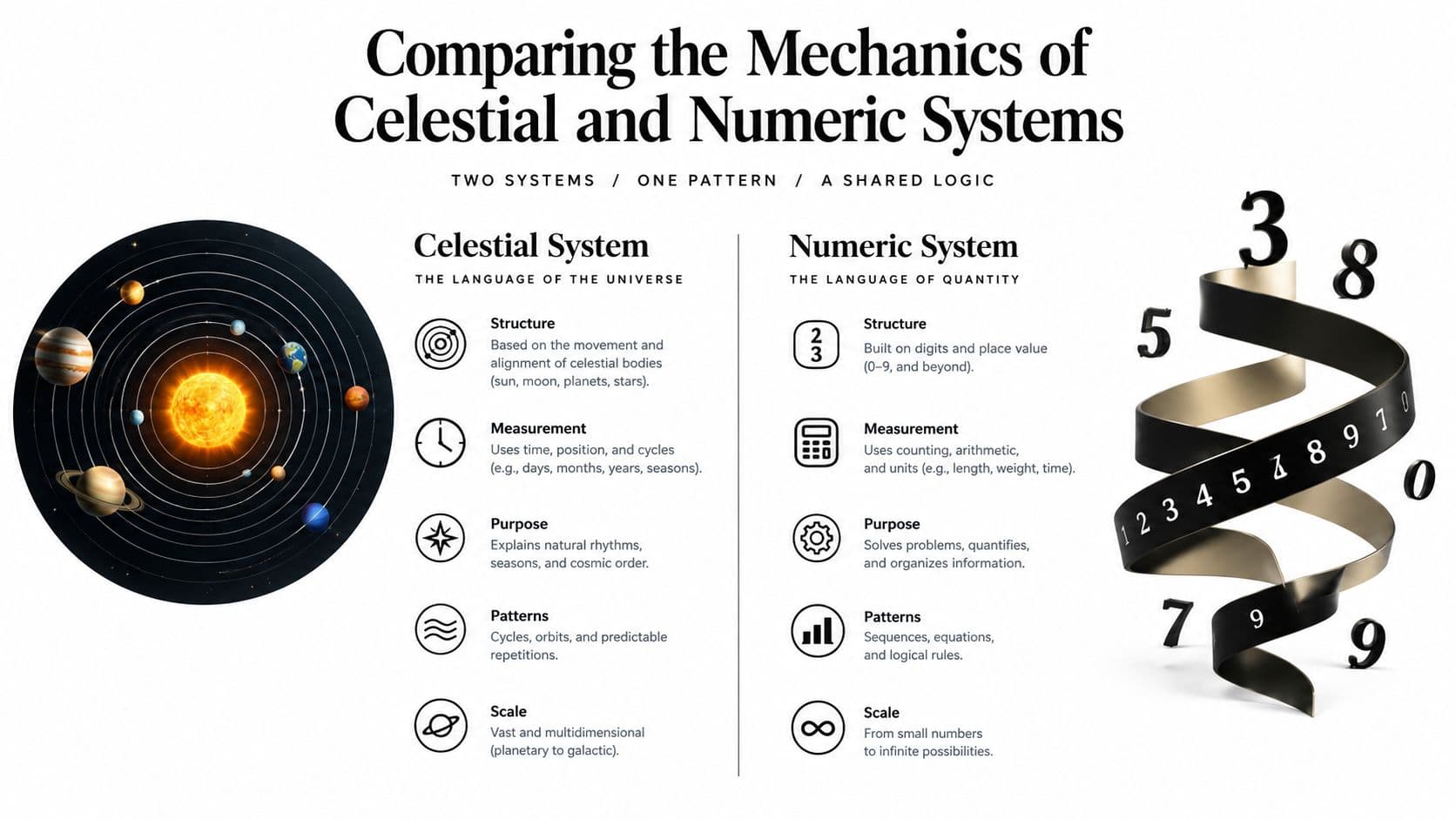
Astrology and numerology feel similar to many readers because both translate ordinary data into symbolic meaning. Under the hood, though, they work very differently.
Astrology uses a larger set of inputs, birth time, place, planetary positions, houses, signs, and aspects. A natal chart can involve dozens of interacting variables, which gives it more detail but also more room for interpretation. That complexity can be useful when someone wants a textured reading about identity, relationships, or timing.
Numerology is narrower and more standardized. It usually starts with a birth date, sometimes a name, and then reduces those inputs into numerical categories through deterministic arithmetic. That makes the output easier to reproduce when the same method is used, which is one reason structured birth-date systems feel cleaner and more repeatable.
Why the difference matters for readers
A complex system invites nuance, but it also invites selective interpretation. With many chart components available, two readers can emphasize different details and reach different conclusions from the same birth data.
By contrast, a birth-date method gives a smaller symbolic field, so the message often feels more focused. That's useful for people who want a practical frame rather than a sprawling symbolic map. If you want a broader context on number-based life-path frameworks, what is Vedic Mathematics Life from Anvaya is a helpful way to compare a more mathematical style of number thinking with other reflective systems.
For a product-level view of that approach, the overview shows how readers often separate curiosity from proof when they're exploring symbolic tools.
Bottom line: astrology is usually more granular, numerology is usually more standardized, and neither should be confused with a validated prediction engine.
Historical Lineages and the Asymmetric Evidence Base
Western astrology and numerology both draw on old symbolic traditions, but their histories don't line up neatly. Astrology interprets celestial positions as meaningful for human life, while numerological traditions assign symbolic or non-mathematical qualities to numbers.
The historical point that often gets blurred is the link to Pythagorean thought. A scholarly study from University College London warns against treating modern Pythagorean numerology as a direct survival of ancient Greek practice. Some Pythagoreans gave special meanings to numbers, but there's no evidence they used modern name- or birth-date-based personality systems. Numbers such as 2 and 3 were tied to masculine and feminine principles, 5 to marriage, and 10 to divinity or perfection, with the tetractys of 1, 2, 3, and 4 used to explain cosmic structure. University College London study on Pythagoreans, number symbolism, and numerology
Tested claims and untested claims are not the same
That distinction matters because astrology has been tested in controlled settings, while birth-date numerology is much less developed in the research record. A double-blind experiment reported in Nature in 1985 did not support the claim that astrological charts reliably predicted personality traits. Nature report on a double-blind astrology test
A careful reader should take from that not a blanket insult, but a narrower conclusion. Astrology has a substantial, largely unfavorable experimental literature. Numerology has far less comparable testing against validated psychological measures.
The oldest Western form of astrology also matters here. Western astrology commonly divides the ecliptic into 12 zodiac signs, each occupying an equal 30-degree segment, and it anchors those signs to seasonal points rather than to the current astronomical positions of the constellations. Britannica overview of the zodiac
That doesn't make astrology useless. It means its strength is symbolic ordering, not scientific prediction. The same restraint should apply to modern numerology systems, including Dan Millman's The Life You Were Born to Live and the Life Purpose App. They work best when described as meaning-making frameworks, not as diagnosis.
Navigating the Complexity of the Natal Chart
A natal chart can feel like walking into a room where every object has a label. The Sun points to core identity, the Moon to emotional patterns, the rising sign to how you come across, and the aspects show how those parts interact. That's why astrology often feels personal in a way that a simple label doesn't.
A reader who gets a chart reading usually hears more than one story at once. One part may say they look confident, another part may suggest they're privately sensitive, and another may describe tension between independence and closeness. That layered structure can be useful because it mirrors how people actually live, not as one trait, but as a mix of habits and contradictions.
More detail can mean more ambiguity
The same complexity that makes astrology feel rich can also make it slippery. With many chart elements to choose from, a reader can emphasize one placement over another, or focus on one time window instead of a different one. That flexibility is part of why astrology feels meaningful, but it's also why it can drift into interpretation that sounds confident without being firmly testable.
A good astrological reading should feel clarifying, not dominating. If the language feels absolute, slow down.
The tropical zodiac also explains why astrology stays symbolic rather than observational in a strict astronomical sense. The traditional signs are fixed to seasonal points, not to the current positions of the constellations themselves. That makes the chart a symbolic calendar for reflection, not a star map in the scientific sense.
A thoughtful user doesn't need to reject astrology to use it well. They just need to keep asking whether a reading is opening a conversation with the self, or closing one too quickly.
Discovering Your Path with Dan Millman and the Life Purpose App
Dan Millman's The Life You Were Born to Live gives numerology a very specific shape. Instead of presenting numbers as vague signs, it turns a birth date into a structured life-path reading focused on purpose, lessons, and recurring themes. The Life Purpose App carries that framework into a digital format, so users can enter a date of birth and work with the system more consistently.
The appeal here is clarity. A person who wants a reflective framework around work, relationships, or inner habits doesn't need a sprawling chart to begin. They may want a defined pattern, a concise language for strengths and challenges, and a way to revisit the same reading over time.

How the framework works in practice
Millman's system is built for self-observation, not for treating a person like a fixed result. A user looks at the life path description, notices where it feels accurate, and compares it with lived experience. That process is more useful when it stays grounded in reflection, especially on questions like health, money, relationships, and purpose.
The app's structure also makes it easier to return to the same themes over time. The point isn't to chase predictions, it's to notice recurring lessons, especially when life gets noisy. For readers who want a deeper explanation of personality patterns in this system, counseling insights by Be Your Best Self offers a useful companion perspective on inner meaning and self-understanding.
If you're comparing symbolic systems, it helps to remember that a birth-date reading can be practical without pretending to be a diagnosis. The overview that accompanies this approach shows how the same framework is often used to describe inner tendencies rather than fixed fate.
What to expect from a serious life-path reading
- Core gifts: recurring strengths that can support work, relationships, and self-trust.
- Core challenges: patterns that show where friction keeps returning.
- Spiritual laws: the kind of discipline or learning a person is meant to practice.
- Life cycles: a simple way to think about change as patterned rather than random.
A spiritually mature use of numerology keeps the focus on accountability. The reading should help you understand your tendencies, not excuse them.
Choosing the Right System for Your Current Life Phase
Some readers want depth. Others want direction. The better system depends on the kind of clarity you need right now.
Astrology fits best when the question is layered. If you're trying to understand relationship dynamics, emotional triggers, or why one area of life keeps feeling stuck, the chart's complexity can help. Its value is in pattern recognition across many moving parts, which suits people who want nuance and are willing to sit with contradiction.
Dan Millman's system, through The Life You Were Born to Live and the Life Purpose App, fits better when the question is narrower and more structured. If you want a concise life-path reading, a simple way to think about recurring lessons, or a framework for a current transition, a birth-date model gives you that without asking you to parse a full symbolic chart.
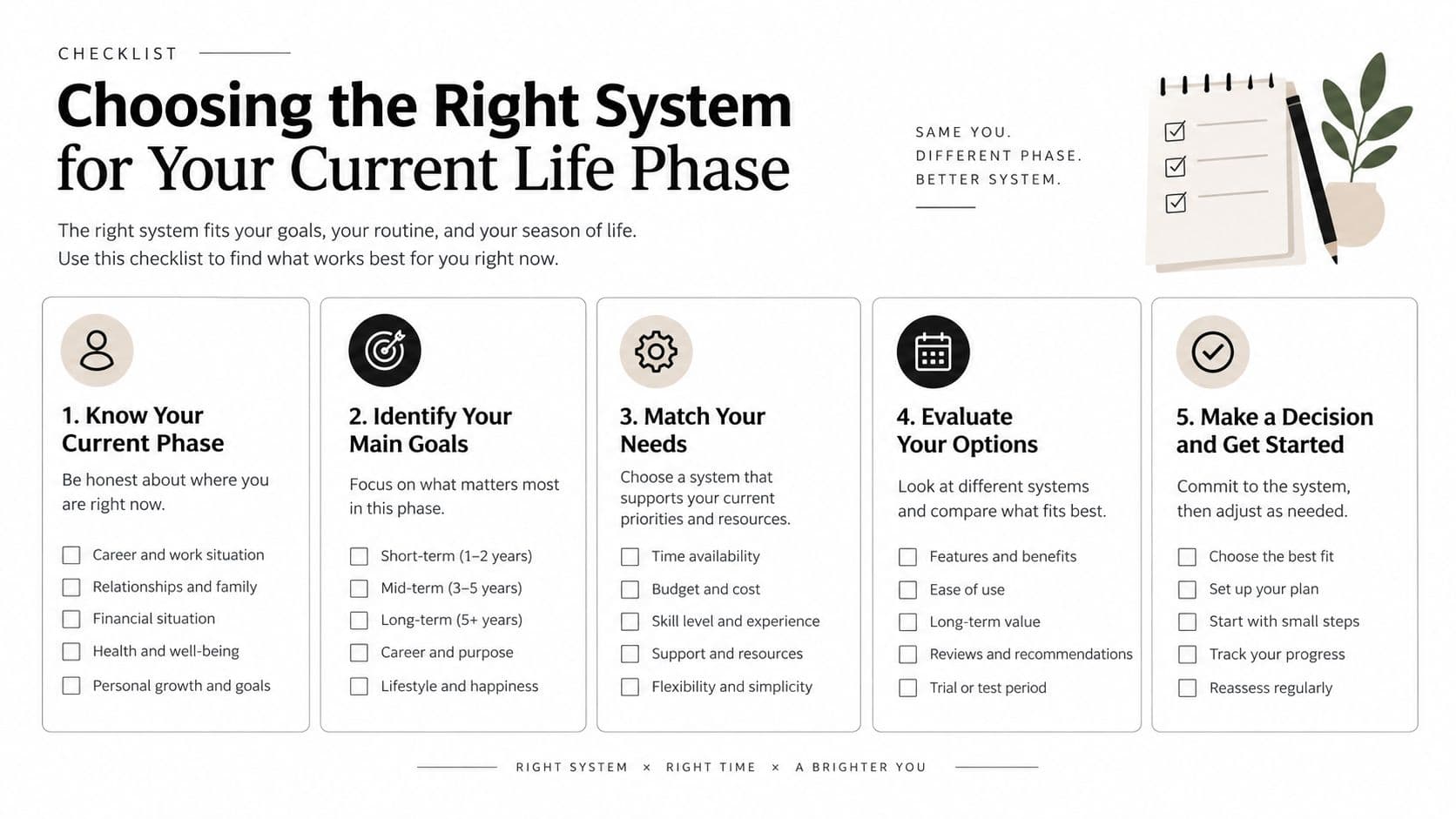
A practical way to choose
- Use astrology when you want a broad map of personality, timing, or relationship patterns.
- Use numerology when you want a cleaner statement of purpose and recurring lessons.
- Use both when you're calm enough to let one system offer depth and the other offer focus.
- Avoid both when you're looking for certainty that should come from evidence, not symbolism.
- Return to journaling when the reading raises questions you need to answer in your own life.
The strongest choice is often not either-or. A person can use astrology for texture and Millman-style numerology for structure. That combination keeps the spiritual conversation open without pretending that symbolism is the same thing as proof.
Integrating Cosmic and Numeric Insights for Holistic Growth
The most useful comparison between astrology and numerology isn't about competition. It's about fit. Astrology can describe the shape of your experience with more nuance, while a structured life-path system like Dan Millman's can help you name the core theme underneath that experience.
That pairing works best when you keep the categories separate. Astrology can suggest how patterns show up in behavior and relationships, while numerology can give you a compact language for purpose, challenge, and recurring lesson. When readers confuse those roles, they start asking one system to do the work of the other.
For a health-focused lens on this kind of symbolic reflection, consider how inner patterns relate to daily care without turning the system into medical advice.
Simple journal prompt: what pattern keeps returning, and what would change if I treated it as a lesson instead of a verdict?
That question keeps you in the driver's seat. Use astrology to notice complexity, use numerology to simplify the next step, and let your own experience decide what stays useful.
If you want a structured way to explore life-path numerology through Dan Millman's framework, Life Purpose App gives you a direct way to work with birth-date-based insights, life cycles, and reflective guidance. It's a practical place to compare your own patterns with a clear symbolic system, then bring what you learn back into journaling, relationships, and daily decisions.
Discover your life path today
Enter your date of birth and see your life path, free.
Find your life path