Explore 7 best self knowledge books for purpose, awareness, emotional resilience, creativity, and practical self-discovery, with reading tips and takeaways.

September 12, 2026 (1mo ago)
7 Best Self Knowledge Books for Lasting Clarity
Explore 7 best self knowledge books for purpose, awareness, emotional resilience, creativity, and practical self-discovery, with reading tips and takeaways.
← Back to blog
Explore 7 best self knowledge books for purpose, awareness, emotional resilience, creativity, and practical self-discovery, with reading tips and takeaways.
One personal-growth book won't explain every part of you. A book about purpose can give direction without testing your blind spots. A personality system can reveal recurring patterns without teaching you how to sit with difficult thoughts. A journaling program can uncover buried desires, while a self-compassion guide can help you face what you find without turning self-knowledge into self-criticism.
The best self knowledge books work better as complementary tools. This list compares seven distinct approaches: Dan Millman's structured life-path framework, research-based self-awareness, Enneagram pattern work, observing thoughts, creative journaling, and self-compassion. You'll get a concise synopsis, the right reader profile, practical takeaways, trade-offs, and a manageable way to apply each book. When numerology and life paths appear, the source is Dan Millman's The Life You Were Born to Live, with the Life Purpose App connected specifically to that system.
1. The Life You Were Born to Live
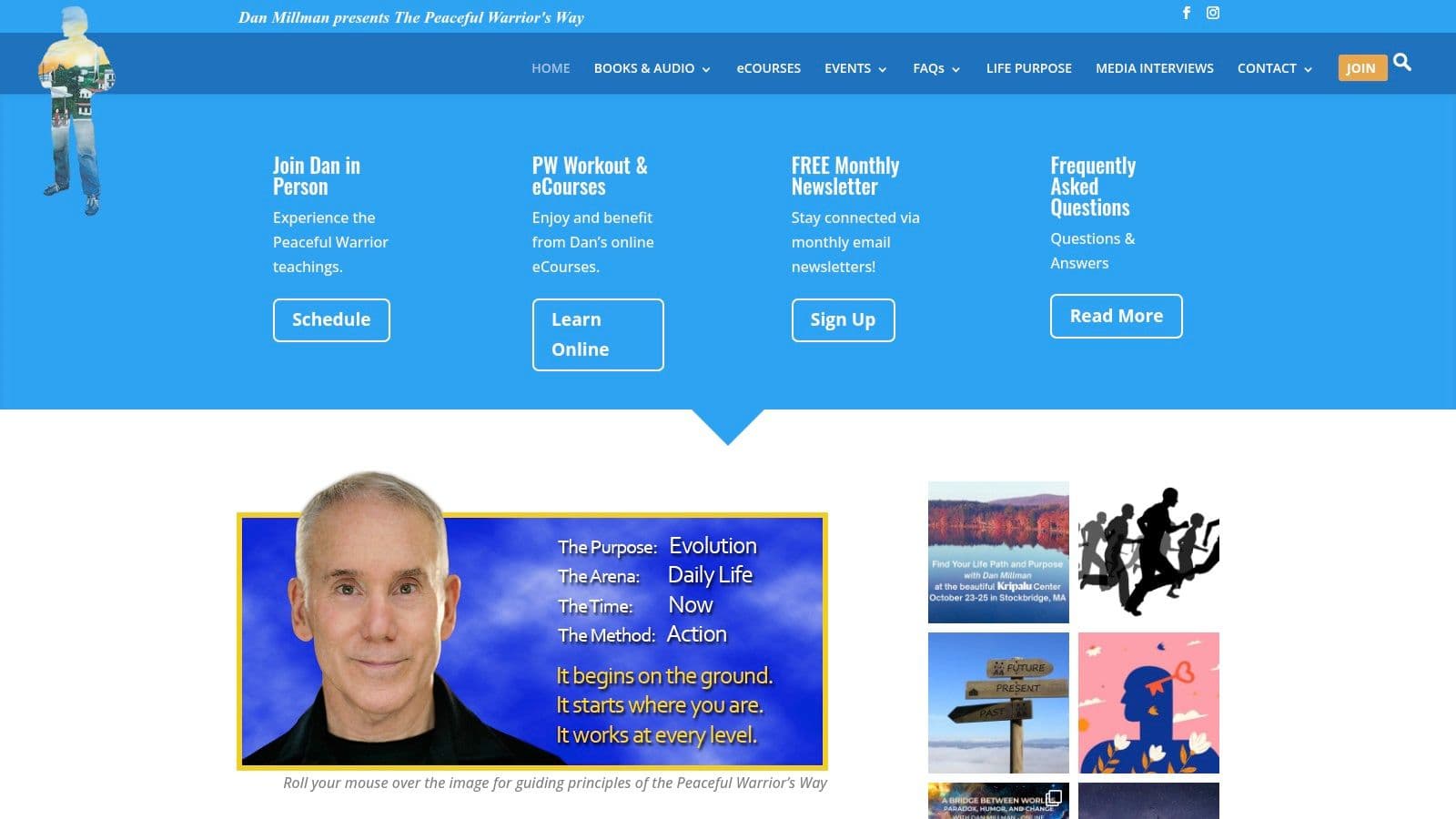
If your central question is “What direction fits me?”, start with Dan Millman's The Life You Were Born to Live. The book offers a structured life-path framework for exploring recurring themes, personal gifts, challenges, and a deeper sense of purpose. Its a better starting point than a vague motivation book because it gives you a defined lens through which to examine your experiences.
Millmans system asks readers to work with their birth date to identify a life path. The method adds every digit together without reducing the result to a single digit. For example, August 25, 1987 becomes 8 + 2 + 5 + 1 + 9 + 8 + 7 = 40, a calculation described in the Life Purpose App's explanation of the life-path method. Treat that result as a prompt for reflection, not a replacement for judgment or personal responsibility.
The companion Life Purpose App book overview makes the framework easier to explore across digital and book formats. It connects Millman's guidance with a modern tool for reviewing life paths, recurring themes, and areas such as career, relationships, health, and money.
Why choose it
The system is accessible, memorable, and practical when you use it actively. Read the relevant life-path material, then compare it with your actual history. Which descriptions fit repeated choices? Which challenges appear in several areas of life? Which parts feel inaccurate or too general?
Practical rule: Use the life path as a question generator. Dont let a label make decisions for you.
The book's limitation is equally clear. The overview isn't the complete system, and the full benefit requires reading, note-taking, and honest application. It won't satisfy readers who want a strictly secular psychological model. For readers interested in spiritual growth, purpose, and pattern recognition, however, it gives the list a strong organizing framework.
2. The Life You Were Born to Live, Revised 25th Anniversary Edition
The revised 25th Anniversary Edition is the more complete choice for readers who want to study Millman's framework in depth. It expands the original system from 37 life paths to 45 life paths, and Millman said the revised edition includes updated explanations, new examples, and material for people born after 2000, as described in this edition overview.
The book explores life purpose through birth-date-based paths, then applies that framework to recurring questions about work, relationships, health, money, and sexuality. It also explains repeating nine-year cycles. One description divides those cycles into three phases: Years 1 to 3 as foundation, Years 4 to 6 as integration, and Years 7 to 9 as mastery, according to the Life Purpose App's guide to nine-year cycles.
Best for structured spiritual inquiry
Choose this edition if you want a step-by-step system rather than free-form reflection. Keep a separate notebook with four columns: the book's description, a real example from your life, evidence that supports the pattern, and evidence that challenges it. That simple structure prevents passive reading and keeps the framework connected to lived experience.
The direct relationship with the Life Purpose App matters here. The app is based on Millman's book and provides access to all 45 life paths, a personal-year calculator for the nine-year cycle, and relationship-dynamics features. The book supplies the source material and context. The app makes it easier to explore the same framework digitally.
The trade-off is depth. This isn't a book to skim for an instant answer. It requires careful reading and note-taking, and readers who prefer contemporary psychology may find its spiritual and numerological approach unsuitable. For anyone already drawn to Millman's work, it's the essential primary text.
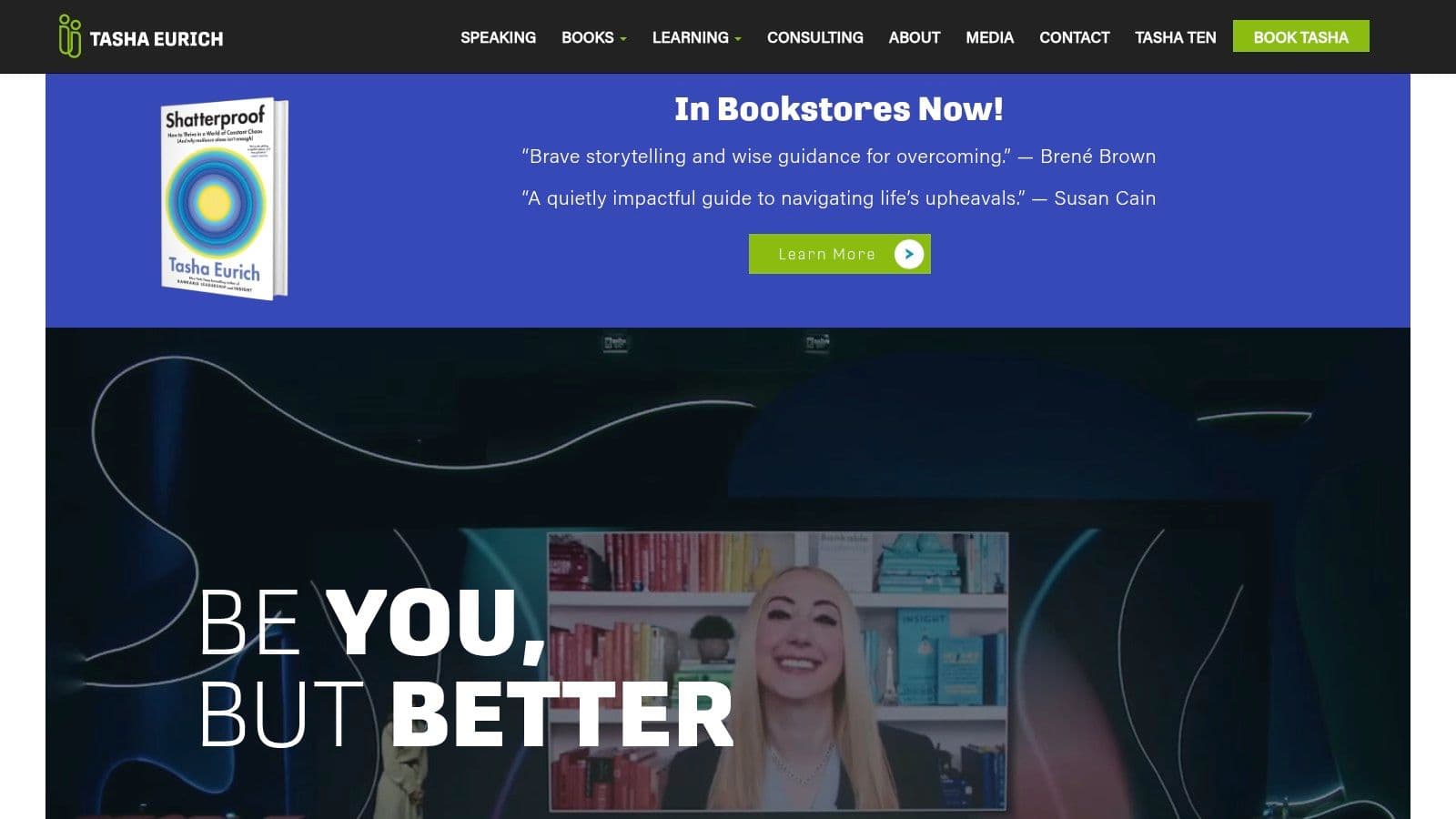
3. Insight by Tasha Eurich, PhD
Purpose frameworks can suggest useful questions, but they can t tell you whether your self-image matches the way other people experience you. Thats where Tasha Eurich's Insight earns its place among the best self knowledge books.
Eurich distinguishes between internal self-awareness, how you see yourself, and external self-awareness, how others see you. The book turns that distinction into practical work around feedback, blind spots, and more accurate self-understanding. Its approach draws on research and corporate fieldwork, so it feels especially relevant to people navigating leadership, teamwork, career decisions, or difficult professional relationships.
The Life Purpose App's discussion of self-knowledge pairs naturally with this book's central concern. A life-path description may give you a language for recurring themes. Eurich's approach asks you to test those interpretations against behavior and feedback.
Use it to check your assumptions
Don't ask everyone, “What do you think of me?” Ask focused questions instead:
- Request a specific strength: Ask someone when they've seen you at your most effective.
- Name a possible blind spot: Ask what behavior makes collaboration harder.
- Look for repetition: Compare feedback from people in different parts of your life.
- Separate intent from impact: Record what you meant to do and what happened.
Self-awareness isn't the same as thinking about yourself more. It's learning to see yourself more accurately.
The book's strength is its balance between introspection and outside perspective. Its limitation is that it leans toward professional and leadership contexts. Readers seeking spiritual ritual, creative exploration, or a workbook-heavy experience may find it less immersive. Choose it when your self-knowledge problem involves blind spots, communication, or decisions other people can observe.
4. The Wisdom of the Enneagram by Don Richard Riso and Russ Hudson
Some readers don't need another purpose statement. They need to understand why they keep reacting in the same way, especially under pressure. The Wisdom of the Enneagram offers a detailed guide to the nine-type Enneagram system, with questionnaires, type profiles, and practices aimed at personal growth.
The book combines psychological and spiritual perspectives. Its profiles explore motivations, defensive habits, strengths, and recurring challenges, then connect those patterns to targeted exercises. The Enneagram Institute provides additional background for readers who want to continue studying the framework.
Read it without rushing to a type
The biggest mistake is treating the Enneagram as a personality quiz that delivers a permanent identity. Use the assessments as starting points, then read several profiles and focus on the motivations behind your behavior. Pay attention to the patterns you'd rather deny. Those often provide more useful material than flattering descriptions.
The book's type-specific practices make it more actionable than a simple typology summary. You can choose one recurring behavior, such as avoiding conflict, seeking approval, controlling outcomes, or withdrawing under stress, and observe when it appears. Write down the trigger, your automatic response, and one alternative action.
A helpful companion is this guide to coaching tips for Enneagram types. Still, the framework can overwhelm beginners, and some cultural examples may feel dated. Pick this title when you want a long-term map of personality patterns, not a quick inspirational read.

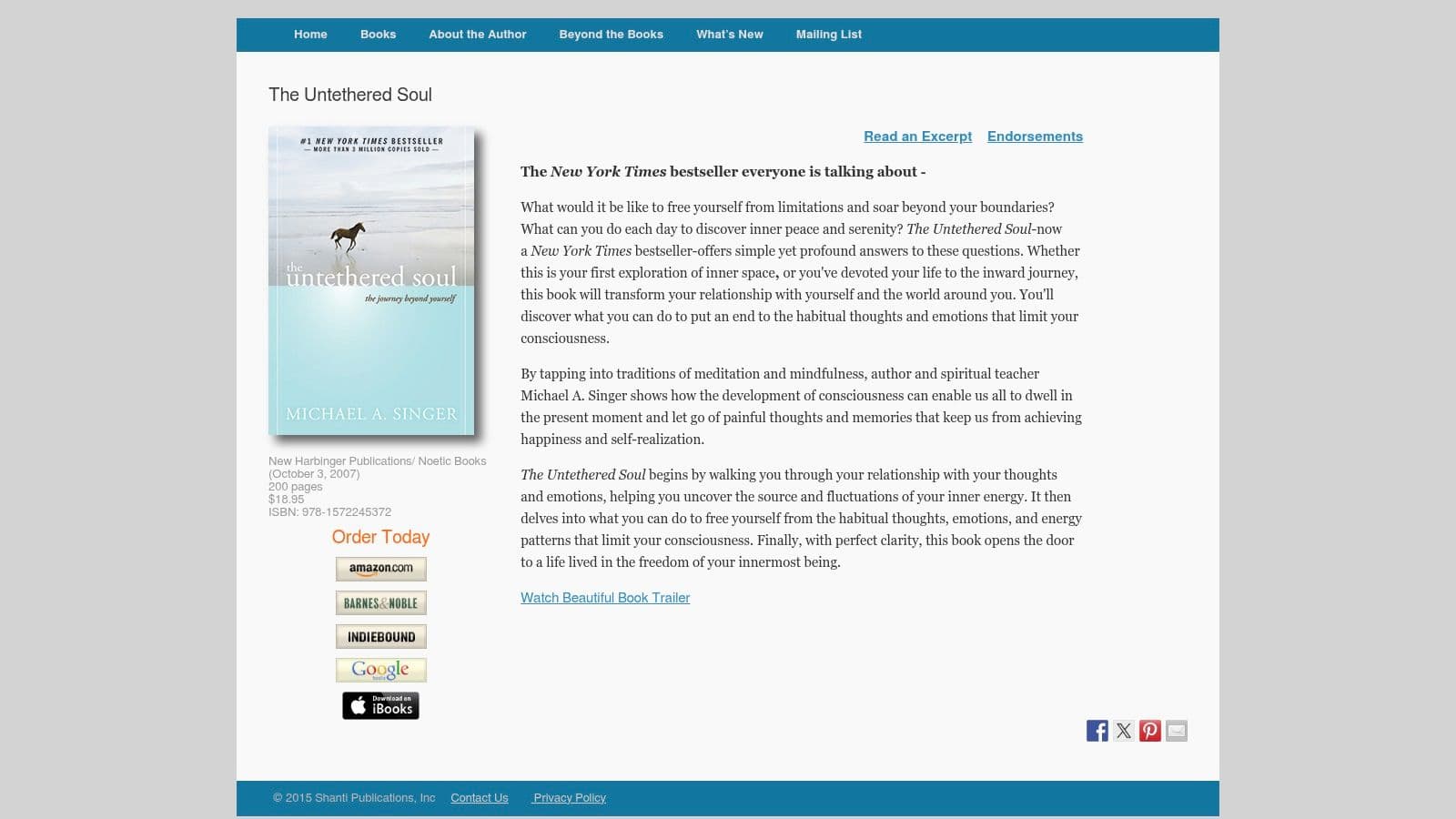
5. The Untethered Soul by Michael A. Singer
If your mind feels noisy, The Untethered Soul is the clearest recommendation. Michael A. Singer focuses on the difference between your awareness and the thoughts, emotions, and inner commentary passing through it.
The book uses accessible spiritual language and short, focused chapters. It encourages readers to notice mental chatter without automatically obeying it, then release habitual reactions that keep emotional patterns in place. The official Untethered Soul site presents the book as an approachable entry into this form of inner work.
Turn observation into a daily practice
Read one short section, then use an ordinary trigger as your practice material. Notice the first thought, the emotional sensation in your body, and the urge to act. Instead of immediately sending the message, defending yourself, or replaying the conversation, pause and observe the reaction.
This isn't about suppressing emotion or pretending difficult experiences don't matter. It's about creating enough distance to choose a response. The technique works best when you practice during minor frustrations, not only during major crises.
Notice the reaction before you turn it into a decision.
The book's greatest advantage is its clarity for first-time inner-work readers. Its weakness is the same feature from another angle. It offers a philosophical and spiritual lens rather than an empirical research program, and readers who want worksheets may find it too open-ended. Choose it for direct experiential self-knowledge, especially if overthinking and emotional reactivity are your main obstacles.
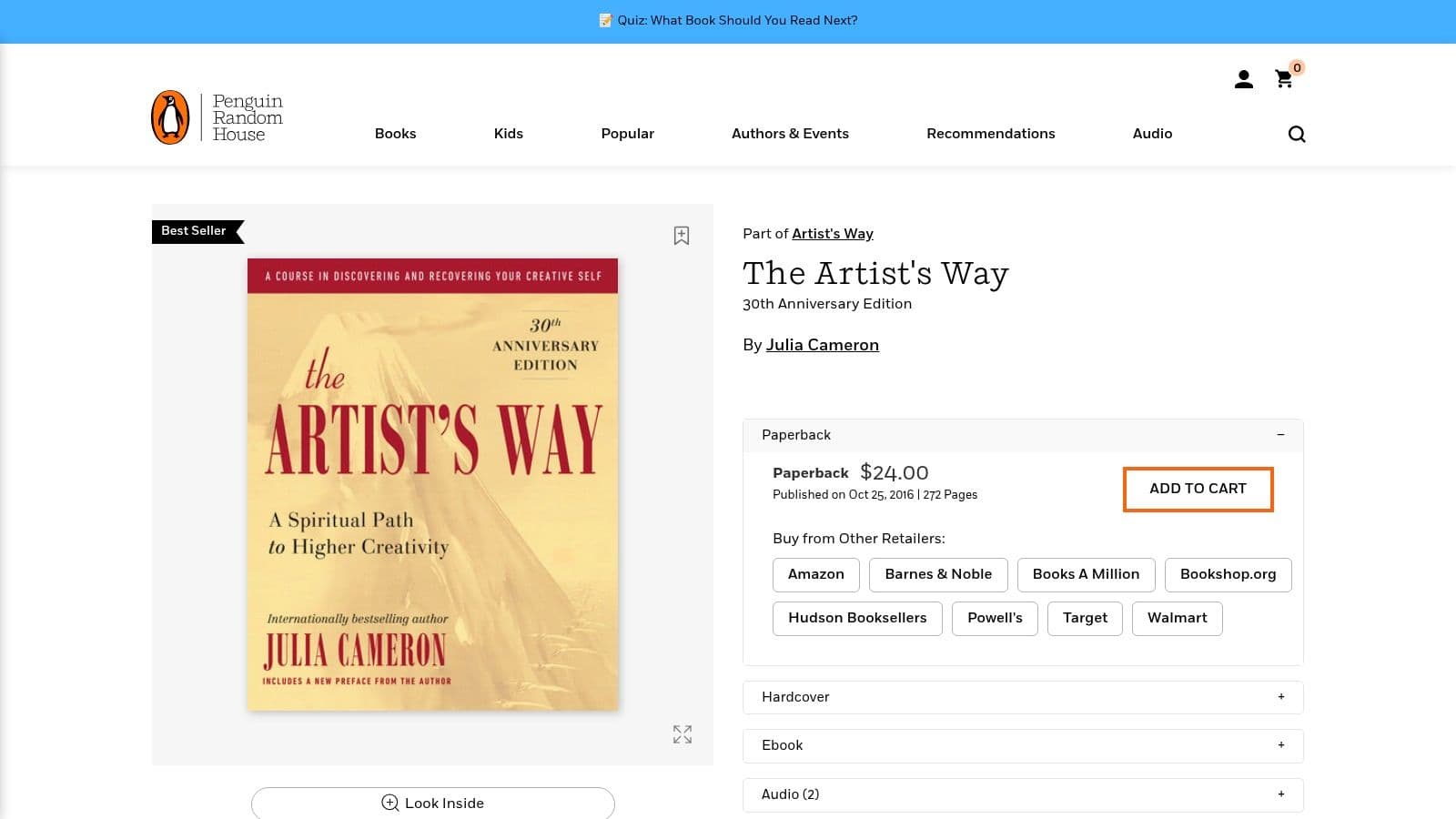
6. The Artist's Way by Julia Cameron
Julia Cameron's The Artist's Way develops self-knowledge through consistent creative action, not personality analysis. Its structured program uses Morning Pages, Artist Dates, exercises, and prompts to help readers uncover fears, habits, desires, and neglected interests.
The approach works even if you don't consider yourself an artist. Writing longhand each morning can reveal the complaints, hopes, and decisions that remain hidden when your thoughts stay in your head. A weekly Artist Date, spent alone on an exploratory activity, gives you a practical way to notice what attracts your attention when nobody else is directing it.
The Penguin Random House page for The Artist's Way provides the publisher's overview of the program and its format.
Make the rituals measurable
Keep the practice simple:
- Morning Pages: Write continuously without editing or judging the result.
- Artist Date: Choose an activity that stimulates curiosity, then record what you noticed.
- Weekly review: Circle repeated fears, desires, and excuses.
- Behavior test: Turn one recurring desire into a small action during the following week.
This book rewards commitment. Its program requires near-daily effort and may feel indirect if you want strictly psychological insight. That's also its advantage. It gets self-knowledge out of abstract thinking and into choices, attention, and experimentation. Choose it when you feel blocked, disconnected from desire, or overly dependent on other people's expectations.
7. Self-Compassion by Kristin Neff, PhD
Self-knowledge becomes distorted when every discovery turns into a prosecution. Kristin Neff's Self-Compassion: The Proven Power of Being Kind to Yourself gives readers a research-grounded way to examine mistakes, limitations, and painful emotions without collapsing into shame or self-excuse.
Neff's framework centers on self-kindness, common humanity, and mindful awareness. Those elements create a balanced alternative to both harsh self-judgment and forced positivity. You can acknowledge that you handled a conversation poorly, recognize that imperfection is part of being human, and decide what repair requires.
The Self-Compassion Institute offers further practice resources and information connected with Neff's work. Her book fits well after more analytical titles because it changes the emotional conditions under which reflection happens.
Apply it after a difficult moment
Write three brief responses:
- Mindful awareness: What happened, without exaggeration or insult?
- Common humanity: Why might another person struggle with something similar?
- Kind action: What would help you repair, learn, or continue?
The book is more clinical than spiritual or typology-based titles, and its exercises require repetition. That repetition is the point. Self-compassion isn't a mood you wait for. It's a practice that helps you evaluate yourself enough to change.
For readers who regularly abandon self-reflection because it triggers shame, this is the strongest choice. You can also connect reflection with everyday behavior through compassionate actions.
7-Book Self-Knowledge Comparison
| Item | Implementation complexity (🔄) | Resource requirements (⚡) | Expected outcomes (📊) | Ideal use cases (💡) | Key advantages (⭐) |
|---|---|---|---|---|---|
| The Life You Were Born to Live (product page) | 🔄 Low, summary & links, minimal friction | ⚡ Low, quick access; purchase required for full system | 📊 Awareness of Millman framework; gateway to deeper study | 💡 Discover source material; connect book to Life Purpose App | ⭐ Convenient overview + direct retailer/app linkage |
| The Life You Were Born to Live (Revised 25th Anniversary Edition), Dan Millman | 🔄 Moderate, step-by-step system requiring study | ⚡ Moderate, purchase, reading, note-taking | 📊 Clear life-path mapping; actionable domain-specific guidance | 💡 Deep self-inquiry; users aligning with Life Purpose App | ⭐ Comprehensive source text with structured framework |
| Insight, Tasha Eurich, PhD | 🔄 Moderate, exercises + feedback cycles; some facilitation | ⚡ Moderate, time, peer/360 feedback or assessments | 📊 Improved internal/external self-awareness; fewer blind spots | 💡 Leadership development; team awareness initiatives | ⭐ Research-driven, practical leader-tested methods |
| The Wisdom of the Enneagram, Riso & Hudson | 🔄 High, broad typology, assessments, nuanced typing | ⚡ Moderate–High, time, assessments, possible coaching | 📊 Deep personality insight; targeted type-specific growth | 💡 Coaches, in-depth personality work, spiritual/psych growth | ⭐ Rich, long-standing framework with actionable practices |
| The Untethered Soul, Michael A. Singer | 🔄 Low–Moderate, short experiential chapters, daily practice | ⚡ Low, brief chapters; regular mindfulness practice | 📊 Greater emotional stability; expanded present-moment awareness | 💡 Beginners to inner work; anyone seeking experiential change | ⭐ Approachable language with practical everyday techniques |
| The Artist's Way, Julia Cameron | 🔄 High, 12-week curriculum with daily/weekly rituals | ⚡ High, daily Morning Pages + weekly Artist Dates (time-intensive) | 📊 Surfaced habits/fears; renewed creative output and self-awareness | 💡 Creativity recovery; habit-based self-inquiry programs | ⭐ Highly actionable, decades-proven routine and community use |
| Self-Compassion, Kristin Neff, PhD | 🔄 Moderate, structured exercises and reflective practices | ⚡ Moderate, repeated practice over weeks; some guidance | 📊 Increased resilience; kinder, balanced self-appraisal | 💡 Emotional healing, parenting, coping with setbacks | ⭐ Strong empirical foundation with teachable exercises |
Build a Reading Path, Not Just a Bookshelf
Don't read all seven at once. Choose the book that matches the question currently creating the most friction in your life.
Start with The Life You Were Born to Live when you're asking about direction, purpose, and recurring life themes. If you want to explore Dan Millman's system digitally, use the Life Purpose App alongside the book. The app provides access to all 45 life paths, personal-year calculations connected to the nine-year cycle, and relationship-dynamics features. The book gives you the interpretive foundation, while the app makes the framework easier to revisit and apply.
Move to Insight when you need to test your self-perception against feedback. It's the right follow-up if your purpose work feels compelling but you're unsure how accurately you understand your effect on other people. Then use The Wisdom of the Enneagram to examine recurring personality patterns, particularly the motivations and defensive habits that shape your choices under pressure.
Read The Untethered Soul when your main challenge is inner reactivity. It teaches you to notice thoughts and emotions before they become automatic behavior. Follow it with The Artist's Way if you need a more active form of discovery through journaling, curiosity, and creative experiments. Finish with Self-Compassion when the process becomes self-critical or when you need a steadier way to face difficult truths.
This sequence moves from direction to verification, pattern recognition, inner awareness, expression, and emotional sustainability. It also keeps each book in its proper role. A life path can suggest themes, but it doesn't replace feedback. An Enneagram type can describe a pattern, but it shouldn't become an excuse. Meditation can create distance from thoughts, but action still matters.
Self-help has a long publishing history. The modern genre is widely traced to Samuel Smiles's 1859 book Self-Help: With Illustrations of Character, Conduct and Perseverance, which the British Psychological Society describes as an immediate and lasting success. The category remains commercially active, but popularity doesn't make every title useful for every reader.
Use a simple application plan. Choose one book, write down its core question, practice one exercise for a defined period, and review what changed in your behavior. Don't collect labels, highlights, or inspirational phrases without checking whether you're communicating differently, choosing differently, or responding with greater honesty.
The Life Purpose App gives you a digital companion to Dan Millman's The Life You Were Born to Live, with access to life-path insights, nine-year cycles, and relationship-dynamics tools based on the same framework. If purpose and recurring life patterns are the questions you're ready to explore, visit Life Purpose App and begin with your own life-path summary.
Discover your life path today
Enter your date of birth and see your life path, free.
Find your life path