You’ve probably tried a birthday quiz and felt only partly convinced. Dan Millman’s life-path system treats your birth date as a practical map, revealing gifts, recurring lessons, and nine-year cycles you can use for real-life choices.

July 3, 2026 (3mo ago) — last updated October 20, 2026 (3d ago)
Birth Date Personality: Life Path Guide
Discover your birth date personality with Dan Millman’s life-path system. Calculate your number, learn gifts & challenges, and apply nine-year cycles.
← Back to blog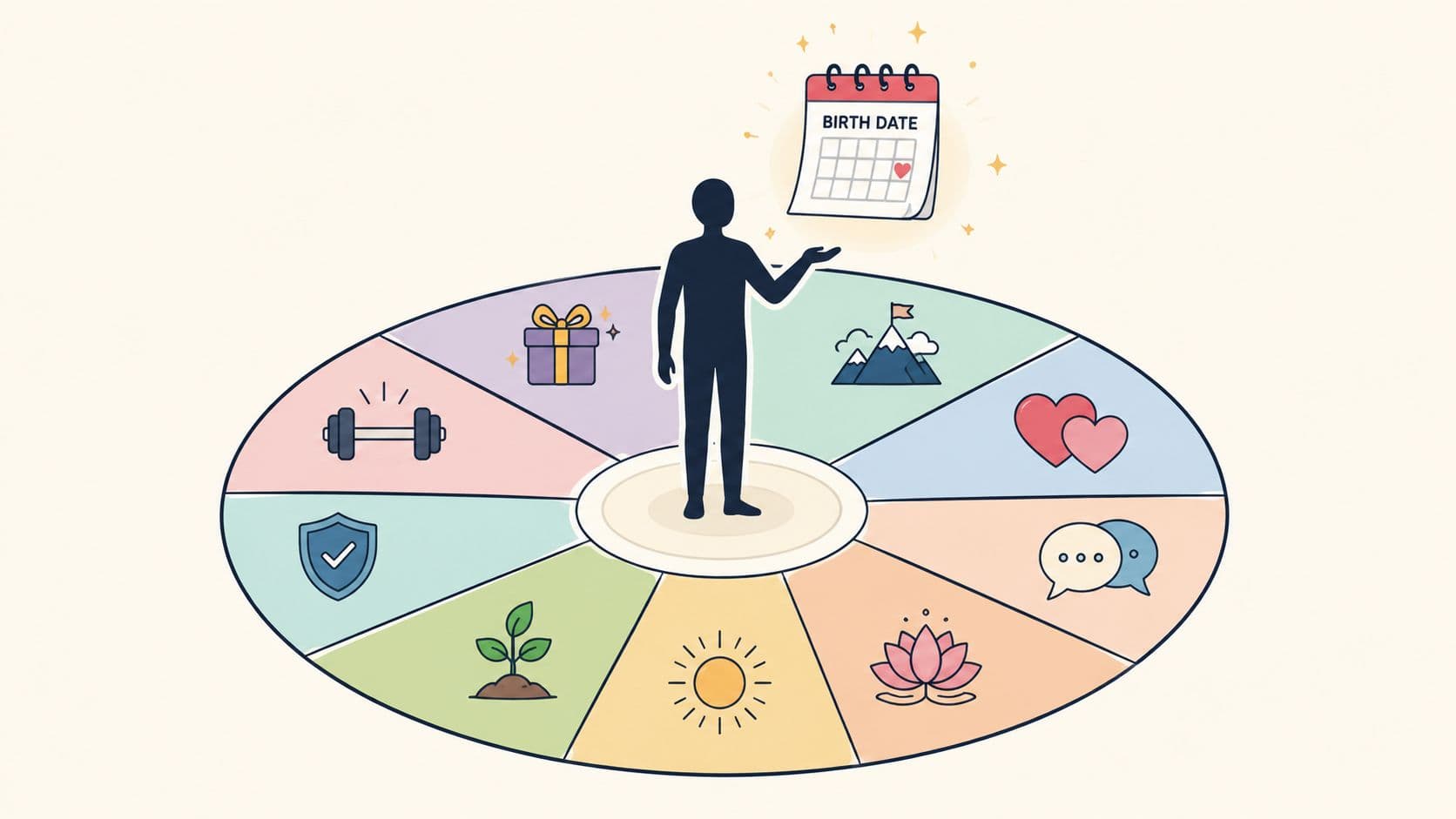
You’ve probably tried a birthday quiz and felt only partly convinced. Dan Millman’s life-path system treats your birth date as a practical map, revealing gifts, recurring lessons, and nine-year cycles you can use for real-life choices.
Your Birth Date Personality: Life Path Guide
Summary: Discover your birth date personality with Dan Millman’s life-path system. Calculate your number, learn gifts and challenges, and apply nine-year cycles to daily life.
Introduction
You’ve probably tried a birthday quiz, read a handful of traits, and felt only partly convinced. Dan Millman’s The Life You Were Born to Live offers a different approach: it treats your birth date as a starting point for a structured map of lessons, strengths, and recurring themes rather than a flat label1. The Life Purpose App applies the same framework in an interactive format2.
More Than Just a Number: A Deeper Look at Birth Date Personality
Many quick birthday profiles list flattering traits without answering the questions people actually have about work, relationships, and life phases. Millman’s system connects your date of birth to one of 45 life paths, each describing strengths, recurring tests, and opportunities for growth1.
Why generic birthday lists often fall short
A short trait list tells you how you might appear, but not why patterns repeat or what lessons are trying to develop. Millman’s method gives context for how a gift can become a struggle until you learn to work with it. That context makes birth date personality practical rather than just entertaining.
“Your birth date points to a path of development, not a simple personality tag.”
A more grounded way to read your birth date
This system doesn’t claim a number controls your life. It asks you to observe patterns and compare them with life-path descriptions, using that structure for self-reflection. The result is language for experiences that once felt random and a practical way to study recurring themes.
How to Find Your Life Path Number
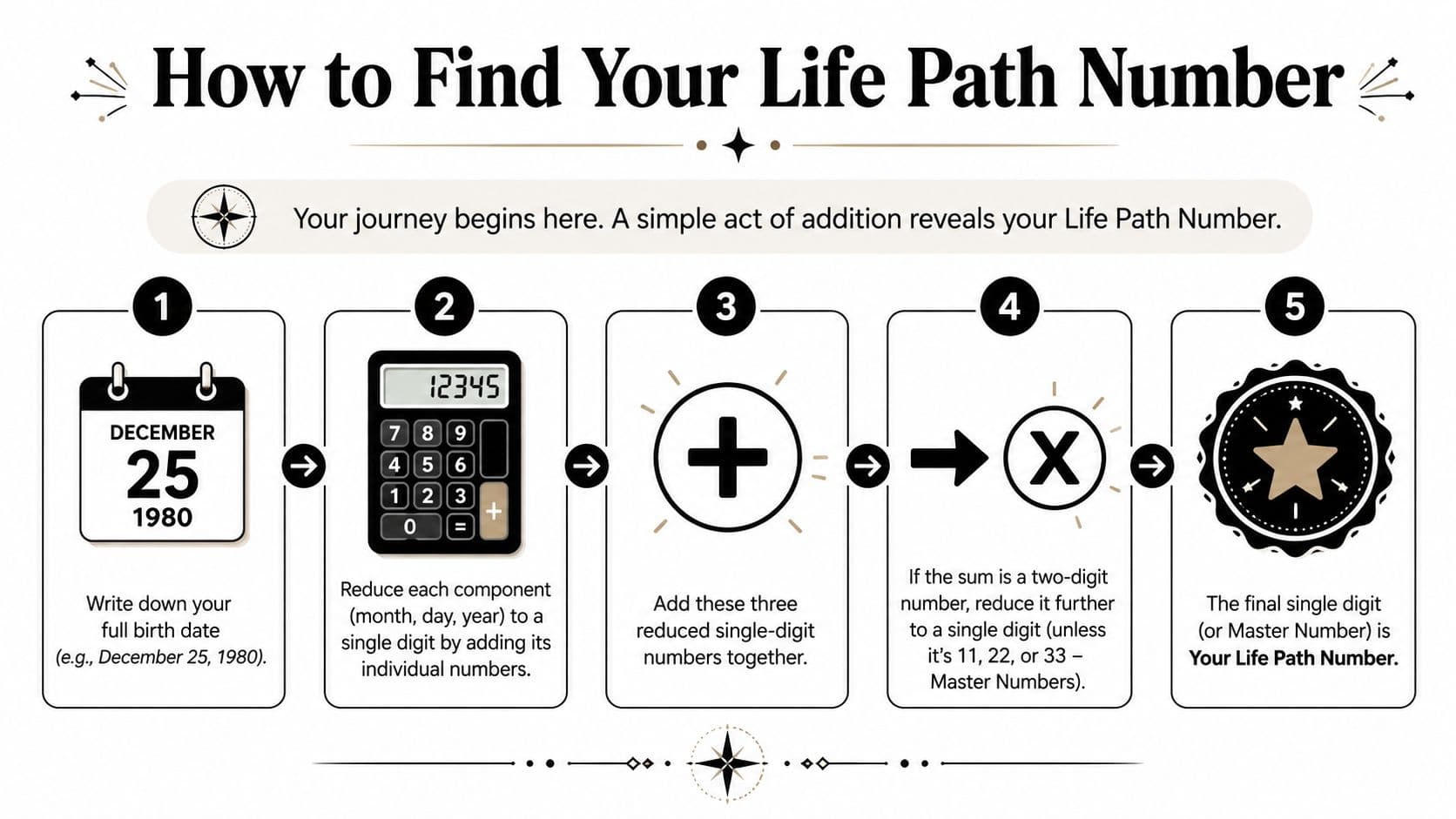
Calculating the life path number is straightforward, and getting the arithmetic right matters because Millman’s system builds from this starting place. The Life Purpose App follows the same structure for calculation and interpretation2.
The basic calculation
Use your full month, day, and year of birth. Write each digit separately, add them all together, then reduce until you reach a single digit.
Example: March 15, 1990 = 3 + 1 + 5 + 1 + 9 + 9 + 0 = 28 → 2 + 8 = 10 → 1 + 0 = 1. Life path number = 1.
Steps to calculate
- Write your birth date in digits with full year.
- Add every digit, keeping them separate.
- Reduce the total by adding digits until one digit remains.
If you prefer, try an automated calculator on this site page: /calculate-life-path.
Common mistakes to avoid
People often skip a digit, shorten the year, or stop reducing too soon. Also remember the single number is an entry point, not the entire reading. Verify the math before questioning the result.
Your Core Gifts and Challenges on This Path
Each life path in Millman’s system outlines core gifts and recurring challenges. The value of the system is in holding both together—seeing how strengths and struggles shape one another.
What a life path describes
Millman’s framework links each path to universal principles and practical lessons, which help clarify past experiences and anticipate challenges tied to career and relationships1.
A gift is an ability that comes alive when you’re aligned. A challenge is tension that asks for maturity, discipline, and awareness. Reading them together helps you use insights rather than identify solely with one side.
How this helps in real life
- Work: Lean into natural abilities instead of forcing roles that drain you.
- Relationships: Recognize that repeated reactions often follow internal patterns.
- Personal growth: Treat recurring struggles as material for development.
Short reflection prompts:
| Question | Why it matters |
|---|---|
| What comes easily to me? | Points to a core gift. |
| What challenge keeps repeating? | Often signals a lesson. |
| Where do I overcompensate? | May show a gift used out of balance. |
Navigating Life with Your Nine-Year Cycles
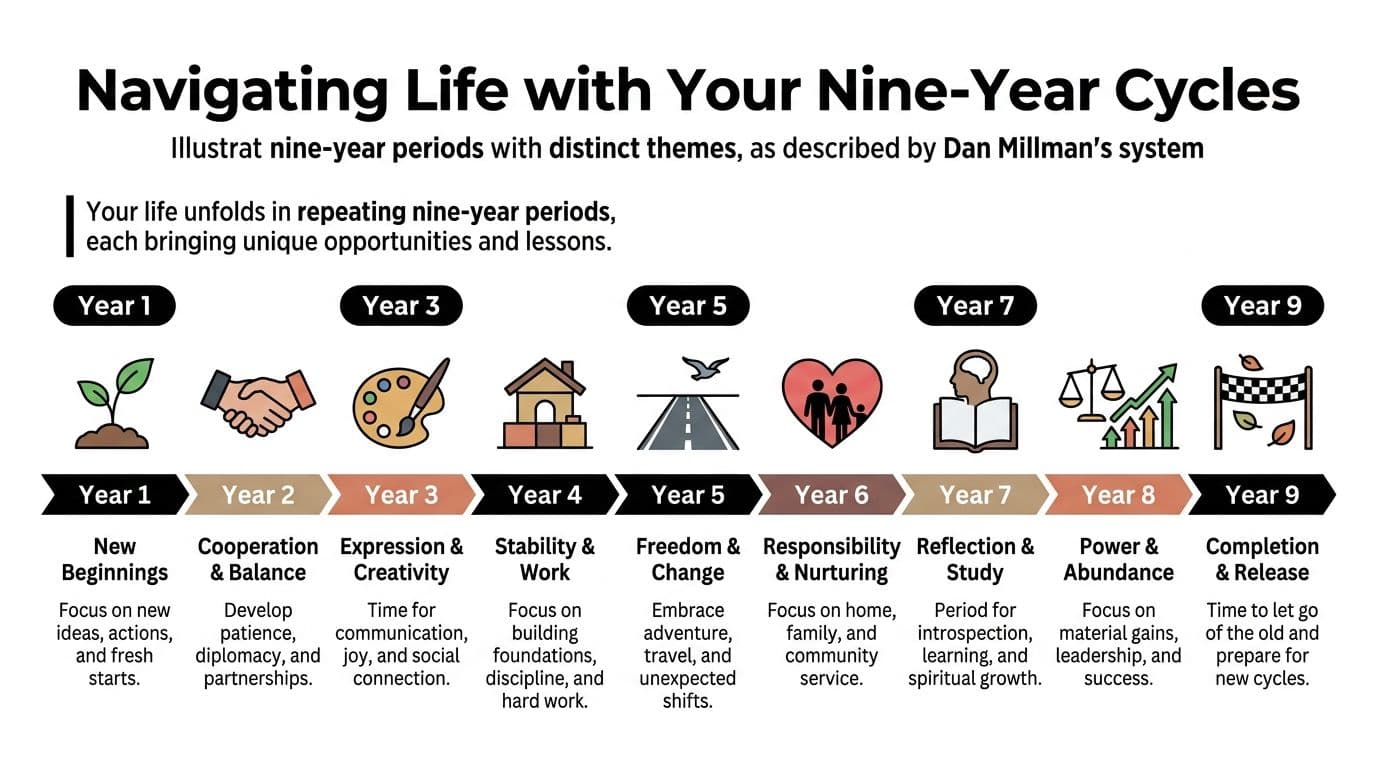
The life path describes your overall direction, while the nine-year cycle acts as a timekeeper that explains why different years emphasize different developmental tasks.
Why cycles matter
Cycles help you match your effort to the season. A person with the same life path can be bold in one period, reflective in another, and focused on responsibility in a third. The cycle clarifies which response a period rewards.
Themes of the nine-year cycle
- Year 1: New beginnings, initiative
- Year 2: Cooperation, balance, patience
- Year 3: Expression, creativity, connection
- Year 4: Stability, structure, effort
- Year 5: Change, movement, freedom
- Year 6: Responsibility, care, service
- Year 7: Reflection, study, inner work
- Year 8: Power, leadership, material focus
- Year 9: Completion, release, transition
These themes are prompts, not predictions. For a step-by-step cycle calculator, see our nine-year cycle guide: /nine-year-cycle-guide.
How to use cycle thinking
Match your effort to the year’s tone. If it’s a beginning year, ask what deserves a first step. If it’s about structure, prioritize consistency. If it’s completion, ask what no longer fits.
| Cycle theme | Useful question |
|---|---|
| Beginning energy | What needs a first step? |
| Work and structure | What needs consistency? |
| Completion energy | What am I still carrying? |
Understanding Your Relationships Through Life Paths
Different life paths bring different lessons into relationships. Millman’s method helps you read interaction patterns as meeting points of two lesson plans, not fixed compatibility labels.
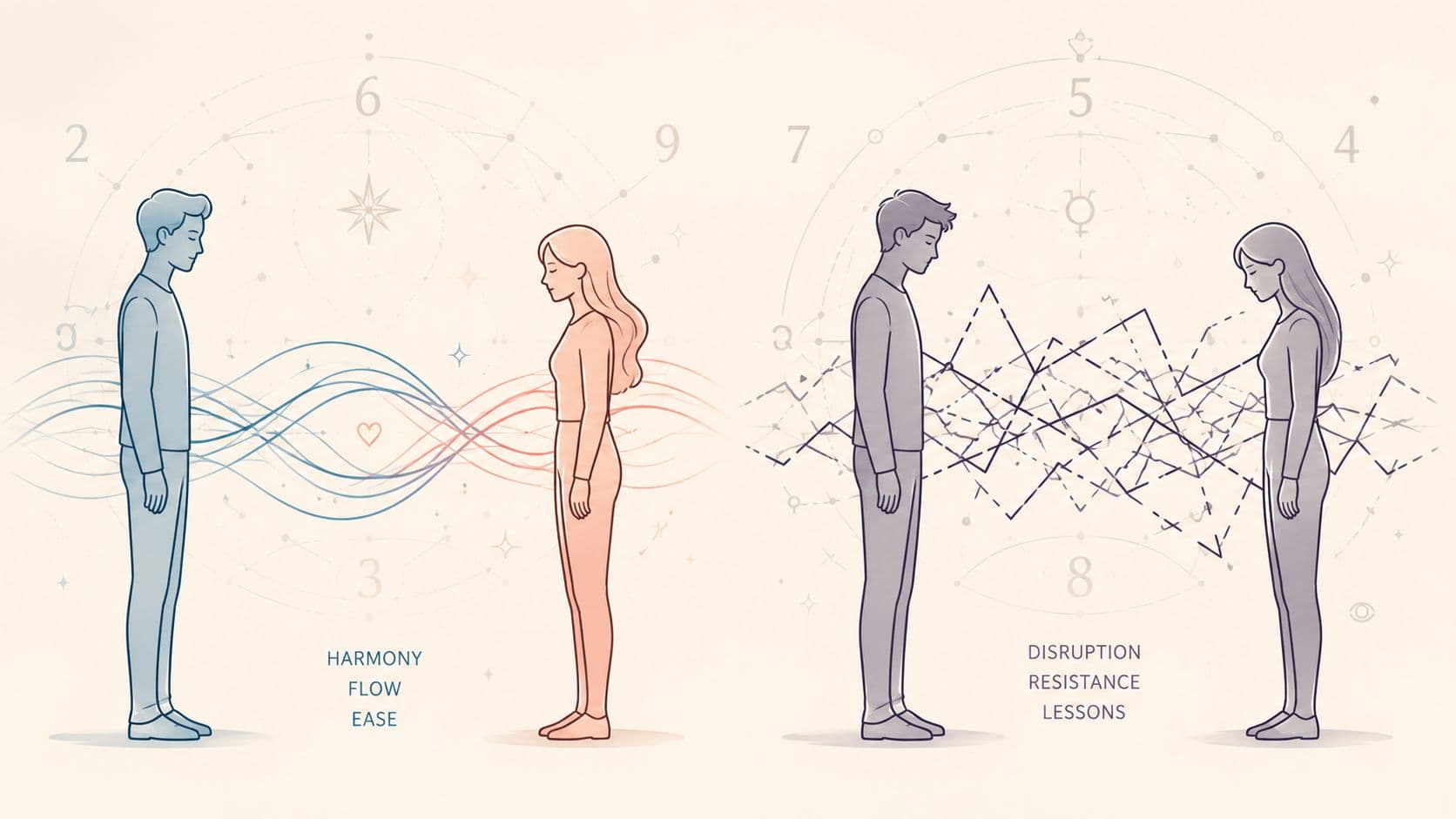
A coworker who acts quickly and independently may clash with someone learning through sensitivity and caution. Families often show these differences clearly: a parent’s push can clash with a child’s need for steadiness. The point is to describe the pattern before reacting to it.
Practical questions to explore:
- Where do our paths support each other?
- Which conflicts point to different lessons rather than failure?
- What does this person keep asking me to develop?
- Where do I expect someone to grow in my style instead of their own?
For a deeper look at compatibility by birthday, see our related guide: /guides/relationship-compatibility-by-birthday.
Your Practical Guide to Living on Purpose
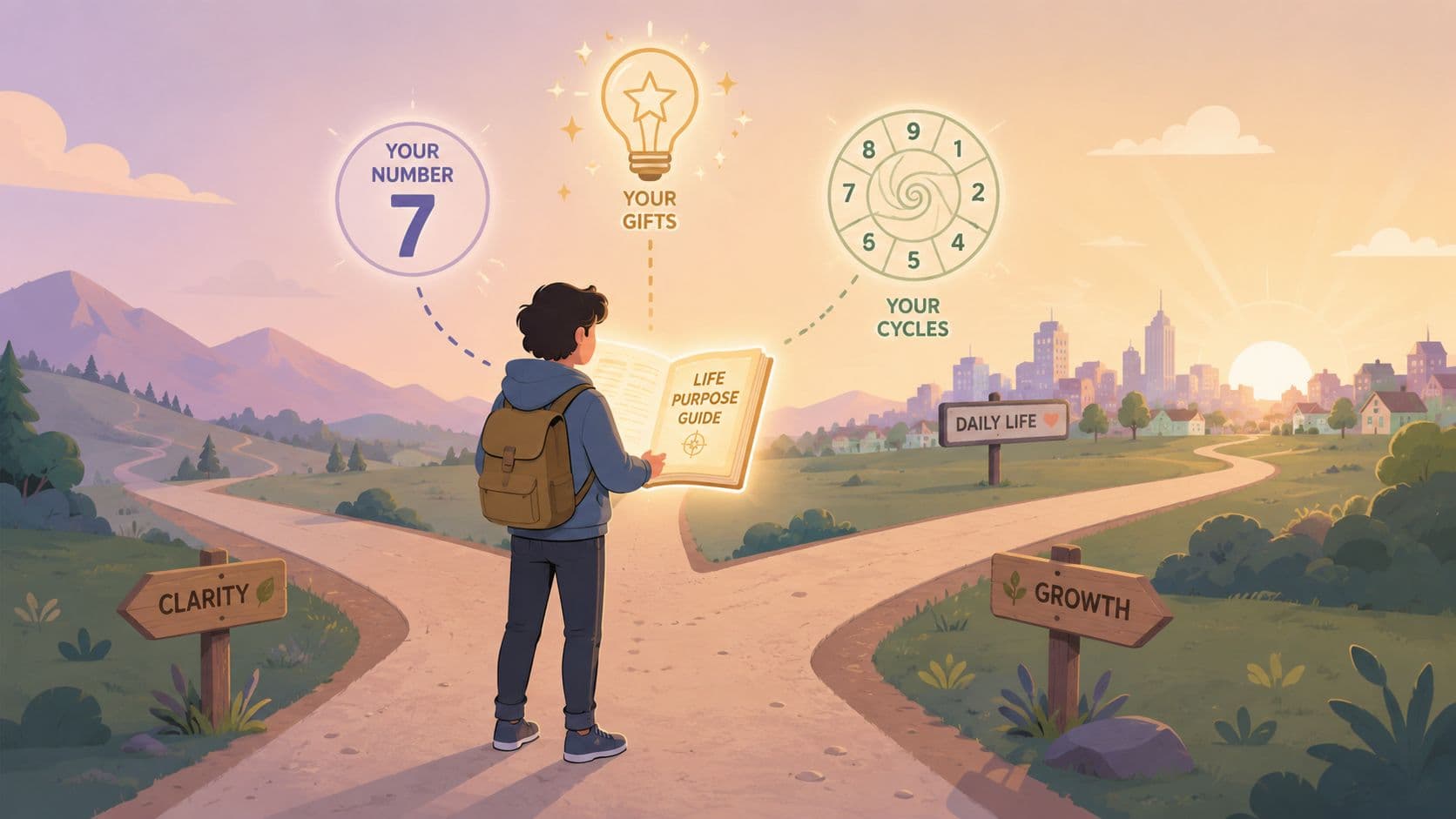
Apply these insights in ordinary life: choose work that matches your nature, catch an old reaction before it runs the conversation, and recognize that demanding seasons often follow a pattern rather than random bad luck.
Habits that make the system practical
- Write things down: track repeating themes in work, love, and energy.
- Use the language lightly: let the system inform choices without creating a rigid identity.
- Check timing: when life feels blocked, ask whether the season calls for action, patience, structure, or release.
Journaling and expressive writing can make reflections more effective, improving clarity and emotional processing3.
One place to go deeper
If you want a practical tool that maps life paths, cycles, and relationship patterns from your birth date, try the Life Purpose App2. It uses your date of birth to identify a life path and present a structured, applied reading.
Frequently Asked Questions
How do I calculate my life path number?
Write your full birth date in digits, add each digit separately, then reduce the total to a single digit by summing digits repeatedly. Example: 3/15/1990 → 3 + 1 + 5 + 1 + 9 + 9 + 0 = 28 → 2 + 8 = 10 → 1 + 0 = 1.
Is this system accurate or scientific?
Millman’s system is a framework for reflection rather than a scientific law. It’s most useful when you treat it as a tool for observing patterns and testing what helps you grow, rather than a rigid identity.
How can I use a life path reading in everyday life?
Use readings as prompts: choose work aligned with your gifts, notice recurring relationship patterns, and match actions to the tone of your current nine-year cycle.
1.
Dan Millman, The Life You Were Born to Live: A Guide to Finding Your Life Purpose, overview and details on Google Books, https://books.google.com/books/about/The_Life_You_Were_Born_to_Live.html?id=I4JWt_jcdBAC
2.
Life Purpose App, official site, https://lifepurposeapp.com
3.
Harvard Health Publishing, “Writing can help you cope,” discussion of expressive writing and health benefits, https://www.health.harvard.edu/mind-and-mood/writing-therapy
Discover your life path today
Enter your date of birth and see your life path, free.
Find your life path