Compassion in action means choosing to help in ways that truly matter. This guide gives clear, practical steps, short daily exercises, and community examples to help you move from empathy to sustainable action that benefits others and yourself. Read on for simple habits, healthy boundaries, and ways to scale your care into lasting community impact.

December 3, 2025 (10mo ago) — last updated August 22, 2026 (2mo ago)
Everyday Compassion: Practical Guide
Short daily practices, boundary strategies, and volunteer tips to turn empathy into sustainable action, prevent burnout, and strengthen community.
← Back to blog
Compassion in action means choosing to help in ways that truly matter. This guide gives clear, practical steps, short daily exercises, and community examples to help you move from empathy to sustainable action that benefits others and yourself. Read on for simple habits, healthy boundaries, and ways to scale your care into lasting community impact.
Everyday Compassion: Practical Guide for Everyday Life
Summary: Practical steps, short daily practices, and community strategies to turn empathy into sustainable action. Build self-compassion, avoid burnout, and make a real impact.
Introduction
Compassion in action means choosing to help in ways that truly matter. This guide gives clear, practical steps, short daily exercises, and community examples to help you move from empathy to sustainable action that benefits others and yourself. Read on for simple habits, healthy boundaries, and ways to scale your care into lasting community impact.
What Compassion in Action Really Looks Like
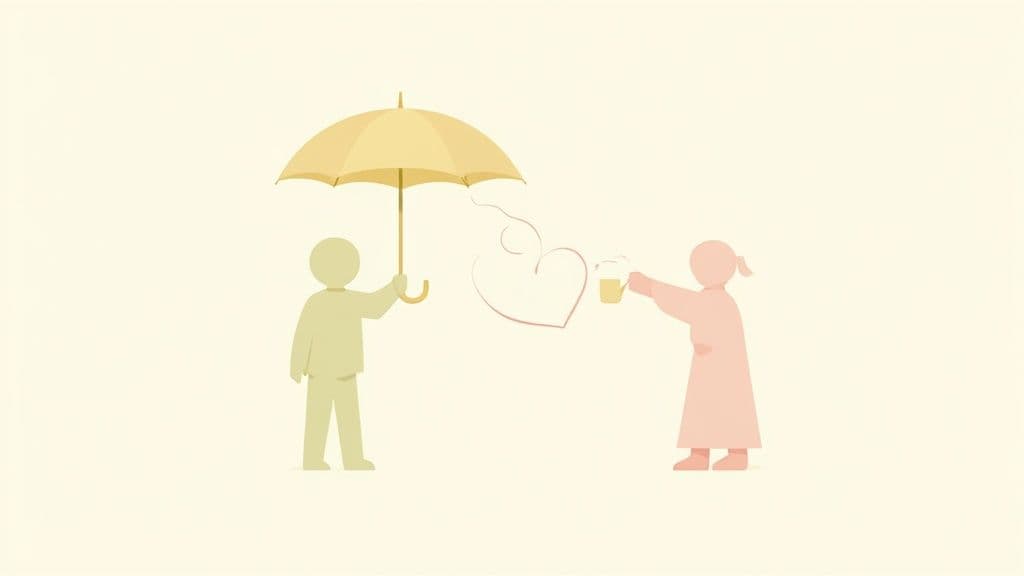
Compassion is more than a feeling. It’s the conscious choice to step in and help, closing the gap between understanding someone’s pain and easing it with concrete action. That might mean carrying a neighbor’s groceries, offering a listening ear, or organizing support for someone in crisis.
From Feeling to Action: Quick Comparison
| Concept | What It Is | What It Looks Like | Outcome |
|---|---|---|---|
| Sympathy | Feeling with distance | “I’m so sorry that happened to you.” | The person feels heard but remains alone in their struggle |
| Empathy | Sharing someone’s emotional state | “I can imagine how difficult that must be.” | The person feels understood and emotionally connected |
| Compassion | The desire to help, paired with action | “I can see you’re struggling. How can I help?” | The person receives support and feels cared for |
Compassion is where care becomes change.
Why This Practice Matters
Many people report feeling disconnected—61 percent of Americans said they felt lonely in a national survey1. When you act compassionately, you don’t just help one person, you contribute to a culture of care that counters isolation.
“Compassion isn’t a feeling you wait for; it’s a muscle you build. Each small act strengthens your ability to connect and makes a tangible difference.”
Understanding your own tendencies helps. Tools that clarify strengths and limits make compassionate action feel more natural and sustainable. Research links self-compassion with greater resilience and lower symptoms of anxiety and depression2.
Start with Self-Compassion: The Essential Foundation
You can’t pour from an empty cup. Sustainable compassion begins with being kind to yourself. Self-compassion builds emotional resilience so you can help others without burning out.
Reframing Your Inner Critic
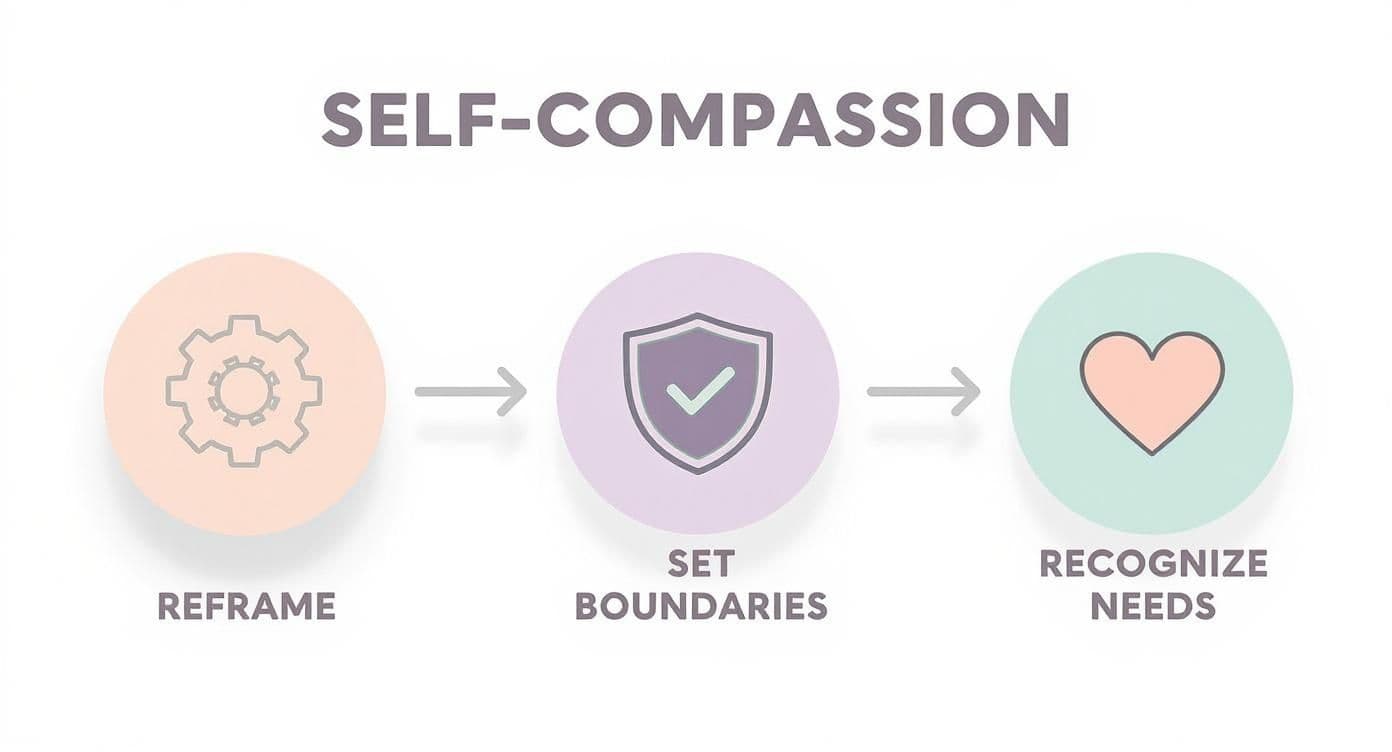
We all have a critical voice. Self-compassion asks you to respond as you would to a friend: “It’s okay—what can we learn from this?” The goal isn’t to silence the inner critic, it’s to invite a kinder voice into the conversation.
Learning to Set Healthy Boundaries
Compassion without boundaries leads to exhaustion. Boundaries honor both others and yourself. Start with small steps:
- Say “no” when you don’t have the bandwidth
- Block out personal time on your calendar
- Communicate needs clearly and calmly
Every “no” to what drains you is a “yes” to your well-being. For deeper work on unmet needs, consider guided exercises such as inner-child healing or self-compassion modules on our resources page: https://lifepurposeapp.com/self-compassion-exercises.
Daily Exercises to Build Your Compassion Muscle
Compassion is a skill you can strengthen with short, repeatable practices that fit into busy days.
The “Just Like Me” Reflection
When someone frustrates you, pause and think, “Just like me, this person wants to be happy and avoid pain.” This small shift humanizes the other person and reduces judgment.
The Five-Minute Compassion Scan
Set a timer for five minutes and bring people to mind in this order:
- Yourself—wish yourself peace and well-being
- A loved one—send warm wishes
- A neutral person—the barista or mail carrier
- Someone difficult—offer calm wishes even if it’s hard
This practice expands your circle of compassion.
Aligning Action With Your Strengths
Certain compassionate acts will feel more natural. When your efforts match your strengths, they become more effective and joy-giving. Tools that identify life purpose or strengths can help you choose roles—hands-on service, advocacy, creative work, or steady support—that fit you best. Explore practical tools and role ideas on our Getting Started page: https://lifepurposeapp.com/start-here.
Turning Empathy Into Meaningful Community Action
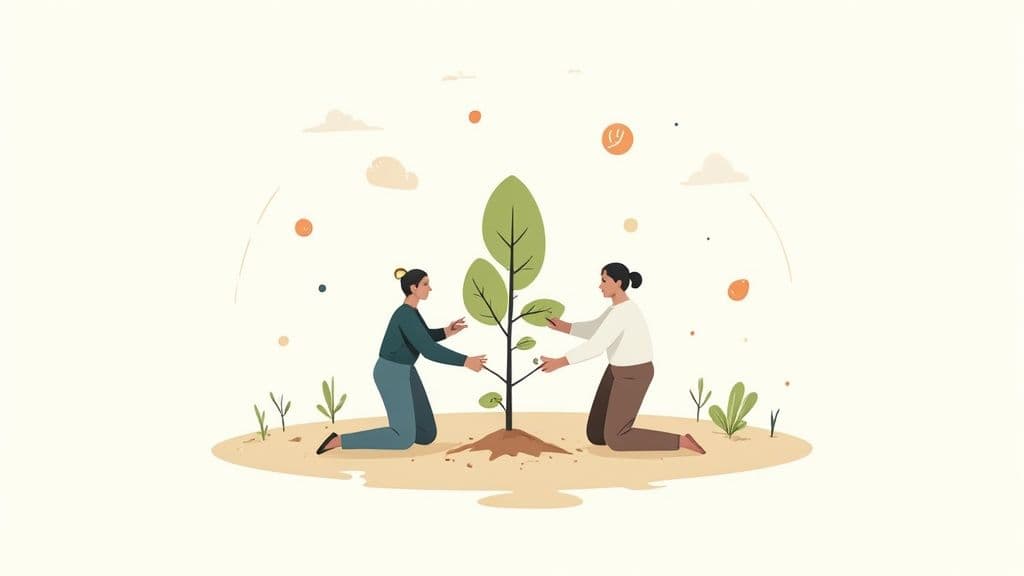
Personal compassion scales when it becomes community action. Volunteering an hour a week, helping a neighbor, or joining a cleanup can spark ripples of change. Find causes that move you—environmental work, animal welfare, or human services—and match them to your abilities.
Finding Your Compassion Sweet Spot
Notice what draws your attention. If environmental issues stir you, try a local tree-planting group. If animals move you, contact your shelter. If you’re organized, volunteer at a food bank. When your skills meet need, your impact grows.
The Power of Organized Compassion
Individual acts matter, but joining organized efforts amplifies impact. Nonprofits and coordinated programs focus resources for measurable results; structured sponsorship and coordinated programs can deliver long-term outcomes for children and families3. Volunteering also links to improved well-being for volunteers, including better mental health and stronger social connection4.
“One person’s compassion can change a day. A community’s compassion can change a future.”
Aligning Compassion with Your Life’s Purpose
When compassion aligns with your core strengths, it’s sustainable and powerful. Finding your life path or strengths—through tools or personal reflection—helps you focus energy where it will have the biggest effect.
Finding Your Personal Compassion Blueprint
You don’t need to be an expert. Simple tools that map strengths to roles can reveal whether you’ll thrive in advocacy, direct care, creative campaigns, or steady support. This clarity prevents frustration and burnout by guiding you toward suitable ways to help.
Living Compassion from the Inside Out
Knowing your strengths explains why some service roles uplift you while others drain you. Leaders organize and inspire, quiet healers give steady care, and creative problem-solvers raise awareness in inventive ways. When your actions match who you are, compassion becomes a source of energy.
Navigating the Rough Patches on the Compassion Journey
Compassion isn’t always easy. You can feel exhausted, triggered, or unsure whether small acts matter. These challenges are normal. The skill is learning how to keep going without losing yourself.
How Do I Show Compassion Without Burning Out?
Compassion fatigue is real. Aim for empathetic concern rather than taking on others’ pain. Boundaries and self-compassion are essential. Step back when needed, limit exposure to overwhelming situations, and practice the self-care routines that refill your energy.
“Compassion isn’t about setting yourself on fire to keep others warm. Tend your own light so you can be a steady presence for others.”
What If I Can’t Feel Compassion for Certain People?
Start small. Use the “Just Like Me” reflection privately. Recognize shared humanity without condoning harmful actions. Over time, this practice can lower internal walls and make compassionate responses more possible.
Do My Small Actions Make a Difference?
Yes. Individual acts build into large-scale change. Volunteering, speaking up, and small daily kindnesses model a more caring culture. Collective impact grows from consistent individual choices.
Ready to align your compassion with your strengths? Discover tools that help you find purpose and match your gifts with service opportunities at https://lifepurposeapp.com or try a short volunteer role at https://lifepurposeapp.com/volunteer.
Frequently Asked Questions
How can I start practicing compassion today?
Begin with short daily practices: the “Just Like Me” reflection and the five-minute compassion scan. Add one small outward action each week, like helping a neighbor or volunteering once a month.
How do I avoid compassion fatigue?
Set clear boundaries, practice self-compassion, and limit exposure to overwhelming situations. Schedule rest and choose roles that match your energy and strengths.
Where should I volunteer if I don’t know what fits me?
Notice what naturally draws your attention—environmental issues, animals, or human services—and try a short-term commitment with a local group. Many organizations offer one-time events so you can test what fits.
Practical Q&A
Q: I’m busy. Can small acts really help?
A: Yes. Small, consistent acts model care and reduce isolation. Even brief, regular help builds community connection over time.
Q: How do I measure whether my efforts matter?
A: Look for immediate signs—gratitude, improved mood, repeated requests for help—and longer-term signals like stronger local networks or measurable program outcomes.
Volunteer Q&A
Q: How do I pick sustainable volunteer work?
A: Match tasks to your strengths and energy level, and start with short commitments to test fit.
Q: Where can I try volunteering with low commitment?
A: Look for one-time events or short shifts through local nonprofits or the volunteer page at https://lifepurposeapp.com/volunteer.
Self-Care Q&A
Q: What’s one daily habit to build compassion?
A: Do the five-minute compassion scan each morning or evening to widen your circle of care.
Q: How do I protect my mental health while helping others?
A: Set boundaries, practice self-compassion regularly, and step back when you need rest.
1.
Cigna. “U.S. Loneliness Index.” Cigna, 2020. https://www.cigna.com/about-us/newsroom/studies-and-reports/loneliness-study
2.
Neff, Kristin. “Self-Compassion: An Alternative Conceptualization of a Healthy Attitude Toward Oneself.” Self-Compassion.org, 2003. https://self-compassion.org/wp-content/uploads/publications/Neff_Self_Compassion_paper.pdf
3.
Compassion International. “Accelerate Action Report.” Beyond Measure, 2025. https://beyondmeasure.compassion.com/stories/spring-2025-accelerate-action-report/
4.
Corporation for National and Community Service. “The Health Benefits of Volunteering.” https://www.nationalservice.gov/serve-your-community/benefits-volunteering
Discover your life path today
Enter your date of birth and see your life path, free.
Find your life path