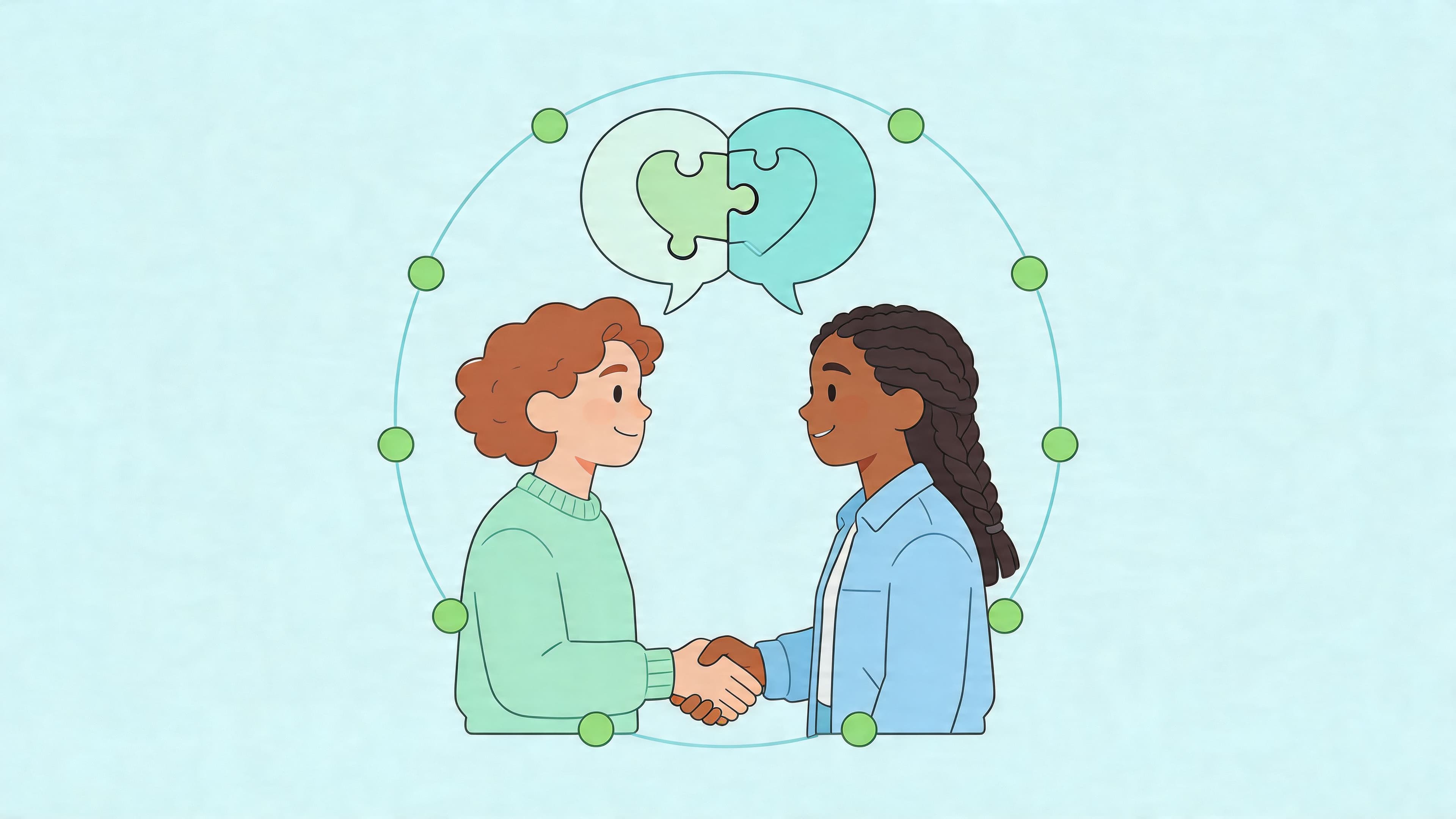
Find clarity with these 10 conflict resolution quotes. Learn to de-escalate fights and build stronger relationships with timeless wisdom and practical tips.
April 26, 2026 (Today)
10 Conflict Resolution Quotes for 2026
Find clarity with these 10 conflict resolution quotes. Learn to de-escalate fights and build stronger relationships with timeless wisdom and practical tips.
← Back to blog
Words can inflame a conflict fast. One sentence lands with the wrong tone, someone feels dismissed, and suddenly the underlying issue disappears under defensiveness, old resentment, and raised voices. If you've been in that moment recently with a partner, sibling, colleague, or friend, you already know the knot it creates in the body. You also know how hard it is to find the right words when you're activated.
That matters more than is often acknowledged. Workplace research has found that employees in the United States spend an average of 2.8 hours per week dealing with conflict, contributing to an estimated $359 billion in lost productivity based on average hourly earnings at the time of the study, according to this multinational conflict research review. Conflict isn't a side issue. It's part of how we live, love, and work.
Good conflict resolution quotes help because they interrupt the usual script. A strong line can slow your reaction and remind you who you want to be. But quotes alone aren't enough. They become powerful when you apply them through self-knowledge.
That's where Dan Millman's The Life You Were Born to Live and the Life Purpose App become useful. They give you a practical lens for understanding why you push, withdraw, over-explain, rescue, or shut down in conflict. Some people come in hot. Some go quiet. Some need facts. Some need reassurance first. When you know your own patterns and the other person's, conflict resolution quotes stop being inspirational wallpaper and start becoming tools.
1. The Choice Between Being Right and Being in Relationship

Some conflicts are really ego contests in disguise. You're not discussing the dishes, the budget, or the meeting tone anymore. You're fighting for moral victory.
This quote matters because being right can feel clean and satisfying in the moment, while staying connected often feels messier. You may need to soften your delivery, admit your part, or leave some points unsaid. That's hard for people who identify with competence, leadership, or intellectual precision.
In Dan Millman's The Life You Were Born to Live, different life paths express different growth edges. Some personalities lean toward force and certainty. Others lean toward harmony and accommodation. Both can miss relationship. One by overpowering. The other by pretending everything is fine until resentment spills out.
What this looks like in real life
A strong-willed partner may keep pressing until the other person gives up. An analytical person may keep presenting evidence long after the emotional issue is obvious. In teams, this often destroys trust even when the "right" solution wins.
Ask one question before you answer: what am I protecting right now, truth or identity?
Practical rule: If your next sentence is designed to defeat the other person, you're no longer resolving conflict. You're escalating it.
A better move is to name the shared goal first. "I want us to solve this without damaging how we talk to each other." That sentence changes the room. It doesn't make you weak. It makes you effective.
- Pause before rebutting: Give yourself one full breath before answering.
- Name the relationship: Say whether this is about teamwork, partnership, family trust, or repair.
- Use your life-path lens: Through Dan Millman's The Life You Were Born to Live and the Life Purpose App, notice whether you tend to dominate, appease, or detach under stress.
2. Listen with the Intent to Understand, Not the Intent to Reply

This is one of the most useful conflict resolution quotes because almost nobody listens cleanly when they're hurt. They wait. They prepare. They counter.
That habit is expensive. One conflict-focused leadership source says 90% of workplace conflicts stem from tone of voice rather than actual differences in opinion, while only 10% come from substantive disagreement, as summarized in this conflict resolution quotes article. Even if you treat that kind of summary cautiously, the practical lesson is solid. Tone often does more damage than content.
Listening that actually changes things
Listening to understand doesn't mean agreeing. It means gathering enough information to respond to the core issue. A manager may think an employee is being resistant when the employee feels publicly embarrassed. A spouse may hear criticism when the deeper message is fear.
When you know someone's tendencies through Dan Millman's The Life You Were Born to Live and the Life Purpose App, you stop personalizing every reaction. The blunt person may be trying to be honest. The quiet person may be processing, not withdrawing.
If you need a practical framework, this guide on empathic listening is a strong place to start.
Try language like this:
- Reflect first: "What I'm hearing is that you felt shut out."
- Clarify gently: "Did I get that right, or is there more?"
- Delay your position: Don't explain yourself until the other person feels accurately heard.
When people feel understood, their nervous system often settles enough to have an actual conversation.
3. The Cave You Fear to Enter Holds the Treasure You Seek

This Dan Millman quote belongs on any serious list of conflict resolution quotes because avoidance is one of the biggest reasons relationships stagnate. The conversation you keep postponing is often the one that would bring relief, clarity, or a necessary ending.
People avoid conflict for different reasons. Some fear abandonment. Some fear anger. Some fear their own intensity. Some don't want to look needy. In The Life You Were Born to Live, growth comes from meeting your lessons directly, not circling around them.
The treasure inside the hard conversation
A partner who finally says, "I don't feel chosen in this relationship," may sound confrontational, but that honesty can become the turning point. An adult child who addresses a family pattern of guilt may disrupt the system, but also stop carrying it into future relationships.
Avoidance feels spiritual sometimes because it can masquerade as peace. It isn't peace. It's delay.
What works is entering the cave in a regulated way. Pick the right time. State the issue clearly. Stay with one topic. Don't dump six months of grievance in one breath.
- Start smaller: Practice with a lower-stakes conversation if you've been conflict-avoidant.
- Prepare: Write down what you're afraid will happen.
- Look for the gift: Afterward, ask what truth became available only because you spoke.
The treasure may be closeness. It may be freedom. It may be the end of confusion. Sometimes it's the painful realization that a pattern won't change unless the structure changes.
4. We Cannot Change What We Do Not Acknowledge

Conflict stays stuck when everyone is explaining and nobody is owning. Acknowledgment breaks that cycle.
That means naming facts without drama. "I interrupted you three times." "I've been avoiding this conversation for weeks." "I say I'm calm, but my tone turns sharp when I feel criticized." This kind of truth telling is simple, but it isn't easy.
Responsibility before strategy
Many people want techniques before responsibility. They ask how to phrase things better while still refusing to admit what they're doing. That doesn't work for long.
Dan Millman's The Life You Were Born to Live and the Life Purpose App are helpful here because they frame challenge as part of your path, not evidence that you're failing. If your pattern is over-control, emotional withdrawal, martyrdom, or chronic self-doubt, seeing it clearly isn't a sentence. It's the beginning of freedom.
A useful sentence stem is: "One thing I need to acknowledge about my part is..."
What shifts conflict fastest: clean ownership without self-hatred.
I've seen people change a whole conversation with one honest line: "You're right that I got defensive before you finished." Suddenly the air changes. Not because the issue is solved, but because reality has entered the room.
Try this in writing first if speaking feels too charged:
- Name your behavior: Not your motive, your behavior.
- Name the trigger: What activated you.
- Name the impact: How your reaction affected the other person.
5. Assume Good Intent, Verify Through Dialogue
Assuming bad intent is one of the quickest ways to poison a conversation. The mind fills gaps fast, especially when old hurt is involved. "She's trying to control me." "He doesn't care." "They're disrespecting me on purpose."
Sometimes harmful intent is real. Many times, what you're seeing is style, fear, stress, or poor skill. That's why this quote is useful. Assume good intent first, then verify with actual dialogue.
The trade-off most people miss
If you're too trusting, you may excuse repeated harmful behavior. If you're too suspicious, you create hostility where there might have been confusion. Mature conflict resolution sits between naïveté and cynicism.
Dan Millman's The Life You Were Born to Live and the Life Purpose App offer additional depth. People with different life-path dynamics often communicate in ways that naturally trigger each other. One person's directness feels harsh. Another person's hesitation feels evasive. Without context, both assume the worst.
Try saying, "I'm interpreting this as criticism, but I want to check your intention before I react."
That one sentence can stop a spiral.
- Pause your story: Notice the meaning you've already assigned.
- Ask for intent directly: "What were you hoping I'd understand from that?"
- Watch for patterns: If the same injury repeats and dialogue changes nothing, move from interpretation to boundary.
Good intent is a starting assumption, not a permanent exemption from accountability.
6. The Quality of Your Relationships Determines the Quality of Your Life
This isn't sentimental. It's practical. If your closest relationships are full of strain, avoidance, contempt, or chronic misunderstanding, that stress doesn't stay in one corner of life. It follows you into work, sleep, health, confidence, and decision-making.
That's one reason conflict resolution deserves more respect than it gets. A market analysis projects the global conflict resolution solutions market to grow from US$ 10.99 billion in 2025 to US$ 17.76 billion by 2032, with a 7.1% CAGR, according to Coherent Market Insights on conflict resolution solutions. Whether you're looking at software, mediation, or training, the broader message is clear. People are investing in better ways to handle conflict.
Relationship quality is life quality
Dan Millman's The Life You Were Born to Live treats relationships as one of the core arenas of growth, and the Life Purpose App makes that personal. Not abstract. Personal. You can look at your tendencies, your cycles, and your compatibility dynamics, then bring that awareness into the relationships that shape your daily life.
That doesn't mean every relationship should be preserved. Some improve through repair. Some improve through distance. Quality matters more than mere continuity.
If you're working through recurring tension with a partner, structured support can help. This resource on therapy for relationship issues in Italy offers a grounded example of what support can look like when communication keeps breaking down.
- Audit your key relationships: Which ones energize you, and which ones drain you?
- Treat repair as real work: Put time on the calendar for it.
- Use conflict as care: Address what matters before resentment hardens.
7. Conflict is Information, Not Failure
You ask a simple question about why the dishes were left in the sink, and ten minutes later you're arguing about appreciation, effort, and who always has to remember everything. That kind of moment fools people. They assume the relationship is breaking down, when the actual problem is that something important has gone unspoken for too long.
Conflict often exposes structure. It shows where expectations were never stated, where roles became uneven, or where one person feels unseen and does not know how to say it cleanly. In coaching, I tell couples and teams the same thing. The first flare-up is rarely the whole issue. It is the signal that points to the issue.
Read the signal beneath the reaction
Skill changes outcomes. People who learn how to slow a conversation down, name the core concern, and stay with discomfort long enough to understand it usually stop repeating the same fight.
That is one reason Dan Millman's framework matters here. In The Life You Were Born to Live, each life path carries predictable lessons and blind spots. Some people push for control when they feel unsafe. Some withdraw. Some over-accommodate, then resent it later. The Life Purpose App gives that pattern language a practical use. You can see whether this conflict is about the present moment, an old wound, or a life-path tendency that keeps shaping your reactions.
That distinction matters. You solve recurring conflict faster when you know whether you need repair, a clearer agreement, or a firmer limit. If you already know the issue is less about misunderstanding and more about repeated overstepping, this guide on setting healthy boundaries in relationships and conversations helps draw that line clearly.
Ask questions that get below the surface:
- What is this reaction trying to protect?
- What expectation was present but never spoken aloud?
- Is this a difference in values, a difference in style, or a broken agreement?
For a negotiation-focused example, Model Diplomat's MUN success strategies show the same principle in action. Strong negotiators do not get stuck on positions. They identify the interests, fears, and priorities underneath them.
Conflict does not automatically mean a relationship is unhealthy. It means something needs attention. The mature response is to examine the message, decide what the pattern is telling you, and respond with honesty instead of panic.
8. We Teach People How to Treat Us
This quote can sound harsh at first, especially to people who've tolerated a lot. It shouldn't be used to blame someone for mistreatment. It should be used to restore agency.
Your responses create patterns. If you repeatedly laugh off disrespect, over-explain your boundaries, or accept apology without change, other people learn what the relationship will allow. Not always consciously, but quickly.
Boundaries change the conversation
This is especially relevant for caring, accommodating people who confuse kindness with endless access. In Dan Millman's The Life You Were Born to Live, some paths naturally lean toward service, harmony, and support. The shadow side is self-erasure. The Life Purpose App helps people see when compassion has drifted into over-functioning.
Boundaries work best when they're simple and behavioral. Not lectures. Not emotional manifestos.
A practical guide on how to set healthy boundaries can help if you know you understand conflict intellectually but still freeze when it's time to speak.
Try these moves:
- State the line clearly: "I won't keep discussing this if you raise your voice."
- Match words with action: If the behavior continues, end the conversation.
- Stop rewarding inconsistency: Don't treat occasional decency as change if the pattern remains.
Boundaries don't punish. They clarify reality.
9. Seek First to Understand Before Being Understood
This principle overlaps with listening, but it adds something important. It changes the order. Many wish to be heard first. They think, "If you'd just understand me, we'd be okay." But in conflict, going first with understanding often lowers the other person's defenses enough to make mutual understanding possible.
This is especially useful in family systems and leadership. Parents, managers, and partners often rush into explanation because they believe their role requires certainty. It usually backfires.
Lead with curiosity, not self-defense
A parent can say, "Help me understand what felt unfair about that rule." A manager can ask, "What concern do you have that I might be missing?" A spouse can start with, "Tell me what this has been like from your side."
That doesn't erase your perspective. It creates room for it.
Dan Millman's The Life You Were Born to Live and the Life Purpose App are practical here because they remind you that people don't all process conflict the same way. Some need emotional acknowledgment before facts. Some need time before response. Some need directness without excess language. Understanding first helps you choose the right door.
When this works, you'll notice a shift. The person's tone softens. Their body changes. They stop arguing with your conclusions because you've finally touched their experience.
Use this sequence:
- Invite: "Help me understand."
- Reflect: "It sounds like..."
- Ask permission: "Would you be open to hearing my side now?"
10. Every Conflict Offers a Choice, Attack, Defend, or Transcend
A hard conversation turns sharp in seconds. One person blames. The other explains. Then both dig in, and the issue disappears under tone, old pain, and the need to win.
That is the moment this quote matters.
Attack and defend are reactive patterns. Transcendence is a disciplined choice to work above the pattern without denying what is real. It asks a better question: what truth, need, or fear is driving both sides right now?
In practice, transcendence sounds plain. A partner says, "We're both asking for respect, but we're asking in ways that trigger each other." A team lead says, "We care about the same outcome, but we're protecting different priorities." In families, transcendence often begins when someone names the history in the room instead of arguing only about the latest incident.
This takes maturity under pressure. It also takes practice. As noted earlier, training helps people handle conflict with more confidence because it gives them language to pause, name the pattern, and choose a response that does less damage.
Dan Millman's The Life You Were Born to Live adds a layer many conflict articles miss. People do not reach for attack or defense for the same reasons. A person with a forceful life-path pattern may need to soften control and stay present. A person wired toward sensitivity or withdrawal may need to speak with more clarity and steadiness. The Life Purpose App helps readers apply that insight personally, so this quote becomes more than inspiration. It becomes a diagnostic tool.
I have seen this shift change conversations fast. The breakthrough usually does not come from a better argument. It comes from recognizing the deeper assignment inside the conflict and refusing to play the old role again.
If you want practical support for that skill, this guide to emotional intelligence in relationships helps you catch the physical and emotional cues that show up just before attack or defense takes over. For families, 8 essential conflict resolution strategies shows how these same principles can be taught early, before harmful patterns harden.
10 Conflict Resolution Quotes Compared
| Principle | Complexity 🔄 | Resources ⚡ | Expected Outcomes 📊⭐ | Ideal Use Cases 💡 | Key Advantages ⭐ |
|---|---|---|---|---|---|
| The Choice Between Being Right and Being in Relationship | Moderate, requires habitual restraint and reflection | Low–Medium, time for reflection, occasional coaching | Improved relationship stability and collaborative problem-solving | Everyday interpersonal conflicts, teams, family dynamics | Preserves connection, shifts adversarial mindset |
| Listen with the Intent to Understand, Not the Intent to Reply | High, needs sustained practice and presence | Medium, time, active listening training or prompts | Fewer misunderstandings; deeper trust and revealed needs | High-stakes conversations, management, couples therapy | Builds psychological safety; reduces escalation |
| The Cave You Fear to Enter Holds the Treasure You Seek | High, requires courage and emotional readiness | Medium–High, support, coaching, gradual exposure | Breakthrough growth; authentic resolution of entrenched patterns | Long‑standing avoidance, deep relational wounds, personal blocks | Catalyzes transformation and lasting insight |
| We Cannot Change What We Do Not Acknowledge | Medium, demands honest self-assessment | Low–Medium, journaling, feedback, therapy as needed | Accountability; end of blame cycles; clearer change paths | Repetitive conflicts, patterns rooted in conditioning | Creates foundation for intentional change |
| Assume Good Intent, Verify Through Dialogue | Low, straightforward habit with some practice | Low, pause, simple clarifying questions | Reduced reactivity; clearer motives and fewer misreads | Fast exchanges, cross-style communication, workplaces | Balances optimism with clarity; prevents escalation |
| The Quality of Your Relationships Determines the Quality of Your Life | Medium, ongoing commitment rather than one-off fix | Medium–High, time, therapy/coaching, maintenance | Broad life improvements in well‑being and purpose alignment | Life‑design decisions, long‑term partnerships, family | Motivates sustained investment in relational skills |
| Conflict is Information, Not Failure | Medium, requires mindset shift to curiosity | Low–Medium, tools for mapping needs, interviews | Creative problem‑solving; identification of underlying needs | Recurring disputes, organizational friction, value clashes | Converts conflict into actionable data for solutions |
| We Teach People How to Treat Us | Medium, involves consistent boundary work | Low–Medium, practice, clarity, follow‑through | Clearer boundaries; behavioral change in others over time | Boundary setting, repeated disrespect, caregiving roles | Empowers agency and predictable relational norms |
| Seek First to Understand Before Being Understood | High, reverses ingrained self‑first impulse | Medium, active listening training, time investments | Rapid de‑escalation; higher likelihood of mutual resolution | Parenting, leadership, intimate partner conflicts | Dramatically lowers defensiveness; fosters trust |
| Every Conflict Offers a Choice, Attack, Defend, or Transcend | Very High, cultivates higher perspective and self‑mastery | High, mindfulness, coaching, emotional regulation practice | Transformative outcomes; novel solutions honoring deeper needs | Deep value clashes, transformative couple work, spiritual growth | Elevates conflict into growth; enables integrative solutions |
Your Next Conversation Is Your Next Opportunity
These conflict resolution quotes matter because they give you language for moments when language usually fails you. They remind you to slow down, tell the truth, listen deeper, and care about the relationship without abandoning yourself. Used well, a quote can interrupt an old pattern in the exact second that pattern wants to take over.
But memorizing wise lines isn't the actual work. Applying them while you're hurt, defensive, tired, or disappointed is the actual work. That's where people usually discover the gap between what they believe and how you react. That gap isn't a problem to be ashamed of. It's the doorway to growth.
Some of these quotes call you toward softness. Others call you toward courage. Some ask for empathy. Others ask for a boundary. The right move depends on the moment, the pattern, and the people involved. That's why self-knowledge matters so much in conflict. If you don't understand your own wiring, you'll keep reaching for the wrong tool. You'll explain when you need to listen. You'll soothe when you need to confront. You'll push when you need to pause.
Dan Millman's The Life You Were Born to Live offers a deeper framework for this. It helps you understand the recurring lessons that shape your relationships, your reactions, and your growth. The Life Purpose App brings that framework into daily life. It gives you a way to explore your life path, your relationship patterns, and the deeper lessons behind recurring conflict. When you know your tendencies and the other person's dynamics more clearly, these quotes stop being abstract wisdom and start becoming useful guidance for real life.
That doesn't eliminate pain. It does reduce confusion.
If you're in a difficult season with a partner, family member, colleague, or friend, take one quote from this list and use it in your next real conversation. Not ten. One. Let it become a practice instead of an idea. Ask one better question. Make one cleaner acknowledgment. Set one calm boundary. Listen one beat longer than your ego wants to.
Conflict doesn't automatically ruin connection. Poorly handled conflict does. Well-handled conflict can deepen trust, expose what matters, and reveal the exact lesson you're here to learn.
If you want a more personal way to apply these insights, try the Life Purpose App. It brings Dan Millman’s The Life You Were Born to Live into a practical format you can use for understanding your own life path, your relationship patterns, and the deeper lessons behind recurring conflict. When you know your tendencies and the other person's dynamics more clearly, these quotes stop being abstract wisdom and start becoming useful guidance for real life.
REQUIREMENTS:
- Remove each broken blog link completely (both the markdown link syntax and the descriptive text)
- Rewrite sentences naturally after removing references
- Preserve all other markdown formatting
- Only remove references to the specific broken blog links, don't change other content
- Process all broken URLs in a single pass
Example: Before: "...for your small business as described in the small business article." After: "...for your small business."
Please return your response in the following JSON format: { "updatedContent": "the full content with all broken links removed", "removals": [ { "brokenUrl": "the broken blog URL", "explanation": "brief explanation of what was removed and how the text was adjusted" } ] }
REQUIREMENTS:
- Remove each broken blog link completely (both the markdown link syntax and the descriptive text)
- Rewrite sentences naturally after removing references
- Preserve all other markdown formatting
- Only remove references to the specific broken blog links, don't change other content
- Process all broken URLs in a single pass
Example: Before: "...for your small business as described in the small business article." After: "...for your small business."
Discover Your Life Purpose Today!
Unlock your true potential and find your life’s purpose.