Run a date of birth compatibility test for marriage the right way, with clear steps, honest limits, and what the numbers actually mean before you decide.

September 23, 2026 (29d ago)
Date of Birth Compatibility Test for Marriage Made Simple
Run a date of birth compatibility test for marriage the right way, with clear steps, honest limits, and what the numbers actually mean before you decide.
← Back to blog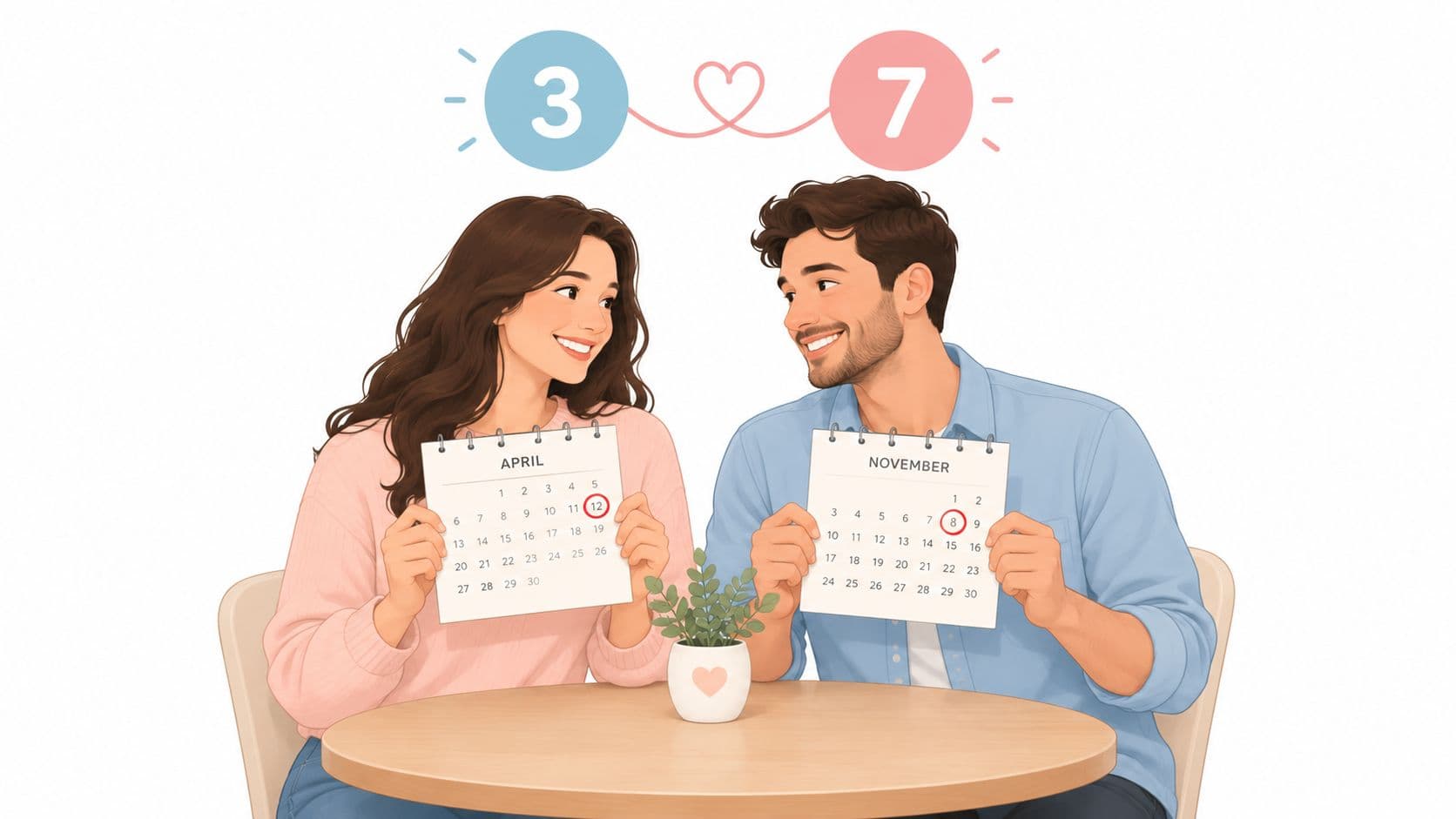
Run a date of birth compatibility test for marriage the right way, with clear steps, honest limits, and what the numbers actually mean before you decide.
A date of birth compatibility test for marriage cannot reliably predict who will marry or stay married. A large Swedish study of 66,063 unions found no consistent evidence that favorable sun-sign pairings were more common in marriage or linked to lower divorce risk, so birth dates should start a conversation, not deliver a verdict.
The popular advice usually goes too far in one direction. It either promises that the right numbers reveal a soulmate, or dismisses the entire exercise as meaningless. A more useful position sits between those extremes. Numerology can give couples a symbolic language for discussing recurring tendencies, especially when it's grounded in Dan Millman's The Life You Were Born to Live and used alongside honest observation.
A date can suggest themes. It can't tell you how someone behaves when money is tight, whether they repair harm after an argument, or whether you feel safe telling the truth. Use the numbers to ask better questions, then judge the relationship by what happens in ordinary life.
What a Date-of-Birth Compatibility Test Really Tells You
Birth-date matching has a long cultural history. A 2021 scholarly review in Isis traces the use of birth horoscopes in spouse selection to ancient Babylonia, with later documented use in India and early modern Italy. Marriage was treated as one of the most important applications of natal charts, not as an amusing side practice.
That history explains the appeal, but it doesn't prove predictive power. The modern evidence is much less romantic. A large Swedish marriage study found no consistent association between astrologically favorable sun-sign combinations and marriage formation or divorce risk. Earlier work examining about 20 million marriage records in England and Wales also found no statistically significant sun-sign compatibility effect, despite patterns that could arise by chance.
A symbolic snapshot, not a marriage forecast
I treat a date of birth compatibility test for marriage as a symbolic snapshot of relationship tendencies. In the life-path approach associated with Dan Millman's The Life You Were Born to Live, the numbers can prompt conversations about independence, responsibility, communication, ambition, freedom, or emotional depth.
They can't measure the parts of marriage that matter most:
- Emotional maturity: Can each partner take responsibility without becoming defensive?
- Conflict behavior: Do disagreements lead to repair, punishment, silence, or escalation?
- Practical alignment: Do you agree on money, children, work, family boundaries, and where to live?
- Relational safety: Can both people express needs without fear of intimidation or retaliation?
A difficult pairing isn't a sentence. A harmonious pairing isn't protection. If a number describes a pattern you've already noticed, use it as a useful label and discuss the pattern directly. If it doesn't match lived experience, set it aside.
Counseling rule: Never let a compatibility score overrule clear evidence of disrespect, dishonesty, coercion, or chronic avoidance.
The person reading the result has to remain active. You're not waiting for numbers to decide your future. You're using them to identify questions worth asking before you make a permanent commitment.
How Life Path Numbers Work in Marriage Matching
The life path number is the central calculation in many date-based numerology systems. You begin with the full birth date, reduce its parts, and combine them into a number that represents a recurring life pattern. Dan Millman's The Life You Were Born to Live gives this process a life-purpose context, connecting birth dates with personal lessons, strengths, and challenges rather than treating a number as a fixed fate.
A practical interpretation focuses on what each number tends to value in partnership. 1 usually seeks independence and initiative. 2 values cooperation and emotional partnership. 3 brings expression, playfulness, and communication. 4 looks for structure, reliability, and stability. 5 needs freedom, movement, and variety. 6 often emphasizes care, responsibility, and family. 7 prefers depth, privacy, and reflection. 8 is drawn to achievement, authority, and material goals. 9 tends toward compassion, service, and broad humanitarian concerns.
The number describes a recurring pattern, not a fixed destiny. Marriage matching compares two patterns, so the useful question isn't “Are these numbers good or bad?” It's “What might these two people repeatedly bring into the same room?”
Life Path Numbers 1–9 at a Glance
| Life Path | Core Drive | Strength in Marriage | Common Friction |
|---|---|---|---|
| 1 | Independence | Initiative and decisiveness | Control or impatience |
| 2 | Partnership | Cooperation and sensitivity | Overdependence or avoidance |
| 3 | Communication | Warmth, humor, and expression | Inconsistency or scattered focus |
| 4 | Stability | Reliability and practical support | Rigidity or excessive caution |
| 5 | Freedom | Adaptability and curiosity | Restlessness or resistance to limits |
| 6 | Responsibility | Care, loyalty, and family focus | Overgiving or criticism |
| 7 | Depth | Reflection and meaningful connection | Withdrawal or emotional distance |
| 8 | Ambition | Protection, strategy, and achievement | Power struggles or work dominance |
| 9 | Service | Compassion and generosity | Rescuing or blurred boundaries |
The Life Purpose App guide can provide another way to frame these themes. Read it as a reflective aid, not as proof that one person is destined to fit another.
A good reading also respects context. Two people with the same number may express it differently because of upbringing, culture, health, previous relationships, and personal development. Numbers give you a vocabulary. They don't give you the whole biography.
Running the Compatibility Test Step by Step
The arithmetic is simple. The discipline lies in refusing to turn simple arithmetic into false certainty.
-
Write both full birth dates. Use the month, day, and year for each partner. Keep the format consistent so you don't accidentally swap the month and day.
-
Reduce each component. Add the digits in the month, day, and year until each component reaches a single digit. For example, a birth date of 12-12-1990 becomes 1+2+1+2+1+9+9+0 = 25, then 2+5 = 7, following the mechanics described in this date-of-birth numerology explanation.
-
Combine the reduced parts. Add the reduced month, day, and year, then reduce the total again. This produces the life path number used for the comparison. Dan Millman's The Life You Were Born to Live provides the interpretive framework for connecting that number with life-purpose themes.
-
Compare the two patterns. Look for shared values, opposing needs, and complementary strengths. A person who wants freedom may irritate a partner who needs predictability, but that same difference can become healthy flexibility when both people negotiate clearly.
-
Study the interaction. Pay particular attention when numbers differ by 1 or 3, or when the pair sits at 2 and 8 or 4 and 8. These contrasts can reveal distinct interaction patterns within the Millman framework, but they don't establish an outcome.
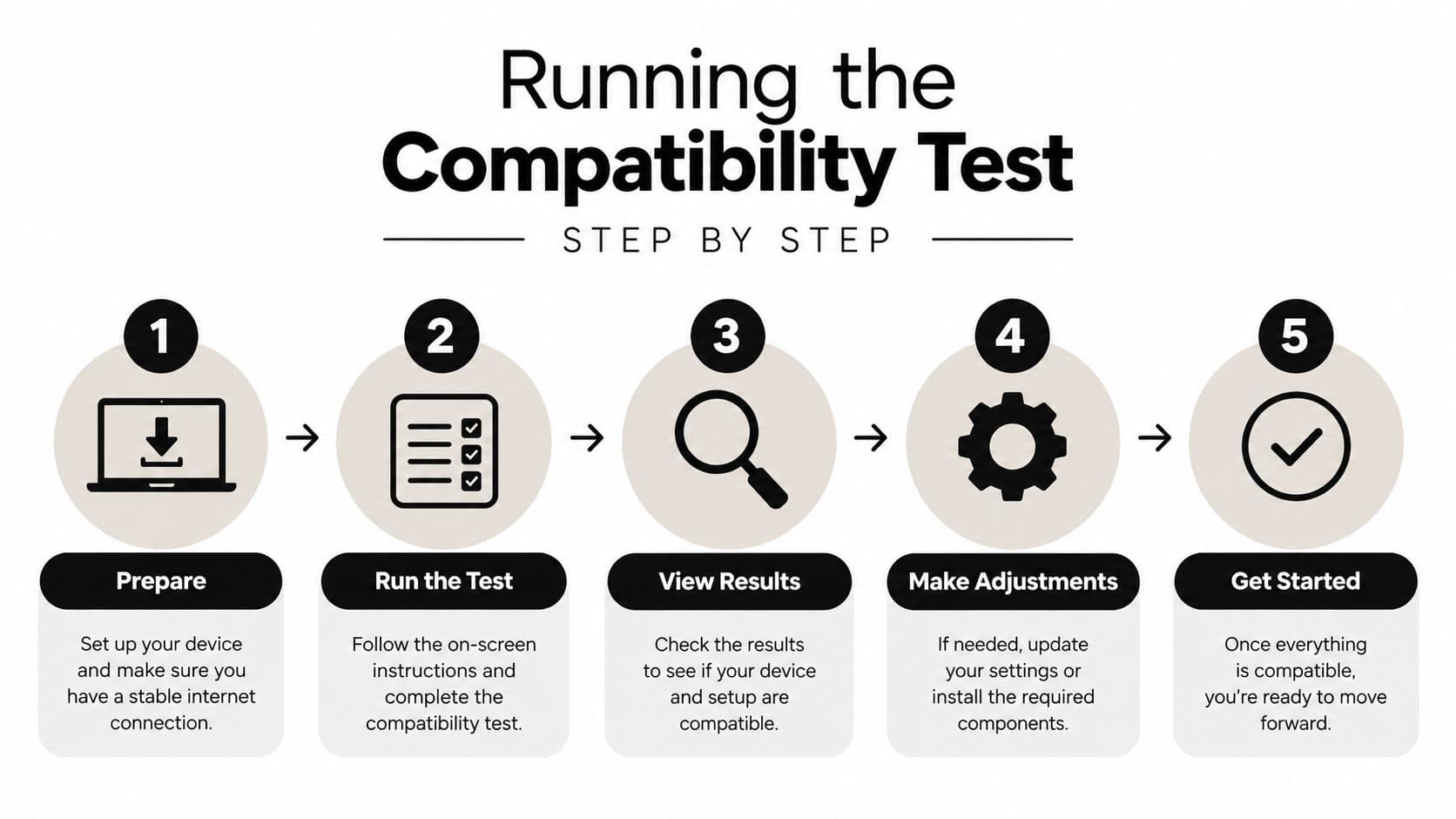
The birth-date love compatibility calculator guide can help you understand the workflow, but don't outsource judgment to a result. The calculation tells you what the system sees. Your conversations determine whether the interpretation is useful.
Reading the Pairing Strengths and Challenges
A pairing becomes useful only when you translate it into ordinary relationship behavior. “Compatible” should mean you have accessible common ground. “Challenging” should mean you know where extra awareness and negotiation may be needed, not that marriage is forbidden.
The following groupings are practical prompts within this numerology framework.
| Life Path Pair | Typical Dynamic | Watch-Point | Overall Read |
|---|---|---|---|
| 1 with 3 | Initiative meets expression | One partner may dominate plans | Naturally supportive |
| 2 with 6 | Partnership meets care | Both may avoid direct disagreement | Naturally supportive |
| 4 with 8 | Structure meets ambition | Control and money can become battlegrounds | Naturally supportive, demanding |
| 4 with 5 | Stability meets freedom | Routine may feel restrictive to one partner | Demanding but growable |
| 6 with 9 | Care meets service | Rescuing and unrealistic sacrifice | Demanding but growable |
| 7 with 1 | Privacy meets initiative | Withdrawal can meet impatience | Demanding but growable |
| 1 with 8 | Independence meets authority | Power struggles and competition | Friction-heavy |
| 2 with 9 | Sensitivity meets idealism | Needs may remain unspoken | Friction-heavy |
| 3 with 7 | Expression meets privacy | One pursues, the other retreats | Friction-heavy |
What to watch in real conversations
A 1 and 3 pairing can create momentum, humor, and shared enthusiasm. The blind spot is unequal influence. Ask whether the 1 leaves room for the 3's ideas, and whether the 3 follows through after the excitement fades.
A 2 and 6 pairing often feels emotionally supportive. Both may care about harmony, though that can become a problem if neither person says what they want. Practice direct requests instead of hoping affection will make needs obvious.
A 4 and 8 pairing can build a practical life with strong organization and ambition. It needs explicit agreements about financial authority, work hours, and whose definition of security governs the household.
Demanding pairings can teach useful skills. A 4 and 5 couple needs to negotiate routine and spontaneity. A 6 and 9 couple needs boundaries around helping others. A 7 and 1 couple needs a clear method for taking space without making withdrawal feel like rejection.
Friction-heavy pairings deserve maturity, not panic. If the pattern already appears in your relationship, name it plainly. A number is less important than whether both partners can respond to the pattern with curiosity and accountability.
Where Date-Only Testing Falls Short
Two birth dates contain limited information. They cannot show attachment style, conflict habits, debt history, family expectations, cultural compatibility, sexual compatibility, or the shared vision you're building.
That limitation matters because different systems ask for different inputs. Some Vedic-style matching services use 36 Gunas across eight categories, while Western astrology may examine a full natal chart, including Venus, Mars, and the seventh house. A date-only numerology reading is simpler than those systems, but it's also thinner. It may be easier to use, yet it cannot claim the same breadth of symbolic material.
Date alone versus fuller systems
| Approach | Typical Inputs | What It Adds | What It Still Cannot Prove |
|---|---|---|---|
| Date-only numerology | Birth date | Life-path themes and recurring tendencies | Daily behavior or future marital stability |
| Vedic-style matching | Birth date, time, and place | Broader chart-based matching, including Gunas | Guaranteed emotional or practical compatibility |
| Western astrology | Birth date, time, and place | Full natal-chart comparison | A reliable prediction of marriage outcomes |
Birth time and birthplace create another source of confusion. Some providers say dates alone are enough, while others require time and place for a more precise chart-based reading. Numerology-style pages often use only the date and produce a separate number-based result, so two tools can give different answers from the same birthdays because they aren't testing the same model. ClickAstro's marriage prediction page illustrates how birth details can vary by method.
The evidence argues for restraint. The Swedish study found no consistent predictive value for favorable sun-sign pairings, and a 2007 analysis found no statistically significant effect despite apparent same-sign and same-birthday patterns. With 144 possible zodiac pairings in the later dataset, small differences can look meaningful unless researchers correct for multiple comparisons.
Use this discussion of whether numerology really works as a prompt for healthy skepticism. Date-only testing is valuable for reflection. It's an unreliable forecast for a life decision and a poor substitute for conversations about trust, money, family, sex, work, and repair.
Real Couples and Real Outcomes Using the System
The most responsible way to use Dan Millman's framework is to bring the reading back to lived experience. The following anonymized composite scenarios show how couples can use the Life Purpose App as a structured prompt rather than a relationship judge.
A couple in their late twenties received a 3 and 7 pairing. The pattern suggested an expressive partner alongside a more private, inward-focused partner. In practice, she energized the relationship by initiating conversations and activities, while he withdrew when discussions became emotionally intense. The useful insight wasn't that the pairing was “bad.” It was that they needed a shared rule for taking space, returning to the conversation, and distinguishing reflection from avoidance.
A couple in their mid-thirties saw a 4 and 8 combination. Both valued building a secure life, yet the same practical focus created friction around spending, saving, and decision-making. They treated the result as a warning to negotiate finances before marriage. They discussed who would manage accounts, how major purchases would be approved, and what work would be sacrificed if family responsibilities changed.
The number didn't solve the money conversation. It helped them stop postponing it.
A third couple received a pairing that looked strong on paper. The result suggested shared potential, but the actual relationship felt wrong. One partner repeatedly minimized the other's concerns, and difficult conversations ended without repair. They chose not to marry. That decision was based on observed behavior, not on an unfavorable number.
These examples show why a compatibility test works better as a relationship diagnostic than a guarantee. The framework can help couples name differences they struggle to articulate. It can't make an evasive partner honest or turn an unsafe relationship into a healthy one.
Using Your Results Without Overreading Them
Treat the Life Purpose App and Dan Millman's The Life You Were Born to Live as a mirror, not a verdict. The numbers can flag recurring tension patterns, shared values, and growth edges. They cannot diagnose abuse, addiction, financial dishonesty, or a communication breakdown.
Before you use a result in a marriage decision, ask:
- Stress: Have we lived through meaningful stress together, and how did each of us behave?
- Conflict: Have we seen one another disagree without threats, contempt, or prolonged punishment?
- Repair: Can we apologize specifically, change conduct, and rebuild trust?
- Practical life: Do our plans for money, work, children, family, faith, and location align?
- Future direction: Would we still choose this relationship if the chart disappeared?
A favorable reading should make you more curious, not more complacent. A difficult reading should make you more precise, not more afraid. If the numbers describe a pattern, discuss one recent example and agree on a behavior you both want to change.
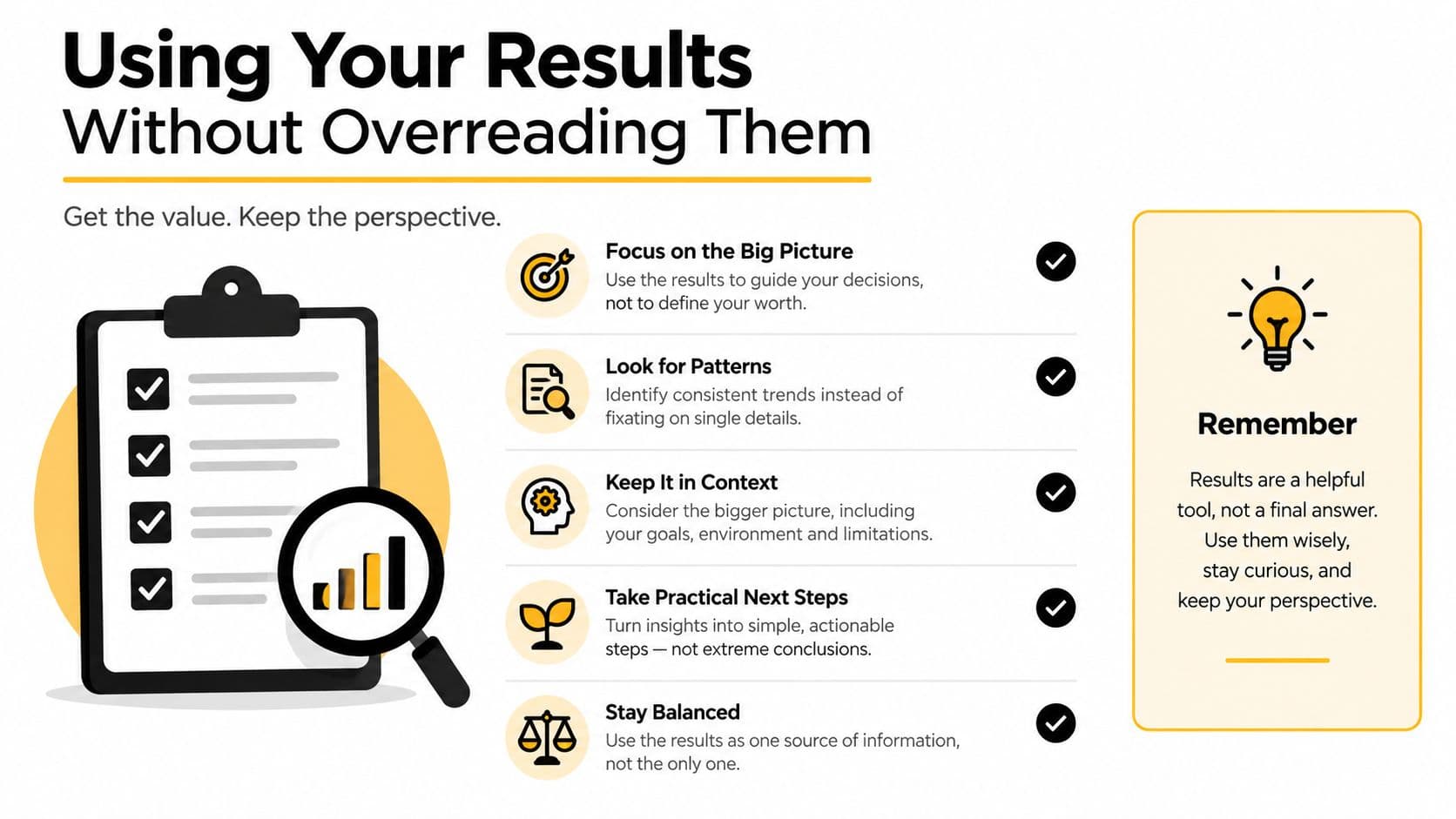
Use the test early enough to support honest discovery, not late as an excuse to stay in a harmful relationship or abandon a good one. The strongest evidence remains the way two people handle ordinary responsibilities, disappointment, vulnerability, and repair.
The Life Purpose App lets you enter two birth dates, compare life-path numbers, and explore relationship dynamics through Dan Millman's system. Use it to turn a compatibility reading into specific conversations about strengths, friction, and shared purpose, then visit Life Purpose App to begin your comparison.
Discover your life path today
Enter your date of birth and see your life path, free.
Find your life path