Explore different types of fast, from Intermittent to Water Fasting. Learn protocols, benefits, and risks for your health goals.
July 30, 2026 (8d ago)
Different Types of Fast: A Complete Guide for 2026
Explore different types of fast, from Intermittent to Water Fasting. Learn protocols, benefits, and risks for your health goals.
← Back to blog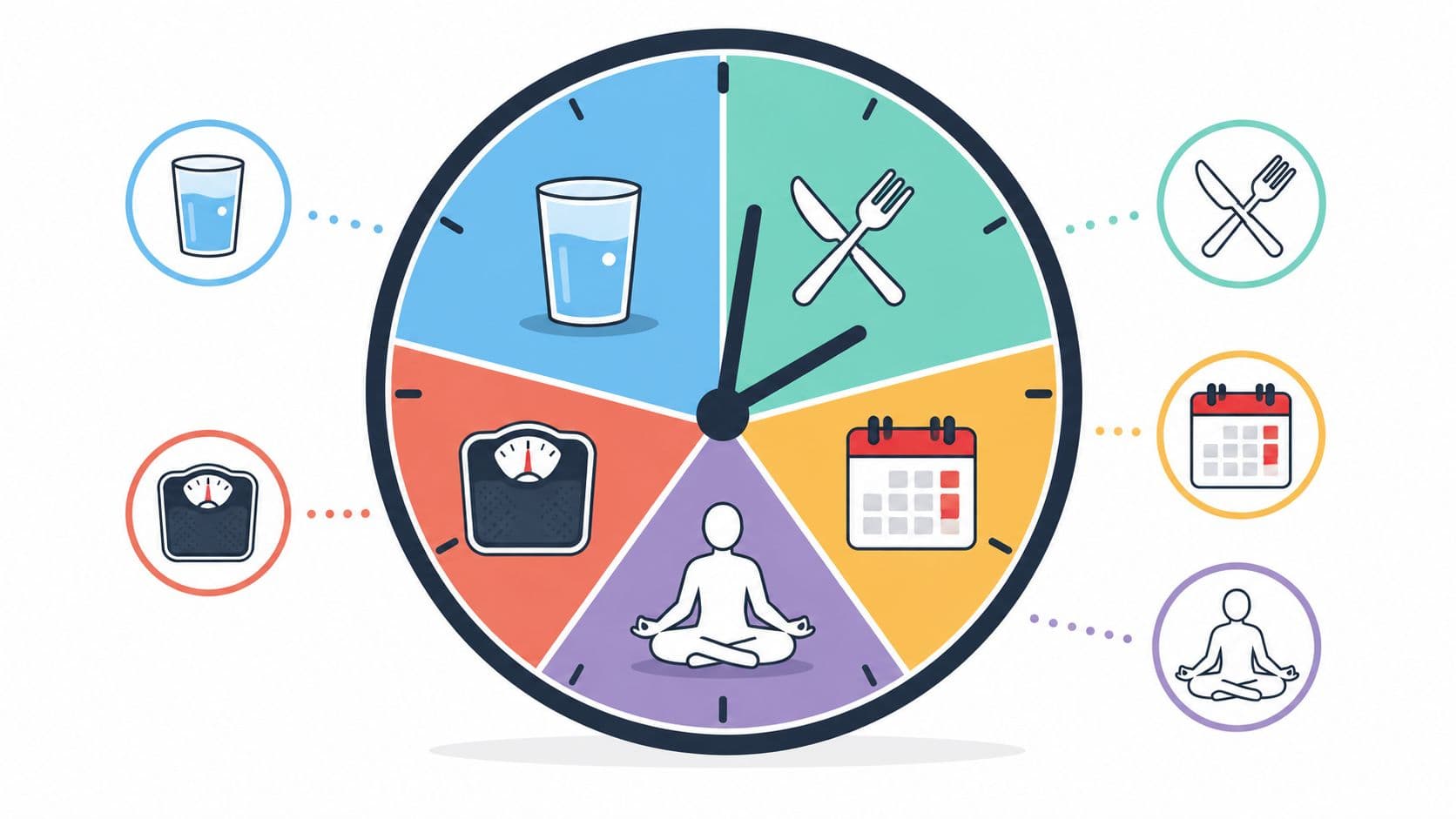
Have you ever noticed how people say they are “fasting” as if it's one single habit, even though the reality ranges from a simple overnight pause to a strict water-only reset? That gap matters, because different types of fast work differently, feel differently, and carry very different safety considerations. Some are built for routine life, some fit spiritual practice, and some belong only in more cautious, medically supervised settings.
The clearest way to understand fasting is to stop treating it like one big category and start seeing the distinct patterns underneath it. A person doing 16/8 intermittent fasting is making a very different choice from someone doing a 5:2 pattern, a 24-hour fast, or a water fast. Even the science side of fasting uses these distinctions, because shorter daily schedules, complete-day fasts, alternate-day fasting, and prolonged fasting are not interchangeable, and clinical reviews separate them for good reason (clinical review on fasting types and safety).
The point of this guide is simple. You'll get the main different types of fast, what they mean in plain English, who they tend to suit, and who should think twice before trying them. You'll also see how to match a fasting style to your body, your schedule, and your goals, instead of forcing yourself into the strictest version just because it sounds impressive.
1. Intermittent Fasting
Intermittent fasting is the umbrella term many people mean when they talk about fasting in everyday life. It usually means you eat during a set window and fast during the rest of the day, which is why it feels more like a schedule than a diet. In the literature, shorter daily fasting patterns are especially common, with a U.S. adult study reporting 17.7% using a 12-hour fasting pattern and 15.0% using a 16-hour schedule (review of intermittent fasting patterns).
A 16/8 plan is the best-known version, and it means 16 hours of fasting and 8 hours of eating (16/8 fasting overview). Many people like it because it changes when you eat more than what you eat, which can make it easier to keep up than more restrictive plans. In practice, that can look like lunch and dinner only, or breakfast and an early dinner, depending on your routine.
Who It's Best For
This style often suits people who want structure without a harsh ruleset. Office workers, busy parents, and people easing into fasting usually find it more realistic than longer fasts. If you want a routine that can fit around work meetings, family meals, and workouts, intermittent fasting is usually the most approachable place to start.
Practical rule: If a fasting plan makes your day harder to manage than your actual meals, it probably isn't the right starting point.
Who Should Avoid It
People with diabetes, a history of disordered eating, pregnancy, breastfeeding, or medication schedules that depend on food should be careful and get medical guidance first. Even shorter fasting patterns can be a problem if timing meals badly leaves you shaky, irritable, or unable to keep blood sugar steady. If you're unsure, treat the meal window as a tool, not a test of willpower.
Think of this pattern as a way to practice discipline without making every meal a project. A useful self-check is to ask whether your current schedule supports the kind of calm, focused life you want, the kind Dan Millman writes about in The Life You Were Born to Live.
2. Water Fasting
What changes when fasting stops being about timing and becomes about total restriction?
Water fasting is the strictest common form of fasting. It means exactly what it sounds like, only water, with no food and no calories from drinks or juices. Unlike intermittent fasting, which is built around timing, water fasting is built around complete restriction, so the physiological shift is much more intense.
That intensity is why people speak about it carefully. Some use short water fasts as a reset, while others do longer fasts in therapeutic or spiritual settings. Clinically, longer fasting belongs in a different category from routine intermittent patterns, because the risks and support needs change as the duration increases, as shown in a clinical review on fasting types and safety. If you need a practical sense of how the timing side works before you try anything stricter, start with timing help from AI Meal Planner.

What It Feels Like in Real Life
A person doing a water fast may start the day feeling fairly normal, then notice hunger waves, lower energy, and a stronger need to rest. Others describe the experience as mentally clear, but that does not make it harmless. The body is working with a much narrower fuel supply, so hydration, symptoms, and refeeding all deserve close attention.
A sensible way to understand it is simple. Water fasting removes most of your flexibility, so the margin for error gets smaller. Even people who handle shorter fasting patterns often treat water fasting as a separate category because it asks more of the body and the mind.
Who It's Best For
This style is best left to people with experience, a strong reason for doing it, and proper support. Some medically supervised programs and spiritual traditions use it deliberately, and some trained athletes experiment with very short versions. If you already handle shorter fasting patterns well and you want a deeper reset, this is the kind of practice to discuss with a clinician before trying.
A useful self-check is whether the discipline serves a larger purpose or only proves you can endure discomfort. Dan Millman's The Life You Were Born to Live frames discipline as a path to self-knowledge, and that framing matters here. If the fast helps you act with more clarity and alignment, it may fit. If it only feeds a need to push harder, it may not.
Who Should Avoid It
Avoid water fasting if you are pregnant, have a history of eating disorders, live with diabetes, take medications that require food, or tend to get dizzy or faint when you go too long without eating. It is also a poor fit for beginners who have not yet learned how their body responds to fasting. If your last meal already feels like a gamble, a water fast is too steep a jump.
People who need steady blood sugar, dependable medication timing, or regular meals for physical stability should treat this style with extra caution. Water fasting can narrow your options quickly, the way driving on an empty tank leaves little room for detours. That is why suitability matters more than toughness here.
3. 5:2 Diet
The 5:2 pattern is one of the most practical middle-ground approaches to fasting. You eat normally for five days of the week, then restrict intake to about 500 to 600 calories on two non-consecutive days (5:2 fasting definition). It's not the same as total fasting, because you still eat on the low-intake days, but it does create a structured break from routine overeating.
That structure is why many people like it. It gives you two clearly defined lighter days without forcing you to micromanage every meal all week long. In that sense, it sits between ordinary calorie control and the more rigid styles that demand a full-day or multi-day fast.
Who It's Best For
The 5:2 approach often fits working professionals, parents, and anyone who wants a fasting rhythm that's predictable but not extreme. It can also be useful for people transitioning from traditional dieting into fasting, because it keeps food in the picture on fasting days. If you like planning ahead and don't mind two lighter days, this style can feel manageable.
Who Should Avoid It
Anyone who becomes obsessive around calorie counting, gets lightheaded easily, or has a history of binge-restrict cycles should be cautious. The same goes for people who rely on regular meals to support medication timing or blood sugar stability. Even though this pattern is gentler than complete fasting, it still requires enough self-awareness to know when “moderation” starts sliding into under-fueling.
A simple way to keep it sane is to treat the low-intake days as planned, not improvised. Choose the days in advance, keep the meals straightforward, and let the rest of the week remain normal instead of turning every eating day into a compensation ritual.
Practical rule: Non-consecutive low-intake days are easier to live with than two back-to-back days, because the pattern gives your body and your mind a clearer rhythm.
That rhythm matters if you're using fasting as a discipline practice. Dan Millman's The Life You Were Born to Live and the Life Purpose App both lean into the idea that consistency reveals more about you than intensity does.
4. Eat-Stop-Eat
Eat-Stop-Eat is the classic 24-hour fast format. You stop eating after dinner one day, then don't eat again until dinner the next day, or you use a similar 24-hour window once or twice per week. Its appeal is simplicity, because you're not tracking small rules all day, you're just honoring a defined stop and restart point.
That simplicity is exactly why some people love it. A person who doesn't want to think about calories, macros, or meal timing during the fast may find a full-day structure easier than daily restriction. It's also easy to remember, which matters more than people think when they're trying to build a habit that lasts.
Who It's Best For
This can work for disciplined adults who already know how they respond to hunger and can stay functional through a longer gap between meals. It may also suit people who prefer clear boundaries, because the fast starts and ends at a fixed point. If you're the kind of person who likes clean rules, this style can feel refreshingly straightforward.
Who Should Avoid It
If you tend to overeat once the fast ends, this may backfire. People with demanding physical jobs, intense training schedules, blood sugar concerns, or a history of restriction-related anxiety should be careful. A 24-hour fast asks for more mental steadiness than a shorter daily fast does.
A useful way to approach it is to start with one 24-hour fast per week rather than jumping into a heavier routine. On the fast day, the challenge isn't just hunger, it's the emotional habit of reaching for food because the clock says it's time. That's where journaling can help, especially if you want to connect the practice to discipline, restraint, and personal patterning.
Hunger often rises in waves. A wave is not an emergency, it's a passing signal.
If you want to treat a 24-hour fast as more than a food pause, use it to notice what happens when routine disappears. That kind of observation fits the self-knowledge approach in The Life You Were Born to Live, and it's one reason structured fasting can become a mirror rather than a stunt.
5. Alternate-Day Fasting
Alternate-day fasting is exactly what the name suggests, one day of fasting, one day of normal eating, then repeat. In the data summarized in the literature, a prior study found 32% of participants practicing alternate-day fasting, while another reported 44% using the 16/8 method and 24% using a 20/4 pattern (review of intermittent fasting patterns). The point is not that one number proves superiority, it's that fasting habits come in very different shapes.
ADF is more demanding than most other patterns because the alternation is constant. There's no long stretch of normal eating before the next fast day arrives, so your week becomes a series of repeated on-off cycles. For some people, that predictability is helpful. For others, it feels too disruptive.
Who It's Best For
This style can suit people who do well with structure and don't mind a strong routine. It may also appeal to people who prefer a clear weekly system over loose moderation. If you like knowing exactly which day is for eating and which is for restraint, alternate-day fasting offers that clarity.
Who Should Avoid It
This is not the best place to start if you're new to fasting. It can also be a bad match for anyone with a demanding social calendar, a history of deprivation eating, or a tendency to feel depleted when meals become too sparse. The alternation can be psychologically intense, especially if you are already stressed.
A better strategy is to step down into fasting gradually, using shorter daily fasts or a 5:2 pattern first. That gives you time to learn how hunger, mood, sleep, and concentration change before you try a harder rhythm.
What Makes It Different
ADF is not just “more fasting.” It's a pattern that asks your life to accommodate repeated transitions. Some people find that cycle energizing, because it creates a visible structure. Others find that the constant switching leaves too little room for flexibility, which is a real downside if your job or family life is already unpredictable.
Use this pattern as a check on your relationship with cycles. If the rhythm feels grounding, that tells you something. If it feels exhausting, that tells you something too. Dan Millman's The Life You Were Born to Live treats these recurring patterns as meaningful, and fasting can reveal them fast.
6. Time-Restricted Eating
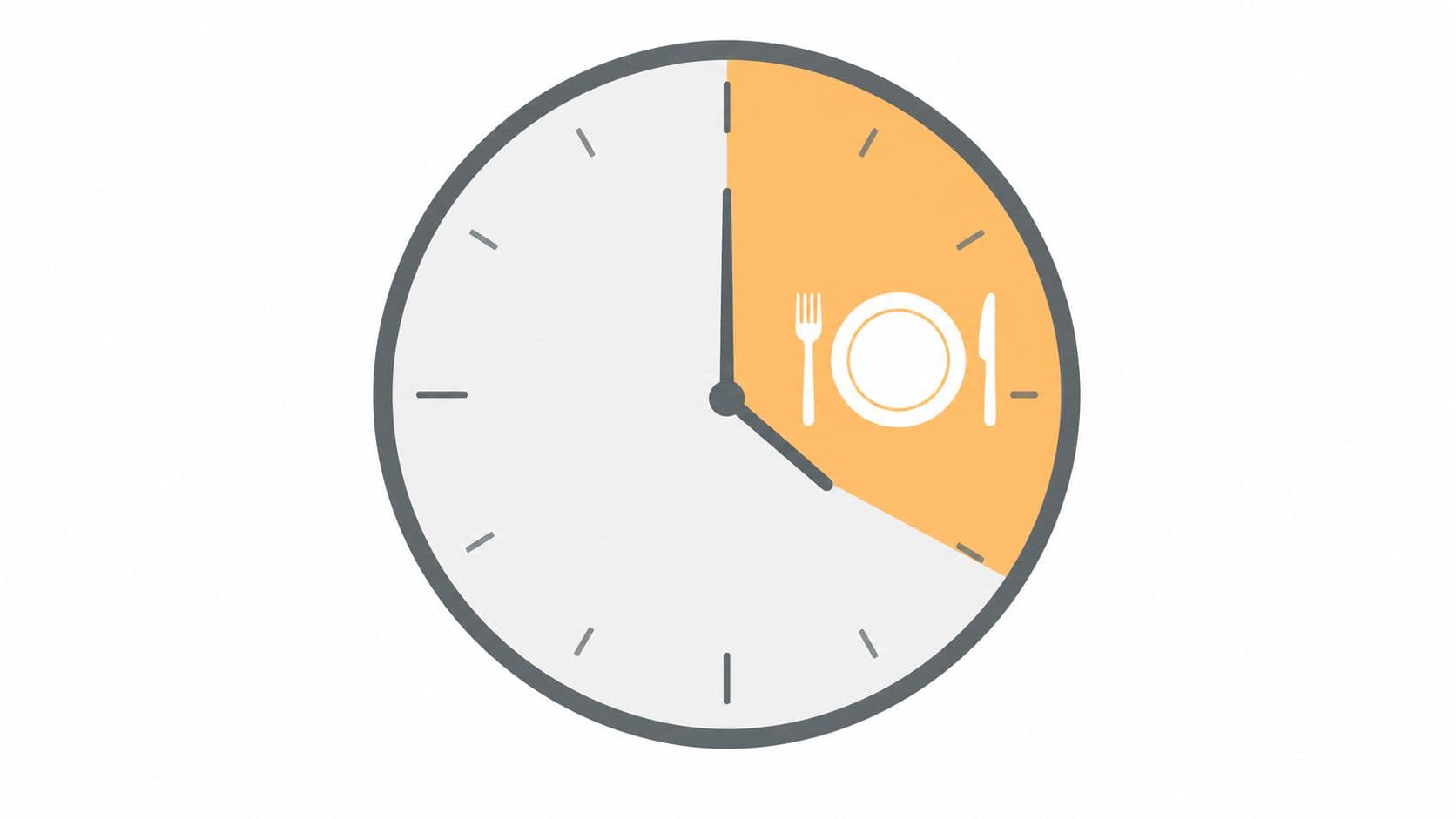
Time-restricted eating is closely related to intermittent fasting, but the emphasis is a little different. Instead of focusing on a named ratio like 16/8, TRE focuses on a daily eating window, often 6 to 10 hours, with fasting for the remaining 14 to 18 hours (review of fasting categories and common forms). That makes it more flexible than a fixed formula and easier to adapt to sleep schedules, work shifts, or training times.
A 12/12 pattern is the mildest common version of this idea, and it splits the day evenly between fasting and eating (review of intermittent fasting patterns). For some people, that's the cleanest entry point because it trims late-night eating without forcing a dramatic change.
Who It's Best For
TRE often fits people who want a practical, repeatable rhythm rather than a more aggressive fast. Night shift workers, early exercisers, and people who want to stop grazing all evening may find it especially helpful. It also suits anyone who wants to test fasting without jumping straight to full-day restriction.
Who Should Avoid It
If your work or family life makes meal timing unpredictable, a rigid eating window can become a source of stress. It may also be a poor fit for anyone who already under-eats in the daytime and then binges at night, because the window can accidentally reinforce that pattern. In that case, the problem is not the fasting window itself, it's the eating rhythm you're bringing into it.
Use the window to support your natural energy pattern, not to fight it. Some people feel best with an early window, others need a later one, and the right choice is the one you can repeat without resentment. For a deeper check-in on personal timing and self-awareness, this guide on listening to your body pairs well with the discipline of time-restricted eating.
A Simple Example
A person who eats breakfast at 9 a.m. and finishes dinner by 5 p.m. may find that pattern more sustainable than skipping breakfast and pushing all meals late into the night. The best window is the one that keeps energy stable and makes sleep easier, not the one that sounds most extreme.
7. Juice Fasting and Liquid Fasting
What happens if you remove solid food but still allow juices, broths, or herbal tea?
Juice fasting means you stop eating solid food and drink only fresh fruit and vegetable juices for a period of time. Liquid fasting is broader, since it can include broths, herbal teas, and other non-caloric liquids along with juices. These approaches can feel softer than water fasting because you are still taking in some nutrients and flavor, but they are still restrictive enough to call for caution.
The difference matters in practice. Water fasting removes food and calories almost entirely, while juice and liquid fasts can provide a narrower stream of vitamins, minerals, and hydration. That is part of why they show up in wellness retreats and short reset plans. It is also why people sometimes assume they are safer than they really are.
Who It's Best For
This style may suit people who want a gentler entry into fasting and are mainly looking for a short reset rather than a deep metabolic challenge. Some supervised retreat settings use juice fasting for that reason. If you want a temporary break from solid food and you are comfortable keeping things brief, this may be easier to tolerate than a strict water-only fast.
It can also help people who are easing into self-discipline and want to observe how their body responds without making the first step feel overwhelming. For someone reflecting on purpose and inner direction, a liquid fast can become a quiet pause for asking what habits are supporting life and what habits are draining it. That kind of check-in fits well with the self-awareness work behind Dan Millman's The Life You Were Born to Live.
Who Should Avoid It
People with diabetes or blood sugar medications should avoid juice fasting unless a clinician specifically clears it. It is also a poor fit if you expect it to solve deeper nutrition or stress issues, because a liquid-only reset does not replace balanced eating. If your goal is real health improvement, the plan still has to include what happens after the fast ends.
Some people are drawn to juice fasting because it sounds cleansing, but “detox” is often a marketing word here, not a medical explanation. For a practical starting point, a cleanse foods list can help you think more carefully about what you would eat before and after any reset, rather than treating the fast as the whole solution. The better question is whether the fast supports steadier habits, clearer thinking, and safer eating patterns.
Better Ways to Use It
If someone chooses a liquid fast, keeping it short and mostly vegetable-based is the smarter approach. Broth, herbal tea, and fresh vegetable juices are less likely to cause a sugar spike than fruit-heavy blends. A careful refeed matters too, because the digestive system can react badly to a sudden jump back into heavy meals.
That refeed is where many people get confused. After a period of liquid intake, the stomach and intestines may need a gradual return to normal food, the same way a runner would not sprint immediately after sitting still for hours. Small, simple meals are usually easier to handle than a sudden return to rich or heavy dishes.
For anyone tempted by the idea of a cleanse, it helps to ask what you want. More energy? A less chaotic relationship with food? A mental reset? Those goals are easier to pursue when the fast is paired with self-reflection and a clear reason for doing it, not just the feeling that restriction itself must be helpful.
8. Religious and Spiritual Fasting Traditions
Religious fasting has been part of human life for centuries, and it still shapes how many people understand restraint, devotion, and renewal. Islamic Ramadan, Christian Lent, Jewish fasts, Hindu observances, Buddhist monastic practices, and indigenous ceremonial fasts all use food restriction in ways that extend beyond the physical act itself. In those settings, fasting is tied to prayer, meditation, community, and intention, not just appetite control.
That spiritual context changes the experience. A person fasting for faith may be guided by a calendar, a community, and a shared meaning structure, which can make the practice easier to sustain emotionally even when it's physically demanding. The fast becomes a devotional rhythm instead of a private challenge.

Who It's Best For
This is best for people whose fasting is grounded in a faith tradition or spiritual practice. If your community already has a framework, that framework can provide both accountability and meaning. It's also a good fit for people who want fasting to be less about body goals and more about inner discipline, gratitude, or renewal.
Who Should Avoid It
People shouldn't adopt religious fasting as a performance or borrow traditions without understanding them. It's also unwise to ignore health needs because a spiritual goal feels noble. If you have medical concerns, the tradition still needs to be adapted responsibly.
A few real-world examples show how varied these practices are. Ramadan fasting typically runs from dawn to sunset, Christian Lenten practices often involve specific restrictions, and Jewish Yom Kippur includes a 24 to 25 hour fast. Those differences matter because spiritual fasting is not one fixed template, it's a family of traditions with distinct rules and meanings.
How to Approach It Respectfully
Learn the actual guidelines of your tradition, then prepare both physically and spiritually. Use the fasting time for prayer, meditation, journaling, or quiet reflection. When the fast ends, break it in the way your tradition recommends and, when appropriate, share that moment with your community.
For people interested in the deeper common ground across faiths, this Life Purpose App piece on what religions share is a useful companion read. If you want fasting to deepen character rather than just test endurance, Dan Millman's The Life You Were Born to Live offers a helpful lens for understanding discipline, meaning, and inner growth.
Comparison of 8 Fasting Methods
| Method | 🔄 Implementation complexity | 💡 Resource requirements | ⭐📊 Expected outcomes | 💡 Ideal use cases | ⭐⚡ Key advantages |
|---|---|---|---|---|---|
| Intermittent Fasting (IF) | 🔄 Moderate, daily eating window (e.g., 16/8), needs routine | 💡 Low, no special foods or equipment | ⭐📊 Improved insulin sensitivity, modest weight loss, enhanced autophagy | 💡 Sustainable lifestyle change; productivity and metabolic health | ⭐⚡ Flexible and easy to integrate; simplifies meal planning |
| Water Fasting | 🔄 High, extended food abstinence; requires planning | 💡 High, medical supervision, electrolyte monitoring for long fasts | ⭐📊 Deep autophagy, rapid weight loss, strong metabolic reset when supervised | 💡 Therapeutic resets under clinician oversight; short intensive interventions | ⭐⚡ Produces the most profound physiological effects if done safely |
| 5:2 Diet (Eat-Stop-Eat variation) | 🔄 Low–Moderate, two low-calorie days per week | 💡 Low, plan 500–600 kcal meals for fasting days | ⭐📊 Moderate weight loss, improved metabolic markers over time | 💡 Busy people seeking flexibility; gradual diet-to-fasting transition | ⭐⚡ Sustainable weekly structure with social flexibility |
| Eat-Stop-Eat (24‑Hour Fasting) | 🔄 Moderate, one or two full 24‑hour fasts weekly | 💡 Low, minimal prep but requires discipline on fast days | ⭐📊 Significant weekly caloric deficit, fat loss, improved insulin response | 💡 Fitness enthusiasts; those preferring simple, rule-based protocols | ⭐⚡ Very simple to follow with substantial weekly energy deficit |
| Alternate‑Day Fasting (ADF) | 🔄 High, alternating strict and normal days, consistent pattern | 💡 Moderate, plan fasting-day intake (0–500 kcal), protein focus on feed days | ⭐📊 Consistent, predictable weight loss and robust metabolic improvements | 💡 Structured programs, clinically oriented weight-loss efforts | ⭐⚡ Predictable results with strong research backing |
| Time‑Restricted Eating (TRE) | 🔄 Low, fixed daily window (6–10 hrs), flexible timing | 💡 Low, timing discipline only; no food rules within window | ⭐📊 Circadian alignment benefits, modest metabolic and digestive improvements | 💡 Those aligning meals with sleep/work cycles; long-term maintenance | ⭐⚡ Highly flexible; supports circadian biology and habit formation |
| Juice & Liquid Fasting | 🔄 Moderate, short-term liquid-only (1–7 days) | 💡 Moderate–High, access to fresh juices/broths; cost considerations | ⭐📊 Provides micronutrients, gentle digestive rest; can cause glucose spikes | 💡 Short detox-style resets or gentle transition from solids | ⭐⚡ Supplies vitamins/minerals while offering a gentler alternative to water-only fasting |
| Religious & Spiritual Fasting | 🔄 Variable, protocol determined by tradition (simple to strict) | 💡 Variable, community support, ritual needs, specific dietary rules | ⭐📊 Spiritual growth and community bonding; some physiological benefits | 💡 Faith observance, communal rituals, integrated spiritual practice | ⭐⚡ Deep motivation and sustained adherence via cultural/spiritual meaning |
Choosing Your Path, Start Slow, Listen to Your Body
There is no single best type of fast. The right approach is the one you can practice safely, repeat consistently, and fit into real life without wrecking your energy, your mood, or your relationship with food. For many people, that means starting with a gentler rhythm like 12/12 or 16/8, learning how the body responds, and only then considering more demanding styles.
That order matters because fasting is a tool, not a trophy. A simple schedule can teach you a lot about hunger, concentration, sleep, and emotional habits. A harsher plan can also teach you something, but only if you're ready for the stress it brings and honest about whether it improves your life.
If you're choosing between styles, ask three questions. Can I do this safely? Can I do this without constant resentment? Can I do this in a way that supports the life I'm trying to build? Those questions are more useful than chasing the strictest version on a list.
The best self-check is not whether you can endure a fast once. It's whether the pattern makes your days cleaner, calmer, and more intentional over time. That's where the life-path perspective in Dan Millman's The Life You Were Born to Live becomes relevant, because discipline works best when it supports self-knowledge, not just self-denial. For readers also trying to align body composition goals with sustainable habits, this guide on how to build muscle and lose fat can help put fasting in a wider wellness context.
If you want a more personal way to connect fasting with self-awareness, explore Life Purpose App. It's built around Dan Millman's The Life You Were Born to Live, and it can help you reflect on your patterns, discipline, and purpose while you decide which fasting style fits your life.
Discover Your Life Purpose Today!
Unlock your true potential and find your life’s purpose.
