Does numerology really work? The short, evidence-based answer is: not as a predictive science. Still, systems like Dan Millman’s The Life You Were Born to Live and tools such as the Life Purpose App can be useful as reflective frameworks that help people notice patterns, name motivations, and ask better questions about their lives.

July 10, 2026 (3mo ago) — last updated October 14, 2026 (8d ago)
Does Numerology Work? Science or Self-Reflection
Numerology isn’t a reliable predictor, but systems like Dan Millman’s Life Purpose can aid reflection, insight, and personal growth.
← Back to blog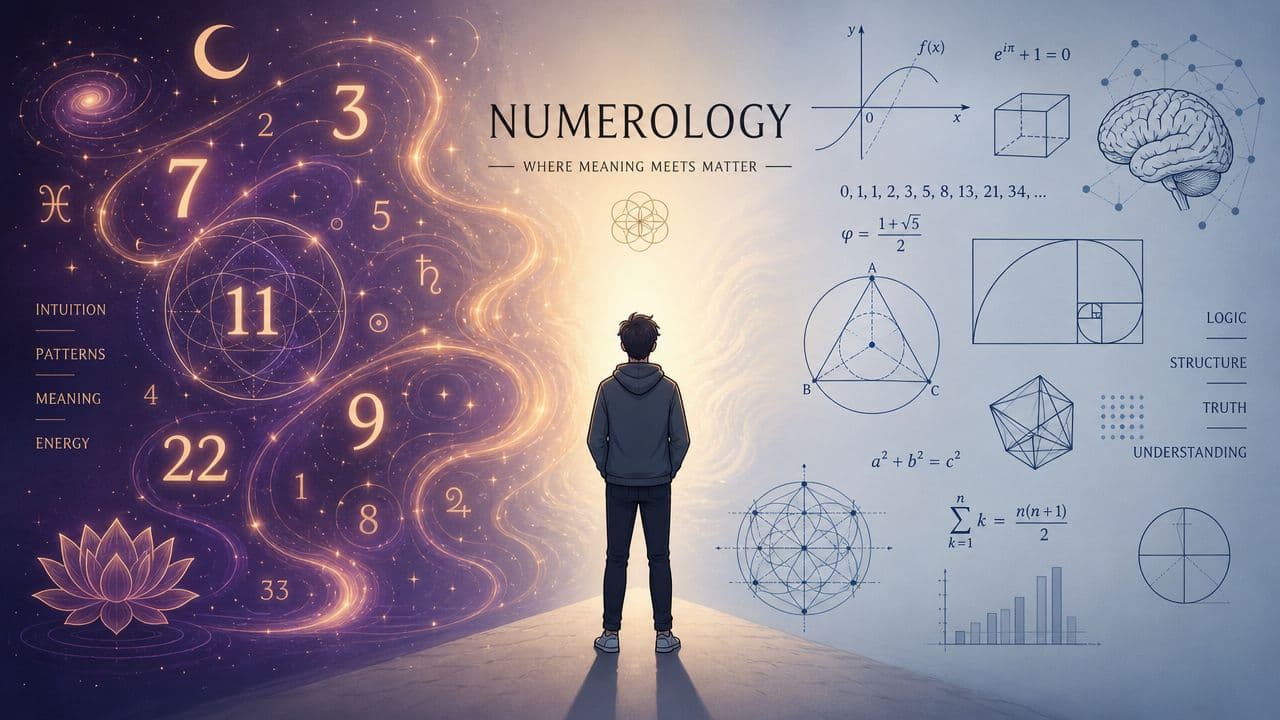
Does numerology really work? The short, evidence-based answer is: not as a predictive science. Still, systems like Dan Millman’s The Life You Were Born to Live and tools such as the Life Purpose App can be useful as reflective frameworks that help people notice patterns, name motivations, and ask better questions about their lives.
Does Numerology Work? Science, Psychology & Uses
Summary: Explore whether numerology predicts the future or serves as a reflective tool, with evidence, psychology, and practical use of Dan Millman’s Life Purpose system.
Introduction
Does numerology really work? The short, evidence-based answer is: not as a predictive science. But numerology can still be a useful reflective framework that helps people notice patterns, name motivations, and ask better questions about their lives — especially in life-path systems such as Dan Millman’s The Life You Were Born to Live and tools like the Life Purpose App.
Why the question matters
When people ask whether numerology “works,” they often mean different things. Do they expect numbers to reliably predict personality and events, or do they want a symbolic system to prompt reflection and growth? Those are very different claims.
A system can feel useful without being scientifically true. That distinction matters when readers explore life-path systems drawn from Dan Millman’s work or use apps built around it such as the Life Purpose App.
So does numerology really work or not?
Short answer: no, not as a predictive science. Numerology is considered a pseudoscience when it claims birth dates can reliably forecast character, relationships, or destiny because it lacks replicable, peer-reviewed evidence for predictive power.1
If you mean “does it help people reflect and feel seen?” then sometimes, yes. Many numerology systems provide structure and language for thinking about strengths, lessons, and recurring themes rather than offering a proven script of future events.
Two meanings of “work”
| Meaning of “work” | What it asks | Short answer |
|---|---|---|
| Predictive | Can numerology forecast real outcomes? | No2 |
| Reflective | Can it spark insight and self-examination? | Sometimes, yes |
When people use Dan Millman’s The Life You Were Born to Live or the Life Purpose App, the practical benefit is usually the reflective structure, not prophecy.
Main takeaway: Numerology doesn’t hold up as a factual system for prediction, but symbolic systems can still help people think more clearly about themselves.
Understanding the core idea
Numerology typically reduces a birth date into one or more core numbers using simple arithmetic rules. In many systems you add digits and reduce them to a single digit or set of numbers; the interpretations attached to those numbers come from the tradition of the system rather than the arithmetic itself.2
A simple calculation example:
- Born July 14, 1992: month 7; day 1 + 4 = 5; year 1 + 9 + 9 + 2 = 21 → 2 + 1 = 3; total 7 + 5 + 3 = 15 → 1 + 5 = 6.
That yields a final number of 6 in many reduction systems. Dan Millman’s framework is more elaborate, reading birth-date patterns as part of a broader life-purpose map rather than a single label.
Where readers get confused
- The math is straightforward; the interpretation is symbolic.
- The leap from symbolic meaning to reliable prediction is the scientific problem.
The numbers aren’t mysterious; the interpretation is where belief enters.
Why the method attracts people
Even without scientific proof, numerology helps by turning a messy life into a readable pattern. Systems like Dan Millman’s and companion tools such as the Life Purpose App give people a concrete starting point for self-study instead of an empty page.
Why numerology can feel accurate
People report that readings feel personal and timely. Psychology explains several reasons why that happens.
The Barnum effect
Broad, general statements feel personal because they can apply to many people. That phenomenon, known as the Barnum effect, helps explain why generic-sounding profiles often seem accurate.3
Confirmation bias
People notice the “hits” and downplay the “misses.” If a reading says you’re drawn to leadership, you’ll remember times you stepped up and may overlook times you didn’t. Confirmation bias amplifies perceived accuracy.4
The practical point
Numerology’s strongest effect tends to be psychological: it prompts reflection. A description can act like a journaling prompt: “Is this true for me? Where does it show up? What would I change?” That process can produce insight even if the original claim isn’t scientifically grounded.
Practical rule: Treat a numerology reading as a prompt, not a diagnosis.
For Dan Millman’s work and the Life Purpose App, the healthiest stance is, “This may describe a tendency, not a destiny.”
What science says about predictive claims
If numerology claims that birth-based numbers predict talent, destiny, or achievement, science can test that claim by checking whether exceptional groups show nonrandom patterns.
A published test examined whether Nobel Prize winners’ birth-number patterns differed from chance and found no meaningful deviation, undermining the claim that birth numbers predict exceptional achievement.5
In plain language: when researchers checked whether highly accomplished people clustered around special numerological birth patterns, they didn’t. That undercuts the strongest version of numerology’s promise.
Science doesn’t rule out symbolic meaning; it simply finds no reliable predictive power for birth-based numerology.
A practical approach with Dan Millman’s life-purpose system
Dan Millman’s The Life You Were Born to Live reads best as a map of themes rather than a prophecy. A map helps you orient yourself: it highlights recurring challenges and capacities you may need to develop, but it doesn’t tell you exactly what will happen.
A grounded reader might use Millman’s system like this:
- Start with description, not belief. Read the life-path material and note what resonates.
- Compare it to real behavior. Does it match how you handle conflict, work, intimacy, or change?
- Notice resistance. What you resist can reveal blind spots.
- Turn insight into action. Reflection matters only if it changes choices.
The Life Purpose App applies Millman’s framework by identifying a life path from your birth date and presenting themes, cycles, and relationship dynamics. Used responsibly, it’s a reflection aid, not an authority on your future. See related resources: Dan Millman, Life Purpose App, numerology guide.
How to explore your life path responsibly
A responsible approach is simple: stay curious, stay skeptical, and keep your feet on the ground.
Good guardrails:
- Don’t use numerology as the sole basis for major decisions.
- Test descriptions against lived experience.
- Focus on growth questions: habits, blind spots, relationships, and purpose.
- Remember that real change comes from action, conversation, and sustained effort.
Use numerology like a mirror: it can show something, but it can’t decide who you are.
Frequently asked questions
Q: Can numerology predict who I’ll marry or whether I’ll be successful?
A: No reliable evidence supports birth-date numerology as a predictive tool for relationships or success. Scientific tests find no repeatable patterns that outperform chance.5
Q: If it’s not predictive, why do readings feel accurate?
A: Readings feel accurate because of known psychological effects, especially the Barnum effect and confirmation bias, which make broad descriptions feel personal and memorable.34
Q: How should I use systems like Dan Millman’s or the Life Purpose App?
A: Use them as reflective frameworks. Treat descriptions as prompts for self-observation, test them against your life, and turn insights into practical changes rather than fixed beliefs.
Quick Q&A (concise user-focused answers)
Q: Is numerology useful for decision-making?
A: No. Use it as one small input for reflection, not as a decision rule.
Q: Can numerology improve self-awareness?
A: Yes. When treated as a prompt for journaling and honest feedback, it can highlight tendencies worth exploring.
Q: How do I tell useful insight from wishful thinking?
A: Test the insight against repeated behavior, ask trusted people for feedback, and prefer evidence-based methods for major life choices.
1.
Africa Check, overview of pseudoscience and numerology discussion, https://africacheck.org
2.
HowStuffWorks, “How Numerology Works,” explanation of calculation methods and cultural context, https://people.howstuffworks.com/numerology.htm
3.
Barnum effect overview, Psychology reference, https://en.wikipedia.org/wiki/Barnum_effect
4.
Confirmation bias, psychological summary and examples, https://en.wikipedia.org/wiki/Confirmation_bias
5.
Journal of the Arkansas Academy of Science, study comparing Nobel laureates’ birth numbers to chance; summary and data on distribution analysis, https://scholarworks.uark.edu/jaas/
Discover your life path today
Enter your date of birth and see your life path, free.
Find your life path