Discover the power of drumming for healing. This practical guide offers step-by-step techniques for stress relief, emotional release, and spiritual growth.
July 8, 2026 (5d ago)
Drumming for Healing: A Guide to Rhythmic Wellness
Discover the power of drumming for healing. This practical guide offers step-by-step techniques for stress relief, emotional release, and spiritual growth.
← Back to blog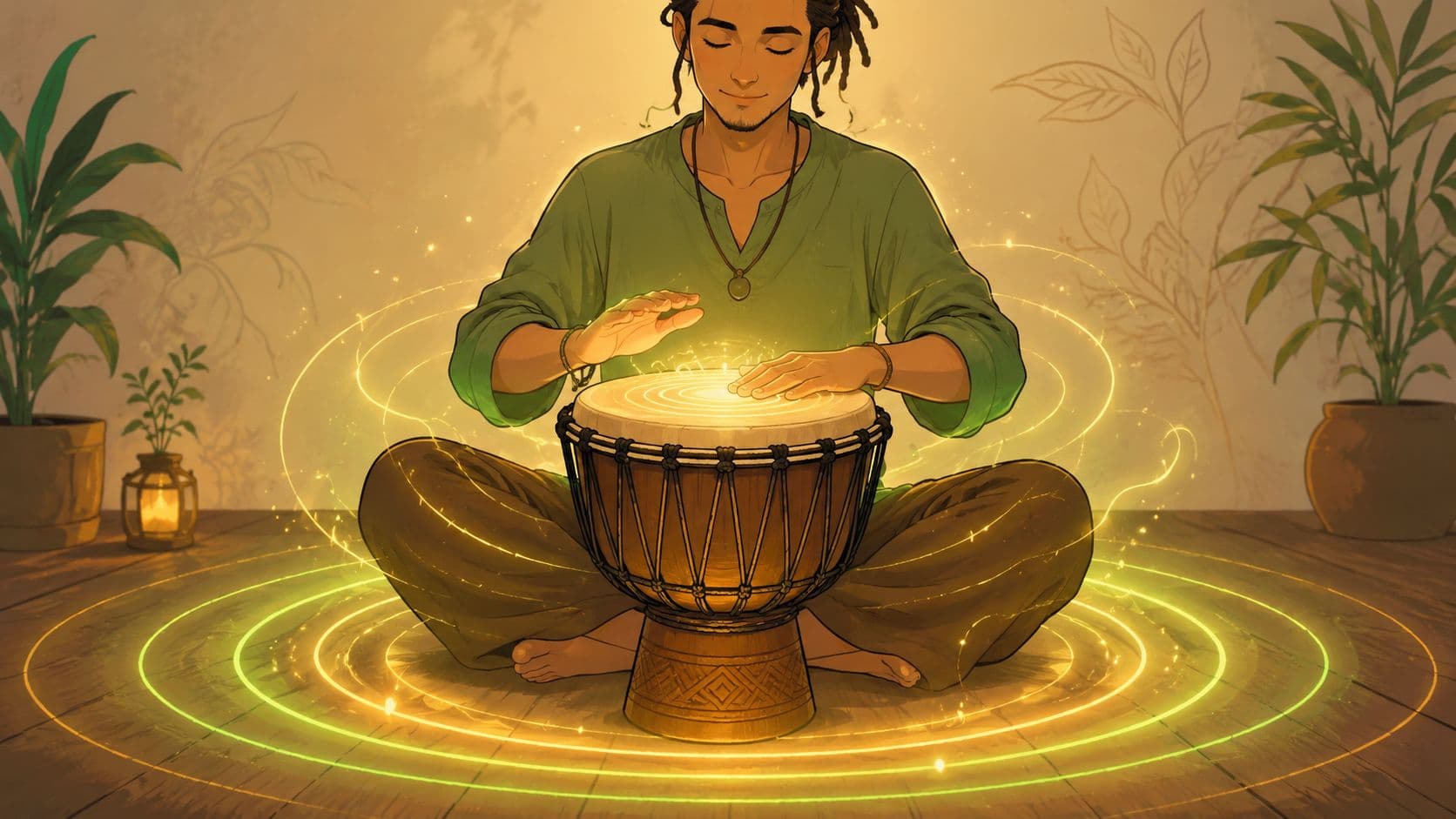
Your shoulders are tight. Your mind is running three conversations at once. You've read enough about nervous system regulation to know you need to slow down, but sitting still feels impossible. For a lot of people, that's the exact moment when drumming for healing starts to make sense.
You don't need to be a musician for this practice to work. You need rhythm, repetition, and a willingness to let your body lead for a while instead of your thoughts. I've seen people come to a drum with the same look they bring to meditation when it isn't landing: restless, skeptical, a little tired of trying to think their way back into balance.
Drumming meets that state differently. It gives the hands something to do, the breath something to follow, and the heart a steady external pulse to lean against. That's one reason rhythm has shown up in ceremony, grief work, community gatherings, and healing traditions across cultures for thousands of years. It isn't a trend. It's a human technology.
Finding Your Pulse in a Hectic World
A lot of people arrive at drumming because quiet practices feel too far away at first. They want relief, but they don't want another performance of “calm down now.” They need something physical.
That was the doorway for one of my students, a woman who spent her days moving between caregiving, work calls, and late-night worry. She told me she felt “buzzing but exhausted,” which is a state many people know well. When she first touched the drum, she didn't create anything polished. She played a plain, uneven pulse and stayed with it until her breathing changed.
That's often how drumming for healing begins. Not with technique. With return.
Why rhythm works when words don't
Drumming gives stress a channel. You don't have to explain your whole emotional history to begin. You strike, listen, repeat. The body recognizes pattern before the mind makes meaning of it.
Research often cited in therapeutic drumming circles reports that blood samples from participants in an hour-long drumming session showed a complete reversal of the hormonal stress response and a significant increase in natural killer cell activity, which supports immune function. The same source notes that drumming also promotes endorphins, the body's own morphine-like painkillers, which helps explain why people often leave a session feeling steadier and more open (drum circle healing effects).
If you're already using contemplative tools for recovery or emotional regulation, drumming can sit beside them well. Some people pair rhythm work with mindfulness for addiction treatment because stillness and movement-based awareness don't compete. They support different moments in the healing process.
For a gentler entry, I also recommend simple awareness practices like mindfulness in everyday life. A steady beat and a steady breath belong in the same family.
Practical rule: If meditation feels slippery, start with your hands. Rhythm can carry you into presence when silence can't.
You don't need training to begin
The biggest misconception is that healing drumming is a musical performance. It isn't. In therapeutic settings, precision matters less than honesty and pacing.
A basic pulse can be enough:
- Hand to drumhead: Strike a simple left-right-left-right pattern.
- Tabletop practice: Use a desk, pillow, or your chest if you don't own a drum.
- Voice and rhythm together: Hum while tapping and notice when your breath drops lower.
The point is not to impress anyone. The point is to hear yourself again.
The Science of Rhythmic Healing
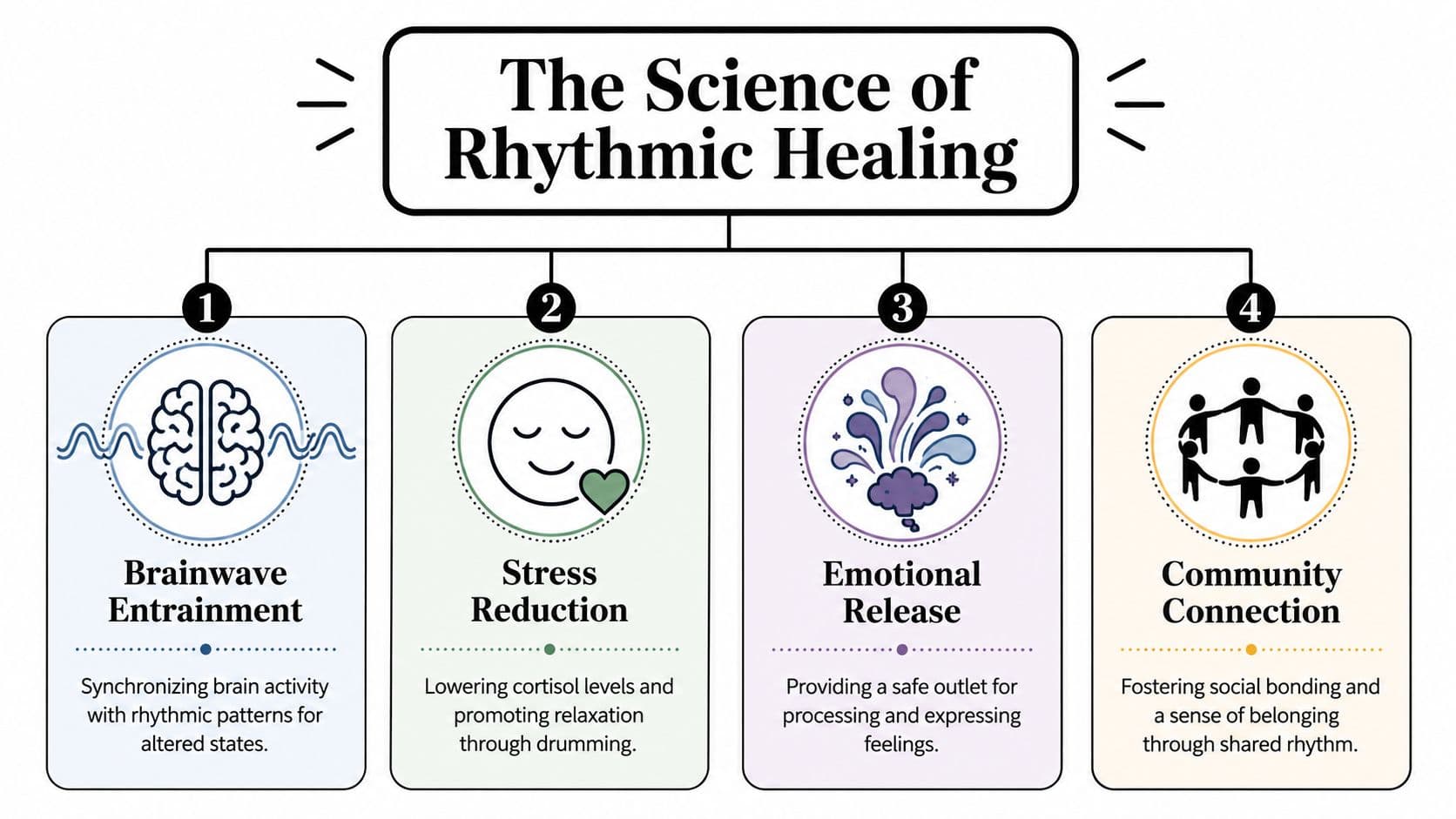
The science behind drumming is one reason this practice has stayed relevant outside spiritual communities. People feel the effects subjectively, but there are also measurable physiological shifts.
What rhythm does in the body
Rhythm organizes attention. When a beat is steady enough, the nervous system has something consistent to orient around. That matters for people who feel scattered, braced, or emotionally flooded.
One research summary reports that drumming can reverse 19 genetic responses to stress, that the physical transmission of rhythmic energy to the brain synchronizes the two cerebral hemispheres, and that a 40-minute session can lower systolic blood pressure (research on drum therapy). Those are strong claims, and in practice they line up with what facilitators observe in the room: less agitation, more coherence, and a shift from fragmentation into pattern.
This is how it works: Stress scatters. Rhythm gathers.
Brain states and entrainment
Therapeutic drumming is not just about catharsis. It also changes the quality of attention. Repetition, tempo, and vibration can help the brain move from high-alert mental activity into a more receptive state.
That's why concepts like entrainment matter here. The beat becomes an external regulator. Over time, breath, muscle tone, and attention start to align with it. People often describe this as “dropping in,” but that phrase hides the mechanism. Something very concrete is happening. The body is following pattern.
If you're interested in the broader contemplative lens around resonance and inner state, energy, frequency, and vibration offer useful language for understanding why rhythmic practice can feel both physical and symbolic.
A good rhythm doesn't force the nervous system. It gives it something stable enough to trust.
What works and what doesn't
Not every drumming session has the same effect. The details matter.
What tends to work well:
- Consistent tempo: A grounded, repeatable pulse usually regulates better than erratic intensity.
- Embodied playing: Full-hand contact and felt vibration help many people settle faster than stick-heavy, purely percussive playing.
- Room awareness: Volume, acoustics, and group energy change the experience.
What often backfires:
- Starting too fast: People who are already overstimulated can become more activated.
- Treating expression as discharge only: Big emotional release can help, but without containment it may leave someone raw rather than restored.
- Ignoring recovery time: Silence after drumming is part of the intervention, not an afterthought.
The skeptical reader is right to ask for more than mysticism. The encouraging answer is that drumming for healing doesn't require abandoning science. Rhythm gives the body pattern, and pattern changes state.
Choosing Your Healing Instrument and Rhythm
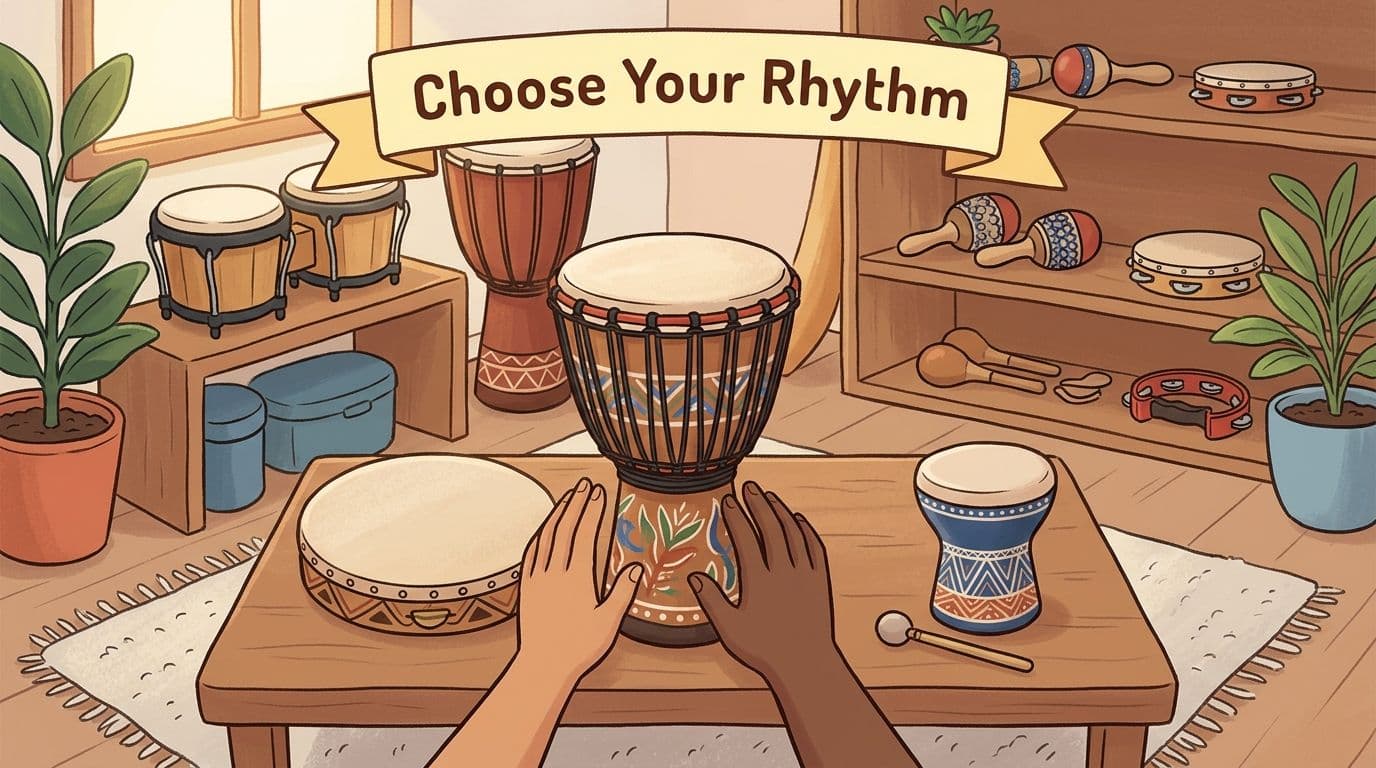
Your first healing instrument does not need to be expensive, rare, or spiritually branded. It needs to invite you to play. That's the standard.
Pick the drum that meets your body well
Different drums create different relationships with rhythm.
- Djembe: Responsive, expressive, and versatile. It gives you bass, tone, and slap in one instrument, which is why many facilitators use it for both grounding and emotional release.
- Frame drum: Softer, rounder, often more meditative. Good for inward practice, breath-led rhythm, and spiritual work.
- Doun or bass-style drum: Excellent for anchoring a group. You feel the pulse in your body.
- Improvised surface: A cushion, tabletop, or bucket can absolutely work when access matters more than aesthetics.
Don't overthink this stage. If you sit down with a drum and your body relaxes a little, that's useful information.
Let sound guide the choice
People often shop with their eyes and ignore the actual experience of playing. I'd reverse that.
Try this in person if you can:
- Rest your hands on the drum before striking it.
- Play a slow heartbeat pulse for a minute.
- Notice your jaw, chest, and breath.
- Ask one simple question: do I want to keep going?
That response matters more than prestige. A beautiful instrument that makes you tense up is not the right starter drum.
If you also work with energy centers in meditation, chakra-focused meditation practices can pair well with instrument selection. Some people naturally choose a lower, grounding tone when they need stability. Others need a brighter sound to break emotional numbness.
Buy the drum you'll actually touch. The perfect drum that lives in a corner won't help you heal.
Start with rhythms that regulate
Beginners don't need complexity. They need patterns that are easy to remember and steady enough to calm the system.
A few useful starting points:
- Heartbeat rhythm: Dum... dum... dum-dum. Slow, even, reassuring.
- Walking rhythm: Alternate hands at a pace that matches a relaxed walk.
- Breath rhythm: Two beats on the inhale, two or three on the exhale.
If you're unsure whether you're “doing it right,” check your body instead of chasing technique. Are your shoulders dropping? Is your exhale longer? Do you feel more present than you did five minutes ago? Those are meaningful markers in drumming for healing.
What doesn't help at the start is trying to sound advanced. Fast fills, loud slaps, and constant variation can become a distraction from the actual point of the practice. Save complexity for later, if it serves you at all.
Your Personal Drumming for Healing Practice
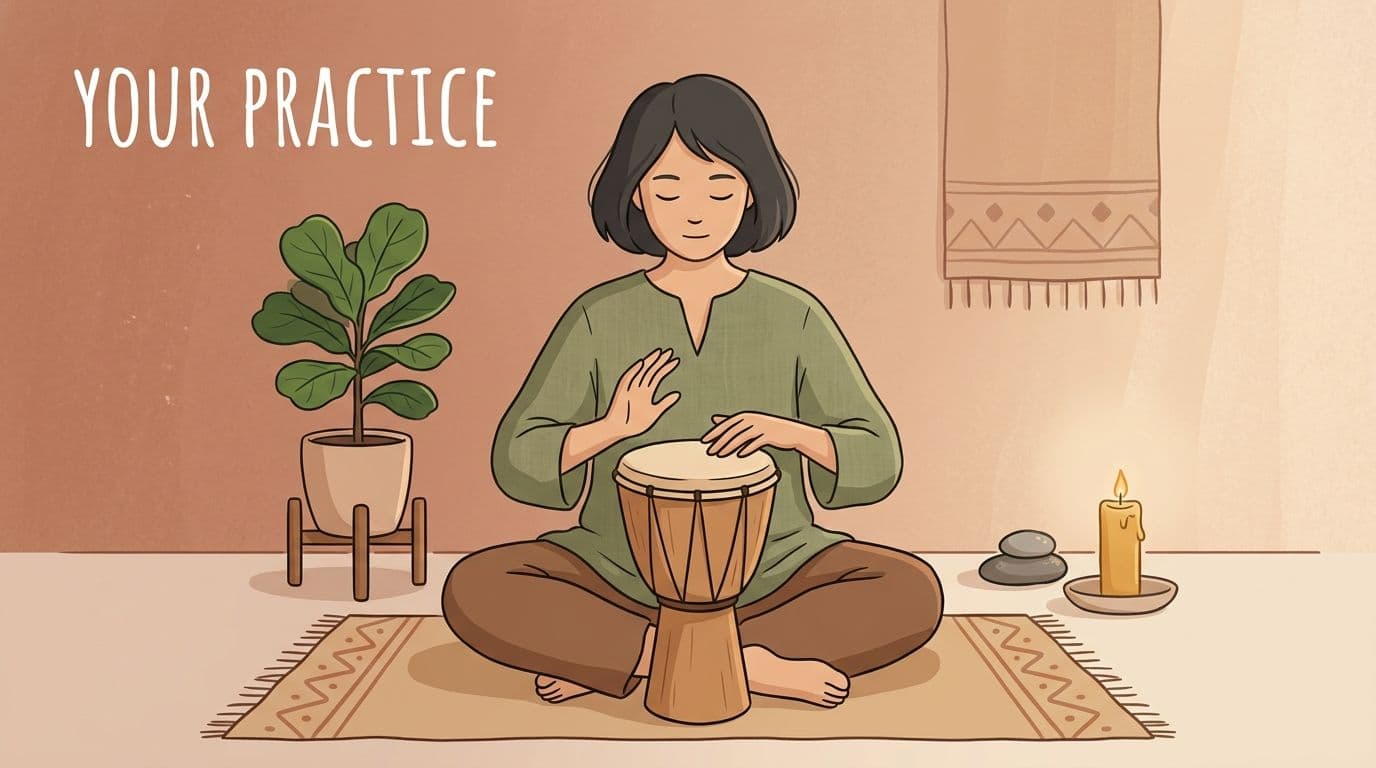
A solo healing session works best when it has shape. Too much structure and the practice feels rigid. None at all, and many people either dissociate into habit or stop before anything opens. I use a simple arc: arrive, regulate, explore, close.
Begin with intention, not performance
Set the room first. Lower the lights if that helps. Sit in a position that lets your spine stay easy. Put water nearby. Silence notifications.
Then choose an intention that is small enough to feel. Not “heal my whole life.” Something like:
- I want to release agitation
- I want to hear what grief is asking for
- I want to reconnect with courage
- I want to understand what this season is teaching me
Through spiritual self-study, the practice deepens. If you work with life paths or life numbers, keep your framework grounded in Dan Millman's The Life You Were Born to Live. That book offers language for core lessons, gifts, and recurring challenges that can give your drumming a more precise focus. Rather than drumming vaguely for “clarity,” you might drum around discipline, trust, expression, relationship, or service, depending on what your current life lesson is revealing.
Move from pulse into inquiry
Start with a plain beat. Let it run until your thinking mind softens a little. Don't chase emotion immediately. Build a container first.
A research summary from the Royal College of Music reported that a 10-week group drumming program reduced depression by 38% and anxiety by 20%, with a key mechanism being theta-wave production and brain-wave synchronization that shifts the brain from a focused beta state toward a calmer alpha state (Royal College of Music findings on drumming and mental health). In personal practice, I take the lesson from that finding seriously. Repetition comes before insight.
Once your rhythm is steady, ask one inward question and keep playing:
- Where am I forcing?
- What am I avoiding?
- What wants expression but not explanation?
- What quality do I need more of today?
You don't have to answer in words. Let the hands answer first.
If the rhythm changes on its own, follow it carefully. Spontaneous shifts often reveal more than planned ones.
Use structure, then let intuition take over
A session can unfold in three phases:
-
Grounding pulse
Stay simple. Low tones. Even tempo. The nervous system settles. -
Free expression
Let the pattern loosen. Add accents, pauses, stronger strikes, or voice. If tears come, keep the beat gentle enough that you remain present. -
Return and closure
Come back to the first pulse. Slow it. End with your hands resting on the drumhead.
Some readers also like to develop technical fluency over time. That can help if it supports freedom rather than perfectionism. If you want ideas without losing the healing focus, it's useful to learn session drumming methods and then strip them back to what serves presence.
Close the circle of the session
Don't stand up the second you stop playing. Sit for a minute. Feel the after-vibration in your hands and chest. Journal a few lines if you want.
A few strong closing prompts:
- What changed in my body
- What feeling became clearer
- What rhythm matched my current life lesson
- What do I need to carry into the rest of the day
If you're using Dan Millman's framework, this is the moment to connect the session back to your life path. Not as fortune-telling. As pattern recognition. The drum helps you feel what the intellect already knows but hasn't embodied yet.
Safety Contraindications and Group Circles
Drumming can be healing. It is not automatically healing in every form, for every person, at every intensity. That distinction matters.
I'm cautious with anyone who has severe sound sensitivity, a history of becoming easily overwhelmed by rhythmic repetition, or unresolved trauma that tends to surface quickly in altered or highly embodied states. None of that means “don't drum.” It means pace, structure, and support matter.
When less is wiser
One of the most important counterweights to the usual wellness language comes from a future-dated report. A 2025 review noted that 19% of trauma survivors reported increased anxiety after unstructured drumming sessions without therapeutic oversight, which suggests that healing through rhythm is not universally safe and that intensity should match psychological readiness (review on healing rhythms and trauma concerns).
That tracks with what facilitators see. Unstructured, loud, emotionally charged circles can dysregulate some people instead of helping them.
Warning signs that a session is not serving you well:
- Escalating distress: You feel more panicked, flooded, or detached as the rhythm continues.
- Auditory fatigue: The sound becomes physically irritating rather than grounding.
- Compulsive intensity: You cannot slow down even when your body wants to.
- Delayed crash: You leave wired, shaky, or emotionally raw for the rest of the day.
Stop before overwhelm. A shorter session that preserves regulation is better than pushing for a breakthrough you can't integrate.
What a well-run group circle looks like
A skilled group facilitator does more than start a beat. They shape safety.
Good circles usually include:
- Clear openings: A welcome, brief orientation, and permission to opt out or play softly.
- Dynamic control: The leader knows when to build energy and when to bring the volume down.
- Simple patterns: Participants can join without scrambling to prove themselves.
- A real closing: Silence, reflection, and a gentle transition back into ordinary awareness.
Poorly facilitated circles often swing between chaos and performance. A few loud players dominate. Beginners disappear. People with tender nervous systems either leave early or override their own signals to stay in sync with the room.
A sample weekly schedule
If you're building capacity, consistency helps more than intensity.
| Day | Focus | Duration |
|---|---|---|
| Monday | Grounding pulse and breath | 10 minutes |
| Tuesday | Rest or quiet tapping on a tabletop | 5 to 10 minutes |
| Wednesday | Emotional expression with gentle closure | 15 minutes |
| Thursday | Group circle or partner rhythm practice | 20 to 30 minutes |
| Friday | Slow meditative frame drum or low bass tones | 10 to 15 minutes |
| Saturday | Free play and journaling after | 15 to 20 minutes |
| Sunday | Silence, listening, and reflection | 5 to 10 minutes |
Basic group etiquette that protects everyone
Group drumming works better when people respect the shared container.
- Listen as much as you play: The circle is a conversation, not a solo audition.
- Match the room before changing it: Join the pulse before introducing variation.
- Leave space: Silence is musical and therapeutic.
- Honor your limit: Earplugs, softer playing, stepping out, or resting are all acceptable.
Drumming for healing works best when it includes consent, pacing, and choice. A good circle doesn't demand surrender. It invites participation.
Integrating Rhythm Into the Flow of Your Life
The people who benefit most from drumming usually don't treat it as a dramatic once-in-a-while release. They make it part of ordinary life. Ten minutes before dinner. Five minutes after a hard session with a client. A soft frame drum at dawn. A steady pulse before writing, praying, grieving, or making an important decision.
That kind of consistency changes your relationship with the practice. The drum stops being a rescue tool and becomes a way of staying in relationship with yourself.
Why rhythm belongs in a sustainable routine
Clinical observations support what many facilitators notice in ongoing work. In a UK hospital, a 10-week group drumming intervention resulted in 88% of participants showing measurable mood improvement, 84% experiencing increased relaxation, and 68% of sessions recording a significant decrease in anxiety levels (clinical drumming study summary). That kind of result matters because it points to continuity, not novelty.
You don't need a ceremonial mood every time you sit down. Sometimes the most honest practice is three minutes of simple bass notes because your day has been noisy and your body needs one clear signal: come back.
Helpful resources for going deeper
If you want this practice to stay alive, keep your ecosystem simple and nourishing.
A few reliable directions:
- Foundational reading: Dan Millman's The Life You Were Born to Live is useful if you want to connect rhythm with life paths, life numbers, and the deeper themes shaping your growth.
- Local drum circles: Look for facilitators who name safety, pacing, and accessibility clearly.
- Complementary sensory supports: Some people pair drumming with breathwork, low lighting, or scent. If that helps you settle, you might also explore aromatherapy for calm as part of your pre-session ritual.
- Reflection tools: Keep a notebook near the drum. Track the rhythms, moods, and questions that repeat.
Rhythm becomes medicine when you practice it before the crisis, not only during it.
Living in time with your own nature
Healing rarely looks like one breakthrough. More often, it looks like repetition with awareness. You notice that you react less sharply. You recover faster. You can feel grief without drowning in it. You can hear your own inner guidance under the noise.
That's why I trust drumming for healing as a long-term practice. It respects both science and soul. It gives the nervous system pattern, and it gives the spirit a language that doesn't depend on perfect words.
When you stay with it, the drum becomes less about escape and more about alignment. You start to hear which rhythms exhaust you, which relationships pull you off your center, and which choices bring you back to the life you were born to live.
If you want to connect rhythmic practice with deeper self-knowledge, the Life Purpose App is a practical companion to Dan Millman's The Life You Were Born to Live. It helps you explore your life path, core gifts, challenges, and cycles so your drumming practice can reflect the lessons you're living, not just the mood you're in today.
Discover Your Life Purpose Today!
Unlock your true potential and find your life’s purpose.
