Unlock your potential with emotional intelligence coaching. This guide explains what it is, its core benefits, and how it can transform your life.
March 12, 2026 (Today)
Your Guide to Emotional Intelligence Coaching
Unlock your potential with emotional intelligence coaching. This guide explains what it is, its core benefits, and how it can transform your life.
← Back to blog
Ever found yourself in a high-stakes moment, reacting in a way you instantly wish you could take back? We've all been there. Emotional intelligence coaching is designed to help you navigate those exact challenges with more confidence and skill. It’s not some fluffy, abstract concept—it’s a practical set of skills for understanding your own emotions and accurately reading the emotions of others.
What Is Emotional intelligence Coaching and Why It Matters
Think of an emotional intelligence coach as a trusted partner who helps you see what you can’t on your own. They guide you in identifying emotional blind spots, questioning old patterns, and building new, more resourceful habits. For a long time, the common belief was that emotional intelligence (EI) was fixed—you either had it or you didn’t. We now know that’s simply not true. It's a skill, and like any skill, it can be developed and strengthened with the right guidance and practice.
This is where coaching really shines. It bridges the gap between knowing what you should do and actually doing it when emotions are running high. It’s the difference between reading a book on difficult conversations and successfully navigating a tense meeting with your boss. The impact can be huge, leading to real improvements in your career, your relationships, and your overall well-being.
From Unseen Reactions to Conscious Choices
At its heart, emotional intelligence coaching is about shifting from being controlled by your emotions to being in command of them. Many of us go through our days on autopilot, driven by deeply ingrained emotional habits we aren't even aware of.
For example, maybe you find yourself snapping at a colleague who questions your work. On the surface, the reaction seems to be about their comment. A coach helps you look a little deeper. Is it really about their feedback, or is it touching on an old fear of not being seen as competent?
"I realised how many mistakes I made as a coach early on… I was putting the blame on the athlete rather than questioning my delivery.” - Kyle Gookins, Founder of The Neu Sport
This insight from a former NCAA coach gets to the core of it. The focus moves from blaming other people or outside events to understanding what's happening on the inside. Once you see the true trigger, you get your power back. You can then choose a more constructive way to respond.
More Than Just "Soft Skills"
The term "soft skills" does a major disservice to the power of emotional intelligence. In reality, these are foundational life skills with a very real impact on your performance and success. Study after study shows that leaders with high EI are the ones who build engaged, productive, and incredibly loyal teams.
Through emotional intelligence coaching, you can expect to develop some tangible abilities:
- Deeper Self-Awareness: You’ll start to spot your emotional triggers as they happen, stopping those knee-jerk reactions that can harm your reputation and relationships.
- Smarter Stress Management: Instead of feeling swamped by pressure, you’ll have a toolkit of techniques to stay calm and focused, allowing for clearer thinking when it counts.
- Clearer Communication: You’ll get better at articulating your own needs with empathy and also become a much better listener—one who truly hears what others are trying to say.
- Stronger Relationships: By getting a handle on your own emotions and understanding others, you'll find it easier to build trust and rapport, which strengthens your entire personal and professional network.
Ultimately, working on your emotional intelligence is an investment in yourself. It's not about changing who you are. It’s about becoming a more aware, effective, and authentic version of the person you’ve always been. This work gives you the tools to handle criticism with grace, resolve conflict constructively, and build a life that is both successful and genuinely fulfilling.
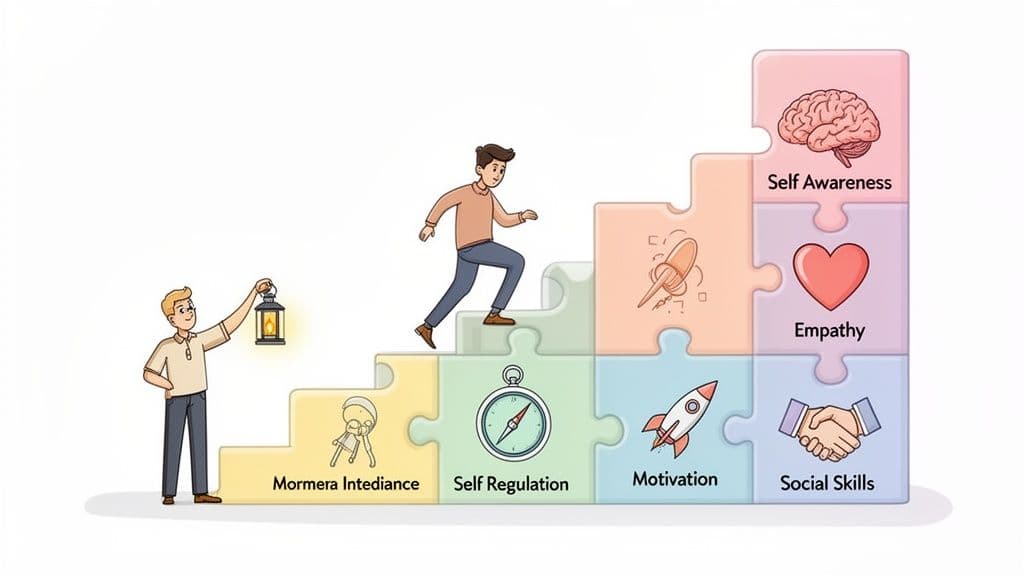
To truly get a handle on what emotional intelligence coaching can do, you have to understand what we're actually building. EI isn't some vague, abstract concept; it's a set of five concrete, learnable skills. Think of them as the pillars supporting a stronger, more resilient you.
These pillars aren’t isolated skills you learn one by one. They're deeply interconnected, and a good coach helps you see how they build on each other.

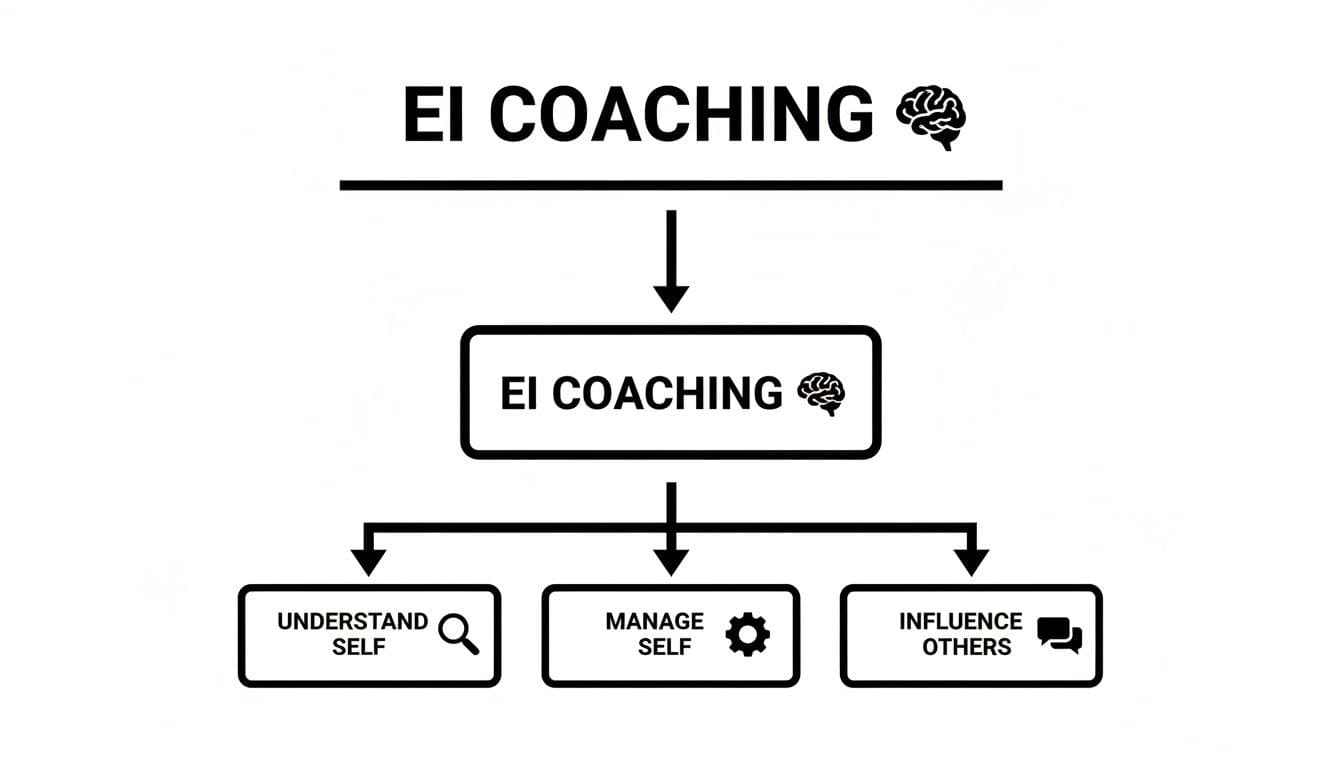
As you can see, everything starts with what's happening inside you. You first learn to understand yourself, then you manage yourself, and only then can you effectively connect with and influence others. It’s an inside-out job.
We can summarize these skills and their real-world impact in a table.
The Core Competencies of Emotional Intelligence
| Competency | What It Means | Example in Action |
|---|---|---|
| Self-Awareness | Recognizing your own emotions, strengths, and weaknesses. | Noticing you feel anxious before big meetings and understanding it’s tied to a fear of being judged. |
| Self-Regulation | Managing your emotions and impulses in a healthy way. | Instead of snapping at a colleague during a stressful project, you take a breath and calmly explain your concern. |
| Motivation | Using your deepest values to drive you toward your goals. | Pushing through a difficult task because you believe in the outcome, not just because you’re chasing a bonus. |
| Empathy | Understanding and sharing the feelings of others. | Sensing a team member is overwhelmed and offering support, even if they haven’t said anything. |
| Social Skills | Managing relationships to build networks and inspire others. | Clearly articulating a vision that gets everyone excited and working together toward a common goal. |
Each of these is a muscle that can be strengthened over time. Let's break down exactly what that looks like.
Self-Awareness: Your Inner Compass
It all starts with Self-Awareness. This is the fundamental skill of seeing yourself with honesty and clarity. It’s your internal compass, giving you a true reading of your emotional state at any given moment.
This goes way beyond just knowing you feel "off." It’s the ability to pause and identify the specific texture of an emotion. You’re not just "mad"; you’re feeling unappreciated, which is causing frustration and a sense of helplessness.
A powerful shortcut to this kind of awareness is to understand your own life story and its underlying patterns. Tools based on Dan Millman's work in "The Life You Were Born to Live," like the companion Life Purpose App, can offer incredible clarity. By showing you the core strengths and challenges tied to your life path, it gives you a map to understand why certain situations trigger you so intensely.
Self-Regulation: Steering Your Ship
Once you can see the storm on your emotional radar, Self-Regulation is what you do about it. If awareness is knowing the waves are coming, regulation is the skill of steering your ship with a steady hand rather than letting the storm toss you around.
This is all about creating a space between a feeling and your reaction. It’s the pause that lets you choose a thoughtful response over a knee-jerk one. Without it, awareness is just information without action.
- Before Coaching: You get some tough feedback and your first instinct is to get defensive or find someone else to blame.
- After Coaching: You hear the same feedback, but now you take a moment. You might say, "Thanks for sharing that. Let me think on it and get back to you," giving yourself time to process instead of reacting.
This isn't about bottling up your feelings. It's about managing them so that you are in the driver's seat, not your emotions.
Motivation: Your Inner Engine
Next up is Motivation—but not the kind that comes from a paycheck or a corner office. This is the deep, internal drive that keeps you going, fueled by your own curiosity, purpose, and desire for growth. It’s the engine that powers you through setbacks because you're committed to your own standard of excellence.
People who run on this kind of fuel are naturally more resilient and optimistic. A failed project isn't a catastrophe; it’s a lesson.
Emotional intelligence coaching is brilliant at helping you find and connect with this inner drive. When the goals you're chasing are locked in with your core values, your motivation becomes a self-sustaining fire.
Empathy: Reading the Map
With your own inner world in order, you can start to truly understand others. Empathy is the ability to read someone else's emotional map—to understand their perspective and feel with them, even if their experience is nothing like yours.
It really breaks down into two parts:
- Cognitive Empathy: "I understand how you see this situation and why you feel the way you do."
- Emotional Empathy: "I can feel the stress you're under right now."
Building your empathy muscle is what allows you to build real trust. You start anticipating people's needs, picking up on unspoken cues, and connecting on a level of genuine human understanding.
Social Skills: Building the Bridge
Finally, Social Skills are where all the other pillars come together in action. This is about using your self-awareness, self-regulation, and empathy to build strong relationships and navigate social situations effectively. You’re taking all that internal insight and using it to build bridges to other people.
This covers everything from listening actively in a conversation and persuading a team, to inspiring a group and navigating difficult conflicts. It's the art and science of making others feel seen and valued.
If you're looking to strengthen this pillar, our guide on how to improve communication skills is a fantastic resource. Because at the end of the day, great social skill is simply making a positive impact on the people around you.
How Emotional Intelligence Drives Real-World Success
The skills you build through emotional intelligence aren't just abstract ideas; they directly translate into tangible, real-world wins. Honing these abilities is what truly separates the highest performers from everyone else, both at work and in their personal lives.
Think of it this way: your technical skills might get you in the door for an opportunity. But it’s your ability to manage yourself and connect with others that dictates how high you'll climb once you're inside. It’s the difference between being a competent manager and becoming an inspiring leader who cultivates loyalty and drives real innovation.
From Boardrooms to Your Daily Life
For a long time, developing these "soft skills" was seen as something reserved for the C-suite. Companies poured money into executive training because they saw a clear return: emotionally intelligent leaders are better at retaining top talent and fostering a creative, productive culture.
But those benefits aren't just for the corner office anymore.
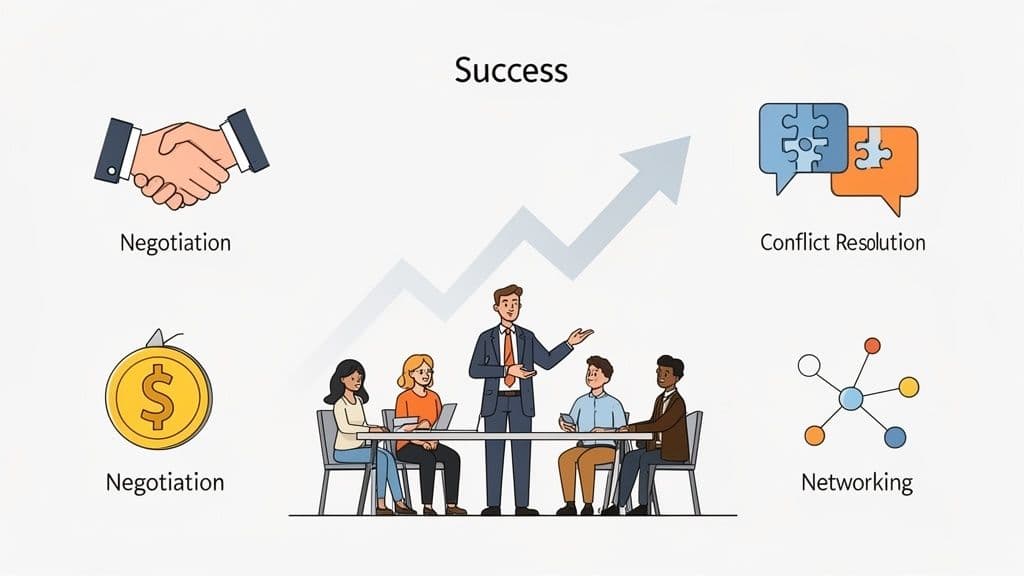
Today, the same advantages are within reach for everyone. With emotional intelligence coaching, people are learning how to negotiate better salaries, resolve conflicts without burning bridges, and build powerful professional networks that open new doors. The impact is immediate and incredibly practical.
Here’s how it plays out in common situations:
-
Salary Negotiation: Someone with low emotional awareness might let anxiety take over, either accepting the first offer too quickly or making aggressive demands that shut down the conversation. A person with high EI, on the other hand, can manage their stress, read the room, and build a collaborative case for their value.
-
Conflict Resolution: When a tough disagreement comes up, our gut reaction is often to get defensive or just avoid the issue entirely. An emotionally intelligent approach helps you regulate that defensiveness, genuinely listen to the other person's perspective, and find a solution that actually strengthens the relationship.
-
Networking: Building a professional network isn't about collecting business cards. It's about creating genuine rapport, which requires empathy and sharp social skills to make other people feel truly seen and heard.
A Strategic Investment with Clear Returns
Organizations aren’t just investing in EI because it feels good; they're doing it because it delivers a measurable return on investment. The explosive growth of the coaching industry is all the proof you need.
The executive coaching market alone was valued at $11.74 billion in 2025 and is projected to surge to $20.67 billion by 2030. That kind of massive investment shows that businesses recognize how critical these human-centric skills are for success.
An emotionally intelligent approach turns every interaction into an opportunity. It transforms criticism into a catalyst for growth, disagreement into a chance for deeper understanding, and setbacks into fuel for resilience.
This isn't about trying to become a different person. It's about becoming a more effective and authentic version of yourself. When you improve your social awareness and relationship management skills, you directly improve your outcomes in the real world. This often involves the kind of focused development you’d see in social skills coaching for adults, which builds your ability to influence and connect.
Working with an emotional intelligence coach is one of the most strategic investments you can make in yourself. The dividends show up not just in your career, but in your resilience, adaptability, and overall satisfaction with life. You learn the skills to not only achieve your goals but to enjoy the journey with a lot more grace and a lot less stress.
Connecting Self-Knowledge with Emotional Intelligence
Real emotional intelligence coaching doesn't just scratch the surface. It’s about going deeper than simply naming an emotion in the moment. The goal is to cultivate a profound sense of self-knowledge—to get to the very heart of your purpose, your natural strengths, and the specific life challenges that tend to define your emotional world.
It's in this deeper exploration that we see a powerful connection between coaching and tools built for genuine self-discovery. A fantastic framework for this comes from Dan Millman’s book, “The Life You Were Born to Live,” and its digital version, the Life Purpose App.
Uncovering Your Emotional Blueprint
The numerology system Millman outlines in "The Life You Were Born to Live" acts like a unique blueprint for your life's journey. By using your birth date, the Life Purpose App can calculate a life number that reveals a surprising amount about your core nature. This isn't about fortune-telling; it's about understanding the internal programming you've had all along.
The app makes this wisdom incredibly easy to access. It essentially hands you a map of your key talents and, just as crucially, your primary life challenges. This gives you the 'what'—the foundational awareness of your inner landscape.
This screenshot shows how the Life Purpose App presents a clear overview of a life path, including core issues and talents. Gaining this kind of clarity is the first step toward understanding the deeper 'why' behind your emotional patterns.
Knowing this can be a total game-changer. For instance, if you discover your life path involves a core lesson in overcoming self-doubt, you suddenly have a new lens for your reactions. You can start to see why you might get defensive during feedback. That reaction isn't random; it's a deeply rooted pattern tied directly to what your life is trying to teach you. You can dive deeper into this with our article on how to be more self-aware.
True self-awareness isn't just about identifying an emotion; it's about understanding its roots. When you know the 'what' (your life lesson) and the 'why' (its trigger), you can finally master the 'how' (your response).
This is precisely where emotional intelligence coaching steps in to provide the 'how,' giving you practical skills to navigate the very challenges your life path has revealed.
From Blueprint to Actionable Skills
Let's say your life path number from "The Life You Were Born to Live" points to a recurring pattern of conflict in relationships. Armed with this knowledge from the Life Purpose App, you and your coach have a clear place to start. You can work directly on self-regulation techniques for when you feel that conflict brewing and practice empathy skills to see things more clearly from the other person's side.
This combination of self-knowledge and coaching is incredibly powerful:
- Anticipate Triggers: Once you understand your core challenges from the Life Purpose App, you can start predicting what situations will likely set you off. This helps you move from being reactive to proactive.
- Develop Targeted Strategies: Your emotional intelligence coaching is no longer generic. Instead of just learning to "be less angry," you're building specific tools to manage the feeling of being unheard—a core theme your life path might be asking you to master.
- Understand Relational Dynamics: A big part of this work is seeing your own relational patterns. Some are so ingrained they feel automatic, like the tendency to form an anxious-avoidant attachment style, which can profoundly shape how you connect with people.
Think of it this way: The Life Purpose App provides the map of your inner terrain, showing you exactly where the mountains and valleys lie. Emotional intelligence coaching then gives you the climbing gear and navigation skills to travel that terrain with confidence. It’s this powerful partnership that turns self-knowledge into genuine self-mastery.
What to Expect From Your Coaching Journey
Wondering what emotional intelligence coaching actually looks like? It’s natural to feel like you’re stepping into the unknown, but the process is surprisingly straightforward and built entirely around you. Think of it less like a lecture and more like a collaborative partnership—a dedicated space to figure out what’s holding you back and co-create a plan to move forward.
The demand for this kind of personal development has exploded. The global coaching market, which is projected to reach an impressive $5.34 billion in 2025, is expected to climb to $9.5 billion by 2032. It’s clear people are seeing the immense value in investing in their own growth. You can read the full report on coaching market sizes for a deeper dive into these trends.

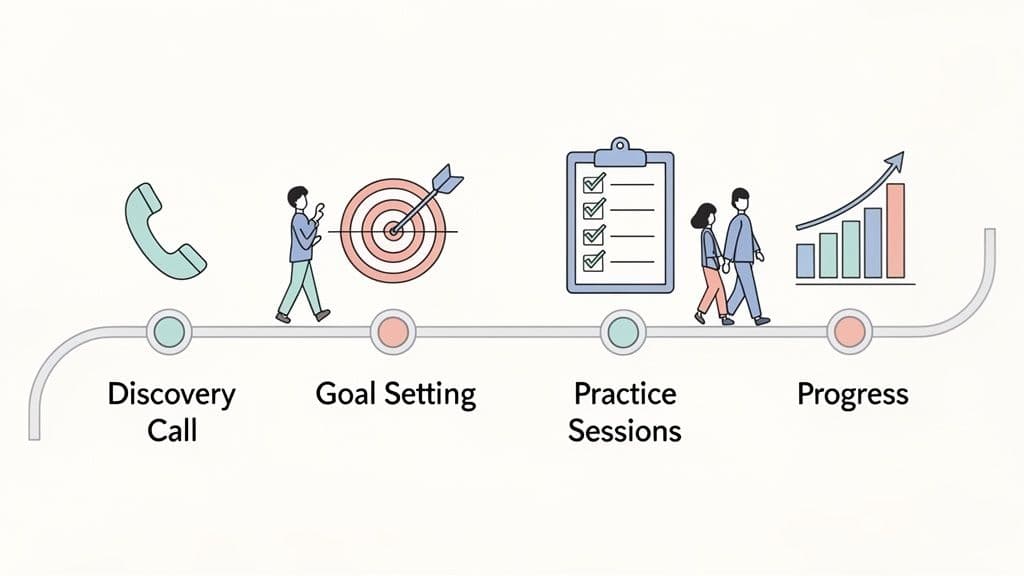
The Initial Discovery and Goal Setting
It all starts with a simple conversation. Most coaching journeys kick off with a discovery call, which is really just a chance for you and a potential coach to see if you click. You’ll talk about what brought you to coaching, and you can ask any questions you have to get a feel for their approach. No pressure, just a mutual exploration.
If it feels like a good fit, you’ll work together to set goals that actually mean something. We’re not talking about vague wishes like “be happier.” We’re talking about concrete, actionable targets that will become the North Star for your sessions.
For example, your goals might sound like:
- "I want to learn how to take constructive feedback from my manager without getting defensive."
- "My goal is to lead team meetings in a way that makes everyone feel comfortable contributing."
- "I need practical strategies for managing my stress when project deadlines are looming."
Practical Exercises and Skill Building
Once you have your goals, the real work begins—and I mean work. This isn’t just about talking; it's about actively practicing new skills until they feel second nature. For some great starting points, you can check out these tips on how to build emotional intelligence.
A typical session is a dynamic mix of different hands-on activities.
- Journaling Prompts: You might get prompts to help you unpack situations that triggered a strong emotional reaction. This is where you start connecting the dots between your feelings, thoughts, and actions.
- Role-Playing Scenarios: To practice your social skills, you might run through a difficult conversation with your coach. It’s a safe space to get real-time feedback before you have to do it for real.
- Mindfulness Techniques: For self-regulation, your coach could introduce you to simple breathing exercises that help you create a pause between a trigger and your response. It’s about learning to choose your reaction.
The coaching partnership is built on trust and a shared commitment to your growth. It’s a supportive space where you can be vulnerable, experiment with new behaviors, and learn from both successes and setbacks without judgment.
Measuring Your Progress
So, how do you know if it's actually working? Progress in emotional intelligence coaching isn't measured in fuzzy feelings but in real, observable changes. You and your coach will constantly check in on your development by looking for tangible evidence.
This could be direct feedback from colleagues that your communication has improved. It might be you noticing that conversations at home are more harmonious. Or it could be the simple, powerful feeling of staying grounded during a stressful moment that once would have sent you spinning.
Ultimately, the goal is to see these new skills become your new normal.
Choosing the Right Emotional Intelligence Coach for You
Finding the right coach is less about ticking boxes and more about finding a true partner for your growth. This person will be in your corner, acting as a guide and a sounding board as you navigate the path to greater emotional intelligence. The fit is everything.
Think of it like finding a personal trainer for your mind. You wouldn't just hire the first person you meet. You’d want someone with proven expertise, the right credentials, and a personality that actually makes you want to show up. The same exact principle applies to finding an emotional intelligence coaching professional.
Finding Your Match: Key Qualities to Look For
With a sea of coaches out there, knowing what to look for can feel overwhelming. I always tell people to focus on three core areas to sift through the noise and find a high-caliber professional who can genuinely help.
Here’s what you should have on your radar:
- Credentials and Training: Look for certifications from respected bodies like the International Coaching Federation (ICF). A certificate isn't a golden ticket, but it does mean the coach has committed to rigorous training and is bound by a professional code of ethics. It's a baseline for quality.
- Relevant Experience: Has the coach walked a similar path with other clients? If you’re a leader trying to connect better with your team, finding a coach with a background in executive development is a massive advantage. They’ll understand the specific pressures and dynamics you're facing.
- The "Gut Feeling" Check: Pay close attention to the vibe during your initial chat. Do you feel seen and heard? Or do you feel like you're being put into a box? Trust your intuition. A great coaching relationship is built on genuine rapport and psychological safety, not pressure.
Questions to Ask a Potential Coach
That first consultation call is a two-way interview. You're trying to see if they're the right fit for you just as much as they're assessing if they can help you. Don't be shy—come prepared with thoughtful questions.
Here are five essentials I recommend asking:
- How do you approach emotional intelligence in your coaching practice?
- Can you walk me through what a typical coaching session with you looks like?
- How do you and your clients track progress and measure success?
- Could you share a (confidential) example of how you helped a client with a challenge similar to mine?
- What's your personal coaching philosophy? What can I expect from you in this partnership?
Don’t be afraid to “shop around” and speak with a few coaches before committing. The goal isn't just to find a supporter; it's to find someone who can challenge you in exactly the right way.
The Rise of Digital Coaching Platforms
The good news is that finding a fantastic coach is easier and more accessible than ever. Digital coaching platforms have completely changed the game, connecting people with vetted coaches from all over the world, often at a much better price point.
The market reflects this shift. The coaching platform industry was valued at $3.8 billion in 2025 and is on track to hit an astounding $11.1 billion by 2035. This isn’t just a trend; it’s a fundamental change in how we access professional development. Over 61% of enterprise spending on coaching now goes to these scalable platforms, as detailed in a full market report from Future Market Insights.
What this all means is that top-tier emotional intelligence coaching is no longer a C-suite luxury. It’s a powerful, accessible tool for anyone ready to invest in themselves.
Common Questions About Emotional Intelligence Coaching
If you're thinking about emotional intelligence coaching, you probably have a few questions swirling around. That’s a great sign—it means you're taking your growth seriously. Getting clear on what this work involves is the best way to decide if it's the right next step for you. Let's dig into a few of the most common ones.
How Long Does It Take to See Results?
That's the big question, isn't it? The truthful answer is, it varies from person to person. You’ll often feel small shifts right away—little 'aha!' moments where you suddenly see a familiar situation in a whole new way. These early wins can happen within the first couple of sessions.
But for real, lasting change, think of it less like a quick fix and more like building muscle. It takes time and consistency. Meaningful, sustainable growth in how you handle your emotions and connect with others typically unfolds over 3-6 months. You're essentially carving out new neural pathways in your brain, and that takes both patience and practice.
Is This the Same as Therapy?
It's really important to understand how coaching differs from therapy, as they both play powerful but distinct roles in our well-being. Therapy is generally focused on healing from the past. It's an invaluable space for processing trauma, managing clinical conditions, and understanding how your history shapes your present.
On the other hand, emotional intelligence coaching is forward-looking and action-based. It's about building concrete skills to achieve your future goals—whether that means leading your team more effectively, navigating tough conversations with grace, or fostering deeper personal relationships. The entire focus is on what's next and how you'll get there.
Can I Just Improve My EI on My Own?
You absolutely can! There are tons of fantastic books, podcasts, and online resources out there, and you can make genuine progress through self-study. It's a wonderful way to start building self-awareness.
So, why hire a coach? Because a great coach provides three things that are almost impossible to get from a book:
- Personalized Feedback: A coach is trained to see your blind spots—the patterns and habits you're not even aware of—and reflect them back to you constructively.
- Accountability: It's one thing to read about a new habit; it's another to practice it when life gets stressful. Having a dedicated partner to check in with keeps you committed to the work.
- Accelerated Growth: Instead of sorting through a mountain of information, a coach gives you the right tool at the right time for your specific challenge, which dramatically speeds up your progress.
Working with a coach helps you go deeper and faster, ensuring the changes you're working so hard to make actually stick.
Ready to discover your unique blueprint for self-knowledge? The Life Purpose App offers a powerful starting point by revealing the core strengths and challenges of your life path, based on the wisdom from Dan Millman’s bestseller, "The Life You Were Born to Live." Find clarity on your journey by downloading it today at https://lifepurposeapp.com.
Discover Your Life Purpose Today!
Unlock your true potential and find your life’s purpose.