Discover what sets empaths and healers apart, how to spot the signs, avoid burnout, and use tools like the Life Purpose App for deeper self-knowledge.
July 31, 2026 (7d ago) — last updated August 1, 2026 (6d ago)
Empaths and Healers: Signs, Differences, and Growth Paths
Discover what sets empaths and healers apart, how to spot the signs, avoid burnout, and use tools like the Life Purpose App for deeper self-knowledge.
← Back to blog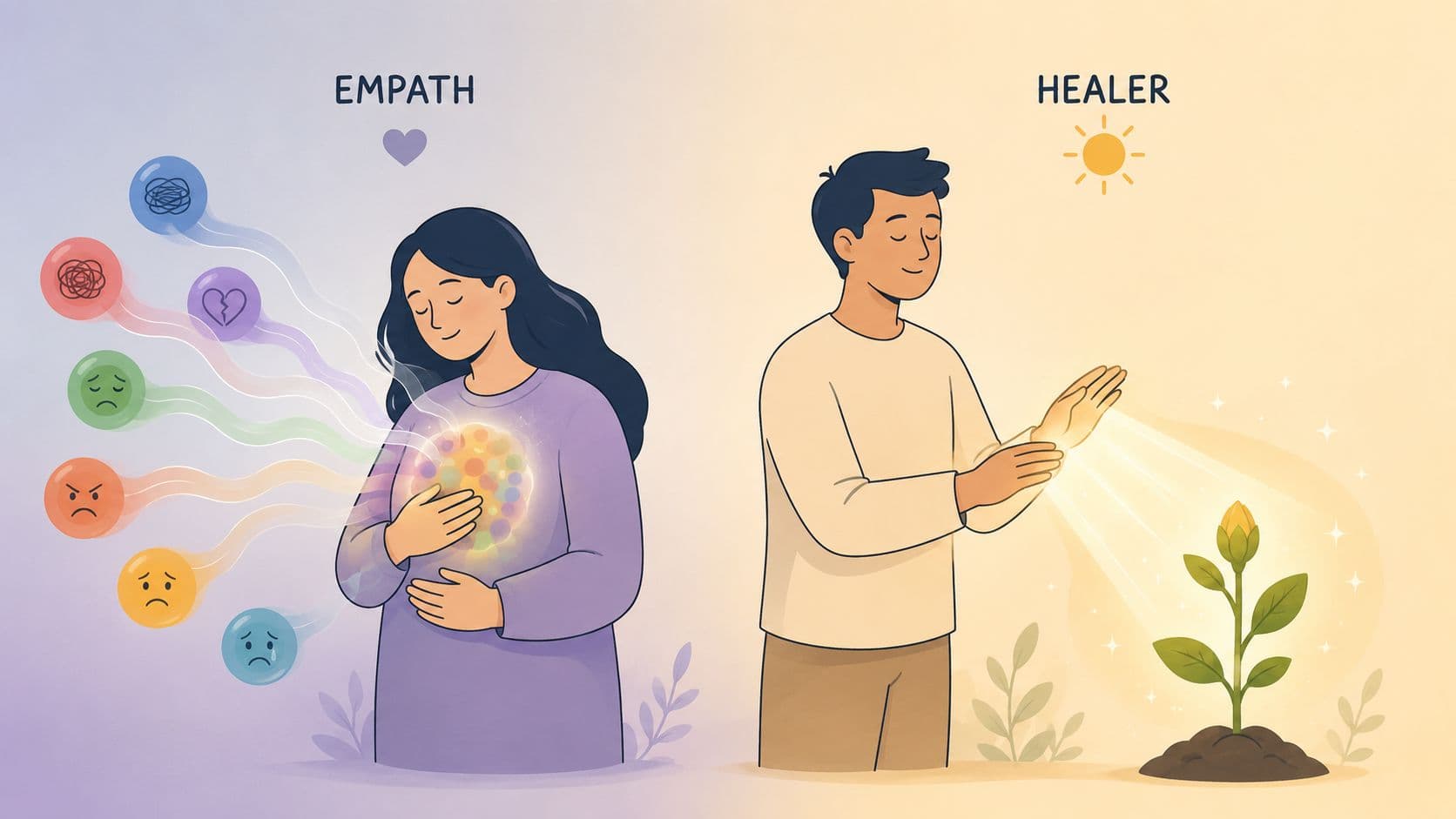
You're sitting with someone who's having a hard day, and halfway through their story your chest tightens, your stomach drops, and you start carrying their mood home with you. That's where a lot of people first notice the difference between being caring and being emotionally porous. Some people feel that pull so strongly that they've started calling themselves empaths, while others eventually learn how to turn that sensitivity into something steadier, more useful, and more protected.
Understanding Empaths and Healers in Everyday Life
A friend unloads at dinner, and you leave feeling like you've lived through the argument yourself. That experience is common among people who describe themselves as empaths, meaning they tend to absorb other people's emotional states quickly and intensely, not just understand them intellectually. Clinical-style summaries describe this as high emotional contagion, strong reliance on verbal and nonverbal cues, and a real risk of compassion fatigue when there's no recovery time between one person's distress and the next. WebMD's overview of empaths
A healer looks different. Sensitivity is still there, but it gets organized into a response, listening carefully, holding space, asking the right questions, and helping someone move through stuck emotion instead of carrying it all on one's own. A useful way to think about it is this, an empath feels like a sponge, while a healer functions more like a filter, taking in what matters, sorting it, and letting the rest pass through.
Practical rule: if sensitivity leaves you flooded, you need protection. If sensitivity helps you respond clearly, you're beginning to work like a healer.
That difference matters in ordinary life, not just in spiritual conversations. A counselor, bodyworker, hospice volunteer, nurse, or friend can all be empathetic without being able to hold other people's pain safely. The skill isn't “feel more,” it's “feel enough to help without getting swallowed by the experience.”
For readers who've been trying to make sense of their own patterns, a simple starting point is to notice whether you leave interactions energized, drained, or emotionally scrambled. If you want a deeper breakdown of empath styles, the overview is a helpful companion to this distinction.
Key Differences Between Empaths and Healers
A common scene makes the difference easier to see. One person leaves a conversation feeling as if they have taken on the other person's mood, while another leaves with a clear sense of what was felt, what needs attention, and what can be left where it belongs. An empath tends to absorb. A healer learns to translate. That is why two people can both be highly sensitive, yet only one can stay steady enough to help without getting pulled under by the emotion itself.
A side by side view
| Dimension | Empath | Healer |
|---|---|---|
| Main pattern | Takes in other people's emotions quickly | Uses sensitivity to guide a response |
| Inner experience | Feels overloaded when emotions pile up | Feels moved, but keeps enough distance to act |
| Strength | Deep resonance and quick emotional reading | Structured support, trust, and direction |
| Main risk | Emotional overload and burnout | Overfunctioning if boundaries slip |
| Relationship style | May become a sponge for others' pain | Helps without losing self-tracking |
The comparison is not about superiority. Many people move back and forth along this spectrum depending on stress, training, and life context. A parent may show more empathic traits at home and a more healer-like steadiness at work, while a therapist may be highly sensitive and still need firm boundaries to avoid carrying client pain into their body and mind.
What changes in practice
An empath often notices tone shifts, facial tension, and silence before anyone says a word. That can be a gift, but it can also make small conflict feel huge. A healer uses that same perception to ask a grounded question, set a limit, or choose a supportive action instead of getting swept up in the emotional weather.
Clear takeaway: sensitivity is raw material. Healing skill shapes it into something usable.
That is why boundaries matter so much. Without a container, insight can turn into overload, especially in caregiving or public-facing work. With a container, the same sensitivity becomes useful, reliable, and much less draining.
A practical way to understand the shift is to look at energy after contact. If someone consistently leaves interactions feeling scrambled, they may need stronger protection, rest, or support for their nervous system. If they leave with clearer perception and enough steadiness to respond well, they are operating more like a healer, even if they still feel deeply.
Recognizing the Signs and Prevalence of Empathic Traits
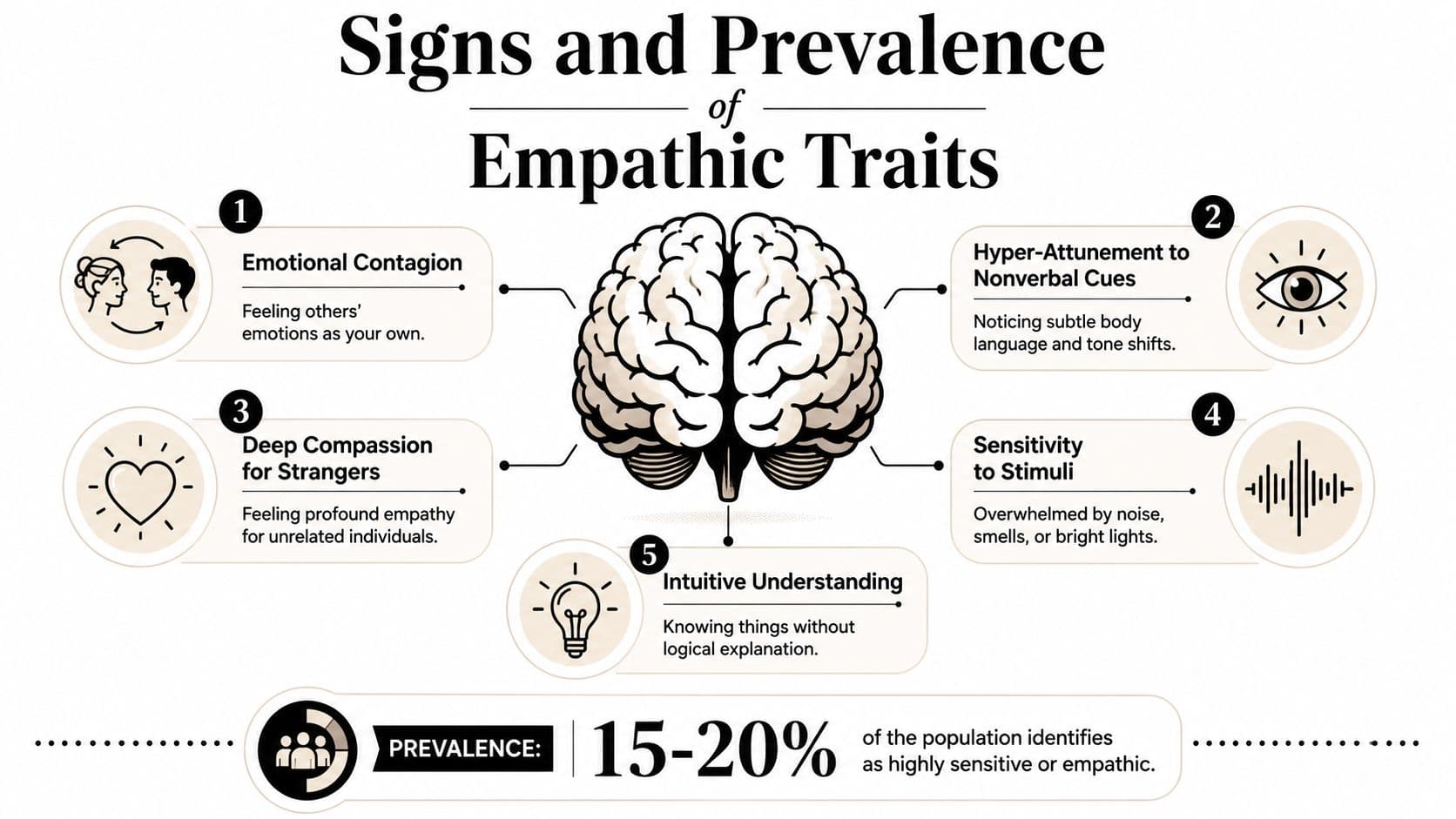
A person may spend years wondering why ordinary rooms feel heavy, why other people's moods seem to land in their body, or why a conversation can leave them drained before dinner. That question often leads to the word empath, but the label is broader than a formal diagnosis, so there is no single official prevalence rate. Research-informed discussions usually place people with high sensitivity or strong empathic responsiveness in the 15% to 20% range, while more unusual empath-like sensory experiences such as mirror-touch synaesthesia are often estimated at 1% to 2% of the population. Panaprium's discussion of empath rarity and related estimates
What the signs tend to look like
The signs are often plain on the surface and tiring underneath. Someone may pick up tone shifts, facial tension, or silence before anyone says a word, feel other people's emotions as if they were their own, react strongly to noise or bright lights, or sense tension in a room with very little overt evidence. Science-oriented explainers connect this pattern to Sensory Processing Sensitivity, a genetically based trait linked with stronger responses to environmental input and social cues. Science Insights on empath-like traits and Sensory Processing Sensitivity
Healer-seeking behavior appears in population data as well. In a U.S. national survey published in 2011, 3.7% of respondents reported lifetime faith healer use, and 6.1% reported ever using a psychic for healing purposes, with the figures discussed in the PMC study on faith healer and psychic use. The same study did not reduce healer-seeking to poor education, low socioeconomic status, or lack of medical access, which helps correct the old assumption that these choices only appear at the edges of society.
How the body often speaks first
Emotional overload rarely stays abstract. People may notice headaches, fatigue, a tight chest, or the urge to withdraw after too much contact. WebMD's empath overview describes how repeated exposure to distress without enough recovery can wear down the nervous system, a pattern often discussed under compassion fatigue. WebMD's empath overview
A second nuance matters here. A person who feels flooded, vigilant, or unable to separate their own state from other people's moods may have high sensitivity, but the same pattern can also reflect learned hypervigilance. The label matters less than the pattern, because boundary skill and nervous-system regulation are what determine whether sensitivity becomes a burden or a usable form of awareness.
A practical way to separate the two is to notice what happens after contact. If a person regularly leaves interactions scrambled, they may need stronger boundaries, more rest, or better support for their nervous system. If they leave with clearer perception and enough steadiness to respond well, they are functioning more like a healer in daily life, even if they still feel profoundly.
That distinction is also useful for self-knowledge work. Tools such as the Life Purpose App boundary and self-knowledge guide can help someone map where sensitivity shows up, where it tips into overextension, and where a more grounded life path may be asking for cleaner limits. For some readers, pairing that reflection with shadow work prompts for anxiety can make it easier to notice whether emotional intensity is pointing to growth, old protection patterns, or both.
Practical Boundary and Self Care Strategies
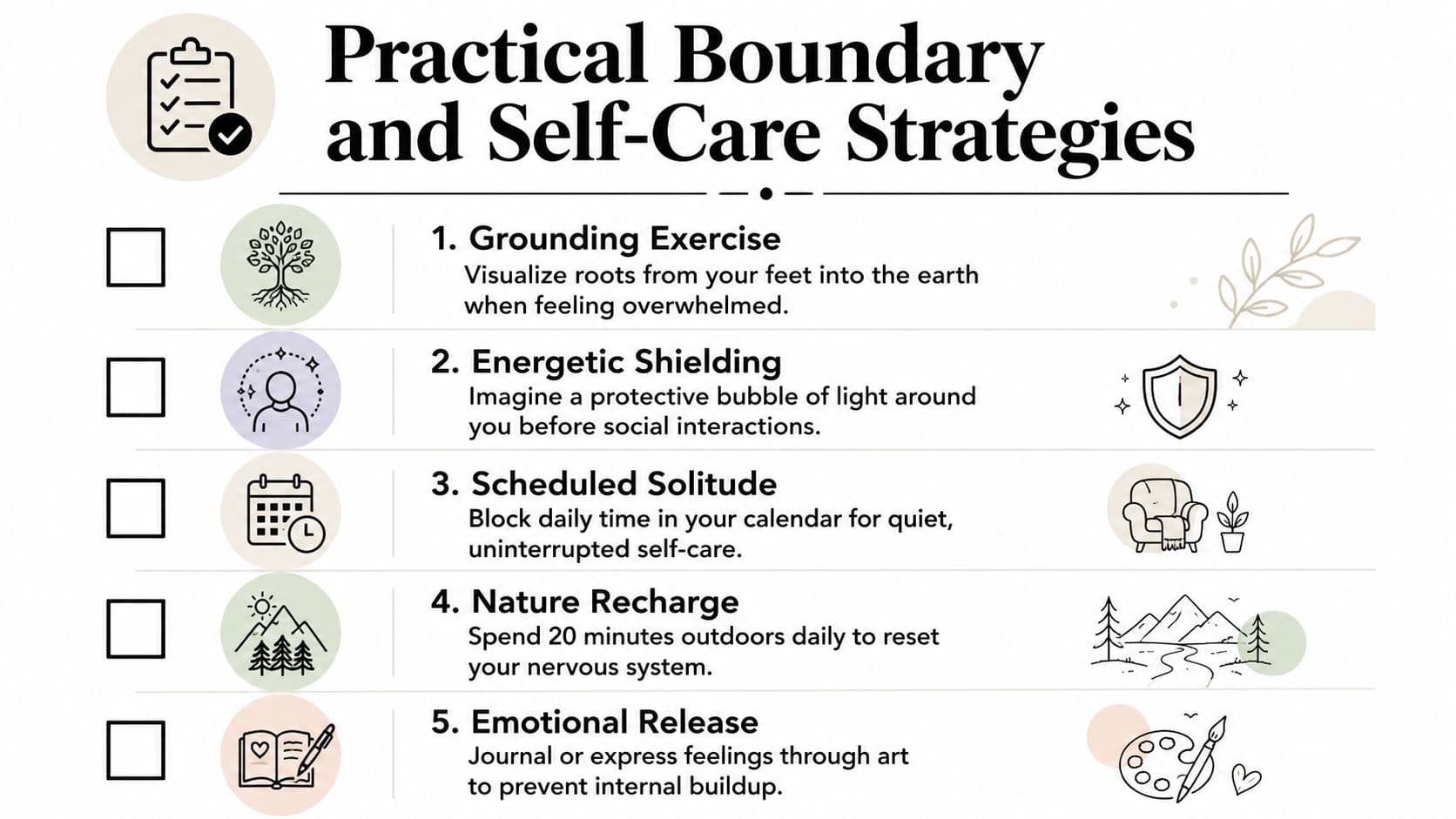
The first boundary is not a sentence. It's a pause. Before you answer a request, a text, or a sudden emotional dump, give your nervous system a beat to register what's yours and what isn't. That tiny delay can keep you from saying yes out of reflex.
A few skills that actually help
- Ground your body first. Feel both feet, slow your breath, and notice the surface under you before you respond to anyone else's emotion.
- Use short boundary language. “I can't take that on right now” is cleaner than a long explanation that invites negotiation.
- Build decompression into your day. Quiet time, a walk, or a few minutes away from stimulation helps the body reset before overload turns into shutdown.
- Separate care from rescue. You can support someone without becoming responsible for their mood, choices, or repair work.
- Track early fatigue. If you keep getting irritable, numb, tearful, or foggy after helping, your system is asking for rest, not more effort.
The deeper idea is differentiated empathy, caring without absorbing. That's what keeps compassion sustainable. Without it, helping can start to feel like emotional labor with no end point, which is where burnout grows.
A useful companion resource for anyone untangling old relational patterns is shadow work prompts for anxiety, especially if your tendency to over-help is tangled up with fear, guilt, or the urge to fix everyone around you.
Scripts that protect the relationship
Boundaries work best when they're plain. Try, I want to support you, and I need to keep some space right now, or, I can listen for ten minutes, but I can't problem-solve tonight. That kind of language preserves connection without pretending you have unlimited capacity.
When people fear boundaries will make them cold, the opposite is usually true. Clear limits lower resentment, and lower resentment makes real kindness possible again. If you want a more detailed companion on this skill, a guide on setting healthy boundaries can offer a helpful next layer.
Spiritual Growth and Life Path Discovery
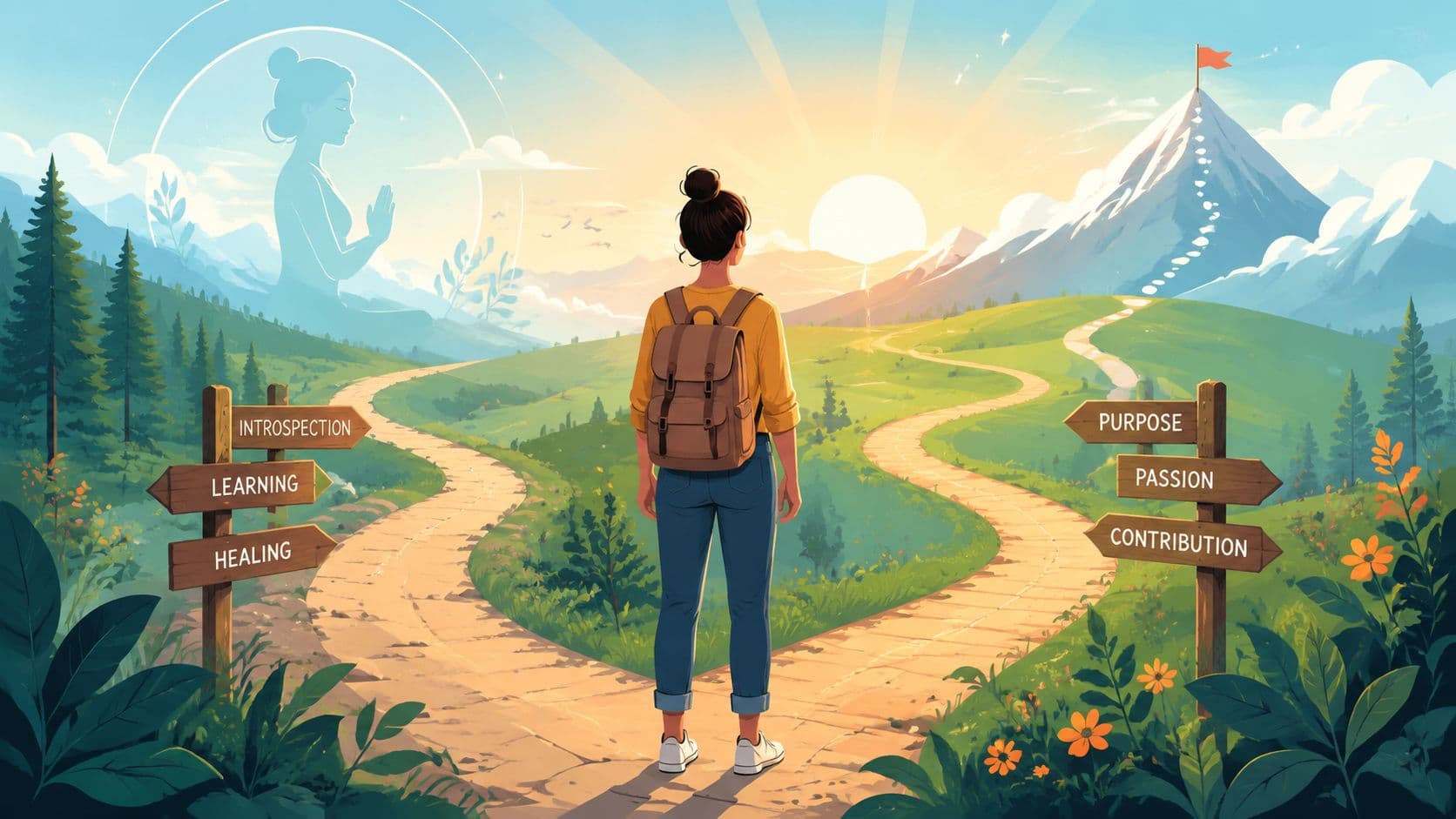
Some people want a psychological framework, others want a spiritual map, and many want both. Dan Millman's book The Life You Were Born to Live and the Life Purpose App offer one way to look at sensitivity as part of a broader life pattern, not just as a personality quirk. By entering a date of birth, the app shows one of 45 unique life paths, along with nine-year life cycles and relationship dynamics. That system comes from an ancient-wisdom framework, and it's often helpful for people who keep asking why certain patterns feel so central in their lives.
Why this lens can clarify the empath question
Not everyone who feels intensely is meant to heal in the same way. For one person, sensitivity may be a core gift that supports caregiving, counseling, or art. For another, the same sensitivity may be a lifelong challenge that needs boundaries, rest, and better discernment before it becomes a gift.
That's where life-path language can be useful. It doesn't replace clinical insight, and it shouldn't be used to romanticize suffering. It can, however, help a person ask a sharper question, what role does my sensitivity play in my growth, and where am I still mistaking intensity for purpose?
Relationship compatibility is another practical piece. If you're an empath, it's easy to assume every difficult dynamic is your responsibility to soothe. A life-path lens can make it easier to notice which relationships call for closeness, which ones need distance, and which ones drain you because the fit is off. The value is not prediction, it's self-awareness.
Some people need a language for their patterns before they can change them.
If you've been looking for a structured way to reflect on your gifts, your challenges, and your relationships, Dan Millman's system inside the Life Purpose App gives that reflection a concrete shape.
When Sensitivity Becomes a Trauma Response
Not every empathic presentation is a spiritual identity. Sometimes it's a coping strategy built around vigilance, fawning, or chronic self-monitoring. That's why clinical and therapeutic sources keep circling back to the same caution, high sensitivity can overlap with boundary problems, burnout, and misdiagnosis. Clinical discussion of empaths as misunderstood, misdiagnosed, and mistreated
Signs it may be more than sensitivity
If you feel responsible for everyone's mood, freeze when someone is upset, or say yes when every part of you wants to say no, the pattern may be trauma-linked rather than purely intuitive. A person can also confuse hypervigilance with empathy, because both involve scanning a room for danger. The difference is that true empathy can stay present without panic, while trauma reactivity often feels urgent, narrow, and hard to turn off.
That's why the old romantic story of the endlessly open empath can be misleading. Some people are not “too gifted to set boundaries,” they're exhausted. Others learned early that staying alert was safer than relaxing, and that habit can look like deep intuition from the outside.
A trauma-informed lens matters here. If your sensitivity is paired with nightmares, panic, dissociation, compulsive caretaking, relationship reenactments, or the feeling that you can't come down after helping someone, professional support is a wise next step. The point is not to strip away meaning, it's to make sure meaning isn't covering pain that needs care.
The piece on trauma-informed yoga is useful if you're trying to understand why regulation has to come before spiritual interpretation. Healing works better when the body feels safe enough to stop bracing.
Building a Sustainable Path Forward
Start by asking three blunt questions. Do I absorb other people's feelings faster than I can process my own? Do my boundaries protect my energy, or do I explain them away? Do I help because I'm grounded, or because I'm afraid of being selfish? The answers usually point to the next step more clearly than any label does.
A grounded next step
If you recognize yourself more as an empath, focus on regulation before service. If you recognize yourself more as a healer, focus on structure before overextension. And if you're unsure, treat that uncertainty as useful data instead of failure.
Support helps here. That can mean a therapist, a mentor, a trusted community, or one honest friend who doesn't reward self-erasure. It can also mean a self-knowledge tool that gives your patterns a map, especially when you want to understand your life path, relationship dynamics, and recurring challenges without guessing.
Healthy helping starts when you know where your responsibility ends.
The most sustainable path is usually simple, even if it isn't easy. Protect your nervous system, name your limits, and let your sensitivity become something you direct instead of something that runs you.
If you want a clearer map for your own sensitivity, the Life Purpose App can help you explore your life path, nine-year cycles, and relationship dynamics through Dan Millman's system in The Life You Were Born to Live. It’s a practical way to connect self-knowledge with the empath and healer conversation, so you can understand your patterns with more clarity and less guesswork.
Discover Your Life Purpose Today!
Unlock your true potential and find your life’s purpose.
