Learn how to brew fennel cumin and coriander tea with exact ratios, steeping times, and evidence-based health insights. Includes safety tips and variations.
July 25, 2026 (1mo ago)
Fennel Cumin and Coriander Tea: A Complete Brewing Guide
Learn how to brew fennel cumin and coriander tea with exact ratios, steeping times, and evidence-based health insights. Includes safety tips and variations.
← Back to blog
Most advice about fennel, cumin, and coriander tea oversells it. It's not a detox, it's not a cure-all, and it won't magically flatten every bloated stomach by sunset. What it can be, when made well, is a steady Ayurvedic kitchen tea that supports a calmer digestive routine without asking much from your body.
That modest role matters. CCF tea, the common shorthand for cumin, coriander, and fennel tea, comes from a long household tradition, not a modern supplement aisle invention. Contemporary wellness guides still describe the same simple three-seed pattern, roughly ½ teaspoon each of cumin, coriander, and fennel with 3 to 5 cups of water, simmered or boiled for a short time and sipped warm, which says a lot about how durable the preparation is as a daily ritual rather than a branded product (Wellness Mama).

Practical rule: treat CCF tea as a gentle support, not a treatment plan. If a drink seems to help your digestion, great, but persistent symptoms still deserve a real look.
The evidence fits that restrained view. A clinical review summarizes a controlled human study in which a single 2 g dose of fennel prepared as tea lowered appetite in healthy women, but did not reduce food consumption (PMC clinical evidence review). That's a useful distinction, because feeling less hungry and eating less are not the same thing.
That's why I like CCF tea best as a low-risk ritual. It's a warm, food-based habit built from everyday spices, and it can sit comfortably beside better digestion basics like regular meals, slower eating, and paying attention to trigger foods. The drink earns its place through consistency, not drama.
Why CCF Tea Is Not a Miracle Cure (And Why That Is Fine)
A lot of wellness language turns fennel cumin and coriander tea into a promise it cannot keep. People want a simple cup that erases bloating, resets digestion, and fixes the aftereffects of a heavy meal. CCF tea does not do that in any dramatic or reliable way, and the more honest version is the one that helps people use it well.
What the tea is matters here. It is a traditional Ayurvedic blend of three ordinary kitchen spices, and that identity is part of its appeal. The point is continuity, not novelty. Coriander, cumin, and fennel have each lived in the pantry for generations, and the tea turns that familiar cooking tradition into a daily beverage many people reach for when they want something warm and calming, a practice that has long been described in herbal kitchens and home remedy guides such as Wellness Mama.
Tradition gives it staying power, not proof of a cure
The best way to read CCF tea is as a household preparation method that has lasted because it is simple, affordable, and pleasant enough to repeat. That is different from a medicine with a clear dose-response curve and a strong clinical track record. The tea's value comes from being easy to make and easy to tolerate, which is exactly why so many people return to it.
The controlled evidence is narrower than the popular claims. A clinical review summarizes a human study in which fennel tea lowered perceived appetite in healthy women, but did not reduce food consumption, which keeps the claim in a modest range and avoids turning one small finding into a sweeping promise (PMC clinical evidence review). That does not make the tea useless. It does mean you should stop short of promising weight loss, fat burning, or major metabolic change from a cup of seeds.
CCF tea earns trust by being mild. Once a tea starts sounding like a miracle, it usually stops being believable.
That is the right frame for the rest of the discussion. CCF tea can be a steady, low-stakes part of a digestion-friendly routine. It can also disappoint if you expect it to replace sleep, meal timing, or medical care. A tea can be useful without being a cure-all, and that is exactly where this one fits best.
How to Brew Fennel Cumin and Coriander Tea Properly
A decent cup starts with measuring the seeds, not guessing. Too little seed leaves the tea thin and vaguely sweet. Too much seed, or too much heat, can push fennel and cumin into a bitter edge that hides the softer coriander note.
The method that gives a repeatable cup
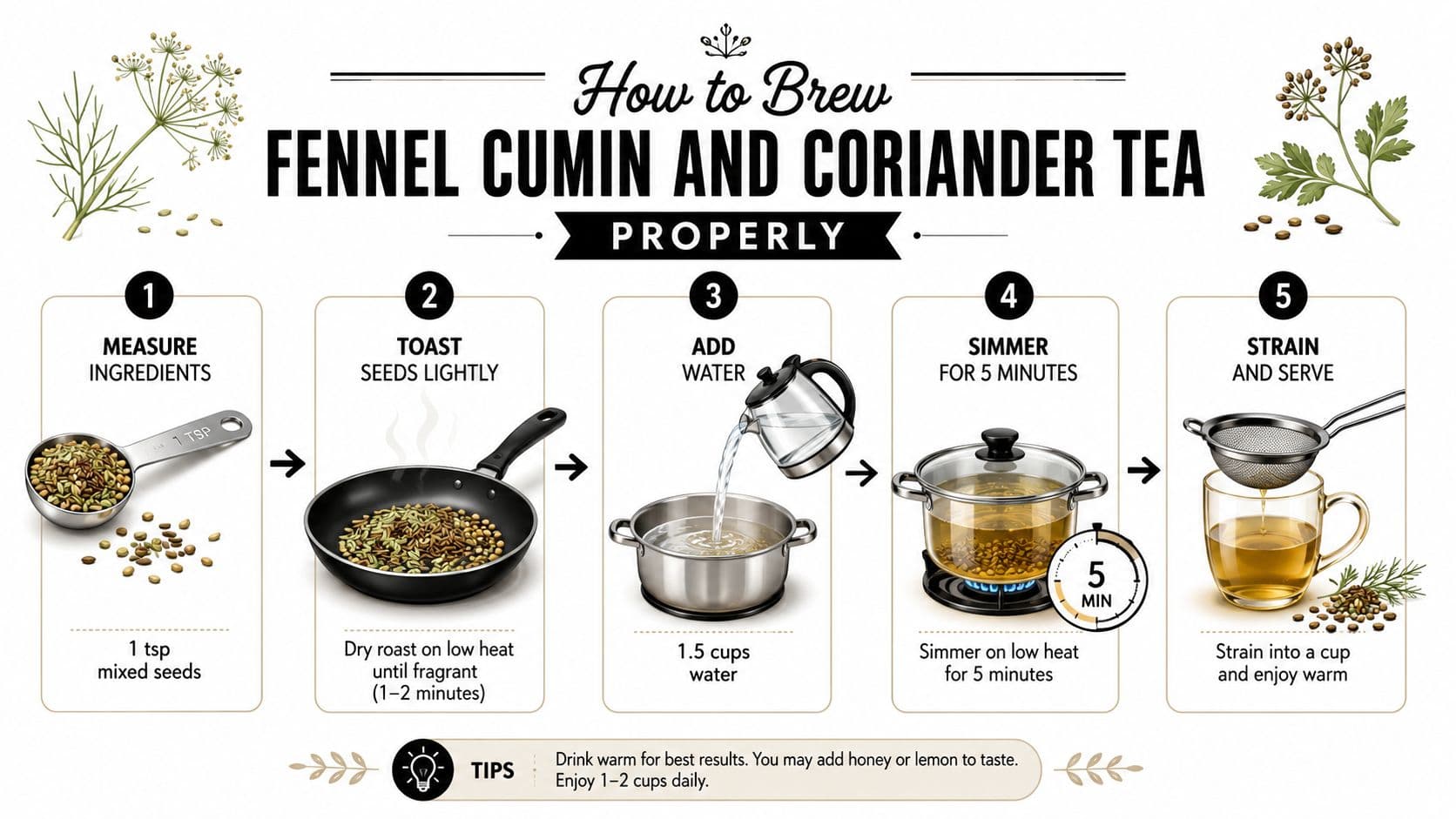
The most reliable starting point is an equal-parts seed blend, about 1 teaspoon total seeds per cup of water, or roughly ½ teaspoon each of cumin, coriander, and fennel. I use whole seeds rather than pre-ground spice, because whole seeds keep their aroma longer and brew cleaner.
A practical single-cup method looks like this:
- Measure the seeds. Use ½ teaspoon each of cumin, coriander, and fennel.
- Warm the seeds briefly in a dry pan if you want a fuller aroma, then stop before any browning starts.
- Add water. A useful brewing range is around 1 cup to 1.5 cups water for one serving.
- Simmer or steep. Either method works. Let the seeds sit for 5 to 10 minutes.
- Strain and serve warm. Warm tea is the usual format for digestive use.
That basic method is the one described by Kripalu. The same source also notes a practical routine that many people keep to 2 to 3 cups per day, which makes batch brewing useful when you want the same taste every time.
If you are making a larger batch, keep the ratio steady and scale it evenly. Uneven spooning is one of the main reasons the tea feels unpredictable from one pot to the next. Flavor should guide the final adjustment. If the cup tastes weak, change the seed-to-water ratio before you stretch the simmer time.
For cafés or caterers who want a separate point of comparison for other warm-spice drinks, buy chai latte powder from Allied is a useful reference for how those beverages are packaged and served.
What the Evidence Actually Says About Health Benefits
The claims around fennel cumin and coriander tea are easy to overstate. People use it for digestion, bloating, calmer nerves, appetite control, and weight management, but those benefits do not all rest on the same kind of evidence. Treating them as one neat package makes the tea sound stronger than it is.
What has some support and what doesn't
The clearest human signal in the material available here is for fennel tea and appetite perception. A controlled study summarized in a clinical review found that a single 2 g dose of fennel prepared as tea reduced appetite in healthy women, but did not reduce food consumption (PMC clinical evidence review). That difference matters in practice. Feeling less hungry is not the same as eating less, so this tea should not be treated as a dependable way to lower calorie intake.
The digestive reputation of CCF tea comes more from tradition than from tightly controlled trials. The blend has a long history as a gentle, food-based remedy, and that is part of why people keep returning to it (Wellness Mama). The cup is soothing for many people, but tradition alone does not prove strong effects on bloating, indigestion, or body weight.
A recent expert explainer in a major Indian outlet puts the claim set in plain terms, saying the tea is not a miracle cure and may be more useful for mild indigestion and bloating than for severe or persistent digestive complaints (The Indian Express). That is the most honest way to frame it.

A fair reading of the evidence looks like this:
- Most believable use: a warm, mild digestive ritual after a heavy meal or during a sluggish spell.
- Possible but limited effect: a softer sense of hunger with fennel tea.
- Overstated claim: guaranteed weight loss, detoxification, or disease prevention.
That does not make CCF tea pointless. It just keeps the claims in proportion. In my own practice, it is a useful cup when the goal is comfort and consistency, not a cure-all. For cafes and caterers who want a separate point of comparison for other warm-spice drinks, sustainable cup choices for caterers can be useful when thinking about serviceware alongside the tea itself.
Who Should Avoid or Limit CCF Tea
Safety is where most CCF tea coverage turns vague. The seeds are generally considered safe in ordinary kitchen use, but repeated herbal drinking deserves the same caution you would give any daily routine, especially during pregnancy, breastfeeding, or when medications are involved (Verywell Health).
Start conservatively if you're unsure
The first thing I tell a new client is simple, start small and pay attention. CCF tea is often brewed in loose, informal ways, and that variability matters because what looks like a mild cup can become a much stronger daily habit if the seed load keeps creeping up.
A cautious approach makes sense for people who should get medical advice before making it a daily habit:
- Pregnant or breastfeeding people, because even familiar herbs can be a poor fit when they are used often or in concentrated form.
- People taking medications, especially if there is any concern about herb-drug interactions.
- Anyone with a known allergy to Apiaceae plants, since cumin, coriander, and fennel all belong to that family.
- People who notice discomfort after drinking it, such as nausea, cramping, reflux, or an overly full feeling.
If a tea is meant to help digestion but leaves you feeling worse, do not force it.
The practical problem with CCF tea is that its reputation makes people ignore dose. A mild cup once in a while is different from a strong batch taken multiple times a day. If you are sensitive, begin with a weaker brew and stop if the tea does not sit well.
For foodservice teams choosing disposable drinkware, sustainable cup choices for caterers is a useful resource when your service menu includes warm herbal drinks alongside espresso and chai.
Sourcing Seeds and Building a Daily Tea Ritual
Good CCF tea starts with good seeds, and the difference shows up fast. Fresh cumin smells earthy and warm, coriander has a citrus lift when crushed, and fennel should smell sweet, almost licorice-like. If the jar smells dusty or flat, the cup usually tastes that way too.
What to buy and how to store it
Whole seeds are the safer buy. They hold aroma better than pre-ground spice and give you more control over extraction when you brew. Keep them in a tightly sealed jar, away from heat and direct light, because stale seeds make a thin tea no matter how carefully you brew it.
I prefer to keep the three spices separate until the day I use them. That leaves room to adjust the mix if one seed runs stronger than the others. Some people like fennel a touch higher for sweetness, while others prefer cumin to lead for a more savory cup. The core formula stays the same, but the final balance can be personal.
A daily ritual works best when it fits the reason you're drinking it. Many people sip CCF tea warm or hot, and it often feels most useful between meals or after eating, when the digestive system feels burdened rather than empty (Sivananda Bahamas). That is the rhythm I'd trust most for an ordinary home practice.
If you want to keep the ritual interesting, additions should stay modest. A little fresh ginger changes the tone without swallowing the original flavor. A squeeze of lemon works for some palates, but too much acid can make a soothing tea feel sharper than necessary.
Seed quality matters more than people admit. I have brewed enough batches to know that tired spices make a tired cup, and fresh spices let you taste the actual balance of the blend instead of a dull, muddy brew. For an herbal backup that pairs naturally with this kind of kitchen practice, Seed Cellar fenugreek seeds are a practical addition to a well-stocked pantry.
Best habit: make the tea part of a larger digestive routine, not the only thing you change. Slow meals and steady timing still matter more than any spice blend.
Troubleshooting Common Brewing Problems and Questions
A weak batch usually means the seeds never had a real chance to extract. I see this most often when someone fills a large mug, drops in a pinch of seeds, and expects a useful cup from that alone. The fix is straightforward, a better ratio, roughly 1 teaspoon total seeds per cup, with a short simmer or steep.
A bitter batch usually points to too much heat, too long on the stove, or seeds that were already past their best. If that happens, shorten the simmer and trust the aroma more than the color. Whole seeds can be lightly dry-toasted first, but once they darken, the tea turns sharper instead of better.
If you only have one or two of the three spices, you can still brew something drinkable. Use the full trio when you can, though, because the balance between sweet fennel, warming cumin, and cooling coriander gives the cup its familiar character. That balance is also why a plain single-seed infusion rarely tastes the same.
A few practical questions come up over and over:
- Empty stomach use: Some people tolerate it well that way, but if you are prone to nausea or reflux, start after food.
- Mixing with other herbal teas: Keep the first few trials simple so you can tell what is helping and what is just adding flavor.
- No whole seeds available: Ground spices work in a pinch, but they cloud the tea and make dosing less predictable.
If you need a backup seed source while you stock a broader pantry for digestive teas and kitchen formulas, Seed Cellar fenugreek seeds is a practical place to start.
The best troubleshooting habit is patience. Change one variable at a time, seed amount, water volume, or simmer length, and judge the result from the next cup instead of the last one. If you are trying to correct a formula that feels flat, stale seed quality is often the first thing to inspect, before you blame the method.
Discover Your Life Purpose Today!
Unlock your true potential and find your life’s purpose.
