A compassionate step-by-step guide to finding purpose after divorce, covering emotional healing, life rebuilding, and using life-path insight for clarity.
September 3, 2026 (Today)
Finding Purpose After Divorce: A Compassionate Guide
A compassionate step-by-step guide to finding purpose after divorce, covering emotional healing, life rebuilding, and using life-path insight for clarity.
← Back to blog
Six months after the divorce, you may be answering emails, managing school pickups, paying bills, and appearing perfectly capable to everyone around you. Then Tuesday arrives. You sit at the kitchen table with coffee going cold and realize you don't know what an ordinary day is supposed to feel like anymore. The crisis has quieted, but the old story of your life has ended, and the next one hasn't taken shape.
Finding purpose after divorce isn't about forcing a silver lining onto a painful ending. It's about rebuilding the internal structure that once organized your choices, relationships, routines, and hopes. Divorce can disrupt identity, time, social roles, finances, and mental health at once, which is why “moving on” often feels like an inadequate assignment. The work is more specific: stabilize yourself, examine the identity you lived inside the marriage, and deliberately design the next chapter.
The Strange Space Between an Old Life and the Next One
A person can be highly functional and still feel unmoored. You might show up at work, care for your children, return messages, and keep the house reasonably clean while privately wondering, Who am I when nobody needs me to be a spouse? That question reaches deeper than loneliness. Loneliness asks for company. An identity gap asks for a life that feels like yours again.
Divorce has a measurable historical footprint across major markets. In 2022, crude divorce rates ranged from 0.6 divorces per 1,000 people in Colombia to 3.6 per 1,000 in Chile, and across OECD countries, rates increased in 13 countries and decreased in 16 between 1990 and 2022, as summarized by this overview of divorce's mental-health impact. The pattern varies by law, economics, culture, family support, and local expectations, but the transition itself isn't culturally isolated.
That doesn't make your experience ordinary in the dismissive sense. It means you aren't failing because you haven't “found yourself” on schedule. A getting through divorce guide can help with immediate emotional survival, while the deeper task is deciding which parts of your former identity deserve to be carried forward.
Name the gap accurately
The old identity may have included being the peacemaker, the provider, the planner, the attractive partner, the reliable parent, or the person who always adapted. Some of those qualities remain valuable. Others were coping strategies that helped the marriage function while shrinking your choices.
Practical rule: Don't ask, “How do I become a new person?” Ask, “Which roles were chosen, which were inherited, and which can I release?”
This guide won't offer a neat grief timetable or tell you that everything happened for a reason. It offers an identity-architecture approach. You'll build enough stability to think clearly, use reflection to identify what still matters, and create social, financial, and personal structures that support a life beyond the divorce.
For additional reflection on the emotional gap after a relationship ends, consider a grief guide. The immediate priority is not a grand purpose statement. It's creating enough steadiness that your mind can begin making trustworthy choices again.
The old identity may have included being the peacemaker, the provider, the planner, the attractive partner, the reliable parent, or the person who always adapted. Some of those qualities remain valuable. Others were coping strategies that helped the marriage function while shrinking your choices.
Practical rule: Don't ask, “How do I become a new person?” Ask, “Which roles were chosen, which were inherited, and which can I release?”
This guide won't offer a neat grief timetable or tell you that everything happened for a reason. It offers an identity-architecture approach. You'll build enough stability to think clearly, use reflection to identify what still matters, and create social, financial, and personal structures that support a life beyond the divorce.
Journaling Prompts That Reveal What You Actually Want
Journaling after divorce should do more than document pain. Used well, it acts as a diagnostic tool. It shows you which roles you performed, which preferences you abandoned, and which desires still have energy beneath the fear.
Start with the marriage story
Write without editing:
- What role did I default to in the marriage?
- What did that role make easier?
- What did it cost me?
- Which responsibilities did I accept without discussing them?
- Where did I confuse peace with self-abandonment?
Use the prompt to identify a pattern, not prosecute your former partner. A surface answer says, “I did everything.” A revealing answer says, “I became the person who anticipated every need, then resented everyone when nobody noticed the effort.” The second response gives you something to change.
Recover small preferences
List five small things you enjoyed before the relationship and stopped doing. Keep them ordinary. Maybe you liked cooking spicy food, reading in cafés, taking photographs, dancing, repairing bicycles, or visiting museums alone.
Then mark each preference as dormant, changed, or alive. “I want to travel the world” may be a performance of freedom. “I want to spend Saturday morning browsing a used-book shop without explaining why I'm taking so long” is a more useful signal.
For a broader approach to taking ownership of your choices, the Sovereign leadership framework from Baz Porter offers a helpful complement to post-divorce reflection. The central question is practical: which decisions are yours now.
Describe a future Tuesday
Write about a Tuesday afternoon three years from now when life feels good. Describe the room, the light, your body, your work, the people you speak with, and what you do between obligations. Avoid status language such as successful, healed, or impressive.
A surface response says, “I'm wealthy, partnered, and admired.” A revealing response says, “I finish work with enough energy to cook, call my sister while walking, and spend an hour on a project that makes me curious.” The revealing version contains values you can act on now.
Keep the practice contained. Write for a set period, then underline repeated words. If freedom, teaching, beauty, steadiness, challenge, or community appears several times, don't treat that repetition as decoration. It may be the beginning of your purpose language. These prompts can help you continue the exercise without turning it into endless emotional analysis.
Rebuilding the Two Foundations Nobody Talks About
Money and friendship hold up almost every post-divorce life. Neglect either one and the other often weakens. A person who feels financially trapped may stop accepting invitations, while someone who feels socially invisible may lose the energy required to handle money carefully.
The financial consequences can be substantial. U.S. evidence summarized by the National Bureau of Economic Research found average income losses of 15% to 20% in the years after an initial divorce, while children in families that remained divorced for at least six years experienced a family-income decline of 40% to 45%. Gender differences can also shape the recovery. A large longitudinal study reported that women lost about 40% of predivorce income in the year of divorce, while former husbands saw gains of about 5%, with divorced people also reporting lower satisfaction across several areas of life, as reported in this study of divorce and well-being.
Make money visible
Create a one-page budget that shows post-divorce cash flow. List income, housing, debt payments, insurance, childcare, food, transport, and irregular expenses. Don't build a fantasy budget based on the person you hope to become. Build one based on the month you're living.
Then automate small transfers toward a 90-day emergency buffer. The amount matters less than creating a system that reduces dependence on last-minute decisions. Stable money doesn't create purpose, but it gives you permission to choose. You can decline an unhealthy job, consider training, or move toward a better fit when every unexpected expense isn't a threat.
Rebuild social life without performing
A newly single parent may rebuild a busy social calendar while hiding a maxed-out credit card. That life looks full but feels precarious. The opposite pattern is just as damaging: a financially disciplined ex manages every account perfectly, loses regular contact with friends, and slowly loses the will to act.
Start with one low-pressure outing each week. Choose a recurring dinner, walking group, library event, class, or coffee with someone safe. Don't make every meeting a confession about the divorce. You're practicing being a whole person in public again.
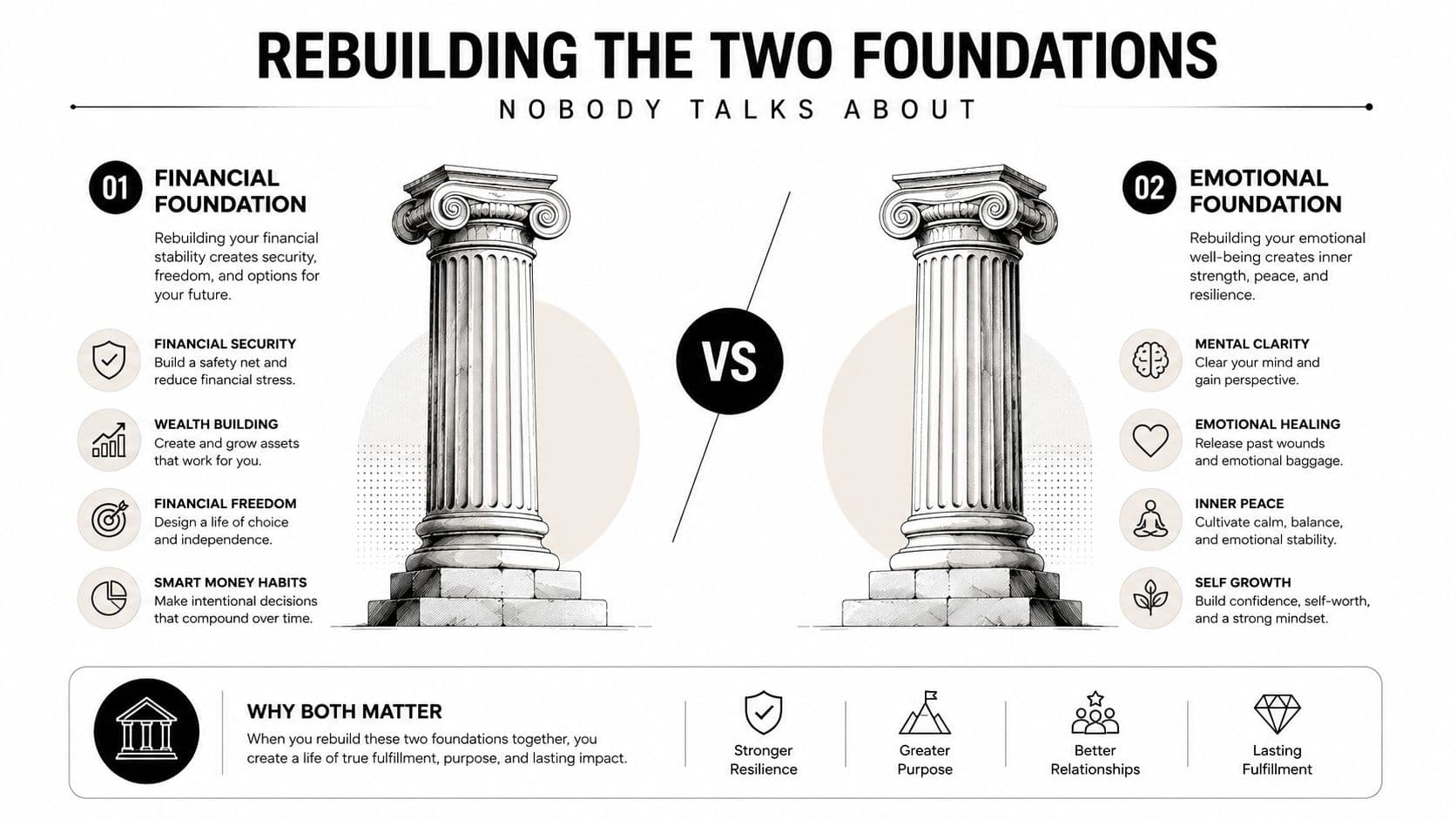
The purpose of these steps isn't to complete your recovery. It's to create a floor. A stable financial picture lowers panic, and a small reliable circle reminds you that your existence is larger than the marital ending.
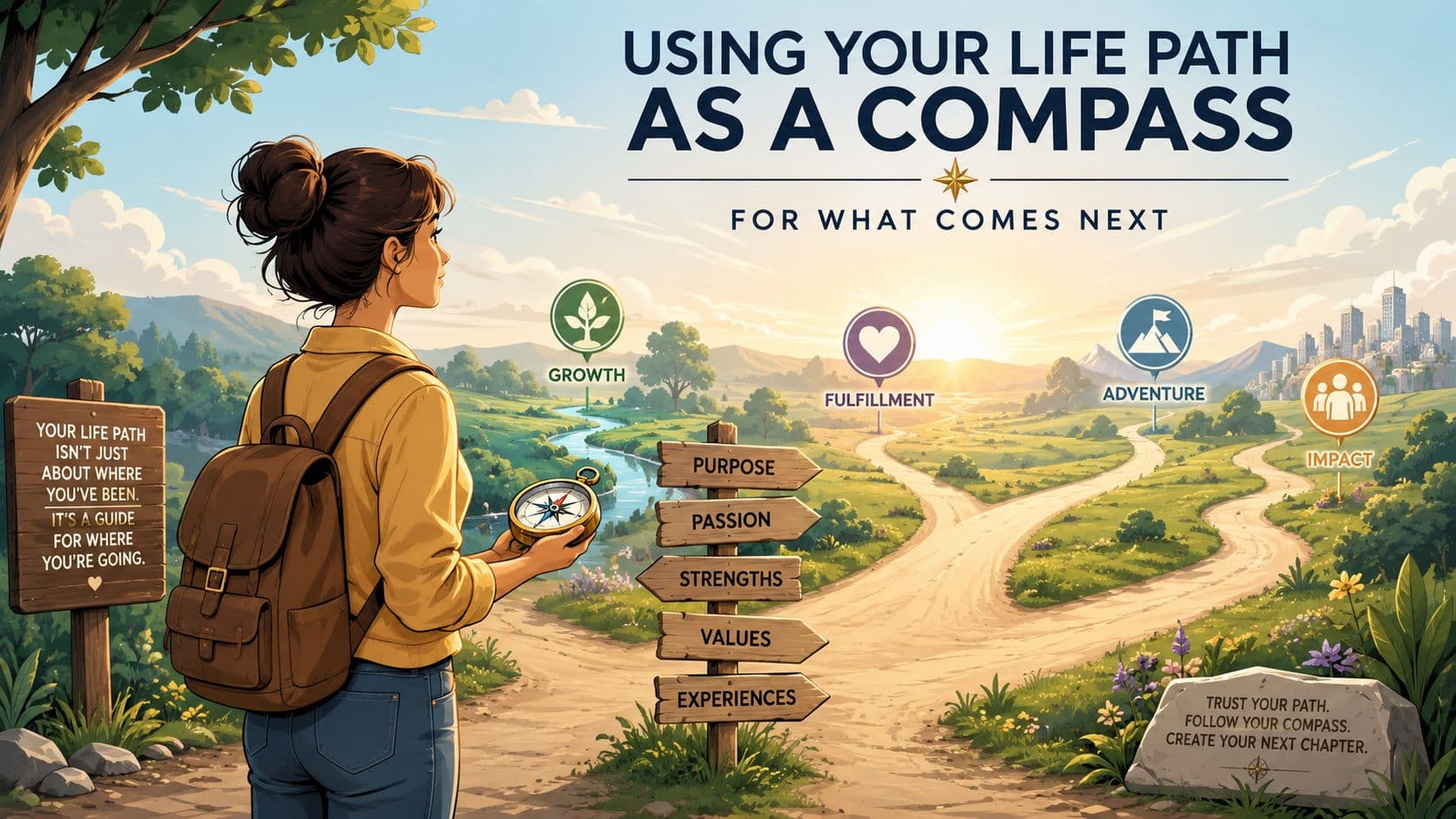
Using Your Life Path as a Compass for What Comes Next
Dan Millman's life-path framework in The Life You Were Born to Live can serve as a mirror while you rebuild your identity. I wouldn't use it to predict what will happen or excuse behavior. Use it to ask sharper questions about values, natural gifts, recurring lessons, and the kind of contribution that feels sustainable.
The framework assigns a primary life path from your birth date and pairs it with a lesser complementary path. In the language of the book, the result is a readable map of recurring themes, strengths, and challenges. That map can be useful after divorce because the old relationship may have rewarded some parts of you while suppressing others.
Treat the framework as reflection
Consider a Path 7 seeker who is drawn to quiet study, analysis, solitude, and depth. If that person keeps forcing themselves into loud sales roles, feels drained, and concludes they're failing, the life-path lens offers a different question: Is this failure, or is it misalignment?
That reframing doesn't mean the person should abandon every difficult task. Purpose often requires skills that don't come naturally. It means they can distinguish growth from chronic self-betrayal. A complementary path may point toward a quality they need to develop, such as stronger communication, practical engagement, or greater trust in others.
A useful framework doesn't make decisions for you. It gives you better questions to bring to your decisions.
Read your own path description twice. The first reading often triggers recognition or resistance. The second lets you notice the details you dismissed because they challenged your preferred self-image.
Then journal through three areas:
- Identity change: Where did your path's strengths appear in the marriage, and where did you hide them?
- Relationship patterns: Which recurring lesson showed up in conflict, caretaking, intimacy, or avoidance?
- The next development: What might your complementary path be asking you to practice now?
The Life Purpose App is one digital option for exploring this system. It uses a birth date to provide a life-path profile, with information connected to core issues, talents, challenges, relationships, and life cycles. Keep the output beside your own experience. The app can suggest a language for reflection, but your choices, boundaries, and lived evidence must remain the authority.
When Therapy Is Worth It and How to Choose One
Therapy is worth serious consideration when divorce symptoms are interfering with the responsibilities you care about. If intrusive memories, lost sleep, or anger keep spilling into parenting or work for more than a month, don't treat that as a character flaw. If old wounds keep producing the same relationship pattern, a skilled therapist can help you interrupt it instead of merely describing it.
A review of longitudinal research associated separation or divorce with a 23% higher mortality rate, and reported that among people with a prior history of major depressive disorder who later divorced, roughly six out of ten experienced a subsequent depressive episode. The same review notes that U.S. lifetime prevalence of major depressive disorder is about 17%, while people without a prior history of the disorder don't show the same significant elevation in future depressive-episode risk after divorce. These findings are summarized in this review of divorce recovery.
That distinction matters. Divorce can be intensely painful without causing chronic clinical impairment, but a person's mental-health history changes what support makes sense. A therapist can help you assess that difference rather than relying on a generic recovery timetable.
Know what kind of help you need
Therapy doesn't have to be urgent if you mainly need structure, social contact, and time. A good book, support group, trusted mentor, or coach may be enough for a period, provided your daily functioning is stable and you aren't avoiding serious symptoms.
Choose a therapist who works with post-divorce recovery or major life transitions. Ask:
- How would you frame the first three sessions?
- How do you separate grief from recurring psychological patterns?
- How will we know whether the work is helping?
- What do you do when a client feels stuck?
Avoid anyone who pushes one ideology, promises quick closure, or treats your former marriage as a simple morality play. The right therapist should feel like a steady collaborator, not a rescuer.
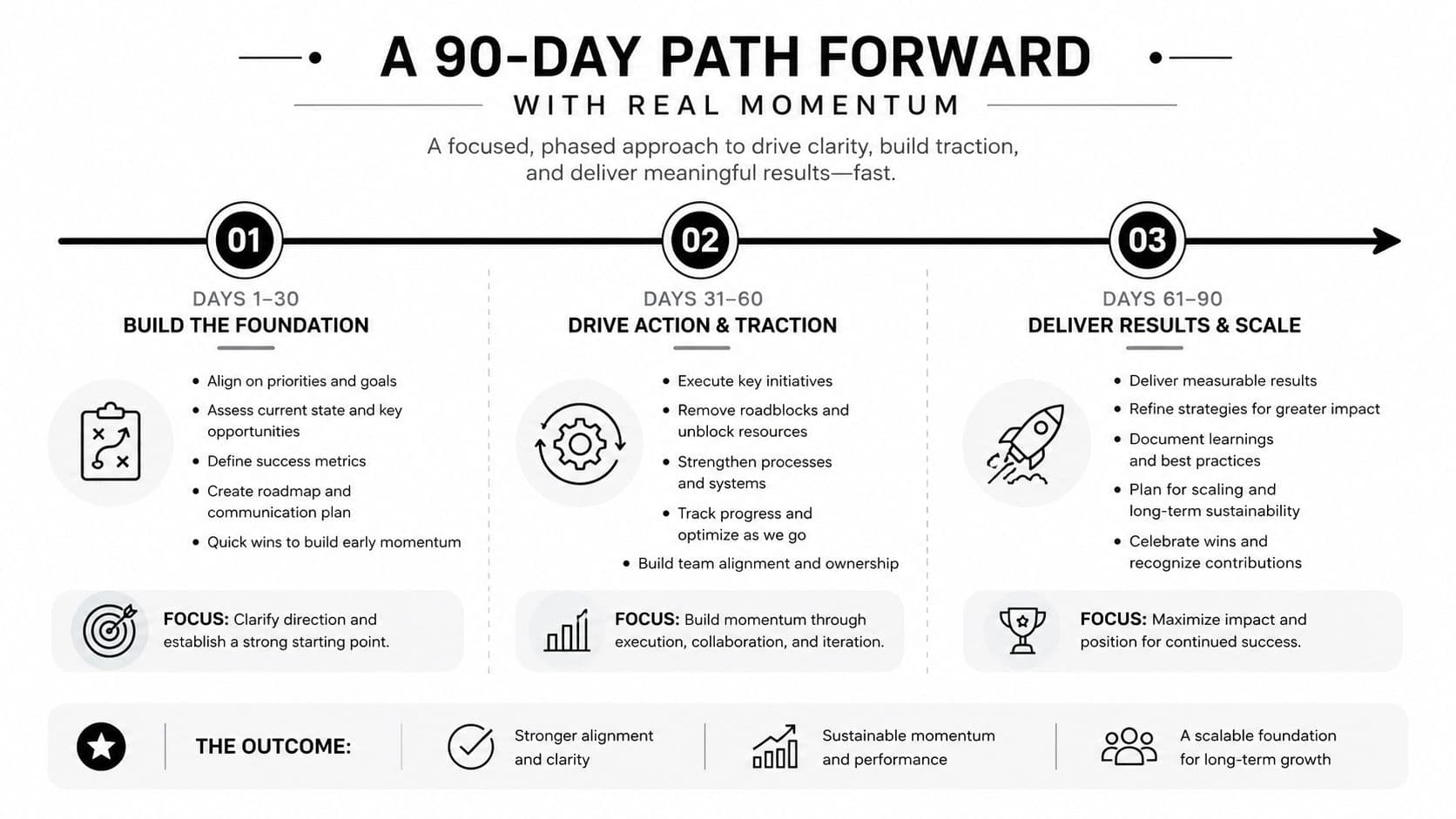
A 90-Day Path Forward With Real Momentum
A useful 90-day plan should produce traction without demanding that you feel transformed. Divide the period into three phases, each with a different job.
Days 1 through 30 build the floor
Repeat the stabilization moves: consistent waking, one anchored daily block, short movement, hydration, one prepared meal, and weekly contact with a trusted person. Create the one-page budget and address persistent sleep or appetite problems with your primary care doctor.
This month isn't glamorous. That's why it works. You're proving that your new life can hold you before asking it to inspire you.
Days 31 through 60 clarify direction
Set aside one weekly session for journaling. Review the marriage-role prompts, the five abandoned preferences, and the future Tuesday description. Add a reading and reflection session using The Life You Were Born to Live, treating Dan Millman's life-path framework as a question-generating tool rather than a prediction.
Pair reflection with one social repair task and one financial repair task each week. Invite someone to dinner, attend a recurring group, review a bill, adjust an automatic transfer, or investigate work that fits your emerging values.
Days 61 through 90 create evidence
Choose one small experiment. Start a creative project, join a community commitment, take a class, return to an old interest, or volunteer in a role that uses a neglected strength. The experiment isn't your permanent purpose. It's evidence about what gives you energy, what drains you, and which people or environments help you feel more like yourself.
At the end, write a next-chapter review. Keep what worked, revise what didn't, and choose the next experiment.
Take these actions this week:
- Schedule one recurring dinner: Put a reliable social connection on the calendar.
- Open or designate one savings account: Automate a manageable transfer toward your emergency buffer.
- Write one page: Describe the life you want to build without using status words.
- Choose one experiment: Give an old interest or new community a real-world trial.
- Book support if needed: Contact a therapist or primary care doctor if symptoms are disrupting daily life.
The Life Purpose App offers a digital way to explore Dan Millman's life-path system from The Life You Were Born to Live, using your birth date to examine recurring themes, strengths, challenges, relationships, and life cycles. Visit Life Purpose App and use the profile as a starting point for the deeper identity work your next chapter requires.
Discover Your Life Purpose Today!
Unlock your true potential and find your life’s purpose.
