Looking for clarity? Discover 8 powerful finding-purpose quotes from thinkers like Marcus Aurelius and Steve Jobs, with practical steps and journaling prompts to turn insight into action.

July 14, 2026 (4mo ago) — last updated October 21, 2026 (1mo ago)
8 Quotes to Help You Find Your Life’s Purpose
Find clarity with 8 purpose-driven quotes from Marcus Aurelius to Steve Jobs, plus practical steps, journaling prompts, and tools to turn inspiration into action.
← Back to blog
Looking for clarity? Discover 8 powerful finding-purpose quotes from thinkers like Marcus Aurelius and Steve Jobs, with practical steps and journaling prompts to turn insight into action.
More Than Words: Turning Inspiration Into Your Life’s Purpose
Looking for clarity? Discover 8 powerful finding-purpose quotes from thinkers like Marcus Aurelius and Steve Jobs, with practical steps to apply each one and tools to turn insight into action.
What if that nagging feeling of being lost isn’t proof you’re failing, but evidence that part of you is done living on autopilot? Many people don’t lack ambition. They lack practical translation of abstract advice. Purpose language can sound inspiring and disappear the moment life shows up with bills, fear, family expectations, and ordinary Tuesday fatigue.
That gap is why finding-purpose quotes help only when you do more than admire them. A quote can name a truth in seconds. Living it takes practice, friction, and self-knowledge. Purpose often becomes clearer when reflection is paired with tools that make inner patterns visible: journaling, long walks, therapy, or systems like Dan Millman’s The Life You Were Born to Live and the Life Purpose App.4
A widely circulated compilation of purpose-focused responses and reflections highlights how many people place meaning above money; see related community polls and reader notes for context.1
If you want to turn insight into action, structure matters. These eight finding-purpose quotes are chosen for both their immediate clarity and their practical entry points.
1. “The obstacle is the way.” — Marcus Aurelius

This quote is often read as motivation. The better reading is instruction: the obstacle isn’t interrupting your path; it is your path.
That’s hard to accept in the middle of rejection, illness, grief, or confusion. Yet purpose often sharpens under pressure because pressure strips away performance. Hard seasons force a more honest relationship with what matters.
Work with the resistance
Millman’s system doesn’t pretend life paths are built from gifts alone. It identifies distinct challenges too. Growth isn’t random: the friction you’re meeting may be connected to the qualities your path is trying to develop.4
Practical rule: When life blocks you, stop asking only, “How do I get past this?” Ask, “What strength is this demanding from me?”
Try this for one week:
- Name the obstacle clearly in one sentence with no drama: “I’m afraid to leave a career that no longer fits.”
- Find the skill inside the pain: courage, patience, boundaries, humility, discernment.
- Review pattern: open the Life Purpose App and compare your struggle with Millman’s life-path descriptions.4
- Journal backward: list three old obstacles that shaped strengths you now rely on.
Purpose gets sturdier when you stop treating difficulty like a cosmic mistake.
2. “The only way to do great work is to love what you do.” — Steve Jobs

This line is one of the most quoted in purpose literature and one of the most misunderstood. Loving your work doesn’t always mean it feels easy or glamorous. Steve Jobs cared intensely, and that intensity kept bringing him back to the work even after failure.2
The useful test isn’t “Does this feel fun every day?” but “Do I still care when it’s difficult?”
Love is not the same as fantasy
Purpose rarely arrives as a single blazing passion. Often it appears through repeated attraction: you keep returning to a subject, a problem, a craft, or a community. That pull matters.
The Japanese idea of ikigai — the overlap of what you love, what you’re good at, what the world needs, and what you can be paid for — pairs well with systems that map gifts to contribution. Use the Life Purpose App to explore how your natural strengths fit real service opportunities.4
Use this quote like a filter:
- Track energy, not mood: notice which tasks leave you more alive after doing them.
- Notice recurring concern: which problems in others’ lives make you want to help?
- Match gift to service: compare your strengths with the Life Purpose App’s career guidance.4
- Stop chasing borrowed prestige: a respected path that deadens you is still misalignment.
Some work feeds ego. Other work feeds life. Purpose usually begins in the second kind.
3. “Everything you want is on the other side of fear.” — Jack Canfield

Fear can sound wise: stay safe, wait until you’re ready, avoid embarrassment. The problem is that purpose rarely introduces itself under perfect emotional comfort. It usually appears at the edge where your current identity can no longer contain your deeper life.
Learn the difference between danger and expansion
Not every fear should be obeyed, and not every fear should be conquered. Some fear protects your body; some protects your self-image. Learning the difference changes everything.
If anxiety is intense or persistent, grounded support matters. Practical help such as local counselling and therapy can make discerning the right risks safer and clearer.
Try this journal sequence:
- Define the fear precisely: “I’m afraid I’ll fail publicly.” “I’m afraid my family won’t understand.”
- Name the cost of obeying it: what part of your life gets smaller if you keep retreating?
- Take one edge step: send the email, sign up for the class, publish the post, make the call.
- Review your pattern: use the Life Purpose App to see whether this fear mirrors a recurring lesson in your life.4
Fear shrinks when you stop debating your whole future and take one honest step.
4. “Your time is limited, so don’t waste it living someone else’s life.” — Steve Jobs
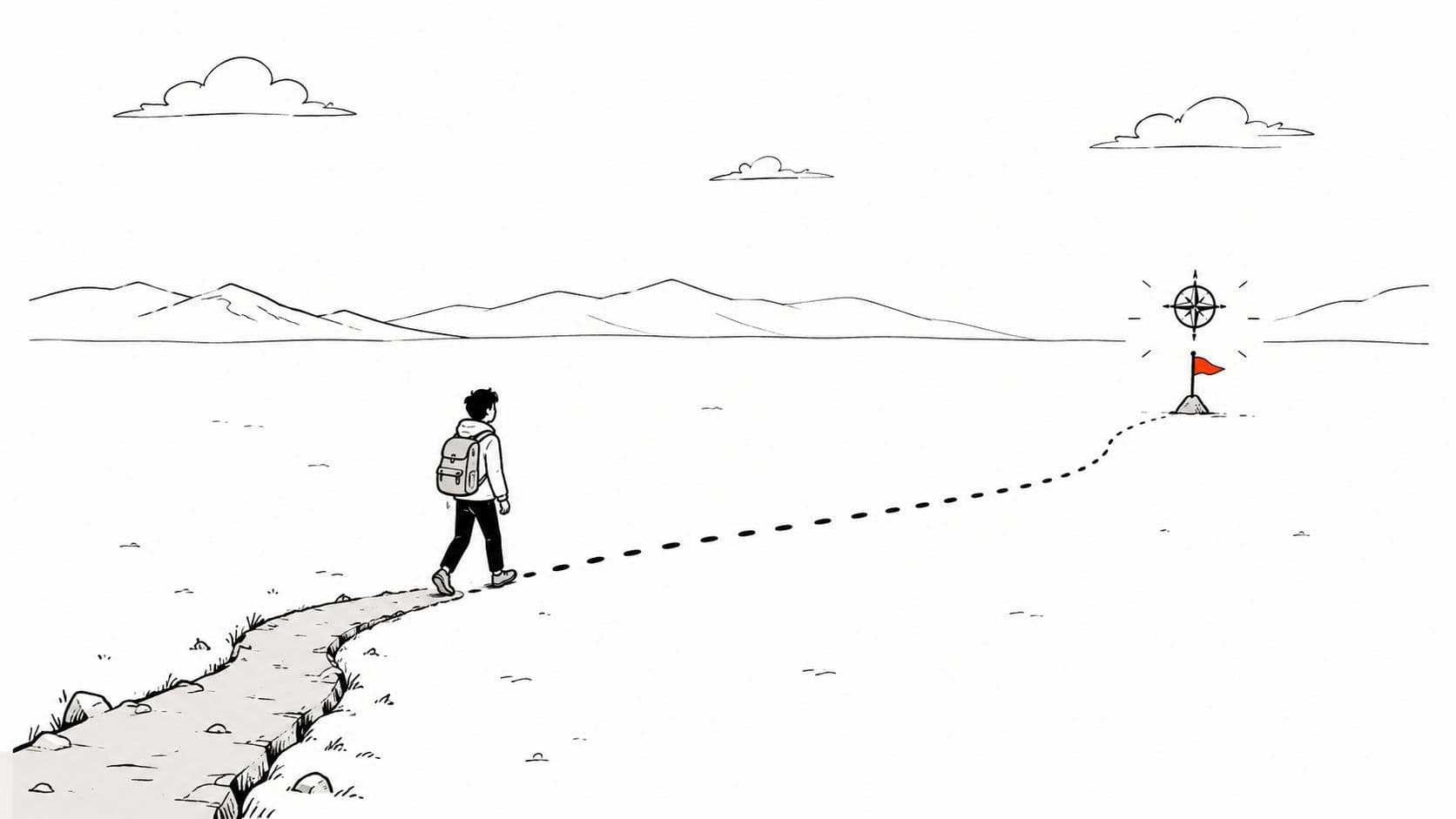
This quote can hurt because many of us can see where we’re doing it: keeping roles because they look respectable, staying loyal to expectations that no longer fit.
Purpose dies by imitation long before it dies by failure.
Borrowed ambition has a cost
Self-knowledge matters more than self-improvement hacks. Systems that give language to your tendencies, gifts, and tensions help you sort what is yours from what you’ve absorbed. The Life Purpose App and Millman’s descriptions help distinguish inherited scripts from genuine calling.4
A practical exercise:
- Write two lists: choices you made for approval and choices you made from conviction.
- Scan for body truth: which list feels lighter when you read it?
- Set one boundary: decline one expectation that keeps you in a false role.
- Consult your path: compare your actual direction with the role you’ve been performing using the Life Purpose App.4
Many people don’t need a brand-new life. They need to stop living a rented one.
5. “The purpose of our lives is to be happy.” — Dalai Lama
This sounds simple until you take it seriously. Happiness here isn’t mindless pleasure. It’s alignment: the steadier feeling that your life is coherent, honest, and connected to something nourishing.
A lot of people pursue purpose as if it must feel heavy to be valid. That usually backfires. Chronic self-betrayal doesn’t become noble because you call it sacrifice.
Happiness needs structure
Examples like Fred Rogers and the Dalai Lama show how discipline and small, steady practices create durable joy. Purpose that has no room for joy usually turns into performance.
Ask:
- What brings clean happiness — not escape, not numbing, but a calmer aliveness?
- What commitment drains meaning because it isn’t true, not because it’s hard?
- Which life season are you in: expansion, repair, learning, service, or reevaluation?
Millman’s system also maps longer cycles that can explain why fulfillment changes shape across seasons, which helps normalize shifts in meaning and energy.4
If a goal keeps making you more fragmented, it may be feeding ambition while starving purpose.
6. “Don’t go where the path may lead; go instead where there is no path and leave a trail.” — Ralph Waldo Emerson
Trailblazing isn’t only entrepreneurship or fame. It can mean creating a vocation no one around you understands, building an unconventional family life, combining disciplines, or refusing a script.
Originality needs grounding
Originality without self-knowledge can become chaos. You need to know the difference between a real calling and a reaction against authority. Millman’s life-path system gives structure for that discernment and makes it easier to test whether a novel direction is sustainable.4
Questions to help:
- Where do your gifts diverge from convention?
- What do people ask you for that feels natural to you but difficult to them?
- What kind of life would you build if you stopped asking whether it looked normal?
Leaving a trail isn’t about being different. It’s about being exact.
7. “What lies behind us and what lies before us are tiny matters compared to what lies within us.” — Ralph Waldo Emerson
This quote recenters agency. Purpose becomes possible when inner resources carry you through uncertain periods, rather than waiting for external permission.
Inner work becomes outer direction
Viktor Frankl argued that meaning is forged by the stance we take toward life, not handed to us by ideal conditions. Usefulness anchors purpose: it gives meaning somewhere to land and corrects the excess focus on passion alone.5
Journal prompts:
- Which strengths have carried me through previous pain?
- Which values remain true when circumstances change?
- Where can I be useful right now without waiting for a perfect plan?
- Which part of my life improves when I act from character instead of mood?
The inner life isn’t separate from purpose. It’s the source of it.
8. “The two most important days in your life are the day you are born and the day you find out why.” — Mark Twain
This quote captures a real ache: being alive isn’t the same as knowing what your life is for. Purpose rarely arrives as a single lightning bolt. It emerges through reflection, pattern recognition, and repeated experiments in the world.
Turn the why into practice
Millman’s approach offers a practical entry: calculate your life path by adding every digit in your full birth date and keeping the full sum so that numbers like 37, 38, or 45 remain distinct paths rather than being reduced further. That precision helps many people move from inspiration to usable insight.4
A useful daily practice:
- Set aside real time: purpose work doesn’t happen well in distracted scraps.
- Map peak moments: when have you felt most alive, useful, or aligned?
- Compare pattern with path: use the Life Purpose App alongside Millman’s book.4
- Test insights: purpose becomes clearer when lived, not merely analyzed.
If you feel disoriented, you’re not alone. Grounded support and structured reflection can help you move forward.
From Quote to Quest
Read a quote as a prompt, not decoration. Take one quote, write it down, ask where it shows up in your actual week, then test it in behavior: set a boundary, have the conversation, apply for the role, start the practice, say no to an obligation. Purpose gets clearer through use.
Millman’s life-path system adds another layer of structure. Inspiration becomes more reliable when paired with a framework that names patterns clearly. The Life Purpose App can support that process by helping you examine your life path, recurring lessons, and longer cycles so you treat purpose as a pattern you can study and work with rather than a mood.4
If one quote unsettled you in a useful way, start there. Journal on it tonight. Then choose one concrete action for the next 24 hours — small enough to do, meaningful enough to matter. That’s how a quote becomes a quest.
Quick Q&A
Q: How do I start turning a quote into real change?
A: Pick one quote that unsettles you, journal on where it appears in your week, then choose one concrete, small action to test it — send the email, set a boundary, or try a new task.
Q: Are systems like The Life You Were Born to Live useful or just entertainment?
A: They’re useful as interpretive frameworks that name recurring patterns and suggest practices; treat them as mirrors for reflection, not absolute rules.4
Q: What if fear or anxiety is blocking me from taking steps?
A: Distinguish fear that protects your body from fear that protects your smallness. If anxiety is intense, seek grounded professional support and use gradual exposure steps paired with journaling.
Internal links and further reading
- Try a short journaling exercise: /journaling-prompts
- Learn more about life-path tools: /life-purpose-app
- Read practical steps for finding purpose: /how-to-find-purpose
1.
A collection of community reflections and reader polls on purpose and meaning is available at https://www.goodreads.com/quotes/tag/purpose.
2.
Steve Jobs, Stanford Commencement Address, 2005. Transcript available at https://news.stanford.edu/2005/06/14/jobs-061505/.
3.
Industry reporting on digital wellness and personalization notes growing interest in astrology and life-path apps; see representative market coverage at https://www.prnewswire.com/.
4.
Dan Millman, The Life You Were Born to Live and the Life Purpose App overview, summary resources at https://sobrief.com/books/the-life-you-were-born-to-live.
5.
Viktor Frankl, Man’s Search for Meaning; overview of Frankl’s argument available at https://en.wikipedia.org/wiki/Viktor_Frankl.
Discover your life path today
Enter your date of birth and see your life path, free.
Find your life path