Feeling lost? This guide helps you move from drifting to deliberate direction. With focused journaling, tiny real-world experiments, and Dan Millman’s Life Path framework, you’ll gather evidence about what energizes you and learn how to test purpose in daily life.

January 4, 2026 (9mo ago) — last updated June 21, 2026 (4mo ago)
How to Find Your Life’s Goal
Practical steps, journaling prompts, and Dan Millman’s Life Path system to uncover your life’s goal and test it with short experiments.
← Back to blog
Feeling lost? This guide helps you move from drifting to deliberate direction. With focused journaling, tiny real-world experiments, and Dan Millman’s Life Path framework, you’ll gather evidence about what energizes you and learn how to test purpose in daily life.
How to Find Your Life’s Goal
Summary: Feeling lost? Practical steps, journaling prompts, and Dan Millman’s Life Path system to uncover your life’s goal and test it with short experiments.
Introduction
Feeling lost? This guide helps you move from drifting to deliberate direction. With focused journaling, tiny real-world experiments, and Dan Millman’s Life Path framework, you’ll gather evidence about what energizes you and learn how to test purpose in daily life.
Why the question matters
Asking “What is the goal of my life?” is more than a passing thought. It’s a search for direction and meaning. Purpose emerges where your energy, skills, and the world’s needs overlap. If you feel adrift, you’re not alone. Many people use tools and apps to map a more intentional life1.
Purpose grows from ongoing reflection, structure, and action.
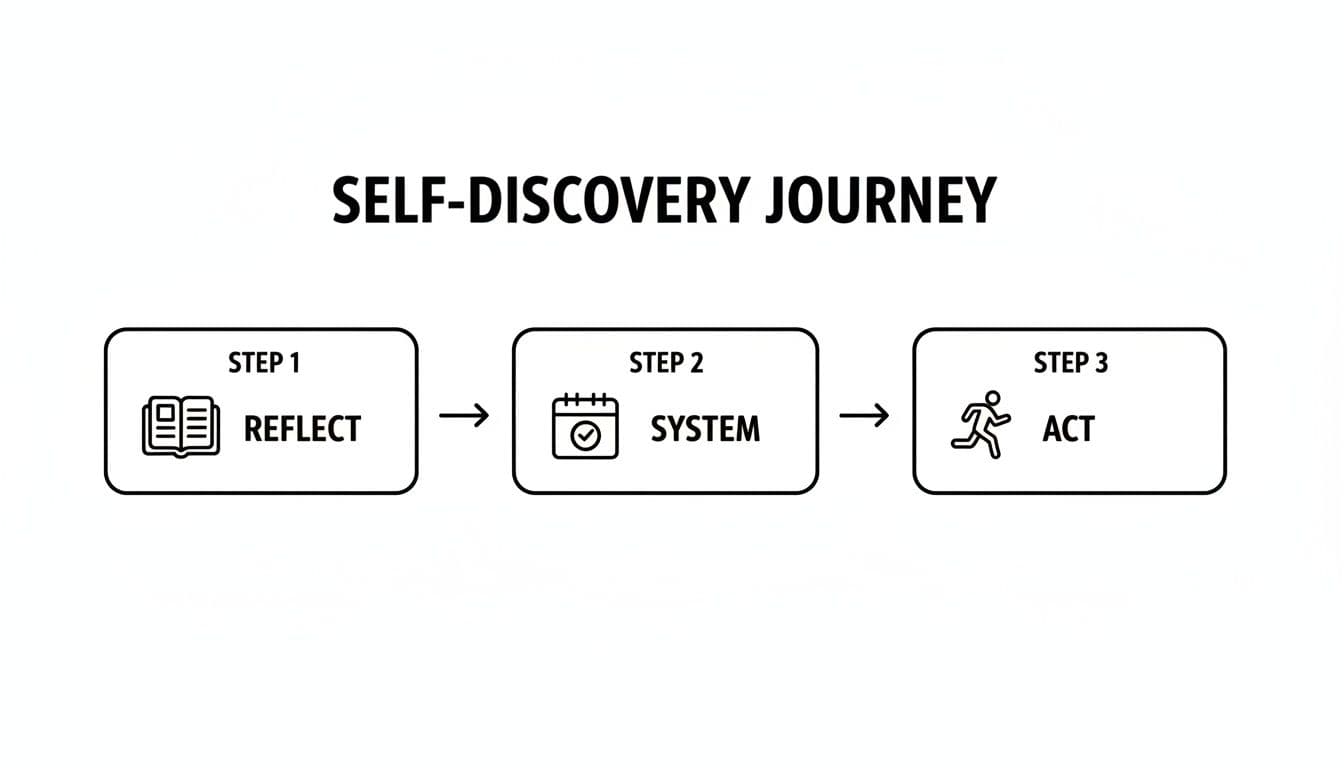
A practical path forward
Instead of waiting for a single revelation, combine self-reflection with a tested framework. Dan Millman’s The Life You Were Born to Live and tools like the Life Purpose App use your birth date to highlight recurring themes, strengths, and challenges. Treat these systems as practical maps—helpful guides, not absolute answers3.
“The real goal isn’t to be handed an answer, but to find a better way of asking the questions.”
Mindset shifts to start with
Small mindset changes make the work feel like exploration rather than pressure:
- Ditch the “one true calling” myth. Look for recurring themes and values rather than a single perfect purpose.
- Choose curiosity over pressure. Ask “What if?” and “I wonder…”
- Look back to move forward. Identify moments when you felt most alive or in flow.
- Focus on contribution, not just passion. What problems do you want to solve?
Use journaling to gather evidence
Journaling turns scattered impressions into usable data. Set aside 15–20 minutes in a quiet spot and answer focused prompts without judgment.
- Describe a time you felt completely in your element. What were you doing? Who was there? How did it feel in your body?
- What problem in the world, your community, or your job lights a fire in you?
- If you had to teach a 30-minute class with zero prep, what topic would you choose?
- When do you feel most like yourself?
For more prompts, see related prompts on the Life Purpose App.
Turn reflections into insights
After a week of journaling, review entries for recurring themes, emotions, and keywords. Your journal is raw data; your review is analysis that reveals patterns.
| Activity/Memory | Feelings Evoked | Core Value Revealed |
|---|---|---|
| Mentoring a new team member | Energized, proud | Empowerment, guidance |
| Solving a coding bug | Focused, triumphant | Problem-solving, mastery |
| Solo hike in the mountains | Peaceful, expansive | Solitude, nature, freedom |
These distilled values become building blocks for a clearer purpose. Research shows expressive writing and reflective journaling can improve clarity and emotional processing, which supports decision-making about life goals7.
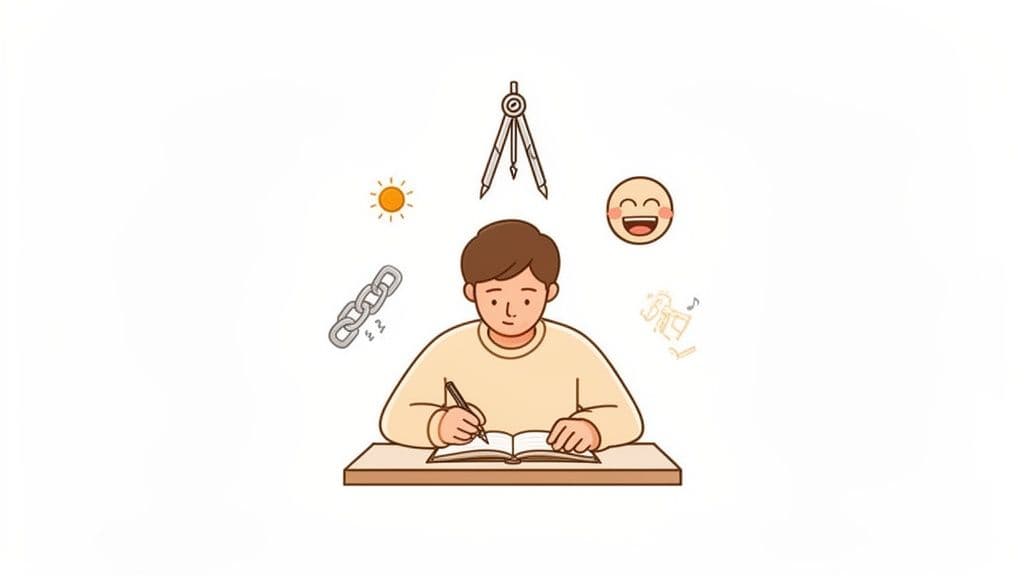
Uncover your blueprint with Dan Millman’s Life Path system
After journaling, overlay your findings with a time-tested blueprint. Millman’s system assigns life path numbers from your birth date to highlight core themes, talents, and recurring challenges. It’s a practical framework that can validate your reflections and reveal blind spots3.
A consistent theme between your journal and your life path number strengthens confidence that you’re on the right track.
Example in practice
Imagine Sarah. Her journal is full of stories about mediating conflicts and organizing community events. Her theme is harmony and diplomacy. The Life Purpose App confirms a path focused on cooperation and warns of a tendency to overextend for others. With that insight, Sarah reframes her purpose: create harmony while protecting her own energy.
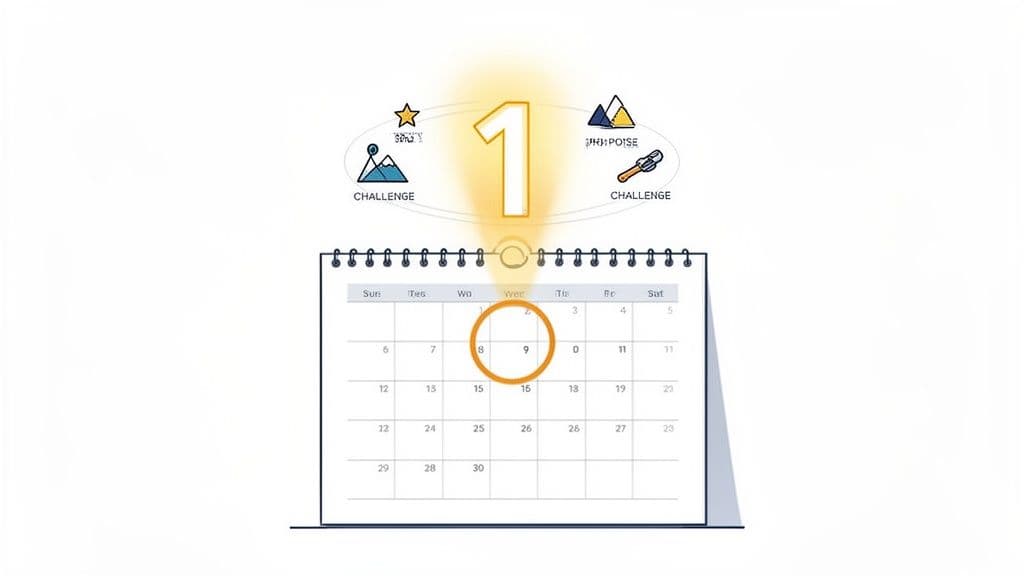
Bring purpose into daily decisions
Your life path number and journal insights are tools for everyday choices:
- Career: Does your work use your core strengths?
- Relationships: Does understanding a partner’s path explain friction or fit?
- Finances: Does your path suggest risk tolerance or a need for stability?
Use small, consistent actions to test alignment. Many people use habit-tracking and planning tools to turn insight into change4.
Test purpose with micro-experiments
Treat purpose as a hypothesis. Run low-risk experiments to see how an idea feels in practice. Don’t quit your job; try “purpose sampling.” Keep experiments tiny so you can’t talk yourself out of them.
Examples:
- Service: Volunteer a single four-hour shift at a hospital or help an elderly neighbor for a week.
- Creativity: Write 15 minutes a day for one week or attend a local writing group.
- Mentoring: Tutor a student for one hour.
Design useful experiments
Keep tests small and specific. Observe energy, flow, and meaning rather than looking for instant career certainty.
| Potential Area | Low-Risk Experiment | Evaluation Question |
|---|---|---|
| Teaching/mentoring | Tutor a student for one hour | Did it energize me? |
| Environmentalism | Join a one-day cleanup | Did it feel satisfying? |
| Entrepreneurship | Create a one-page business idea | Did the process excite me? |
| Animal welfare | Walk shelter dogs for a morning | Did I feel a strong connection? |
Evaluate each test
After a test, ask:
- Did this energize or drain me?
- Did I lose track of time (flow)?
- Did it feel meaningful beyond momentary fun?
A “no” is useful data. It refines your hypothesis and points you toward a closer fit.
Weave purpose into daily life
Purpose is a compass, not a one-time event. Build momentum with small, consistent actions that align with your values.
Example for someone whose purpose is empowering others through teaching:
- This week: Block 30 minutes to research platforms for sharing knowledge.
- Today: List three topics you enjoy explaining.
- Right now: Offer a friend a listening ear on something they’re stuck on.
When the fog returns, revisit your sources:
- Re-read journal entries that felt alive.
- Revisit your life path in the Life Purpose App to see challenges in context3.
Plan with your natural cycles and protect your energy to avoid burnout5.
Common questions answered
What if I have too many interests to pick one goal?
That’s a strength. Look for an overarching theme—like “empowering others” or “solving puzzles”—that connects diverse interests. Life path frameworks can reveal the larger energy that ties them together3.
How do I know if it’s true purpose or a passing interest?
True purpose resonates repeatedly and fuels you even when it’s hard. Use testing to see whether the activity consistently energizes you and aligns with your values.
Can my life’s goal change?
Yes. Your core purpose tends to stay steady while the ways you express it evolve. Think of purpose as a compass that guides changing routes.
Quick Q&A: Common user questions
Q: How do I start if I feel completely lost?
A: Begin with short journaling sessions (15–20 minutes), answer a few deep prompts, and run tiny experiments to collect evidence about what energizes you.
Q: Is numerology-based guidance useful or pseudoscience?
A: Treat systems like Dan Millman’s as practical frameworks—tools to validate and clarify your reflections, not absolute answers.
Q: What if my experiments fail?
A: “Failing” is data. Each result narrows your options and brings you closer to what truly fits.
Bottom-line Q&A (concise answers)
Q: What is the first thing I should do?
A: Start a 15-minute daily journal for one week and note moments of energy and flow.
Q: How can I test a possible purpose quickly?
A: Run a one-week micro-experiment of 15–60 minutes per day and evaluate energy, flow, and meaning.
Q: Where can I get structured help?
A: Use the Life Purpose App to compare your journal findings with a life path framework and gain clarity3.
Three concise Q&A summary sections
1) Getting started when you feel lost
Q: What’s a simple first step?
A: Write for 15 minutes each day for seven days and flag moments that felt energizing.
Q: How will I know I’m making progress?
A: You’ll spot repeating themes, emotions, and actions that point to strengths and values.
2) Validating insights with a framework
Q: How can a life path system help?
A: It offers a structured lens to compare against your journal evidence and highlight blind spots or recurring patterns.
Q: Should I treat it as destiny?
A: No. Use it as a tool to test and clarify—not a fixed verdict.
3) Moving from clarity to action
Q: How do I try purpose without risking too much?
A: Run very small, time-boxed experiments that test energy and meaning.
Q: What if an experiment doesn’t fit?
A: Record what you learned and adjust your next test. Each result refines your direction.
Ready to explore your life path? Learn more at the Life Purpose App: https://lifepurposeapp.com.
\"1\".
Grand View Research, “Life Planning App Market Size & Share,” https://www.grandviewresearch.com/industry-analysis/life-planning-app-market.
\"2\".
Fortune Business Insights, “Wellness App Market Size, Share & COVID-19 Impact Analysis,” https://www.fortunebusinessinsights.com/wellness-app-market-105712.
\"3\".
Life Purpose App, user insights and app overview, https://www.lifepurposeapp.com.
\"4\".
Grand View Research, “Habit Tracking App Market Forecast,” https://www.grandviewresearch.com/industry-analysis/habit-tracking-app-market.
\"5\".
Research on habit formation and sustained behavior change, overview at Statista and academic summaries, https://www.statista.com and selected studies in behavioral science journals.
\"6\".
Overview of journaling benefits, Anxiety Checklist, https://anxietychecklist.com/what-is-journaling-benefits.
\"7\".
Harvard Health Publishing, “Writing to Heal — The Benefits of Expressive Writing,” https://www.health.harvard.edu/mind-and-mood/writing-to-heal.
Discover your life path today
Enter your date of birth and see your life path, free.
Find your life path