Discover a complete health optimization framework covering physical, mental, and spiritual wellness. Learn measurable metrics and daily habits.
August 5, 2026 (2d ago)
Health Optimization: A Complete Wellness Framework
Discover a complete health optimization framework covering physical, mental, and spiritual wellness. Learn measurable metrics and daily habits.
← Back to blog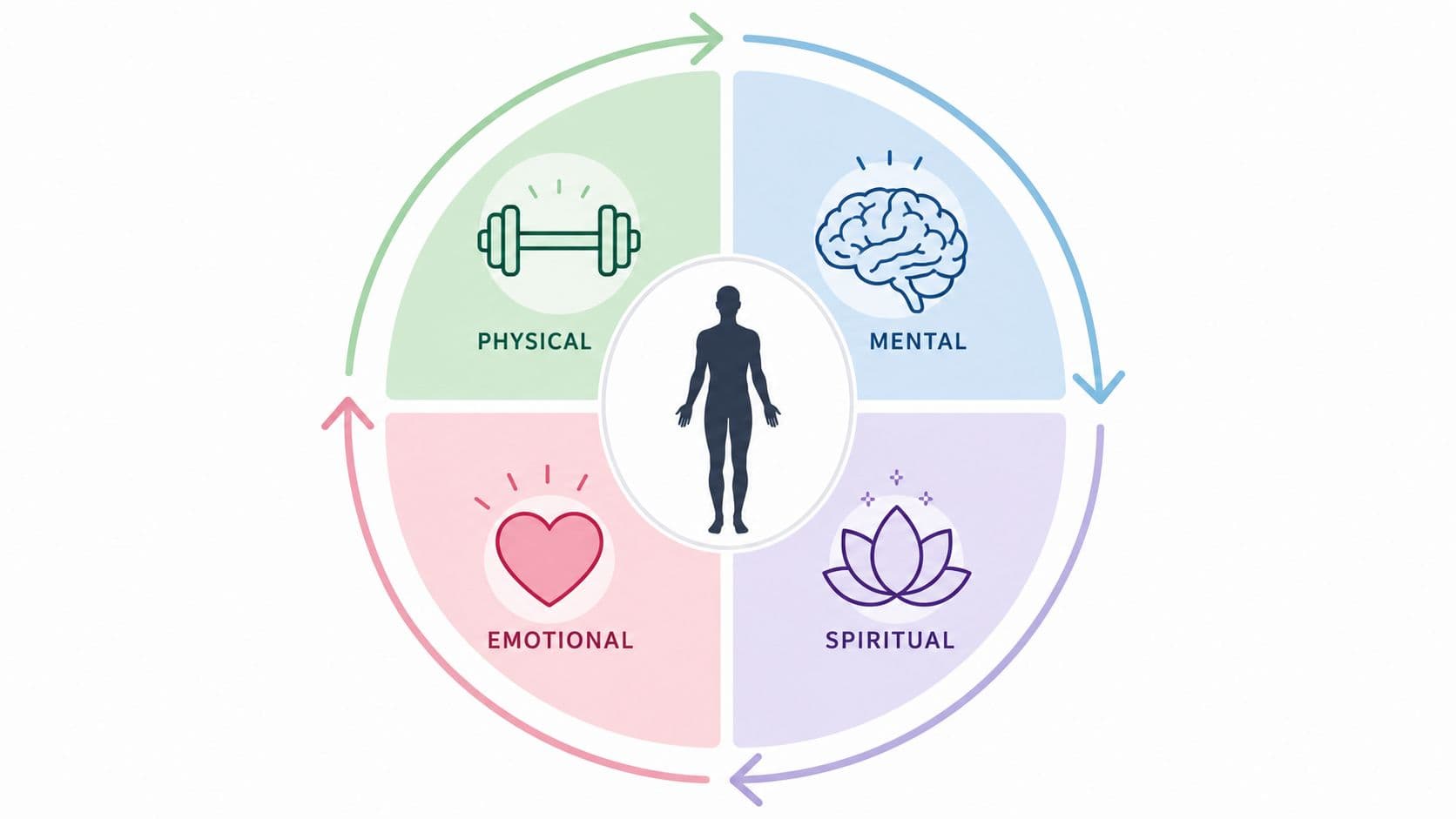
Many hear health optimization and picture gadgets, stacks, and expensive routines. That's a narrow view. Real optimization starts with the basics, then adds measurement, context, and self-knowledge so your effort moves your health in the right direction.
Health optimization is about making your limited time, energy, and attention work better for you. The World Health Organization recommends adults aged 18 to 64 get 150 to 300 minutes of moderate-intensity aerobic activity per week, or 75 to 150 minutes of vigorous-intensity activity, plus muscle-strengthening activities on 2 or more days per week. WHO also notes that regular physical activity can reduce all-cause mortality risk by 20% to 30% and lower the risk of cardiovascular disease, type 2 diabetes, and some cancers, which is why this topic is far more than a wellness trend. measuring healthy years vs total years is a useful lens here, because the goal isn't just living longer, it's living with more capacity.
Rethinking What Health Optimization Really Means
The loudest version of health optimization is often the least useful one. It tells people to buy more, track more, and chase more, as if better health were hidden in a supplement cabinet or a smart ring dashboard. That mindset misses the point. Health optimization is really a measurable, evidence-based process that helps you reduce risk, improve function, and use your resources wisely.
Health optimization begins with standards, not guesses
The WHO's activity guidance gives this field real structure. When adults reach 150 to 300 minutes of moderate activity or 75 to 150 minutes of vigorous activity each week, plus strength work on 2 or more days, they're not chasing perfection, they're meeting a benchmark tied to prevention. The same WHO guidance links regular physical activity with a 20% to 30% reduction in all-cause mortality risk, along with lower risk for major chronic diseases. WHO's physical activity recommendations make that plain.
That matters because many people think optimization means “doing everything.” It doesn't. It means identifying the few actions that create the biggest downstream benefits. A daily walk, a consistent strength routine, and enough recovery can matter far more than a complicated stack of biohacks with no foundation.
Practical rule: If a health habit doesn't improve your energy, resilience, or follow-through, it's probably just taking up space in your day.
Optimization also has a systems side. The WHO's recurring global health statistics reports reflect a broader shift toward benchmarks, targets, and continuous monitoring across countries. That same logic applies to personal health. You don't need perfect data. You need enough good data to see what's changing and why. WHO's global health statistics framework shows how measurement turns health from a vague idea into something you can improve.
That's the frame. Health optimization isn't a luxury hobby for people with endless time. It's a disciplined way of caring for your body, mind, and purpose so your life has more room in it.
The Four Pillars of an Integrated Health Framework
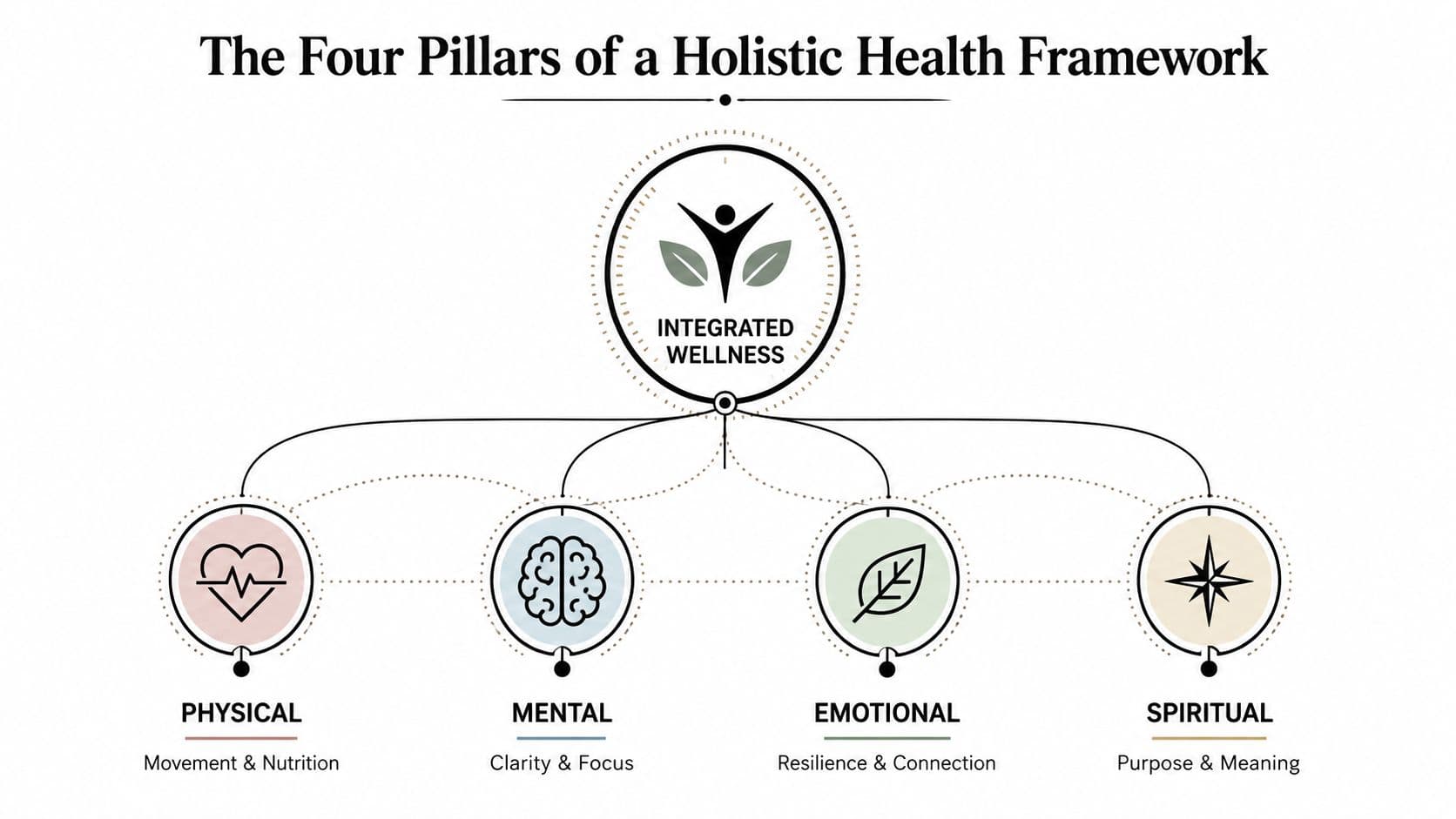
A useful health plan does not behave like a pile of separate projects. It works more like a coordinated system, where strain in one area often shows up somewhere else. The physical, mental, emotional, and spiritual dimensions of health belong together because they shape one another every day.
Physical health gives the body its baseline
Physical health includes movement, nutrition, sleep, blood pressure, and metabolic function. It is the most visible part of the picture, so many people start here. That makes sense, because the body is where energy, pain, recovery, and stamina become impossible to ignore.
It also sets the floor for everything else. When sleep is off or blood sugar is unstable, concentration, mood, and patience often become harder to manage. A body that functions well gives the rest of life more room to breathe.
Mental health shapes how you use attention
Mental health includes focus, thought patterns, memory, and the habits that shape your inner narrative. A person can train hard, eat well, and still feel pulled in ten directions if the mind is never given space to settle. Mental clarity helps you choose fewer things, then give those things real attention.
That is where self-awareness starts to matter. Dan Millman's life-path teaching in The Life You Were Born to Live points to a larger pattern, people often need to understand their natural tendencies before they can change them wisely. The point is not to label yourself. The point is to notice how your mind works, so your habits fit the person living your life, not an idealized version of who you think you should be.
Emotional health regulates how you relate
This pillar covers stress response, relationships, and your ability to stay steady under pressure. It shows up in how quickly you recover from conflict, how much tension you carry, and whether your relationships leave you nourished or depleted. Emotional health also influences whether you can follow through on the plans you make when life is calm.
A useful clue is your recovery time. If a difficult conversation derails your whole day, or if small frustrations pile up until they shape your behavior, the emotional pillar needs more care. Practices like honest communication, nervous system regulation, and healthy boundaries can make the other pillars much easier to sustain.
Spiritual health keeps the whole structure meaningful
Spiritual health is about purpose, values, and alignment. It does not require a specific belief system. It does require honesty about what matters most to you, and whether your daily routine reflects it.
Without that layer, even a polished routine can start to feel empty. People can chase better numbers while feeling increasingly disconnected from their own life direction. Spiritual self-knowledge and physical optimization reinforce each other here, because the body gives you the energy to live your values, and your values give the body a reason to stay cared for.
A quick self-check can make imbalance easier to see. Ask yourself where your energy leaks most often, which area gets ignored when life gets busy, and which pillar feels naturally strong. If you want a practical way to notice those patterns in daily life, listen to your body through clear feedback and honest reflection, then start where the signal is strongest, not everywhere at once.
Simple test: If your health plan makes one area stronger but drains another, it is not complete yet.
That is why these four pillars matter. They give you a way to read health as a living structure, not as a checklist.
Measurable Metrics and Smart Tracking Approaches
Health data only helps when it reflects the change you want to make. People often gather too many numbers too often, then end up with a cluttered pile of information that does not point to any clear decision. A better approach is to choose a few signals that matter, check them on a sensible schedule, and connect them to what is happening in daily life.
Choose metrics that reflect real change
For metabolic health, a useful benchmark is a ~90-day retest cycle for markers like HbA1c, because it reflects average glucose over roughly three months. Monthly testing can blur the picture, since the results overlap and become harder to interpret. Bloodwork works best when it sits beside a simple log of diet, training load, sleep, supplements, and stress, because then you can tell whether a shift is likely real or just short-term noise. This practical guide to health data timing explains why timing matters.
If you are unsure where to begin, UK metabolic health testing options can help you compare the kinds of measures people often review, even if your own plan stays simple. The point is to choose indicators that match your goal, not someone else's dashboard.
A simple metric map
| Metric | What It Measures | Recommended Interval | Optimal Range |
|---|---|---|---|
| HbA1c | Average glucose over time | About every 90 days | Use your clinician's interpretation |
| Fasting glucose | Short-term glucose status | Consistent, periodic checks | Use your clinician's interpretation |
| Fasting insulin | Insulin response | Consistent, periodic checks | Use your clinician's interpretation |
| Triglycerides | Lipid and metabolic pattern | Periodic lab review | Use your clinician's interpretation |
| Blood pressure | Cardiovascular strain | Regular home or clinic checks | Below 120/80 mm Hg is the AHA's optimal range for healthier aging |
The American Heart Association's Life's Essential 8 gives a practical anchor here. It recommends 2½ hours of moderate activity or 75 minutes of vigorous activity per week and names blood pressure below 120/80 mm Hg as the optimal range for healthier aging. That makes cardiovascular tracking feel less abstract and more actionable.
At a systems level, WHO's SCORE framework, Survey, Count, Optimize, Review, Enable, is a reminder that good health data has to move from collection to action. SCORE tools show why a dashboard only matters if it helps someone decide what to do next.
Practical Daily Habits That Compound Over Time
Real health change usually starts without fanfare. A walk after lunch, a steadier breakfast, a calmer evening routine, those ordinary choices often do more than a dramatic reset that burns bright for a week and then fades. The body learns by repetition, so a routine that feels almost too simple at first can become the one that truly holds.
Start with movement that fits real life
The strongest movement habit is the one you can repeat without rearranging your whole day. Research on physical activity and hypertension reports a linear, inverse dose-response relationship between leisure-time physical activity and incident hypertension, and each 10 MET-h/week increase is associated with a 6% lower risk of developing hypertension. That pattern is described here. Small increases still matter because the body responds to repeated signals, not only to intense workouts.
A working parent might take a brisk walk after lunch and do a short strength session twice a week. A commuter might park farther away and use the stairs. A person who prefers a gentler start might follow a short Donna Eden daily energy routine and then build from there. These choices may look modest, but they tell the nervous system and muscles the same message again and again.
Let habits stack instead of starting from zero
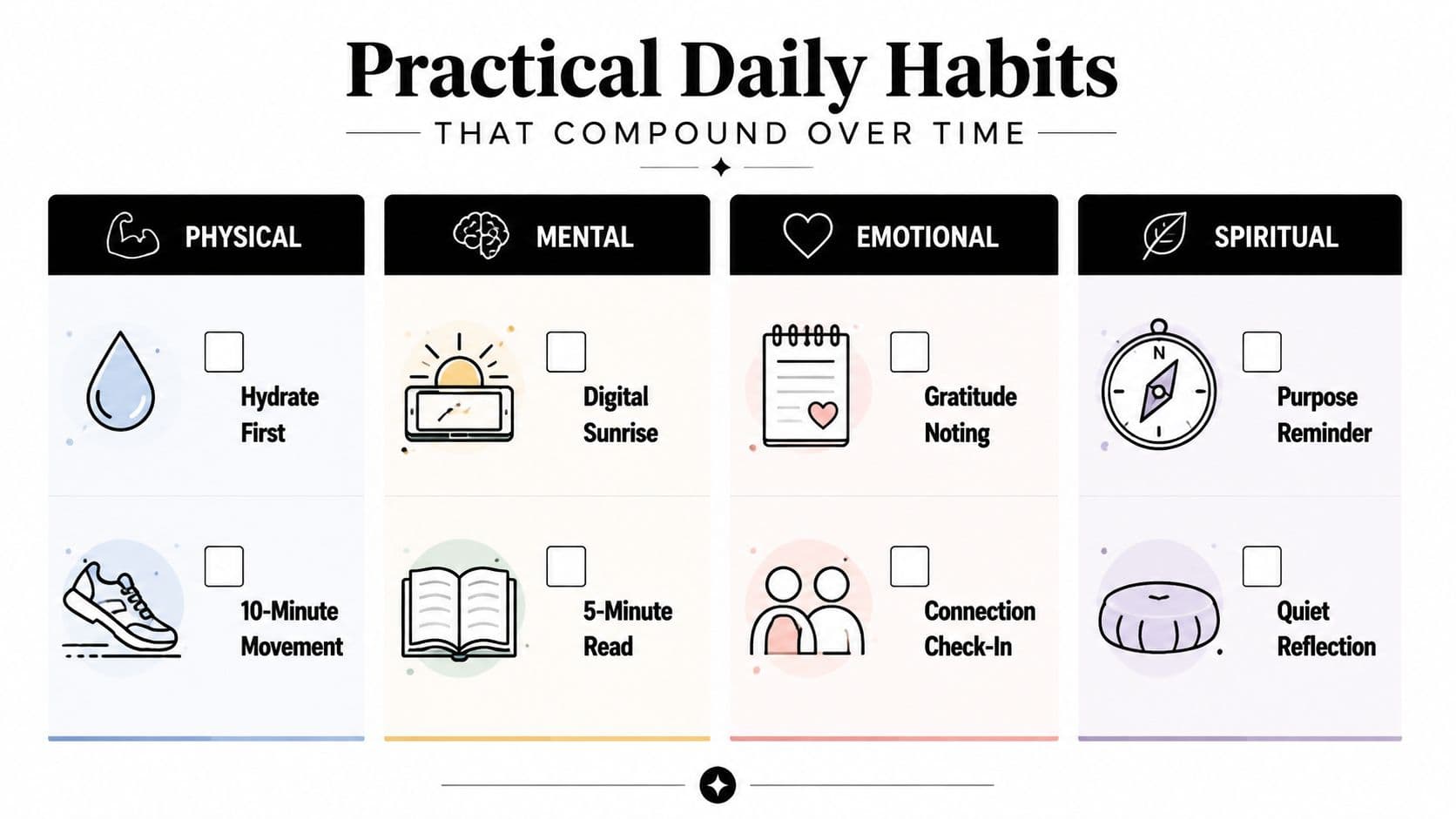
A clean reset often sounds appealing because it seems simpler, not because it is harder. Habit stacking works by linking a new practice to something already anchored in the day. After coffee, stretch. After brushing your teeth, breathe slowly for two minutes. After dinner, walk for ten minutes.
That same approach can support emotional steadiness too. A short gratitude note, a pause before replying to a stressful message, or a quiet five-minute sit can change the tone of the whole evening. This body-listening practice helps when you want to tell the difference between real fatigue and avoidable overload.
Some fasting patterns can also fit into a daily rhythm for certain people. A review on metabolic health notes that multiple fasting approaches are associated with reduced body weight, blood glucose, and insulin levels, along with improved insulin sensitivity, lower blood pressure, improved lipid profiles, and reduced inflammatory markers. The review is here. That does not mean fasting belongs in every plan, but it does show that timing and consistency can shape results in ways people often overlook.
The point is simple. Choose a few habits that fit your actual day, not someone else's ideal schedule. In Dan Millman's language, life path wisdom and daily health practice are not separate lanes. When your routines fit your energy, responsibilities, and deeper pattern of being, the path itself becomes easier to walk.
Common Pitfalls and Hidden Barriers to Progress
A lot of health optimization fails for the same reason. People try to fix too much at once, or they assume the problem is motivation when the issue is access, stress, or exhaustion. If you're busy, under-resourced, or carrying care responsibilities, a polished wellness plan can collapse fast.
More information is not the same as more progress
One trap is metric overload. Another is supplement hype. A third is believing that a protocol that worked for someone on the internet will work for you in your actual life. Foundational habits usually matter before optimization tools do.
Some people also run into a hidden nervous-system problem. They're trying to improve sleep, diet, and exercise while their stress load keeps spiking all day. If that sounds familiar, how to balance cortisol levels may help you think through stress as part of the whole picture, not a separate annoyance.
Access barriers change the whole equation
Research on underserved populations repeatedly frames the health gap as a delivery and equity problem rather than a knowledge problem. That means the issue often isn't that people don't know what to do. It's that they can't easily get to care, keep continuity, communicate comfortably, or fit recommendations into real life. The most useful levers are access, culturally responsive care, continuity, translation, interpretation, and community-designed interventions. The review here is clear on that.
A lot of wellness advice fails here. It assumes stable schedules, money for testing, private transportation, and a supportive environment. Many people don't have those conditions.
Grounded reminder: A plan that ignores your environment isn't personalized, it's theoretical.
The link between context and progress is also why burnout prevention strategies matter so much. If your current season is already overfull, optimization has to begin with subtraction, not addition.
The most honest question is not “What's the best protocol?” It's “What can I sustain without breaking my life?” That question keeps health optimization humane.
Aligning Health Practices with Your Life Path
Some routines feel natural the moment you try them. Others feel like a costume. That difference matters, because the healthiest plan is usually the one that fits both your biology and your deeper sense of purpose.
Dan Millman's book The Life You Were Born to Live and the Life Purpose App offer one way to reflect on that inner alignment. In that system, a date of birth opens up one of 45 unique life paths, each linked to core gifts, challenges, and patterns in areas like health, relationships, career, and purpose. The point isn't to replace evidence-based health habits. It's to help you understand why some habits feel energizing and others feel forced.
Self-knowledge changes the way a plan lands
A person whose life feels scattered may need structure that's simple and repetitive. Another person may need more room for variety, reflection, or solitude. When your routine matches your temperament, you waste less energy resisting your own plan. That leaves more energy for actual follow-through.
Millman's work also points to spiritual laws that can shape practical decisions about rest, movement, and balance. If you're in a period of outward effort, your body may need stronger recovery habits. If you're in a season of inward review, quieter practices may serve you better. The wise move is to let your self-knowledge influence the style of your health practices, not the need for them.
The app also maps nine-year life cycles, which can be a useful way to think about timing. Some seasons naturally call for action, others for reassessment. That rhythm can help you stop fighting your current chapter and start working with it.
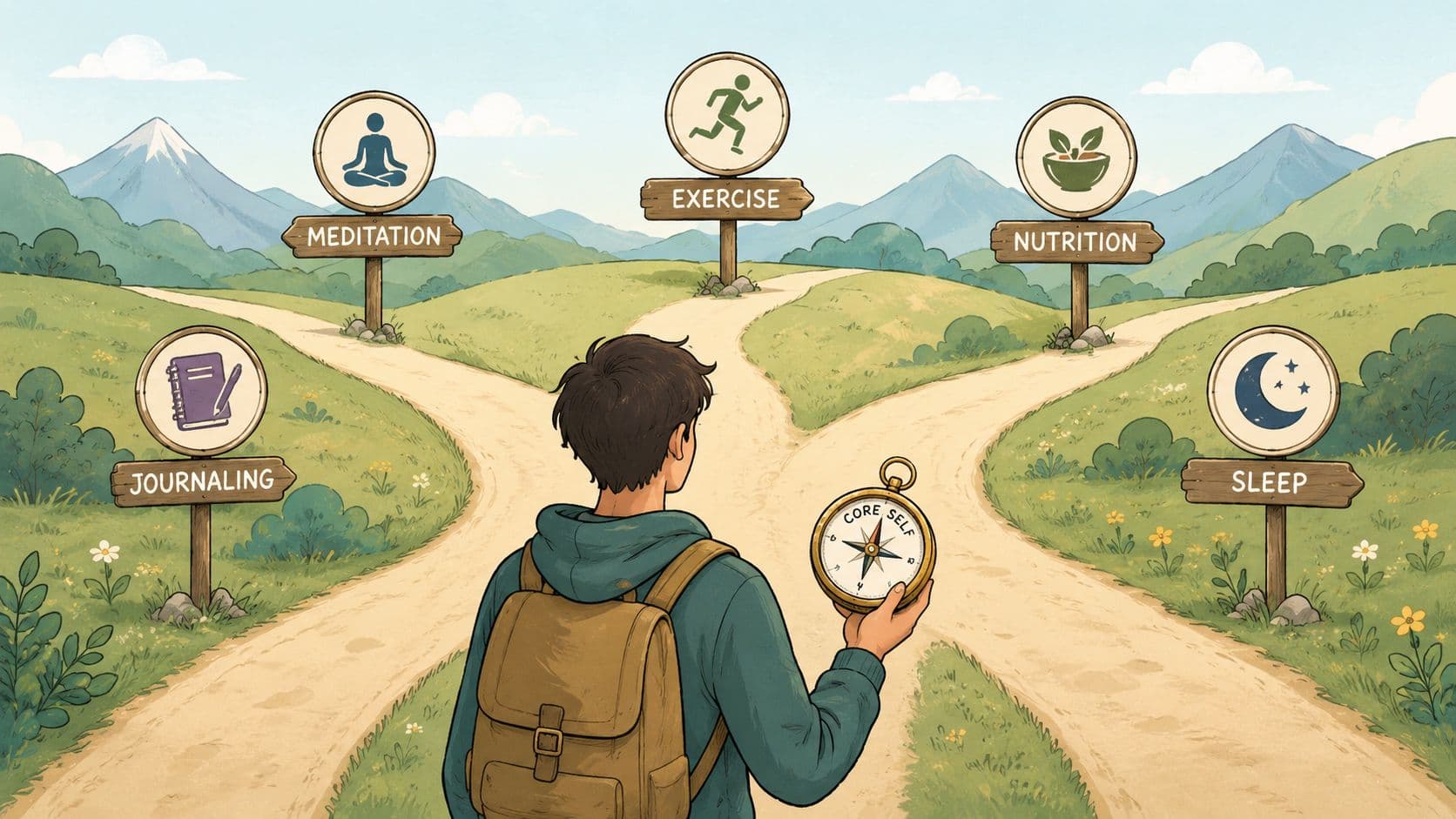
Best fit, not best trend: A health practice lasts longer when it feels aligned with who you are, not just with what's popular.
That's where spiritual wisdom and health science meet cleanly. Science helps you choose what works. Self-knowledge helps you choose what you can live with.
Your Starting Plan for Sustainable Health Optimization
Keep the first month simple. Pick two foundational habits, such as daily walking and a consistent wind-down routine, then choose three metrics that match your goal, such as blood pressure, HbA1c, and energy or sleep quality. Use a four-pillar self-assessment to notice which area, physical, mental, emotional, or spiritual, needs the most support right now.
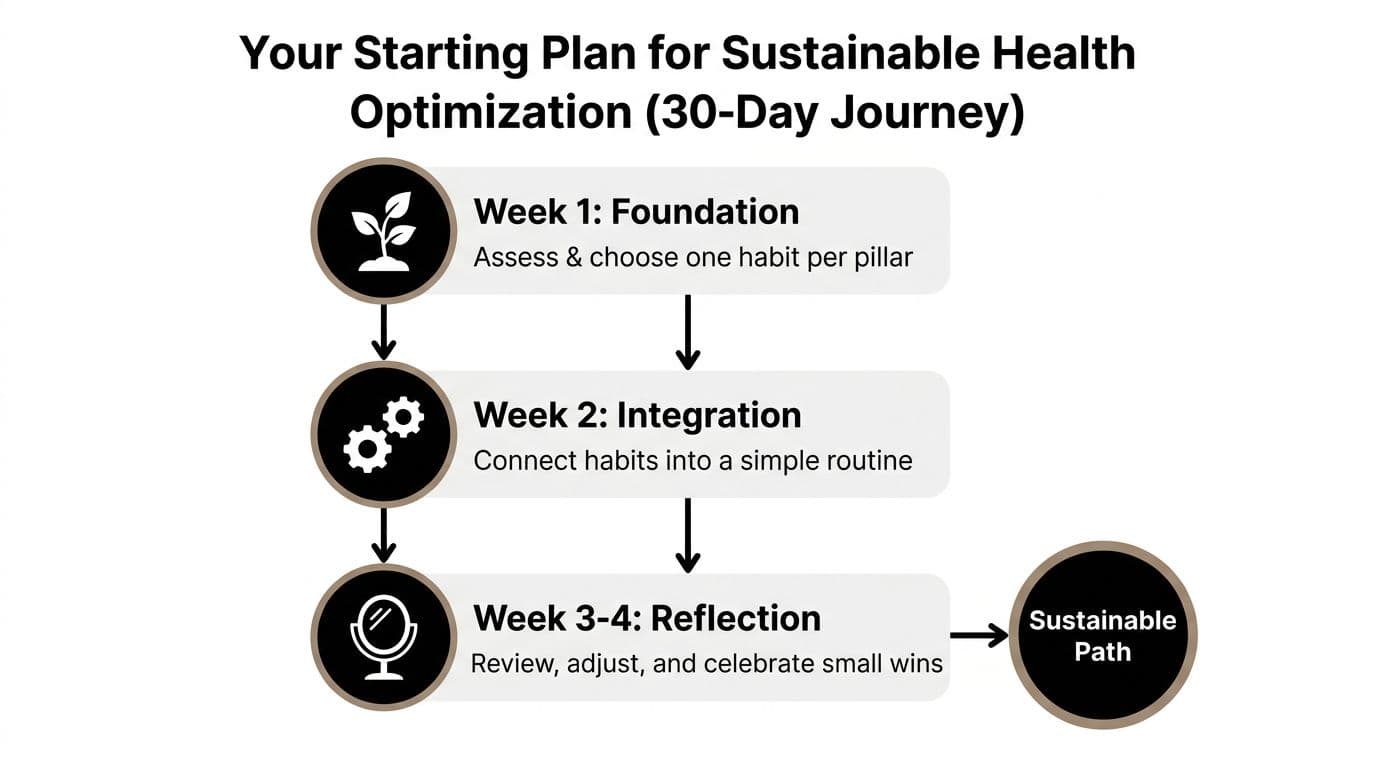
A simple 30-day rhythm
- Week 1, Foundation: Notice what's already working, choose one habit per pillar that feels realistic, and write it down.
- Week 2, Integration: Attach those habits to existing routines so they happen with less effort.
- Week 3 to 4, Reflection: Review what's changing, adjust what feels off, and pay attention to small wins.
A few changes can show up quickly, especially in mood, energy, and consistency. Deeper markers usually need more time, which is why a 90-day retest cycle makes sense for many metabolic measures. Treat the first month as a listening phase, not a verdict.
If you want a deeper layer of personal context, explore your life path through the Life Purpose App and use that insight to shape your routines with more honesty and less friction. Then visit Life Purpose App to see how your path, your patterns, and your wellness choices can work together in one grounded, practical framework.
Discover Your Life Purpose Today!
Unlock your true potential and find your life’s purpose.
