Learning to be your true self is less about a dramatic transformation and more about choosing inner peace over external approval. These clear, practical steps—values work, energy tracking, boundary setting, and aligning work and relationships—help you live with more honesty, connection, and purpose while reducing stress and burnout.
March 20, 2026 (6mo ago) — last updated August 20, 2026 (1mo ago)
Be Your True Self: Steps to Authentic Living
Discover practical steps to uncover your values, set boundaries, and align work and relationships to live more authentically.
← Back to blog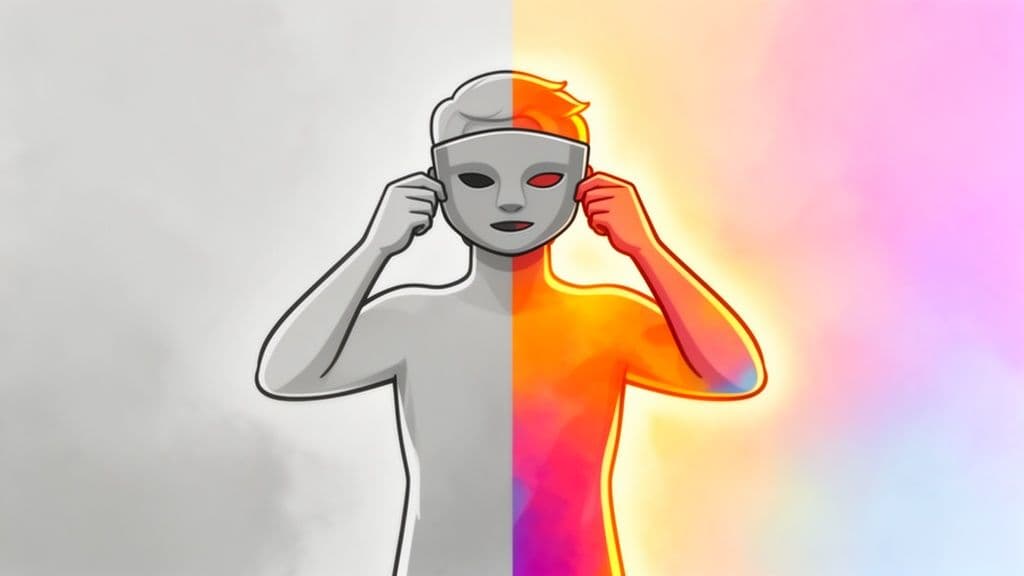
Be Your True Self: Steps to Authentic Living
Summary: Discover how to be your true self with practical steps on values, energy tracking, boundaries, and alignment for a more authentic life.
Introduction
Learning to be your true self is less about a dramatic transformation and more about choosing inner peace over external approval. These clear, practical steps—values work, energy tracking, boundary setting, and aligning work and relationships—help you live with more honesty, connection, and purpose while reducing stress and burnout.
The Hidden Cost of Not Being Yourself

Have you ever felt like you’re just playing a role in your own life? That quiet, nagging feeling when you say “yes” while every fiber of your being is screaming “no” is more than discomfort. It points to a deeper disconnect.
Most of us learn to hide parts of ourselves to fit in at school, avoid family judgment, or keep the peace at work. We bite our tongues in meetings even when we have ideas, or attend social events that leave us hollow because we don’t want to disappoint someone else.
The Slow Burn of Inauthenticity
This constant act creates low-grade stress that chips away at your spirit. Each compromise—swallowing an opinion here, faking a smile there—may feel small alone, but they add up. Soon your life may look fine from the outside but feel empty inside.
The gap between who you truly are and who you perform for the world is often the source of quiet unhappiness. It isn’t always about big life changes, but about hundreds of small daily decisions.
“The moment you stop people pleasing is the moment you stop living someone else’s dreams, needs, wants, and life and start living your own.”
Recognizing this cost isn’t about blame. It’s about reclaiming your energy and direction, an essential first step toward a life that feels genuinely good.
Where Does This Pressure Come From?
Pressure to conform comes from societal norms, family expectations, and fear of being misunderstood. From a young age, we’re often taught what we should want and who we should be, which can drown out our inner voice.
Common patterns include:
- People-pleasing: always saying yes and putting others’ happiness ahead of your own, often at great personal cost.
- Chasing external validation: relying on praise, promotions, or social media likes to feel worthy.
- Suppressing feelings: hiding disappointment, frustration, or joy to seem “strong” or “easygoing,” which can lead to resentment and burnout.
The journey to authenticity starts by noticing these patterns without judgment and asking why you put on the mask in the first place.
Discovering the Real You from the Inside Out
Authenticity isn’t something you find, it’s something you uncover. To learn how to be your true self, begin by looking inward past the noise of expectations to reconnect with what genuinely matters to you. This is steady work, not a single revelation.
Start with Your Core Values
Get clear on your personal values. We often absorb values from family, work, or culture without asking, “Is this actually important to me?” Try this values-clarification exercise:
- List words that feel important to a good life—creativity, connection, security, adventure, and so on.
- Circle your top five. These are your non-negotiables.
When your life aligns with these values, you build a foundation for authentic living. For a guided exercise, see our values worksheet at /guides/values-clarification.
Tune Into Your Personal Energy
Track your energy for a week. Use a small notebook or notes app and jot what gives you energy and what drains it—tasks, people, even thoughts.
You might find a quiet morning walk charges you for hours, while 15 minutes of social scrolling depletes you. This is real-world data about what your authentic self needs. Design your days around what energizes you and you’ll feel more alive and aligned.
Uncover Your Unique Life Blueprint
Frameworks and personality tools can add clarity. Free personality assessments reveal patterns that help you understand your natural preferences and blind spots. For deeper guidance, systems like Dan Millman’s The Life You Were Born to Live offer a life-path framework many people find illuminating. The Life Purpose App applies Millman’s system to help you explore your core gifts and challenges and how they show up in work and relationships.
Research links meaning and authenticity to greater well-being and stronger autonomy and relatedness1.
Bringing Your Authentic Self to Life, One Choice at a Time
You’ve done the inner work. Now translate that awareness into everyday life. Authentic living is a practice built from hundreds of intentional choices.
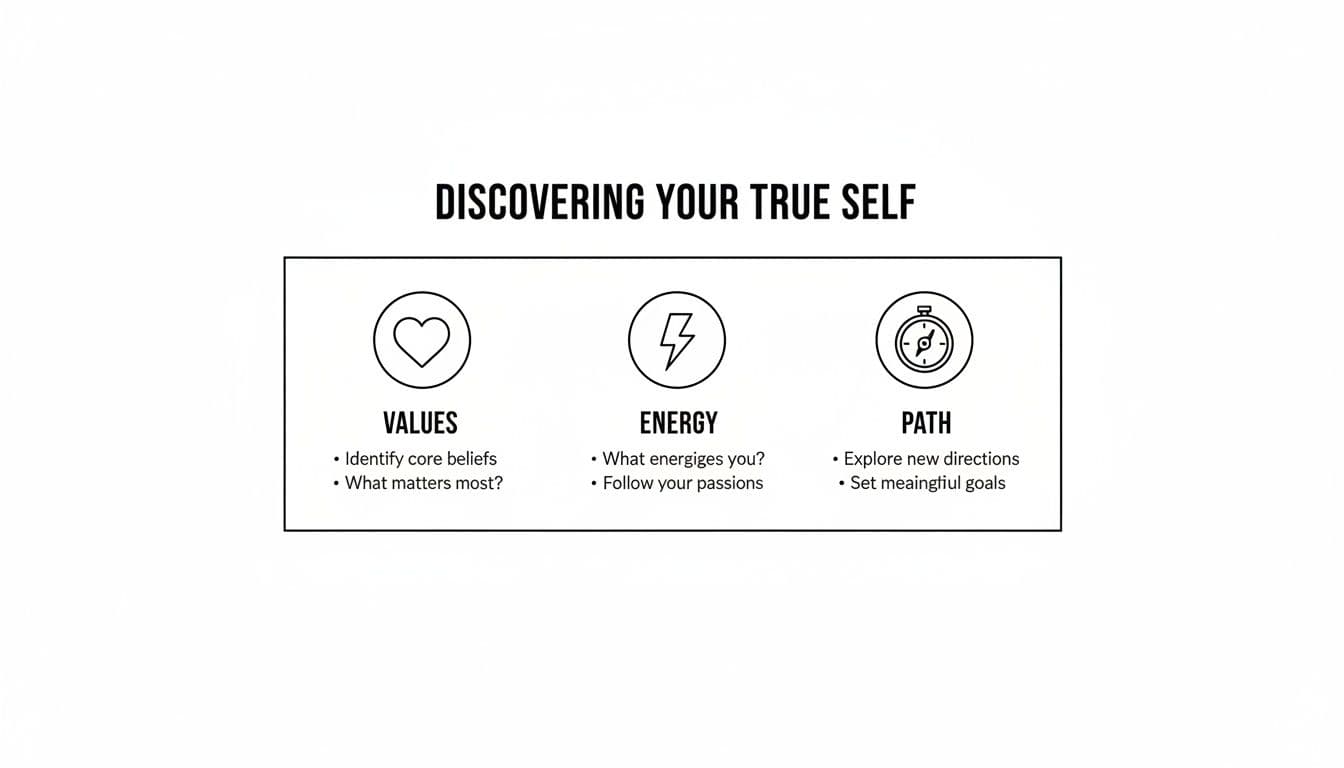
Honor your values, protect your energy, and trust your path. Over time, the pieces begin to click.
Setting Boundaries That Honor Who You Are
Boundaries aren’t walls, they’re fences that protect your peace and energy. They are values in action.
If “tranquility” is a core value, a boundary might be saying no to a last-minute loud party when you need a quiet night to recharge. It can feel uncomfortable, but that choice invests in your well-being.
These conversations often feel awkward at first. Simple, clear phrases help.
Practical Scripts for Tough Conversations
Be firm and kind. Examples:
- With your boss: “I appreciate you thinking of me, but I can’t take on another project right now. My focus is on delivering excellent work with my current commitments.”
- With a friend: “I’d love to see you, but I’m drained today and need a quiet night. Can we reschedule for next week when I can be present?”
- With family: “I hear you and I know you mean well. I need time to make the choice that feels right for me.”
Each time you do this, you strengthen your authenticity muscle.
Making Mindful Daily Choices
Authenticity is in the tiny choices. Before you accept an invitation or pick content to consume, pause and ask, does this feel expansive or contractive?
Choices aligned with your true self tend to feel open, light, or energizing; those out of alignment feel heavy or draining. A quick body check helps you move off autopilot and live with intention.
From Knowing to Doing: Practical Shifts Toward Authenticity
| Area of Life | Inauthentic Behavior | Authentic Action |
|---|---|---|
| Social Life | Saying “yes” to avoid FOMO or guilt | Decline politely when you need rest; choose energizing events |
| Career | Overcommitting to be seen as a team player | Set clear workload boundaries to protect focus |
| Family | Following traditions that feel misaligned | Share your needs or suggest new traditions |
| Daily Habits | Mindless social scrolling | Curate your feed or choose a book or podcast |
Authenticity isn’t a trait you’re born with. It’s a set of choices that, over time, create a life that’s truly yours.
Navigating Career and Relationships Authentically
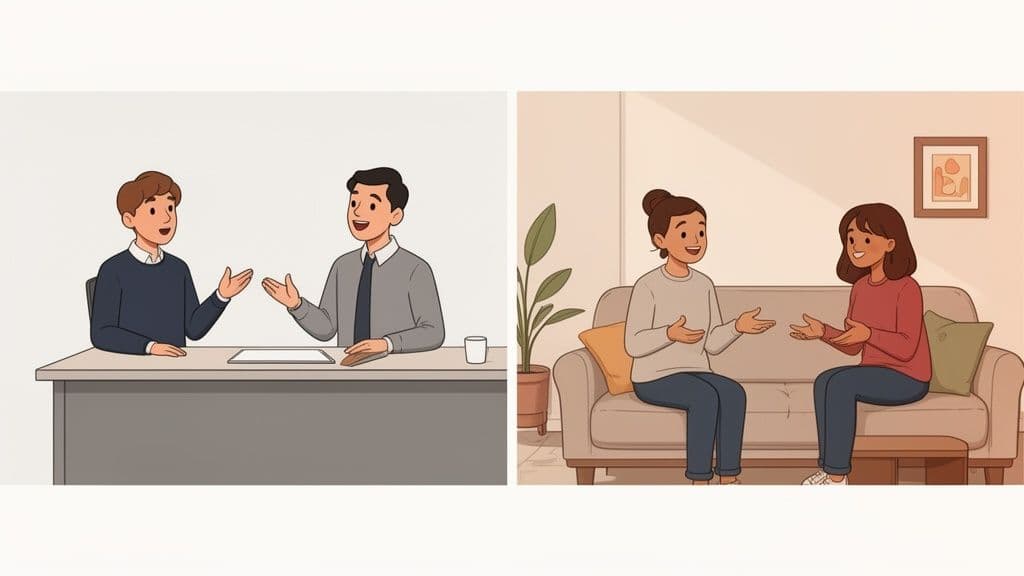
Showing up as your true self at work and in relationships is where authenticity pays off. It’s not about oversharing, it’s about aligning actions and communication with your values.
Aligning Your Career with Your Core Purpose
Ask: does your work light you up or drain you? Authentic careers feel meaningful and connected to your values. The coaching and self-development market has grown significantly as more people invest in purpose-driven work paths2. Employers are also placing greater emphasis on soft skills like adaptability and communication, which supports a cultural shift toward work that fits human strengths3.
Frameworks for self-understanding can help you test whether a role fits your innate blueprint. The Life Purpose App uses such frameworks to suggest environments where you’re likely to thrive and the challenges you might face.
“Being authentic at work doesn’t mean sharing every personal thought. It means actions, decisions, and communication that are consistent with your core values.”
Building Authentic Connections in Relationships
Authenticity matters in personal life too. Hiding parts of yourself creates distance. Showing up as your true self means being willing to be vulnerable about what you feel and need. Exploring each other’s temperaments or life-path patterns can reduce judgment and build compassion.
The Life Purpose App can help you explore relationship dynamics by comparing life-path energies, which often sheds light on why certain conflicts appear and how to navigate them.
Overcoming the Hurdles on Your Authentic Path
The road to your true self is rarely straight. It’s a winding trail with steep sections and unexpected obstacles. The biggest work is internal, unlearning habits and fears shaped over years.
Moving Through Fear and Guilt
That stomach-dropping fear before you speak up or set a boundary is normal. Guilt often follows because you’re shifting away from people-pleasing patterns. Recognize this discomfort as a sign of growth. You’re rewiring old habits, and that takes time.
“The discomfort you feel when setting a boundary is temporary. The resentment you feel from not setting it can last a lifetime.”
The Modern Trap of Performed Authenticity
In a world of visible lives, authenticity is sometimes performed. Influencers and brands sell curated “realness,” which creates pressure to perform for an audience, the opposite of genuine living. Real authenticity is messy, imperfect, and private.
Sharpening mental skills like cognitive flexibility and reflective thinking supports self-actualization and helps you pivot in a changing job market where reskilling is increasingly common45.
Common Questions About Living Authentically
How can I tell my true self apart from my ego?
The ego is loud and concerned with image, status, and proving itself. Your true self is quieter and feels like a steady inner knowing. Notice body cues: ego-driven choices often cause tightness or urgency; guidance from your true self feels expansive and calm.
What if my authentic path clashes with my loved ones’ expectations?
Handle it with firm, loving boundaries. Frame it as choosing yourself rather than rejecting them: “I know you pictured a different path, and I appreciate how much you care. For my own happiness, I need to follow what feels right for me.” Strong relationships thrive on mutual respect, not perfect agreement.
How long until authenticity feels natural?
There’s no fixed timeline. Some changes bring immediate relief, like saying no to an obligation. Other shifts feel awkward as you form new habits. The goal isn’t perfect authenticity, it’s getting a little closer with each choice.
Ready to discover a specific blueprint for your life? The Life Purpose App puts the wisdom from Dan Millman’s The Life You Were Born to Live in your hands, helping you find your life path, core gifts, and clarity in career and relationships. Download the app and start your self-discovery journey today.
Quick Q&A: Practical Answers to Common Concerns
Q: I feel exhausted saying yes to everything. Where do I start?
A: Begin with energy tracking for a week, then protect one low-energy activity by saying no. Practice a short script for that situation, and repeat until it feels natural.
Q: I’m worried setting boundaries will ruin relationships. What if it backfires?
A: Boundaries can feel awkward at first, but they create honest expectations. Start small, use kind language, and test responses. Strong relationships adapt to mutual respect.
Q: How do I know if my job fits my values?
A: Map daily tasks against your top five values. If core tasks regularly drain you, explore small shifts or experiments, such as volunteer projects, role changes, or skill-building, to test a better fit.
1.
Steger, M. F., Kashdan, T. B., Sullivan, B. A., and Lorentz, D., “Understanding the Search for Meaning in Life: Personality, Cognitive Style, and the Correlates of Meaning,” Journal of Positive Psychology (2008). https://www.tandfonline.com/doi/abs/10.1080/17439760500372796
2.
Grand View Research, “Life Coaching Market Size, Share & Trends Analysis Report.” Market projection for life and coaching services. https://www.grandviewresearch.com/industry-analysis/life-coaching-market
3.
LinkedIn Talent Blog, “Global Talent Trends,” on employers prioritizing soft skills and adaptability. https://business.linkedin.com/talent-solutions/blog/trends-and-research/2019/global-talent-trends
4.
World Economic Forum, The Future of Jobs Report 2020, noting that by 2025 many workers will require reskilling as tasks shift. https://www.weforum.org/reports/the-future-of-jobs-report-2020
5.
QAJ Journal, study on Gen Z and self-actualization: cognitive flexibility and moral metacognition boost self-actualization measures. https://journal.qubahan.com/index.php/qaj/article/view/2133
Discover Your Life Purpose Today!
Unlock your true potential and find your life’s purpose.
