It’s easy to lose sight of who you are when life hands you roles and expectations. This guide offers research-backed, practical steps to reconnect with your authentic self, set healthy boundaries, and redesign your life for lasting fulfillment.
June 17, 2025 (9mo ago) — last updated March 15, 2026 (3d ago)
Authentic Living: How to Find Your True Self
Research-backed steps to uncover your authentic self, set boundaries, and align your life for lasting fulfillment.
← Back to blog
Authentic Living: How to Find Your True Self
Summary
Practical, research-backed steps to uncover your authentic self, set healthy boundaries, and redesign your life for lasting fulfillment.
Introduction
It’s easy to lose sight of who you are when life hands you roles and expectations. This guide offers simple, research-backed steps to reconnect with your authentic self, make values-aligned choices, and redesign your life so it feels meaningful and energizing.
When Being Yourself Feels Impossible
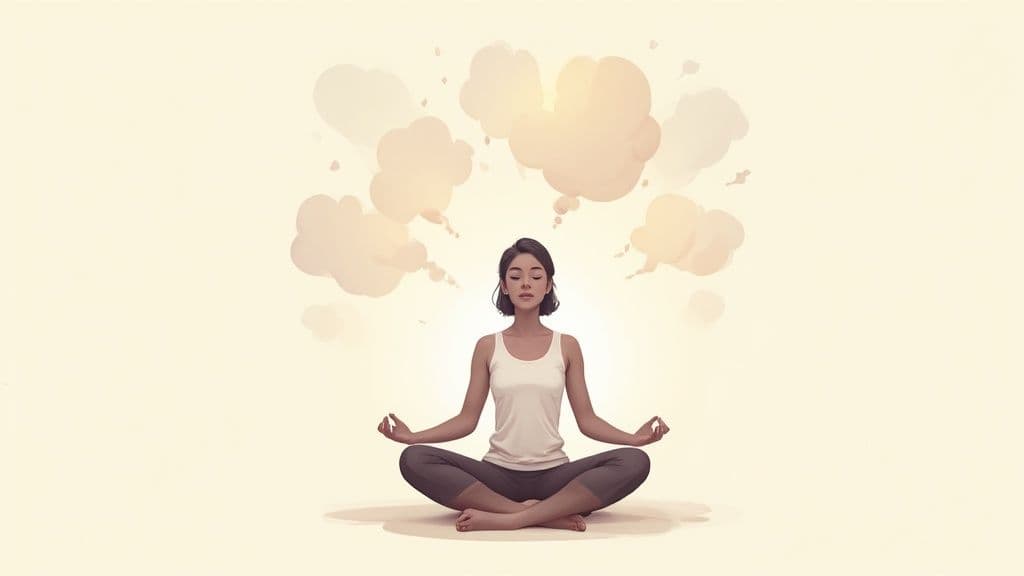
Many of us play roles so long we start accepting them as who we are. We become the perfect worker, the good kid, the Instagram star, and our true self gets buried. A quiet voice still asks, “Is this really me?”
That disconnect creates low-level exhaustion. You might be successful on the outside yet feel hollow inside. This is the cost of living someone else’s dream.
Modern life amplifies that pressure. About 72% of U.S. adults use social media, increasing exposure to comparison and curated lives1. Family expectations can nudge us onto paths that don’t fit. Work stress pushes us toward external praise instead of inner satisfaction. The growth of the personal-development market shows how many people are searching for authenticity2.
People who seem truly happy often had to ditch other people’s expectations to embrace themselves. They learned to say “no” when something felt wrong. Recognizing you’re on autopilot is the first step to reclaiming your life. It’s about listening to that quiet inner voice and letting it speak.
The Blind Spots That Keep You Stuck
We like to think we know ourselves, but that belief can create blind spots—areas where self-perception doesn’t match reality. These gaps show up in the difference between how we see ourselves and how others experience us.
The stories we tell about ourselves shape those blind spots. Narratives formed early in life can lock us into roles. If you were labeled “shy,” you might avoid social opportunities that could help you grow. The work is figuring out which preferences are truly yours and which you absorbed from your environment. That applies to small habits, like skincare choices, as well as big life decisions4.
There’s a surprising reality about self-awareness: many people believe they’re self-aware, but far fewer actually are. Research shows a wide gap between perceived and actual self-awareness, and understanding this helps you approach self-discovery with humility and curiosity3.
Uncovering blind spots isn’t about harsh criticism. It’s gentle exploration—asking how you show up and being open to new perspectives.
Separating Your Voice From Everyone Else’s
Trying to hear your inner voice in a crowded world is like trying to think in a bustling restaurant. Parental hopes, cultural norms, and peer pressure build up layers that can bury your true nature.
Maybe you chose a career for prestige rather than passion. Maybe you adopted beliefs that matched your social circle, not your inner compass. Identifying when your choices come from fear or obligation versus genuine desire is essential.
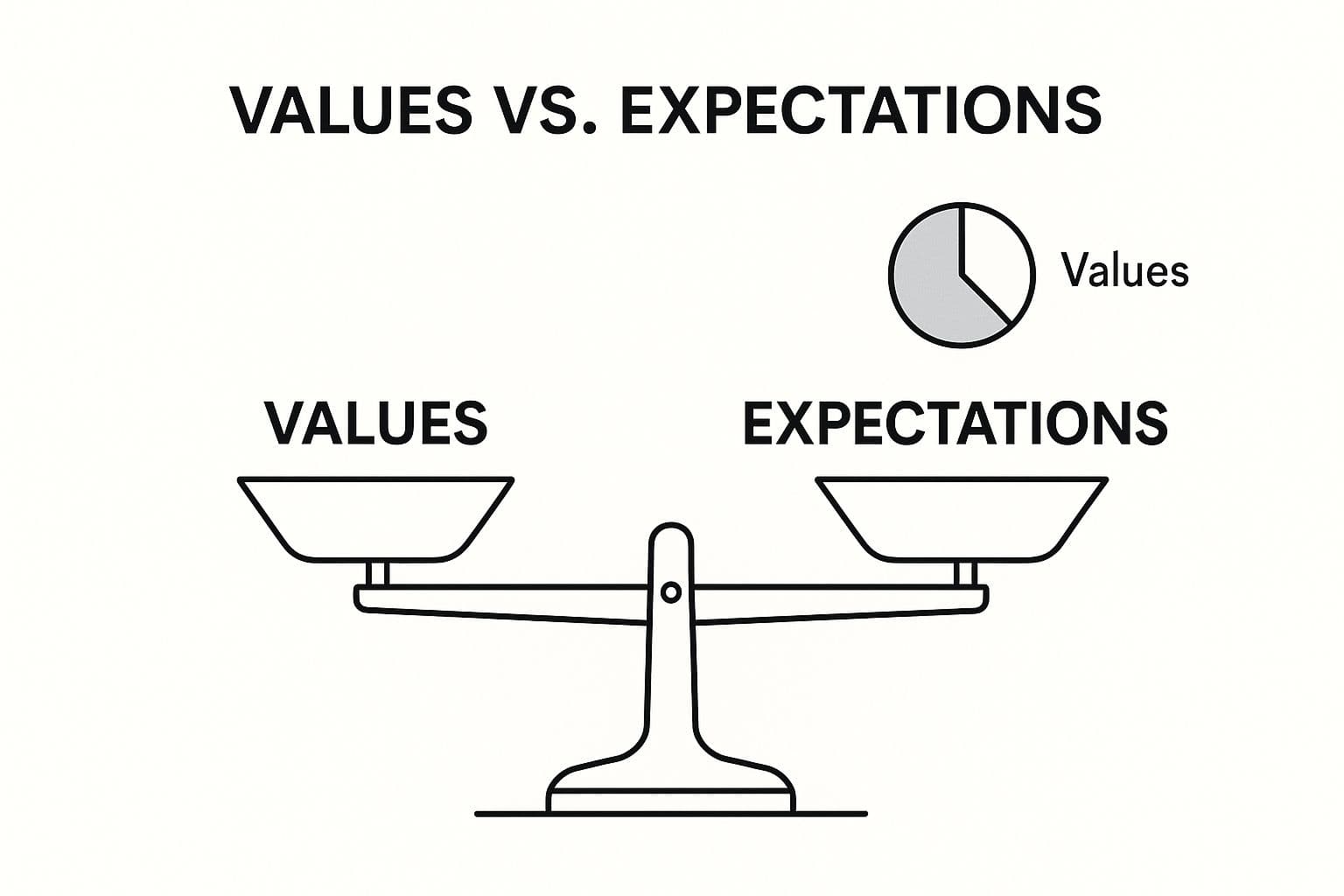
Ask yourself: How often are my choices driven by my values versus what others expect? Distinguishing fear-based choices from authentic preferences frees you to take ownership and act differently.
Listening to Your Inner Voice
Try gentle, honest reflection: “What truly excites me?”, “What activities make me feel alive?”, “What am I passionate about?” Pay attention to the answers. These insights point to your authentic desires.
Consider this comparison to spot conditioned responses:
| Life Situation | Authentic Self Response | Conditioned Self Response | How to Tell the Difference |
|---|---|---|---|
| Choosing a career | Driven by passion and genuine interest | Influenced by perceived status or family expectations | Does this energize me, or feel like an obligation? |
| Expressing your opinion | Speaking your truth, even if it’s unpopular | Staying silent to avoid conflict or maintain approval | Is this my opinion, or an echo? |
| Setting boundaries | Prioritizing your needs and well-being | Overextending yourself to please others | Do I feel empowered or resentful after saying “yes”? |
| Responding to criticism | Considering feedback thoughtfully, not taking it personally | Feeling devastated and internalizing failure | Can I separate feedback from self-worth? |
| Pursuing your dreams | Taking action despite fear | Letting fear or judgment stop you | Am I motivated by excitement or fear of judgment? |
Tools like the Life Purpose App can help clarify values and life direction, giving structure to the inner work5.
Simple Practices That Reveal Who You Really Are
You don’t need an intense retreat to find yourself. Small, consistent habits reveal big truths over time. Think of this as gardening; steady care helps your authentic self grow.
Morning Rituals for Self-Connection
Before the day takes over, connect with your natural rhythms. A few minutes of mindful breathing or light stretching can center you. Savoring your morning coffee without distraction creates space to check in. These small practices set an intentional tone for the day.
Journaling Beyond the Surface
Use journaling to explore motivations and patterns. Ask, “What motivated me today?” or “What emotions am I avoiding?” Don’t worry about grammar. Regular journaling surfaces recurring themes and clarifies values. See a simple journaling prompt set at /journaling-guide.
Trusting Your Body’s Wisdom
Our bodies often notice what the mind hasn’t yet. Track what activities energize you and which leave you drained. Notice tension in certain situations. These signals are valuable data about what’s authentic for you. For more on personal growth and inner sensing, see related resources5.
Making Authentic Decisions
Ask, “What do I really want here, regardless of others’ expectations?” Making small authentic choices—choosing a healthy meal, setting a boundary—builds your decision-making muscle. Over time, authenticity becomes more natural and leads to deeper fulfillment.
Staying Authentic When Others Want You to Change Back
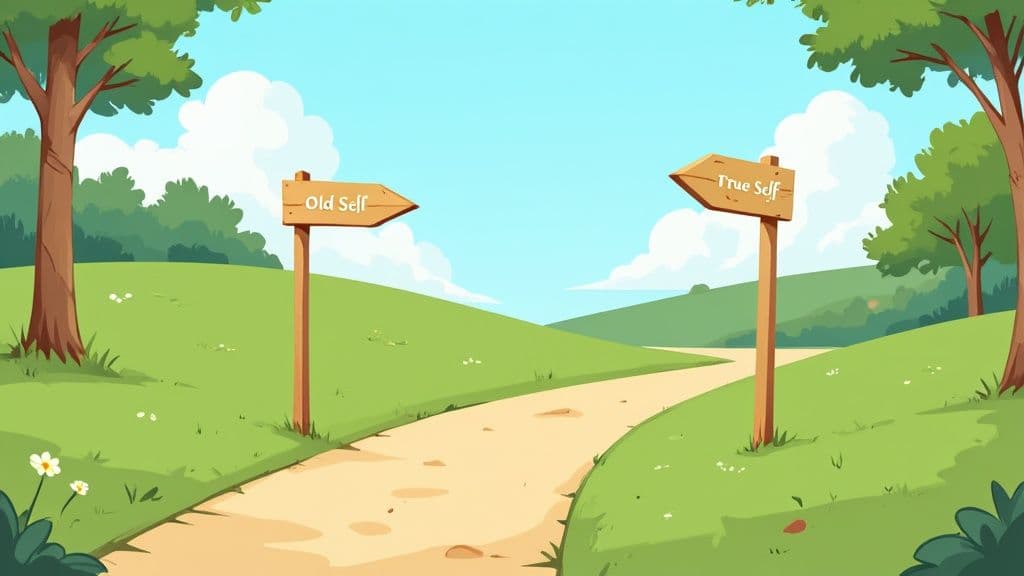
People close to you may resist your changes because they’re accustomed to the old you. That resistance is usually about comfort, not malice.
If you start saying “no” more, you may trigger pushback. Healthy boundaries protect your space and energy. Communicate your journey calmly: explain that you’re prioritizing well-being so you can be your best self for others too. In relationships and at work, boundaries help you stay aligned without burning bridges.
Living authentically can strengthen relationships. Those who stick around will appreciate the real you. Over time, authenticity attracts people and opportunities that match your values.
Redesigning Your Life Around Your Authentic Self
Knowing who you are is only step one. The next step is aligning your life with that self: career, relationships, environment, and habits. Small, sustainable changes are often more effective than dramatic overhauls.
Assessing Your Current Reality
Observe honestly. Does your career energize you? Are your relationships supportive? Does your living space reflect who you are? Use an assessment to map where reality clashes with desire. Try a quick life alignment worksheet at /worksheets.
Making Sustainable Changes
Pick one or two areas to change. Take a night class to explore a new career, set boundaries with draining relationships, or declutter one room a week. Expect discomfort. Growth often feels awkward before it feels natural.
Making Authentic Decisions
Regularly ask, “What does my heart truly want?” Authentic choices may disappoint others, but they lead to deeper fulfillment. This is an ongoing process—your authentic self evolves, and your life should too.
Staying True to Yourself for the Long Haul
Self-discovery is lifelong. Treat it like a garden that needs tending.
Regular Self-Check-Ins
Use gentle check-ins: “How am I feeling?”, “Are my actions reflecting my values?”, “What gives me energy?” These questions catch small shifts before they become big detours.
Handling Setbacks with Kindness
Slip-ups will happen. Respond with compassion, not criticism. Acknowledge, learn, and return to the path.
Creating Rituals and Practices for Connection
Rituals—meditation, walks, journaling—anchor you. They create space for reflection and help you hear your inner voice.
Building a Supportive Network
Surround yourself with people who encourage your true nature. Set boundaries with those who pull you back. Seek communities that reflect your values.
Embracing the Courage to Be Authentic
Authenticity takes courage: speaking your truth, standing by your values, and accepting the discomfort that comes with change. Tools like the Life Purpose App can support ongoing self-understanding and decision making5.
Questions & Answers
How do I start finding my true self?
Begin with small practices: morning reflection, daily journaling, and noticing what energizes you. Track patterns and ask whether choices come from obligation or genuine desire.
What if my family or friends resist my changes?
Communicate your intentions calmly, set clear boundaries, and allow relationships to evolve. If someone consistently undermines your growth, limit contact while you strengthen your sense of self.
How long does self-discovery take?
There’s no set timeline. Expect continual evolution. Small, consistent steps compound into meaningful change over months and years.
Quick Q&A (Concise Answers)
Q: What’s one immediate action I can take?
A: Start a five-minute daily journaling habit to note what energizes you.
Q: How do I handle pushback from others?
A: State your boundary calmly and stay consistent; people adjust over time.
Q: Will this work if I’m busy?
A: Yes—small, consistent practices (even five to ten minutes daily) accumulate into real change.
Three Concise Q&A Takeaways
Q: What’s the simplest step to begin authenticity work?
A: Notice what energizes you each day and record it—five minutes of journaling is enough.
Q: How do I tell if a choice is mine?
A: Ask whether it energizes you or feels like an obligation; your body’s reaction is a clear signal.
Q: How should I respond to resistance from others?
A: Set calm boundaries and be consistent; true relationships adapt or reveal themselves.
1.
Pew Research Center, “Social Media Fact Sheet.” https://www.pewresearch.org/internet/fact-sheet/social-media/
2.
MorningUpgrade, “Self-improvement and personal development rapidly becoming a global trend.” https://morningupgrade.com/self-improvement-and-personal-development-rapidly-becoming-a-global-trend/
3.
Tasha Eurich, summary of self-awareness research at LeaderChat. https://leaderchat.org/2019/02/01/the-importance-of-self-awareness-with-tasha-eurich/
4.
Example of early messages shaping habits: consumer-focused wellness writing on skincare routines. https://lulumine.com/blogs/mindful-beauty/skincare-routine-for-sensitive-skin
5.
Life Purpose App: tools and exercises for clarifying values, life path, and authentic decision making. https://lifepurposeapp.com/
Discover Your Life Purpose Today!
Unlock your true potential and find your life’s purpose.
