It’s okay to feel lost. Finding your calling is usually a gradual process of noticing what energizes you, testing ideas, and adjusting as you learn. This guide shows how to gather evidence from your life, form testable purpose hypotheses, and run low-risk experiments that reveal what fits.
October 21, 2025 (4mo ago) — last updated March 1, 2026 (3d ago)
Find Your Calling: How to Discover Purpose
Step-by-step guide to uncover your calling with self-reflection, low-risk experiments, and practical tools for a purpose-driven life.
← Back to blog
Find Your Calling: Steps to Purpose & Meaning
Summary: Practical steps to uncover your calling, test purpose ideas with low-risk experiments, and build a life that supports meaningful work.
Introduction
It’s okay to feel lost. Finding your calling rarely comes as a single moment of revelation; it’s a gradual process of noticing what energizes you, testing ideas, and adjusting as you learn. This guide shows how to gather evidence from your life, form testable purpose hypotheses, and run low-risk experiments that reveal what fits.
That Feeling of Being Lost Is More Common Than You Think

Does your daily life feel far from what you’re meant to be doing? You’re not alone. Many people sense a gap between routine and deeper values; younger workers in particular report lower job satisfaction, suggesting many are still searching for a career that fits their purpose1.
Why the search for purpose can feel urgent
Social media comparisons and fast-changing careers can make choosing a path feel pressured. The first step is to give yourself permission to explore. Acknowledging uncertainty creates space to try things without expecting a perfect answer immediately. Your calling is something you uncover by doing—one intentional step at a time.
Start by understanding yourself better. Try reflection prompts and practical exercises in our guide on how to understand yourself better.
Look Inward to Chart Your Course

Begin by quieting the noise and collecting evidence about what energizes you. Review past roles and projects and focus on tasks rather than job titles. Which activities made time fly? When did you feel most alive? Those moments are clues.
Pinpoint your flow state
Psychologists call that absorbed, energized feeling a flow state. Identify where your skills meet a meaningful challenge—those are activities to note.
- Creative work: painting, writing, music
- Problem-solving: untangling systems, technical fixes
- Connecting with others: mentoring, coaching, collaborating
Record these observations without judgment. This raw data will help when you form testable hypotheses.
Identify your core values
A calling will align with your core values. If freedom matters most, a rigid structure will feel suffocating. If community matters, isolation will leave you empty. Use mindfulness and reflection to separate true priorities from external expectations. For practices you can try, see this list of mindfulness activities for adults.
A New Perspective: Life Path Number as an Extra Data Point
Sometimes patterns are easier to see with an external framework. Dan Millman’s system in The Life You Were Born to Live offers one such perspective. The Life Purpose App uses that framework to calculate a life path number from your birth date, highlighting strengths and lessons you may encounter5.
Use the life path as one input, not the only answer
Treat a life path number as a helpful validation tool. It can confirm what feels true and reveal possible strengths like leadership, creativity, or steadiness. Combine this insight with your own evidence for a clearer picture. Learn how to calculate your number with our guide on how to find your life path number.
Turn Personal Insights Into Action
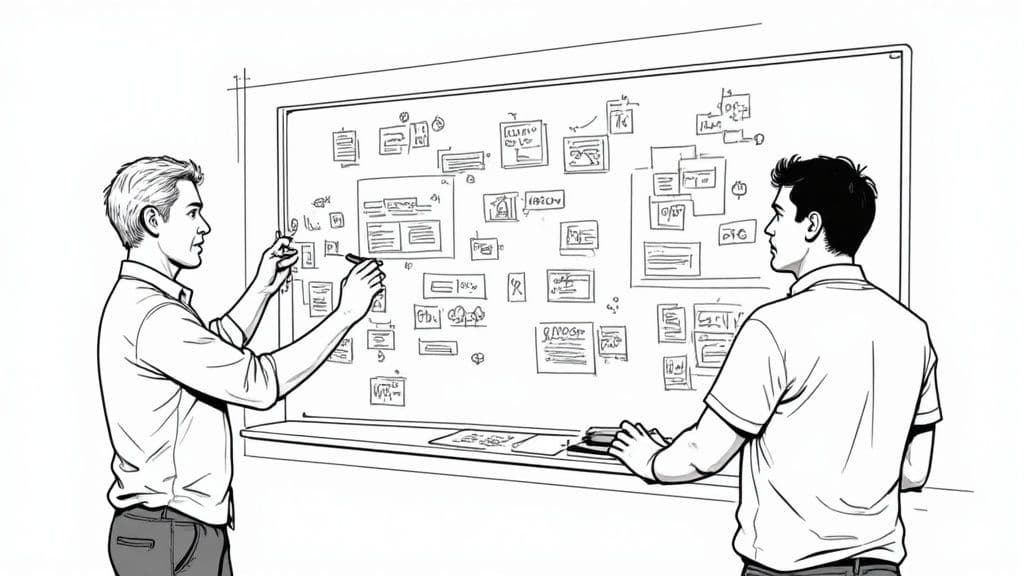
Insight alone won’t change your life. Treat discoveries like clues and connect recurring themes—creativity, helping others, teaching—into a simple, testable purpose hypothesis.
Examples of purpose hypotheses:
- “My calling involves using my design skills to help mission-driven businesses tell their stories.”
- “My purpose might be centered on teaching practical wellness skills to help people manage stress.”
- “I’m meant to build communities around environmental causes.”
Your hypothesis is a direction, not a final answer. Use it to plan low-risk experiments that give real feedback.
Comparing self-discovery methods
| Method | Focus | Best for |
|---|---|---|
| Life Path (Numerology) | Innate tendencies and life lessons | High-level reflection that can validate patterns |
| Journaling & Reflection | Thoughts, emotions, past experiences | People who gain clarity through writing |
| Value Identification | Defining non-negotiables | Big decisions that must align with core beliefs |
| Small Experiments | Real-world testing | People who learn by doing |
A blended approach usually works best.
Run low-risk experiments
Start small and keep your main income intact—test a few hours a week.
- Volunteer for a cause that matches your theme
- Take a weekend workshop to learn a relevant skill
- Launch a small side project to test demand
These experiments provide feedback without huge risk. For a practical plan template, see our personal development plan template.
Build a Life That Nurtures Purpose
Purpose needs space and energy to grow. If your schedule and environment constantly wear you down, you won’t practice what you discover. Make small, consistent changes that protect your energy and create time for exploration.
The Global Life-Work Balance Index shows how national cultures shape people’s ability to explore outside work, with some countries scoring higher on balance and wellbeing3. Places that prioritize balance often make it easier to pursue meaningful work; Finland, for example, ranks highly in global wellbeing reports4.
Practical steps for a purpose-driven life
- Do an energy audit: each evening list what drained you and what energized you.
- Schedule “Exploration Time” and treat it as non-negotiable.
- Curate a support system of mentors, friends, and communities that lift you up.
Your environment either fuels your purpose or starves it. Design daily routines and relationships that give your calling room to grow.
Navigating Common Questions on Your Journey
People today want more than a paycheck; purpose matters to many when evaluating career choices2.
What if my calling seems unprofitable?
Many callings aren’t immediately lucrative. Treat them like experiments: volunteer, start a side project, or test small services. Over time you may find ways to make the work sustainable or appreciate its nonfinancial benefits.
Is it a true calling or a passing interest?
Time reveals truth. A calling tends to persist through difficulties and refills your energy; a passing interest usually fades when the hard work starts.
Can a calling change over time?
Yes. A calling can evolve as you grow. Re-evaluate regularly; what mattered at one stage may shift at another.
FAQ — Quick Answers to Common Questions
Q: How do I start if I feel totally lost?
A: Begin with small reflection exercises—journal five minutes daily, note moments of flow, and list your non-negotiable values. Collect clues before making big moves.
Q: How can I test a purpose without quitting my job?
A: Run low-risk experiments: volunteer, take short courses, or start a side project. Use feedback from these tests to refine your purpose hypothesis.
Q: What if my purpose doesn’t pay well?
A: Mix purpose work with stable income while you test ways to scale or monetize sustainably. Meaningful work also improves wellbeing and long-term fulfillment.
Quick Q&A — Three Practical Questions
Q: What’s one simple daily habit that helps uncover purpose?
A: Keep a short “flow log” each day—note a 10–15 minute task that energized you and why. Over weeks, patterns will emerge.
Q: How long should I test an idea before deciding it’s not for me?
A: Give a focused experiment at least 4–8 weeks with consistent effort. Short trials may not reveal real challenges or rewards.
Q: How do I balance purpose work with a full-time job?
A: Block 2–4 hours weekly for exploration, protect that time, and use incremental experiments that compound into clearer decisions.
Three Concise Q&A Summaries
Q: How do I discover what truly energizes me?
A: Track moments of flow, review past projects for recurring themes, and list activities that felt meaningful.
Q: How can I test a calling with low risk?
A: Use volunteer roles, short courses, or side projects for a few hours a week to gather feedback before making big changes.
Q: What keeps purpose work sustainable?
A: Design your schedule and relationships to protect energy, and combine purpose work with stable income while you test and grow.
Ready to get a clearer picture of your path? The Life Purpose App brings Dan Millman’s framework to life, helping you discover your life path number and connect the dots to your calling. Visit https://lifepurposeapp.com.
1.
HR Dive summary of Conference Board findings on job satisfaction by age. https://www.hrdive.com/
2.
Deloitte survey on purpose at work and generational priorities. https://www2.deloitte.com/global/en/pages/about-deloitte/articles/millennial-genz-survey.html
3.
Global Life-Work Balance Index, Remote. https://remote.com/resources/research/global-life-work-balance-index
4.
World Happiness Report, rankings and insights on national wellbeing. https://worldhappiness.report
5.
Dan Millman, The Life You Were Born to Live; Life Purpose App interpretation of Millman’s system. https://lifepurposeapp.com/blog/find-your-life-path-number
Discover Your Life Purpose Today!
Unlock your true potential and find your life’s purpose.
