How to Know If Your Loved One Loves You by tracking consistent actions, responsiveness and conflict repair, plus a simple test to run over several weeks.

November 19, 2026 (7d ago) — last updated November 19, 2026 (6d ago)
How to Know if Your Loved One Loves You: Signs to Check
How to Know If Your Loved One Loves You by tracking consistent actions, responsiveness and conflict repair, plus a simple test to run over several weeks.
← Back to blog
How to Know If Your Loved One Loves You by tracking consistent actions, responsiveness and conflict repair, plus a simple test to run over several weeks.
Which moment would you point to if someone asked whether your partner loves you? Many reach for a highlight. The birthday dinner, the tearful apology, the first month when every message got an answer within a minute. Highlights are the weakest evidence you have, because anyone can produce a good week, and a hard month can make a caring person look absent.
The stronger question isn't how intense the feeling is. It's whether the care repeats, on ordinary days and dull days and especially in the middle of a disagreement. Knowing how to know if your loved one loves you comes down to reading behavior over time rather than decoding a single gesture. Repeated behavior reveals a lot, what it can't prove, and how to read your own doubt without turning it into an investigation.
Signs of Genuine Love at a Glance
Love isn't a single signal. It's a cluster of behaviors that repeat. A partner who remembers your dentist appointment but mocks you in front of friends hasn't handed you two equal pieces of evidence, because one of those tells you far more about how they'll treat you five years from now. So the useful move is to stop hunting for one definitive sign and start reading patterns across the areas where care either shows up or doesn't.
Care signs and warning signs across six relationship behaviors
| Behavior | Sign of genuine care | Sign to watch |
|---|---|---|
| Responding to bids | Notices and follows up on your news, requests or affection | Ignores or brushes off small requests |
| Handling disagreements | Listens, names the specific problem and takes some responsibility | Attacks your character, shuts down or wins by force |
| Repairing after conflict | Returns to the topic and reconnects within a reasonable time | Never revisits the harm or uses silence as punishment |
| Daily curiosity | Asks about your inner life and remembers what matters to you | Conversation stays on logistics and their own needs |
| Consistency over time | Actions match earlier promises across several weeks | Intense affection early, then steady withdrawal |
| Respect for independence | Supports your friends, goals and time apart | Demands constant access, monitors you or pressures you to choose |
Read the middle column as a cluster, not a checklist. One odd day means very little. Anyone can be short-tempered during a bad week at work, and anyone can be generous on a good one.
One good day is not evidence. Six ordinary weeks, including two hard conversations, is.
That last row earns a second look. Support for your friendships, goals and time apart is how a partner treats you as a person rather than a project. For readers who are dating with a disability, that support often has a practical side too: accessible ways to meet people, such as dating sites for disabled people from Special Bridge, mean your social world doesn't have to shrink to one person.
A note on the phrasing that brought many readers here: "how to know if your loved" is cut short, and the most likely question behind it is whether a loved one loves you. That's the question this guide answers.
No single row proves love by itself. The strongest evidence is a cluster of care signs that holds up across ordinary days and stressful ones. The next section shows how to test these signs without interrogating your partner.
What Anxiety and Social Media Can Distort
Doubt often starts inside you rather than in your partner's behavior, and it helps to see the mechanism clearly.
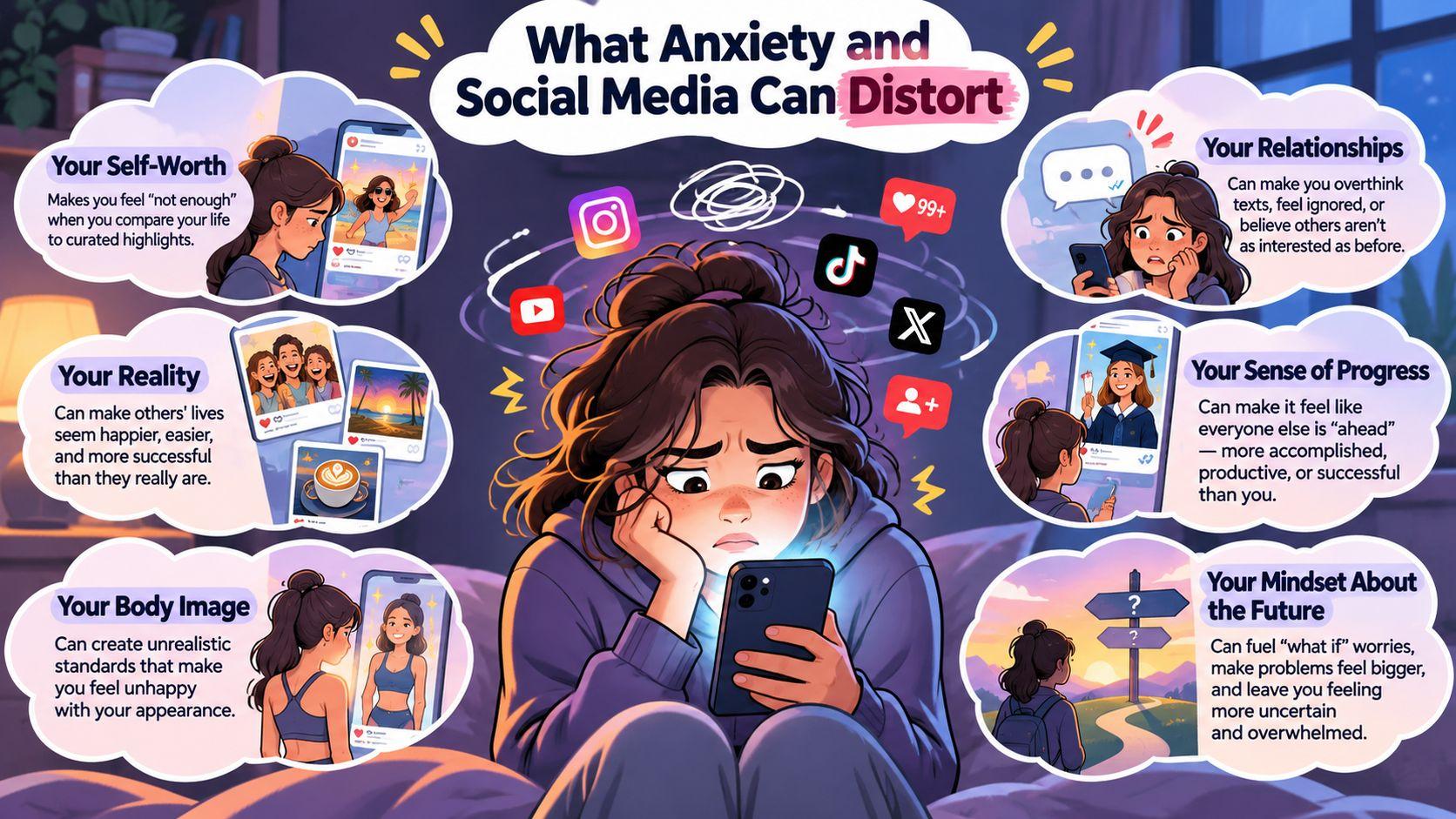
Reassurance-seeking is the first distortion. You reread the last message thread three times before lunch. You ask the same question in slightly different words, hoping an answer will finally settle something. A neutral text reads as cold because you're scanning for threat, not because the words changed.
Outside voices amplify it. In a 2025 U.S. survey of 1,110 adults, 32% said social-media content had made them question their relationships, and respondents described sizing up their partners through borrowed labels such as "toxic", "gaslighting" or "love bombing". Comparison works the same way. Other couples' anniversary posts become the standard your Tuesday night gets measured against, and the loop feeds itself: the less certain you feel, the more you scroll, and the more you scroll, the less certain you feel.
Labels do their own damage. A 2025 study of 696 adults in the Journal of Marital and Family Therapy, most of them married or cohabiting, found that satisfaction with a partner's supposed primary love-language behavior didn't predict relationship satisfaction or felt love any better than satisfaction with other behaviors. A second study of 499 long-term cohabiting couples reported in the same journal found that fewer than half had an identifiable primary love language at all, and that relationship quality tracked satisfaction across a broad range of loving behaviors rather than one channel.
Three questions cut through most of the noise:
- Is this a moment or a pattern? A month of silence at dinner matters. One distracted evening after a twelve-hour shift usually doesn't.
- Am I comparing, or observing? If your standard arrived in a feed, it isn't yours.
- Is this a need I've never voiced? Unspoken needs get answered by accident at best.
Uncertainty is not automatic proof that love is absent. It's also not proof of abuse. It's a signal to slow down and gather better evidence. If suspicion has you reaching for your partner's phone, read something that explains the boundaries first, such as this ethical guide to uncovering cheating from Digital Footprint Check. Monitoring answers a different question than the one you're asking.
A Repeated-Observation Test Over Several Weeks
You can gather real evidence without turning your relationship into an investigation. The process below works because it samples behavior across conditions instead of trusting a single charged moment.

- Choose one ordinary bid for connection. Bids are small requests for attention: sharing news, asking for a ten-minute call, reaching for affection. Pick a low-stakes one, because it's easy to repeat and hard to fake.
- Make the request in a normal moment. Ask over dinner or in the car, never mid-argument. Conflict loads the request with pressure and changes the answer you get.
- Notice whether it's acknowledged at all. Not whether they leap up, but whether they register it within a reasonable time. Being seen is the first half of responsiveness.
- Watch follow-through and memory separately. Doing the thing and remembering the need behind it are different skills. One is compliance. The other is attention.
- Repeat across contexts. Try the same kind of bid on a busy day, in a stressful week, and shortly after a small disagreement. Consistency across conditions separates a pattern from a mood.
- Write each result down with the date and context. A short note keeps you honest, since memory edits in your favor in both directions.
The measured version of this idea comes from Gottman Institute research across more than 3,000 couples and 12 longitudinal studies: couples later classified as relationship "masters" responded to their partner's bids about 86% of the time, compared with 33% among couples in the most troubled group. Responsiveness is a pattern you can count.
Observation Log for Bids Over Several Weeks
| Date | Bid | Context |
|---|---|---|
| Week 1 | Shared news about work | Busy day |
| Week 2 | Asked for a 10-minute call | Stressful week |
| Week 3 | Requested affection after a small disagreement | Moment after disagreement |
Keep the test clean. It should never slide into pressure, checking up, or scoring your partner in an argument. A few misses during a brutal month don't mean what a steady pattern of ignoring you means.
The rule that matters: if the pattern improves once you name your need calmly, the relationship has room to grow.
How Listening and Curiosity Reveal Care
You mention a worry about a presentation while you're both clearing the table. One partner changes the subject to the radiator. Another offers a fix in four seconds. A third sets down the plates and asks which part of it worries you most. All three might love you, but only the third is learning something about your inner life.
The American Psychological Association's guidance on healthy relationships recommends that couples make time to check in regularly and spend at least a few minutes each day on deeper or personal subjects, not only practical matters such as parenting or household maintenance. That's a low bar, and it's revealing precisely because it's low. Anyone can manage one big romantic gesture. Fewer people sustain daily curiosity about someone else's interior.
Concrete listening leaves a trail you can observe:
- Facing you rather than talking over a shoulder, which signals that the conversation is the activity.
- Eye contact that fits the moment, not a stare.
- No interrupting, even when they're sure where the sentence is going.
- Summarizing what they heard before responding to it.
- Naming the feeling underneath, such as "that sounds like you felt undermined".
None of these behaviors proves romantic love on its own. Together they show whether someone is making an active effort to understand you, which is a different question from whether they're fond of you. Emotional skills like these are learnable, and this guide to emotional intelligence in relationships covers how to build them on both sides.
Ask whether they return to your inner life
A single good conversation tells you little. What matters is whether the person comes back. Do they ask a follow-up about the meeting two days later? Do they remember that your sister's surgery is on Thursday? Conversation that stays on schedules and chores isn't cruelty, but it isn't curiosity either.
The test is the bad day. Anyone listens when the story is funny and the mood is easy. Notice whether the listening habits survive a week when you're anxious, short-tempered, or repeating yourself.
Reading Conflict and Knowing When to Step Back
Disagreement is not evidence that love has left the room. Research discussed by the American Psychological Association reports that roughly 69% of couples' problems are perpetual, rooted in lasting differences in personality, preferences or lifestyle needs. Those problems don't get solved. They get managed, or they get weaponized. So the useful question isn't whether you clash. It's how you clash.
Take one ordinary situation: a partner forgets the plan you made for Saturday. Here are the four patterns John Gottman's research identifies as corrosive, in the order they usually appear.
- Criticism attacks character instead of behavior. "You always do this, you're so selfish" rather than "we agreed on Saturday and I was left waiting".
- Contempt adds superiority to the criticism: sarcasm, eye-rolling, a small cruel joke at your expense. It's the one Gottman singles out as most destructive.
- Defensiveness flips the complaint back. "I only forgot because you never tell me anything twice."
- Stonewalling ends the conversation by leaving it, sometimes for hours, sometimes for days, with no sign of return.
Couples who display these patterns divorced an average of 5.6 years after marriage, compared with 16.2 years for emotionally disengaged couples, according to John Gottman's research published by the Gottman Institute. That doesn't mean one sharp argument is a verdict. It means repetition is the thing to watch.
Repair looks unglamorous. Someone calls a pause before the volume climbs. Someone comes back an hour later and says, "I got defensive. The part about being left waiting was fair." A partial apology beats a perfect one that never arrives, because it proves the topic can be revisited without a war.
Where uncertainty ends and danger begins
Ordinary doubt and genuine unsafety are not the same problem, and mixing them up costs people time. Treat these as safety issues rather than relationship puzzles: control over your money, phone, friends or movements; intimidation, threats, or silence used as punishment; personal attacks after every disagreement; refusal to ever acknowledge harm; and any physical violence or threat of it.
If you recognize your situation here, write down what happened with dates and keep the record somewhere private. Tell one trusted friend in plain language. Contact a domestic violence helpline or a counsellor in your country, and call local emergency services if danger is immediate. Couples therapy suits mutual problems, and it only applies when nobody's safety is at stake. Practicing the words for a firm refusal helps here too; these scripts for saying no at work from Integrative Psychiatry of America translate directly to family and partner conversations.
You're also allowed to want distance without first proving your partner is a bad person. Wanting out is a reason. If you're still making sense of how the two of you push and pull, this explanation of relationship dynamics helps you name the cycle you keep landing in.
Have the Direct Conversation Before You Decide
You can gather observations for a month and still be guessing, because you haven't asked. A direct conversation is the cheapest test available, and it produces evidence the log can't.
- Pick a calm window. Not during an argument, not ten minutes before a flight, not at midnight when you're both tired and raw.
- Describe one specific pattern with dates and examples. "Three times this month you said you'd handle dinner and it didn't happen" lands; "you're unreliable" invites a fight.
- Say what you need in plain terms. A time to talk each evening. Follow-through on plans made earlier in the day. What you'd like, not what's wrong with them.
- Ask them to say it back in their own words. You're listening for whether they acknowledge the pattern or only defend against it.
- Agree on one small change and a check-in date two weeks out. Small and specific beats sweeping and vague, because you both get a clear result.
- Compare the log to what happens next. The weeks after the conversation tell you more than the conversation itself.
A partner who responds with curiosity has told you something. So has a partner who mocks the question or refuses to discuss it. Both are answers.
Effort counts even when the pattern hasn't fully changed yet, because taking some responsibility and trying is what care looks like in motion. Dismissal, mockery or a flat refusal gives you clearer information than any argument about feelings would. If you want prompts that reach past logistics and into values, this set of love compatibility questions covers the ground most couples skip.
Then answer one question. After the conversation and several weeks of watching, does the care column outweigh the watch column?
If you'd like a clearer map of how you and the people close to you each give and receive care, Life Purpose App turns a birth date into one of 45 life paths, with the gifts and challenges each path carries in relationships, health, money and sexuality. It's built as a companion to Dan Millman's The Life You Were Born to Live, and you can save a partner, friend or family member to compare life paths, life cycles and relationship dynamics side by side. Visit Life Purpose App to start with the free life-path summary, then bring what you learn back to the conversation.
Discover your life path today
Enter your date of birth and see your life path, free.
Find your life path