Learn ethical, practical steps to manifest a specific person without coercion. This guide focuses on emotional readiness, identity work, clear boundaries, and simple visualization practices that respect free will and build lasting connection.
April 18, 2026 (5mo ago) — last updated May 19, 2026 (4mo ago)
Manifest a Specific Person Ethically
Ethical, practical guide to manifesting a specific person: emotional readiness, identity work, consent-focused intentions, visualization, and boundaries for real connection.
← Back to blog
Unlock Love: Manifest a Specific Person Ethically
Learn how to manifest a specific person ethically. Discover mindset shifts, emotional regulation, visualization, consent, and practical steps for genuine connection. Your ethical guide awaits.
Why most advice fails
Most advice on how to manifest a specific person is immature. It tells you to repeat a few affirmations, visualize a text message, and wait for the universe to deliver someone like a package.
That approach creates obsession, not alignment.
Some teachings claim manifesting a specific person is always guaranteed; that idea is too simplistic for the emotional, ethical, and psychological reality of relationships. Wanting love is human. Trying to force love is where people get lost.
A healthier approach uses the desire for a specific person as information. Let it reveal attachment patterns, unmet needs, standards, and blind spots. Then work from there. If that person is aligned, available, and compatible with who you’re becoming, the connection can deepen. If not, the process should still leave you stronger, clearer, and more self-respecting.
That is real manifestation—not fantasy control, not spiritual bypassing, not pretending anxiety is intuition.
Beyond wishful thinking: the real work of manifestation
Thinking about someone all day isn’t manifestation. It’s fixation.
If you want to manifest a specific person without wrecking your nervous system, drop the idea that desire alone creates a healthy relationship. Attraction without stability becomes drama. Intention without self-respect becomes chasing.
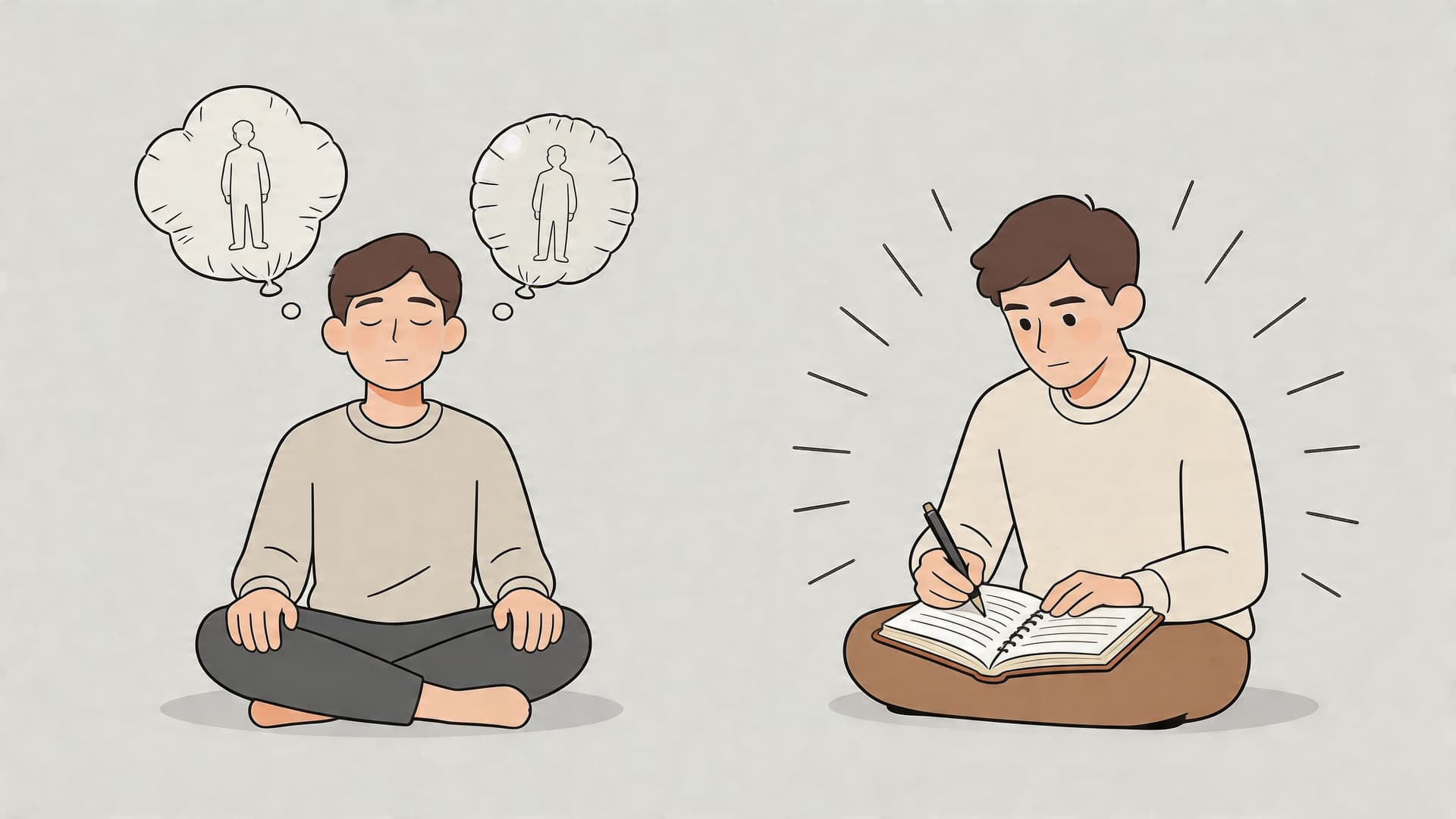
Stop treating manifestation like a remote control
Some people approach this as if they can mentally override another person’s confusion, disinterest, or inconsistency. That’s not spiritual power. That’s desperation wearing incense.
The deeper work is identity work. Instead of asking, “How do I get them?” start asking, “Who am I being in love?” That question changes everything.
Old habits shift into healthier ones:
| Old approach | Mature approach |
|---|---|
| Make them text me | Become someone who expects clear, mutual communication |
| Make them choose me | Embody the self-concept of someone who is naturally chosen |
| Watch for signs all day | Build inner steadiness and let reality catch up |
| Cling to one outcome | Stay open to the highest aligned relationship |
The real target is self-alignment
A specific person can be part of the desire. But the deeper desire is usually safety, devotion, chemistry, recognition, companionship, repair, or a second chance.
Get honest about that.
“You don’t manifest love by shrinking around it. You manifest it by becoming emotionally capable of holding it.”
The strongest manifestation work begins with your relationship to yourself, your emotional habits, and your standards. If your inner world says, “I have to earn love,” no technique will feel peaceful for long. You’ll twist every practice into checking, waiting, and grasping.
Practical shift
Use manifestation as a tool for refinement:
- Name the essence of what you want, not just “them.”
- Notice your current identity: are you secure, or are you performing worthiness?
- Refuse manipulative energy. If your desire depends on overriding someone’s reality, it’s off course.
- Aim for mutuality. The right outcome is a healthy, consensual bond.
This is slower than fantasy, but far more powerful. It gives you your dignity back. Without dignity, no practice stays clean for long.
Laying the foundation: mindset and emotional readiness
Before you script one sentence or visualize one reunion, regulate your emotional state. That’s not optional—emotions shape decisions and behavior in measurable ways.1
Three blocks that sabotage the process
Most people don’t fail because they picked the wrong technique. They fail because the technique sits on top of fear.
Watch for these patterns:
- Scarcity thinking: you believe this person is your only chance at love.
- Attachment to outcome: you decide you can’t be okay unless it works exactly as you want.
- Pedestal energy: you treat them as more valuable or more powerful than you.
All three create the same signal: “I am incomplete, and they complete me.” That signal poisons manifestation work because it trains your body into craving, not receiving.
Build an emotional baseline before you “manifest”
Try this for a week before any serious practice:
-
Start the day with a self-check. Ask, “What am I feeling before I think about them?” If the answer is panic, emptiness, shame, or urgency, address that first.
-
Interrupt fantasy spirals. When your mind replays old conversations or imagined scenes, redirect into the body. Breathe. Walk. Drink water. Write down what the fantasy is trying to give you.
-
Replace need with truth. Instead of “I need this person,” try “I desire love, but I am whole today.”
-
Reclaim daily life. Eat well. Sleep. Answer messages. Show up for work. Clean your space. A regulated life supports a regulated love life.
If a practice leaves you more frantic than grounded, stop and return to emotional stabilization.
Use self-knowledge instead of blind repetition
Tools like Dan Millman’s life-path framework can help you time inner work and relationships. If you try to manifest romance during a period meant for emotional cleanup, you’ll repeatedly run into the same lesson2.
Good resources for building emotional resilience and breaking limiting beliefs can support this deeper inner work.
Questions that show readiness
Don’t ask whether you can manifest them. Ask better questions:
- Can you desire them without collapsing if they don’t respond today?
- Can you imagine a beautiful future without insisting on one exact script?
- Can you hold yourself with dignity when you feel vulnerable?
- Can you tell longing from self-abandonment?
If the answer is no, that’s information—not failure.
The ethics of manifestation: consent and compatibility
If your version of manifesting a specific person depends on controlling another human being, your foundation is wrong. You can pray for connection, imagine reconciliation, and align with love. But once you treat someone else’s autonomy like a barrier to overcome, you’ve moved from spirituality into entitlement.
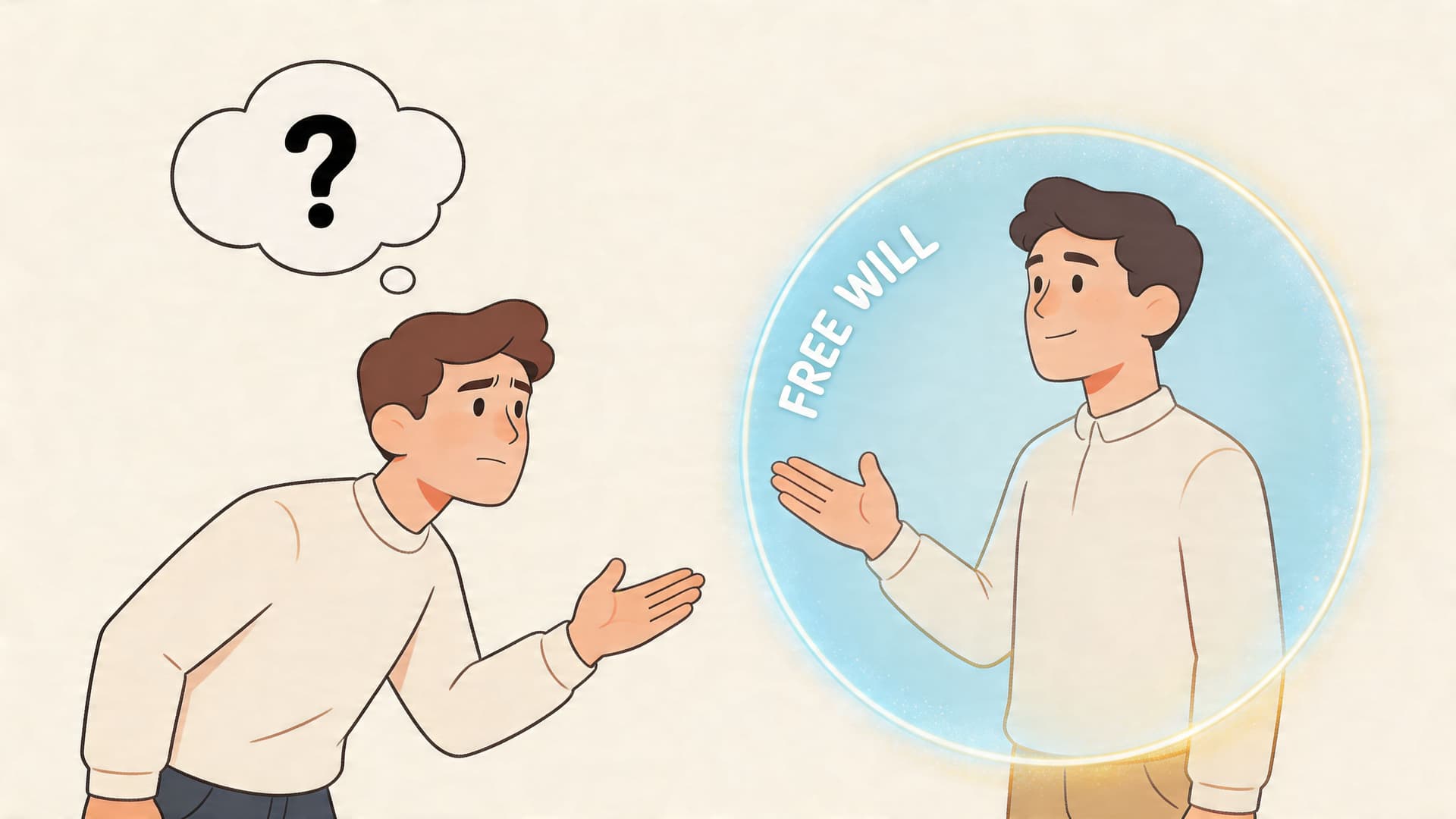
Free will matters
Critics warn that many practices in this space ignore free will and ethical concerns3. The ethical frame is this: you are not manifesting domination. You are aligning with a reality in which a loving, mutual connection can exist. If that reality includes this specific person, great. If it doesn’t, forcing the issue won’t produce peace.
Ask compatibility questions, not control questions
Instead of “How do I make them want me?” ask:
- Are we compatible in values, timing, and emotional capacity?
- Would this relationship be healthy if it arrived today?
- Am I drawn to who they are, or to what I hope they’ll become?
- Is this desire rooted in love, or in unfinished pain?
Millman’s life-path work offers a grounded lens for timing and growth, helping you read life events as development rather than cosmic approval2.
Boundaries are part of manifestation
Boundaries protect love from distortion. Clarity, mutual respect, and emotional responsibility don’t kill connection. They reveal whether connection is real.
Practical resources on setting boundaries and healthy relationship examples help turn abstract intention into concrete practice.
“If someone only feels ‘manifested’ when you ignore your standards, you’re not calling in love. You’re rehearsing self-betrayal.”
A cleaner intention for specific-person work
Shift forceful intentions into ethical ones. Examples:
| Forceful intention | Ethical intention |
|---|---|
| They have no choice but to love me | I align with a mutual, loving connection if it serves us both |
| They text me now | Communication opens naturally and clearly if this bond is aligned |
| They come back obsessed | We both move toward truth, respect, and emotional honesty |
| I will make this happen | I will become the version of me who can receive real love |
This keeps practice clean and protects your mind from turning every delay into spiritual failure.
Core practices: visualization, identity, and assuming the state
Once your emotional baseline is steadier and your intentions are ethical, techniques become useful. Not before.
Techniques work best when they reinforce a new identity instead of smothering panic. The core is assuming the state of the version of you who is already loved, secure, and chosen.
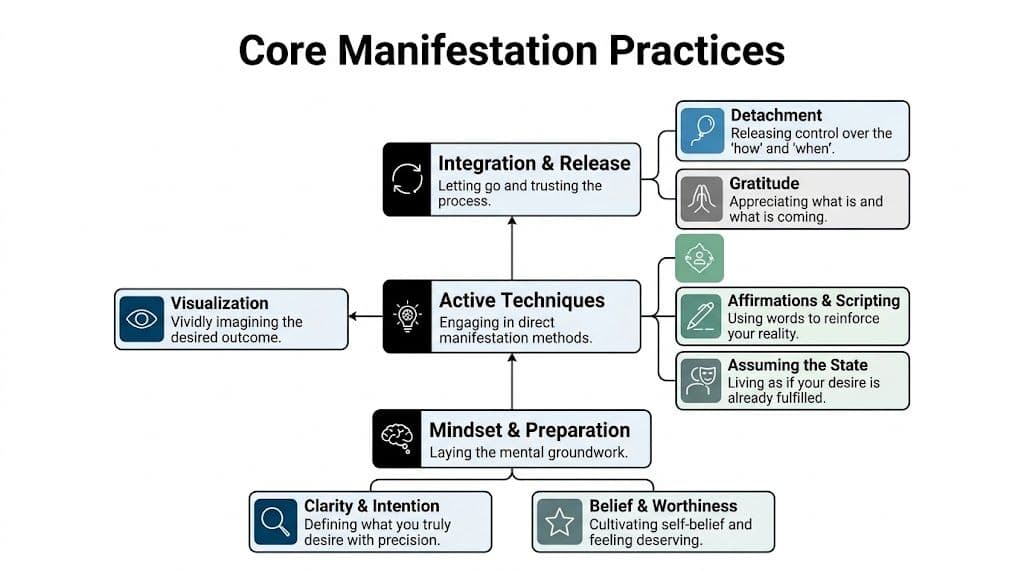
Start with identity-based affirmations
Craft “I am” affirmations that reflect your end-state identity, such as “I am secure, loved, chosen.” Community guides report that committing to end-state journaling for a consistent period correlates with subjective shifts in many practitioners4. Self-concept comes first.
Try affirmations like:
- I am chosen without chasing
- I am emotionally safe in love
- I am available for mutual devotion
- I am no longer entertaining crumbs
- I am the kind of partner I want to receive
Say them slowly and mean them.
Use “living in the end” properly
Neville Goddard’s “living in the end” doesn’t ignore reality. It rehearses the fulfilled state until it feels more natural than the old story. Do it cleanly:
- Choose one short scene.
- Make it ordinary—a Saturday coffee, a calm hand on your back.
- Add sensory detail.
- Stay in the feeling for a minute or two.
Example scene: You’re in the kitchen on a quiet Saturday. Sunlight through the window. They tease you about how you make coffee. You feel relaxed. Safe. Familiar.
The dominant feeling should be natural belonging, not relief from panic.
Script for emotional reality, not performance
Scripting works when it captures the state of the relationship, not just events. Prompts:
- What does a normal day together feel like?
- How do I speak and behave when secure in love?
- What kind of communication exists between us?
- What version of me is present in this relationship?
A simple structure helps:
| Prompt | Example |
|---|---|
| Where are you? | At home making breakfast together |
| What’s happening? | Easy conversation, shared routine, no tension |
| How do you feel? | Calm, cherished, steady |
| Who are you being? | Open, self-respecting, affectionate |
You’re scripting stability, not obsession.
Assuming the state in daily life
Assuming the state shows up in ordinary choices. Ask:
- Would the securely loved version of me stalk their social media right now?
- Would that version beg for mixed signals?
- Would that version neglect sleep, food, work, or friends?
If the answer is no, take the action that aligns with the secure version.
A short daily ritual keeps practice clean:
- First minute: sit still and relax.
- Next few breaths: feel present.
- Affirm identity: use one or two “I am” statements.
- Replay one end-state scene briefly.
- Close with release: “What is aligned for me is unfolding in the right way.”
If your ritual leaves you raw or dependent, trim it. Better five clean minutes than an hour of nervous-system chaos.
Navigating the journey: common pitfalls and troubleshooting
Most manifestation problems are behavioral, not mystical. When people say “it’s not working,” they usually mean one of three things: they’re checking for proof constantly, swinging between confidence and despair, or using “detachment” as an excuse to avoid growth.

Pitfall one: checking the 3D for reassurance
Compulsive checking—rereading messages, looking for hidden signs, asking the same reader every day—is surveillance, not persistence. The root is fear.
Pattern interrupt for obsessive checking:
- Put the phone down and move to another room.
- Name the feeling under the urge: rejected? powerless? lonely?
- Write one sentence of truth: “Checking will not create security.”
- Do one grounded action that benefits your life today.
Pitfall two: hot-and-cold energy
Inconsistency confuses your own mind. Consistency matters more than intensity. A calm practice repeated over time beats emotional overexertion.
Pitfall three: confusing detachment with passivity
Detachment isn’t numbness. Healthy detachment means you release control of timing while staying anchored in your values.
What healthy detachment looks like:
- You still care, but you aren’t consumed.
- You still notice reality, but you don’t worship every detail.
- You still take care of yourself, even on hard days.
- You remain open, but you don’t abandon discernment.
Pitfall four: using techniques to escape truth
If the relationship is unhealthy—if the person is inconsistent, unavailable, or dishonest—doubling down on manifestation is avoidance, not devotion. Ask plainly:
- Has this person shown basic respect?
- Am I manifesting love, or trying to heal rejection by winning?
- If a friend described this, would I call it aligned?
Painful truth is cleaner than spiritual delusion.
Troubleshooting method
When things feel stuck, diagnose before adding more techniques:
- Frantic: return to emotional regulation.
- Obsessed: reduce practice and increase real-life engagement.
- Numb: reconnect with the actual desire beneath control.
- Humiliated: strengthen boundaries and standards.
- Confused: look at behavior, not fantasy.
Sometimes the block isn’t energetic. Sometimes you’re asking for a relationship that doesn’t match your deepest wisdom.
From manifesting a person to becoming whole
This part is less romantic but more transformative. The deepest value in learning to manifest a specific person is that you stop organizing your worth around being chosen. You become someone who can love without collapsing, desire without groveling, and hope without self-abandonment.
The person was never the whole lesson
A specific person often acts as a mirror. They trigger hunger for love, fear of rejection, and old stories about not being enough. Handle that well and it breaks you open in a useful way.
When handled well, this journey teaches:
- Self-concept instead of self-neglect
- Discernment instead of fantasy
- Emotional steadiness instead of obsession
- Compatibility awareness instead of forced attachment
Real magnetism comes from wholeness: emotional congruence, self-respect, warmth without neediness, desire without demand.
“The most attractive energy isn’t ‘I can make anyone love me.’ It’s ‘I know who I am, and I welcome what is mutual.’”
Keep the desire. Drop the desperation. Want the relationship. Pray for the connection. Visualize the best outcome if it helps you stay centered. Hold all of it with open hands. Let the process refine you. Let it reveal whether this bond is real, reciprocal, and timely. Let it teach you how to become the version of yourself who no longer bargains for affection.
If love arrives, receive it cleanly. If it doesn’t, you don’t leave empty-handed—you leave with yourself.
If you want a grounded way to understand relationship patterns, timing, and deeper life lessons, explore the Life Purpose App. It’s built around Dan Millman’s The Life You Were Born to Live and helps you examine life paths, relationship dynamics, and personal cycles with more depth than generic manifestation advice.
Q&A — Common user questions
Can I ethically manifest a specific person?
Yes—if your intention respects free will and prioritizes mutuality. Align with becoming the person who can receive a healthy relationship, and use intentions that allow for consent and compatibility.
What should I do when I feel obsessed?
Stop techniques that amplify anxiety. Return to regulation: breathe, move your body, and take a grounded action that improves your life today.
How do I know when to let go?
Let go when the other person repeatedly shows disrespect, unavailability, or mismatched values. If a relationship requires you to abandon standards, it’s not aligned.
1.
Jerome S. Bruner et al., “Emotion and Decision Making,” Annual Review of Psychology 66 (2015): 799–821; https://www.annualreviews.org/doi/10.1146/annurev-psych-010213-115043
2.
Manifesting SP, “Manifest Your Specific Person: The Complete Step-by-Step Guide,” Manifesting SP, accessed 2026, https://manifestingsp.com/blog/manifest-your-specific-person-the-complete-step-by-step-guide
3.
Juliette Kristine, “Manifesting a Specific Person: Major Pitfalls,” JulietteKristine.com, accessed 2026, https://www.juliettekristine.com/blog/manifesting-a-specific-person
4.
Dan Millman, The Life You Were Born to Live (Carlsbad, CA: Hay House, 1993); https://www.hayhouse.com/the-life-you-were-born-to-live
Discover Your Life Purpose Today!
Unlock your true potential and find your life’s purpose.
