Overcoming relationship insecurity begins with steady, practical steps you can take today. This article helps you trace the roots of your fears, strengthen self-worth, communicate more clearly, and work with your partner to build reliable, lasting security.

December 9, 2025 (10mo ago) — last updated September 20, 2026 (1mo ago)
Overcome Relationship Insecurity: Steps to Build Trust
Learn practical steps to reduce relationship insecurity: identify root causes, build self-worth, communicate clearly, and strengthen lasting trust.
← Back to blog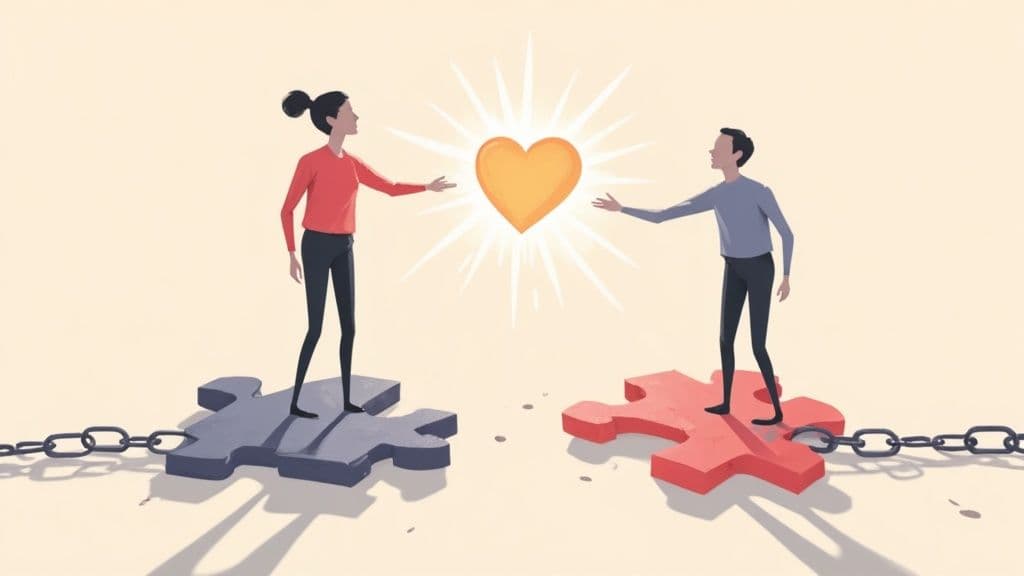
Overcoming relationship insecurity begins with steady, practical steps you can take today. This article helps you trace the roots of your fears, strengthen self-worth, communicate more clearly, and work with your partner to build reliable, lasting security.
How to Overcome Relationship Insecurity
Summary: Discover practical strategies to overcome relationship insecurity by identifying root causes, building self-worth, improving communication, and strengthening lasting trust.
Introduction
Overcoming relationship insecurity begins with steady, practical steps you can take today. This article helps you trace the roots of your fears, strengthen self-worth, communicate more clearly, and work with your partner to build reliable, lasting security.
Trace Your Insecurity to Its Source

Before you can move past insecurity, you need to know where it’s coming from. This isn’t about assigning blame. It’s about finding clarity so you can heal and show up with more confidence in your relationships.
That nagging need for reassurance, the urge to check a partner’s phone, or overanalyzing texts are often learned emotional habits—patterns wired in long ago. Identifying those patterns is the first step toward changing them.
Understand Your Attachment Style
Attachment theory is a useful roadmap for seeing how early relationships shaped your expectations of love. Common insecure styles include:
- Anxious attachment: Fear of abandonment, craving frequent reassurance.
- Avoidant attachment: Needing excessive independence and shutting down emotional closeness.
- Disorganized attachment: A mix of anxious and avoidant responses, producing chaotic push-pull dynamics.
These styles aren’t permanent labels. Awareness gives you the power to choose new ways of relating. Learn more about attachment patterns in our guide: Attachment Styles Explained. Around half of adults show some form of insecure attachment1.
How Past Experiences Shape Present Fears
If love felt conditional as a child, it’s natural to carry those fears into adulthood. For many people, sensitivity to perceived rejection can intensify normal relationship stresses. Targeted counseling and therapy can significantly reduce anxiety and help people develop more secure relationship patterns2.
Build a Strong Foundation of Self-Worth

Lasting security in a relationship starts with how you feel about yourself. When you cultivate a stable inner life, your partner’s behavior has less power to destabilize you.
This work is steady, not instant. Small daily habits rewire your self-image over time and build a kinder inner voice.
Uncover Your Strengths and Purpose
Knowing who you are outside the relationship creates an essential anchor. Exploring your natural gifts and life purpose can make it easier to rely less on partner validation. Tools like Dan Millman’s framework and the Life Purpose App can help you discover your core strengths and values. Learn more at the Life Purpose App: https://lifepurposeapp.com.
Actionable Exercises to Build Self-Love
- Win file: Save accomplishments and moments of evidence that you’re capable and loved.
- Self-compassion journaling: Use prompts that invite kindness toward yourself, such as, “What would I tell my best friend in this situation?”
- Identify core values: List your top five values and check whether your daily actions align with them.
These practices are the slow, reliable work that builds inner safety.
Healing the Inner Wounds
Old wounds often fuel insecurity. Inner child work and targeted exercises can help you resolve those patterns. For practical exercises, see our post on inner child healing exercises: [/post/inner-child-healing-exercises].
Learn to Communicate and Regulate Emotions
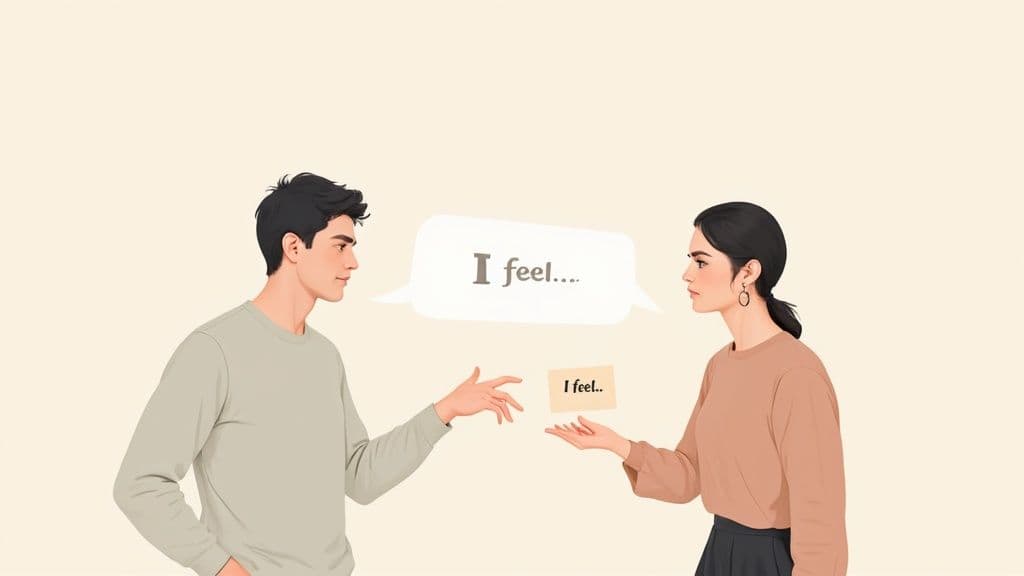
Insecurity grows in silence. Managing intense feelings and communicating them clearly turns potential conflict into connection.
This isn’t about never feeling jealous or anxious. It’s about having a plan so you respond intentionally rather than react from fear.
The Power of a Pause
When insecurity spikes, pause. Give yourself a short break to breathe, take a walk, or ask for a few minutes before discussing the issue. That pause helps your rational brain catch up and prevents reactive messages that create more distance.
Use “I feel” Statements
“I feel” statements shift the conversation from accusation to vulnerability. Instead of saying, “You never make time for me,” try, “I’ve been feeling lonely lately and I miss our quality time.” This invites collaboration, not defensiveness. For more on emotional communication, see our post on emotional intelligence in relationships: [/post/emotional-intelligence-relationships].
From Reaction to Response
| Trigger | Insecure Reaction (Avoid) | Secure Response (Do Instead) |
|---|---|---|
| Partner is quiet | “Are you mad at me?” | “I notice you seem quiet. I’m worried I might have upset you. Can we talk when you’re ready?” |
| Partner goes out with friends | Multiple texts and surveillance | “Have fun tonight. I’ll feel calmer if you send a quick message when you’re heading home.” |
| Body-image insecurity | “They must prefer someone else” | “I’m having a hard body image day. Could I use some reassurance?” |
Sample Scripts for Tricky Moments
When you feel jealous:
“Hey, I want to be honest about something vulnerable. When I saw [situation] I felt a pang of jealousy. It brought up old insecurities, and I wanted to share that so it doesn’t build up inside me.”
When you need reassurance:
“Lately my anxiety has been higher and I’ve been feeling insecure. It would mean a lot if you could share one thing you appreciate about our relationship.”
Open, calm scripts like these make honesty easier to hear.
Strengthen Your Relationship as a Team
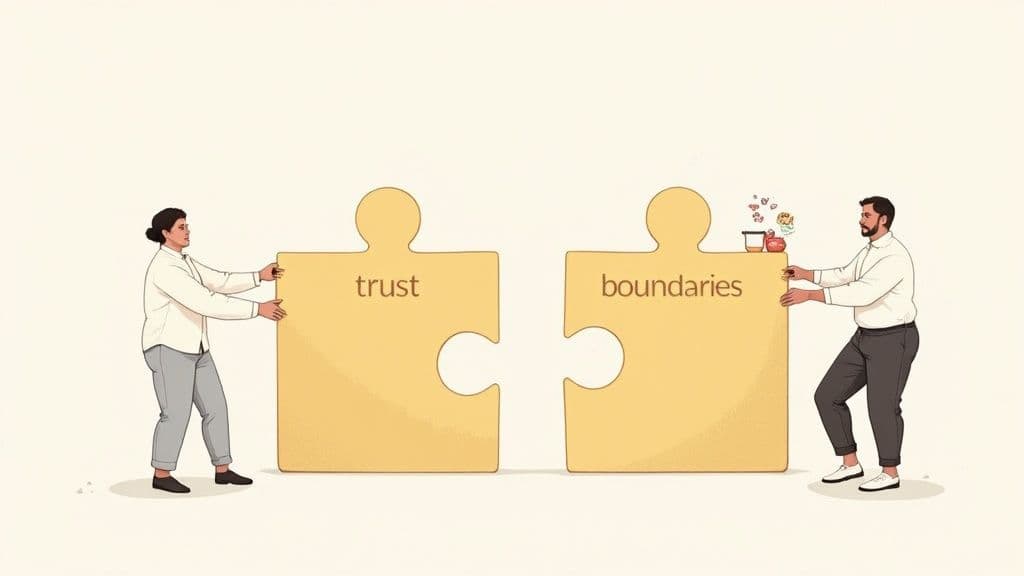
Getting secure is both personal work and a team effort. Your personal stability is the foundation, but a relationship becomes truly safe when both partners commit to creating predictability, trust, and emotional safety.
The Importance of Emotional Stability
Knowing your partner will show up consistently helps calm your nervous system and reduces chronic anticipatory anxiety. Many people now prioritize emotional stability in a partner, reflecting a shift toward valuing reliability and predictability in relationships3.
A steady partner doesn’t fix your insecurity, but they create the safe environment you need to do the inner work.
Shared Rituals and Gratitude
Small rituals build trust over time:
- Daily check-ins: Five minutes, phones down, ask, “How was your day?”
- Weekly relationship time: A calm check-in about what’s going well and what could improve.
- Gratitude practice: Share one thing you appreciate about each other before bed.
These consistent deposits create a reserve of goodwill to draw on during hard moments.
Talk About Practical Stressors Like Money
Money often intensifies relationship insecurity. Avoiding financial conversations can make fears worse. Schedule a non-emotional time to plan finances together, and frame it as a team task using “we” language. Financial stress is a common source of relationship conflict, so a proactive approach helps reduce anxiety and blame4.
Deeper Insights with the Life Purpose App
If you want another lens for your dynamic, exploring life paths—such as the system in Dan Millman’s book—can highlight strengths and predictable friction points. Comparing life paths with a partner can create empathetic language to discuss differences rather than assign blame.
When to Seek Professional Support
If insecurity is persistent and damaging your sleep, work, or daily joy, seeking professional help is a strong step. Therapy provides tools and a neutral space to unpack patterns that keep repeating5.
Signs It’s Time to Get Help
- Persistent self-sabotage that repeats across relationships
- Constant reassurance-seeking that never lasts
- Overwhelming emotional reactions to small triggers
- Relationship stress that harms work, friendships, or health
Helpful Therapeutic Approaches
- Cognitive Behavioral Therapy (CBT) is practical for spotting and reframing distorted thoughts2.
- Attachment-based therapy explores early patterns to build an earned secure attachment.
Couples therapy can also help both partners learn new interaction patterns and break destructive cycles.
Quick Q&A: Common Concerns
Can I ever get rid of my insecurity for good?
Not like an illness that disappears forever. Insecurity is an emotional pattern you learn to manage. The goal is to shorten the time you spend in anxiety and to develop tools that bring you back to trust faster.
Is this my insecurity, or a real relationship problem?
Distinguish feelings from facts. Ask, “What’s the concrete evidence?” If there’s repeated disrespect or broken promises, that’s a relationship problem. If your fear is based on assumptions, it’s likely your own pattern.
Am I responsible for fixing my partner’s insecurity?
No. You can’t fix someone else. You can offer consistency, reassurance, and encouragement, but their inner work is theirs to do.
Three Concise Q&A Sections
Q: What first step helps most when I feel insecure?
A: Pause, breathe, and identify the story you’re telling yourself. Use an “I feel” statement to share your experience without blaming.
Q: How can I build self-worth that sticks?
A: Commit to small daily habits: a win file, self-compassion journaling, and living by your core values.
Q: When should I see a therapist?
A: If insecurity repeatedly sabotages relationships, disrupts work or sleep, or causes intense reactions, professional support can make a major difference.
Ready to explore your deeper strengths and life purpose? Learn more at the Life Purpose App: https://lifepurposeapp.com
1.
Verywell Mind, “Attachment Styles in Relationships,” https://www.verywellmind.com/attachment-styles-2795344.
2.
S. G. Hofmann, A. Asnaani, I. J. Vonk, A. T. Sawyer, and D. F. Fang, “The Efficacy of Cognitive Behavioral Therapy: A Review of Meta-analyses,” Clinical Psychology Review, 2012. [https://pubmed.ncbi.nlm.nih.gov/22506637/](https://pubmed.ncbi.nlm.nih.gov/22506637/).
3.
“30 Fascinating Relationship & Love Statistics That Reveal How We Love in 2025,” We’re Not On a Break, 2025. https://www.werenotonabreak.com/blog/30-fascinating-relationship-love-statistics-that-reveal-how-we-love-in-2025/.
4.
Why money causes arguments in marriage and how couples can manage it, CNBC, April 2019. https://www.cnbc.com/2019/04/30/why-money-causes-arguments-in-marriage.html.
5.
National Institute of Mental Health, “Psychotherapies,” https://www.nimh.nih.gov/health/topics/psychotherapies.
Discover your life path today
Enter your date of birth and see your life path, free.
Find your life path