Learn how to visualize effectively for goal-setting and stress reduction. Discover sensory techniques, mental imagery science, and life path alignment.

September 30, 2026 (23d ago)
How to Visualize for Real Life Changes
Learn how to visualize effectively for goal-setting and stress reduction. Discover sensory techniques, mental imagery science, and life path alignment.
← Back to blog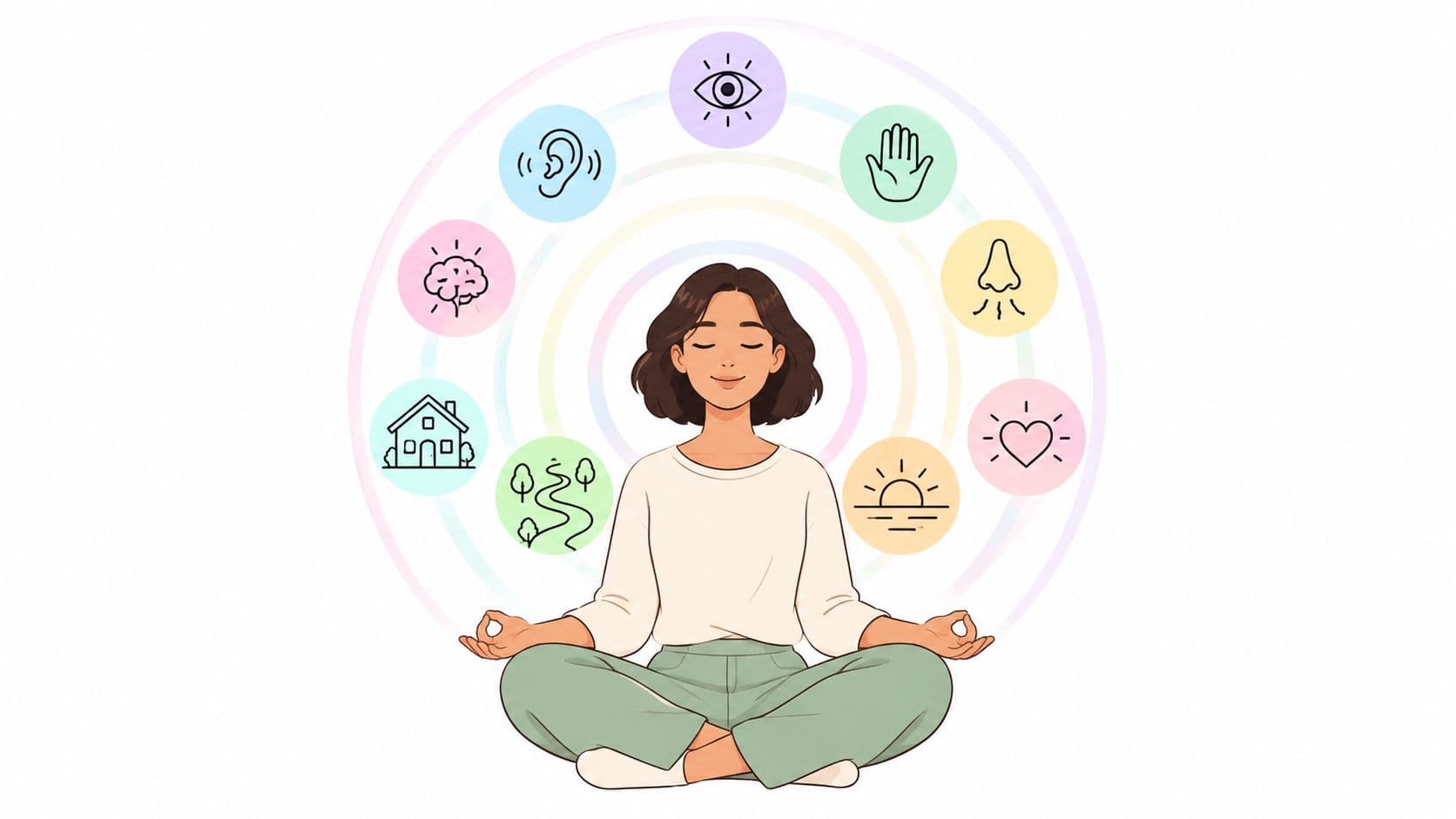
Learn how to visualize effectively for goal-setting and stress reduction. Discover sensory techniques, mental imagery science, and life path alignment.
“Close your eyes and picture your dream life” sounds inspiring, but it's incomplete advice. A polished image of a new career, perfect relationship, or peaceful home can feel comforting while leaving your actual behavior unchanged. Visualization works best when it becomes a rehearsal for attention, emotion, and action, not a substitute for them.
Learning how to visualize for real life changes means choosing the right kind of image, grounding it in the body, and connecting it to a purpose that feels personally meaningful. You don't need a perfect mental movie. You need a practice that helps you notice what matters, prepare for what may happen, and take the next honest step.
Why Most Visualization Advice Fails
The popular “picture your dream car” exercise fails because the car usually has no connection to the decisions required to earn, maintain, or enjoy it. You see the polished outcome, but you don't rehearse the difficult conversation, the unfamiliar skill, the rejected application, or the ordinary Tuesday when motivation disappears.
That kind of pleasant daydreaming isn't useless. It can reveal what you desire. The problem begins when you confuse desire with preparation. A broad image of success may lift your mood for a moment, yet it doesn't necessarily tell your attention what to notice or your body what to practice.
Outcome fantasies leave out the useful parts
Effective mental imagery includes more than sight. You might hear your voice during a presentation, feel your feet on the floor, notice the temperature of the room, or sense the pause before you answer a difficult question. These details make the imagined situation specific enough to guide behavior.
A vague image also makes it difficult to recognize misalignment. “I want to be successful” could mean financial security, creative freedom, social approval, service, mastery, or rest. Each meaning calls for a different routine. If you visualize a goal borrowed from other people, the exercise may produce pressure rather than direction.
Practical rule: Don't ask only, What do I want to have? Ask, Who am I practicing becoming, and what will that person do next?
Another common mistake is demanding vivid imagery from a mind that doesn't naturally think in pictures. Some people visualize clear scenes. Others notice words, physical sensations, emotions, spatial impressions, or symbolic shapes. A weak visual image doesn't mean you're doing the practice wrong. Your job is to create a usable inner cue, not a cinematic production.
Passive imagery needs a behavioral bridge
End each session with one action that can happen in the real world. Send the email, open the document, place the walking shoes by the door, or write down the question you've been avoiding. The mental scene becomes meaningful when it changes what you do after you open your eyes.
Visualization also becomes unreliable when it promises certainty. Life contains other people, changing circumstances, incomplete information, and outcomes you can't control. A grounded practice prepares you to respond well. It doesn't guarantee that reality will match the picture.
Building a Grounded Sensory Practice
Start with your physical state before choosing a goal. If your shoulders are tight and your breathing is hurried, an ambitious image may feel like another demand. Grounding gives the mind a stable platform from which to imagine.
Sit with both feet supported, or stand with your weight evenly distributed. Let your eyes rest on one ordinary object in the room. Notice its edges, color, and distance. This environmental anchor helps you remain aware that you're imagining rather than drifting into an absorbing fantasy.
Prepare the body first
Move through a brief release practice:
- Settle your breathing. Let the exhale become unforced and slightly longer than the inhale. Don't strain to create calm. Notice the breath you already have.
- Relax in small areas. Gently tense your hands, shoulders, jaw, and legs, then release them. The contrast helps you identify tension instead of trying to think it away.
- Name present sensations. Notice contact with the chair, the floor beneath you, the air on your skin, and any sounds nearby.
- Choose a simple intention. Use a phrase such as, I'm practicing a clear response, or, I'm making room for the next step.
Progressive muscle relaxation can be useful because it gives attention a physical task. You're not forcing the nervous system to become peaceful. You're teaching yourself to distinguish effort from unnecessary contraction.
Now build the scene gradually. Begin with the setting. Where are you? What time of day is it? Is the light warm or cool? Then add sound, texture, temperature, and smell. If you're rehearsing a job interview, notice the chair beneath you, the sound of a door opening, the texture of a folder in your hands, and the feeling of your feet resting on the floor.
Give the image a useful sequence
Don't pile on every sensory detail at once. Layer the experience in a steady order:
- Environment: Establish the room, natural surroundings, or social setting.
- Body: Notice posture, breath, movement, and physical contact.
- Action: Rehearse one behavior, such as asking a question or beginning a task.
- Response: Include a likely obstacle and your chosen response.
- Meaning: Identify the quality you want to embody, such as patience, courage, or honesty.
The mind-body connection and visualization become easier to understand when you treat imagery as an embodied practice rather than a picture held in the head. A calm posture may not solve a problem, but it can make it easier to notice choices that hurried attention misses.
Finish by returning to the room. Feel your feet, look at the object you selected, and describe one action you'll take. This closing matters because it separates rehearsal from avoidance. You're bringing the useful quality of the image into ordinary life.
The Science of Abstract Versus Concrete Imagery
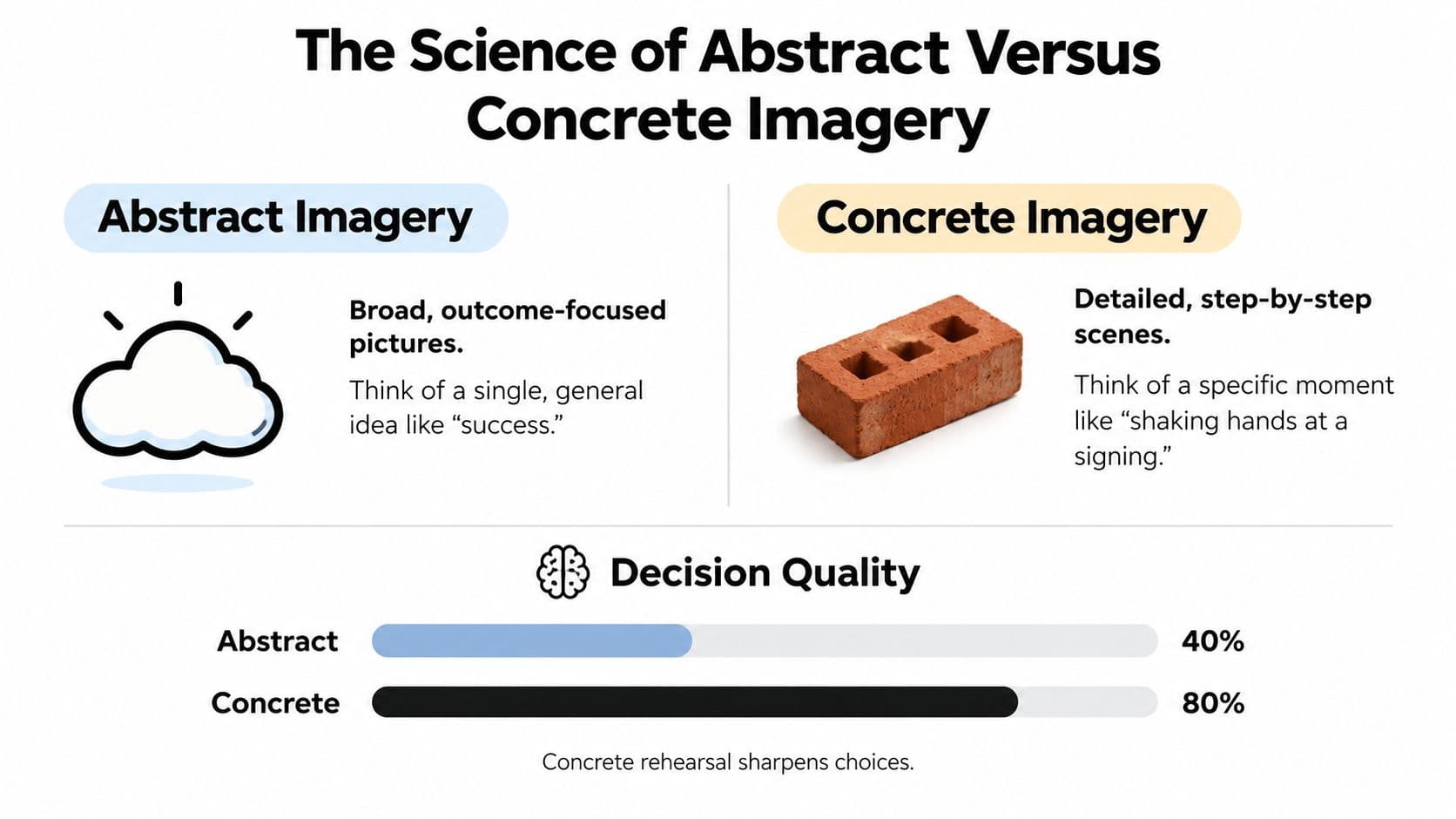
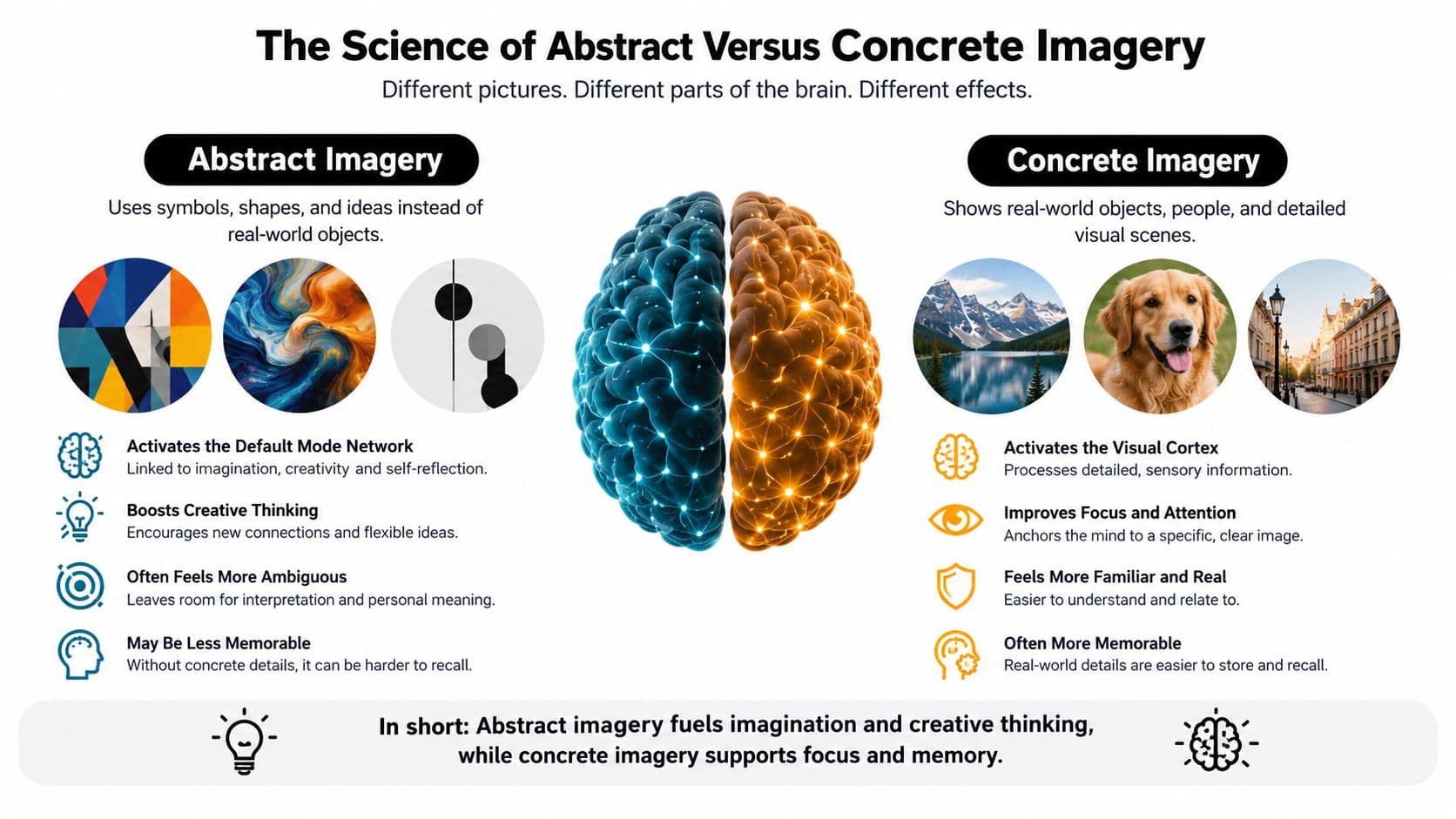
A concrete image and an abstract image serve different purposes. Concrete imagery shows what happens, where it happens, and how you move through it. Abstract imagery captures a broader quality, such as freedom, protection, belonging, or renewal.
Suppose you're considering a career transition. A concrete scene might show you updating a résumé, introducing yourself to a contact, answering a question, and reviewing an offer. An abstract image might be an open doorway or a rising sun that represents possibility. The first supports task preparation. The second can help you explore emotional meaning.
Recent research suggests that more abstract visualizations can evoke more varied mental images and stronger negative affect, which may produce more risk-averse decisions, while concrete visuals can suppress that imagery response. These findings come from a recent research paper on abstract and concrete visualization, and they complicate the usual advice that vivid realism is always superior.
Match the image to the decision
Concrete rehearsal is appropriate when you need to perform a defined behavior. Use it before a presentation, difficult phone call, examination, negotiation, or new physical routine. Keep the scene realistic enough to include friction. Rehearse losing your place, receiving a skeptical question, or needing to pause and begin again.
Abstract imagery is more suitable when you're exploring identity, values, uncertainty, or a complex emotional choice. A symbol can hold several meanings at once. A bridge might represent transition, but it can also invite questions about what you're leaving, what you're carrying, and whether the destination fits.
Reasoning supports visualization. A resource such as the Kohru reasoning guide for students can help you distinguish broad concepts from specific examples. That distinction matters because an image can inspire reflection without giving you enough information to act.
Try a two-stage practice:
- Open with abstraction. Choose a symbol or quality that captures the deeper direction you want to explore. Let several associations arise without judging them.
- Translate one insight into a scene. Select one practical moment that expresses the quality. If the symbol is steadiness, rehearse remaining composed while someone challenges your proposal.
- Add an obstacle. Include a realistic interruption, delay, misunderstanding, or emotional reaction.
- Choose a response. Decide what you'll do, say, or remember in that moment.
- Review the signal. Afterward, ask whether the image produced clarity, fear, energy, resistance, or a need for more information.
The aim isn't to force positive emotion. Negative feeling can carry useful information, especially when an image reveals risk or conflict. Treat the emotional response as a signal to investigate, not a command to retreat or proceed.
Aligning Mental Imagery With Your Life Path
A visualization becomes more personal when it reflects your values rather than a generic definition of achievement. Ancient wisdom can offer a language for that inquiry, provided you use it as a reflective framework rather than a rigid prediction.
Dan Millman's The Life You Were Born to Live presents a Life-Purpose System based on ancient wisdom and says it has helped hundreds of thousands of people find new meaning, purpose, and direction in life, as described in the book's published description. The book was first published in 1993 and describes 37 life paths, with methods for determining life paths and exploring core issues, talents, and special needs, according to its bibliographic listing.
Use this system as a prompt for self-observation. A life path shouldn't become an excuse to avoid responsibility or a label that limits your choices. It can instead help you ask better questions about the qualities you're trying to develop.
Turn a life-path theme into a lived scene
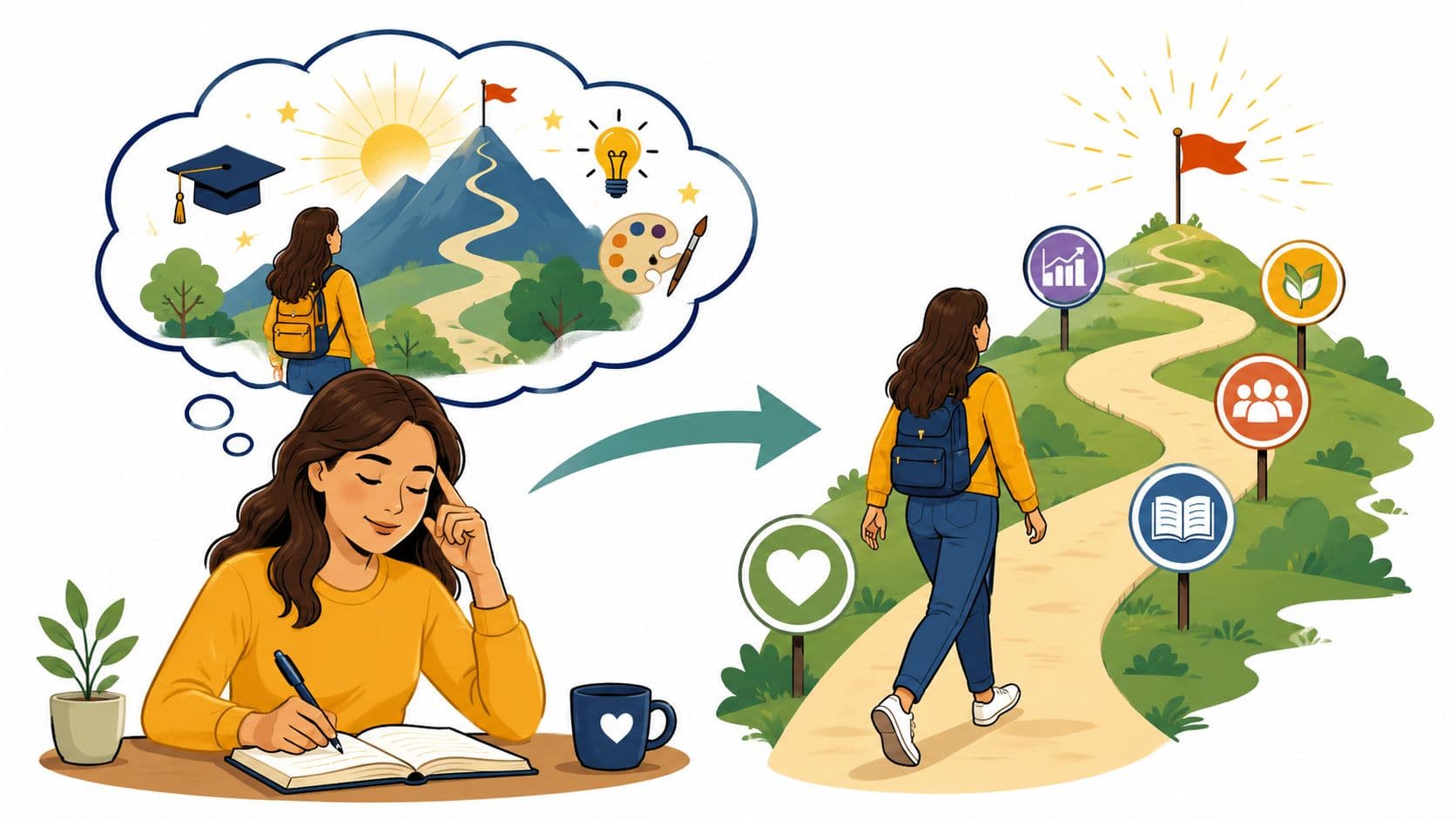
Begin with a theme that feels relevant to your current circumstances. You might reflect on discipline, trust, service, independence, communication, or balance. Then ask where that theme appears in your actual week.
For example, if your reflection points toward learning patience, don't visualize an idealized life in which nothing frustrates you. Visualize the moment a colleague changes a plan, a family member needs more time, or your own progress feels slow. See yourself listening, asking for clarification, and choosing a response that respects both your needs and the situation.
If you're exploring career direction, build three images:
- The aligned scene: You're using a natural strength in a way that serves a meaningful purpose.
- The challenge scene: That same strength becomes excessive, such as carefulness turning into hesitation or independence becoming isolation.
- The integration scene: You use the strength with greater awareness and accept support where it's needed.
This approach keeps ancient life-path wisdom connected to observable behavior. You're not waiting for a number to tell you what will happen. You're examining patterns, testing interpretations, and deciding how you want to express a value.
The Life Purpose App is described as the mobile companion to Dan Millman's The Life You Were Born to Live. Its listing says it can calculate life paths, relationship paths, and life cycles, provide access to the book's text, and explore relationship dynamics through its app description. If you use it, treat the result as a starting point for journaling and visualization, not as a replacement for judgment, conversation, or practical planning.
You can also connect the practice to a specific reflection on manifestation of wealth and purposeful action. The important question is not just whether you can imagine having more. Ask what kind of relationship with money would support your values, responsibilities, generosity, and freedom.
Guided Exercises for Real World Scenarios
A useful visualization routine should survive an ordinary day. You can adapt the same principles to stress, change, and relationships by changing the level of detail and the emotional aim.
When stress narrows your attention
Imagine a steady sensory cue rather than an elaborate future. Choose the feeling of warm sunlight on your hands, the sound of rain against a window, or the weight of your feet on solid ground. Keep the image simple while you notice three physical sensations in the present room.
Then let the cue become an instruction: soften your jaw, lower your shoulders, and lengthen one exhale. You aren't trying to erase the stressful event. You're creating enough space to choose whether to respond now, ask for time, or seek support.
When work or identity is changing
Use concrete rehearsal for a transition. Suppose you're moving into unfamiliar work and feel unprepared. Begin at the first practical moment, such as opening the application, entering a new workplace, or introducing yourself to someone with more experience.
Rehearse the sequence in manageable pieces:
- You arrive and orient yourself.
- You state what you know without exaggeration.
- You ask a clear question.
- You receive an answer that challenges your assumptions.
- You write down the next task and begin.
Include the possibility of discomfort. The purpose isn't to create an image in which you perform flawlessly. It's to practice recovering when the situation doesn't follow your preferred script.
After the exercise, write two columns. In the first, record what you can control. In the second, record what needs research, feedback, or patience. Visualization becomes more responsible when it shows you where evidence is missing instead of disguising uncertainty with confidence.
When a relationship feels strained
For relationship harmony, avoid visualizing another person behaving exactly as you want. That turns imagery into an attempt to control them. Instead, visualize yourself entering the conversation with curiosity and a clear boundary.
See the other person's posture and imagine that they may be protecting a need you don't yet understand. You don't have to agree with their interpretation. Practice asking, What matters most to you here? Then rehearse listening without preparing your defense while they speak.
The life-purpose guided meditation practice can provide another reflective structure for connecting personal meaning with daily conduct. Keep the exercise grounded by ending with a specific action, such as requesting a conversation, acknowledging your part, or deciding what boundary you need to state.
Troubleshooting Blocks and Building Daily Routines
Your mind won't cooperate every time. Intrusive thoughts, blankness, skepticism, and emotional resistance are normal parts of practice. A visualization routine becomes sustainable when it makes room for these experiences instead of treating them as evidence of failure.
Work with the block in front of you
- If images won't appear: Use words, sounds, body sensations, or a simple symbol. Describe the scene aloud or write three concrete details.
- If your thoughts keep interrupting: Shorten the exercise and return to one anchor, such as your feet or the sound nearest you.
- If the practice feels fake: Rehearse a small action you genuinely could take. Credibility grows from a believable step, not a grand declaration.
- If the image creates fear: Reduce the intensity. Look at the scene from a distance, change the setting, or visualize asking for help.
- If you feel emotionally numb: Don't force enthusiasm. Notice the absence of feeling and ask what information it may contain.
Visualization isn't a test of imagination. It's a way to practice meeting experience with more choice.
A simple routine can begin with a morning intention, a brief rehearsal before a demanding event, and an evening review. You might use a transition moment, such as sitting in the car before work or waiting for a kettle to boil, to recall one sensory cue and one chosen behavior.
Track subtle changes rather than demanding dramatic results. Note whether you recognize tension sooner, recover more quickly after an interruption, communicate more directly, or take an action you previously postponed. These observations keep the practice connected to life.
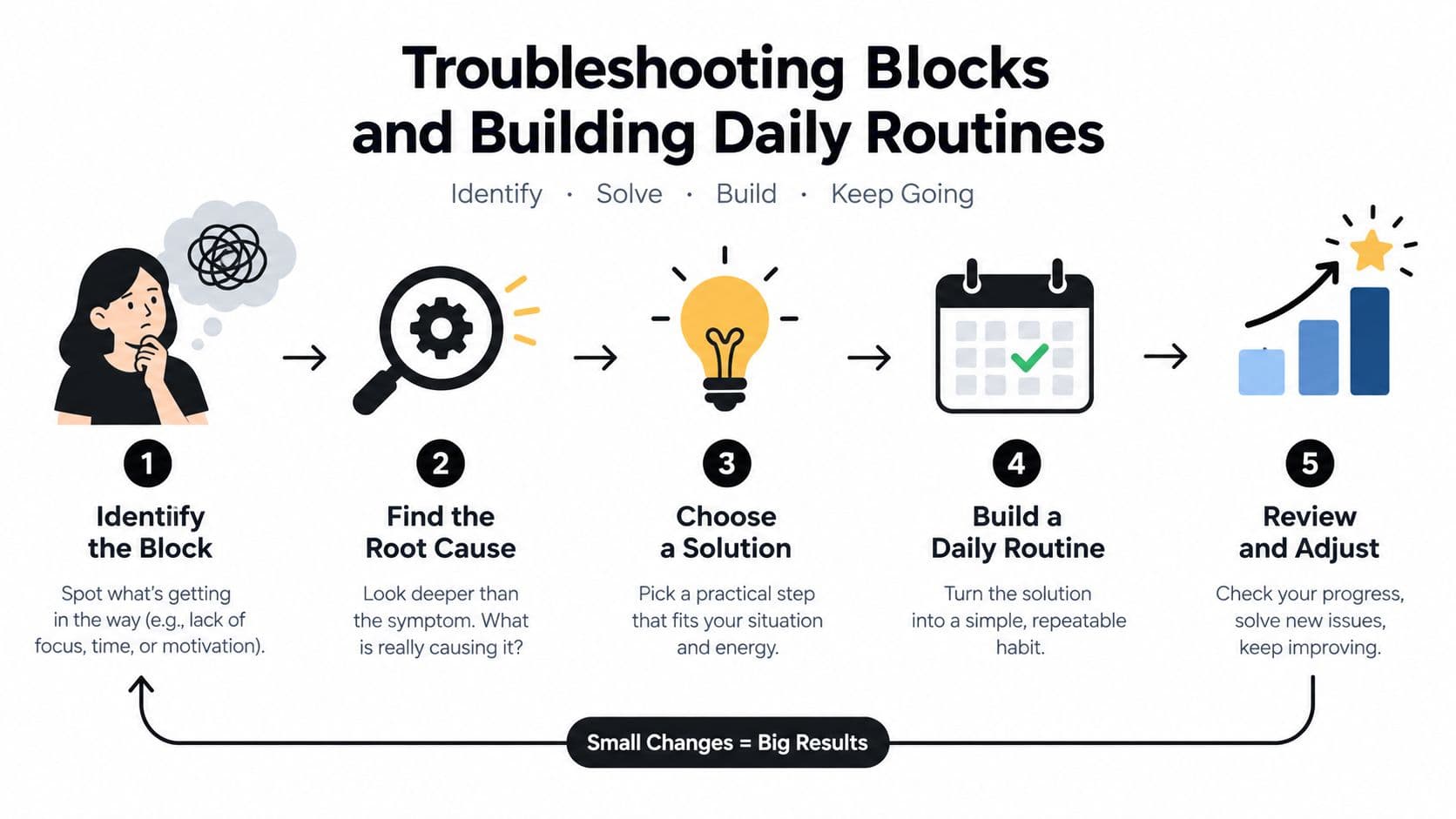
Use this five-part rhythm when you're unsure what to do:
- Arrive: Notice your body and surroundings.
- Choose: Select an abstract quality or concrete task.
- Rehearse: Include sensory detail and one realistic obstacle.
- Act: Take a small step immediately afterward.
- Reflect: Record what changed and what still needs attention.
Your practice can remain spiritual without becoming vague, and practical without becoming mechanical. Let symbols reveal meaning, let concrete scenes prepare behavior, and let real-world feedback refine both.
Use the Life Purpose App to explore the life-path framework connected with Dan Millman's The Life You Were Born to Live, then turn your reflections into grounded visualization exercises for work, relationships, and personal growth. Visit the app, identify one theme that speaks to your current season, and pair it with one concrete action you can take today.
Discover your life path today
Enter your date of birth and see your life path, free.
Find your life path