Explore the law of polarity in relationships, from masculine-feminine energy to practical exercises for balance and growth.
August 9, 2026 (1mo ago)
The Law of Polarity in Relationships: A 2026 Guide
Explore the law of polarity in relationships, from masculine-feminine energy to practical exercises for balance and growth.
← Back to blog
You're in the middle of a relationship that still works on paper, but feels quieter than it used to. The schedules are coordinated, the chores are divided, the bills get paid, and yet the easy spark that once made everything feel alive now shows up only in rare bursts. That's often the moment people start asking whether the problem is love, compatibility, or something they can't quite name.
The law of polarity in relationships gives that feeling a language. It's the idea that attraction grows through contrast, while steadiness grows through shared ground, and healthy couples need both at different times. When people confuse those two jobs, they either chase excitement without stability or settle for harmony without chemistry.
Why Couples Start Feeling Like Roommates
A lot of couples don't drift apart in dramatic ways. They drift into efficiency. One person makes the grocery list, the other handles pickup, both of them answer texts, and the relationship starts to feel more like a well-run household than a living bond.
That shift isn't always a sign that love is gone. It often means the relationship has become over-focused on coordination and under-focused on contrast. When two people spend enough time solving logistics together, they can lose the sense that the other person brings something distinct, unexpected, and energizing.
The room-mate feeling usually starts with sameness
Sameness isn't bad. Shared routines, shared values, and shared responsibilities are what make a relationship safe enough to build a life inside. The problem shows up when the whole connection gets flattened into function, and neither person feels pulled into the other's difference anymore.
That's where the law of polarity in relationships becomes useful. It frames attraction as something that often needs an active tension between distinct ways of showing up, not identical habits. In plain language, a relationship can be stable and still feel flat if every interaction starts to look like a team meeting.
Practical rule: if you only feel like co-managers, the relationship may need more contrast, not more criticism.
The fix isn't to become strangers. It's to notice where the relationship lost its lively edge. Sometimes that means one partner stopped leading with warmth, decisiveness, playfulness, or desire. Sometimes it means both people got so focused on being reasonable that neither one feels especially magnetic anymore.
A useful question is simple. What used to make this person feel different from everyone else in your life? That answer usually points toward the quality that needs room again.
What the Law of Polarity Means
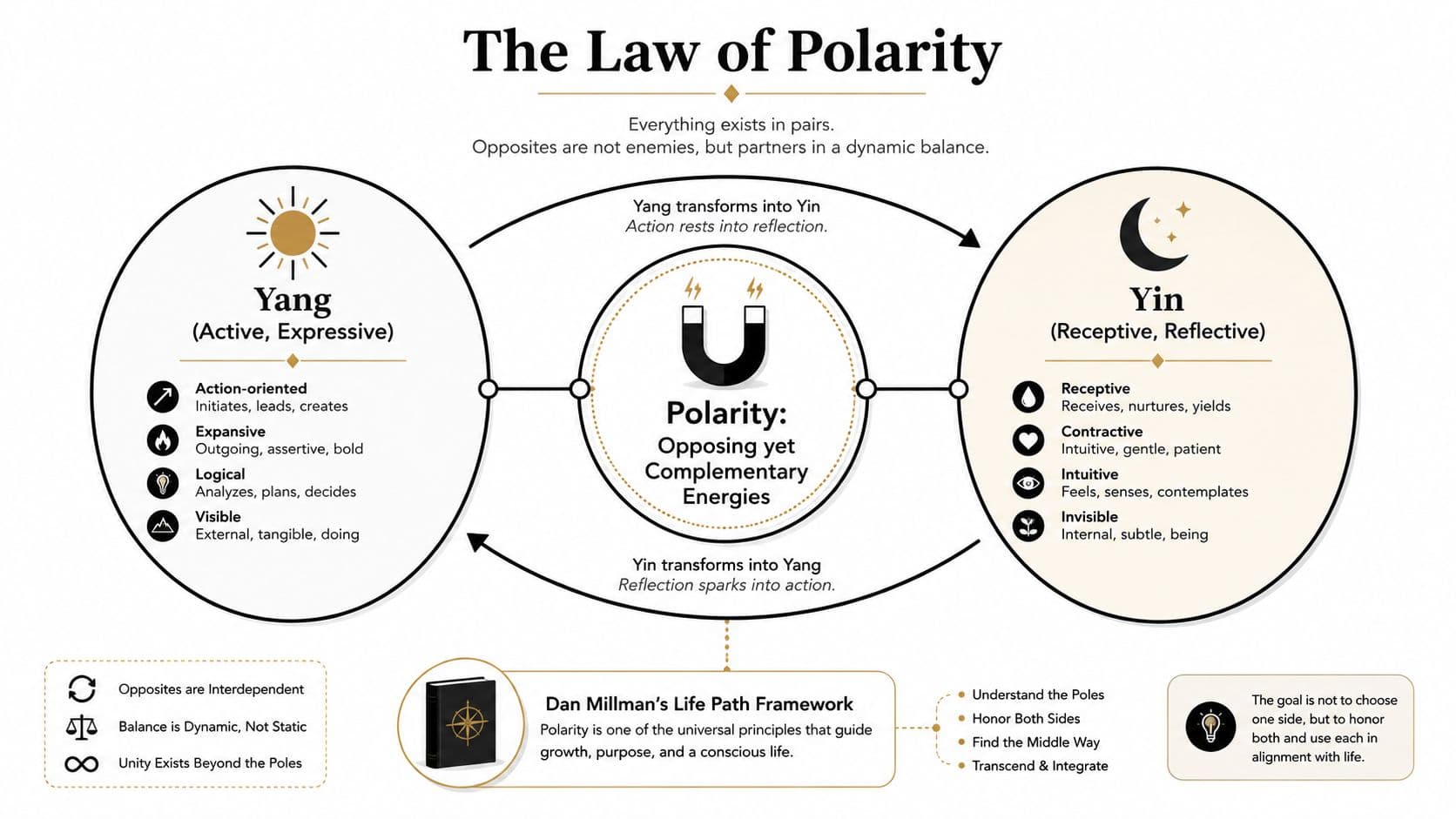
The law of polarity in relationships is easiest to understand through a magnet principle. A magnet has two different poles, each serving a distinct function. Relationship coaches use that image to explain why contrast can create attraction, while sameness creates comfort and trust.
Dan Millman's The Life You Were Born to Live fits into this conversation because it treats each person's life path as having a distinct energetic pattern. In that framework, compatibility is less about making two people the same and more about seeing how two different life paths interact, where they complement each other, and where they need more care. The Life Purpose App uses that same kind of life-path thinking to help people compare patterns and get a clearer sense of compatibility.
Difference is not the same as polarity
People get confused here. Two people can differ in many ways and still feel little attraction. A relationship can also feel strongly polarized in style while sharing the same values, ethics, and long-term goals.
The useful distinction is simple. Difference means two people are not identical. Polarity means their differences create a felt pull, a living tension that keeps the connection from going numb. That helps explain why some couples feel calm but uninspired, while others feel charged but unstable.
In practical terms, many people describe polarity with the language of Yang and Yin. Yang tends to mean active, expressive, outward-moving energy. Yin tends to mean receptive, reflective, inward-making space. Those labels are not fixed identities. They work more like temporary modes people move through depending on the moment.
A relationship gets dull when both people live in the same mode all the time.
That is also why polarity makes more sense as a dynamic pattern than as a personality test. The goal is not to prove that one partner is “the masculine one” and the other is “the feminine one” forever. The question is whether the relationship has enough contrast to stay alive, and enough softness to stay safe.
The same idea can help you think about life paths. If your own pattern and your partner's pattern create easy flow, that may look like stability. If they create energetic spark, that may look like attraction. The point is to read the pattern accurately, then use that insight to understand where the relationship fits well and where it may need more care.
The Main Poles That Create Attraction
People usually talk about polarity as masculine versus feminine energy, but that's only one lens. Real relationships also feel contrast through temperament, pace, structure, and emotional style. Some of the strongest attraction happens when one person is naturally more spontaneous while the other is more deliberate.
Poles show up in ordinary behavior
A planner and a free spirit can find each other fascinating. An introvert and an extrovert may bring out different parts of the same relationship. One person may lean toward direct expression, while the other brings steadiness and patience that keeps the bond from becoming chaotic.
Those contrasts matter because they keep each partner from collapsing into a mirror of the other. When both people lead the same way, they can begin to feel interchangeable. When their styles differ in a useful way, each person gets to experience something they don't naturally generate alone.
Attraction needs contrast, but trust needs familiarity
That's the balancing act. Too much sameness can feel flat. Too much difference can feel unsafe. Healthy polarity often lives in the middle, where each person remains recognizable as themselves, but the pair still has an edge, a charge, or a sense of complementary movement.
The easiest way to spot your own pattern is to notice what you admire in a partner before the relationship settles into routine. Did you feel drawn to their decisiveness, their calm, their warmth, their risk-taking, or their emotional depth? That early pull usually reveals the pole you're responding to.
You can also ask a simpler question. Which energy do you naturally bring first under stress, control or openness, structure or improvisation, speech or silence? The answer often shows the pole you live in most often, and the one you may need to invite back into balance.
Polarity in Romance, Family, and Friendship
Polarity gets talked about most often in romance, but it shows up anywhere two people have enough contact to feel each other's difference. A strong bond doesn't erase contrast. It learns how to use contrast without turning it into conflict.
In new parenthood, for example, a couple can spend months in pure coordination. Feedings, sleep, and logistics take over, and that's normal. Later, when the baby phase eases a little, they may rediscover the part of each other that once felt playful or sexy, and that can feel surprisingly fresh because the relationship finally has room for it again.
Different relationships need different kinds of contrast
A father and daughter may not need romantic polarity, but they often do need difference that feels safe and alive. One may be more cautious, the other more adventurous. One may be quiet, the other expressive. That contrast can create curiosity and mutual learning when neither person tries to erase the other's style.
Friendships work the same way. Two close friends may stay bonded because one is the social spark while the other is the grounding presence. The friendship feels richer when each person brings something the other doesn't naturally do all day long.
That's one reason polarity can be a helpful lens in family systems. It reminds you that closeness doesn't require sameness. It requires enough difference for each person to keep their shape, and enough respect for the bond to hold that difference without pressure.
If you want a quick self-check, ask whether the relationship feels alive because of contrast or exhausted because of it. That distinction matters. Contrast can nourish connection. Constant friction just burns energy.
What Research Shows About Opposites Attracting
Romantic folklore says opposites attract, but the larger pattern is more complicated. A major 2023 analysis led by researchers at the University of Colorado Boulder examined millions of married and cohabiting couples across more than 100 years and over 130 traits. It found that for 82% to 89% of the traits, partners were more likely to be similar than different, while only 3% of traits showed any tendency toward dissimilar pairing in part of the analysis. The same study found especially strong similarity for political values, with a correlation of 0.58 on a scale where 0 means no correlation and 1 means perfect matching. That is why compatibility questions matter in relationship life path conversations.
That matters because it pushes back on the idea that polarity alone should drive mate selection. Shared values, habits, and worldview still do a lot of the work. Contrast can create spark, but similarity does much of the stabilizing.
A separate survey of 2,000 Americans in relationships or marriages found that 26% said their partner was their “polar opposite,” while 73% said they believe opposites attract, and 65% said the theory applies to their own relationship. The same survey also found that 47% wanted someone more similar, compared with 21% who wanted someone opposite, which suggests the culture loves the idea of polarity even when people often choose familiarity. For couples who want help sorting through that mix of similarity and difference, Arizona couples counseling tips can offer a practical place to start.
So the cleanest conclusion is this. Polarity can help explain attraction, but it does not replace compatibility. It works best when it sits on top of shared values instead of pretending that difference alone can carry a life together.
Practical Exercises to Restore Healthy Polarity
A relationship can feel flat without becoming broken. Sometimes the issue is not a lack of love, but a lack of contrast, like a song that keeps playing the same note until no one can hear the melody anymore. The aim is not to stage a new personality. It is to make space for each person's natural rhythm to show up again.
Four simple experiments for this week
- Weekly Polarity Check-in: Set aside ten minutes and have each partner name when they felt most like themselves this week, whether that felt more active, more receptive, more leading, or more yielding. Do not argue with the answer. Just notice the pattern.
- Contrast Ritual: Choose one shared action that brings in healthy difference, such as taking separate solo walks before dinner or dressing for a date in a way that feels a little more intentional than usual. The point is distinction, not distance.
- Role-Aware Communication: Before a hard conversation, agree on who will lead first and who will listen first. That small choice can lower the tug-of-war that makes some couples treat every discussion like a contest.
- Boundary Experiment: Protect one area where each partner gets to lead without correction. If one person handles planning, let that person finish the plan before anyone starts improving it.
Watch for this: if the exercise creates more curiosity and less defensiveness, it is probably helping.
Small moves work better here than grand redesigns. If an experiment makes one person feel controlled, abandoned, or pushed into a role that does not fit, pull back and try again with less pressure. Polarity should bring more aliveness, not a sense of being boxed in.
For couples who want structure while they sort out the pattern, a conversation guide can help. Arizona couples counseling tips from reVIBE Mental Health can be useful if you want questions that make therapy or counseling sessions feel more grounded and practical.
There is also a communication piece that matters. If stress keeps flattening the relationship, use a shared prompt and pause before problem-solving. That approach fits well with relationship communication exercises, where the goal is to hear the difference before trying to fix it. One partner may also find it useful to compare those patterns with life-path and numerology style compatibility questions from the Life Purpose App, especially when Dan Millman's framework helps explain why one person feels more initiating and the other more receptive in daily life.
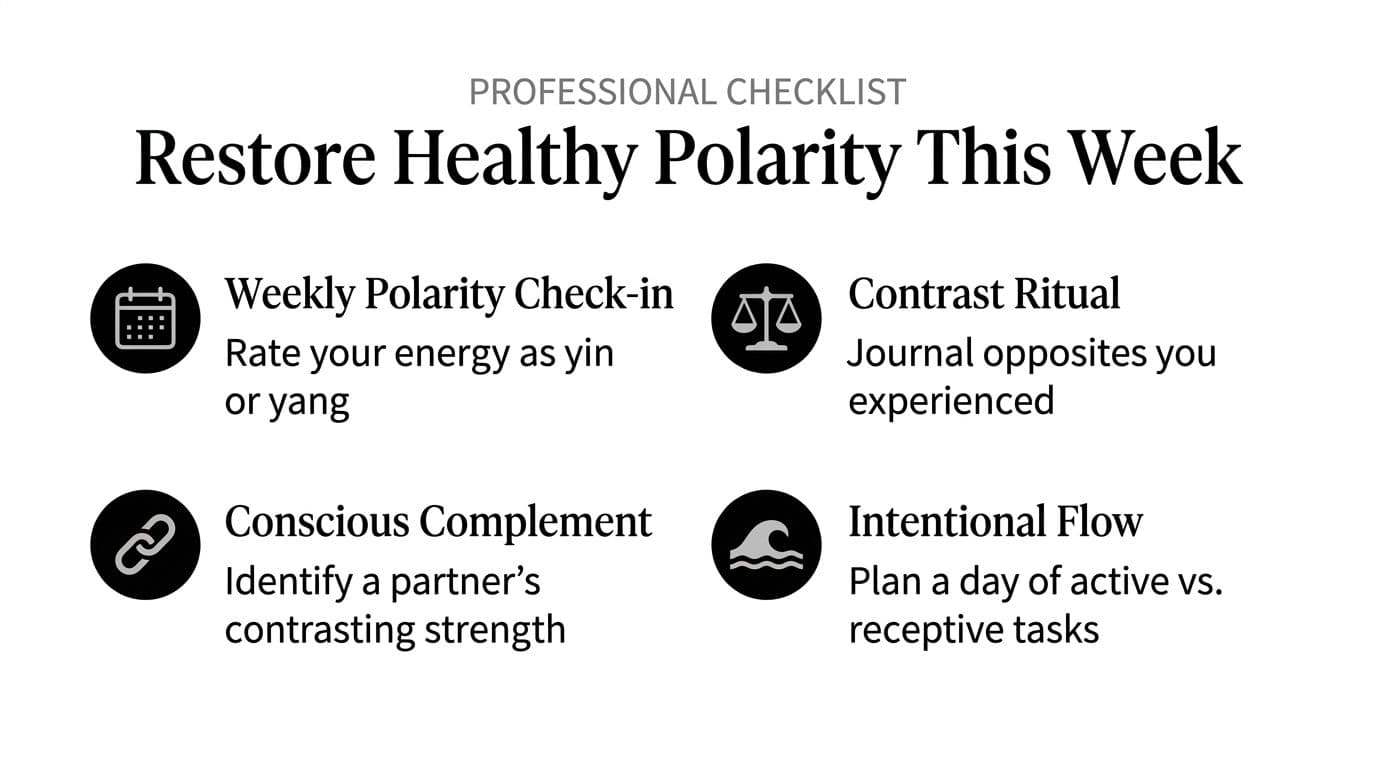
The quickest test is simple. If a week of small contrast leaves you with more respect, more attraction, and less friction, you are probably heading in the right direction. If the result is more strain, the problem may not be too little polarity. It may be too much pressure on the relationship to hold a role it cannot carry right now.
Pitfalls, Phases, and When Polarity Stops Helping
Polarity isn't a permanent ideal. That's the part people miss when they turn it into a rule. A relationship that needs caregiving, parenting, illness support, or heavy work stress may naturally become more symmetrical, and that doesn't mean it's failing.
The stronger view is phase-based. High contrast can support attraction and erotic energy. High equality can support shared responsibility, safety, and the plain work of daily life. Couples often need both, just not all at once in the same form.
Where polarity language goes wrong
The first pitfall is control. If one person uses polarity language to justify domination, emotional withholding, or a refusal to collaborate, the concept has stopped being relational and turned into a power script. That's not chemistry, that's coercion.
The second pitfall is rigid labeling. Men don't always lead. Women don't always receive. People shift depending on context, stress, health, and trust. When a relationship gets locked into performance, the language of energy starts to hide real needs instead of revealing them.
The third pitfall is treating depolarization like a moral failure. Sometimes two people do become more practical, more tired, and less erotic for a season. That may be exactly what a family system needs. The question is whether they can later make room for contrast again without blaming each other for the season they just lived through.
Polarity is useful when it helps you notice the pattern. It's harmful when it makes you shame the pattern.
Outside support can matter. A counselor, coach, or trusted guide can help a couple tell the difference between healthy flattening during a hard season and a deeper mismatch that needs repair. The goal isn't to force attraction on command. It's to read the relationship and respond with care.
Polarity Insights Meet Life Path Compatibility
Dan Millman's The Life You Were Born to Live and the Life Purpose App add another layer to the conversation. The app maps 45 life paths and lets you explore relationship dynamics by entering dates of birth, which can be useful when you're trying to understand how two people may naturally complement or challenge each other.
That doesn't replace real conversation. It gives you another lens for noticing where polarity feels easy, where it feels strained, and where the relationship may need more patience than force. For a deeper look at how compatibility fits into this kind of self-knowledge work, see life path compatibility.
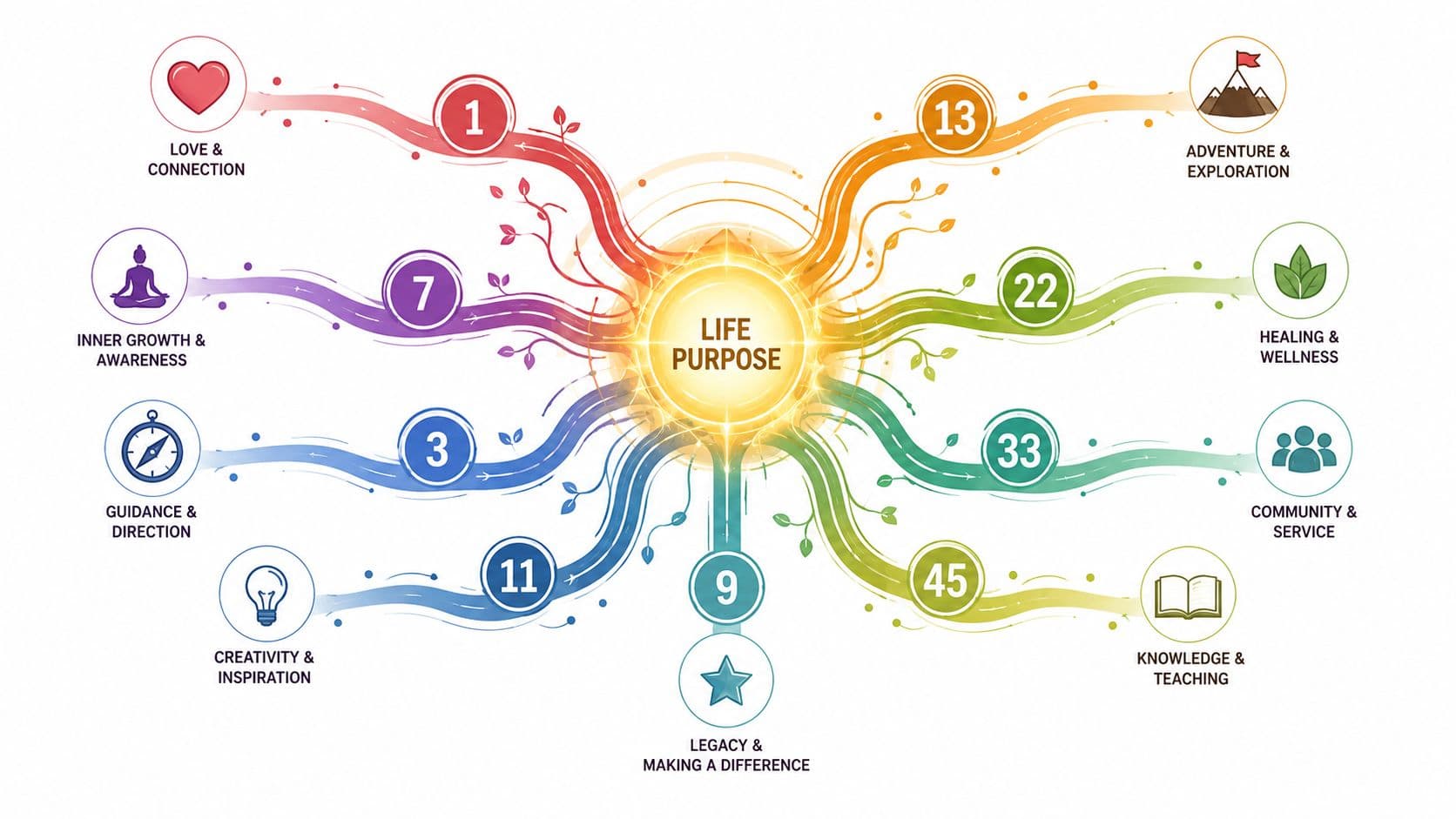
The strongest takeaway is simple. Polarity can help you understand attraction, but it works best alongside shared values, clear communication, and the humility to ask for support when a pattern keeps repeating. If you want a structured way to explore your life path and relationship dynamics together, visit Life Purpose App and use it as one more lens for understanding yourself and the people you love.
Discover Your Life Purpose Today!
Unlock your true potential and find your life’s purpose.
