Learn personal life cycle management with Dan Millman's nine-year cycles. This guide shows how to find your cycle, interpret its themes, and plan your life.
June 15, 2026 (1mo ago) — last updated June 27, 2026 (28d ago)
Personal Life Cycle Management: Your Nine-Year Guide
Learn personal life cycle management with Dan Millman's nine-year cycles. This guide shows how to find your cycle, interpret its themes, and plan your life.
← Back to blog
Some seasons of life feel strangely familiar. You work hard, yet everything stalls. Then another stretch opens up, people return your calls, ideas land, and decisions that felt impossible suddenly become simple. That is often called luck, timing, or mood.
I've found it's often something more orderly than that. Life cycle management doesn't have to mean factories, software, or corporate assets. In a personal sense, it can mean learning the rhythm of your own development so you stop pushing for harvest in a season meant for pruning.
That's where Dan Millman's The Life You Were Born to Live becomes so useful. It gives a grounded way to understand personal timing through recurring nine-year cycles. Once you start seeing those patterns, daily choices feel less random and more workable.
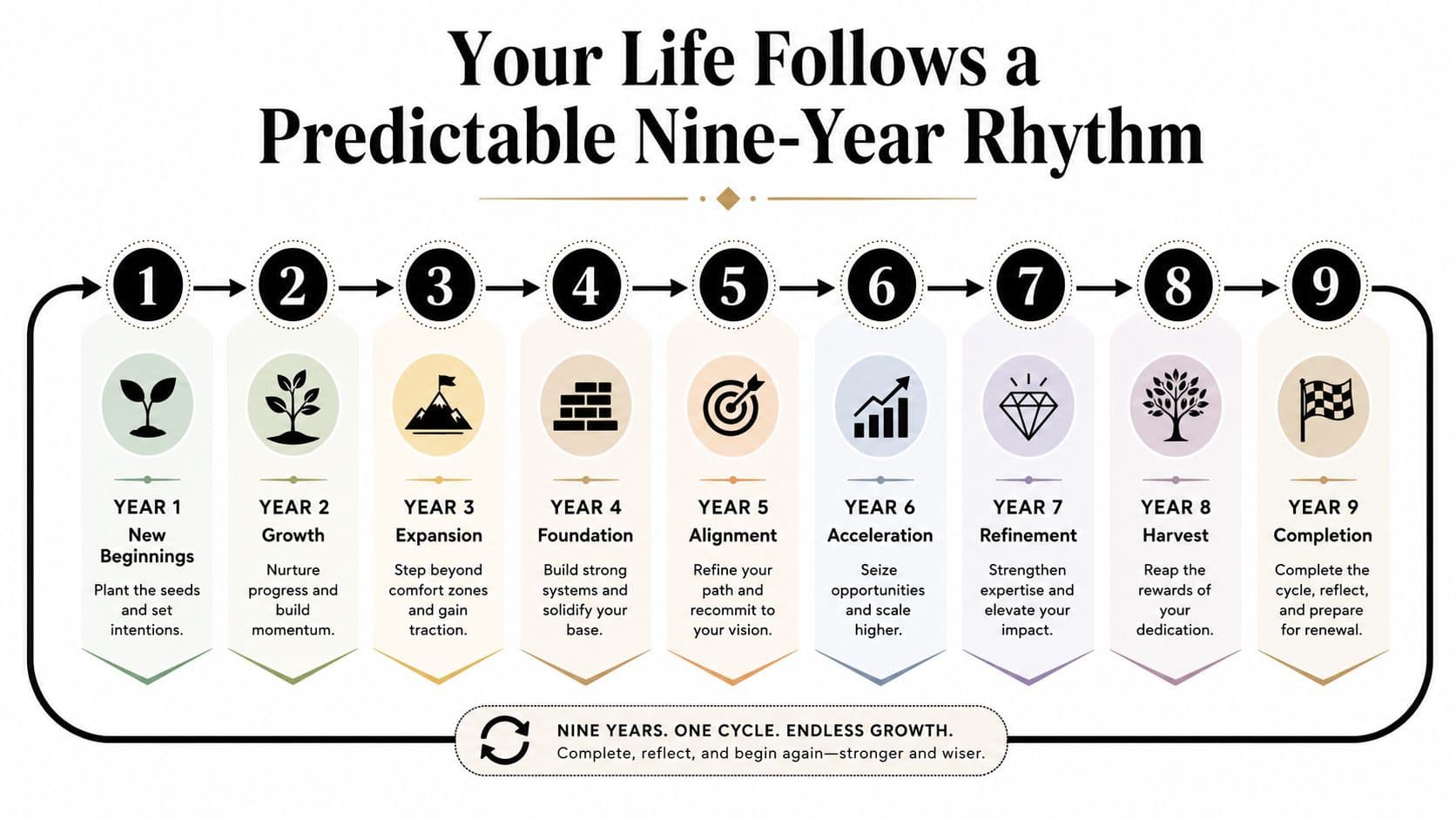
Your Life Follows a Predictable Nine-Year Rhythm
Individuals typically first encounter life cycle management in a business setting. They hear about planning, maintenance, retention, and disposal. That framework is useful, but it misses something human. Much of the existing content on life cycle management stays focused on industrial asset optimization, leaving a real gap for people trying to apply lifecycle thinking to personal spiritual development and the nine-year cycles described in Dan Millman's system, as noted by the Life Purpose App.
A more personal meaning of life cycle management
In technical fields, lifecycle thinking has been organized in several ways. One historical framework described 8 phases of work, from problem elicitation through impact assessment, and information management models such as POSMAD formalized 6 core phases. Modern data lifecycle practice often compresses this into 5 to 6 stages covering creation, storage, use, sharing or archiving, and deletion, as outlined in Kenett and Shmueli's life cycle view here.
That matters because it shows a simple truth. People manage complex things better when they understand the stage they're in. The same idea applies inwardly. If your life has seasons, then each season asks for different choices.
What the nine-year rhythm gives you
Dan Millman's work offers a map for that inner timing. It doesn't ask you to predict every event. It helps you recognize the theme of a period so you can respond with more wisdom.
A personal nine-year cycle often feels like this:
- A beginning phase when new directions, identities, or commitments emerge
- A building phase when patience, discipline, and relationship lessons matter more
- A turning phase when change, release, and reevaluation become unavoidable
- A completion phase when you finish, forgive, simplify, and prepare for renewal
Practical rule: Don't judge your whole life by one difficult year. Read the year as part of a larger rhythm.
That shift alone can be calming. Instead of asking, “Why is my life doing this to me?” you start asking, “What is this period asking of me?”
This is guidance, not fortune-telling
Readers often get stuck here. They worry that a cycle system means fate is fixed. That isn't how I use it, and it isn't the healthiest way to read Dan Millman's teaching. A cycle describes conditions, not a prison.
Rainy weather changes how you travel, but it doesn't decide where you go. In the same way, a personal year can highlight effort, change, service, reflection, or completion. You still choose how consciously you meet it.
That's what makes personal life cycle management so practical. It gives you a framework for timing, perspective, and self-understanding. When you know the rhythm, you stop treating every season as if it should look the same.
How to Calculate Your Personal Year Number
You don't need a complicated system to get started. The first step is to find where you are in the current nine-year rhythm. In Dan Millman's The Life You Were Born to Live, this kind of timing becomes much more meaningful once you can locate your present year.
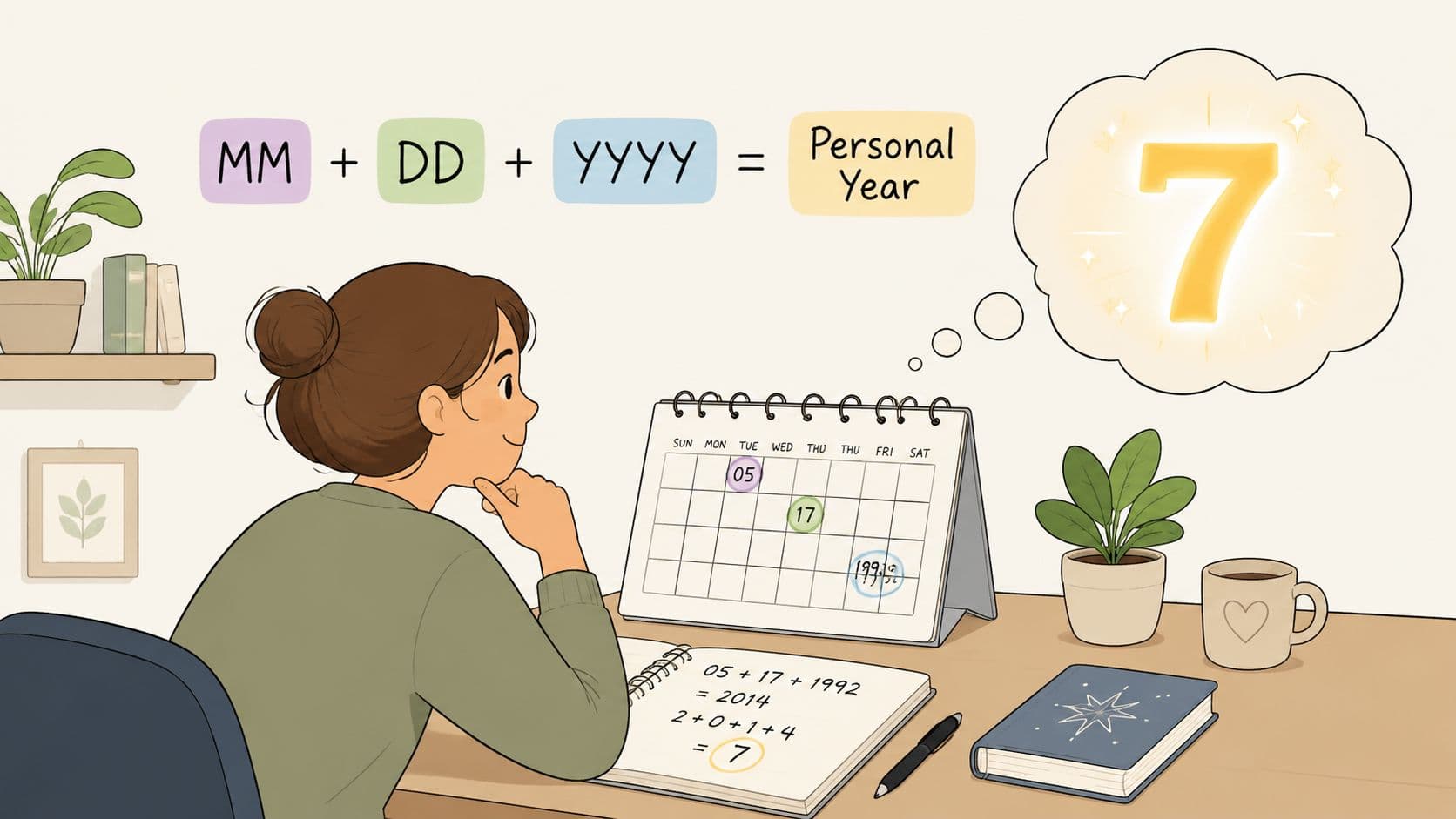
The simple manual method
A common way to calculate a personal year number is to add:
- Your birth month
- Your birth day
- The digits of the current calendar year
Then reduce the total to a single digit from 1 through 9.
Here's a plain example. If someone was born on April 17 and the current year is 2026, they would add 4 + 17 + 2 + 0 + 2 + 6. That total is 31. Then they reduce 3 + 1 to get 4. In that example, they'd be in a 4 year.
People new to this often want to double-check the broader numerology around their date first. If that's you, this guide on how to find your life path number gives helpful background before you layer in cycle timing.
Where people get confused
The arithmetic isn't hard. The confusion comes afterward. People ask whether the cycle changes on January first, on their birthday, or by another timing method. They also wonder whether the number matters on its own or only in relation to their wider life path.
Those are good questions, and they're exactly why I don't recommend stopping at the math.
The number is only the doorway. The real value comes from understanding the meaning of the year in the context of your full path.
A cleaner way to check your cycle
If you want a direct way to verify your current cycle without second-guessing the calculation, use a dedicated nine-year cycle calculator. It's easier than recalculating by hand every year, and it reduces the common mistakes people make when they rush the addition or misread the interpretation.
I still like doing the manual method once. It helps you understand the bones of the system. After that, users benefit more from accuracy and context than from repeating arithmetic.
Why the number matters
Your personal year number doesn't tell you what job to take or whom to marry. It gives you a lens. If you're in a year that favors release, forcing a giant expansion may feel heavy. If you're in a year that supports initiative, waiting forever can become its own problem.
That's why this practice belongs under personal life cycle management. You're not just naming a number. You're learning the conditions of the season you're living in.
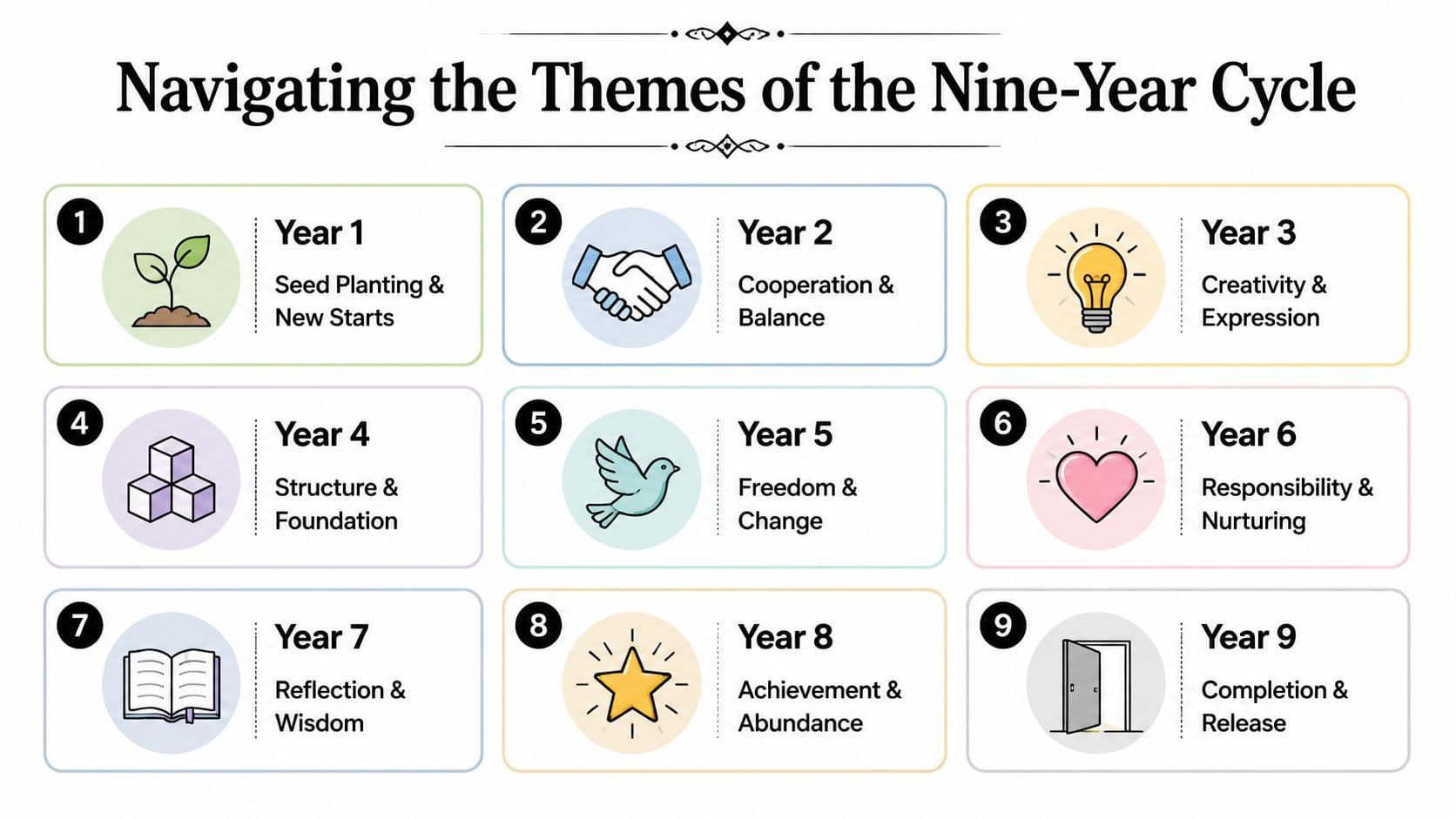
Navigating the Themes of the Nine-Year Cycle
Once you know your place in the cycle, the next step is learning the tone of each year. I think of the nine-year rhythm as a human story. It begins with emergence, moves through growth and testing, and ends in completion before beginning again.
Years one through three
A 1 year feels like a fresh field. New interests appear. You may feel drawn to start a role, relationship, habit, move, or project that didn't make sense before. The key is courage. Start something that belongs to your future, even if it's still small.
A 2 year slows the pace. That can frustrate people who expect instant momentum after a new beginning. But this year teaches cooperation, sensitivity, patience, and emotional balance. If Year 1 plants the seed, Year 2 waters it.
A 3 year brings expression. People often feel more social, verbal, creative, or visible here. This is a good time to write, teach, present, reconnect, or explore joy more intentionally. The danger is scattering your energy. Create, but don't drift.
Years four through six
A 4 year asks for structure. Budgets, routines, systems, boundaries, and practical effort matter now. This isn't always glamorous, but it's stabilizing. If something in your life lacks a foundation, Year 4 usually makes that obvious.
A 5 year changes the weather. Movement, transition, experimentation, travel, freedom, and disruption often show up here. Some people love this year. Others resist it because it shakes loose what had become predictable. Flexibility helps more than control.
A useful question for a 5 year: What is trying to change that I keep pretending is permanent?
A 6 year often turns attention toward responsibility, home, care, love, service, and values. Relationships become harder to avoid in this period. So do questions of loyalty and maturity. This can be a healing year when you take responsibility without slipping into rescue mode.
Years seven through nine
A 7 year turns inward. Reflection deepens. You may crave space, study, solitude, prayer, therapy, or a quieter pace. Outward progress can feel slower, but inner progress can become profound. This isn't a sign that life has stopped. It's a time for insight.
An 8 year often brings themes of power, achievement, recognition, money, leadership, and accountability. What you've been building may become more visible now. It's also a year that asks whether your ambition is aligned with your values. Outer success without inner clarity can feel strangely empty.
A 9 year completes the cycle. Things end, resolve, or reveal their true shelf life. You may release roles, habits, belongings, relationships, or expectations that no longer fit. This year can feel emotional because it asks for trust. Letting go creates room for the next beginning.
A quick reference
| Year | Core theme | Best focus |
|---|---|---|
| 1 | Beginnings | Start with intention |
| 2 | Patience and connection | Listen and nurture |
| 3 | Expression | Create and communicate |
| 4 | Structure | Build solid habits |
| 5 | Change | Stay flexible |
| 6 | Responsibility and love | Care with boundaries |
| 7 | Reflection | Learn and simplify |
| 8 | Achievement | Lead responsibly |
| 9 | Completion | Release and forgive |
How to use this without overthinking
Don't force every event to match the theme perfectly. Life is messier than that. A 7 year can include career movement. A 1 year can contain grief. The value lies in recognizing the underlying lesson.
I've found it helps to ask one question at the start of each month: What kind of action fits this season? That keeps the cycle practical. You stop using it as a label and start using it as guidance.
Applying Cycle Insights to Career and Relationships
The ultimate test of any spiritual framework is whether it helps you make better decisions on ordinary days. Consequently, personal life cycle management becomes useful. It can give shape to choices about work, love, timing, and expectations.
A question many people privately wonder is how lifecycle thinking connects with numerology, relationship compatibility, and personal timing. Traditional industrial lifecycle frameworks don't address those symbolic and cyclical dimensions, which is why they leave people without a way to connect technical lifecycle ideas to personal insight. That gap is one reason Dan Millman's approach feels so practical in daily life.
Career choices that fit the season
A cycle doesn't make a decision for you, but it can tell you what kind of effort is more likely to feel supported.
Consider a few examples:
- In a 1 year, launching a new line of work, changing direction, or claiming a more independent role may feel natural.
- In a 4 year, refining operations, getting certified, building a portfolio, or stabilizing your finances often makes more sense than chasing constant novelty.
- In a 9 year, finishing a long chapter, clearing commitments, or preparing for a shift can be wiser than forcing a brand-new identity before the old one has closed.
If you want more context on matching your vocational direction to your numbers, this article on career path numerology is a helpful next read.
You don't have to delay every dream until the “perfect” year. You just want your actions to match the deeper work of the period you're in.
Relationship timing feels different too
Cycles become especially helpful in close relationships because they soften unnecessary conflict. If one partner is in a highly social, expressive stretch and the other is moving through a reflective inward period, both people can misread each other.
The first partner may think, “Why are you pulling away?” The second may think, “Why are you pushing me?”
Often, neither is the villain. They're just living different lessons at the same time.
A simple way to apply this
When you're evaluating a relationship dynamic, ask these questions:
- What does this season ask of me personally
- What might the other person be learning right now
- Am I demanding speed from a period that requires patience
- Am I clinging to something that may be completing
That small pause can change the tone of a conversation. It can also spare you from making career and relationship decisions out of panic.
I've seen people become much kinder to themselves once they stop treating every challenge as failure. Sometimes it's not failure. Sometimes it's a 7 year asking for honesty, or a 9 year asking for release.
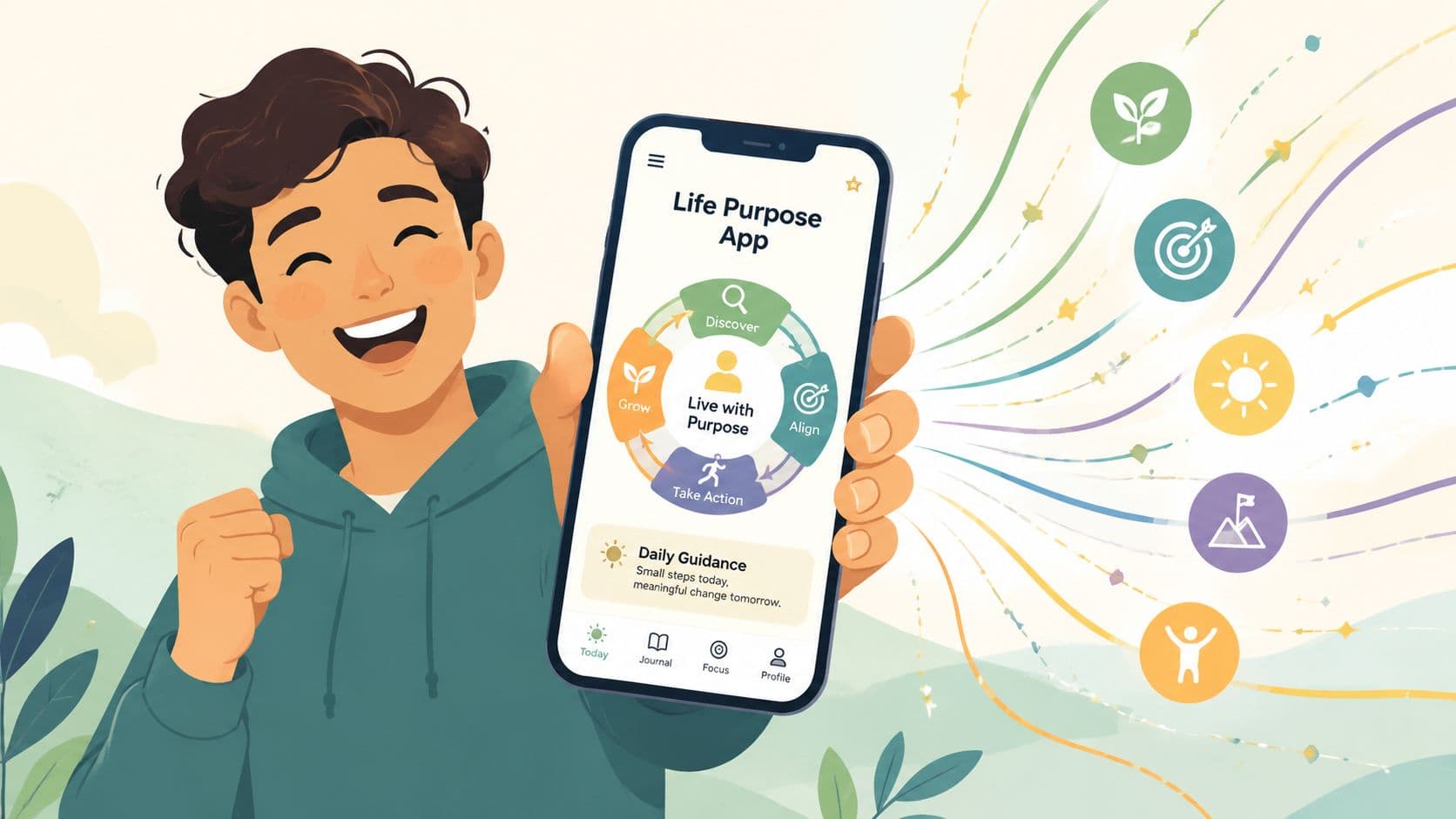
Using the Life Purpose App for Daily Guidance
Understanding your cycle once is helpful. Living with that awareness day by day is where the practice matures. Dan Millman's The Life You Were Born to Live gives the philosophical backbone, but daily life usually requires something more immediate. People forget, second-guess, or lose the thread when work, family, and stress pile up.
A grounded daily practice
The easiest way to work with personal cycles is to make them part of reflection, not obsession. I suggest a short rhythm:
- Morning check-in. Ask what kind of action suits your current year.
- Midweek review. Notice whether you're pushing against the lesson of the period.
- Monthly reset. Look at recurring friction. It often reveals where you're resisting the season.
This keeps the system practical. You're not trying to decode every coincidence. You're using a stable framework to see your life more clearly.
Use it for people, not just for yourself
One of the most useful parts of this kind of work is relationship awareness. You can look at a difficult conversation with a friend, partner, parent, or colleague and ask whether timing is part of the friction.
That question alone can shift your approach:
- With a reflective person, give more space and fewer demands for instant answers.
- With someone in a highly changeable stretch, expect movement rather than rigid consistency.
- With a person carrying heavy responsibility, offer support without assuming distance means lack of love.
For daily guidance: Read your cycle to increase compassion, not to put people in boxes.
Go deeper when you need interpretation
A number by itself won't hold you through grief, career uncertainty, or a relationship crossroads. That's where returning to Dan Millman's original teaching matters. His language adds depth that quick summaries often miss.
If you like to mix reflection with symbolic prompts, the life purpose oracle can also support journaling and inner clarity. I find that especially useful when the cycle theme is obvious but the next right action still feels cloudy.
Keep your notes
This is the quiet habit that makes the whole practice stronger. Keep a small record of your years. Write down what changed, what ended, what began, what felt easy, and what kept repeating.
Over time, life cycle management becomes less theoretical. You begin to recognize your own patterns. You stop borrowing someone else's timeline and start trusting the rhythm that belongs to you.
Living Intentionally with Your Life Cycles
Living reactively is a common human experience. They push when life asks for patience. They cling when life asks for release. They interpret every delay as failure and every ending as a mistake. Personal life cycle management offers a steadier way.
When you understand your timing, you don't become passive. You become more skillful. You can work hard in a building year, reflect thoroughly in an inward year, and let go more gracefully in a completion year. That shift changes the quality of your choices.
Intentional living looks simpler than people expect
It often comes down to a few habits:
- Name the season before making a major decision.
- Match the action to the lesson of the period.
- Review resistance instead of assuming something is wrong with you.
- Plan with rhythm rather than force.
If you want support on the planning side, these master goal setting techniques pair well with cycle awareness because they help turn insight into clear action.
A calmer relationship with timing
One of the deepest benefits of this work is emotional. You stop expecting every year to produce the same kind of results. That softens self-judgment. It also helps you extend more grace to other people as they move through lessons you may not fully understand from the outside.
I keep coming back to one simple truth. A wise life isn't built by controlling every outcome. It's built by learning what kind of effort belongs in the season you're in.
Dan Millman's The Life You Were Born to Live remains one of the clearest guides I know for that kind of self-knowledge. If life has felt confusing, repetitive, or badly timed, there may be more pattern in it than you think.
If you're ready to explore your own rhythm more thoroughly, the Life Purpose App is a practical place to begin. It helps you work with the nine-year cycle system from Dan Millman's The Life You Were Born to Live in a way that fits everyday decisions about relationships, career, timing, and personal growth.
Discover Your Life Purpose Today!
Unlock your true potential and find your life’s purpose.
