Explore the connection between life path mental health and your emotional patterns with Dan Millman's system. Discover your path and find balance.

June 13, 2026 (4mo ago) — last updated June 29, 2026 (3mo ago)
Life Path Mental Health and Your Inner Well-Being
Explore the connection between life path mental health and your emotional patterns with Dan Millman's system. Discover your path and find balance.
← Back to blog
Explore the connection between life path mental health and your emotional patterns with Dan Millman's system. Discover your path and find balance.
Some days you're not looking for a diagnosis or a grand spiritual revelation. You're just trying to understand yourself. Why one setback lingers for weeks. Why certain relationships feel like old lessons in new clothing. Why your mind seems calm in one season and unsettled in another.
That's where people often start searching for life path mental health. They want language for their inner patterns. They want meaning, but they also want something grounded enough to help with everyday emotional life.
The phrase gets confusing fast. Some people use life path to mean a spiritual self-discovery framework, especially the one Dan Millman explores in The Life You Were Born to Live. Others use Life Path to describe actual mental health and crisis programs. That confusion is real. Search results for “life path mental health” often include psychosis intervention, counseling, and crisis services, not just reflective or numerology-based material, as seen in LifePath behavioral health program information.
So it helps to begin with a clear distinction. In this article, life path refers to Dan Millman's personal-growth system from The Life You Were Born to Live, along with the related ideas people explore through the Life Purpose App. Used well, that system can support self-awareness, emotional reflection, and better choices. It can't diagnose depression, treat panic, or replace therapy.
If you're already wondering whether what you're feeling might need more than self-reflection, it may help to read about what to expect for your first therapy. Sometimes the most caring step is learning what professional support looks like before you need it urgently.
Introduction Navigating Your Inner Map
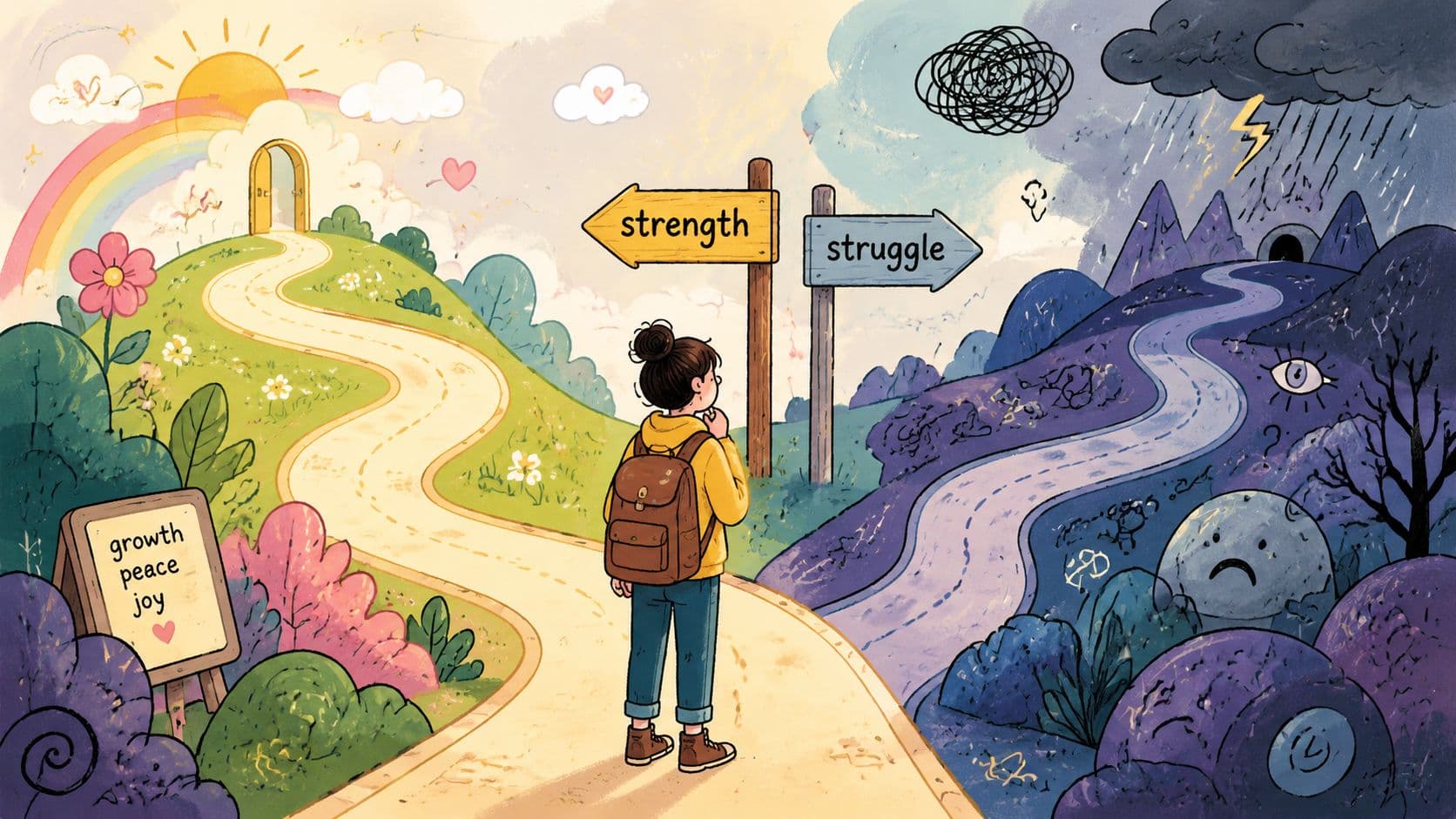
A spiritual system can be useful when it gives you a language for tendencies you've felt for years but never named. Maybe you often carry responsibility for everyone else. Maybe you push hard, then crash. Maybe you need beauty, movement, and creativity to feel emotionally alive, yet you criticize yourself whenever your output slows down.
Dan Millman's The Life You Were Born to Live speaks to that kind of pattern recognition. It doesn't ask you to become someone new. It asks you to notice the lessons, strengths, and recurring challenges already shaping your life.
Why this topic gets mixed up
The phrase life path mental health sits at an unusual crossroads. One person types it into a search bar looking for inner guidance. Another is trying to find a counselor, crisis support, or help for a loved one whose behavior has changed in a serious way.
Spiritual reflection can support mental wellness. It should never blur the line between insight and treatment.
That distinction matters because not every emotional struggle belongs in the same category. Restlessness after a breakup, burnout from overgiving, and questions about purpose can fit inside self-reflection. Severe mood swings, inability to function, or signs of psychosis require clinical attention.
A gentle way to use the map
A life path framework works best when you treat it as a mirror, not a verdict. You're not reducing yourself to a number. You're looking at recurring themes. The useful question isn't “What am I doomed to struggle with?” It's “What lesson keeps asking for my attention?”
A few practical boundaries help:
- Use it for reflection: Journal prompts, emotional patterns, relationship dynamics, and values-based decisions fit well here.
- Don't use it for diagnosis: A life path can't tell you whether you have an anxiety disorder, trauma response, or depressive episode.
- Stay honest about intensity: If your distress feels persistent, disruptive, or frightening, spiritual tools shouldn't be your only support.
That balance is where this topic becomes meaningful. You can respect inner symbolism and still honor real mental health care.
What Is Your Life Path Number
The idea is simple. In Dan Millman's The Life You Were Born to Live, your birth date points to a life path, which reflects a broad life lesson and pattern of development. It's less about prediction and more about understanding the terrain you move through again and again.
If you've never calculated it before, the process is straightforward.
The basic method
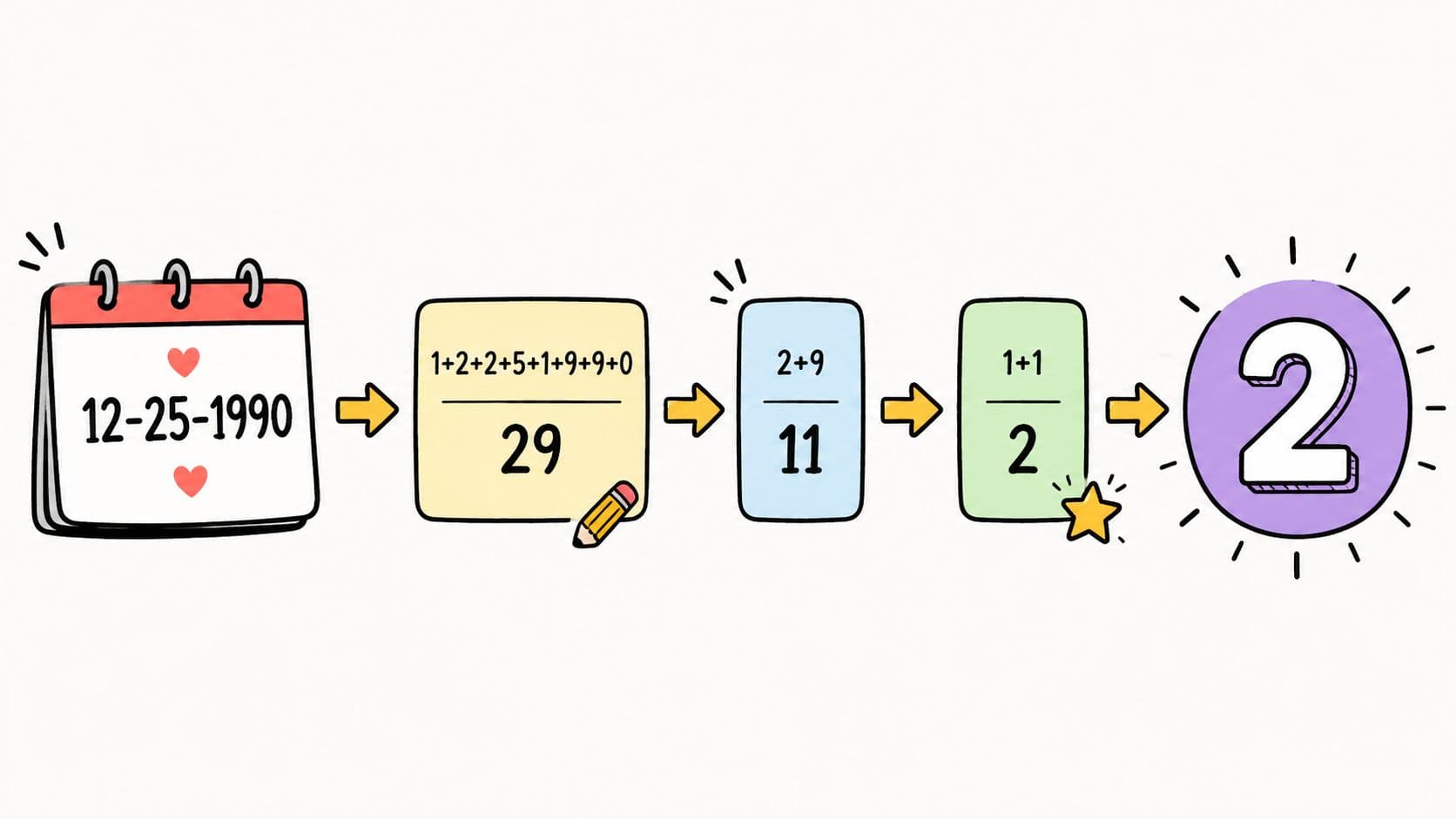
You reduce the numbers in your birth date until you arrive at a core number used in Dan Millman's system.
Here's a plain example using a sample date:
-
Write the full birth date
Say the date is 12-25-1990. -
Reduce each part
Month: 12 becomes 1 + 2 = 3
Day: 25 becomes 2 + 5 = 7
Year: 1990 becomes 1 + 9 + 9 + 0 = 19, then 1 + 9 = 10, then 1 + 0 = 1 -
Add the reduced parts
3 + 7 + 1 = 11, then reduce again to 2
That gives you a core number to start from.
Why people find this useful
The value isn't in the arithmetic. The value is in what the pattern invites you to examine. A number becomes helpful when it points you toward familiar emotional material. Maybe you avoid conflict to keep peace. Maybe you overidentify with achievement. Maybe you need freedom so much that structure feels threatening, even when structure would help you.
Dan Millman's The Life You Were Born to Live takes that starting number and places it inside a richer framework of lessons, strengths, and growth edges. That's why readers often describe the system as more personal-development oriented than fortune-telling.
Practical rule: If a life path description helps you become more honest, more compassionate, and more responsible for your choices, it's serving you well.
A note on precision
Because people often mix different numerology systems together, it's worth staying consistent. If you're using Dan Millman's approach, use his approach fully instead of blending fragments from unrelated systems online. That keeps the interpretation clearer and more meaningful.
If you want a walkthrough that focuses specifically on the calculation process, a direct overview is available.
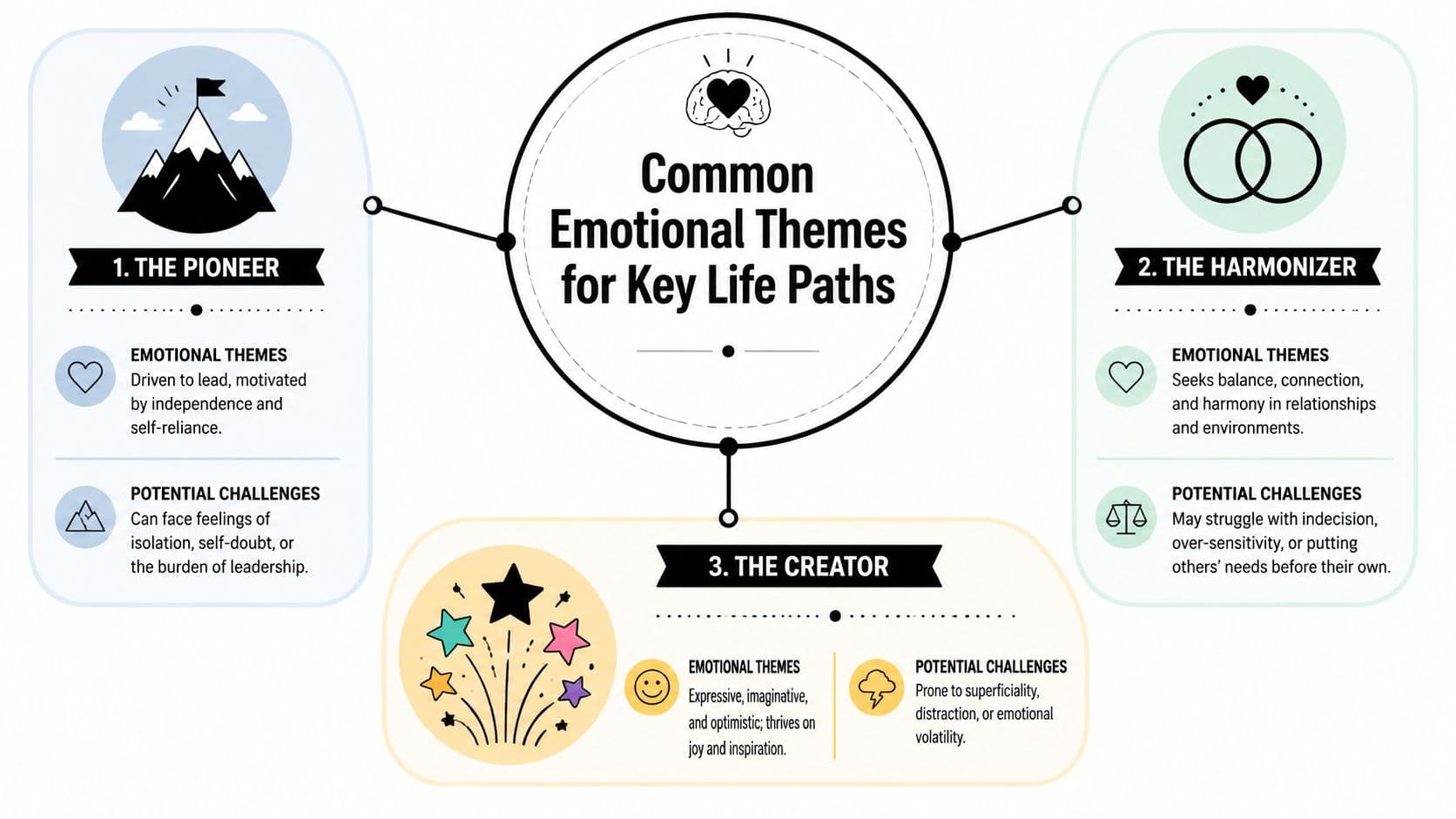
Common Emotional Themes for Key Life Paths
The emotional side of a life path isn't usually dramatic. It shows up in ordinary life. In how you handle praise. In what kind of stress wears you down. In the story you tell yourself when something goes wrong.
The Pioneer
The Pioneer energy often leans toward independence, initiative, and movement. This is the person who sees what could be built and wants to get going. They may look confident from the outside, even when they're carrying private uncertainty.
The shadow side usually appears as isolation. A Pioneer may think, “If I can't do it well alone, I'm failing.” That belief can make support feel like weakness. It can also create a harsh inner climate where rest feels undeserved.
A familiar pattern looks like this: someone starts projects with real courage, hits a stretch of self-doubt, then becomes irritable or withdrawn because asking for help feels harder than suffering in silence.
The Harmonizer
The Harmonizer tends to notice emotional tone quickly. They often sense tension before anyone names it. They care about fairness, connection, and balance, and they can bring warmth into rooms that feel brittle or guarded.
But the same sensitivity can turn inward. Harmonizers may absorb too much. They may hesitate, overthink, or shape themselves around other people's needs until they lose contact with their own.
Here's where life path mental health becomes practical. A person with Harmonizer tendencies may not say “I'm overwhelmed.” They may say, “I'm just tired,” while carrying resentment, emotional overload, and decision fatigue. Their distress hides behind agreeableness.
If you always know how everyone else feels but rarely pause to name your own state, that's not emotional wisdom alone. It may also be self-abandonment.
The Creator
Creator energy often brings expression, imagination, humor, and emotional color. These people can light up around beauty, language, art, performance, or ideas that let them make meaning from experience.
The challenge is inconsistency. A Creator may feel strongly inspired one day and flat the next. That swing can trigger shame. Instead of seeing rhythm, they see personal failure. Then the inner critic arrives and says they're unserious, scattered, or lazy.
That pattern matters because creative people often confuse emotional dryness with lack of worth. They don't just think, “I'm blocked.” They think, “Something is wrong with me.”
The Caregiver
Some life paths carry strong themes of service, responsibility, and practical love. Caregivers often become the dependable person early in life. They handle tasks, anticipate needs, and keep things going when others fall apart.
The hidden cost is overfunctioning. Caregivers may feel guilty when they rest. They may become so identified with being useful that they don't know who they are outside support roles. When they finally hit a limit, the crash can look like numbness, irritability, or quiet despair.
A simple comparison helps:
| Archetype | Core gift | Common emotional strain |
|---|---|---|
| Pioneer | Courage and initiative | Isolation, pressure, fear of weakness |
| Harmonizer | Sensitivity and connection | Indecision, overgiving, emotional overload |
| Creator | Expression and imagination | Self-doubt, moodiness, shame around inconsistency |
| Caregiver | Service and steadiness | Burnout, guilt, loss of self |
None of these themes are diagnoses. They're patterns. When readers connect with Dan Millman's The Life You Were Born to Live, it's often because the patterns feel familiar in a humane way. The point isn't to label yourself. It's to recognize where your strengths and your stress tend to come from.
Self-Care Strategies Aligned with Your Path
Self-care works better when it matches the actual shape of your stress. Generic advice can miss the mark. A Pioneer doesn't need the same reset as a Harmonizer. A Creator doesn't recover the same way a Caregiver does.

If you carry Pioneer energy
Try reducing the pressure to prove yourself through constant action. Your nervous system may need cooperation as much as achievement.
A useful reset can be:
- Ask for one small assist: Not a dramatic rescue. Just one concrete piece of help.
- Set a finish line: Choose when work ends for the day so your drive doesn't consume your evening.
- Practice self-respect without performance: Sit with the question, “Who am I when I'm not producing?”
If you lean Harmonizer
Your self-care may need stronger edges, not softer lighting. Emotional sensitivity becomes draining when it isn't paired with boundaries.
Try this mix:
- Name your feeling before the room's feeling: Before a call, dinner, or meeting, write one sentence about your own state.
- Use a delayed yes: If someone asks for something, wait before agreeing.
- Make decisions in private first: Know what you want before you ask everyone else what they think.
If you identify with the Creator
You may need rhythms that protect inspiration without turning it into a test. Creativity often dries up under surveillance.
A better structure is often:
- Keep a low-stakes practice: Journal for a few minutes, sketch badly, hum melodies, draft fragments.
- Separate mood from meaning: A heavy day doesn't cancel your gift.
- Track energy, not just output: Notice where your imagination returns naturally.
If you recognize the Caregiver
Your recovery may begin with receiving. That sounds simple, but it can feel extremely uncomfortable if usefulness has become part of your identity.
Consider these anchors:
- Do one task imperfectly on purpose: Let “good enough” be enough.
- Schedule solitude without a goal: No fixing, organizing, or helping.
- Replace guilt with data: If exhaustion rises after repeated overgiving, that's information, not failure.
Some forms of self-care are less about calming down and more about stopping the pattern that keeps wearing you out.
If you want ideas specifically related to overload and depletion, this article can help you connect inner patterns with practical daily adjustments.
Used carefully, Dan Millman's The Life You Were Born to Live can support this kind of personalized reflection. The Life Purpose App also lets people enter a birth date and view life-path themes and cycle information, which some use as prompts for journaling, pattern tracking, and more intentional choices.
Understanding Your Nine-Year Cycles
Sometimes your emotional life shifts not because your personality changed, but because the season of your life changed. Dan Millman's The Life You Were Born to Live gives language for that through nine-year cycles.
The basic idea is that life moves in repeating phases, each with its own tone. One period may emphasize beginnings, risk, and self-definition. Another may pull attention toward relationship, discipline, expression, grief, or completion. That doesn't mean every event is prewritten. It means certain themes may come into focus more strongly at certain times.
Why cycles help emotionally
A cycle framework can soften self-judgment. If you're in a period of endings, you may feel tender, restless, or strangely detached. If you're in a period of initiation, your anxiety might rise even while you're excited. The emotional weather makes more sense when you stop expecting every year to feel the same.
Here's a simple way to use cycle awareness:
-
Notice the repeating theme
Ask what keeps coming up lately. New starts? Letting go? Relationship friction? Pressure to grow up? -
Match your expectations to the season
A year of completion may not feel energetic and expansive. A year of new beginnings may feel unstable before it feels clear. -
Respond instead of pathologizing every feeling
Sadness, uncertainty, or urgency may still need attention. They just don't always mean something is “wrong.”
A grounded way to work with it
Cycle insight is most helpful when it becomes reflective rather than magical. Use it to ask better questions. What is this season asking me to release? Where do I need courage? What wants closure? What wants commitment?
For a deeper overview of how this framework is interpreted, this guide lays out the concept in more detail.
When Your Path Leads to Professional Help
Spiritual self-inquiry can be comforting. It can even be life-altering. But there's a line where interpretation stops being enough.
If your distress is affecting sleep, relationships, work, safety, daily functioning, or your ability to care for yourself, professional help matters. That's true whether you relate strongly to Dan Millman's The Life You Were Born to Live or not. Insight doesn't automatically create stability.
A large 2023 meta-analysis found that people with mental disorders had a pooled life expectancy of 63.85 years and a pooled years-of-potential-life-lost of 14.66 years compared with the general population, underscoring that mental health conditions are tied to serious differences in lifespan, not only quality of life, according to this 2023 meta-analysis on life expectancy and mental disorders.
Signs that self-reflection isn't enough on its own
You don't need to wait until things feel catastrophic. Reach for a therapist, counselor, doctor, or crisis support when any of these are true:
- Daily life is shrinking: You're withdrawing, missing responsibilities, or struggling to do ordinary tasks.
- Your body is carrying the strain: Panic, dread, exhaustion, agitation, or numbness keep returning.
- You feel unsafe: Any thoughts of self-harm, suicide, or losing control need real-world support quickly.
- The pattern is bigger than insight: You understand the issue, but understanding hasn't helped you function or feel steadier.
Special care for life-stage changes
Some emotional spirals arrive during major hormonal or life transitions and can be easy to dismiss as “just stress.” If panic has shown up around midlife changes, reproductive shifts, or new physical symptoms, resources like Lila's perimenopause panic guide can help you think more clearly about what may be happening and when to seek support.
Needing therapy doesn't mean you failed at spiritual work. It means you're taking your suffering seriously enough to care for it properly.
There's wisdom in using both lenses. A life path framework can help you understand your story. A trained mental health professional can help you stabilize, heal, and build skills when the story has become too heavy to carry alone.
If you want a structured way to explore Dan Millman's system from The Life You Were Born to Live, the Life Purpose App offers a practical starting point. You can enter your birth date, review your life-path themes, and use the material as a prompt for journaling, self-observation, and more thoughtful conversations about your inner life.
Discover your life path today
Enter your date of birth and see your life path, free.
Find your life path