Explore the life path number 1 love life through Dan Millman’s framework. Discover core gifts, relationship challenges, compatibility patterns, and practical
August 25, 2026 (27d ago)
Life Path Number 1 Love Life: Gifts, Challenges
Explore the life path number 1 love life through Dan Millman’s framework. Discover core gifts, relationship challenges, compatibility patterns, and practical
← Back to blog
You're attracted to someone, yet the closer the relationship becomes, the more you want to protect your freedom. You may take the lead in planning dates, solving problems, or defining the future, then feel strangely exposed when your partner asks what you're really feeling. If this pattern sounds familiar, the Life Path Number 1 love life isn't a story about being independent or difficult to date. It's a story about learning how to let intimacy grow without treating closeness as a loss of self.
The Independence and Intimacy Tension
Maya loved being the person who made things happen. She chose the restaurant, organized the weekend, and encouraged her partner when work became demanding. Her initiative felt generous to her. To her partner, it sometimes felt as though every decision had already been made before there was room to contribute.
When he asked for more emotional openness, Maya heard criticism. She became efficient instead of vulnerable, offering solutions rather than sharing fear. She wanted a committed relationship, but she also worried that depending on someone would make her less capable. The more he asked for closeness, the more she defended her independence.
This tension reflects the central relationship lesson associated with Life Path 1 in Dan Millman's The Life You Were Born to Live and the Life Purpose App. Millman's framework presents 1 as “the beginning” and “the creative seed,” linking it with individuality, creative energy, and the need to prove oneself. The Life You Were Born to Live is the foundational reference for this interpretation.
The real question for a Life Path 1 isn't whether to lead or love. It's how to lead without making the partner feel unnecessary.
A healthy relationship doesn't require you to surrender your ambitions, opinions, or personal space. It asks you to make room for another person's inner world as seriously as you make room for your own. The relationship becomes a partnership rather than a contest when independence and emotional availability can exist together.
The law of polarity in relationships offers a useful way to reflect on this balance. Your strongest quality can become your most difficult pattern when it operates without awareness. Leadership can become control, self-reliance can become isolation, and decisiveness can leave no room for dialogue.
That pattern isn't a fixed sentence. You can learn to pause, ask, listen, repair, and reveal what sits beneath the confident exterior. The purpose of understanding Life Path 1 is not to excuse behavior. It's to recognize the pattern early enough to choose a better response.
The Creative Seed Archetype in Romance
Dan Millman describes Life Path 1 as the creative seed, the beginning from which something new can grow. A seed doesn't wait for an established garden to tell it what to become. It carries an inner impulse toward expression, movement, and life.
That image gives you a practical way to understand romance. A Life Path 1 person often wants to make the first move, introduce the idea, choose the direction, or transform possibility into action. The attraction may begin with a clear gesture, an original date, a direct invitation, or a vision of what the relationship could become.
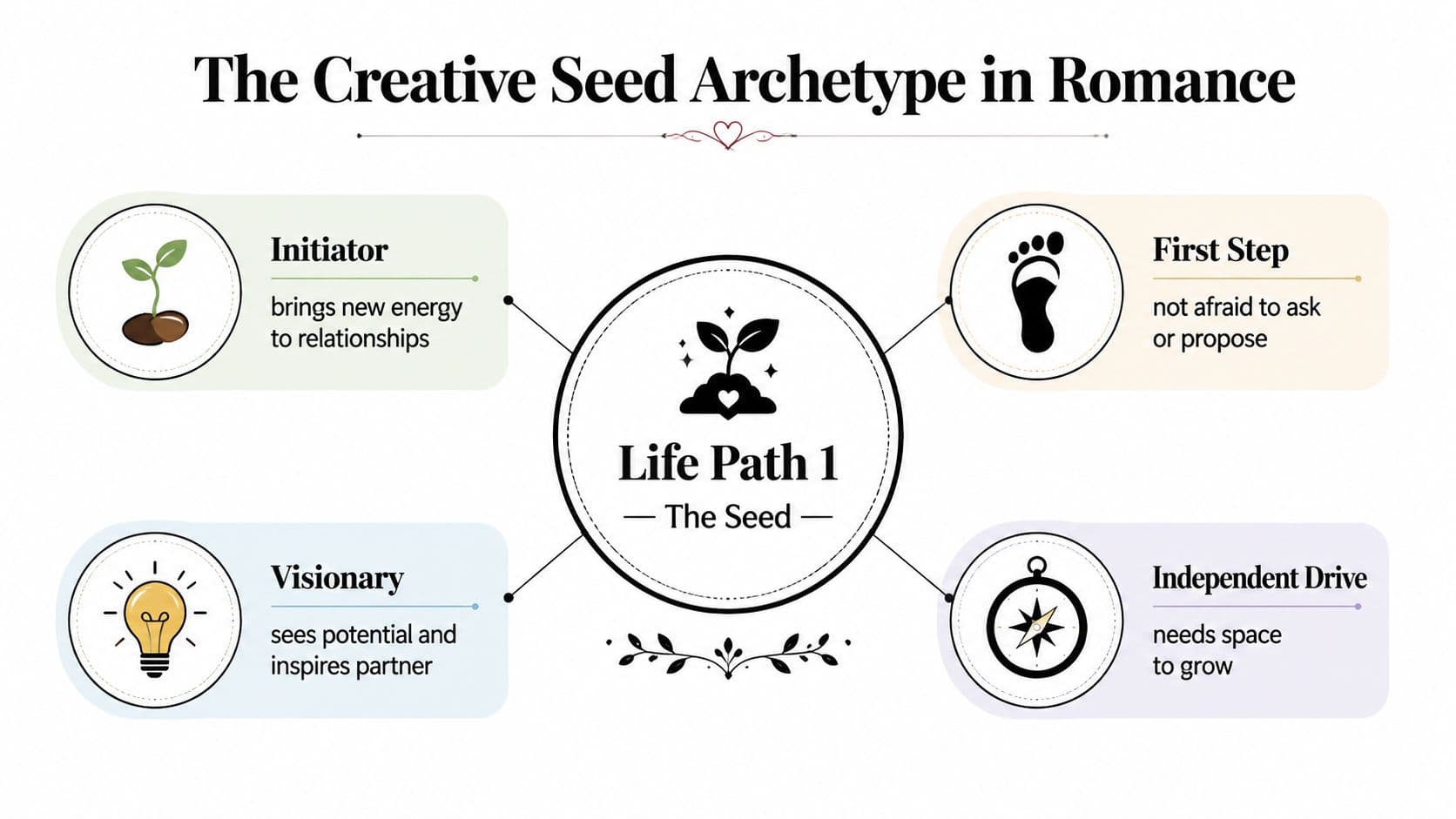
How the seed behaves in love
Think of the archetype in four movements:
- Initiation: You're often comfortable starting the conversation, suggesting the date, or naming the possibility of a future together. Waiting for someone else to create momentum can feel unnatural.
- Direction: Once you care, you may naturally think about where the relationship is going. You want movement, not indefinite uncertainty.
- Vision: Your creative energy helps you see potential. You may encourage a partner's ambitions, imagine shared projects, or bring freshness to ordinary routines.
- Space: A seed needs room, light, and suitable conditions. In relationship terms, that means personal freedom, individual goals, and time to remain connected to your own identity.
This is why Life Path 1 can feel magnetic. Initiative creates energy. Directness can feel reassuring. A partner may appreciate knowing that you're willing to act rather than hide behind ambiguity.
The same quality can create pressure if you assume that your vision must become the shared vision. A relationship isn't an architectural project where one person draws the blueprint and the other approves it. Your partner may want to help design the structure, revise the plan, or choose a completely different room.
Millman's The Life You Were Born to Live and the Life Purpose App frame this number as a pattern of creative selfhood, not a command to dominate. That distinction matters. The healthiest expression of the creative seed invites growth in both people. It says, “I have a direction, and I want to know yours.”
If you're dating a Life Path 1, don't mistake independence for a lack of feeling. This person may express love through action, protection, encouragement, and practical initiative. At the same time, ask whether the relationship includes emotional language as well as visible effort. A grand plan can be meaningful, but intimacy also grows through quiet attention and honest disclosure.
Core Gifts and Challenges in Relationships
Life Path 1 traits rarely arrive as purely positive or negative. They behave more like the two sides of a coin. The quality that draws a partner in can become the quality that creates distance when fear or insecurity takes over.
Millman's discussion of 1 connects the number with creativity and also observes that very creative people may be very insecure. That pairing helps explain why a confident Life Path 1 may still need recognition, reassurance, or proof that they're valued. The outward drive to lead can protect a more private fear of failing, being overlooked, or losing significance. Millman's discussion of the creative seed provides the original context for this tension.
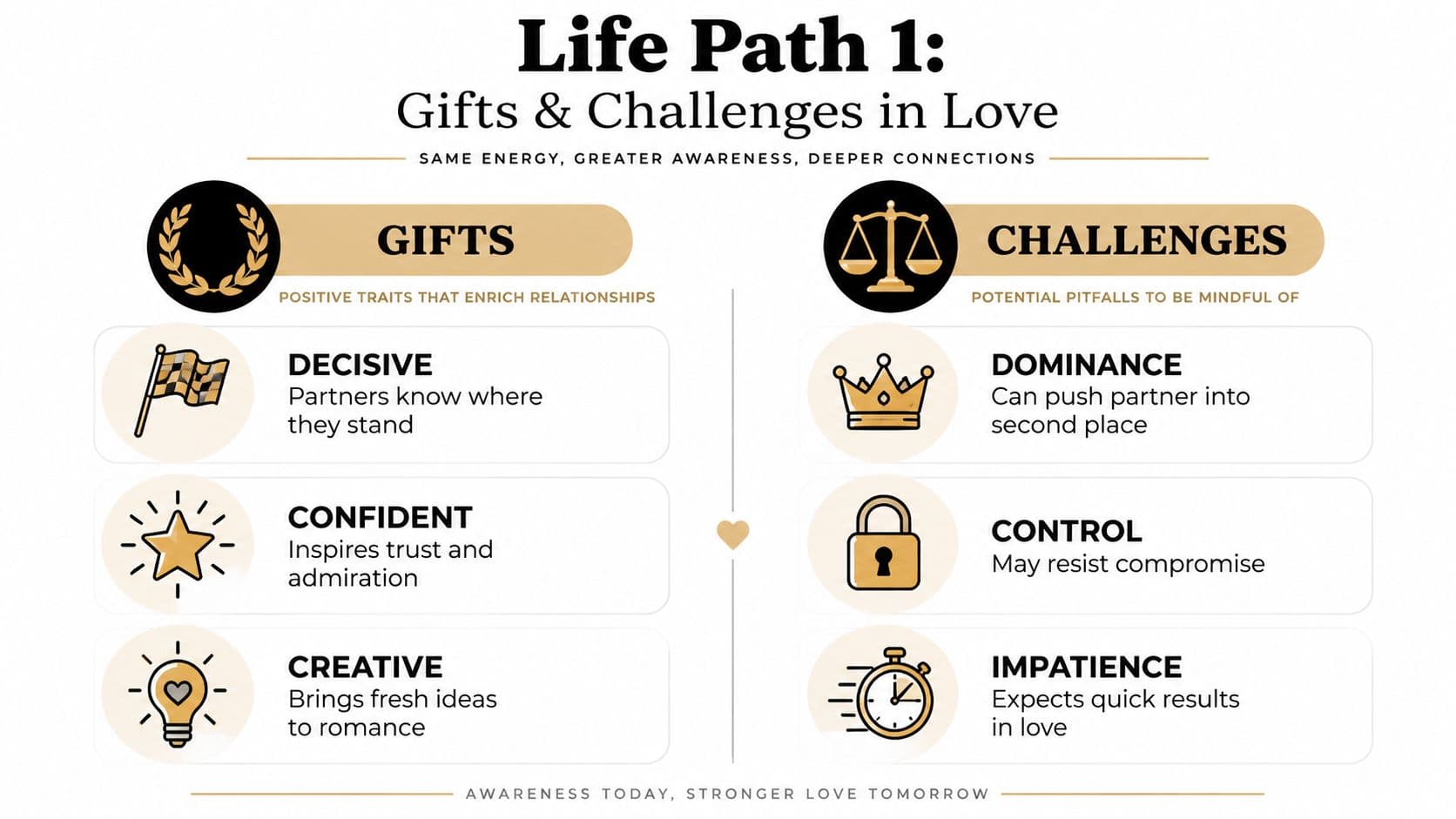
The attraction side
A Life Path 1 partner can bring momentum when a relationship feels uncertain. They may be the person who says, “Let's talk about this,” or “Let's make a plan.” Their directness reduces guesswork, and their ambition can make a shared future feel vivid rather than passive.
Creativity also keeps romance alive. A 1 may dislike repetitive relating and look for ways to bring energy into the connection. They can motivate a partner to take a meaningful risk, pursue a neglected goal, or see an opportunity that fear had hidden.
The shadow side
Control often begins as care. You notice a problem, have a solution, and move quickly to fix it. Your partner may experience the same behavior as dismissal, especially if they wanted empathy before advice.
Compromise can also feel more personal to a 1 than it needs to be. If you're used to relying on your own judgment, changing direction may seem like surrendering authority. Yet a shared decision isn't proof that your judgment failed. It's evidence that two people are shaping a life together.
Emotional opacity creates another challenge. A 1 can be passionate and loyal while remaining difficult to read. Silence may feel safer than admitting uncertainty, but a partner can't respond to feelings that stay hidden.
| Relationship quality | Gift in partnership | Possible challenge |
|---|---|---|
| Initiative | Creates momentum and clarity | Can leave the partner with little influence |
| Confidence | Inspires admiration and trust | May hide insecurity or invite ego clashes |
| Creativity | Keeps attraction and shared life fresh | Can become restless with ordinary maintenance |
| Independence | Protects identity and personal goals | Can make emotional dependence feel threatening |
| Directness | Makes needs and intentions visible | Can sound blunt when tenderness is needed |
The practical task is to notice the moment a strength changes shape. Ask yourself, “Am I leading because this helps us, or because uncertainty makes me uncomfortable?” That question turns self-knowledge into relationship skill.
Compatibility Patterns and Partner Dynamics
Compatibility for Life Path 1 is less about finding a perfect numerical match and more about identifying a relationship structure that can hold independence, ambition, and emotional reciprocity. The recurring theme in numerology interpretations is that a 1 benefits from a partner who feels secure enough not to compete with their drive, while still maintaining a meaningful identity of their own. Contemporary Life Path 1 compatibility guidance emphasizes support, freedom, and a balanced give-and-take.
A partner who agrees with everything may not create lasting harmony. You need respect, not submission. The strongest dynamic often involves two self-directed people who can celebrate one another's progress without turning achievement into a ranking system.
Published compatibility lists commonly highlight Life Paths 3, 5, and sometimes 6 as harmonious possibilities. The reason isn't that a number guarantees success. These pairings are often described as workable because creativity, freedom, warmth, or support can complement the 1's forward motion. A relationship-focused explanation of Life Path Number 1 also describes the 1 as passionate, direct, and selective, with personal ambition sometimes competing for attention with romance.
Compare the relationship environment
| Partner trait | Supports Life Path 1 | Creates friction |
|---|---|---|
| Self-direction | Maintains personal goals and reduces dependence | Uses every decision as a competition |
| Emotional security | Allows the 1 to be ambitious without demanding constant proof | Interprets independence as rejection |
| Flexibility | Makes room for changing plans and shared leadership | Resists every adjustment |
| Honest communication | Names concerns before resentment grows | Relies on silence, withdrawal, or indirect pressure |
| Encouragement | Celebrates effort and forward movement | Belittles ambition or demands that the 1 become smaller |
A Life Path 3 may bring expressive creativity and playfulness. A Life Path 5 may understand the need for freedom and new experiences. A Life Path 6 may offer warmth, care, and steadiness, although closeness can become difficult if nurturing turns into pressure or if the 1 appears emotionally absent.
Two strongly ambitious partners can also thrive, but only when neither person needs permanent authority. Power struggles become likely when both people measure love through control, recognition, or the right to make the final decision. Emotional opacity intensifies the problem because neither partner knows what the other is protecting.
Use compatibility as a conversation starter, not a verdict. The numerology guide for relationships can help you discuss attraction patterns, but your daily habits still determine whether the relationship feels safe, generous, and alive.
Building Intimacy Without Losing Yourself
The central practice for a Life Path 1 is shared authorship. You don't need to stop being decisive. You need to stop assuming that decisiveness gives you sole ownership of the relationship.
Start with small decisions. If you always choose the restaurant, ask your partner to choose it this time without correcting the selection. If you plan every weekend, leave part of the schedule open for their idea. These gestures may seem ordinary, but they teach both people that participation doesn't threaten your identity.
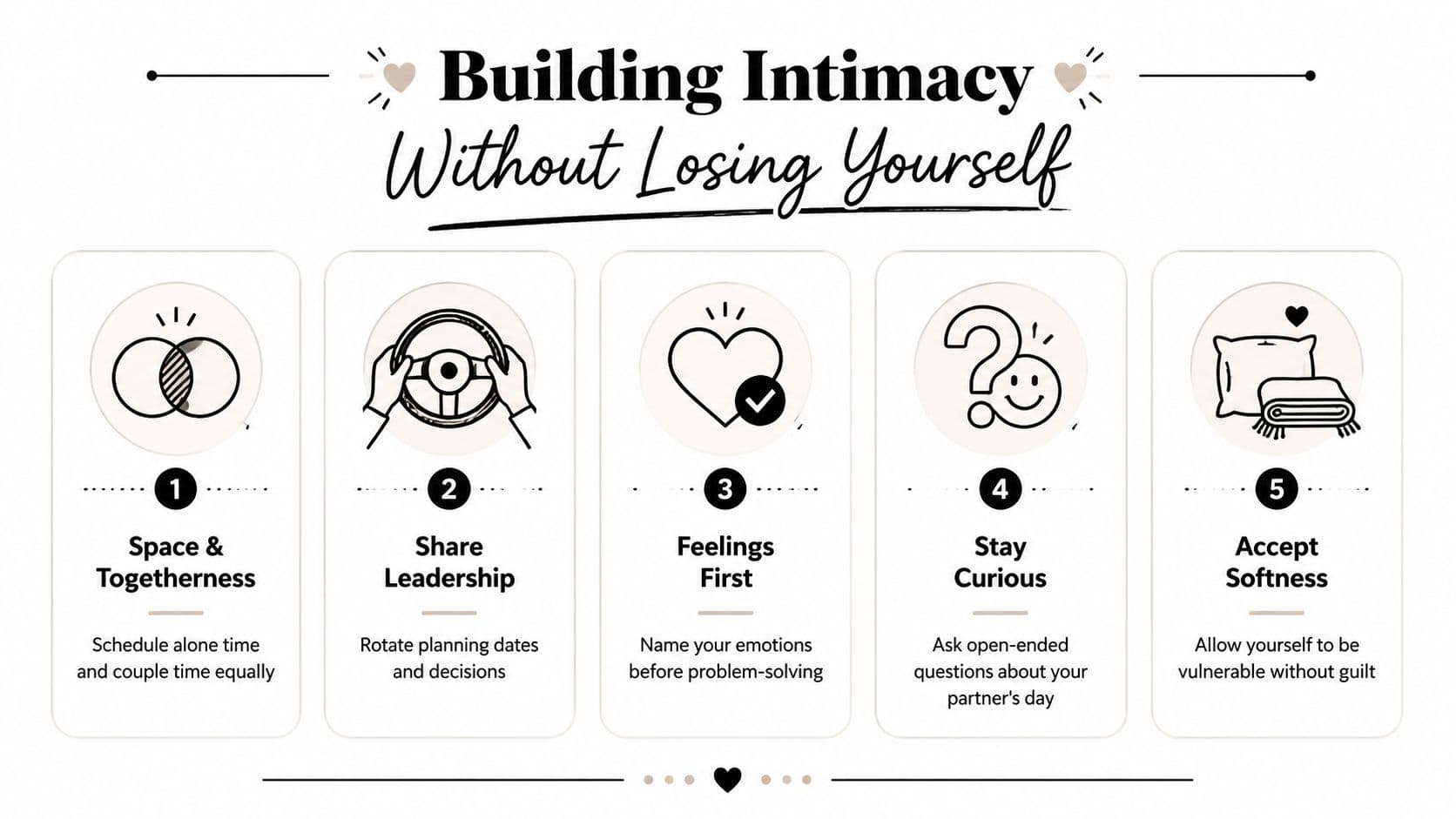
Five practices that protect connection
-
Separate space from withdrawal. Tell your partner when you need time alone, and say when you'll reconnect. “I need an evening to reset, and I want to talk tomorrow” feels very different from disappearing.
-
Rotate leadership. Take turns planning dates, handling practical tasks, and making shared choices. You'll learn whether you resist the decision itself or the feeling of not being in control.
-
Name feelings before solutions. Try, “I'm worried I'm not meeting your expectations,” before offering a plan. Emotional honesty gives your partner something real to respond to.
-
Ask questions you can't answer for them. Instead of deciding what your partner needs, ask, “What felt hardest about today?” or “What kind of support would help right now?”
-
Practice receiving. Let your partner help without immediately repaying, improving, or taking over. Receiving support doesn't make you passive. It lets the other person experience themselves as important to you.
A useful test: If your partner can disagree with you and still feel loved, your leadership is serving intimacy rather than replacing it.
The same principle applies to conflict. State the issue clearly, describe the impact, and ask for a specific change. Avoid turning the conversation into a trial where someone must win. If arguments repeatedly become circular or emotionally unsafe, choosing to find a couples counsellor in Kelowna can give both partners structured support.
Healthy boundaries also help. A boundary says what you'll do to protect your wellbeing, not what you can force another person to do. The guidance on how to set healthy boundaries fits the Life Path 1 lesson well, because autonomy becomes healthier when it's communicated rather than defended through distance.
How Love Style Evolves Across Life Stages
A Life Path 1 love style isn't frozen at the moment you recognize it. The creative seed remains part of the pattern, but the way you protect it can mature.
Earlier in life, personal ambition may take up much of your attention. Romance can feel exciting, but choosing a long-term partner may seem difficult when you're still building direction, identity, or confidence. You may prefer autonomy to emotional dependency, not because you don't care, but because dependence feels like a risk to your developing self.
Commitment can also bring a conflict between intensity and consistency. A 1 may enjoy pursuit, passion, and the feeling of beginning something new, then become impatient when partnership requires repetition, negotiation, and maintenance. Long-term love asks you to value the daily acts that don't produce immediate excitement.
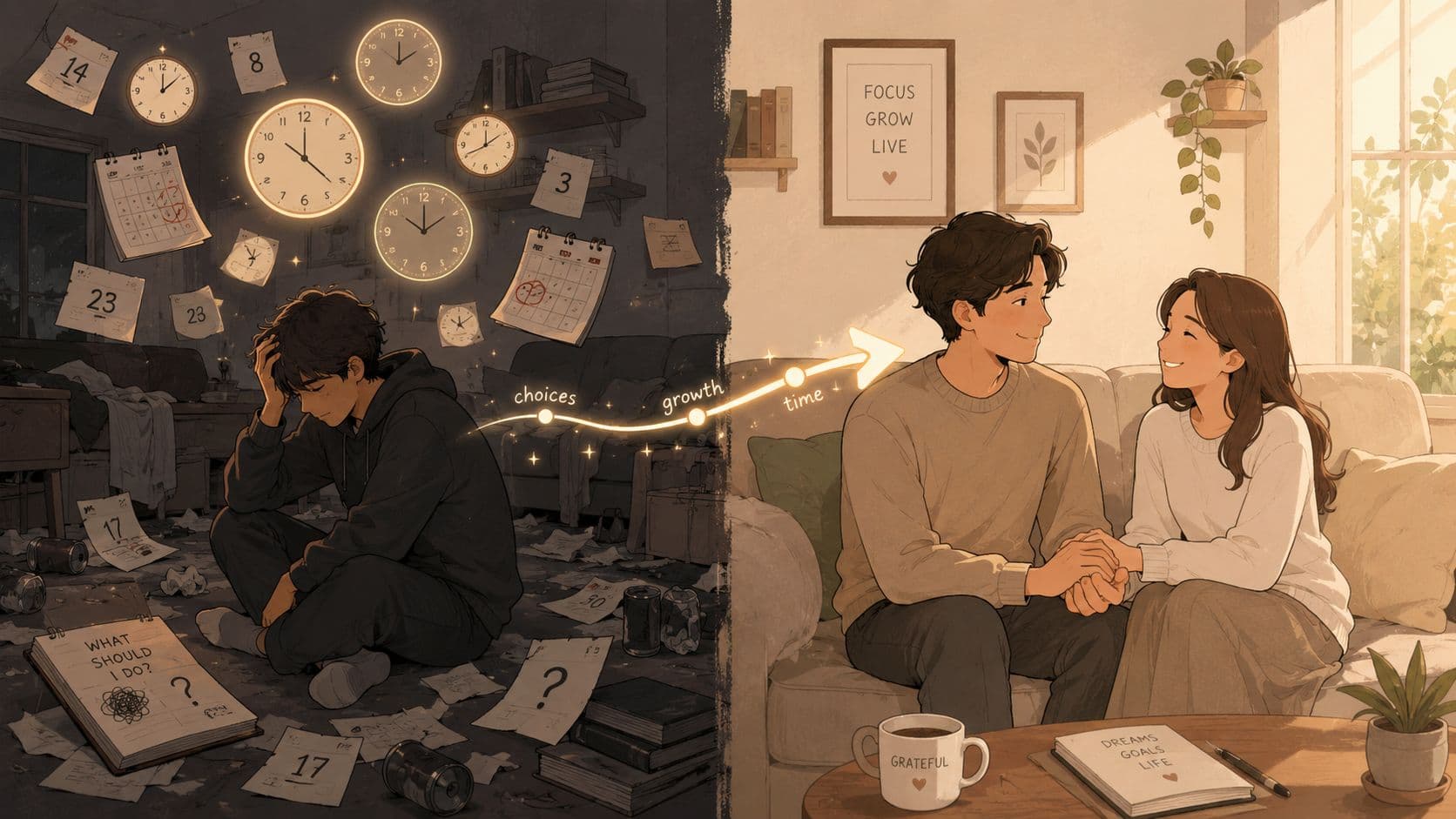
From proving yourself to revealing yourself
Over time, self-knowledge can soften the need to prove your worth through achievement or control. You may become more willing to say, “I don't know,” “I need help,” or “That hurt me.” Those statements don't erase strength. They make strength more relational.
Sex and physical intimacy can follow a similar developmental path. A passionate beginning may come naturally, while sustained intimacy requires listening, reciprocity, and a willingness to communicate preferences instead of assuming leadership. Compromise in sex isn't a loss of desire. It's a way of making room for two complete experiences.
Long-term partnership also tests your ability to share ordinary authority. Who decides how time is spent? Whose goals receive attention? How do you repair an argument? These questions make autonomy and reciprocity practical rather than abstract.
The developmental movement is clear:
- Early pattern: “I'll handle it myself.”
- Growing awareness: “I want support, but I'm not sure how to ask.”
- Mature expression: “I can remain myself and let someone stand beside me.”
Your birth pattern may describe recurring tendencies, but it doesn't remove your capacity to learn. The Life Purpose App and Dan Millman's The Life You Were Born to Live can serve as reflection tools, while your actual growth happens through honest conversations, repeated repair, and choices that make room for mutual influence.
Your Next Steps for Deeper Relationship Clarity
Use your Life Path 1 insight as a practical mirror. Don't ask only, “Who am I compatible with?” Ask better questions:
- Notice your control reflex. Identify the moments when you take over because uncertainty feels uncomfortable.
- Make one shared decision differently. Invite your partner's direction and resist the urge to revise it.
- Reveal one private feeling. Choose honesty before you have a perfect explanation.
- Protect both identities. Schedule personal time while remaining dependable in shared commitments.
- Review the pattern together. Ask your partner where they feel supported and where they feel managed.
For a broader profile, the Life Purpose App provides access to Dan Millman's Life-Purpose System through birth-date information. It includes life-path interpretation, relationship dynamics, nine-year life cycles, and compatibility exploration involving friends, family, co-workers, and partners. The system is based on the 25th Anniversary Edition of The Life You Were Born to Live, which presents strengths and challenges across health, money, sexuality, career, and relationships. You can also explore other tools for self-reflection, including the Kismo Homepage if you're looking for an additional resource alongside your relationship work.
The most useful conclusion about Life Path Number 1 love life is simple: independence and intimacy aren't enemies. Your task is to develop a form of leadership that invites trust, shares influence, and makes vulnerability safe enough for love to deepen.
Explore your relationship dynamics through the Life Purpose App's Dan Millman's Life-Purpose System, including Life Path 1 themes, compatibility patterns, and personal cycles. Visit Life Purpose App to begin reflecting on how you can lead your life while building a more mutual and emotionally open partnership.
Discover Your Life Purpose Today!
Unlock your true potential and find your life’s purpose.
