Understand the role of lust in relationships. This guide explains lust vs. love, its impact on connection, and how to navigate desire for a healthier bond.
May 18, 2026 (2mo ago) — last updated July 4, 2026 (22d ago)
Lust in Relationships: A Guide to Healthy Desire
Understand the role of lust in relationships. This guide explains lust vs. love, its impact on connection, and how to navigate desire for a healthier bond.
← Back to blog
You're lying in bed next to someone you care about. The chemistry is strong. The texting is electric. When you're together, your body says yes before your mind has even formed a sentence.
Then the doubt creeps in.
Do I love this person, or am I just caught in the pull of desire? If the passion is this intense, is that a good sign or a warning sign? And if you're already in a committed relationship, another question may hit even harder. Is what I'm feeling healthy desire, or is it becoming something that could damage trust, peace, and connection?
That confusion is common. Lust in relationships can feel beautiful, alarming, life-giving, destabilizing, or all of that in the same week. The problem isn't desire itself. The problem is that many people were taught only two categories: desire is either pure and good, or dangerous and bad. Real life is more complicated.
A couple might have deep affection and strong physical hunger at the same time. Another couple might mistake intensity for intimacy. Someone else may discover that what they called desire was loneliness, insecurity, or the need to feel chosen.
That's why clear language matters. When you can name what's happening, you can respond wisely instead of reactively. You can stop shaming yourself for being human, and you can also stop excusing patterns that hurt you or your partner.
The Intense Pull Between Desire and Devotion
Maya and Jordan had been together for a few months. They could barely keep their hands off each other. Conversation flowed, but what really defined the relationship was the heat between them. Every date ended late. Every goodbye turned into another hour in the car.
Then they had their first serious disagreement.
It wasn't dramatic. It was ordinary. One of them wanted more clarity about the future, and the other brushed it off. What startled them wasn't the disagreement itself. It was how exposed they suddenly felt once the physical current couldn't smooth everything over.
That's the moment many couples recognize a hard truth. Intensity can create closeness, but it can also hide a lack of depth. The body can make a bond feel solid before the relationship has learned how to carry weight.
Why this feels so confusing
Lust rarely arrives as a neat, obvious category. It often comes wrapped in tenderness, hope, fantasy, and projection. You may sincerely care about someone and still be led mostly by the thrill of wanting them. You may feel spiritually connected and still be ignoring practical incompatibilities.
Practical rule: If the relationship feels strongest in private chemistry but weakest in ordinary life, pause and look closer.
That doesn't mean desire is fake. It means desire needs context. A healthy bond can include powerful sexual energy. But devotion asks different questions. Can we tell the truth? Can we tolerate disappointment? Can we repair after conflict? Can we stay kind when novelty fades?
What people usually miss
Many individuals don't need another lecture about lust being wrong. They need help distinguishing between healthy desire and harmful lust in daily life.
Here's a simple starting point:
- Healthy desire brings energy into the relationship without replacing honesty.
- Harmful lust starts running the relationship. It crowds out judgment, empathy, and stability.
- Devotion doesn't kill passion. It gives passion a place to land.
If you've been asking, “What am I feeling?” that question isn't a sign that something is broken. It's a sign that your deeper wisdom is trying to come online.
Untangling Lust Love and Attraction
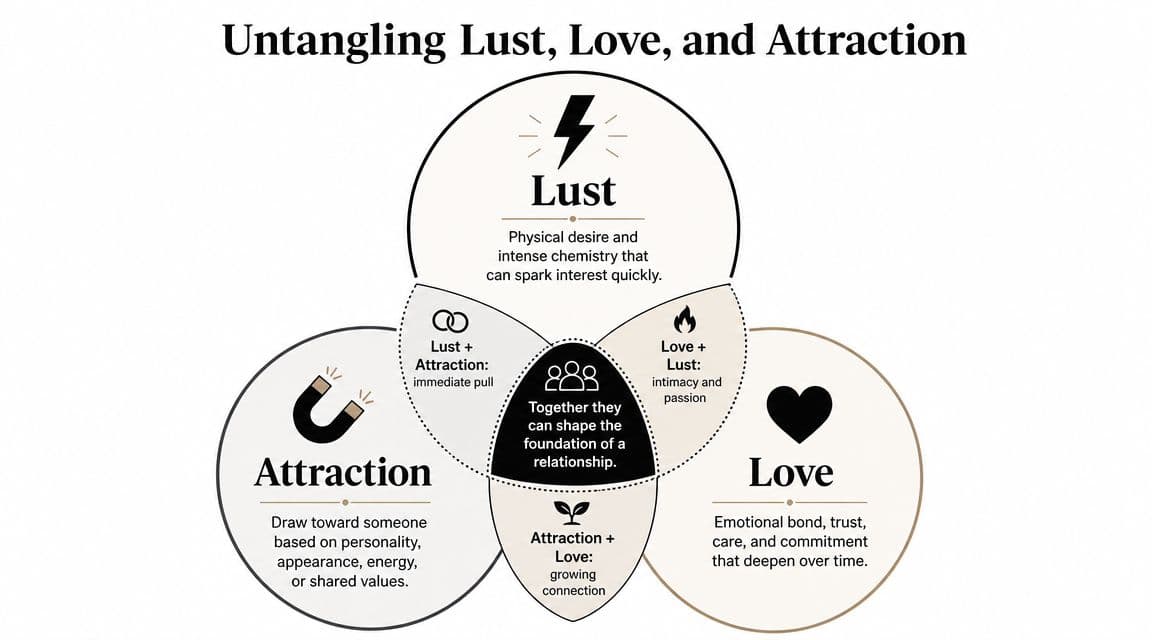
People often use lust, love, and attraction interchangeably. In daily relationship life, that confusion can cause real trouble. A couple may mistake strong chemistry for trust, or assume steady affection means passion has died. These experiences overlap, but they are not doing the same job.
Attraction draws your attention. You notice something compelling in the other person. It might be physical beauty, wit, confidence, emotional warmth, or a quality you cannot easily name.
Lust adds urgency. It is focused, body-centered, and often impatient. Lust tends to narrow your field of vision, the way a bright spotlight makes everything outside its beam harder to see.
Love widens the frame. It includes desire, but it also asks whether two people can tell the truth, carry disappointment, and remain kind in ordinary life. Love is less about intensity alone and more about what grows through repeated choices.
What each one is really doing
A simple way to sort them is to ask what each experience is trying to move you toward.
Lust pushes for contact. It wants closeness now, especially sexual closeness. Attraction invites discovery. It makes you curious. Love supports connection that can survive reality, not just excitement.
| Experience | Main focus | Usual feeling tone | What it tends to ask |
|---|---|---|---|
| Lust | Sexual reward | Urgent, consuming, charged | “How can I get closer now?” |
| Attraction | Interest and pull | Curious, excited, drawn in | “Who is this person?” |
| Love | Bond and care | Steady, vulnerable, committed | “How do we grow well together?” |
A healthy relationship does not require you to choose one and reject the others. In a strong bond, attraction creates interest, lust brings energy, and love gives both of them direction. Without that direction, desire can start acting like a driver instead of a passenger.
What your brain is doing
Part of the confusion is biological. As noted in Harvard Medical School's science of love overview, early romantic and sexual intensity can activate the brain's reward system and increase stress chemistry at the same time. That mix helps explain why someone can feel thrilling, consuming, and essential before the relationship has shown whether it is stable.
So if your body is sending a loud yes, that does not mean your judgment is broken. It means your system is activated.
Dan Millman's spiritual work is helpful here because he does not treat desire as something dirty that must be crushed. He treats it as energy that reveals consciousness. In relationship terms, the key question is not, Is this feeling strong? It is, What is this energy making me become? Desire that makes you more honest, more present, and more responsible is very different from desire that makes you manipulative, obsessive, or split off from your values.
Attraction can be meaningful and still be incomplete. The body can sense significance before the relationship has earned trust.
Where people get tripped up
People usually get confused at the level of daily interpretation. You miss someone all day, feel electric when they text, and assume the relationship must be profound. Sometimes it is. Sometimes you are responding to novelty, fantasy, or old attachment hunger.
That is why chemistry should be tested in ordinary moments. How do you speak to each other when plans change? What happens when one person says no? Is sexual tension making you kinder and clearer, or more reactive and less honest?
If you tend to confuse intensity with safety, it can help to learn how your own patterns shape desire. This guide to attachment styles in relationships can help you spot when old emotional conditioning is coloring present-day attraction.
A useful checkpoint is simple. After the rush settles, do you feel more grounded with this person, or more consumed by them?
That answer often reveals whether you are building love, feeding lust, or still standing at the doorway of attraction.
Understanding the Engines of Desire
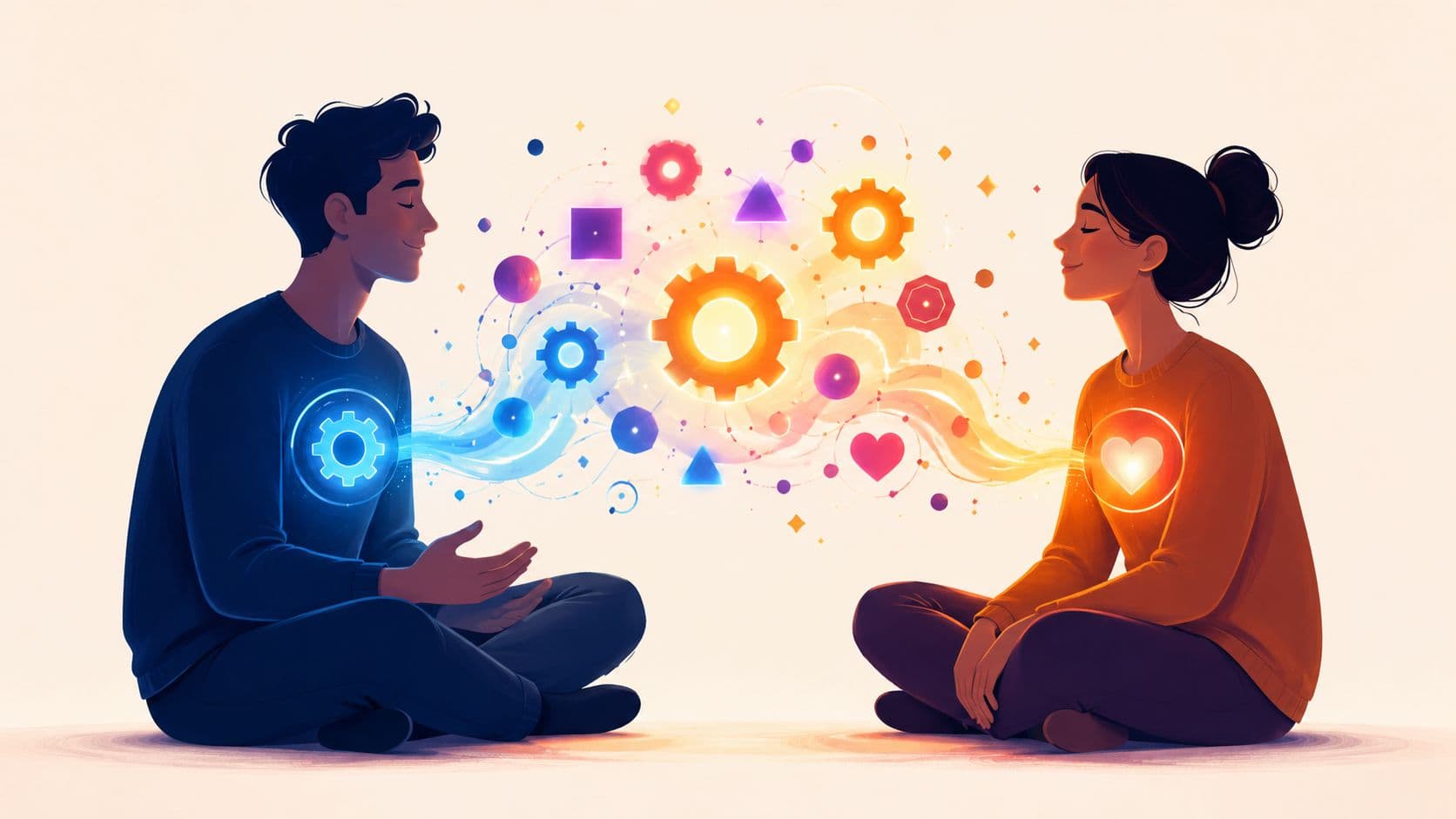
Desire is never just one thing. It has layers. Some are physical. Some come from your history. Some feel almost spiritual, as if a deep life-force is trying to move through you.
When people judge their own desire too quickly, they usually miss what's driving it.
The biological engine
A useful distinction is the one made in this lust vs love explanation. Lust is typically described as an early-stage, hormonally driven state focused on immediate sexual reward, while longer-term attachment relies more on bonding chemistry such as oxytocin and vasopressin. In everyday terms, lust tends to be high-intensity but less stable.
That's why it often feels so present-focused. Lust says: I want you now. Attachment says: I want to know whether we can build something safe.
Hormones also shape how desire feels in the body. If someone is dealing with fatigue, body changes, or shifts in sexual interest, it can help to look at whole-person factors rather than assume the relationship is the only issue. For men navigating physical and hormonal questions, this article on treatment for low testosterone weight gain offers useful medical context.
The psychological engine
Sometimes lust is straightforward attraction. Sometimes it's carrying more emotional material than people realize.
A few examples:
- Need for validation: You don't just want the person. You want the feeling of being wanted.
- Escape from pain: Sexual intensity can distract from grief, boredom, anxiety, or emptiness.
- Old attachment hunger: Desire can become fused with the longing to finally feel chosen, safe, admired, or pursued.
This is why two people can have the same level of chemistry but very different inner experiences. One feels playful and alive. The other feels desperate, obsessive, or emotionally dependent.
The spiritual engine
From a spiritual perspective, desire is powerful life energy. It can create, bond, awaken, and reveal. But spiritual language shouldn't become an excuse for chaos.
If your desire leads you away from integrity, it isn't becoming wiser just because it feels profound. Real spiritual growth asks whether your desire is making you more honest, more compassionate, and more accountable.
Some forms of lust are really unexamined longing. They reach for a body when the soul is asking for connection.
That's why self-observation matters. Instead of asking only, How strong is this feeling? ask, What is this feeling trying to get for me? Relief? Validation? Aliveness? Belonging? Escape?
When you directly answer that question, desire becomes easier to understand and much harder to romanticize.
How Lust Shapes Your Relationship's Health
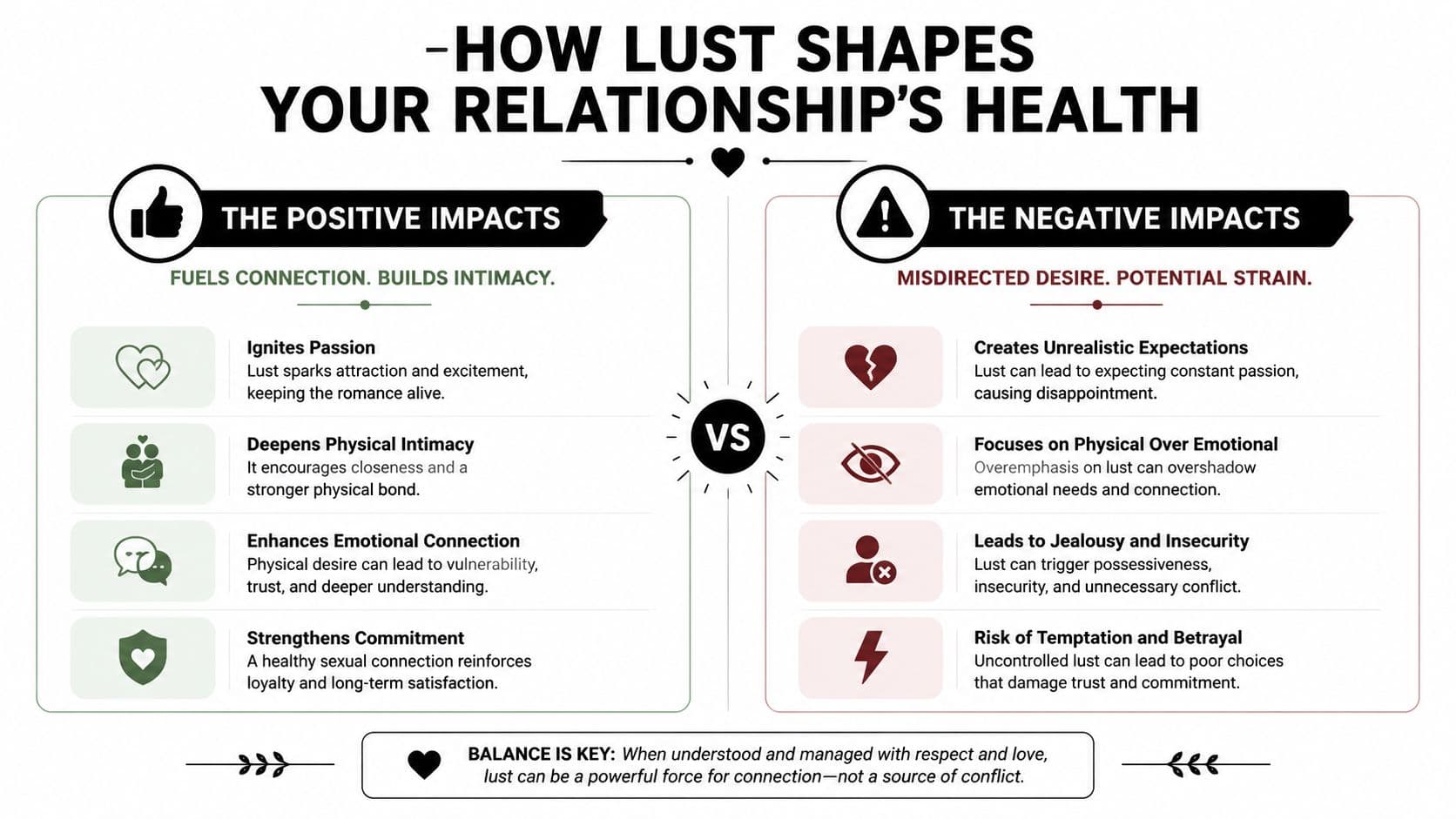
Lust can help a relationship. Lust can also distort one. The difference usually comes down to whether desire supports the bond or substitutes for it.
A lot of couples fear this conversation because they assume they have to choose one side. Either passion matters, or emotional depth matters. In reality, healthy relationships usually need both.
When lust helps
Lust can be a living spark inside a committed bond. It keeps partners curious about each other. It brings play, anticipation, flirtation, and embodied connection into adult life.
For some couples, desire wakes back up when they stop treating sex as another task and start creating space for novelty, surprise, and emotional freshness. That doesn't require betrayal or secrecy. It requires intention.
When lust starts harming the bond
An evidence-based marker is that desire often depends on novelty, mystery, and low familiarity rather than deep knowing. Research summaries discussed in this Cosmopolitan article on what lust means report that stable intimacy alone doesn't necessarily sustain desire, while new experiences and shifts in intimacy can reignite it.
That point gets misunderstood. It doesn't mean long-term love kills desire. It means desire often needs movement. But if a couple can only feel alive through novelty and never through honesty, affection, or shared meaning, the relationship may be running on stimulation instead of connection.
A side-by-side look
| Lust as a spark | Lust as a dependency |
|---|---|
| Adds play and energy | Creates chronic restlessness |
| Supports attraction within commitment | Makes novelty feel necessary |
| Works alongside communication | Replaces communication |
| Deepens physical intimacy | Can lead to objectification |
| Coexists with emotional safety | Often weakens stability |
If conflict is hard for you as a couple, practical skills matter here. A relationship that depends on chemistry but avoids repair becomes fragile fast. These can help couples build the emotional capacity that passion alone can't provide.
The clearest test
Ask yourself what happens after the high.
Do you feel more open, more truthful, and more connected to your partner as a whole person? Or do you feel more preoccupied, more dissatisfied, and less interested in the ordinary work of loving?
That answer will tell you a lot. In healthy lust, the body draws you toward the relationship. In unhealthy lust, the body becomes the only place the relationship feels alive.
Turning Lust Into Lasting Connection
A common scene in long-term relationships goes like this. One partner reaches for more physical closeness. The other pulls back, not because love is gone, but because the pressure makes desire shrink. Both people leave the moment feeling rejected, confused, or slightly ashamed.
That is usually not a lust problem alone. It is a translation problem. Raw desire is showing up, but the relationship has not yet learned how to turn that energy into trust, openness, and mutual choice.
Healthy desire does not need to match a fixed schedule to be real. Frequency varies widely across committed couples, as this overview of how often couples have sex explains. The practical question is simpler and more useful. Does your sexual connection leave both of you feeling more chosen, more known, and more at ease in the relationship?
A fire helps here as a comparison. Heat can cook food or burn a house down. Lust works in much the same way. By itself, it is only energy. What gives it direction is the container around it: honesty, consent, timing, tenderness, and repair when feelings get hurt.
Three daily practices that change the tone
-
Name desire without turning it into pressure
Try: “I've been feeling drawn to you lately, and I wanted to share that. I'm not asking you to respond a certain way right now.” -
Say what the desire may be carrying underneath
Sexual longing often carries another message. It may mean, “I miss you,” “I want reassurance,” “I want playfulness,” or “I want to feel close after a hard week.” -
Build novelty inside commitment
Novelty does not require secrecy or risk. It can come from changing the setting, asking a more honest question, sharing a fantasy with care, lingering longer in affection, or doing something new together outside the bedroom so aliveness returns to the bond.
A grounded reminder: Desire grows best where people feel free to choose and safe to tell the truth.
Clear language helps couples avoid the usual traps.
- If one partner wants more sex: “Sex matters to me because it helps me feel connected to you. I want us to talk about closeness, not just frequency.”
- If one partner feels pressured: “I want connection too. I need more emotional safety and less urgency so my body can relax.”
- If shame shows up: “Let's talk about what brings us toward each other without treating either of us as the problem.”
For men who want to strengthen emotional intimacy and not rely on sexual intensity alone, this men's guide to deeper connections offers practical prompts that can widen the relationship beyond chemistry.
Structure matters more than many couples realize. Desire feels spontaneous, but lasting intimacy usually has support beams. Conversations about initiation, rest, privacy, affection, conflict, and digital boundaries all shape whether lust becomes bonding or friction. These can help couples clarify what protects trust while still leaving room for playfulness and passion.
A spiritual perspective can deepen this work if it stays grounded in daily behavior. Dan Millman's The Life You Were Born to Live describes how people bring different gifts, struggles, and growth tasks into relationships. The Life Purpose App is a digital companion to that system, where people can enter birth dates to reflect on relationship patterns, compatibility, and life-path themes. Used carefully, that kind of reflection can help couples ask better questions. How do I seek love when I feel insecure? How do you protect yourself when conflict starts? What helps each of us feel pursued without feeling used?
Lust lasts in a healthy way when it stops acting like a demand and starts serving a deeper bond. Let it bring energy. Then give that energy a place to go: honest words, steady care, shared meaning, and daily choices that make both partners feel fully seen.
Recognizing When Desire Becomes Destructive
There's a point where desire stops enriching the relationship and starts eroding it. People often miss that point because the behavior still looks sexual on the surface, while the deeper damage is happening in trust, safety, and self-worth.
Current relationship commentary doesn't always quantify the impact well, but it does note that lust can damage intimacy, trust, and self-esteem, and can train people toward novelty rather than connection, as discussed in this article on how lust can sabotage mental health and relationships. It also raises an important modern issue: digital behaviors such as porn and sexting can create a different kind of relational threat than in-person behavior, especially when secrecy is involved.
Red flags worth taking seriously
- Your partner feels increasingly objectified. They feel looked at, used, or compared, rather than cherished.
- Novelty becomes the main fuel. Ordinary affection feels flat unless something secret, risky, or highly stimulating is added.
- There's persistent secrecy. Hidden chats, concealed porn use, deceptive social media behavior, or private sexual contact outside agreed boundaries.
- The emotional bond weakens. Physical intensity remains, but tenderness, accountability, and mutual care keep dropping.
- One person's confidence shrinks. The non-using partner starts feeling less attractive, less safe, or less worthy.
A practical question couples need to answer
Many couples don't share the same definition of betrayal. That creates chaos. If you need help sorting out the gray areas, these expert tips on what's cheating can help you talk more concretely about digital and in-person boundaries.
If desire requires deception to survive, it's no longer just desire. It has become a threat to the relationship.
When to get support
If conversations keep collapsing into blame, defensiveness, shutdown, or panic, outside support can help. A skilled therapist, counselor, or couples professional can help identify whether the issue is compulsive sexual behavior, unresolved attachment pain, chronic disconnection, or a boundary rupture that needs repair.
Seeking help isn't dramatic. It's mature. The earlier couples address destructive lust patterns, the more clearly they can decide whether they're rebuilding trust or trying to prolong something that no longer feels safe.
If you want a deeper way to understand your relationship patterns, emotional wiring, and spiritual lessons in partnership, explore the Life Purpose App. It's built around Dan Millman's The Life You Were Born to Live and can help you reflect on life-path dynamics, compatibility, and the deeper themes shaping how you love.
Discover Your Life Purpose Today!
Unlock your true potential and find your life’s purpose.
