Explore 8 creative outlets—from journaling and painting to dance and meditation—to find your my creative outlet and connect creativity with purpose.

September 27, 2026 (26d ago) — last updated September 28, 2026 (26d ago)
8 Creative Ideas to Find My Creative Outlet
Explore 8 creative outlets—from journaling and painting to dance and meditation—to find your my creative outlet and connect creativity with purpose.
← Back to blog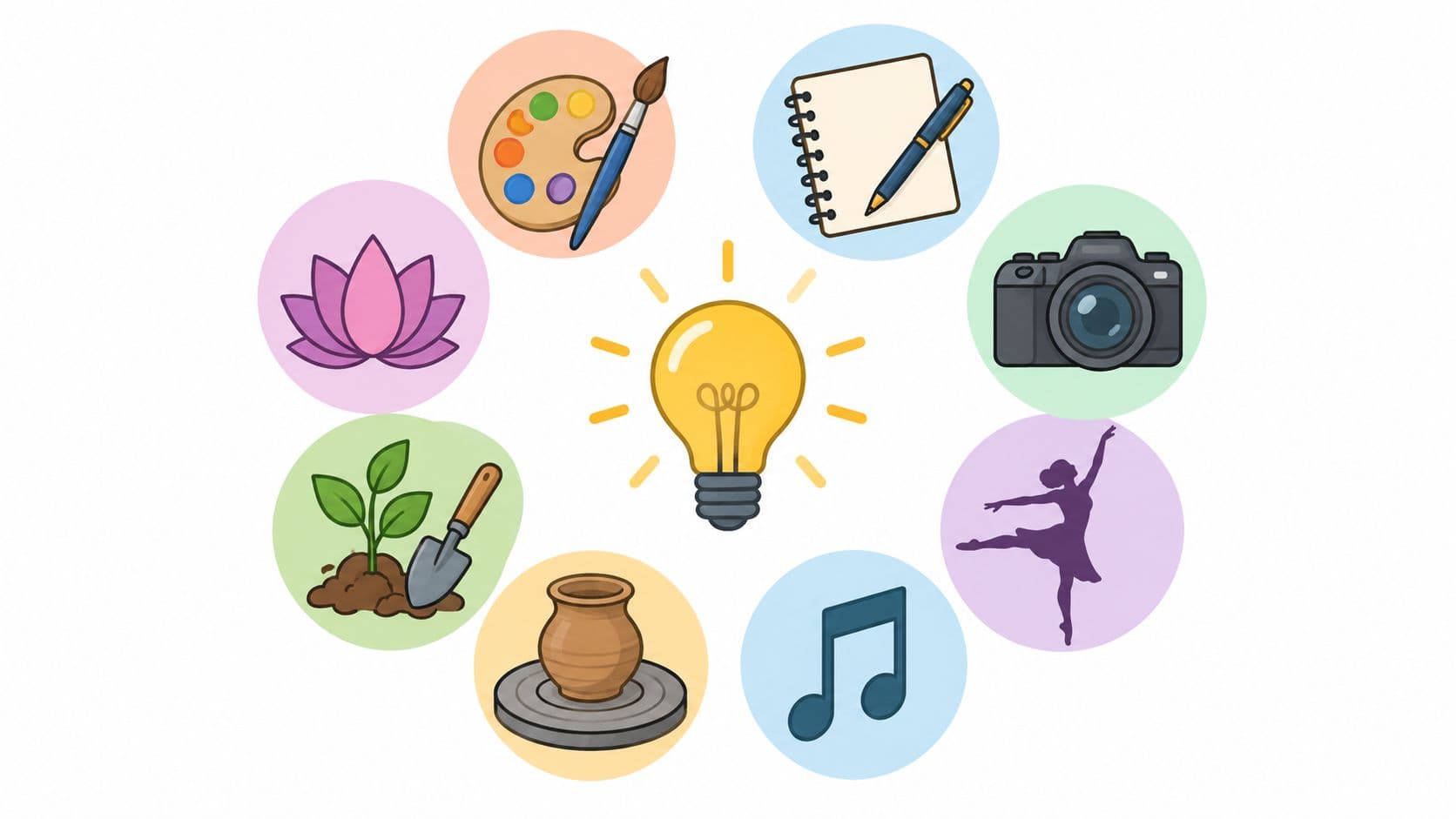
Explore 8 creative outlets—from journaling and painting to dance and meditation—to find your my creative outlet and connect creativity with purpose.
What if your creative outlet isn't supposed to prove that you're talented? It may be less about producing something impressive and more about giving your attention somewhere to land, your feelings somewhere to go, and your curiosity room to develop.
The right activity depends on what you need today. You might want to process an experience, tell a story, work with your hands, move your body, observe the world, make something useful, or create more inner quiet. You don't need to identify as an artist, buy expensive equipment, or commit to a lifelong hobby. A small experiment can tell you more than a long list of personality descriptions.
If you're exploring numerology or life paths, Dan Millman's The Life You Were Born to Live and the Life Purpose App can offer a structured reference point for themes, gifts, challenges, spiritual laws, and cycles. Treat that framework as a prompt for reflection, not a substitute for trying things in real life. Your most useful clues will come from noticing which activities leave you more present, expressive, or connected.
1. Journaling and Reflective Writing
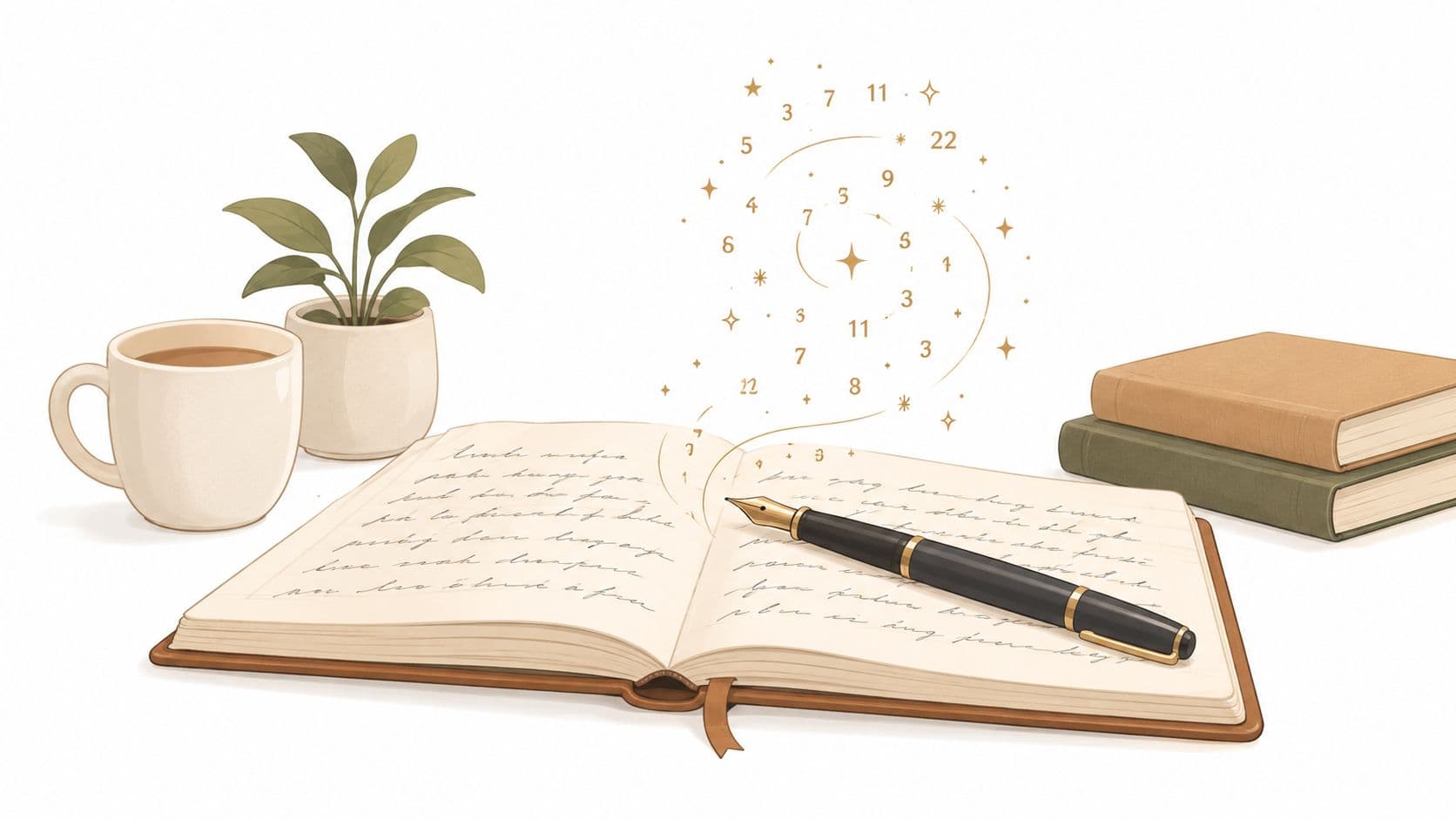
Journaling is a creative outlet for people who think by writing. You don't need a polished voice or a dramatic story. A notebook can become a private place to sort through a difficult conversation, record a passing idea, or notice a pattern that was hard to see while you were busy living it.
Morning pages, popularized by Julia Cameron in The Artist's Way, give you permission to write without editing or performing. Bullet journaling offers a more visual structure, combining planning, lists, habit tracking, and small drawings. You can also keep a life-path journal beside the Life Purpose App, recording which ideas from Dan Millman's The Life You Were Born to Live feel relevant to your current choices.
A simple way to begin
Choose a regular time and write for 10 minutes, even if the page starts with “I don't know what to say.” Don't aim for elegant sentences. Aim for honest attention.
Try prompts such as:
- Emotional processing: What feeling keeps returning today, and what might it be asking me to notice?
- Life-path reflection: Which themes, gifts, or challenges from The Life You Were Born to Live seem connected to my current situation?
- Pattern spotting: What did I repeatedly choose, avoid, or enjoy this month?
- Purpose in practice: Where did my actions feel useful, alive, or aligned?
You can review entries monthly to notice growth and recurring concerns. If you use the Life Purpose App, its life-path themes and nine-year cycles can provide additional prompts, while your journal shows how those ideas appear in ordinary decisions. For a practical companion approach, explore how to boost creativity with journaling.
Practical rule: Write for discovery first. Edit, organize, or interpret later.
Read more about using a spiritual growth journal if you want to turn private writing into a more deliberate self-reflection practice. Your starting experiment is simple: write one page for three mornings, then underline the sentence that feels most honest. Your purpose prompt is, “What am I learning about the kind of attention I want to give my life?”
2. Visual Art and Painting
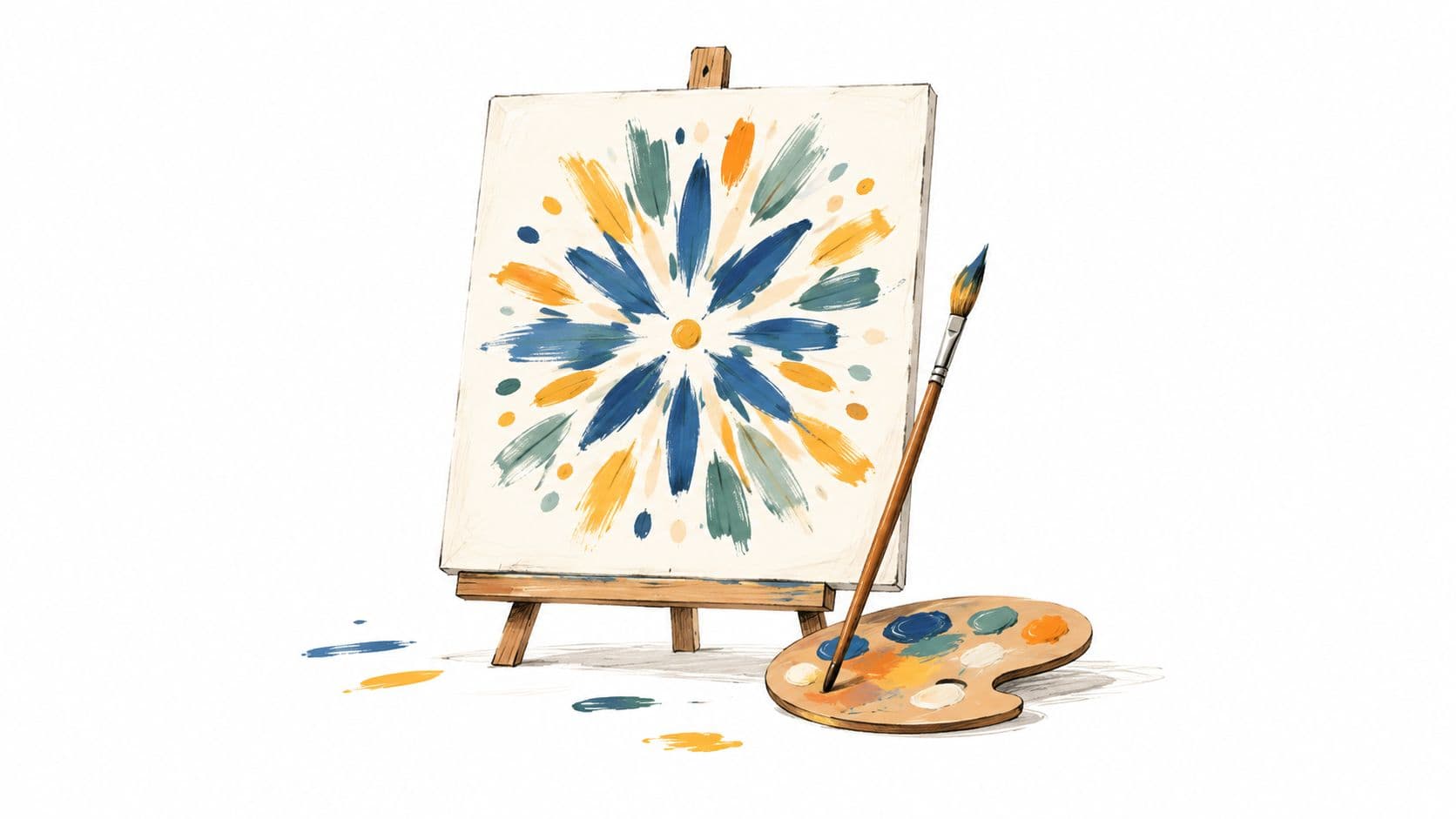
Visual art suits people who feel or understand things through color, shape, texture, and image. Painting, drawing, collage, mixed media, and digital art can express an experience before you have language for it. You might paint an abstract field of color after a stressful week, sketch a place you remember, or combine photographs and handwritten words into a personal symbol system.
A mandala can offer a quieter, more repetitive form of making. A portrait can lead you toward questions about identity and human connection. Mixed media lets you work with materials that already carry meaning, such as ticket stubs, fabric, leaves, or copied photographs. The result doesn't need to be attractive to be useful.
Let the process lead
Start with inexpensive paper, pencils, crayons, or a small set of paints. Limiting your materials can reduce the pressure to produce something “good.” Choose one question, such as “What does rest look like?” or “What part of my life is changing?” Then create without correcting yourself.
You could explore:
- Abstract expression: Use color, line, and movement to release an emotion.
- Contemplative pattern: Draw a mandala slowly, repeating shapes without judging them.
- Personal symbolism: Make a collage from images that represent a current life-path theme.
- Observation: Paint an ordinary object, focusing on light, edges, and texture.
Dan Millman's The Life You Were Born to Live and the Life Purpose App can serve as reflective prompts when you want to connect art with life-path gifts or challenges. Don't treat a life path as proof that you're meant to be a painter. Instead, ask whether a theme gives you an interesting subject to explore. You might create a small seasonal series inspired by a cycle you're reflecting on, without turning the project into a test.
If you're drawn to patterned work, learn more about mandala therapy art.
3. Music Creation and Songwriting
Music creation works well for people who process experience through rhythm, melody, sound, and emotional atmosphere. You can write lyrics, hum a melody into your phone, build a non-vocal loop, or experiment with electronic sounds. You don't have to perform publicly for music to count as your creative outlet.
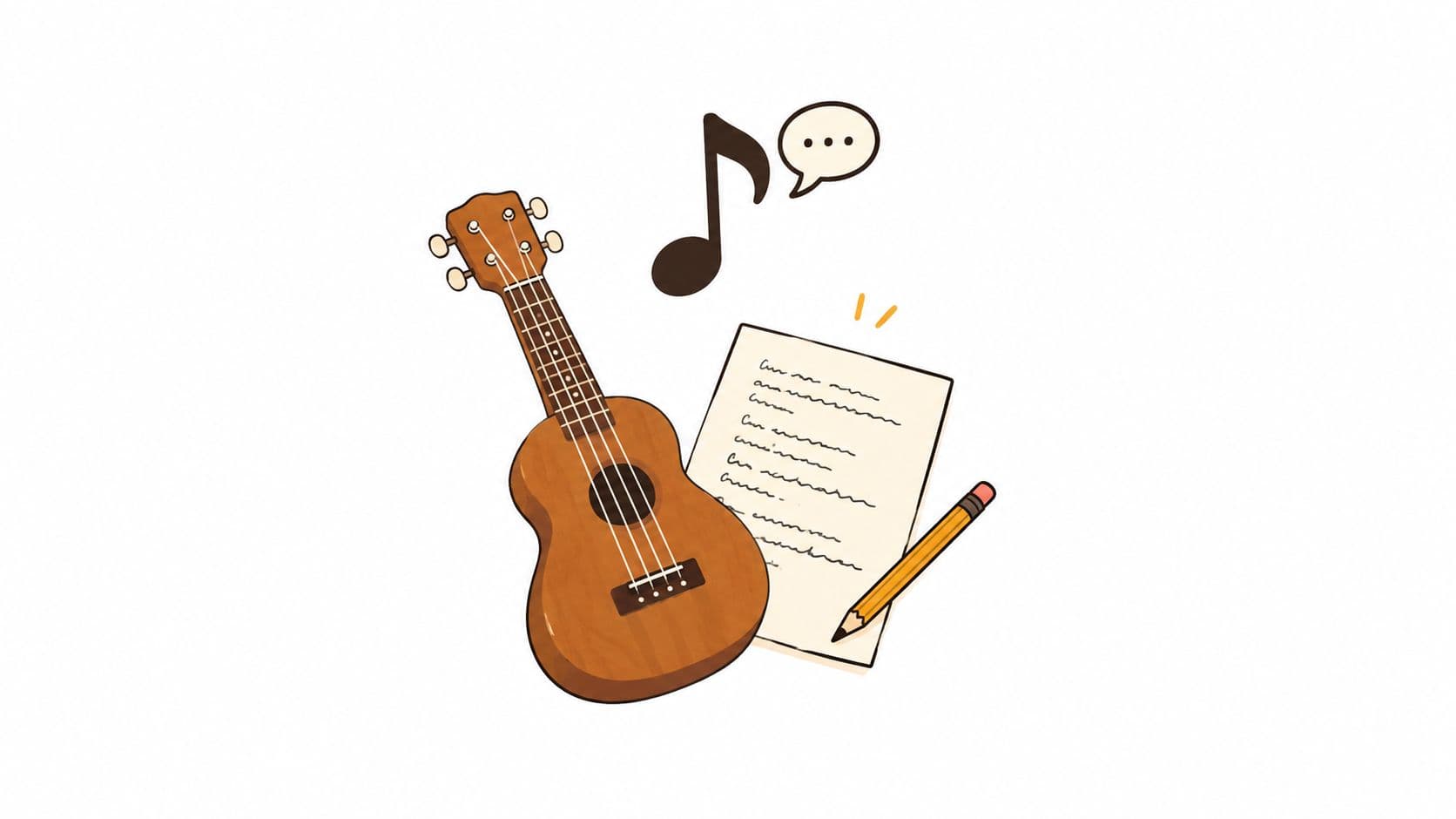
Story-driven artists such as Joni Mitchell and Leonard Cohen show how songs can hold memory, conflict, and observation in a compact form. A beginner might use a ukulele, a keyboard, or only their voice. Someone who prefers technology might use GarageBand or Audacity to arrange simple layers without learning a full recording system.
Build a tiny song
Pick one feeling, image, or sentence from your day. Turn it into a short chorus, a repeated rhythm, or a one-minute sound recording. The goal is not a finished track. It's to notice whether shaping sound changes how you understand the experience.
Try one of these routes:
- Voice first: Record a melody using nonsense syllables, then add words later.
- Instrument first: Play a simple chord pattern and speak or write phrases over it.
- Digital first: Create a short loop and change one element at a time.
- Community first: Attend an open mic to listen, meet other musicians, or share a rough piece when you're ready.
If you're reflecting on numerology or life paths, Dan Millman's The Life You Were Born to Live and the Life Purpose App can offer themes for lyrics about communication, responsibility, connection, or personal challenge. Keep the interpretation flexible. A song may reveal something about your experience that no description can settle.
Record three rough demos over a week, even if you never share them. Then ask, “Do I want music mainly to express private emotion, connect with other people, or explore sound for its own sake?” If digital experimentation appeals to you, you can also explore songwriting with AI vocals, while keeping your own ideas at the center.
4. Photography and Visual Storytelling
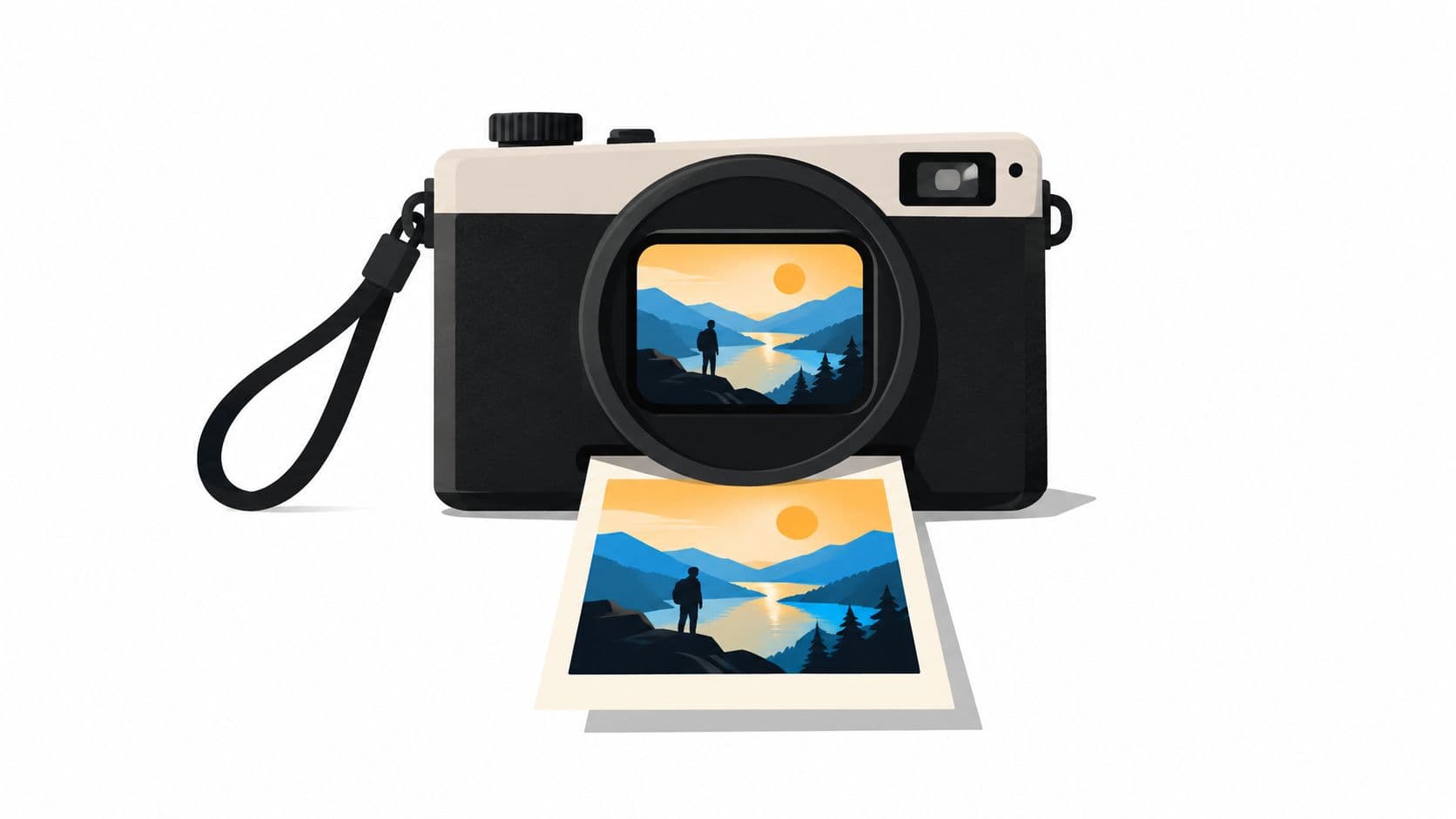
What do you notice before other people do? Photography suits people who think through details, relationships, contrast, and atmosphere. A smartphone camera is enough to begin. Your creative choices include where you stand, what stays outside the frame, when you press the shutter, and how several images work together.
You might document a family member's daily ritual, follow changing light in your neighborhood, photograph overlooked signs, or make portraits that explore how someone wants to be seen. Nature photography can slow your attention outdoors, while street photography can sharpen awareness of ordinary moments. Documentary photography asks you to observe people and places with care, context, and respect. For structured learning, you can explore an art and design photography degree to develop composition and editing skills.
Turn observation into a story
Choose one visual assignment: photograph five examples of “quiet,” “belonging,” “change,” or “work.” Treat the task like collecting clues rather than building a portfolio. Review the images afterward and ask what your choices have in common.
Composition principles such as the rule of thirds can help you understand balance, but they are tools, not laws. Study photographers whose work makes you stop and ask why. Notice distance, shadow, color, and timing. If you share work on Instagram or 500px, request specific feedback about the story or feeling an image communicates instead of asking whether it is good.
People drawn to life-path reflection can use photography to record personal growth. Dan Millman's The Life You Were Born to Live and the Life Purpose App may suggest themes related to observation, communication, or connection. Your camera can test those ideas through real attention. Photograph the people, places, and activities that genuinely hold your interest.
Take one short photo walk and select three images that belong together. Ask, “What am I repeatedly noticing, and what might my attention be trying to tell me?” The purpose is to discover whether photography helps you observe, express, connect, or reflect. A camera can act like a mirror for how you move through the world, not only a device for recording it.
5. Creative Movement and Dance
Some people discover their ideas through movement before they can explain them. Dance gives your body a role in creative expression, whether you follow a structured form such as salsa or contemporary dance or move freely in your living room. The activity can be energetic, playful, social, private, or exploratory.
A social dance class offers connection and shared rhythm. An ecstatic dance gathering may emphasize personal movement without a fixed routine. Contemporary dance can explore unusual shapes and transitions, while dance therapy settings use movement with professional guidance for emotional processing. These formats aren't interchangeable, so choose based on whether you want freedom, structure, community, or support.
Follow sensation, not performance
Start with a song that changes your mood. Close the door, lower the lights if that helps, and move for one track without watching yourself. Let the experiment focus on sensation. Notice your breathing, balance, tension, and the moments when movement feels natural.
You can also try:
- Guided exploration: Follow a free online tutorial to sample a style.
- Social movement: Attend a beginner swing, salsa, or other group class.
- Transition practice: Move slowly between standing, sitting, reaching, and turning.
- Cycle reflection: Choose movement that represents a beginning, ending, pause, or change in your life.
The Life Purpose App's material on bodily kinesthetic intelligence can give language to people who learn through physical experience. If you're exploring numerology or life paths, Dan Millman's The Life You Were Born to Live and the Life Purpose App may suggest themes for reflection, but your body's response matters more than a label.
Try three one-song sessions in different styles. Then ask, “Which movement helped me feel more like myself, and what kind of expression became possible when I stopped trying to look skilled?” That answer can point toward a creative outlet built around embodiment rather than achievement.
6. Writing and Storytelling
What kind of thinking feels natural to you: following images, questioning assumptions, inventing people, or making sense of change? Writing can give each process a shape. Fiction, poetry, memoir, creative nonfiction, personal essays, and short stories all offer different ways to work with language. You can write privately, or share a piece with one trusted reader.
Each form supports a different kind of attention. Memoir examines change while leaving room for incomplete or uncertain memory. Fiction lets you place conflicting desires inside characters and observe what happens. Poetry concentrates feeling into image and rhythm. Essays investigate questions about work, family, culture, or ordinary life.
Choose the form that matches your current need. If experience feels tangled, begin with a remembered scene. If you keep rehearsing an argument, give the opposing views to fictional characters. If one image keeps returning, build a poem around it. If you want understanding rather than a polished conclusion, write an essay that follows an unresolved question.
Let the first draft stay open
Treat drafting like gathering materials, not sitting an exam. Write a rough scene without judging each sentence. Revision can come later, when you can see the whole shape and decide what deserves attention.
Try one small experiment:
- Remember: Describe a place from memory through sound, texture, smell, and light.
- Invent: Write a conversation between two characters who want different outcomes.
- Concentrate: Build a short poem around a window, key, river, or empty chair.
- Question: Explore one personal question without forcing an answer.
A writing practice can fit into a brief, regular period. Stop while curiosity remains, so returning feels possible. Read examples in the form you are trying, and observe structure, pacing, and point of view without copying another writer's voice. A local or online writing group may offer encouragement and focused feedback if you want company.
If life paths interest you, use Dan Millman's The Life You Were Born to Live and the Life Purpose App as prompts for themes, not directions for your story. Write about a challenge, gift, or cycle only when it raises genuine questions. Draft one scene, leave it untouched until the next day, then ask: “What truth or possibility became easier to express through a character, image, or story?”
7. Crafting and Making
Do you understand your thoughts more clearly when your hands are busy? Crafting gives physical form to an idea through pottery, knitting, woodworking, jewelry-making, sewing, paper crafts, or a DIY project. The result may be useful, decorative, imperfect, or unfinished. Meaning can grow through measuring, joining, shaping, repeating, and adjusting.
Each material invites a different kind of attention. Clay responds to pressure and timing. Knitting combines a dependable pattern with small choices. Woodworking teaches you to observe how material meets a tool. Jewelry-making turns color, proportion, and texture into a compact design. Visible changes arrive as you work, which can suit someone who feels restless during abstract reflection.
Start by choosing a material, not a skill level. Visit a makerspace, community center, craft shop, or introductory class, then handle the material before buying a large supply collection. A short trial can reveal whether you prefer precision, repetition, problem-solving, or open-ended shaping.
A useful first project could be:
- A functional object: Make a simple bowl, repaired garment, shelf, or fabric pouch.
- A wearable piece: Create a bracelet, pendant, knitted accessory, or stitched patch.
- A repeated study: Produce several small clay forms or paper designs with one technique.
- A personal object: Make something connected to a value, transition, or relationship.
Use Dan Millman's The Life You Were Born to Live or the Life Purpose App as prompts if those themes interest you. A life-path theme can suggest a color, texture, shape, or function for a project. Let the material question your first idea rather than forcing the finished item to represent anything perfectly.
Set aside one session for a practical object. Notice which part holds your attention: planning, physical movement, solving an unexpected problem, or seeing the completed piece. That response points toward a precise craft, an expressive craft, or a more open-ended way of making. Start there, and let skill develop through regular, manageable experiments.
8. Mindfulness Practice and Meditation-Based Creativity
Could your creative outlet begin with attention rather than an object? Meditation can suit people who think through observation, feel overloaded by stimulation, or need quiet before choosing how to make. Breathwork, walking meditation, visualization, and contemplative movement shape attention so you can notice sensations, images, ideas, and choices before reacting.
Quiet observation can reveal what kind of creativity you need today. If your mind feels crowded, stillness may help you recognize a preference. If emotions feel intense, observing them without immediately turning them into a project can create room. Loving-kindness meditation directs attention toward compassion and connection, while walking meditation combines movement with awareness.
Try a small experiment: follow a guided meditation from a reputable app or teacher. Sit comfortably and notice your breathing, surrounding sounds, and the chair supporting your body. Distraction is expected. Return to the breath without treating it as failure.
Choose the practice that matches your current way of paying attention:
- Insight practice: Observe thoughts and feelings as changing experiences, useful for reflective minds.
- Visualization: Develop an image of a place, project, or quality you want to understand.
- Walking practice: Feel each step and notice your surroundings, a good fit if movement helps you focus.
- Creative capture: Keep paper nearby and record one image or idea after meditating.
If you use Dan Millman's The Life You Were Born to Live for life-path reflection, meditation can give you time to sit with its themes, gifts, challenges, spiritual laws, and cycles. The Life Purpose App offers related prompts, but your direct experience remains the guide. Let these materials raise questions rather than demand conclusions.
Before your next art, writing, or music session, meditate briefly. Then write down one image, sensation, or idea that remained. Ask, “What becomes clearer when I stop demanding an immediate answer?” The purpose is discovery, not perfect stillness. If the practice helps you notice creative impulses, it can support another outlet without becoming a separate performance goal.
8 Creative Outlets Comparison
| Creative Outlet | 🔄 Complexity | ⚡ Resource Requirements | 📊 Expected Outcomes | 💡 Ideal Use Cases | ⭐ Key Advantages |
|---|---|---|---|---|---|
| Journaling and Reflective Writing | Low, simple routine but needs discipline | Minimal, pen/app, private storage | Greater self-awareness, tracked growth, clarified goals | Personal reflection, life-path exploration, emotional processing | Low-cost, therapeutic, tangible record, easy to start |
| Visual Art and Painting | Medium, technique learning + iterative process | Moderate, paints, brushes, workspace; can be low-cost initially | Tangible artwork, enhanced non-verbal expression, flow states | Emotional release, meditative practice, thematic visual projects | Activates intuition, diverse media, visible outcomes |
| Music Creation and Songwriting | Medium–High, technical skill + creative craft | Moderate–High, instrument/DAW, possible studio needs | Emotional expression, recorded works, community performance | Storytelling through song, collaborative projects, performance | Deep emotional connection, scalable from hobby to pro |
| Photography and Visual Storytelling | Medium, composition and editing skills | Low–High, smartphone to pro camera and storage | Visual narratives, portfolio building, heightened observation | Documentary, portrait, travel, social-sharing storytelling | Immediate feedback, highly shareable, versatile equipment options |
| Creative Movement and Dance | Medium, body skill + practice; high vulnerability | Low–Moderate, space, classes, possibly costumes | Embodied expression, tension release, improved presence | Embodiment practices, therapy, community classes | Physical catharsis, confidence building, communal connection |
| Writing and Storytelling | Low–Medium, craft development and discipline | Minimal, pen/computer; optional workshops | Published or personal narratives, clarified thinking, influence | Memoir, fiction, essays, communication of life themes | Highly accessible, scalable projects, strong impact through language |
| Crafting and Making | Medium–High, skill development varies by craft | Moderate–High, materials, tools, dedicated space | Tangible products, practical skills, meditative focus | Handmade goods, gifts, small business, seasonal projects | Hands-on satisfaction, marketable goods, grounded creativity |
| Mindfulness & Meditation-Based Creativity | Low, requires consistency and patience | Minimal, quiet space, optional guided resources | Increased insight, creative clarity, reduced anxiety | Pre-creation practice, spiritual growth, insight generation | Free, foundational for other outlets, deep internal results |
Let the Practice Point the Way
You don't need to find a perfect creative identity before you begin. Choose the outlet that matches the kind of expression you need now. If your thoughts feel tangled, journaling or storytelling may help. If words feel limited, try painting, photography, or music. If you're stuck in your head, movement or crafting can bring you back to physical experience. If every option feels overwhelming, begin with meditation and observe what appears afterward.
Keep the setup small. Use a notebook you already own, your phone camera, a free audio program, household materials, or one song in an empty room. A low-pressure experiment removes the question of whether you're talented and replaces it with a more useful question: “What happens when I give this activity my full attention for a little while?”
For the next seven days, choose one practice and repeat it in a manageable way. You might write a page, take a short photo walk, make one small object, move to one song, record a rough melody, or sit in silence before capturing any ideas. Don't judge the experiment by the quality of the outcome. Judge it by the information it gives you.
Record three observations after each session:
- Energy: What felt absorbing, calming, playful, or energizing?
- Resistance: What felt awkward, boring, exposed, expensive, or difficult to start?
- Return: Which image, question, feeling, or theme kept coming back?
Resistance doesn't always mean an outlet is wrong. A new activity can feel uncomfortable because you're learning, being seen, or allowing yourself to play. But persistent dread is useful information too. You're looking for a relationship with the practice that feels possible enough to continue.
For readers who want a structured lens, Dan Millman's The Life You Were Born to Live and the Life Purpose App can help organize reflection around life paths, spiritual laws, gifts, challenges, relationships, and nine-year cycles. The revised edition of Millman's book was released as a 25th Anniversary Edition in August 2018 and presents 45 life paths, with updated material for people born after 2000, according to the retailer listing for the book. The book's framework covers people born between 1750 and the present, as described in the Apple Books edition.
The Life Purpose App is based on that book. It offers a free life-path summary and system overview, while paid access opens up the complete text, detailed analyses, unlimited contacts, and primary numbers and cycles, as described on the Life Purpose App's midlife purpose page. Use those tools to generate questions, then return to your lived experiment. Purpose becomes clearer through repeated choices, honest reflection, and the activities that help you express yourself with greater presence.
Your creative outlet doesn't have to become a career, a public project, or a measurable achievement. It can be a small practice that helps you listen to yourself. Start with what your curiosity is already pulling toward, give it a week, and let your next step come from what you discover.
The Life Purpose App offers a life-path summary after you enter a birth date, along with a structured way to explore creativity, self-expression, gifts, challenges, relationships, and life cycles. If you want a numerology-based reflection tool to accompany your creative experiment, visit Life Purpose App and use its prompts as a starting point for your own observation.
Discover your life path today
Enter your date of birth and see your life path, free.
Find your life path