Discover how numerology and health connect through Dan Millman's system. Explore life path insights, wellness reflections, and your journey.
August 13, 2026 (1mo ago)
Numerology and Health: Life Path Insights for Wellness
Discover how numerology and health connect through Dan Millman's system. Explore life path insights, wellness reflections, and your journey.
← Back to blog
Numerology and health gets most of its hype from a simple mistake. People treat a life path number like a medical chart, then expect it to diagnose stress, explain symptoms, or predict recovery. Modern medical literature doesn't support that, and a 2024 review-style summary found virtually no randomized controlled trials, cohort studies, or even preliminary feasibility studies on numerology's efficacy for diagnosed health conditions, with any reported benefits described as mainly experiential and psychological rather than physiological (research summary).
That doesn't make numerology useless. It makes it symbolic, which is very different from clinical. Dan Millman's framework in The Life You Were Born to Live and the Life Purpose App can be read as a structured reflection system, one that helps people notice habits, stress patterns, and blind spots without pretending to replace evidence-based care. That's the most responsible way to talk about numerology and health, especially for anyone who wants insight without drifting into medical fantasy.
Rethinking Numerology as a Wellness Reflection Tool
The most common advice about numerology and health is also the least useful, because it asks numerology to do medicine's job. Numerology is not a diagnosis tool, and it does not have validated biomarkers, effect sizes, or clinical outcome data showing that a life-path calculation improves blood pressure, mental-health scores, or other measurable outcomes. A clearer way to read it is as a symbolic practice for self-reflection, not a substitute for care.
That boundary matters, but it also makes the practice more honest. Dan Millman's The Life You Were Born to Live treats numbers as a language for noticing how someone tends to respond to pressure, purpose, conflict, work, and rest. The Life Purpose App carries that same idea into a practical format, so the user can reflect on patterns without turning the app into a medical device.
Numerology works best in a question that health care cannot answer. Medicine asks what is happening in the body and what should be done next. Numerology asks what recurring patterns shape a person's habits, choices, and reactions, and what those patterns might reveal.
Practical rule: if a number-based insight pulls you away from medical care, it is being misused. If it helps you pause, notice habits, and ask better questions, it is serving reflection.
That distinction also keeps the categories clean. Health numeracy is about using numbers and numeric concepts in the context of caring for one's health. A life-path reading belongs to a different category, one that can still support wellness awareness when it stays symbolic and grounded. For readers who want a closer look at that distinction, it can help place the practice in context.
Understanding Your Life Path Through Dan Millman's System
Dan Millman's life-path method starts with the birth date and reduces it into a single guiding number. A published example shows the arithmetic clearly, a person born on 25 is said to have a personal health number of 7 because 2 + 5 = 7, and the same source shows a full life-path calculation for 25 December 1993, where 25 becomes 7, 12 becomes 3, 1993 becomes 4, and 7 + 3 + 4 reduces to 5 (example calculation). The arithmetic is straightforward, and that simplicity is part of why people find the system approachable.
How the calculation works
The practical method is digit-by-digit. You add the numbers in the day, reduce them, do the same for the month, and reduce the year until you land on the final result. A separate numerology health guide describes the same style of reduction, with 11, 22, and 33 treated as specially significant values, and it explains that name numbers can also be built by assigning letters A=1 through I=9 and repeating cyclically through the alphabet (numerology health guide).
The Life Purpose App is built around Dan Millman's system from The Life You Were Born to Live, so it can do that calculation quickly and present the corresponding life-path text in one place. That matters for readers who don't want to do the math by hand or flip through pages looking for the right section.
What the number is used for
In Millman's framework, the life path is not a diagnosis, it's a lens. It points toward core gifts, recurring challenges, and the kinds of choices that tend to feel energizing or draining. For wellness readers, that means the number works best as a prompt for observation, not as a verdict.
Start with the number, then test the pattern against real life. If the reflection feels useful, keep it. If it doesn't, let it go.
Common Wellness Themes Across Life Paths
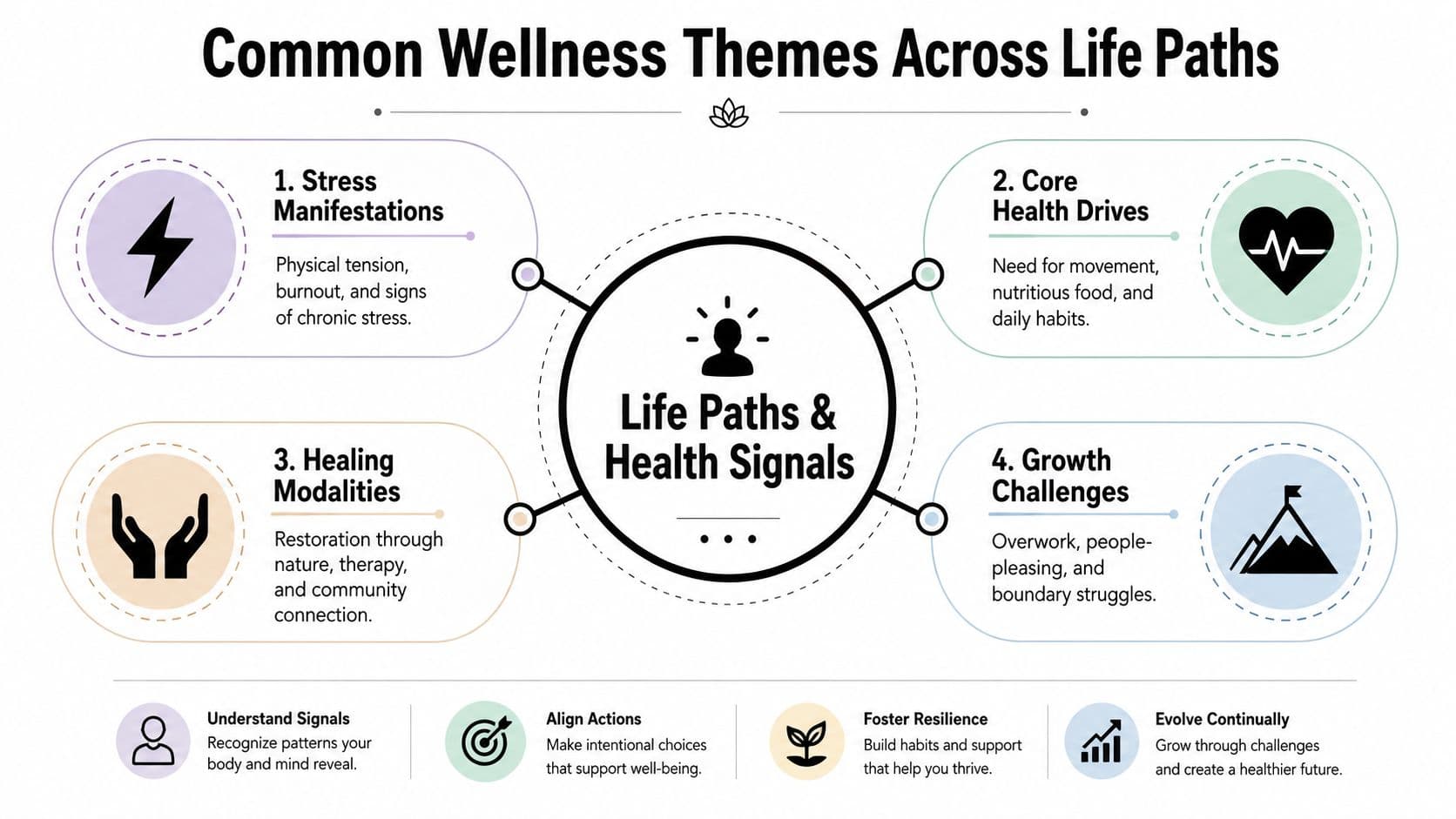
People often want numerology to name a body issue, but Dan Millman's system is better at revealing behavioral tendencies. That shift matters, because behavior affects wellness more directly than symbolism does. A person who overworks, ignores fatigue, or avoids boundaries may experience stress in the body, but the number itself is not the cause. The number becomes a mirror for habits.
Patterns people usually notice
Some life paths tend to be described in terms of drive, discipline, sensitivity, or restlessness in The Life You Were Born to Live. Those words matter because they often translate into everyday wellness behavior. Someone who resonates with a high-drive pattern may skip meals or push through exhaustion because momentum feels safer than slowing down. Someone with a more sensitive pattern may absorb other people's stress and then need solitude, nature, or quiet to reset.
The Life Purpose App can help surface those themes in one place, including the life-path text and the related gifts and challenges that Millman ties to health, money, sexuality, career, and relationships. Used carefully, that becomes a reflection prompt rather than a self-diagnosis.
What to pay attention to
Here are the kinds of questions people can ask when they read their life path through a wellness lens:
- Stress signals: Do I clench, rush, isolate, or keep saying yes when I'm already depleted?
- Core health drives: Do I need movement, structure, food rhythm, or more quiet than I'm giving myself?
- Healing preferences: Do I recover better with nature, therapy, community, or alone time?
- Growth edges: Do I overwork, ignore boundaries, or let perfectionism shape my routines?
That's where numerology and health becomes useful in practice. It doesn't name disease, but it can reveal the habits that make health feel harder than it needs to be.
Using Numerology for Behavioral Health Awareness
The strongest case for numerology in wellness is behavioral awareness. It gives people a way to notice patterns in their choices, routines, and stress responses, while health numeracy covers a different skill set, the ability to use numbers in health decisions, as explained in a standard overview of health numeracy. Those are not the same practice, yet they overlap in one useful way, both train attention toward patterns and make information easier to reflect on carefully.
Turning reflection into routine tracking
A life path works best as a daily check-in when the question shifts from “What does my number say about me?” to “What pattern showed up today?” That small change keeps the practice concrete. Someone who keeps missing meals may start to see that it happens on days filled with back-to-back obligations. Someone who feels tense at night may notice that the tension often follows unfinished decisions earlier in the day.
The Life Purpose App fits this kind of reflection because it gives a quick entry point to Dan Millman's framework without a long setup. It works as a low-friction prompt for journaling, self-observation, and habit awareness, not as a substitute for professional care. For readers who want a broader look at the mental-health side of this kind of reflection, the app's perspective adds a helpful companion to the wellness discussion.
Why the distinction matters
Modern wellness content often blends reflection with treatment, and that can create confusion when people are stressed and looking for fast answers. Numerology can help you notice the shape of your routines. It cannot tell you whether symptoms need medical attention.
Use the insight, not the label: if a number helps you notice a habit, it is doing useful work. If it starts replacing medical evaluation, it has gone too far.
That separation keeps numerology and health in the same conversation without mixing their roles.
Real-Life Scenarios for Applying Life Path Insights
A person with a strong action-oriented life path may recognize a familiar pattern, they stay busy until their body forces them to stop. In Dan Millman's language, the gift is initiative, but the challenge is often overcommitment. A small change, like scheduling a hard stop for dinner or setting a phone reminder to stretch, turns the insight into care.
Another person may see themselves in a more inward, emotionally responsive pattern. They feel other people's moods quickly, then spend the evening replaying conversations. For that person, wellness may improve when they protect quiet time, limit late-night messaging, and make room for recovery after intense social contact.
What these scenarios have in common
They don't prove anything medical. They do show how a symbolic system can point to practical habits. That's the core value of reading The Life You Were Born to Live through a wellness lens, and it's also why the Life Purpose App can be useful when someone wants a fast, private way to check their patterns.
A third example is the person who keeps starting new self-care plans and then abandoning them after a week. Their life path may not “cause” inconsistency, but it can reflect a tension between enthusiasm and follow-through. If they see that tendency clearly, they can work with it instead of feeling ashamed of it.
You can use that same approach with food, sleep, movement, or stress. The number doesn't give instructions. It gives language for noticing what you already do.
Setting Clear Boundaries Between Reflection and Medical Care
Numerology can support reflection when it stays in its lane. It stops being useful the moment it tries to act like medicine. That boundary matters because diagnosis, treatment, and clinical outcomes belong with trained health professionals, not symbolic systems. Research on numerology is best read as a discussion of personal meaning and self-report, not as evidence for preventing or treating illness.
What numerology can offer
It can give people a structure for noticing habits, timing, and recurring stress patterns. It can also create a simple vocabulary for boundaries, recovery, and self-care. For some readers, that makes journaling easier because they are not starting with a blank page, they are responding to a clear prompt.
What it cannot offer
It cannot confirm a condition. It cannot replace lab work, screening, therapy, medication, or medical judgment. It also cannot replace health numeracy, the practical skill of understanding medical information and using it well in real decisions.
For readers who want a plain explanation of where supportive guidance ends and clinical care begins, Acheloa Wellness, Inc. offers a useful comparison. It helps clarify the line between reflective conversations and treatment, which is a helpful frame for anyone using numerology as self-study rather than care.
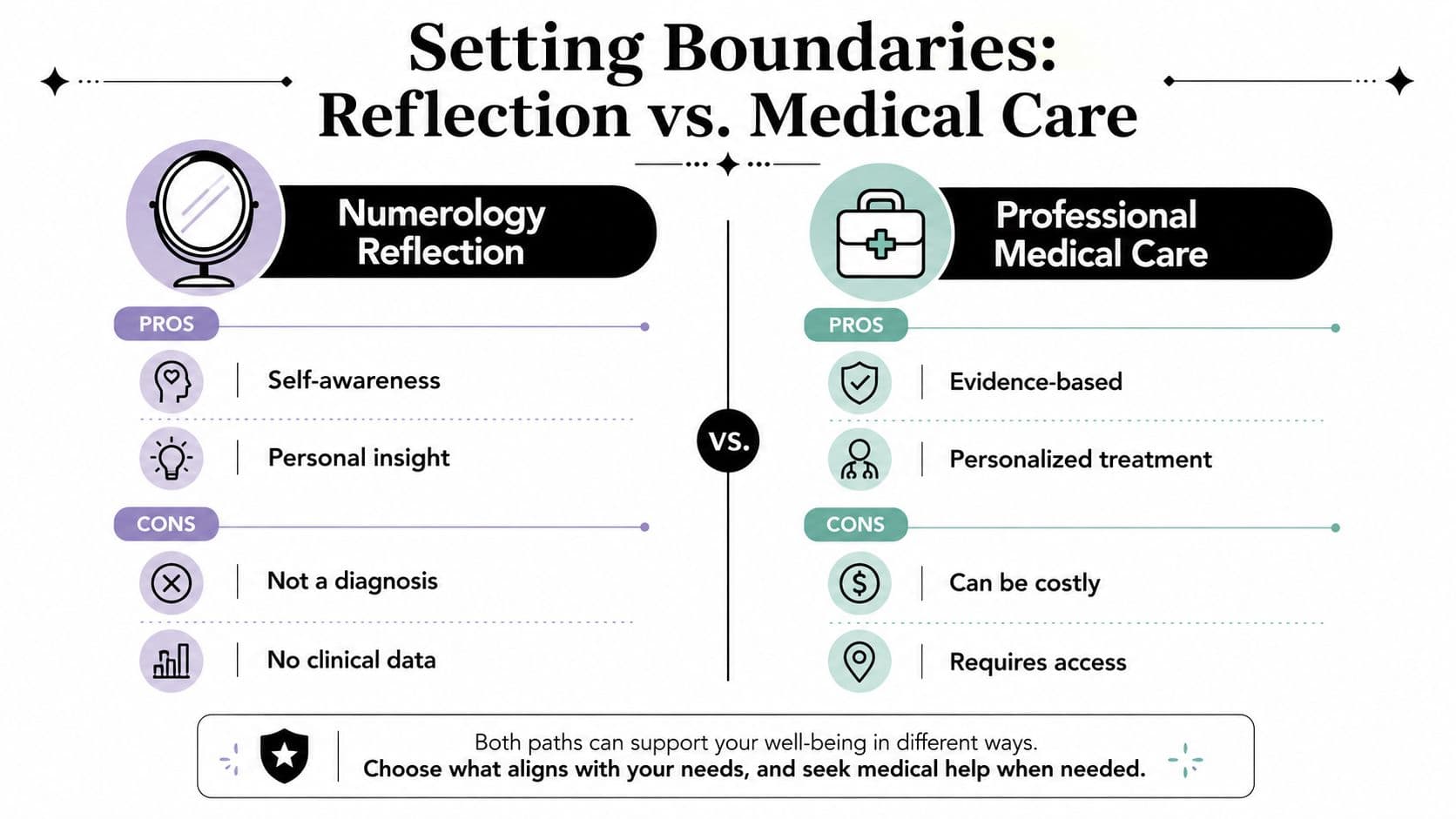
A sound approach is simple. Use numerology for reflection, and use medical care for health decisions that need testing, evidence, or treatment.
Building a Sustainable Wellness Routine with the Life Purpose App
A sustainable routine does not need to be elaborate. It needs repetition, honesty, and a clear reason to return to it. The Life Purpose App can support that process by making Dan Millman's The Life You Were Born to Live easier to revisit when you are checking patterns in stress, relationships, and self-care.
Monthly reflection gives the routine a steady shape. Re-read your life-path themes, then note what keeps showing up in your energy, sleep, boundaries, and mood. If you use the app's relationship tools as well, you can observe which people help keep you balanced and which ones make that balance harder to maintain.
A practical routine you can keep
- Monthly check-in: Review your life path and write down one habit that supported your health and one that made it harder.
- Theme journal: Choose one prompt from your life-path reading, then connect it to a real event from the past week. If you want a fuller explanation of the symbolic framework behind this practice, the Life Purpose Oracle can help you understand how the app organizes those themes.
- Support scan: Notice which relationships help you recover and which ones leave you drained.
A routine like this works best when it stays simple enough to repeat. If you want another layer of support, pair reflection with a broader stress tool. Lila's AI stress management guide is useful for readers who want a technology-based way to track pressure and recovery alongside symbolic self-study.
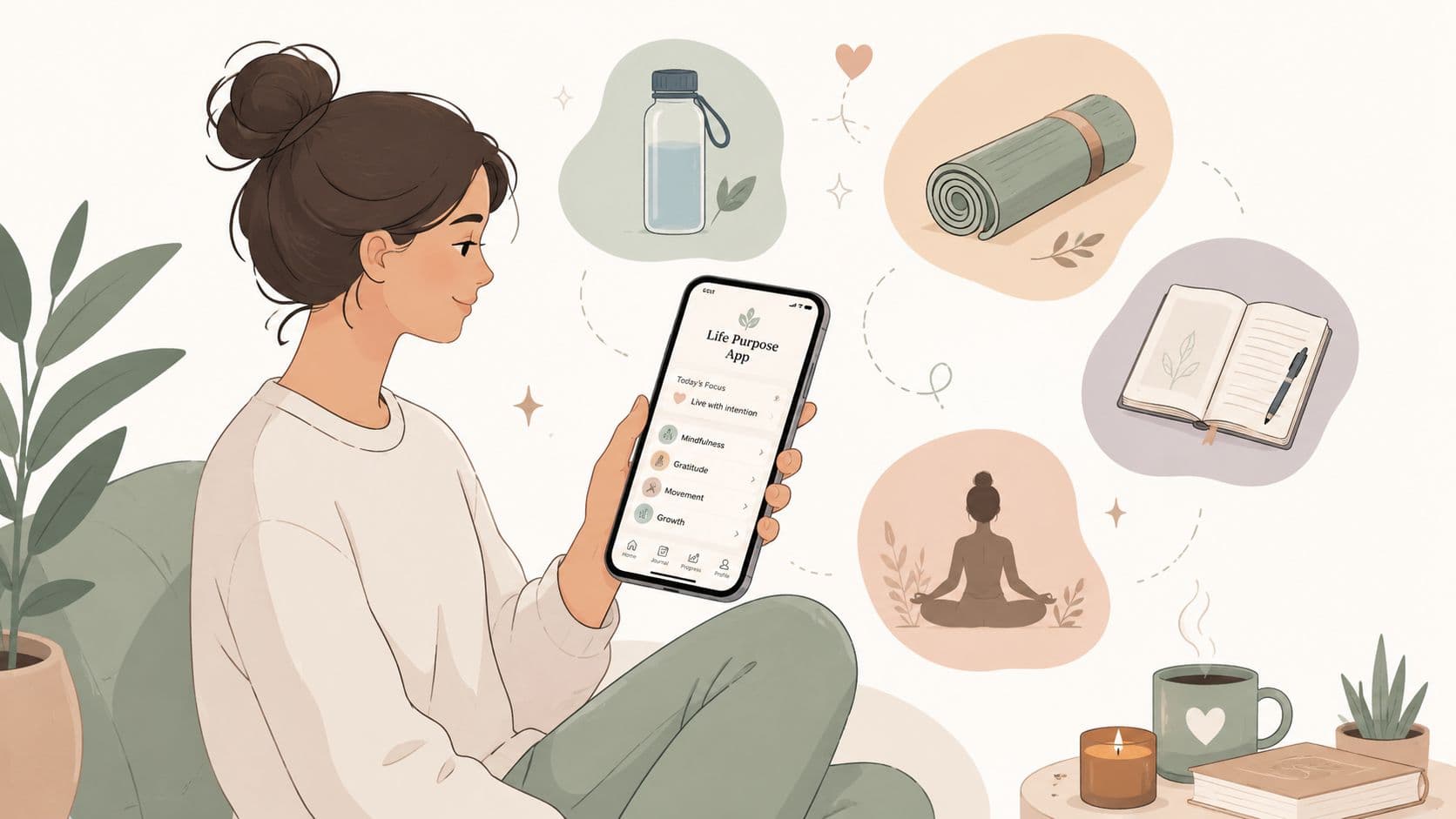
The goal is steady self-awareness, not perfection. When numerology stays beside evidence-based wellness instead of trying to replace it, the practice remains grounded, useful, and practical for everyday life.
Discover Your Life Purpose Today!
Unlock your true potential and find your life’s purpose.
