Discover what shapes parent child compatibility, from temperament and communication to life-path numerology insights from Dan Millman's system and the Life
August 31, 2026 (22d ago)
Parent Child Compatibility Explained
Discover what shapes parent child compatibility, from temperament and communication to life-path numerology insights from Dan Millman's system and the Life
← Back to blog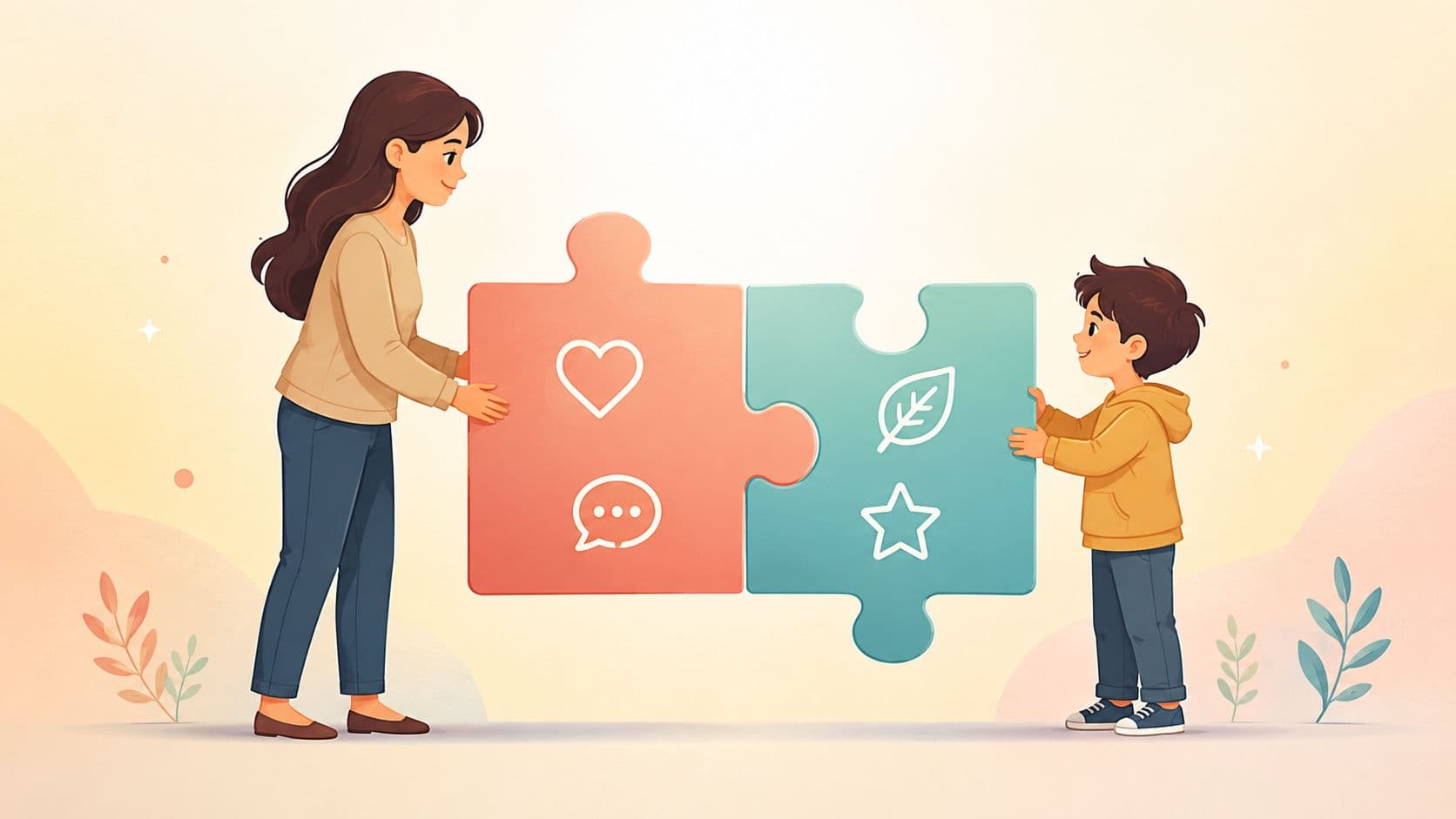
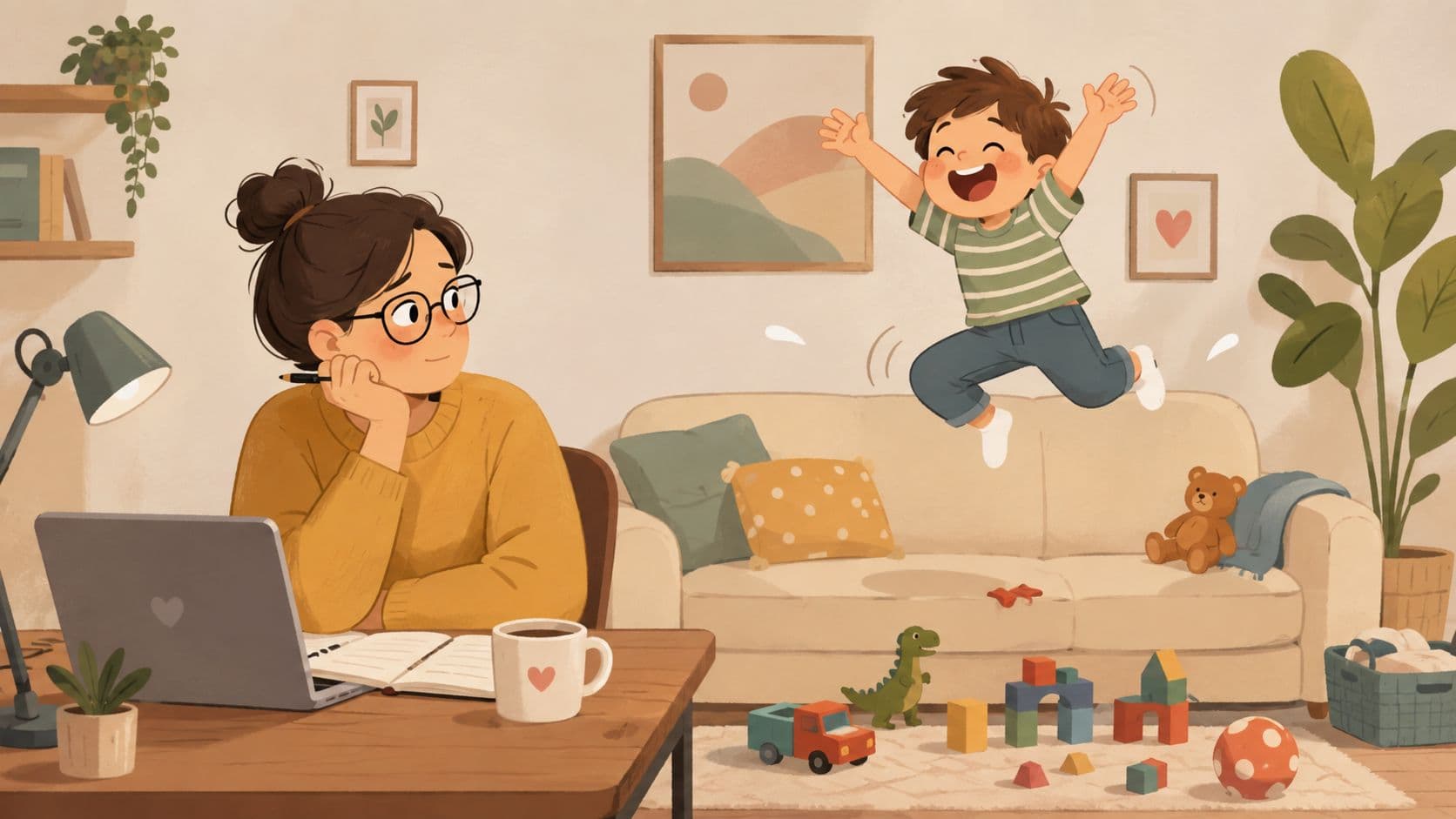
Some families look calm from the outside and still feel tense at the dinner table. A parent can be patient, organized, and loving, while a child is fast-moving, emotionally loud, and always two steps ahead of the rules. Both people care. They just keep missing each other's rhythm.
That mismatch is where parent child compatibility starts to matter. It isn't a verdict on whether a family is “good” or “bad,” it's a way of understanding how two people fit, strain, and adapt to each other over time. Developmental psychology calls that fit goodness-of-fit, and it asks a simple question, how well does a child's temperament line up with a parent's expectations and the demands of daily life?
A useful way to hold this topic is with two lenses at once. One is evidence-based family research, which shows that compatibility has real patterns in warmth, control, values, and behavior. The other is Dan Millman's The Life You Were Born to Live, which offers a spiritual map of life-path dynamics through birth-date numerology and is also reflected in the Life Purpose App. Used together, those lenses can turn blame into understanding.
What Parent Child Compatibility Really Means
A parent often notices the mismatch before anyone names it. The child keeps asking questions, interrupting, and changing plans on the fly, while the parent wants calm, order, and a predictable routine. Love is present in both directions, but the daily interaction feels like two people speaking slightly different dialects.
Compatibility is a fit, not a verdict
In developmental psychology, goodness-of-fit describes how well a child's temperament works with a parent's style and the environment around them. A child who needs movement and choice may thrive with a flexible parent, but feel boxed in with a highly rigid one. A quieter child may relax with steady structure, while a highly sensitive parent may find that same child easy to read and soothe.
That means friction is not proof that a relationship is broken. More often, it signals a mismatch in pace, communication, or emotional intensity. Families can learn to bridge that gap when they stop treating compatibility like fate and start treating it like a skill.
Practical rule: when a clash repeats, look for the pattern underneath it, not just the argument on the surface.
That idea matters spiritually too. In The Life You Were Born to Live, Dan Millman frames life paths as patterns of core gifts and challenges, which means people can share love while still carrying different inner lessons. The Life Purpose App applies that same logic in a practical format, so parents can compare life paths and get a clearer picture of where harmony comes naturally and where effort is required.
A child who feels “too much” for one parent may feel perfectly manageable for another adult. That doesn't mean one bond is real and the other is not. It means compatibility is relational, not absolute.
Key Factors That Shape Family Dynamics
A parent and child can feel close in one moment and out of step in the next. That does not mean the bond is weak. It usually means several forces are shaping the same relationship at once, like different instruments trying to follow one melody.
Temperament, communication, stage, and life path
Temperament is the first layer. Some children move through the day with intensity, curiosity, and quick reactions. Others ease in slowly, stay quiet, or react strongly to change. A parent's own temperament can soften that pattern or make it louder.
Communication style adds another layer. Some parents give direct instruction, while others prefer discussion and negotiation. A child who needs time to process may go silent when correction comes too quickly, while a child who wants clear answers may feel uneasy when adults stay vague.
Developmental stage shapes the picture as well. Toddlers push for autonomy in small ways, school-age children look for fairness and competence, and teenagers often test identity and boundaries as they sort out who they are. A parenting style that feels steady at one stage can feel harsh or confusing at another.
Life-path dynamics add a deeper lens, especially through Dan Millman's framework in The Life You Were Born to Live and the Life Purpose App. The point is not that numbers replace psychology. They offer another way to notice where two people naturally cooperate and where tension keeps returning.
Research supports the idea that compatibility changes by domain. A 2022 peer-reviewed study found warmth could line up between parent and child, while other measures showed similarity in brain-related and well-being patterns across generations (peer-reviewed findings on parent-child similarity). Another study found that warmth and control do not work the same way in mother-child and father-child relationships, which helps explain why one part of a bond can feel easy while another feels strained (research on domain-specific compatibility).
For a broader frame, relationship dynamics helps describe how roles, expectations, and reactions shape family life. The Life Purpose App gives a useful starting point for seeing those patterns more clearly.
A child may feel overwhelming to one parent and manageable to another adult. That difference does not cancel the bond. It shows that compatibility is shaped by the relationship itself, not by a fixed label.
How to Assess Your Compatibility
A good assessment starts with what you can observe. Not theory, not wishful thinking, not the story you tell yourself on a hard day. Look at how the relationship behaves in ordinary moments, because that's where the pattern shows up.
What to watch for in daily life
Ask yourself a few plain questions.
- How does my child respond to correction? Some children soften quickly, others argue, and some go quiet before the message even lands.
- Where do we naturally sync, and where do we collide? You may laugh easily together but struggle every night at homework time.
- Do I adapt my expectations to my child's temperament, or do I expect my child to adapt to mine? That answer often explains recurring stress.
- What does my child seem to need from me, more structure, more space, more reassurance, or more predictability?
Observation works best when you track patterns over time, not just during a bad week. A child who seems defiant in one setting may be overwhelmed, tired, or misunderstood. A parent who feels rejected may be using a style that doesn't match the child's current needs.
How to use life-path numbers as a second lens
Dan Millman's system, as presented in The Life You Were Born to Live, uses the full birth date to calculate a life-path number, and the basic method is simple enough to repeat by hand. The same approach is described in numerology guides that explain how to add the digits of the full birth date and reduce them to a single number, while some traditions preserve 11, 22, and 33 as special cases (numerology compatibility calculation).
In that framework, each person can be compared through a direct parent-child pairing. A guide from askAstrology describes 81 possible parent-child combinations, built from a 9 by 9 pairing grid of life-path numbers (parent-child numerology pairing grid). The Life Purpose App uses that comparison style to show core gifts, hidden challenges, and relational tendencies in a way that's meant for reflection, not judgment.
Use the numbers like a map, not a label. A map shows terrain. It doesn't tell you who's right.
For readers who want a practical entry point, the app's free relationship compatibility test can help turn vague tension into specific conversation points.
Signs of Harmony and Friction
You can often feel compatibility before you can explain it. Some relationships settle into a steady rhythm. Others keep tripping over the same sore spot, even when everyone is trying hard.
What harmony looks like at different ages
A harmonious toddler relationship often looks like quick repair after distress. The child reaches for comfort, accepts limits more easily, and returns to play. By school age, the same bond may show up as easy conversations, shared humor, and less resistance when routines are clear. With teens, harmony often looks quieter, more respectful, and less dramatic, not because nothing is happening, but because both people can recover faster.
Gallup's 2024 poll gives a useful reminder that relationship quality changes with age. 60% of U.S. parents and caretakers said they had an excellent relationship with their child, while only 1% said the relationship was poor or very poor. That sense of excellence was highest with toddlers, where 80% rated the relationship excellent for children ages 3 to 4, and lower with teenagers ages 13 to 19, where 48% did so (Gallup on parent-child relationships).
What friction sounds like in real life
Friction often repeats in the same place. A toddler has a power struggle over getting dressed. A school-age child argues about homework every afternoon. A teenager withdraws after every conversation about friends or grades. The topic changes, but the emotional loop stays the same.
You can also see friction in small nonverbal moments. Eye contact disappears. Repair takes too long. Ordinary requests feel loaded. One person feels criticized, the other feels ignored, and both think the other is being unfair.
The key question is whether the tension is temporary or structural. If the conflict centers on a developmental shift, like a teen pushing for independence, the solution may be more flexibility and patience. If the same pattern appears across different situations, the family may need a deeper change in expectations, communication, or role clarity.
Using Life Path Numerology to Understand Your Bond
A parent may keep asking why one child settles with routines while another seems to come alive only when there is room to move. Numerology gives that question a second layer of meaning. It works alongside psychology, drawing attention to patterns that feel familiar in the home but are hard to name.
A 4 life path often reaches for order, consistency, and follow-through. A 5 child may be drawn to movement, choice, and variety. Put them in the same household, and the daily routine can become a useful practice ground for patience on one side and flexibility on the other.
That pairing is not a problem to fix. It is a family-system fit issue, where each person's strengths become clearer under pressure. The parent offers structure and containment, while the child brings adaptability and helps loosen rigid habits.
Dan Millman's framework in The Life You Were Born to Live gives parents a way to read those differences without turning them into blame. The Life Purpose App uses that framework to compare life paths and highlight places where a bond may feel easy or tense. Its numerology guidance fits that same approach.
What to do with the insight
The most helpful move is to change the question. Ask, “What setting helps this child cooperate?” instead of “Why is my child so difficult?” Ask, “What strengths do they bring that I do not lead with?” instead of “Why don't they act like me?”
That shift changes the emotional temperature of the house. Friction starts to look less like disrespect and more like a mismatch in style. A child who resists control may be showing initiative. A child who needs reassurance may be showing sensitivity. Once the pattern has a name, the relationship feels less personal and more understandable.
Practical Strategies to Improve Harmony
The fastest way to reduce tension is not to force sameness. It's to build better translation. Families do better when they stop assuming the other person hears, processes, and recovers the same way they do.
Match your response to the friction point
When communication mismatches drive conflict, create a “translation conversation.” Say how you prefer feedback, how your child likes to hear corrections, and what tone makes both of you shut down. A verbal child may want immediate discussion. A reflective child may need a pause before answering.
When expectation gaps create strain, shrink the goal to something the child can succeed with today. A structured parent can offer two acceptable choices instead of one strict command. A highly autonomous child may cooperate more readily when the options still preserve dignity.
When emotional intensity overwhelms the room, lower the volume before you lower the standard. That might mean a short break, a quieter space, or fewer words. A reserved child often opens up later if they are not chased in the moment.
Repair matters more than perfection. A family that knows how to come back together after a rupture usually feels safer than one that never argues but never talks honestly.
The gentle-parenting perspective can also be useful here, especially if you want a practical bridge between empathy and boundaries. A clear example of that approach appears in parenting advice from Grow With Me, where the emphasis stays on calm structure without shaming the child.
You can also try an energy audit. Notice which interactions drain each person and which ones seem to restore them. A child may light up during movement and conversation but unravel during rushed transitions. A parent may stay calm during planning but feel overloaded by prolonged emotional processing. Once those patterns are visible, you can design the day around them instead of fighting them.
Common Misconceptions About Compatibility
One of the biggest myths is that compatibility is fixed at birth. Families don't work that way. A sibling can feel easy with a parent while another sibling feels impossible, even inside the same home, because the fit is relational, not mechanical.
Similarity is not the same as harmony
People often assume that shared traits automatically create peace. They don't. Two highly driven people can compete for control, and two sensitive people can amplify each other's stress. Similarity can create understanding, but it can also create friction when neither person naturally yields.
That's where goodness-of-fit is so useful. The model, long associated with Thomas and Chess, reframes the issue as a changing match between a child's temperament and a parent's expectations and responses. The child is not the problem. The fit is the thing to examine.
Friction also doesn't mean failure. Many parent-teen disagreements are part of normal separation and identity development, especially when the teen is testing who they are outside the family. In that sense, conflict can be a sign that development is moving, not stalling.
Research on parent-child similarity also supports a more nuanced view than “like equals love.” Studies have found real patterns in warmth, brain measures, and values, but they also show that compatibility shows up differently across domains, which means you can't judge the whole bond by one repeated argument alone (parent-child similarity research).
A healthier question is this, where do we complement each other, and where do we keep colliding? Once a family asks that, blame starts to loosen.
Building a Deeper Connection Over Time
Compatibility grows through repetition, not one dramatic breakthrough. A parent who keeps adjusting tone, timing, and expectations teaches the child that the relationship can hold change. That kind of trust is built in small moments, over years.
Quarterly check-ins can help. Ask what feels easy right now, what feels tense, and what each person needs more of. If you're using the life-path lens from The Life You Were Born to Live or the Life Purpose App, revisit it as your child grows, because a child's needs at seven won't look like the same child at fifteen.
Families also benefit from preserving the story of how they've changed. A memory book can capture not just milestones, but the tone of the relationship over time, which is why some families like resources such as preserve stories for family when they want to reflect on growth, not just events.
The goal is not perfection. It's attunement. The parent who learns to listen more carefully, and the child who learns to explain more clearly, can build a bond that feels sturdy without being rigid.
If you want a clearer map of your own family pattern, visit Life Purpose App. It can help you compare life paths, notice relational tendencies, and turn confusion into a more compassionate understanding of your parent-child dynamic.
Discover Your Life Purpose Today!
Unlock your true potential and find your life’s purpose.
