Discover how your internal lens shapes what you notice, how you respond, and the life you build. This article explains the science of perception, offers simple reframing exercises you can use today, and shows how deliberate shifts in thinking improve relationships, career outcomes, and resilience.

December 17, 2025 (10mo ago) — last updated September 4, 2026 (1mo ago)
Reframe Perception to Reshape Your Reality
Learn simple reframing exercises to shift perception, boost resilience, and improve career and relationship outcomes.
← Back to blog
Discover how your internal lens shapes what you notice, how you respond, and the life you build. This article explains the science of perception, offers simple reframing exercises you can use today, and shows how deliberate shifts in thinking improve relationships, career outcomes, and resilience.
Reframe Perception to Reshape Your Reality
Summary: Discover how perception shapes your reality and practical techniques to reshape your mindset, improve your career, and transform your life from the inside out.
Introduction
Discover how perception shapes what you notice, how you respond, and the life you build. This article outlines the science behind perception, gives simple reframing exercises you can use today, and shows how a deliberate shift in your internal lens improves relationships, career outcomes, and resilience.
The Power of Perception
Perception isn’t just what happens to you; it’s the meaning you assign to events. It’s the internal lens that decides whether an experience builds you up or wears you down. This mental framework shapes your daily choices and the life you craft.
It isn’t about what you see, but how you see it. That matters.
Your World Through a Different Lens

The world you live in isn’t fixed or purely objective. It’s filtered through beliefs, memories, and emotions. Every conversation, setback, and opportunity is colored by that internal filter long before you consciously decide how to act.
Think of it like sunglasses: some lenses make the world look bleak and intimidating; others add a warm hue that helps you spot the good even when things look gloomy. While you can’t always change the weather, you can choose which sunglasses you put on.
What shapes your internal filter
Your personal filter develops over time from:
- Past experiences: wins and losses that set expectations
- Core beliefs: the truths you hold about yourself and the world
- Emotional state: mood shifts that change how you interpret neutral events
- Personal values: what matters most to you, guiding attention and judgment
These processes run automatically, quietly directing your choices, relationships, and career.
“Choosing a more resourceful filter helps you face real challenges without pretending they don’t exist.”
Why this shift matters
Moving from passive interpretation to actively shaping perception is the first step to changing your life. When you treat perception as a tool, you can use it on purpose. Building mental resilience and self-awareness is the foundation for this work, and it’s where meaningful change begins.
The Science of How Your Mind Builds Reality
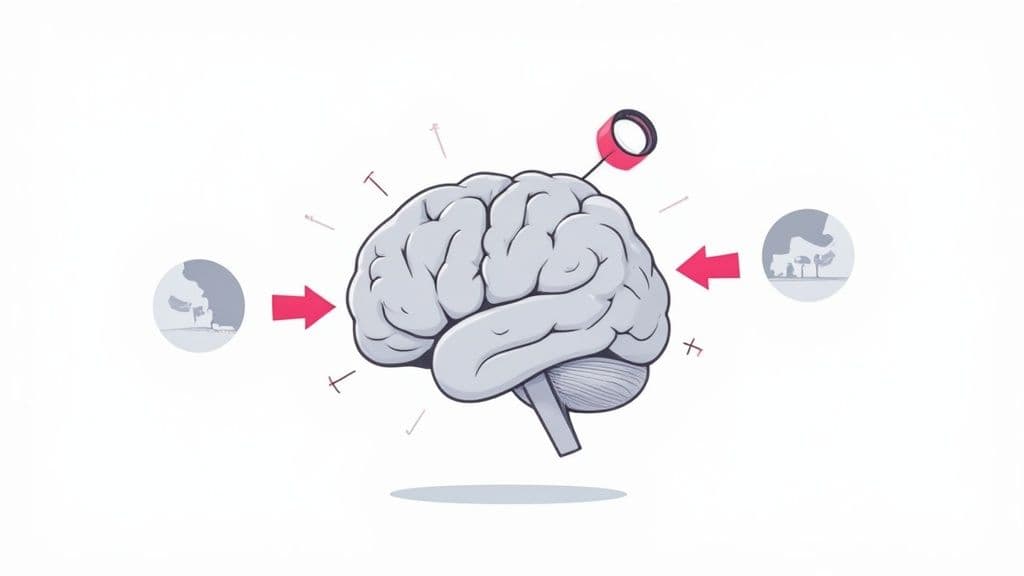
Two people can witness the same event and tell very different stories about it. The secret isn’t in what they saw but in how their brains processed it. Your brain isn’t a passive camera. It edits, filters, and assembles a version of reality for you.
This editing happens so fast that we mistake interpretation for objective truth. The brain negotiates raw sensory data with beliefs, memories, and expectations, relying on cognitive shortcuts called biases to manage the flood of information1.
A common shortcut is confirmation bias, where your brain seeks information that supports what you already believe. It’s like a bouncer at your mind’s door who only lets in familiar faces1.
Your brain is always changing
The good news is your brain’s filtering system isn’t fixed. Neuroplasticity means your brain changes with experience. Every new learning, memory, or repeated thought strengthens certain pathways, like forging a path through a forest. The first pass is hard, but repeated practice makes the path easier to follow2.
When you challenge a negative thought or reframe a situation, you’re not just thinking differently. You’re rewiring your brain and building more constructive neural routes2.
“Shifting perception isn’t a mental trick; it’s a biological process. You can build a brain wired for greater resilience, optimism, and clarity.”
The perception filter in daily life
This filter influences relationships, decisions, and even buying behavior. In a world overflowing with messages, our brains must be selective. Estimates suggest people encounter roughly 4,000 ad impressions a day, which increases the need for selective attention3.
Selective attention also shapes brand evaluation and perceived value, affecting how we make choices and whom we trust45.
The same filter shapes your personal life. You constantly choose what to focus on from an endless sea of information, and that choice crafts your reality.
Practical Exercises to Reframe Your World

Theory helps you understand; practice creates change. These exercises are simple ways to challenge automatic thought patterns and build a more empowering perspective over time.
Benefit finding
Benefit finding trains you to look for positives or lessons inside hard situations. It’s not pretending something bad didn’t happen; it’s widening your lens.
Example: You get harsh feedback at work. Instead of thinking, “My boss thinks I’m incompetent,” ask:
- What is one small benefit here? Maybe you can fix a blind spot
- What can I learn from this? Perhaps better communication or clearer expectations
- How did I handle this? Maybe you stayed calm and professional, showing resilience
This practice trains your brain to stop defaulting to negative interpretations.
Perspective shifting
Perspective shifting means stepping outside your own shoes to see how someone else might view a situation. This breaks you free from limited, biased viewpoints.
If you’re stuck on a creative project and your inner critic screams “failure,” try asking:
“How would someone I admire see this? What advice would they offer?”
That switch helps you detach from strong emotions and find a resourceful outlook. For more on growth mindset, see the article on growth mindset and overcoming limiting beliefs.
From automatic thought to conscious reframe
The real skill is catching automatic negative thoughts and replacing them with balanced, constructive ones. Practice makes this automatic.
| Common Situation | Automatic Thought | Conscious Reframe |
|---|---|---|
| Making a mistake on a project | “I’ve failed completely and everyone knows it.” | “This was a learning moment. I know what to do differently next time.” |
| A friend cancels plans last minute | “They don’t value our friendship.” | “Something important must have come up. I have some free time to recharge.” |
| Getting stuck in traffic | “This is ruining my day.” | “This is out of my control. I’ll use the time to listen to a podcast or breathe.” |
These reframes aren’t magic. They are mindful interventions that shift your default responses.
Transforming Career and Relationships
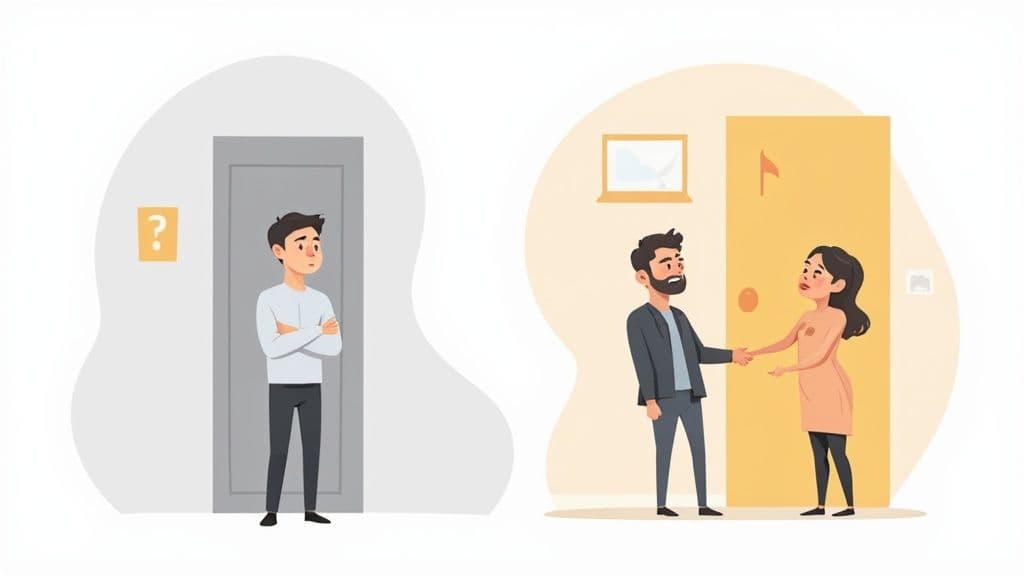
Perception’s impact is most visible at work and at home. How you interpret a tough conversation or a misunderstanding can change the direction of that relationship.
Reframing your professional life
At work, perception guides how you take feedback, handle dynamics, and see opportunities. If you treat feedback as a personal attack, you shut down learning. If you see it as helpful information, it becomes a map for growth.
Think of yourself as a brand: perception affects perceived value. Positive perception increases opportunities and influence, and people often pay more for brands they trust5.
Deepening personal connections
In close relationships, perception is the soil where trust and intimacy grow or fade. Conflict often starts with blame. Shifting from “You did this to me” to “This is what I experienced” changes blame into conversation.
Try these mental switches:
- From “You did this to me” to “This is what I experienced”
- From “They are wrong” to “We see this differently”
- From “I need to win” to “We need to solve this”
This shift invites collaboration and understanding. Emotional awareness supports this work and can be developed with targeted practice.
Finding a Life Path to Guide Perception
Sometimes the biggest shift comes from seeing the larger pattern of your life. Instead of treating events as random, you can view them as meaningful parts of a larger story. This perspective reduces reactivity and increases clarity.
Dan Millman’s The Life You Were Born to Live offers a practical framework for seeing recurring challenges as lessons rather than failures. The Life Purpose App turns that system into an easy tool: enter your birth date to get insights on core tendencies, relationship dynamics, and life cycles. Using a framework like this helps you place current events in context and respond with purpose.
Making a New Perception a Habit
A momentary insight is useful, but lasting change requires practice. To make new perceptual habits stick, use simple rituals you can repeat daily.
- Keep a reframe journal. Each evening write one challenge, your automatic thought, and a conscious reframe. See our reframe journal template to get started
- Celebrate small wins. Notice when you catch yourself and reframe. Acknowledge it to reinforce the habit
Research on habit formation suggests small, consistent actions typically lead to lasting change over weeks to months, with an average of about 66 days to form a new habit in one study7.
Over time, choosing a constructive lens compounds into stronger self-trust and confidence. Perception shapes value and trust, which then reinforce behaviors that support growth and well-being6.
“By choosing what to focus on, you’re not just changing thoughts in the moment. You’re building a more resilient and fulfilling life, one perception at a time.”
Frequently Asked Questions
Isn’t this just pretending bad things aren’t happening?
No. This work starts with honest acknowledgment of difficulty and then chooses a deliberate frame that helps you act effectively, not deny reality.
How long until I see real change?
You can notice small shifts in mood and reactions within weeks. Deeper changes, where a new mindset becomes default, usually take a few months of steady practice7.
Can an app like the Life Purpose App really change my perception?
Yes. Tools that increase self-awareness can help you spot patterns and move from “Why is this happening to me?” to “What is this trying to teach me?”
Quick Q&A — Practical Starter Steps
Q: How do I start reshaping my perception?
A: Begin with awareness. Track one automatic thought per day and reframe it using a reframe journal.
Q: Will this ignore my real problems?
A: No. You acknowledge problems fully, then choose a framing that helps you respond constructively.
Q: How do I keep the habit?
A: Keep it simple: daily reflection, celebrate small wins, and repeat the exercises until they become automatic.
Three Concise Q&A Summaries
Q: What is perception’s role in my daily life?
A: Perception filters what you notice and how you react. Shifting that filter changes relationships, decision-making, and emotional resilience.
Q: What quick tools can I use today?
A: Try benefit finding, perspective shifting, and a nightly reframe journal entry to build new neural pathways over time.
Q: How long before reframing becomes automatic?
A: Small improvements appear in weeks; consistent practice over months helps new thinking become the default7.
Concise Q&A (Top user questions)
Q: What’s the first step I can take right now?
A: Notice one automatic negative thought today and write a balanced reframe in a journal entry.
Q: Will changing perception help my career?
A: Yes. Seeing feedback as information rather than attack turns challenges into growth opportunities and increases influence at work5.
Q: How do I know if reframing is working?
A: Track mood and responses over weeks. If you react with more curiosity and less reactivity, your reframing practice is working.
1.
Explanation of confirmation bias and cognitive shortcuts. https://www.simplypsychology.org/confirmation-bias.html
2.
Overview of neuroplasticity and how repeated practice changes the brain. https://www.ncbi.nlm.nih.gov/pmc/articles/PMC3003975/
3.
Estimates of daily ad impressions and the cognitive load of selective attention. https://www.businessinsider.com/how-many-ads-people-see-day-2015-8
4.
How selective attention influences consumer perception and brand evaluation. https://clootrack.com/blog/consumer-perception/
5.
Research and analysis on brand perception, trust, and willingness to pay. https://www.holickycorporation.com/blog/the-impact-of-brand-perception-on-consumer-behavior/
6.
Perception’s role in decision-making, trust, and behavior. https://pmc.ncbi.nlm.nih.gov/articles/PMC10628707/
7.
Study on habit formation showing average time to form new habits. https://www.ncbi.nlm.nih.gov/pmc/articles/PMC3648682/
Discover your life path today
Enter your date of birth and see your life path, free.
Find your life path