Explore 10 inspiring quotes about self growth, grouped by resilience, change, and self-compassion, with practical ways to apply each one.

October 21, 2026 (28d ago)
Quotes About Self Growth: 10 Quotes to Live By
Explore 10 inspiring quotes about self growth, grouped by resilience, change, and self-compassion, with practical ways to apply each one.
← Back to blog
Explore 10 inspiring quotes about self growth, grouped by resilience, change, and self-compassion, with practical ways to apply each one.
A familiar pattern can make change feel harder than it needs to be. You know you want to speak up at work, make time for a creative project, or respond more calmly at home, but the distance between wanting to change and knowing what to do next can feel wide. A good quotation won't close that distance for you. It can, however, help you notice what matters and choose a first step.
People have used short reflections as practical guidance for a long time. Classical writers including Cicero and Ovid explored character, relationships, discipline, and personal change in works meant to guide their readers, long before today's self-help category took shape (a history of self-help literature). Quotes about self growth belong to that broader tradition, but they're most useful when read as prompts rather than promises.
The quotations below invite different kinds of growth: resilience after setbacks, movement through change, and a kinder relationship with your imperfections. Some attributions are uncertain or commonly simplified, so those limits matter too. For each quote, consider both what it means and what you could do with it in a real situation.
1. “The unexamined life is not worth living.”, Socrates
This line is known from Plato's Apology, where Socrates defends the value of questioning how people live. Its force isn't that everyone must analyze every decision. It's that a life guided entirely by habit, expectation, or impulse can leave little room to decide whether those patterns still fit.
Consider a manager who leaves a tense meeting feeling dissatisfied. Instead of deciding that a colleague was difficult, the manager might ask what they wanted from the conversation, what they were afraid to say, and why they chose the response they did. Reflection doesn't guarantee a better outcome, but it gives the person more information to work with next time.
Replace judgment with curiosity
Self-examination can become harsh if every review turns into a search for flaws. Try asking, “What was I responding to?” instead of “What's wrong with me?” The first question can reveal a need, assumption, or pressure. The second can turn a useful observation into self-criticism.
A short evening journal can help make the practice concrete:
- Recall one moment: What did you do today that felt important?
- Notice your reason: What mattered to you at the time?
- Choose a question: What belief or assumption might be worth examining?
Therapy and coaching often use guided questions to help people reflect, though a journal isn't a substitute for professional support when you need it. Give yourself a few quiet minutes to look at one decision with honesty and patience. The aim isn't to judge your whole life in a sitting. It's to understand one choice well enough to make the next one more deliberately.
2. “Become who you are.”, Pindar
Growth doesn't always mean adding a new skill or becoming more impressive. Sometimes it means noticing which parts of your life feel like yours and which parts are organized around other people's expectations. The line is often rendered as an invitation to become what you are by learning what that is.
A person who chose a career mainly to satisfy family expectations might discover that the daily work drains them, while a less prestigious role better fits their strengths and temperament. An artist, meanwhile, may need to stop imitating a mentor before developing a recognizable voice. In both cases, growth involves practice, but it also involves discernment.
Look for patterns, not a perfect answer
Try listing the activities that absorb your attention, the responsibilities you take on willingly, and the situations that leave you feeling out of step with yourself. Don't treat one answer as a permanent identity. A career changer can value stability and creativity at the same time; the task is to explore how those values might coexist in a real life.
Notice when you say yes from obligation. Before you agree to another commitment, ask what you'd choose if you weren't trying to avoid disappointing anyone. That question won't settle every decision, but it can make your own preference visible.
For a deeper reflection on authenticity, revisit the question over time, too. Your priorities can shift as your circumstances and responsibilities change. Becoming yourself isn't a one-time discovery; it's the continuing work of acting more truthfully on what you learn.
3. “The journey of a thousand miles begins with one step.”, Lao Tzu
A large goal can make the first action seem too small to matter. This saying, traditionally attributed to Lao Tzu and found in varying translations of the Tao Te Ching, points in the opposite direction: the beginning matters because the journey can't happen without it.
Someone who wants to run might begin with a short walk rather than demanding an ambitious training plan on day one. A language learner could practice a few words during a daily commute. Those actions don't complete the larger goal. They make it easier to begin again, and they help turn an abstract wish into something scheduled and observable.
Make the first step small enough to do on an ordinary day.
The useful question isn't “How do I finish?” It's “What can I do today that makes continuing more likely?” Choose an action that doesn't depend on feeling unusually inspired. If you want to write, open the document and draft a sentence. If you want to reconnect with someone, write a thoughtful message without demanding that the relationship be repaired immediately.
Make starting easier
Put the action on your calendar at a specific time, and decide in advance what counts as a beginning. You might track whether you showed up rather than judging every session by how much you accomplished. A missed day doesn't erase the work you've already done; it gives you a chance to restart without turning a pause into a verdict about your character.

Small actions are not a guarantee of success. They're a way to meet a distant aim in the present, where you can do something about it.
4. “The impediment to action advances action. What stands in the way becomes the way.”, Marcus Aurelius
Marcus Aurelius's Meditations presents an approach to difficulty that asks people to examine how they respond to obstacles. It doesn't mean that every hardship is secretly beneficial, or that people should ignore pain, unfairness, or limits. It suggests that a blocked plan may still offer information about what to change next.
An entrepreneur whose product launch falls flat might use customer conversations to understand what was unclear, rather than assuming the idea is worthless. An athlete recovering from an injury might work with qualified professionals on strength or technique while accepting that recovery has limits. In neither example does the setback become pleasant. It becomes something the person can respond to.
Separate the obstacle from your next choice
When a plan stalls, write down what happened and divide it into what you can influence and what you can't. You may not control another person's decision or an unexpected delay. You may be able to ask a clearer question, seek help, adjust the timeline, or choose a different route.
Ask yourself, “What can this teach me, and what can I do around it?” The question is useful only if it leaves room for honest answers. Sometimes the lesson is that you need more preparation. Sometimes it's that the goal no longer fits, or that you need support rather than more pressure.

For practical ways to respond when life feels difficult, read guidance on overcoming life challenges. Don't confuse resilience with pretending nothing hurts. A setback can call for rest, boundaries, or a changed plan, as much as it can call for persistence.
5. “You must do the thing you think you cannot do.”, Eleanor Roosevelt
Eleanor Roosevelt included this advice in You Learn by Living. It challenges the belief that fear is proof of inability. Sometimes “I can't” describes a real limit; sometimes it's a prediction made before you've tried, practiced, or received support.
A person who dreads public speaking could begin by asking a question in a small meeting, then practice a short presentation with a trusted friend. Someone who has long thought of themselves as "not academic" could speak with an adviser about returning to school and learn what the workload involves. Neither person needs to leap immediately into the most intimidating version of the challenge.
Test the belief in manageable steps
Write down one fear-driven belief and design a low-risk experiment that gives you new information. If the belief is “I can't speak in front of people,” your first experiment might be reading a short paragraph to a supportive group. Afterward, note what was difficult, what went better than expected, and what support would make the next attempt easier.
The point isn't to force yourself into situations that are unsafe or beyond your capacity. Growth can include asking for accommodations, finding a supportive setting, or deciding that a particular goal isn't yours. Celebrate the attempt, not only the outcome. You may feel nervous and still have taken a meaningful step.
6. “Between stimulus and response there is a space. In that space is our power to choose our response.”, Viktor Frankl, as popularized by Stephen Covey
This wording is widely attributed to Viktor Frankl, though the familiar phrasing is often traced to Stephen Covey's The 7 Habits of Highly Effective People. The central idea is practical even when attribution is stated carefully: a pause can help you notice what you're feeling before you decide what to do.
A parent who hears a child shout might feel anger rise immediately. A brief breath can create room to check what the child needs and choose a response that sets a boundary without escalating the moment. In a heated work meeting, a team might agree to pause before sending a sharp reply, then return to the issue when people can discuss it more clearly.
Give the pause a physical cue
Slow breathing can act as a signal to wait. Name the feeling you notice, such as frustration, embarrassment, or fear. Naming it doesn't make it disappear, and it doesn't mean your first reaction is wrong. It helps distinguish the feeling from the action you choose.
After a difficult exchange, review the moment without turning it into a character judgment. Where did you notice the trigger? What response did you choose? What might help you pause next time? You won't always catch the moment in time, especially when you're tired or under pressure. The skill grows through practice, not perfect performance.
7. “Until one is committed, there is hesitancy, the chance to draw back...”, W. H. Murray
Scottish mountaineer and writer W. H. Murray wrote this passage in The Scottish Himalayan Expedition. It's often misattributed to Goethe, but Murray is the source identified for the passage. Its point isn't that every promise should be kept regardless of changing circumstances. It's that a clear decision can replace endless waiting for certainty.
A writer who chooses a publication date has a reason to start drafting and a way to organize the work. Someone who enrolls in a certification course may meet classmates, instructors, or mentors who help them stay engaged. Commitment can make opportunities easier to notice because you've started acting toward a specific aim.
A commitment should guide your effort, not punish you for learning.
Write down what you're committing to, what the next action is, and when you'll take it. Tell a trusted person if accountability would help, but don't confuse public pressure with genuine readiness. Add a review point so you can ask whether the goal still matches your priorities and resources.
Hesitation sometimes signals fear, and sometimes it points to a real concern worth examining. You can commit to an experiment rather than a permanent life choice: take a class, draft a proposal, or have a conversation. The value lies in moving from vague intention to a decision you can evaluate.
8. “We are what we repeatedly do. Excellence, then, is not an act, but a habit.”, Aristotle, popularized by Will Durant
This familiar sentence is widely attributed to Aristotle, but it's better understood as a paraphrase of ideas about virtue and habit in his Nicomachean Ethics, reworded by historian Will Durant in The Story of Philosophy. The wording is memorable, but its practical meaning is less glamorous: repeated actions shape what becomes familiar.
A writer who waits for inspiration may produce work only when conditions feel perfect. A writer who sets aside regular time can practice even when a session is uneven. Athletes likewise develop skill through deliberate practice over time, not one impressive performance. A routine doesn't promise excellence, but it gives effort somewhere to go.
Build a routine you can return to
Choose one small behavior that reflects the person you want to become. Attach it to something already in your day, such as writing after morning coffee or stretching after you change out of work clothes. If the routine feels too hard to repeat, reduce it until it fits your actual life.
Habit timelines vary, so don't treat a fixed deadline as a test of character. One study followed people repeating a chosen health behavior in a consistent context and found that the average time to maximum automaticity was 66 days, while individual results ranged from 18 to 254 days (research on how habits form). That finding describes variation, not a required schedule for everyone.
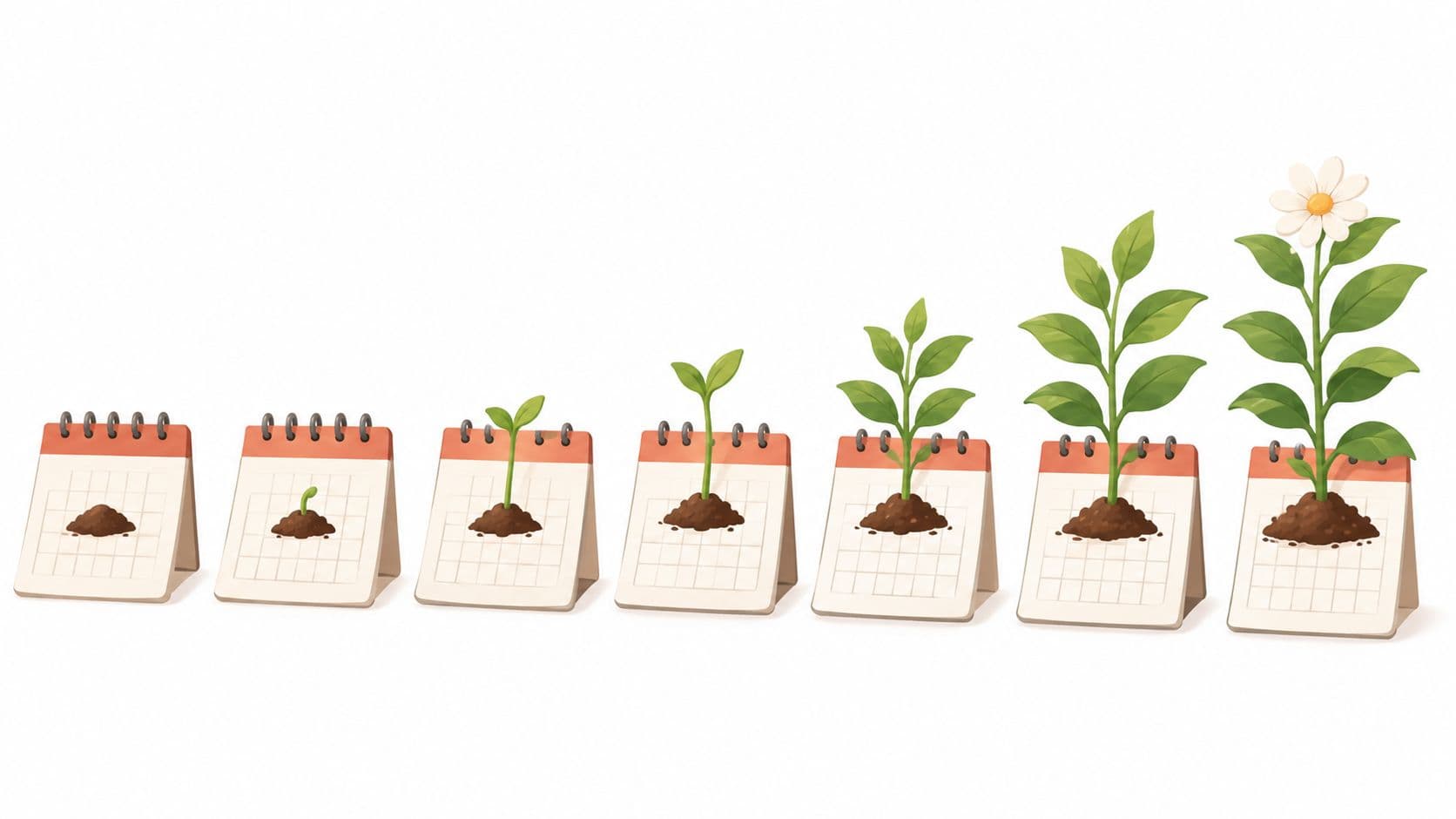
Review your routine regularly. If you keep missing it, consider whether the timing, setting, or size of the action needs to change. Adjusting a habit is part of learning how to sustain it, not evidence that you lack discipline.
9. “The privilege of a lifetime is to become who you truly are.”, Carl Jung
This quotation is widely attributed to Carl Jung, but its exact original source is difficult to verify. It's safest to treat it as a popular paraphrase of ideas associated with his work, including individuation, a lifelong process of bringing different parts of the self into greater awareness and integration.
Someone who has built a life around family expectations may begin to ask which values they want to carry forward and which roles no longer fit. In therapy, a person might explore traits they've tried to hide, not to act on every impulse but to understand what those traits reveal. Self-knowledge can make a person more honest; it doesn't remove the need to make careful choices.
Make room for more than one part of yourself
A reflection journal can help you notice recurring themes in your choices, dreams, or relationships. When you find yourself judging someone else, pause and ask whether the trait you dislike connects to something you struggle to accept in yourself. Treat the answer as a possibility to explore, not a diagnosis.
Inner reflection matters most when it connects to the life you live. That could mean setting a boundary, reconsidering a role, or having a direct conversation. You don't have to remake your life all at once. A small external change can be a way to test what you've learned about yourself.
10. “Know thyself.”, inscription at the Temple of Apollo, Delphi
The maxim associated with the Temple of Apollo at Delphi asks people to understand themselves before acting as if they already know what they need. That includes noticing strengths and recurring difficulties, but also recognizing that self-knowledge develops through experience. A list of traits can be a starting point, not the final word on who you are.
For one practical exercise, write down values that matter to you, situations where you feel capable, and patterns that keep causing difficulty. Ask two trusted people what they see as your strengths and blind spots. Listen for differences between their observations and your own, without assuming either perspective tells the whole story.
Use structured reflection carefully
Readers interested in numerology or life paths can explore Dan Millman's The Life You Were Born to Live and the Life Purpose App, which offers a digital way to engage with the book's life-path framework. Treat that material as a tool for reflection, not as a substitute for your own judgment or a fixed verdict about your future.
If a framework gives you useful questions about your tendencies or relationships, consider how those ideas fit your lived experience. Keep what helps you reflect with clarity, and leave room for your choices to change as you learn.
Top 10 Self-Growth Quotes Compared
| Quote | Core Growth Approach | 🔄 Complexity & Resources | 📊 Expected Outcome | ⭐ Ideal Use & Key Advantage |
|---|---|---|---|---|
| “The unexamined life is not worth living.”, Socrates | Self-reflection and questioning assumptions | 🔄 Low; brief journaling or regular reflection | Greater self-awareness and more considered decisions | 💡 Useful for personal reviews; balance reflection with self-compassion |
| “Become who you are.”, Pindar | Discover and express your authentic nature | 🔄 Moderate; ongoing reflection on values and strengths | More authentic, values-aligned choices | ⭐ Helpful when comparison or outside expectations shape decisions |
| “The journey of a thousand miles begins with one step.”, Lao Tzu | Start with small, manageable actions | ⚡ Low; one specific first step | Makes large goals feel more achievable | ⭐ Useful for overcoming procrastination; pair with a plan to sustain progress |
| “The impediment to action advances action. What stands in the way becomes the way.”, Marcus Aurelius | Reframe obstacles as opportunities to adapt | 🔄 Moderate; deliberate perspective shifts and problem-solving | Greater resilience and adaptive thinking | 💡 Useful during setbacks; avoid minimizing serious hardship or injustice |
| “You must do the thing you think you cannot do.”, Eleanor Roosevelt | Test limiting beliefs through action | 🔄 Moderate; gradual, supported challenges | Builds confidence through experience | ⭐ Useful for facing manageable fears; assess risks and support needs |
| “Between stimulus and response there is a space. In that space is our power to choose our response.”, Viktor Frankl, as popularized by Stephen Covey | Pause and choose a response | ⚡ Low; breathing and emotion awareness | Better self-regulation and communication | ⭐ Useful in conflict or stress; the attribution should be cited carefully |
| “Until one is committed, there is hesitancy, the chance to draw back...”, W. H. Murray | Make a clear commitment and act | 🔄 Moderate; specific goal, deadline, and accountability | Less indecision and greater follow-through | 💡 Useful for starting a project; schedule a review before recommitting |
| “We are what we repeatedly do. Excellence, then, is not an act, but a habit.”, Aristotle, popularized by Will Durant | Build character through repeated habits | 🔄 Moderate; consistent routines and tracking | A clearer foundation for growth and decisions | ⭐ Useful for long-term practice; choose repetitions intentionally |
| “The privilege of a lifetime is to become who you truly are.”, commonly attributed to Carl Jung | Integrate different parts of the self | 🔄 High; sustained reflection or therapeutic work | Deeper self-understanding and authenticity | 💡 Suits long-term inner exploration; the quote's exact source is uncertain |
| “Know thyself.”, Inscription at the Temple of Apollo, Delphi | Identify strengths, values, and recurring patterns | 🔄 Low to moderate; reflection, feedback, or structured tools | A clearer foundation for growth and decisions | ⭐ Useful as a starting point for self-discovery; pair insight with action and feedback |
Let One Quote Become Your Next Small Step
A quote can feel powerful when it puts words to something you've been carrying. But recognition is only the beginning. If you want an idea to shape your life, connect it to a choice you can make, a conversation you can have, or a practice you can repeat. That's a more grounded way to use inspiration than expecting a few memorable words to do the work for you.
Choose the quotation that speaks to the challenge in front of you now. If you're stuck in self-doubt, Roosevelt's words might prompt you to test one small assumption. If you're overwhelmed by a distant goal, Lao Tzu's saying can bring your attention back to a first step. If you're judging yourself for a setback, Marcus Aurelius's reflection might help you separate what happened from what you can do next.
Make the action small enough to fit your real circumstances. Write it down, decide when you'll try it, and think about what support you may need. Afterward, reflect on what you learned, not only whether the result matched your hopes. Maybe the action was useful. Maybe it revealed that you need a different approach, more time, or someone's help. Those are all meaningful things to discover.
Growth isn't a straight line, and self-compassion isn't an excuse to avoid change. It's a way to keep learning without treating every imperfect attempt as proof that you can't improve. If you miss a practice or change direction, ask what the experience is telling you. Then choose what comes next with the information you have now.
Pick one quote before you leave this page. Choose one exercise that fits your present challenge, and schedule it within the next 48 hours. Let the words remind you of the direction you want to move in, while your next small action gives that direction a place to begin.
The Life Purpose App offers digital access to life-path material based on Dan Millman's The Life You Were Born to Live, with reflections on personal tendencies, relationships, and life cycles. If you're curious about using a structured framework alongside these self-growth prompts, explore Life Purpose App.
Discover your life path today
Enter your date of birth and see your life path, free.
Find your life path