Enhance your relationships with Dan Millman's Life Purpose system. Explore life paths, cycles, and compatibility for deeper connections.
July 15, 2026 (1mo ago)
Improve Relationships: Life Purpose Insights
Enhance your relationships with Dan Millman's Life Purpose system. Explore life paths, cycles, and compatibility for deeper connections.
← Back to blog
You may be in a relationship that looks fine from the outside, yet something still feels hard to name. You care about each other. You may even communicate reasonably well. But the same tensions keep repeating, and the usual advice about boundaries, conflict repair, or love languages doesn't quite reach the deeper layer.
That confusion is common in relationships. Sometimes the true question isn't “How do we communicate better?” but “What is this relationship trying to teach us?” When people are spiritually curious or purpose-oriented, that question matters even more.
A useful missing piece is purpose-support. Research highlighted by the University of Pittsburgh notes that helping partners achieve their life goals and understanding their motivations is a key predictor of strong relationships, yet that deeper alignment is often left out of mainstream compatibility advice in favor of surface-level traits and styles in this expert relationship advice overview. If you also want a grounded psychological lens on attachment and connection, Therapsy's article on love is a helpful companion read.
Dan Millman's The Life You Were Born to Live offers a different framework. Instead of treating compatibility like a simple yes-or-no verdict, it looks at the energetic patterns each person brings into relationships. The Life Purpose App translates that framework into something practical, so you can explore it without getting lost in abstractions.
Beyond Love Languages Understanding Your Relationships
The problem with a lot of relationship advice isn't that it's wrong. It's that it stops too soon. It tells you how to speak more gently, listen more carefully, or argue more cleanly. Those things matter. But they don't always explain why one relationship feels calm and anchoring while another feels catalytic, intense, or strangely fated.
Dan Millman's The Life You Were Born to Live approaches relationships from a deeper angle. It asks what each person is here to learn, and how that life purpose shapes attraction, friction, timing, and growth. The Life Purpose App brings that same lens into daily use by helping people examine patterns instead of reacting only to symptoms.
Why surface advice can leave you stuck
Two people can both be kind, thoughtful, and committed, yet still feel like they keep missing each other. One may crave movement and experimentation. The other may need steadiness and clarity before opening up. If they only use generic communication tips, they may improve their conversations without understanding the underlying pattern driving those conversations.
That's where a spiritual framework can help. Not because it replaces practical skills, but because it gives those skills a target.
Relationships often become easier to work with when you stop asking who is wrong and start asking what each person is built to learn.
A more useful question
In Millman's system, the deeper question is not “Are we compatible enough?” It's “What energies are meeting here, and what do they ask of us?” That shift can soften blame. It can also make confusing dynamics feel less random.
For many people, this is a relief. It gives language to experiences they've felt for years but couldn't explain. A partnership may be loving and still ask for courage. It may be stable and still feel emotionally underfed. It may be challenging and still have real purpose.
When you see relationships this way, growth becomes less performative and more honest. You stop trying to act like a textbook couple. You start learning the specific blueprint of your bond.
The Foundation Your Unique Life Path Number
Before you can understand a relationship, you need to understand the two people inside it. In Dan Millman's The Life You Were Born to Live, each person's birth date corresponds to one of 45 unique life paths. That life path isn't a personality gimmick. It's closer to a spiritual blueprint that points to recurring gifts, lessons, habits, and challenges. The Life Purpose App uses the same system so readers can explore it in a practical format.
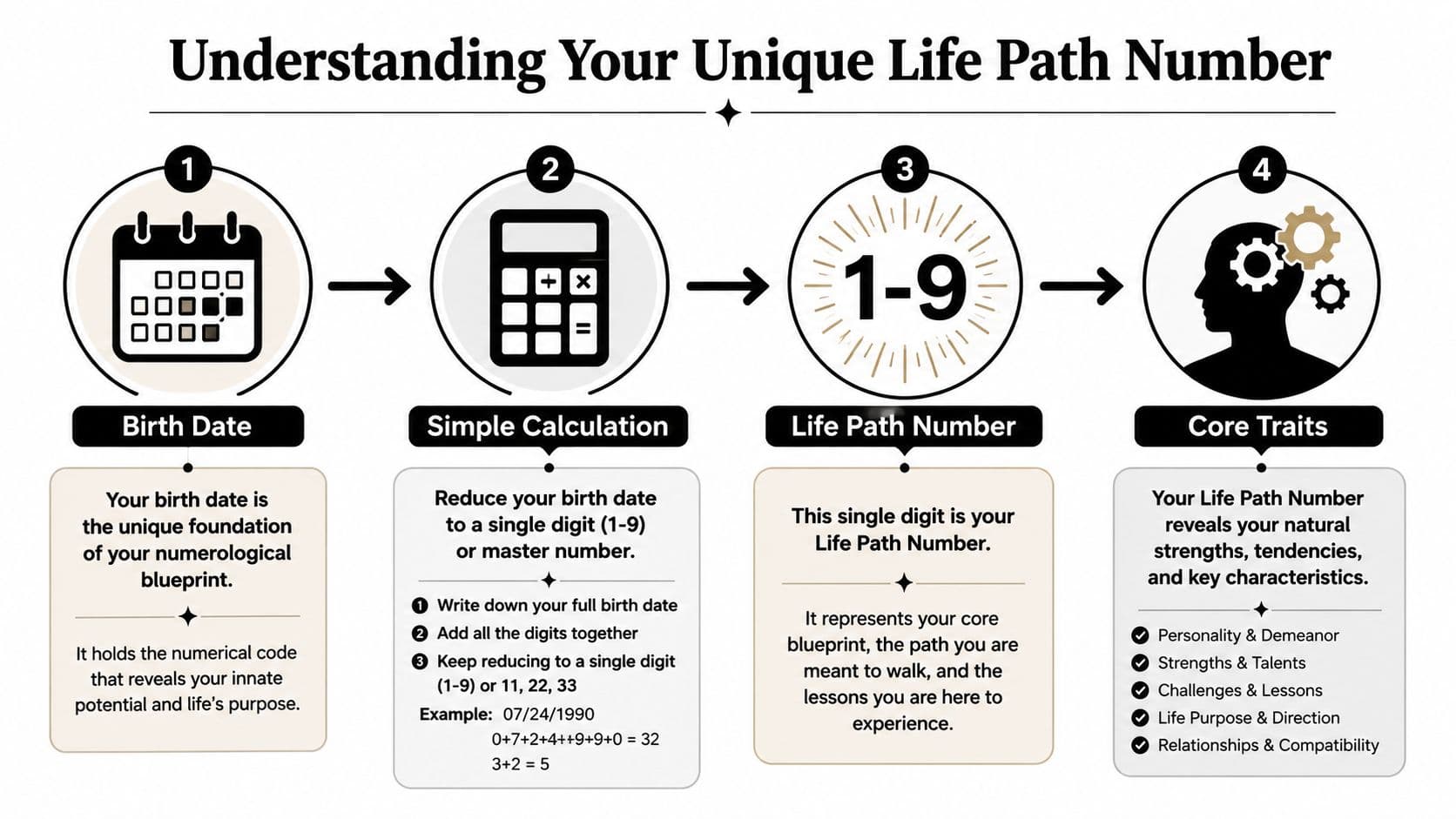
If you're brand new to this framework, the simplest starting place is the explanation of what your life number means.
Think of it as your energetic signature
A life path describes the themes that tend to follow you through work, intimacy, money, health, and self-expression. Some people naturally lead. Some protect. Some analyze. Some feel driven to create, teach, or serve. Each pattern carries strengths and shadow tendencies.
Readers can sometimes get confused. They assume a life path number should describe every detail about them. It won't. It describes core developmental themes, not your entire identity.
A useful analogy is spiritual DNA. Your DNA doesn't dictate every choice you'll make, but it does shape tendencies and patterns. Your life path works in a similar way.
Why this differs from generic numerology
Millman's method is specific to The Life You Were Born to Live. It isn't a grab bag of random traits. It's a structured system built around the 45 life paths and the lessons attached to them. That precision matters, especially in relationships, because broad labels often create more confusion than clarity.
A quick example helps. If someone's path emphasizes order, discipline, and responsibility, they may show love by creating structure. A more spontaneous partner might misread that as rigidity. But once you understand the life path pattern, the behavior makes more sense. You can respond to the person instead of just reacting to the irritation.
For readers who like comparing systems and personality descriptions, this guide for Life Path 4 personalities offers another accessible way to think about structure-oriented energy.
What your life path can reveal in relationships
Here are the kinds of questions a life path can help you answer:
- How you seek safety in relationships
- What kind of growth challenges you most
- Which gifts you naturally bring to a partnership
- What others may misread about you
- Where you repeat old patterns under stress
Practical rule: Don't use a life path as a label for yourself or your partner. Use it as a lens for better observation.
Once you know each person's life path, relationships stop feeling like a mystery made of moods. You begin to see design, tension, and purpose.
The Hidden Purpose How Composite Numbers Define a Relationship
A relationship is more than two individuals standing side by side. It creates a third pattern, a shared field with its own lessons, mood, and momentum. In Dan Millman's The Life You Were Born to Live, that pattern is described through the composite number. The Life Purpose App uses the same principle to help people study relationship dynamics in a structured way.
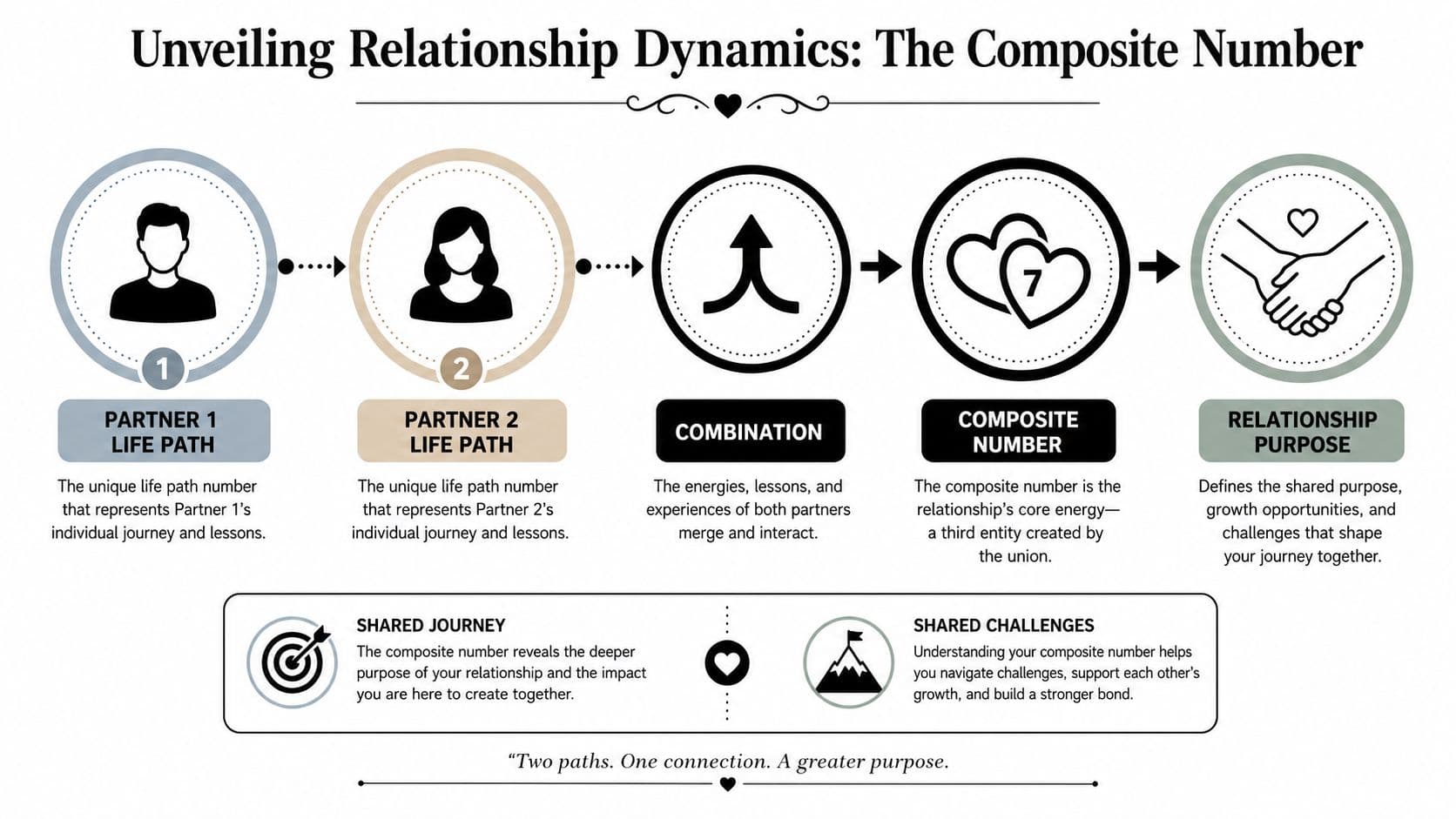
If you want a broader reference point for how core numbers function within this framework, this provides useful context.
How the composite number works
According to Dan Millman's system, relationship dynamics are not determined by a simple compatibility verdict. They're explored by calculating a composite number. You add the right-hand digits of both partners' birth numbers, and if the sum is greater than 13, you reduce it. For example, 14 becomes 5. That final number points to the relationship's unique composite energy, including themes such as cooperation, expression, stability, freedom, vision, trust, power, and integrity, as described in this summary of The Life You Were Born to Live.
The key idea is simple. A composite number doesn't tell you whether the relationship is good or bad. It tells you what kind of classroom this relationship is.
Two relationships can love differently
A relationship with a stability theme may ask both people to build trust slowly, honor commitments, and create dependable habits. That can feel steady and reassuring, but it can also feel heavy if the couple expects constant spontaneity.
A relationship with a freedom theme may feel alive, creative, and changing. It can invite adventure and reinvention. It can also stir inconsistency if neither partner learns how to ground that energy.
Here's a simple comparison:
| Composite theme | Relationship tendency | Common misunderstanding |
|---|---|---|
| Stability | Builds slowly, values consistency | “Why does this feel less exciting?” |
| Freedom | Needs movement, novelty, space | “Why can't we just settle down?” |
| Expression | Thrives on sharing, creativity, conversation | “Why do we talk so much but still feel unresolved?” |
| Power or integrity | Brings lessons around responsibility, truth, and influence | “Why does everything here feel so important?” |
A hard season in relationships sometimes reflects the purpose of the bond surfacing, not the failure of the bond.
When couples understand the composite number, they often stop trying to force their relationship into someone else's ideal. They begin asking a wiser question. What does this particular bond need in order to thrive?
Navigating Life Path Strengths and Friction Points
Once you know the relationship's shared theme, the next challenge is daily life. Who needs space after conflict? Who needs reassurance? Who feels connected through practical action, and who needs emotional expression before anything can heal?
Dan Millman's The Life You Were Born to Live examines this by mapping the interaction between the 45 life paths. The Life Purpose App helps readers work with the same framework. According to this relationship mapping approach, compatibility is analyzed through specific strengths and friction points, and an expressive Life Path 3 specifically requires “open, heartfelt chats” as a primary mechanism for connection.
Friction doesn't always mean mismatch
People often assume conflict proves incompatibility. Sometimes it does. But often, friction means two different developmental styles are rubbing against each other.
Consider a partner with strong expressive energy and a partner who processes more internally. The expressive person may want to talk now, fully and emotionally. The quieter person may need time before they can say anything meaningful. Both can feel rejected. One hears silence as distance. The other hears intensity as pressure.
Neither person is necessarily wrong. They are protecting connection in different ways.
A more compassionate way to read behavior
When you understand life path dynamics, irritating behavior starts to look more specific.
- The expressive partner may not be “too much.” They may need verbal openness to feel close.
- The reserved partner may not be withholding. They may need internal clarity before speaking openly.
- The highly structured partner may not be controlling. They may feel safest when life is organized.
- The freedom-seeking partner may not be unreliable. They may wilt under excessive rigidity.
That doesn't excuse hurtful conduct. It does improve interpretation. And interpretation changes how people respond.
If you keep arguing about the same thing, try translating the conflict into life path language. The meaning often becomes clearer than the complaint.
A healthy relationship doesn't erase differences. It learns how to work with them. In that sense, relationships mature when partners stop demanding sameness and start building fluency in each other's patterns.
Timing Is Everything Navigating Nine Year Cycles in Partnerships
Some years in relationships feel smooth. Others feel strangely misaligned, even when nothing dramatic has happened. Dan Millman's The Life You Were Born to Live gives one way to understand that shift through nine-year cycles. The Life Purpose App uses these cycles as part of its relationship tools, helping people notice timing instead of assuming every rough patch means something is broken.
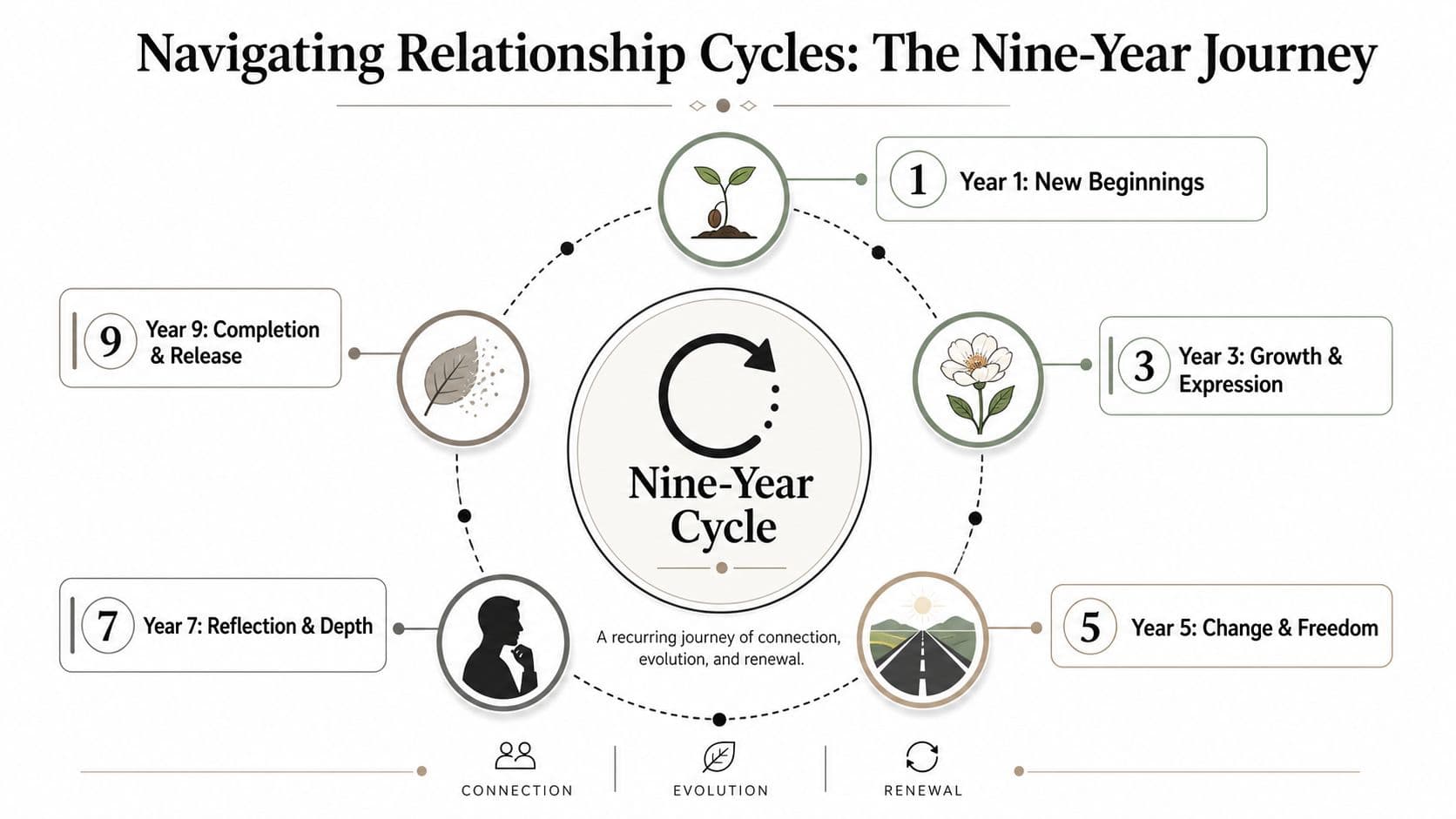
For readers who want to explore the rhythm of these transitions more directly, a useful overview is available.
Why the same relationship can feel different from year to year
A nine-year cycle suggests that each period carries a different tone. Some years support beginnings. Others ask for expansion, reflection, change, or release. If two partners are moving through very different cycle energies at the same time, tension can appear even when love remains intact.
One partner may be in a year that pushes outward toward action and fresh starts. The other may be in a year that asks for evaluation, closure, or solitude. That mismatch can feel personal, but often it's rhythmic.
A simple way to picture it is two dancers hearing different music. They may both want to dance together, but their timing is off.
How cycle mismatches show up in everyday relationships
Here are a few common patterns:
- One person wants movement while the other wants consolidation. This can create arguments about pace.
- One partner is releasing old patterns while the other is initiating something new. They may seem emotionally out of sync.
- A reflective cycle meets an expressive cycle. One wants depth and quiet. The other wants discussion and outward momentum.
You don't need to treat cycles as fate. They are better understood as climate, not command. Climate influences what grows more easily, but it doesn't remove choice.
The value of timing awareness
Timing awareness helps couples depersonalize some conflict. Instead of saying, “You've changed,” they can ask, “What season are you in right now?” That question often opens tenderness where blame was taking over.
A cycle lens can also improve planning. If a relationship feels strained, it may help to simplify expectations rather than forcing a breakthrough conversation before both people are ready. If the energy feels expansive, that may be the right time to create something new together.
Relationships don't move in a straight line. They breathe. Nine-year cycles give language to that breathing.
Putting Insight Into Action with The Life Purpose App
Insight is comforting, but relationships change through repeated practice. That's where tools matter. Dan Millman's The Life You Were Born to Live gives the conceptual map. The Life Purpose App provides a practical way to apply it by translating life paths, relationship dynamics, and cycle patterns into something you can review in ordinary life.
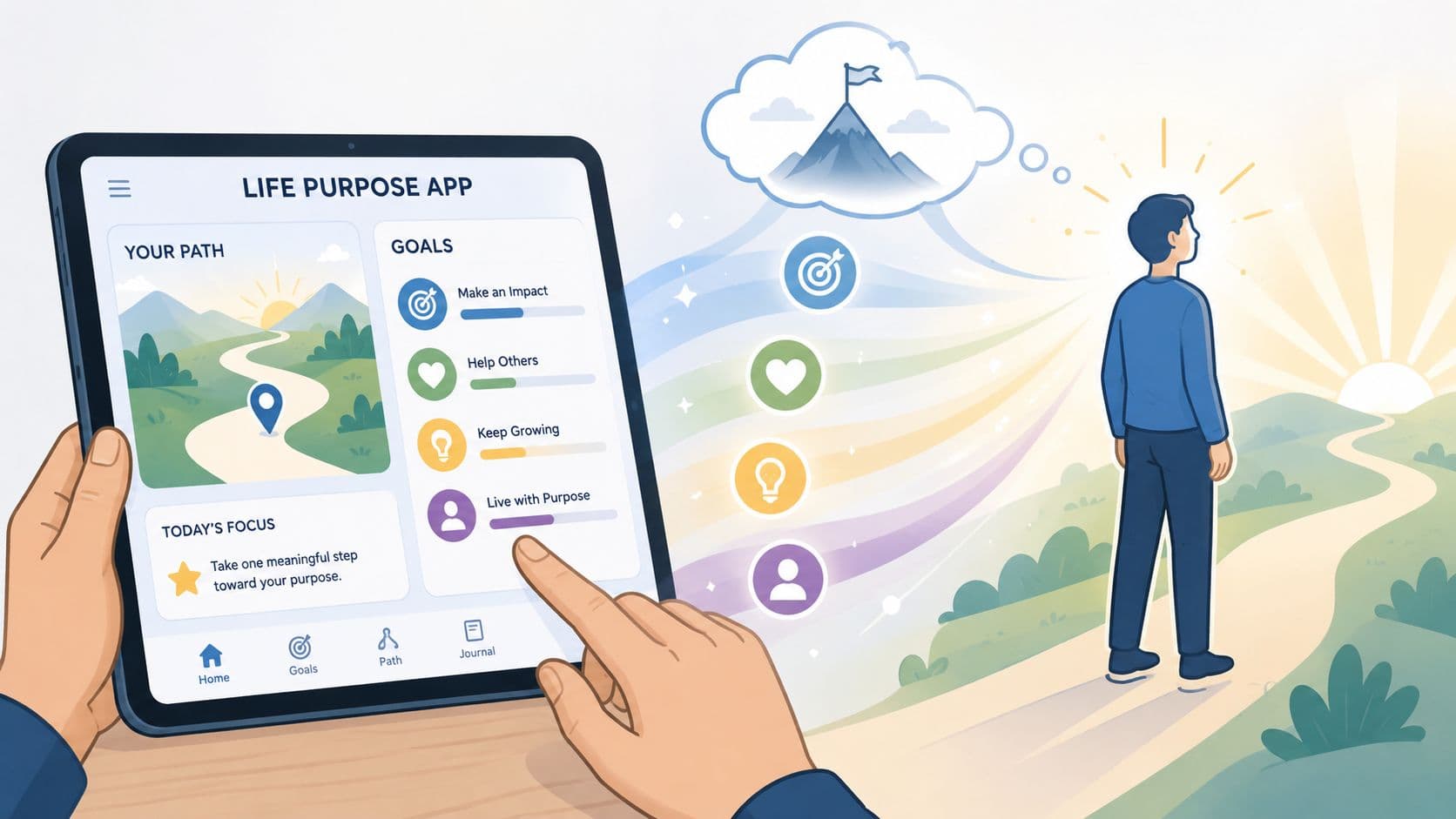
According to guidance published by the app, it maps nine-year life cycles to evaluate relationship dynamics and recommends a “weekly relationship review” in which you choose one relationship, analyze the dynamic between your life numbers, and identify one small action that shows greater understanding.
A simple way to use it
This works best when you keep it small and concrete.
-
Choose one relationship Don't try to decode your whole social world at once. Pick your partner, a parent, a close friend, or even a colleague.
-
Look at the pattern Notice your life paths, the relationship dynamic, and any cycle context that might be active. The goal isn't to explain everything. It's to find the clearest current lesson.
-
Name one action Make it behavioral. If your partner needs more emotional openness, initiate one sincere conversation. If they need steadiness, follow through on one promise. If the pattern points to freedom, create room rather than adding pressure.
Why the weekly review matters
A weekly review prevents spiritual ideas from becoming entertainment. People love insight. Relationships need practice. The gap between those two is where most growth stalls.
Coaches, counselors, and other practitioners can also use this kind of structure in sessions. It offers a shared language for discussing why a client keeps repeating the same dynamic with different people. Instead of talking only about conflict content, they can examine recurring themes of power, trust, expression, freedom, or responsibility.
Reflection prompt: What is one small action that would make your partner feel more understood this week?
That question is humble, but it can shift a relationship more than a dramatic conversation. Small, accurate actions often do more for relationships than grand declarations.
Building Conscious Relationships with Deeper Understanding
The deepest value of Dan Millman's The Life You Were Born to Live is not prediction. It's compassion. The system gives you a way to read relationships with more patience and less blame. The Life Purpose App supports that same process by making the patterns easier to track in real life.
Research on purpose and romance points in a similar direction. A greater sense of purpose predicts the likelihood of maintaining a romantic relationship over time, while higher relationship quality is the factor that increases a person's sense of purpose, creating a reciprocal dynamic between love and meaning, as discussed in this research article on purpose and romantic relationship quality.
What conscious relationships ask of us
Conscious relationships don't require perfection. They require attention. They ask us to notice the blueprint of the bond, the strengths each person carries, the friction that needs translation, and the timing that shapes how growth unfolds.
That kind of awareness can make people gentler with each other. It can also make them more honest. Some relationships are here to stabilize us. Some stretch us. Some reveal where we still confuse control with care, or intensity with intimacy, or silence with safety.
If insecurity is part of your pattern, practical support helps too. This guide on how to feel secure in your relationship offers grounded ideas that pair well with a purpose-based lens.
The real shift
When you work with life paths, composite numbers, and cycles, relationships stop being a guessing game. They become a practice of interpretation. You learn to ask better questions. You stop forcing one-size-fits-all solutions onto bonds that have very different purposes.
And that may be the most helpful spiritual lesson of all. Love doesn't only ask to be felt. It asks to be understood.
If you want to explore your own relationship patterns through Dan Millman's The Life You Were Born to Live, the Life Purpose App offers a direct place to begin. You can use it to look up life paths, examine relationship dynamics, and reflect on nine-year cycles in a way that turns abstract insight into practical awareness.
Discover Your Life Purpose Today!
Unlock your true potential and find your life’s purpose.
