Discover how respeto y amor transform relationships. Learn practical steps to build respect, love your partner, and unlock life path compatibility.

October 7, 2026 (8d ago)
Respeto Y Amor: A Guide to Deep Connection
Discover how respeto y amor transform relationships. Learn practical steps to build respect, love your partner, and unlock life path compatibility.
← Back to blog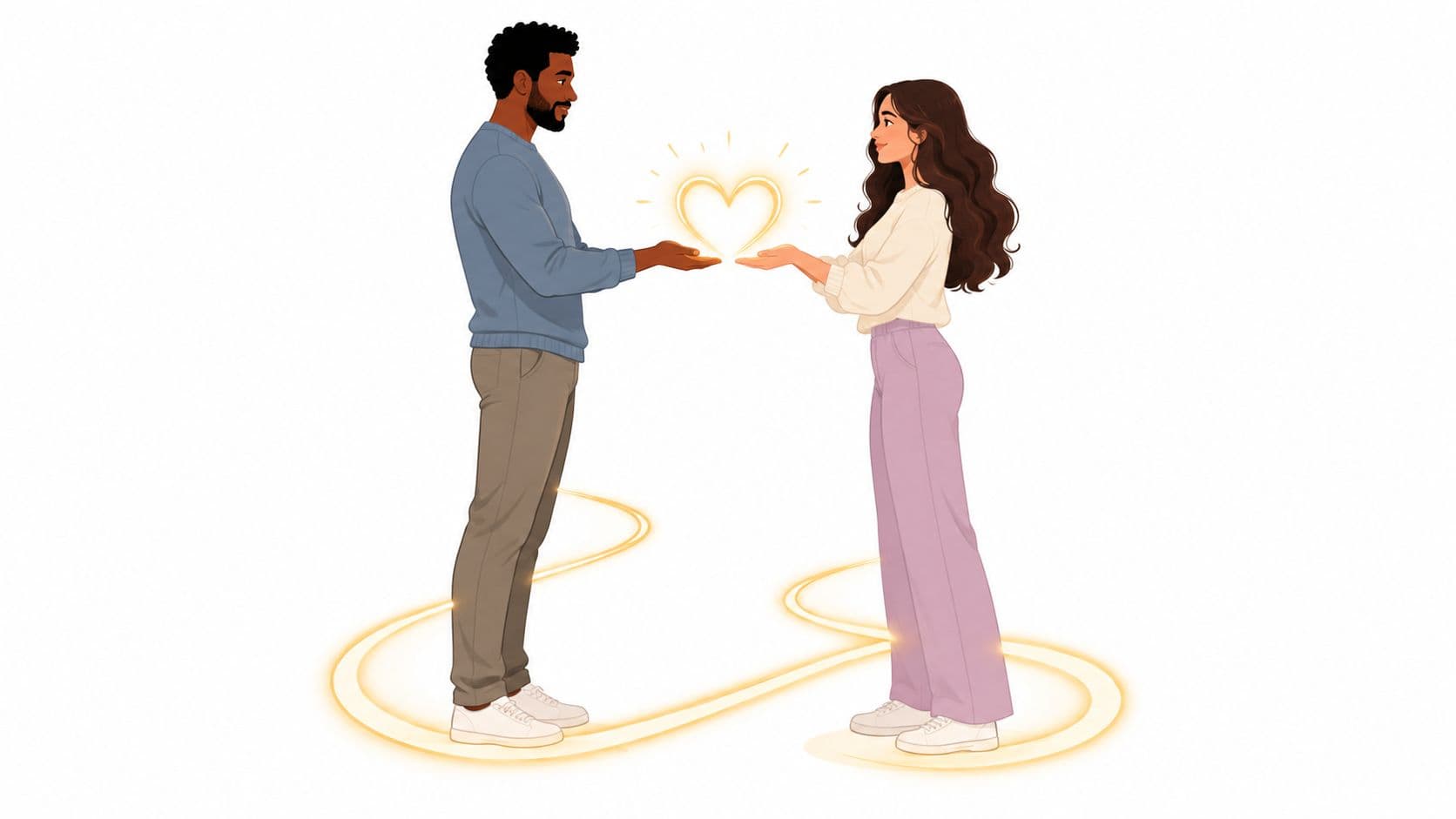
Discover how respeto y amor transform relationships. Learn practical steps to build respect, love your partner, and unlock life path compatibility.
You love each other, yet the same conversation keeps ending badly. One of you asks for reassurance, the other hears criticism. One wants time alone, the other feels abandoned. By evening, affection is still present, but both people feel unseen, defensive, and tired.
Aquí respeto y amor se convierte en algo más que una frase romántica. El amor expresa apego, ternura y cuidado. El respeto reconoce el valor, la autonomía, los límites y el camino individual de una pareja. Juntos, crean una relación donde la cercanía no exige que ninguna persona desaparezca.
Understanding the Respeto y Amor Connection
A couple may share history, attraction, and genuine devotion while still struggling to live together well. Consider Elena and Marcus. Elena shows love by checking in often and solving practical problems. Marcus experiences those efforts as pressure. Marcus shows love by giving Elena space, but Elena interprets that distance as indifference. Neither person is necessarily uncaring. They're using different languages of affection, and their unexamined habits are turning care into conflict.

Respeto, or respect, asks a different question from love. Love may ask, “How can I make you feel cared for?” Respect asks, “How can I honor who you are, even when your needs differ from mine?” That distinction matters because affection without respect can become possessiveness, people-pleasing, or an attempt to manage another person's choices.
Love needs room to breathe
Respect doesn't mean emotional distance. It means allowing two whole people to remain present in the relationship. You can admire your partner's ambition without adopting it, support their friendships without supervising them, and listen to their fears without taking over every decision.
A helpful way to understand this balance is through the symbolism of flowers. The guide to lily symbolism from Fiore offers a gentle reminder that beauty can carry several meanings at once. In the same way, love and respect may express different qualities while belonging to the same emotional realm.
A useful question: Am I trying to honor my partner, or am I trying to make their choices easier for me to tolerate?
When respect is missing, love can become a reason to excuse harm or demand access. When love is missing, respect can become polite detachment. Respeto y amor holds both truths together. For a deeper look at the emotional closeness that healthy relationships require, explore this resource on the meaning of intimacy in a relationship.
The Science Behind Love and Respect
A relationship can feel loving while respect gradually erodes. Repeated interruptions, broken agreements, or dismissive remarks may leave one partner asking, “Do I matter here?” This is why respeto y amor works as a dual system. Love expresses attachment, while respect creates the safety in which that attachment can remain generous rather than controlling.
Relationship research supports this distinction. A foundational study published in the Mexican journal Acta de Investigación Psicológica examined how perceived respect influenced evaluations of romantic partners and relationships. Researchers measured 18 variables, and respect had a statistically significant effect on 15 of them (Acta de Investigación Psicológica study).
Participants who regarded a partner as highly respectful generally evaluated that partner and the relationship more favorably than participants who perceived moderate disrespect. The connection extended beyond simple liking. Respect was associated with relationship satisfaction, commitment, self-disclosure, passionate love, friendship-based love, and altruistic love.
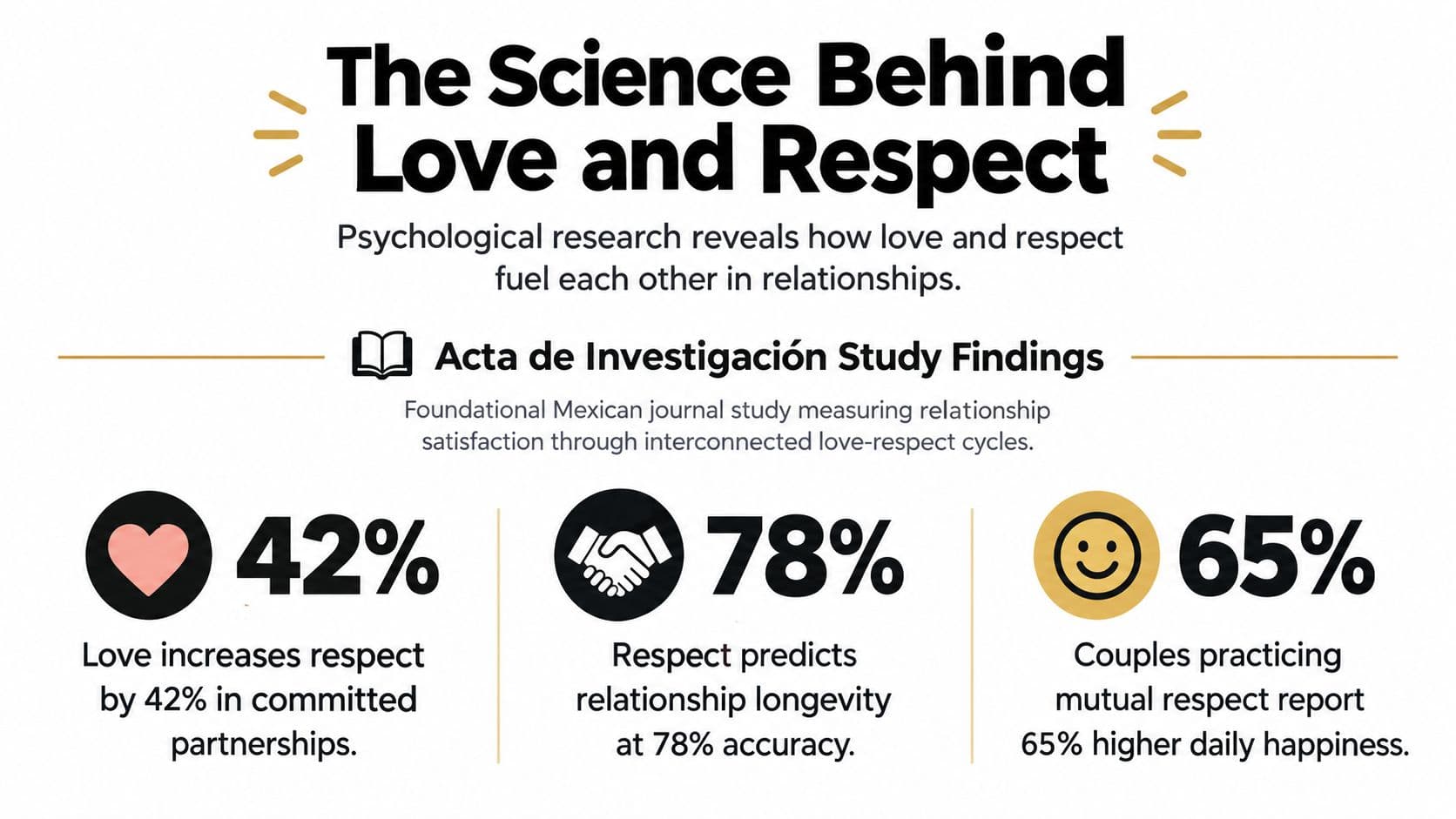
The infographic offers a visual summary, not evidence for extra percentages or findings. The verified study supports a measured conclusion: respect is associated with how people view their partners and relationships. It does not show that respect alone guarantees lasting success.
What respect changes emotionally
Love may remain present while the experience of respect changes. Someone can feel attachment and still feel diminished by pressure, contempt, or disregard. In that setting, the question shifts from “Are we in love?” to “Can I remain fully myself here?”
A separate validation study supported a six-item Respect Toward Partner Scale among 257 college participants. Later research using a broader Respect for Partner Scale found that respect predicted relationship satisfaction more strongly than measures of attachment, love, liking, and positive or negative partner qualities (research on respect in close relationships). The samples were not designed to represent every culture or relationship type, so their conclusions have limits. They still clarify why affection alone may not sustain a partnership.
Self-awareness strengthens this process. Understanding one's life path, recurring pressures, and personal needs can make respectful choices more deliberate, while this awareness translates into listening and restraint.
Shared activities make respect visible. Learning to match another person's timing and adjust without humiliation reflects the Danza Academy social dance benefits. Small acts of attention often carry more weight than grand declarations.
Self-Discovery Through the Life Purpose App
Respecting another person becomes easier when you stop treating your own nature as a mystery. Dan Millman's book, “The Life You Were Born to Live,” presents a system of self-knowledge built around life paths, spiritual laws, personal gifts, and recurring challenges. The Life Purpose App makes that system available as a digital companion, using a date of birth to identify one of 45 unique life paths, explore nine-year life cycles, and consider relationship dynamics.
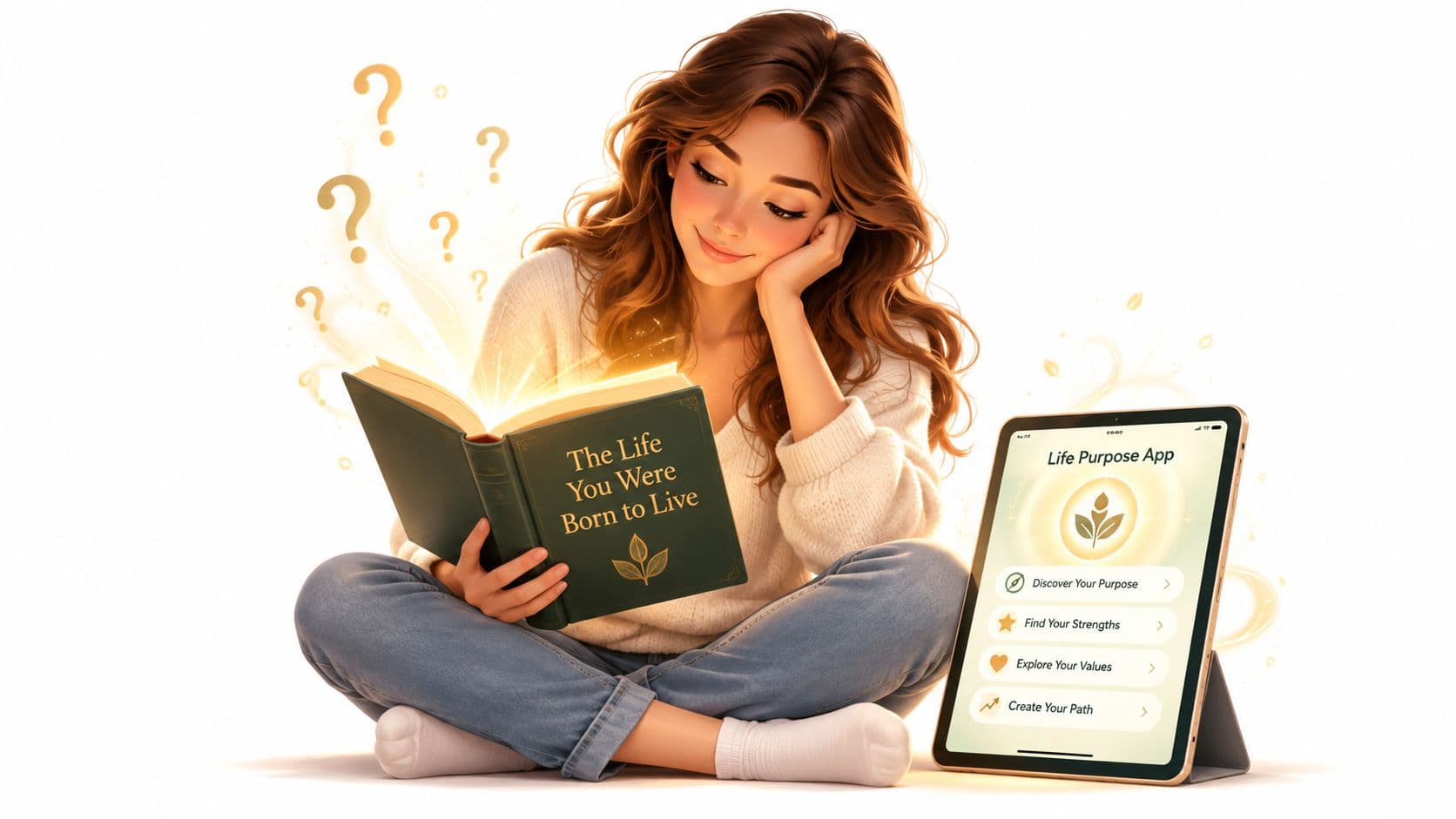
Used wisely, numerology isn't a verdict about your personality or a substitute for direct conversation. It's a reflective framework. It can help you name the needs, fears, and tendencies you may otherwise act out without noticing.
From personal pattern to mutual understanding
Suppose one partner naturally seeks structure, achievement, and visible progress. The other needs quiet, recovery, and emotional harmony before making decisions. Without self-understanding, the first may call the second lazy, while the second may experience the first as aggressive. With a life-path framework, both can pause and ask a better question: “What need is this behavior trying to protect?”
That shift doesn't remove responsibility. A life path can't excuse contempt, manipulation, or refusal to compromise. It can, however, make difference less threatening. Dan Millman's approach emphasizes that each path includes both gifts and challenges, so neither partner gets to claim spiritual superiority.
The resource can support reflection when you use it as a starting point for questions such as:
- What helps me feel secure? Notice whether you seek reassurance, independence, order, novelty, or calm.
- What do I do under pressure? Identify the habit that creates friction before blaming your partner's response.
- What might my partner need differently? Treat difference as information, not as proof that either person is defective.
Self-knowledge becomes relational wisdom when it leads to greater choice. You learn your pattern, then decide whether that pattern serves the person in front of you.
Practical Ways to Cultivate Both in Daily Life
Respect becomes real through repeated behavior. You don't build it by agreeing on every belief or by avoiding difficult conversations. You build it by showing, in ordinary moments, that your partner's inner world matters and that your own inner world matters too.
Small habits with a large emotional effect
Try these practices consistently:
- Ask before advising. Say, “Do you want comfort, ideas, or just a listener?” Advice offered without permission can feel like a judgment, even when the intention is loving.
- Listen without preparing your defense. Reflect the meaning you heard before explaining your side. “You felt alone when I canceled” creates more room than “I had a good reason.”
- Respect alone time. Solitude can be self-care rather than rejection. Agree on a clear return to the conversation so space doesn't become silent punishment.
- Validate the feeling, not every conclusion. You can say, “I understand why that hurt,” without claiming that every interpretation is accurate.
- Name specific appreciation. “I respect how you kept your promise today” carries more weight than a vague compliment.
The visual above summarizes practical ideas for daily connection. Its listed routines should be adapted to the couple rather than followed as rigid performance targets. A respectful practice helps people feel freer and safer, not monitored.
Practical rule: A boundary describes what you will do to protect your wellbeing. Control describes what you demand another person must do to reduce your anxiety.
Before responding during conflict, ask yourself three questions: Am I trying to understand? Am I honoring consent? Am I speaking in a way that leaves the other person free to answer openly? These questions turn love from an impulse into a discipline.
Navigating Life Path Compatibility and Conflicts
Different life paths can create friction because people often mistake unfamiliar priorities for bad character. A person focused on achievement may interpret a partner's need for rest as laziness. A person focused on harmony may interpret ambition as aggression. Both judgments may say more about the observer's fears than about the other person's true intention.
Dan Millman's “The Life You Were Born to Live” frames each path as a combination of purpose, gifts, and challenges. That lens can help couples replace accusation with curiosity, provided they still evaluate behavior candidly.
Life Path Conflict Resolution Matrix
| Conflict Area | Without Respect (Resentment) | With Respeto y Amor (Growth) |
|---|---|---|
| Rest and productivity | One partner labels the other unmotivated or overbearing. | Each person explains what rest or progress protects, then negotiates shared responsibilities. |
| Money and priorities | Different spending or saving habits become evidence of selfishness. | Partners name their values, separate personal choices from shared commitments, and agree on transparent limits. |
| Social energy | One person feels dragged into constant activity while the other feels abandoned at home. | They protect individual friendships and create intentional time for connection. |
| Conflict style | A direct speaker pressures for immediate answers while a reflective partner withdraws. | They agree to pause without evasion and return when both can participate freely. |
| Career direction | A change in work is treated as betrayal or instability. | Each partner considers purpose, practical effects, and the support needed during transition. |
The matrix doesn't predict compatibility. It shows how the same difference can produce blame or learning. Respect doesn't require pretending that every choice works for both people. It requires discussing consequences without attacking the person making the choice.
A grounded conversation might sound like this: “Your need for quiet is real, and my need for shared planning is real. How can we protect both?” That sentence creates a path between self-erasure and domination. Love supplies the wish to remain connected. Respect supplies the discipline to let two distinct people shape that connection together.
Common Misconceptions About Respect and Love
The first misconception is that love means having no boundaries. It doesn't. A relationship without privacy, consent, or personal choice may look close from the outside, but constant access isn't the same as intimacy. Respect makes vulnerability safer because it assures each person that openness won't automatically become a loss of freedom.
The second misconception is that respect feels cold. In reality, respect can make tenderness more honest. A partner who listens without forcing a solution, accepts a no without retaliation, and keeps a confidence offers a form of love that doesn't need to possess.
Care isn't control
Jealousy, surveillance, isolation, financial restriction, and coercion can be mistaken for devotion or protection. The World Health Organization includes psychological abuse and controlling behaviors within intimate-partner violence, which means affection must never be used to excuse coercion (WHO overview of violence against women).
The scale of physical and sexual violence also establishes a firm boundary for relationship advice. WHO estimates that 31.6% of women worldwide, approximately 840 million women and girls, have experienced physical or sexual intimate-partner violence or non-partner sexual violence during their lifetimes (WHO fact sheet). Those figures measure violence, not ordinary disrespect, so they can't tell us how many relationships lack consideration or equality. They do show that love isn't proof of safety.
People-pleasing creates a different confusion. Sacrificing every need may appear generous, but it can produce resentment and dependence rather than mutual care. Dan Millman's teachings on responsibility and autonomy point toward a sturdier position: you can't honor another person's path while abandoning your own.
If coercion, threats, physical harm, or sexual violence is present, don't treat communication exercises as a cure. Prioritize safety, autonomy, freedom from retaliation, and specialized support. More communication isn't always the answer when one person is using communication to gain control.
Frequently Asked Questions About Respeto y Amor
Can a relationship survive without respect?
It may continue in form, but sustained affection becomes difficult when one partner repeatedly feels insignificant, controlled, or unsafe. Respect is not a permanent mood. It's a practice shown through consent, reliability, listening, and regard for boundaries.
How do I know whether I'm respecting my partner or merely tolerating them?
Tolerance often sounds like, “I'll put up with this because I have to.” Respect sounds like, “I see you clearly, I don't agree with everything, and I'll treat you with dignity while deciding what I can participate in.” Respect includes honest limits. It doesn't require pretending that harmful behavior is acceptable.
Can jealousy be a sign of love?
Jealousy is an emotion, not evidence of devotion. You can acknowledge insecurity without allowing surveillance, isolation, demands for passwords, or restrictions on friendships. A respectful response examines the fear while preserving both people's agency.
What if our life paths seem incompatible?
Return to Dan Millman's “The Life You Were Born to Live” as a framework for reflection, not a sentence about your future. A life path may help you notice different needs and recurring challenges, but compatibility still depends on choices, honesty, consent, and behavior.
Is self-discovery enough to repair a relationship?
No. Self-knowledge can reveal patterns, but each partner must take responsibility for changing harmful conduct. Reflection becomes useful when it produces specific actions, clearer boundaries, and more compassionate conversations.
How should I begin?
Choose one daily interaction and observe it without judgment. Notice when you interrupt, withdraw, advise, pursue, or seek control. Then practice one respectful alternative, such as asking permission before offering help or naming your need without making your partner responsible for your emotional state.
Healthy respeto y amor isn't a destination where conflict disappears. It's a way of walking together while each person remains responsible for their own path. With patience, self-knowledge, and practical care, a relationship can become more purposeful without becoming less free.
The Life Purpose App offers a digital companion to Dan Millman's “The Life You Were Born to Live,” including life-path insight, spiritual laws, life cycles, and relationship-dynamics exploration based on a date of birth. Visit Life Purpose App to use self-discovery as a starting point for more respectful communication and a more harmonious life.
Discover your life path today
Enter your date of birth and see your life path, free.
Find your life path