Explore rumi famous poems for spiritual insight. Discover deep meanings and timeless wisdom in this collection of 10 masterpieces.
July 29, 2026 (28d ago) — last updated July 29, 2026 (27d ago)
Rumi Famous Poems: Spiritual Insights for 2026
Explore rumi famous poems for spiritual insight. Discover deep meanings and timeless wisdom in this collection of 10 masterpieces.
← Back to blog
Beyond words, what if the poems you've been sharing only become useful when they help you notice your own life pattern? Rumi famous poems have lasted because they don't just sound beautiful, they point inward, toward grief, love, longing, surrender, and purpose. Rumi, born around September 30, 1207 and died on December 17, 1273, gave the world a body of work that still shapes Persian and Sufi literature, from the Masnavi-ye Maʿnavi to thousands of lyrical poems, including more than 3,000 ghazals and around 2,000 quatrains Britannica.
For modern readers, that scale matters because it explains why his work keeps meeting people at different stages of life. BBC has described Rumi's ecstatic poems as selling millions of copies in recent years and called him the most popular poet in the U.S. BBC. That popularity isn't just literary, it's practical, because his poems still help people make sense of change, relationships, healing, and meaning.
If you use Dan Millman's The Life You Were Born to Live and the Life Purpose App, Rumi's poems become even more grounded. They stop being only inspirational lines and start becoming mirrors for your life path, your lessons, and the way you meet the world.
1. The Guest House
The Guest House is one of the clearest places to begin if you want Rumi to feel immediate, not abstract. The poem invites every emotion to enter, joy, grief, anger, shame, and to be received with dignity. That simple shift changes everything, because resistance often creates more suffering than the feeling itself.
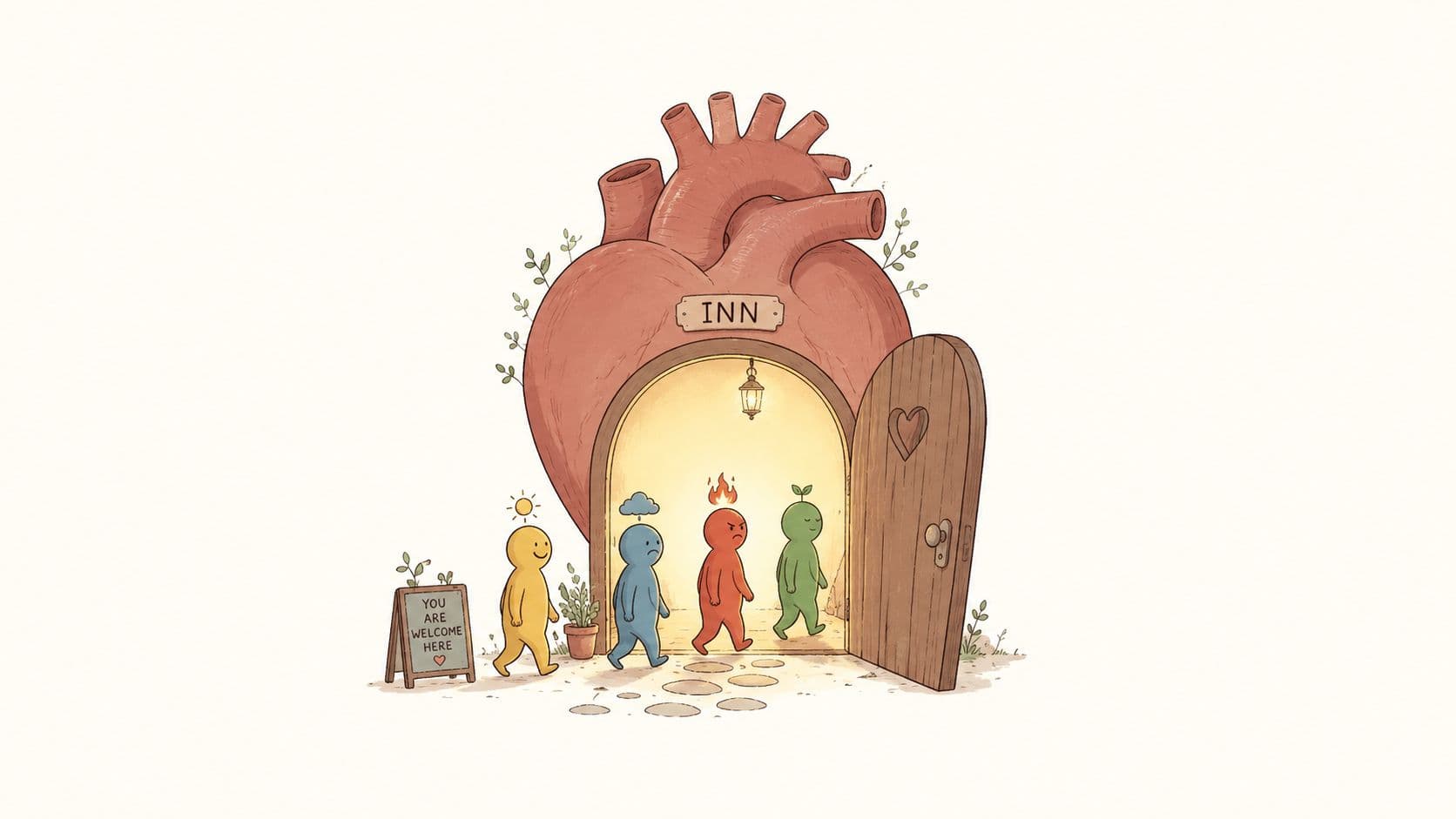
In therapy rooms, meditation circles, and honest conversations between friends, this poem lands because it gives people language for emotional hospitality. A grief-stricken client can read it and realize sorrow is not a failure. A meditation practitioner can use it to stay present with discomfort instead of tightening against it. A life coach can point to it when a client is tempted to label a hard season as “wrong,” when it may be instructive.
A gentle practice for the poem
Practical rule: Name the feeling before you try to fix it. If it's sadness, say sadness. If it's fear, say fear.
That small act of recognition echoes the spirit of Dan Millman's The Life You Were Born to Live, where challenges are not random punishments but part of the path's learning. The Life Purpose App makes that framework easier to apply because it turns self-reflection into something concrete, not vague. Read the poem slowly, pause at each guest, and ask which feelings you usually rush past. Then write one sentence about what those feelings may be trying to teach you.
2. The Lovers
The Lovers moves beyond ordinary romance and into spiritual union. Rumi's love poetry often treats the beloved as a mirror rather than only an object of desire. That matters because real love reveals what still hides inside us, and that revelation can feel tender, painful, cleansing, and freeing all at once.

People often bring poems like this into wedding ceremonies because the language can hold tenderness and reverence together. It also speaks to spiritual seekers who notice that attraction is not only chemistry, it is also a way of seeing parts of the self through another person. In a grounded relationship conversation, the poem can open a useful question, what in this connection is love, and what is ego trying to protect?
The link to The Life You Were Born to Live gives that insight a practical frame. Dan Millman's work encourages people to see relationship dynamics as part of their life path rather than random luck. The Life Purpose App can help users reflect on compatibility and shared growth without turning love into a formula. That balance matters, because healthy partnership is not about perfect harmony, it is about mutual spiritual evolution. For readers looking for ways to use heartfelt language in meaningful rituals, these tips for using past quotes in toasts can help keep the tone warm and sincere.
A relationship can be sacred without being easy.
Read this poem with someone you trust, or alone if you are still healing. Then ask what your closest relationships have revealed about your own fears, generosity, and capacity for devotion.
3. The Journey
The Journey speaks to the soul in motion. It traces the passage from separation toward union, which makes it especially comforting for anyone in a season of uncertainty. Rumi doesn't romanticize the path. He gives room for confusion, effort, and surrender.
That makes the poem useful for people who feel they should already have “arrived.” A job transition, a move, a breakup, or a spiritual dry spell can all feel like interruption, but Rumi keeps returning the reader to the larger arc. He reminds us that becoming is rarely neat.
Reading it as a life-cycle poem
Dan Millman's The Life You Were Born to Live gives that larger arc a practical shape through its nine-year life cycles. The Life Purpose App helps people map those cycles and notice that not every year is meant for the same kind of growth. Some years ask for action, others for patience, and others for release.
A useful way to work with this poem is simple.
- Mark the stage: Name where you feel you are now, beginning, struggle, waiting, or surrender.
- Review the past: Notice which earlier turning points changed you without warning.
- Write the lesson: Ask what this season is teaching you about trust.
That kind of reflection keeps the poem from becoming just a beautiful metaphor. It becomes a companion for the uneven movement of your life.
4. The Wound Is the Place Where the Light Enters You
This line is brief, but it carries a large spiritual weight. Rumi reframes pain as a doorway, not just a burden. That doesn't deny trauma or grief, it gives suffering a place in the larger story of transformation.
For someone in healing, that distinction matters. A support group member may hear the line and recognize that a loss changed them into someone more compassionate. A trauma therapist may use it carefully to help a client see that growth can emerge from the very place that hurt them. A life coach may return to it when a client keeps describing their weakness instead of their resilience.
The wisdom also connects naturally to The Life You Were Born to Live, because Dan Millman's work treats life-path challenges as part of one's development, not as evidence of failure. The Life Purpose App can support that reflection by giving users a structured way to think about gifts and challenges together. That balance is valuable, since people often only want the gift and not the wound that shaped it.
A helpful practice is to write down one painful experience and then name one skill, boundary, or insight that grew from it. You don't have to force positivity. You only need honesty. If a wound has taught you discernment, patience, or compassion, say so plainly.
For a deeper reflection on forgiveness and recovery, you can also explore healing and forgiveness.
5. Come, Come, Whoever You Are
Come, come, whoever you are. Why does this invitation feel so steady, even now? Rumi's welcome opens the door for wanderers, doubters, and people who do not feel spiritually polished. That openness is a large part of why rumi famous poems still speak to communities that value belonging more than performance.

Interfaith gatherings often return to this kind of language because it lowers the barrier to entry. Recovery spaces do the same, since people do not need to arrive polished. They only need to arrive. Spiritual communities can also drift into hidden hierarchy, and this poem gently corrects that habit by treating every person as welcome from the start.
Dan Millman's The Life You Were Born to Live carries a similar ethic. The Life Purpose App presents 45 unique life paths, and the point is not to rank them. It is to recognize that each one has purpose. That perspective helps people stop comparing their worth to someone else's journey and start seeing their own path more clearly.
Belonging is not earned by having the “right” past.
Read the poem as an act of self-acceptance if you have ever felt left out of spiritual spaces. Then let it raise a practical question. Who around you needs that same welcome from you today? For a related reflection on grief, love, and the way they stay intertwined, visit the grief and love guide. The idea of shared human connection also appears, which fits the poem's larger invitation to see each person as part of the same living web.
6. The Reed Flute
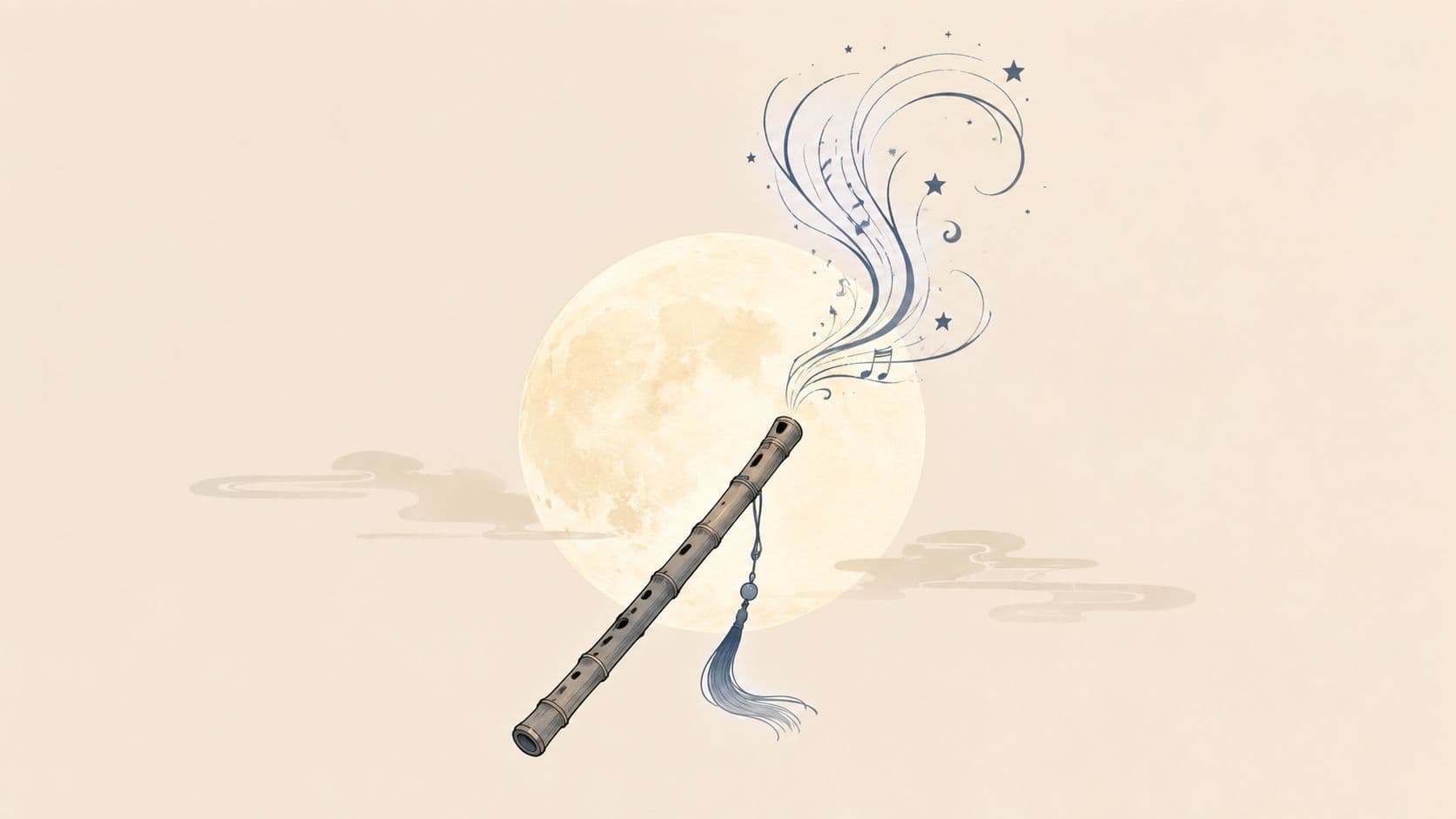
The reed flute image sits at the heart of Rumi's spiritual world. The flute sings because it has been cut away from the reed bed, and that separation becomes music. The ache is real, but so is the meaning it carries.
That image speaks to anyone who has felt homesick for a life they can't quite name. Artists often recognize it as longing. Seekers recognize it as a spiritual call. People in transitions often recognize it as restlessness that refuses to go away.
The poem also opens beautifully into the logic of The Life You Were Born to Live. If your life path has felt uncomfortable, the framework suggests that the discomfort may be tied to remembrance, not just resistance. The Life Purpose App gives that idea structure so you can reflect on calling without drifting into abstraction.
A quiet way to work with the poem is to separate wants from longing. Wants can be immediate and practical. Longing is deeper, and it often points toward meaning, service, or reunion with source. Journal about the difference and be honest about which one is driving your choices lately.
The reed flute does not tell you to reject your ache. It asks you to listen to it.
7. Zero Circle
Zero Circle is one of Rumi's most conceptually rich poems, and it rewards slow attention. The circle with no circumference suggests transcendence beyond visible form. It also suggests wholeness without limit, a paradox that opens the mind rather than closing it.
This poem is especially interesting for readers drawn to sacred geometry, meditation, and non-dual thinking. An artist may see it as a visual paradox. A mathematician may appreciate its precision. A contemplative practitioner may use it to release the habit of defining the self too narrowly.
The connection to The Life You Were Born to Live is elegant. Dan Millman's work helps people understand their path, but it also points beyond personality. The Life Purpose App can help users locate themselves within a clear framework without trapping them there. That matters because purpose isn't just about self-description, it's about becoming more whole than the ego's current story.
Wholeness often feels simpler than the mind expects.
Try visualizing the zero circle during meditation, even if only for a minute. Then notice what happens when you stop trying to prove yourself and rest inside awareness. The simplicity may feel unfamiliar at first, but that doesn't mean it's empty.
8. Spring Gales
Spring Gales carries the feeling of renewal in motion. Rumi uses seasonal change to show that spiritual life also moves in cycles. Old forms clear out, fresh energy arrives, and growth begins again.
That rhythm matters because people often mistake endings for failure. A project may collapse. A relationship may change shape. A season of rest may look unproductive from the outside, even though it is preparing the ground beneath the surface.
The poem fits naturally with the nine-year life cycles in The Life You Were Born to Live. The Life Purpose App gives users a way to notice those patterns without forcing every month to mean the same thing. Some periods are for clearing, some for planting, and some for waiting until the soil is ready.
A practical way to work with the poem is to compare your inner life to the season outside your window. What is ending? What is bare? What is beginning to move? Then choose one renewal practice that matches the moment, maybe a walk, a fast from distraction, or a fresh journal page.
Spring Gales doesn't rush the process. It honors the way change arrives.
9. Love Dogs
This poem uses the image of hunting dogs to show love as relentless pursuit. The pursuit is not casual, and it isn't meant to be. Rumi treats spiritual longing as something fierce, persistent, and intensely alive.
That image can feel reassuring to people who think their restlessness means something is wrong with them. Sometimes the soul keeps moving because it knows more is possible. Teachers and mentors often use this kind of poem to encourage discipline, not just emotion, because love asks for practice.
The connection to The Life You Were Born to Live is straightforward. Life-path challenges don't always disappear when you understand them. Sometimes they persist until you align more fully with your deeper purpose and authentic nature. The Life Purpose App can help users return to that alignment when life feels scattered.
For a grounded practice, ask yourself what you keep pursuing even when it's inconvenient. That might be healing, truth, beauty, service, or belonging. Then ask whether your current habits support that pursuit or undermine it.
For a related reflection on devotion and care, see related posts.
10. The Worm's Waking
This poem carries a quiet kind of wonder. A worm awakening to consciousness becomes a symbol of spiritual possibility for everyone, regardless of background, status, or origin. Rumi suggests that transformation is not reserved for the already exalted.
That idea can be affirming for people who've been told, directly or indirectly, that their beginnings define their limits. Someone from poverty may read it as encouragement. A formerly incarcerated person may hear it as redemption. A student who feels behind may recognize that awareness itself is already a form of awakening.
Dan Millman's The Life You Were Born to Live supports that same dignity by treating every life path as meaningful. The Life Purpose App makes that vision tangible, because it helps people see that no condition disqualifies them from growth. Purpose does not require perfection first.
A helpful response to the poem is to write down one belief that has kept you small. Then write one truth that contradicts it. If you've spent years believing your origins limit your future, this poem invites you to question that story.
Rumi's gift here is humble and radical at once. He reminds us that even the smallest life can open to light.
Comparison of 10 Famous Rumi Poems
| Poem | 🔄 Complexity | ⚡ Resources & Effort | 📊⭐ Expected outcomes | 💡 Ideal use cases | ⭐ Key advantage |
|---|---|---|---|---|---|
| The Guest House | Low, simple contemplative practice | ⚡ Minimal, read, pause, journal | 📊⭐ Greater emotional equanimity; less resistance | 💡 Therapy, meditation, coaching for grief/emotion | ⭐ Accessible, practical wisdom on acceptance |
| The Lovers | Moderate, relational reflection & practice | ⚡ Moderate, shared reading, dialogue, meditation | 📊⭐ Deepened intimacy; spiritual view of partnership | 💡 Couples work, weddings, sacred-partnership coaching | ⭐ Elevates relationships into spiritual practice |
| The Journey | Moderate, requires stage mapping & contemplation | ⚡ Moderate, journaling, cycle-tracking | 📊⭐ Clarifies growth stages; normalizes struggle | 💡 Life transitions, coaching, spiritual seekers | ⭐ Provides roadmap for spiritual development |
| The Wound is the Place Where the Light Enters You | Low–Moderate, reframing trauma thoughtfully | ⚡ Moderate, journaling, therapy support advisable | 📊⭐ Meaning-making from pain; increased resilience | 💡 Trauma therapy, support groups, healing work | ⭐ Transforms suffering into source of growth |
| Come, Come, Whoever You Are | Low, straightforward inclusive practice | ⚡ Minimal, readings, community rituals | 📊⭐ Increased belonging; reduced shame | 💡 Interfaith groups, recovery meetings, community building | ⭐ Radical welcome and unconditional acceptance |
| The Reed Flute | Moderate, symbolic interpretation needed | ⚡ Low–Moderate, meditation, creative reflection | 📊⭐ Articulates soul-longing; normalizes seeking | 💡 Spiritual direction, artists, seekers exploring yearning | ⭐ Poetic language for divine homesickness |
| Zero Circle | High, abstract, non-dual contemplation | ⚡ Moderate, sustained study or guided meditation | 📊⭐ Shift toward non-dual insight; sense of wholeness | 💡 Non-duality teachers, contemplative meditators, artists | ⭐ Visual-spiritual metaphor for transcendence |
| Spring Gales | Low, seasonal metaphor, easy to apply | ⚡ Minimal, seasonal rituals, planning | 📊⭐ Renewal, clearing of old patterns; new impetus | 💡 Seasonal planning, new projects, personal renewal | ⭐ Aligns spiritual change with natural cycles |
| Love Dogs | Moderate, channels intense pursuit constructively | ⚡ Moderate, consistent practice, reflection | 📊⭐ Validates perseverance; channels restlessness | 💡 Dedicated practitioners, teachers encouraging steadiness | ⭐ Celebrates passionate, persistent seeking |
| The Worm's Waking | Low, simple uplifting metaphor | ⚡ Minimal, reflection, encouragement activities | 📊⭐ Hope and empowerment; democratizes awakening | 💡 Outreach, marginalized groups, motivational settings | ⭐ Equalizing message: anyone can awaken |
Bring Rumi's Wisdom Into Your Daily Life
Rumi's poems are more than literature. They're invitations to a more honest way of living. If you keep them at the level of admiration only, you lose part of their power. Read one poem today with your current season in mind, then ask what it is teaching you about grief, love, surrender, or belonging.
The clearest way to make that wisdom practical is to connect it with your own life path. Dan Millman's The Life You Were Born to Live gives you a structured way to see your gifts and challenges, and the Life Purpose App brings that system into daily use. Together, they help Rumi's poems become tools for reflection rather than beautiful lines you read once and forget.
If a poem stirred something in you, return to it tomorrow and notice what changes. Let one verse become a companion while you move through work, relationships, healing, or prayer. Rumi rewards repetition because the heart hears different meanings each time it's ready.
The Life Purpose App helps you connect Rumi's timeless poetry with your own path by showing the life lessons, cycles, and relationship patterns tied to your birth date. If you want a clearer way to reflect on purpose while staying rooted in Dan Millman's system, visit Life Purpose App and begin exploring the wisdom that meets you where you are.
Discover Your Life Purpose Today!
Unlock your true potential and find your life’s purpose.
