Uncover the Seal of Melchizedek: its eight-pointed star, origins, symbolic meaning, modern uses, and scholarly insights.
July 27, 2026 (28d ago)
The Seal of Melchizedek: Origins & Meaning
Uncover the Seal of Melchizedek: its eight-pointed star, origins, symbolic meaning, modern uses, and scholarly insights.
← Back to blog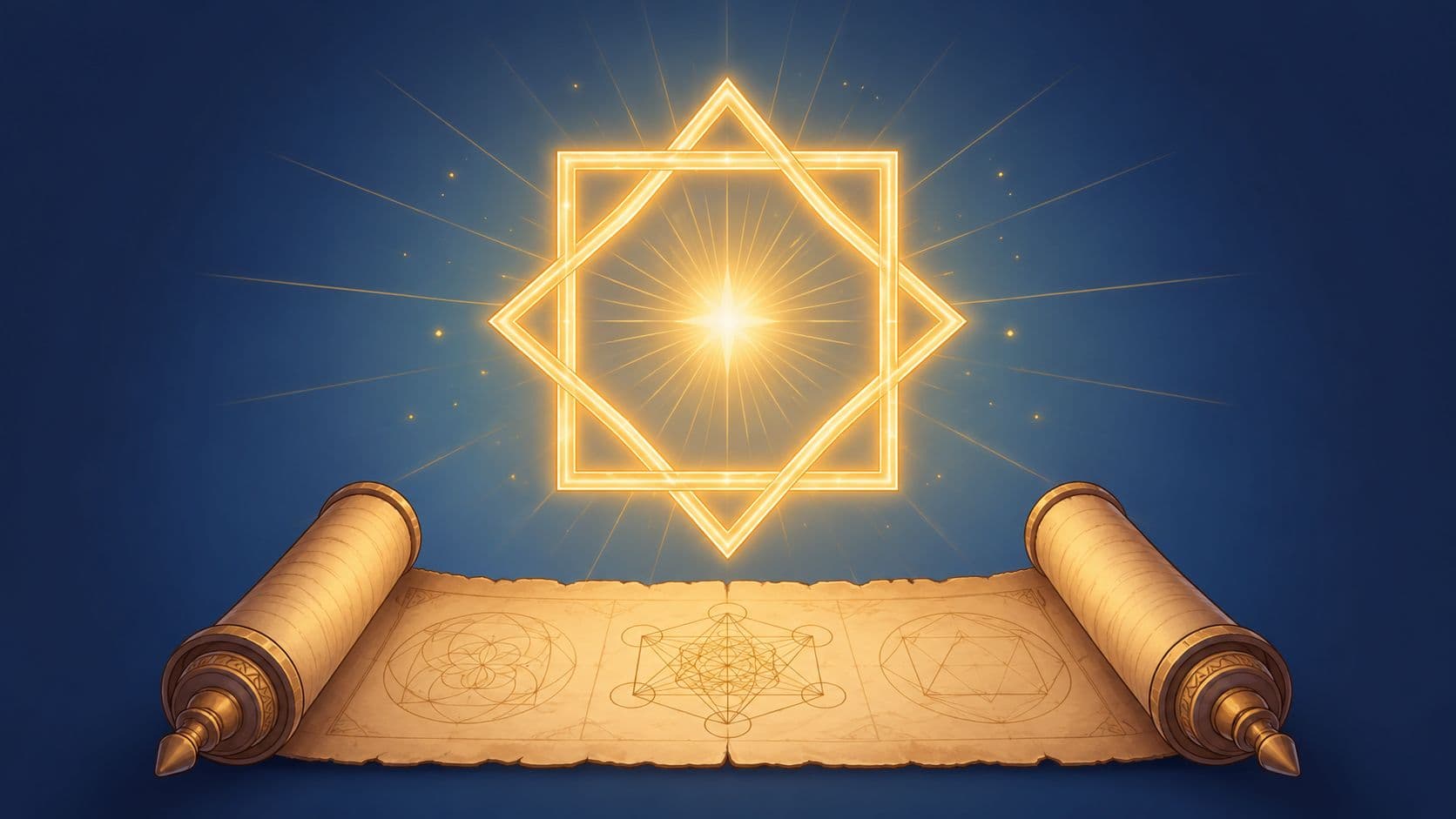
Why does an eight-pointed star carry the name Seal of Melchizedek when the historical trail behind that label is so thin? That question sits at the center of the symbol's modern life. The shape is real, the religious uses are real, and the name attached to it is far more recent and contested than many people assume.
What makes the symbol fascinating is that it lives at the intersection of geometry, scripture, temple art, and devotional interpretation. Some people treat it as a sacred Christian pattern, some as a Latter-day Saint temple motif, and some as a symbolic prompt for prayerful reflection. The shape itself is older than the modern label, and that distinction matters because it helps separate what can be shown from what is believed.
What Is the Seal of Melchizedek
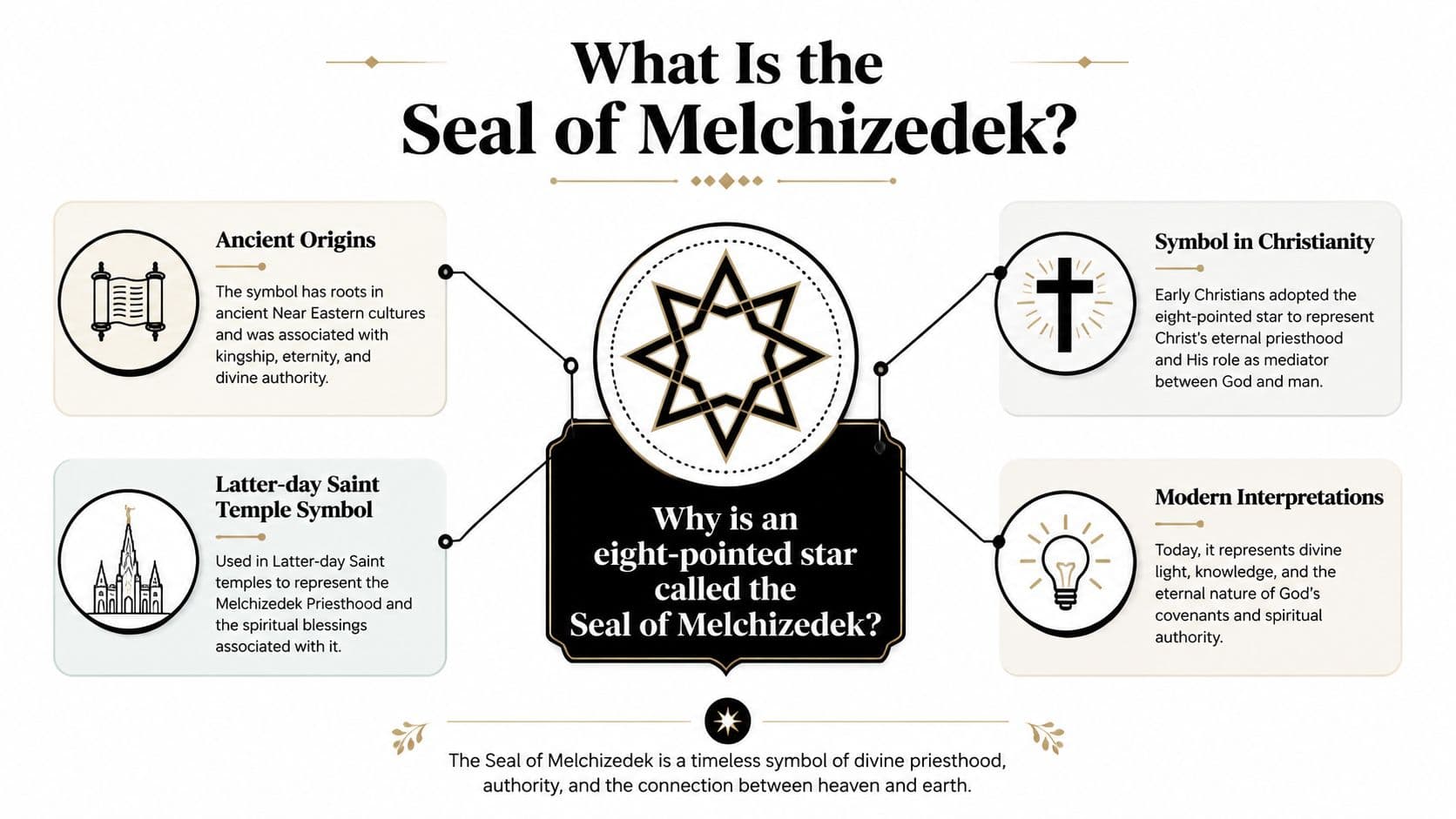
At the simplest level, the Seal of Melchizedek is an eight-pointed star made by overlapping two squares. One square sits on top of another at an angle, and the result looks like a star with a small geometric center. That visual shape is easy to draw and easy to recognize, which is one reason it travels well across different settings.
The confusing part is the name. People often hear “seal” and assume it must point to an ancient official mark tied directly to Melchizedek himself. That assumption is exactly where the historical debate begins, because the name is not the same thing as the design.
Practical rule: separate the shape from the story told about the shape. The geometry can be old without the label being old.
A useful way to think about it is like a common melody that gets new lyrics in different eras. The tune may be familiar, but the message attached to it changes depending on who is singing. The seal works the same way. The underlying pattern appears in older artistic and architectural traditions, while the specific religious name comes from much later interpretation.
That is why discussions of the seal usually split into two tracks. One track asks what the symbol looks like and where similar patterns have appeared. The other asks what believers think it means now. Both questions matter, but they are not the same question.
The Eight-Pointed Star and Its Geometry
The star begins with two squares placed around the same center. Turn one square over the other and the corners produce eight points around a middle form that often reads as an octagon. A sheet of tracing paper makes the process easy to see. One square stays still, the other shifts, and the overlap creates the finished figure.
A better way to picture the effect is through drafting tools, not windows or kites. Two identical shapes, slightly offset, produce a new outline that is more striking than either shape alone. The symbol gains its force from that simple interaction. It is regular enough to feel balanced, yet layered enough to draw attention.
Why the shape feels ancient
The geometry is not tied to one religion. Similar patterns appear in floor mosaics, church ceilings, carved stonework, and decorative layouts across different cultures, so the design can feel historically deep even when the name attached to it is much later.
That wide use also helps explain why the symbol is so easy to reinterpret. A geometric form that belongs naturally in sacred architecture can be carried into new settings without changing its structure. The pattern stays the same, while the meaning around it shifts.
Readers interested in visual symbolism and meditative patterning can compare the seal with other repeating sacred forms. The comparison shows a simple point. A symbol can gain emotional weight through repeated use, even when its origin story is debated.
The eye sees a design first. Meaning comes later, through tradition, teaching, and use.
That distinction keeps the discussion clear. The shape can be appreciated as architecture, read devotionally as a sign of holiness, or studied historically as a reused geometric motif. Those layers can sit together without being forced into one simple explanation.
A visual pattern that travels well
The star appears easily in different settings because it is symmetrical, memorable, and adaptable. Builders can place it in stone, artists can adapt it in paint or metal, and worshippers can use it as a focus for contemplation.
That flexibility is part of the symbol's lasting appeal. It does not need a long explanation to be recognized. A glance is enough.
Historical Sources and the Name Itself
The biblical figure Melchizedek appears briefly in Genesis and the Psalms, then later in a fuller theological form in Hebrews. Those passages speak about priesthood, blessing, and lasting significance, but they do not present a visual emblem and say, “This is his seal.” The symbol is absent from the scriptural record in that direct sense.
That gap changes the burden of proof. If the Bible does not name the symbol, the modern label has to come from somewhere else. In the material provided for this article, the documented origin of the phrase is Hugh Nibley's Temple and Cosmos, and even the illustrator who first used the phrase questioned whether the label was legitimate.
A modern label attached to an older pattern
That combination points to a simple distinction. The phrase “Seal of Melchizedek” is a modern development, while the geometric design itself may be older. The name is a later interpretive layer placed on top of a form that already existed in visual and architectural settings.
Readers often blur those two pieces together. They hear the term and assume the term and the shape are equally ancient. The shape can have a long visual history, while the name remains comparatively recent.
Source criticism helps separate those layers. If you want a method for separating textual evidence from later tradition, take a look at explore source criticism methods. That kind of reading asks who first used a label, when it appeared, and whether the evidence supports the claim being made.
Melchizedek still matters in Christian thought because the biblical texts present him as a priestly figure of unusual importance. The move from that priestly figure to a specific star-shaped emblem came later. Once that distinction is clear, the historical discussion becomes much easier to follow.
Why the name spread
Names travel faster than arguments. Once a symbolic label enters devotional speech, people begin to use it in teaching, art, and temple culture, and the label can start to feel older than it really is. That pattern appears often with religious imagery.
The label gave the star a theological frame. It let believers connect the pattern to priesthood, sacred space, and Christ-centered meaning. That meaning may be spiritually rich, but it still is not the same as ancient documentation.
Some readers also connect the seal to ideas of hidden spiritual records, including language around the Akashic Records, which shows how easily a geometric motif can gather new meanings after the fact. The modern label can therefore act like a caption added to an old drawing, useful for interpretation, but not proof of the drawing's original intent.
What Scholars Say About the Disconnect
The strongest scholarly objection is straightforward. The BYU Religious Studies article on the topic says the star is unquestionably ancient as a design, but it is not supported by scholarly or ancient sources as a symbol of Melchizedek or his priesthood. The same source says there is “nothing” in the evidence tying it to Melchizedek, and it treats the motif as a pattern found in ancient architecture, especially in Christian settings. That is a careful historical separation, not a dismissal of devotional use.
The value of that position is its restraint. It doesn't say the symbol is meaningless. It says the historical claim is not proven. That distinction protects both scholarship and faith from overreach.
Why the disconnect matters
If a symbol shows up in many places, it can be tempting to assign it one original sacred owner. But shared geometry doesn't work that way. Patterns can move across cultures, and builders can reuse them for beauty, balance, and religious atmosphere without preserving one fixed doctrinal meaning.
This is why the seal can appear in Christian, Jewish, Islamic, and secular settings without proving a single ancestral source. The shape is broad enough to travel. The label is narrower than the design.
The difference between “this symbol appears in older architecture” and “this symbol proves an ancient Melchizedek cult” is huge. The first statement is descriptive. The second is a historical claim that needs direct evidence, and the evidence we've been given doesn't provide that.
For readers who want a broader framework for asking those kinds of questions, the habit of testing claims against primary evidence is more important than defending any one conclusion. A symbol can be treasured and still be historically debated. That's not a weakness. It's a sign that people are paying attention.
A fair-minded way to read the symbol
A good historical posture is simple. Hold the art lightly and the evidence tightly. That means appreciating why believers love the seal while also admitting the old geometry does not automatically verify the old story attached to it.
A symbol can be spiritually alive even when its origin story is disputed.
That's the balanced reading the strongest scholarship invites. It leaves room for devotion, but it also refuses to turn reverence into proof.
Symbolic Meanings Across Traditions
People keep returning to the Seal of Melchizedek because it carries layered meanings without losing its visual clarity. In Latter-day Saint contexts, it is often associated with Christ-centered foreshadowing and sacred authority. In broader Christian reading, it can signal holiness, covenant, and the meeting point of heaven and earth. The same shape can also function as a meditation aid for anyone drawn to sacred geometry and ordered design.
That variety is not a flaw. It's how symbols work when they stay alive in culture. A sign that can only mean one thing usually dies off. A sign that can carry several related meanings keeps getting reused.
How different readers approach it
A Latter-day Saint may look at the seal and think about temple space, priesthood, and the way sacred architecture teaches visually. A Christian contemplative may read it as a reminder of divine order and the quiet structure of faith. Someone interested in numerology or life-path themes may use the symmetry as a prompt to reflect on balance, direction, and spiritual laws, especially through Dan Millman's The Life You Were Born to Live and the Life Purpose App, which turns self-knowledge into a structured reflection practice.
That last use is less about proving a doctrine and more about paying attention. A geometric symbol can become a mirror. It can ask a person where life feels aligned and where it feels fractured.
Meanings that overlap
- Christ-centered foreshadowing. Some believers read the name Melchizedek as pointing beyond the ancient figure toward Christ.
- Priesthood authority. In temple settings, the image can symbolize sacred service and divine order.
- Sacred covenant. The seal can remind people of promise, loyalty, and consecration.
- Temple and eternity. The repeated shape works well as a visual cue for permanence and sacred space.
- Unity of heaven and earth. The overlap of two squares suggests two realities meeting at one center.
If you're choosing devotional jewelry or a visual reminder, the shape's symbolic range matters more than any single explanation. A guide to moissanite religious pendant styling tips can help you think practically about how sacred imagery is worn, displayed, and kept personal without flattening its meaning.
Keeping the symbolism grounded
The safest reading is also the richest. Let the seal speak as a living symbol, not as a rigid code. That keeps it open to prayer, teaching, art, and reflection without pretending its meaning was fixed once and for all in antiquity.
Modern Uses and Where You Can See the Seal Today
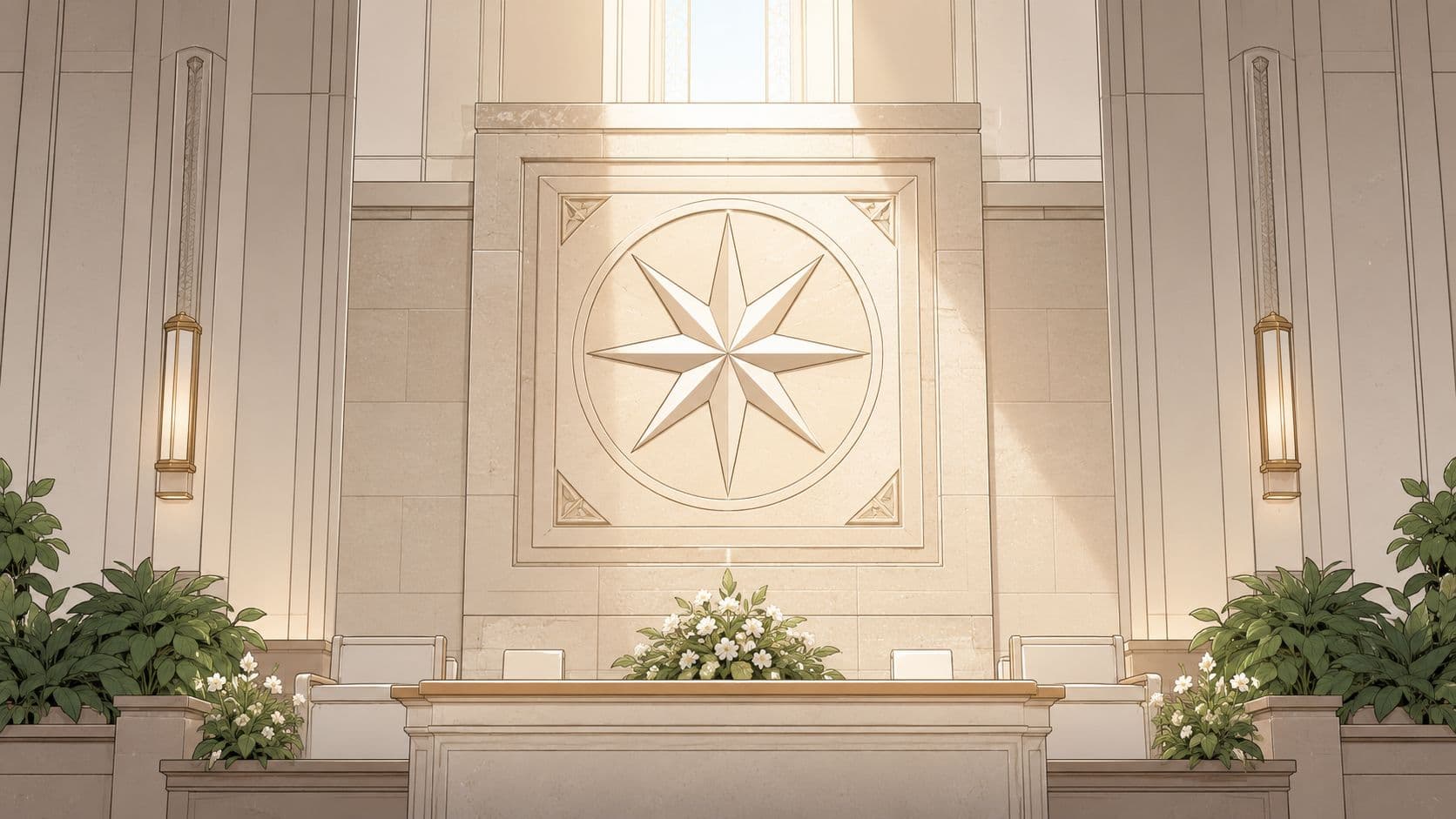
The seal's modern visibility is tied strongly to Latter-day Saint temple architecture. One widely circulated LDS Living article says President Gordon B. Hinckley had the symbol added to the Salt Lake Temple, and that it later appeared about 10,000 times in the San Diego Temple. Those facts matter because they show the design moving from abstract interpretation into highly visible sacred architecture.
That kind of use changes how people encounter the symbol. Instead of seeing it as a small doctrinal footnote, worshippers and visitors meet it as a repeated visual element in a landmark sacred space. Architecture teaches by repetition, and this symbol was given room to repeat.
Beyond temple walls
You can also find the symbol in Christian visual art, jewelry, tattoos, devotional graphics, and meditation aids. In each of those settings, it acts a little differently. Jewelry makes it portable. Tattoos make it embodied. Art makes it contemplative. Meditation tools make it rhythmic and repeatable.
The key point is that these are modern revivals and reinterpretations, not proof of uninterrupted ancient use. The image may feel timeless, but its current religious placement is part of a later history. That doesn't make it less meaningful. It makes it more interesting.
A symbol that enters public sacred space gets recontextualized quickly. A temple wall gives it authority. A pendant gives it intimacy. A tattoo gives it permanence. A screen graphic gives it quick access for prayer or study.
Why modern use keeps growing
People use symbols when words feel too small. That's especially true in spiritual life, where a visual form can hold ideas about covenant, order, reverence, and identity all at once. The seal works because it is simple enough to remember and layered enough to reward repeated looking.
For anyone doing personal reflection, tools that encourage structured self-observation can fit naturally alongside symbolic meditation. The point isn't to reduce the seal to a self-help object. It's to use a clear image as an entry point for honest thought.
Cautions, Common Misconceptions, and Next Steps
The biggest misconception is that the Seal of Melchizedek is universally ancient in the specific sense people often mean by that phrase. The design itself is old, but the label is modern, and the evidence does not show a direct ancient Melchizedek origin. Another common mistake is treating the symbol as if it has one official meaning everywhere it appears.
A third misread is assuming the symbol can be confidently dated to Melchizedek's lifetime. That claim goes beyond the historical record we have. The better reading is simpler and more careful. The geometry is older than the name, and the name is older than some people realize.
How to engage it well
Respect matters when a symbol crosses traditions. What feels devotional in one setting may feel unfamiliar in another, and the safest posture is to avoid claiming more certainty than the evidence allows. If you use the seal in journaling, meditation, or personal prayer, let it function as a prompt rather than a proof text.
A few grounded habits help:
- Check the source layer. Ask whether you're reading scripture, later commentary, or devotional interpretation.
- Separate history from meaning. A symbol can be spiritually useful even if its origin story is debated.
- Stay open to context. The same image can carry different weight in temple art, Christian iconography, or personal reflection.
- Use it reverently. Sacred imagery deserves careful handling, especially when it travels across traditions.
The historical evidence points back to the BYU Religious Studies article as a strong place to start if you want to follow the scholarly argument further. For a broader spiritual reading life, Dan Millman's The Life You Were Born to Live and the Life Purpose App can support reflection on symbolism, life patterns, and personal meaning without forcing the seal into a single interpretation.
The seal is most useful when it stays honest. It can be beautiful, devotional, and thought-provoking all at once, as long as we don't confuse reverence with documentation or symbolism with settled history.
If you want a practical way to keep exploring symbols like this in a grounded, personal way, visit Life Purpose App. It gives you a structured space to reflect on life patterns, spiritual laws, and personal meaning, which pairs naturally with symbols that invite slow, thoughtful looking.
Discover Your Life Purpose Today!
Unlock your true potential and find your life’s purpose.
