Explore the shared death experience (SDE), a profound end-of-life phenomenon. Understand its common features, scientific views, and how to find meaning in it.
July 23, 2026 (1mo ago)
Shared Death Experience: A Gentle Guide to the Phenomenon
Explore the shared death experience (SDE), a profound end-of-life phenomenon. Understand its common features, scientific views, and how to find meaning in it.
← Back to blog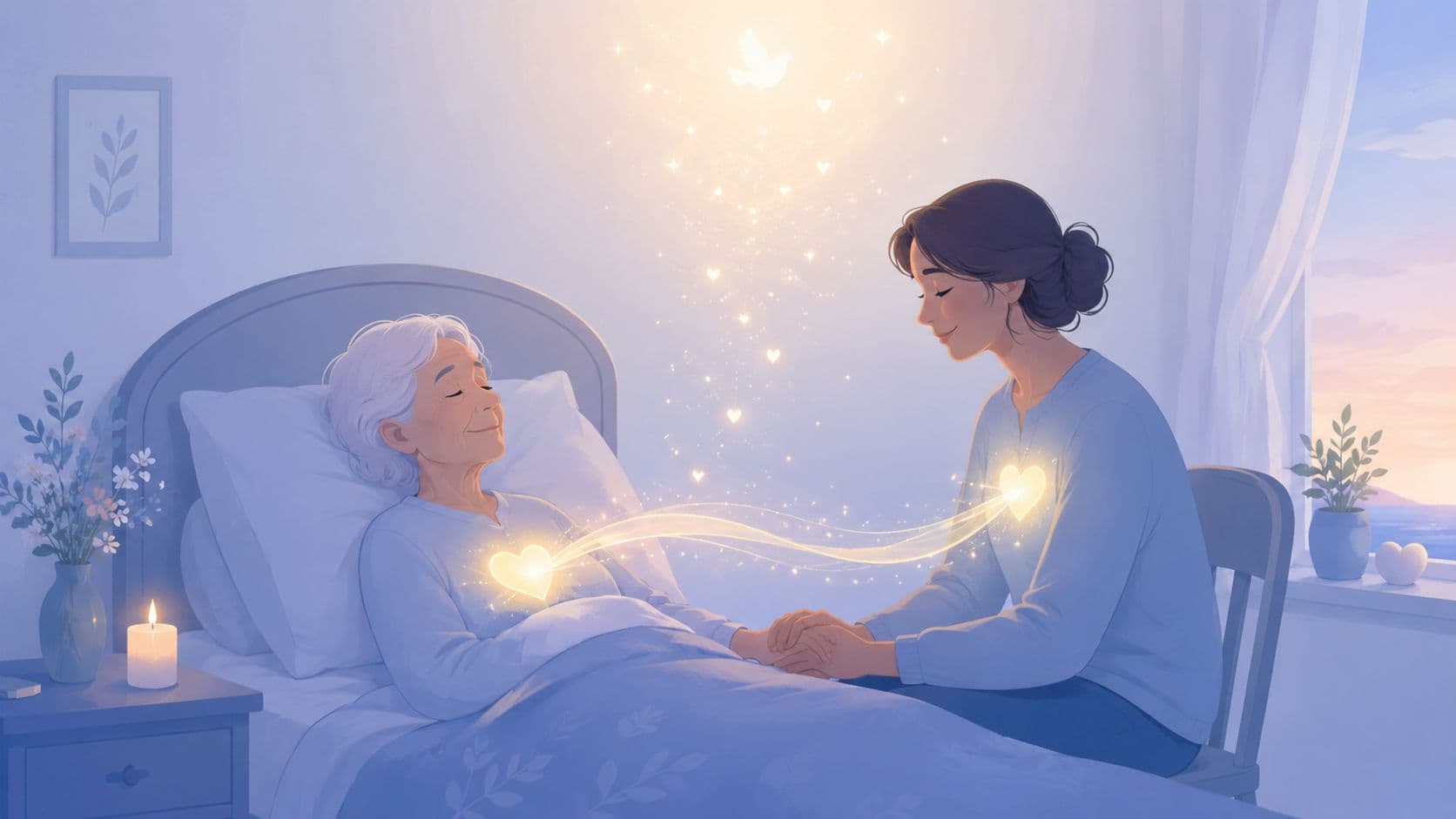
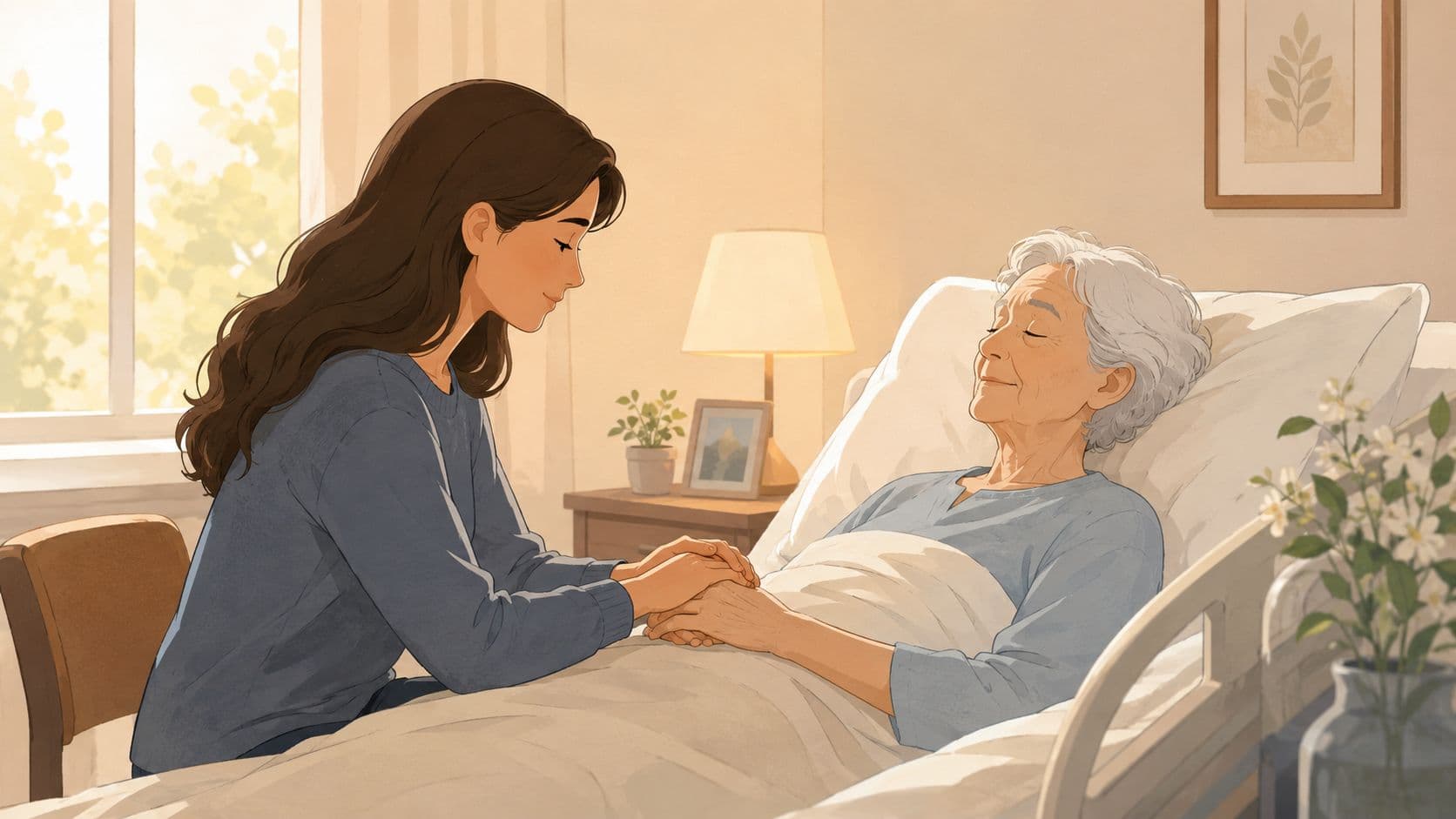
You may have sat beside a hospital bed, held a hand, listened to the breathing slow, and felt something shift in the room that you can't quite explain. Maybe the atmosphere felt fuller, lighter, or strangely intimate, even while grief was already rising. People who later call that moment a shared death experience often say they knew, in a way they can't fully put into words, that something meaningful happened there.
An Introduction to Shared Death Experiences
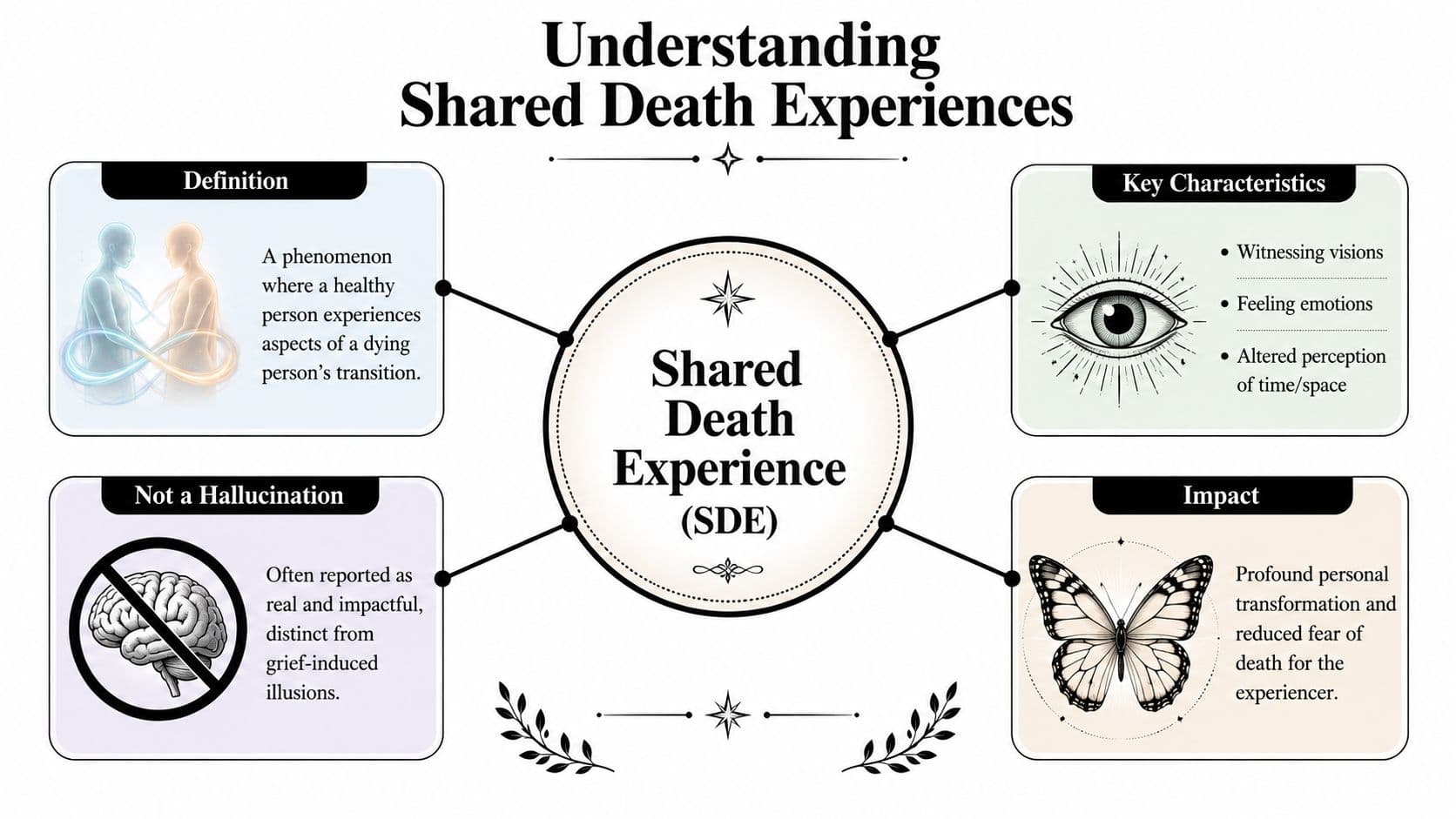
A shared death experience, often shortened to SDE, is usually described by someone who was with a dying person, or emotionally close to them, and felt drawn into the dying process in some way. That participation can feel physical, emotional, visual, or spiritual. The person may sense presence, see light, feel movement, or experience a sudden certainty that death is not only an ending, but also a transition.
A clear starting point comes from the International Association for Near-Death Studies, which describes an SDE as an event in which a living loved one, caregiver, or bystander reports sensing, observing, accompanying, or assisting a dying person as they transition into a postmortem existence, with common features such as a journey toward luminous light, seeing the dying person alive and well, encountering spirit beings, and seeing the spirit or soul leave the body (IANDS fact sheet). That definition matters because it gives readers a shared language for something that can otherwise feel private, confusing, or even lonely.
A quiet point gets lost in many conversations about death. People do not always mean the same thing when they say they felt a loved one “pass by,” “came with me,” or “showed me they were okay.” The phrase shared death experience helps separate these reports from ordinary bedside emotion without dismissing the tenderness of either one.
For many readers, the first question is not whether an SDE sounds mystical. It is whether naming it will make their own experience seem less strange, or help them tell it apart from grief-driven moments that can also feel vivid and real. A useful distinction is this, grief can bring dreams, flashes of memory, and a strong sense of presence after a loss, while an SDE is typically reported during the dying process itself and is often described as shared, immediate, and relational.
A name does not prove the meaning, but it can reduce the shame and isolation that sometimes follow an intense end-of-life moment. It can also give people a calmer way to ask, “What happened here, and what does it mean for me?”
The Peaceful Warrior tradition reflects a similar kind of quiet insight, where life-changing understanding arrives in unexpected moments and asks to be received with care.
What Exactly Is a Shared Death Experience
A shared death experience usually begins in a close, high-stakes moment with someone who is dying. A bedside scene is common, but it is not the only setting. The person later describes a boundary softening between themselves and the dying process, as if they were drawn into an event rather than only observing it from the outside. The account often feels immediate, coherent, and deeply real to the person who lived it.
The core pieces
As noted earlier in the IANDS definition, the term is meant to stay broad. It includes sensing, observing, accompanying, and assisting, because shared death reports do not all follow the same pattern. Some people describe a sudden awareness that death is near. Others report seeing a deceased relative appear, noticing a bright presence, or feeling themselves rise or move alongside the dying person.
The recurring features described in the literature often include a journey or movement, usually toward light, seeing the dying person healthy or radiant, encountering spirit beings, sensing altered time or space, and perceiving the spirit or soul leaving the body, as noted earlier in the IANDS fact sheet. Not every account contains all of these elements. Even so, the repeated themes give the experience a recognizable outline, like different witnesses describing the same storm from different angles.
Practical rule: if a report centers on an intense sense of presence, movement, light, or transition around a death, it belongs in the SDE conversation, even when the details vary from person to person.
What makes it different from a vague feeling
A powerful bedside impression can be tender, frightening, or comforting without becoming a shared death experience. What tends to set an SDE apart is the degree of eventfulness. People often remember it as vivid, organized, and lasting, not as a fleeting emotion that fades into the background.
That distinction matters for anyone trying to sort through grief-related experiences. Grief can bring dreams, memory flashes, and a strong sense that a loved one is near, and those experiences can feel intensely real. An SDE is usually described as happening in relation to the dying process itself, and the person often feels they were part of that moment rather than revisiting it later in memory.
The previously mentioned PubMed summary also found that SDEs often changed how participants understood death, including a stronger sense that consciousness may continue in some form after the body dies. That shift helps explain why many experiencers do not experience the moment as an ordinary dream, a random thought, or a simple emotional reaction.
A final point helps people who are trying to make sense of their own experience. An SDE is not tied to one religion, one culture, or one kind of personality. It is reported in different settings and within different relationships, which is one reason the term remains useful in grief and end-of-life conversations.
The Four Common Types of SDEs
A helpful way to understand a shared death experience is to start with the recurring forms people describe. Researchers and organizations often sort these accounts into four patterns, and that framework helps explain why two people can go through something similar while telling the story in very different ways. A review of survey studies found that the topic appears regularly in the literature, even though it is still not well understood (2023 survey review).
A simple framework
The recurring categories are sensing, witnessing, accompanying, and guiding. The names sound clinical, but the experiences themselves are often intimate and human.
- Sensing: the person feels that a loved one is dying, or senses the transition before anything is confirmed.
- Witnessing: the person sees unusual figures, light, or scenes connected to the dying process.
- Accompanying: the person feels they travel with the dying person toward a threshold, light, or other realm.
- Guiding: the person feels they help the dying individual move through the transition.
These categories are not rigid boxes. They work more like a map for repeated themes. A caregiver might first sense that death is near, then later remember feeling as if they were accompanying the dying person through a passage of light. One account can hold more than one pattern.
What the research suggests
Survey findings suggest that many SDEs are visual, visual-auditory, or feeling-based, and that they are often reported before death or after death of the person involved (2022 survey PDF). A separate summary found that many experiences happened when the experiencer was apart from the dying person (PubMed summary).
That detail matters because it corrects a common assumption. An SDE does not require physical presence at the bedside. It can happen at a distance, which is one reason people are often surprised by the timing or place of the event.
Even when the experience happens away from the deathbed, the person often describes it as tightly linked to the dying individual, not as a random vision.
A published content analysis also grouped reports into four participatory modes and three outcome domains, including changes in belief, reconciliation of grief, and continued relational bonds with the deceased (content analysis). That is one reason these experiences matter beyond the moment itself. They can become part of processing loss and mental health, shaping how a person grieves, remembers, and understands what happened.
Is It an SDE or Is It Grief
This question is often the hardest part of shared death experience accounts, and it deserves a careful answer. Many people worry that they are reading too much into a grief reaction, or that exhaustion, sorrow, and expectation of death may have shaped what they felt. That concern is understandable, especially when the experience arrives during a painful time.
A 2021 review noted that the field is still largely qualitative and distilled four non-exclusive modes of participation, which shows how definition-heavy the subject remains. In plain language, there is no simple test that can sort every experience into “SDE” or “grief” with complete certainty. The distinction usually comes from pattern, context, and what lingers afterward.
What often feels different
Grief-related perceptions can be vivid and meaningful, and they should not be brushed aside. An SDE is often described differently, with a clearer sense of structure, a stronger feeling of peace, and a quality that feels relational rather than random. The central difference is not whether emotion was present, because grief and love are usually part of the background. It is whether the event felt like a full encounter with a transition, rather than a brief image, fragment, or wish.
The same 2021 review describes a defining feature as a profound, lasting, and positive shift in the experiencer's view of death, which can differ from stress-related perceptions. That does not mean every SDE feels comforting in the moment. It means the experience often leaves behind a stable change in how death is understood, like a compass that keeps pointing in a new direction after the moment has passed.
A few questions that can help
- Did it feel organized or fragmented? Many SDE accounts have a clear beginning, middle, and end.
- Did it leave a lasting shift? SDEs often change how the person thinks about death afterward.
- Was it tied to the dying person specifically? An SDE usually feels relational, not random.
- Did it carry peace, recognition, or a sense of transition? Those are common themes in the literature.
These questions cannot diagnose anything, and they should not be used to pressure yourself into certainty. They can, however, help you notice whether what happened fits the broader SDE pattern.
A useful way to separate the two is to look at the shape of the experience over time. Grief can bring fleeting images, sensations, or moments of presence, especially in intense mourning. An SDE is more often remembered as coherent, purposeful, and unusually peaceful, and it may leave a lasting change in how the person understands death, connection, and the dying process. That difference matters because it helps people honor what they experienced without forcing it into a category that does not fit.
If grief, trauma, or mental health concerns are part of what you are carrying, processing loss and mental health may be a helpful place to think more broadly about support. For some people, the question is not whether the experience was “real enough.” It is how to hold both the loss and the meaning of the moment with honesty and care.
How to Integrate an SDE into Your Life
An SDE can leave a person with more questions than answers. That's normal. Some people feel comforted right away. Others feel unsettled because the experience doesn't fit neatly into their previous beliefs about death, consciousness, or spirituality.
The strongest consistent outcome in the research isn't a single doctrine. It's transformation. One analysis of shared death reports identified changes in beliefs, reconciliation of grief, and continued relational bonds with the deceased as major outcome domains (content analysis). In other words, the experience often becomes part of a person's inner life, not just a memory.

What integration can look like
Integration doesn't mean forcing a conclusion. It means letting the experience settle into your life. For one person, that may mean journaling the details before memory blurs. For another, it may mean talking with a grief counselor, chaplain, or trusted friend who won't ridicule the account.
It can also mean noticing what changed in you. Some people come away with less fear of death. Others feel a renewed bond with the person who died. Some feel more careful, more grateful, or less certain that the material world is the whole story. Those changes don't need to be exaggerated to matter.
Practical rule: don't rush to explain away an experience that still feels important months later. Let the meaning develop at the pace your life can hold.
A quiet path forward
If the experience has stirred bigger questions about purpose, values, or direction, it can help to use a framework for self-understanding that doesn't demand certainty all at once. Dan Millman's The Life You Were Born to Live and the companion overview of The Four Purposes of Life offer one structured way to reflect on life path, challenge, and growth without pretending that grief can be solved on a deadline.
That kind of reflection is especially helpful when an SDE seems to open a door you didn't expect. The point isn't to turn the experience into a system. It's to ask what kind of person you want to become in its wake.
Support and Resources for Further Exploration
If this topic feels personal, you do not have to sort through it alone. A careful next step is to look for sources that are calm, credible, and not trying to force a single interpretation. Shared death experiences are recognized in bereavement and end-of-life research, yet they are still underexplored, so openness and discernment both matter.
For further learning, the International Association for Near-Death Studies offers a clear fact sheet and broader educational material on SDEs. It is a useful starting point because it uses plain language and places the experience in its wider near-death context. The Shared Crossing Project also gathers many accounts and groups them by recurring patterns such as sensing, witnessing, accompanying, and guiding, which can help readers compare their own memories with a wider range of reports.
If your experience is tied to pet loss or the death of an animal companion, Heartstrings Pet Hospice resources can be a compassionate place to find support after a loss that others sometimes underestimate.
The Institute of Noetic Sciences has also summarized SDE types and outcomes in accessible form, including bedside and remote experiences, afterlife conviction, grief reconciliation, reduced fear of death, and renewed purpose. That kind of resource helps when you want a broader overview without losing sight of the human impact.
If you are trying to place this experience inside a larger worldview, Dan Millman's guide to The Laws of Spirit can add a reflective lens without pushing you toward a narrow belief system. A thoughtful reading path, along with grounded support, often helps more than trying to settle every metaphysical question at once.
A few people also find comfort in speaking with a grief counselor, chaplain, or trusted support group that can hold both uncertainty and meaning without ridicule. The right companion for this stage is someone who listens carefully, asks gentle questions, and leaves room for you to decide what the experience means in your life.
A CTA for Life Purpose App. If this experience has stirred deeper questions about who you are, why you are here, and how you want to live after loss, explore the Life Purpose App as a gentle next step for reflection and self-understanding.
Discover Your Life Purpose Today!
Unlock your true potential and find your life’s purpose.
