Explore 8 spiritual symbol tattoos and their meanings, from the lotus to the Eye of Horus, plus tips on aligning ink with your life path and values.

October 24, 2026 (22d ago) — last updated October 25, 2026 (21d ago)
8 Spiritual Symbol Tattoos and Their Deep Meanings
Explore 8 spiritual symbol tattoos and their meanings, from the lotus to the Eye of Horus, plus tips on aligning ink with your life path and values.
← Back to blog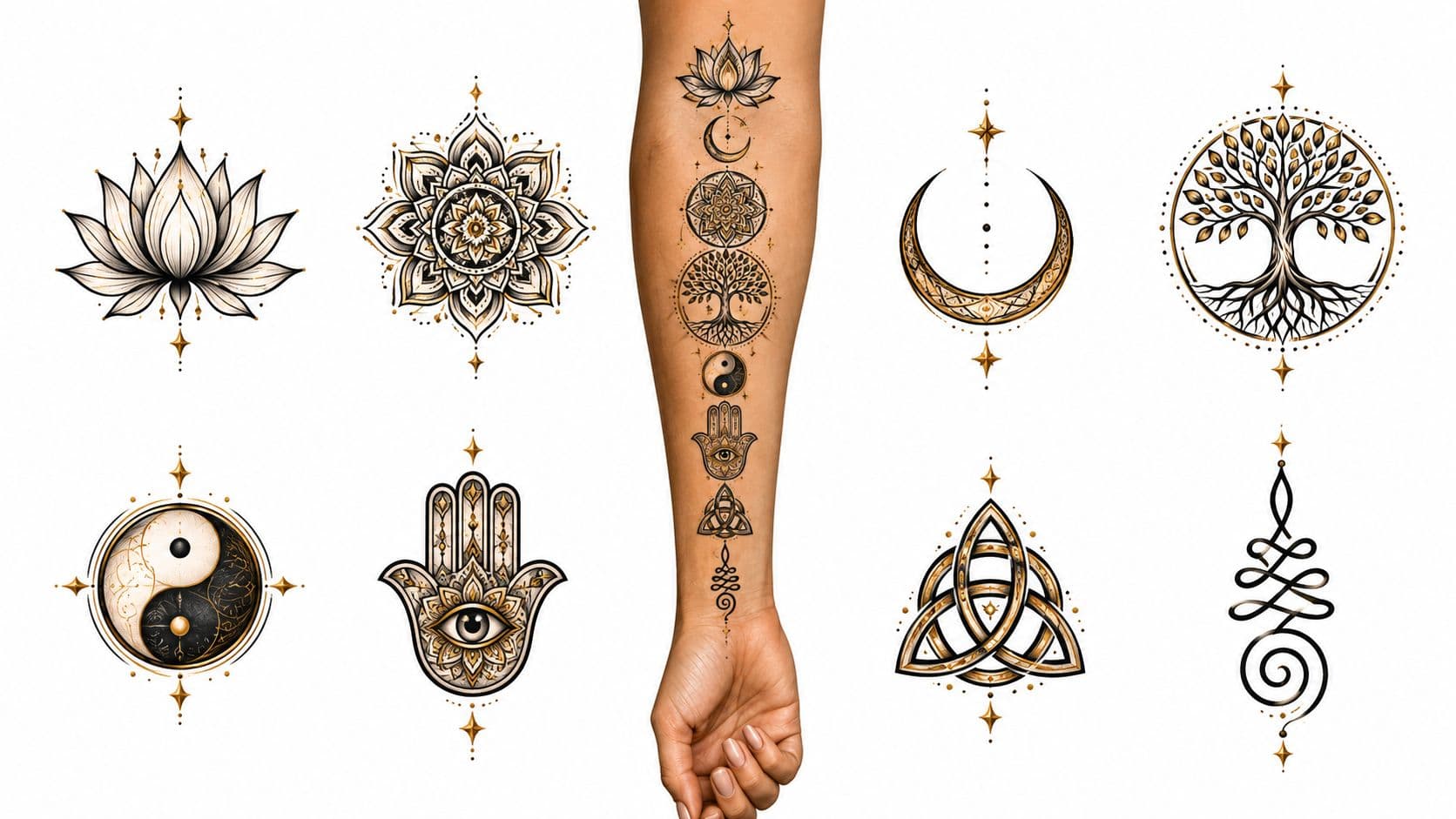
Explore 8 spiritual symbol tattoos and their meanings, from the lotus to the Eye of Horus, plus tips on aligning ink with your life path and values.
What makes a spiritual symbol tattoo feel right: its traditional meaning, or the way that meaning fits the life you're living? A beautiful design can still feel wrong if you choose it for an identity you hope to perform rather than a value you're prepared to practice.
Spiritual symbol tattoos work best as reminders, not promises. A lotus can mark your commitment to growth, but it won't do the growing for you. That distinction matters when you're comparing spiritual tattoo symbols and their meanings.
Dan Millman's book, The Life You Were Born to Live, and the Life Purpose App offer a structured way to reflect on your life path before choosing a design. Use them to identify personal themes, then consider which image expresses those themes. The connections below are personal design interpretations, not claims that Millman assigns these symbols to particular numbers.
- Growth and reflection: Lotus, Om, and mandala.
- Change and connection: Ouroboros and Tree of Life.
- Protection and focus: Hamsa, Sri Yantra, and Eye of Horus.
Start with the value you want to remember. Then choose a symbol whose cultural context, visual structure, and placement you're comfortable carrying.
1. Lotus Flower
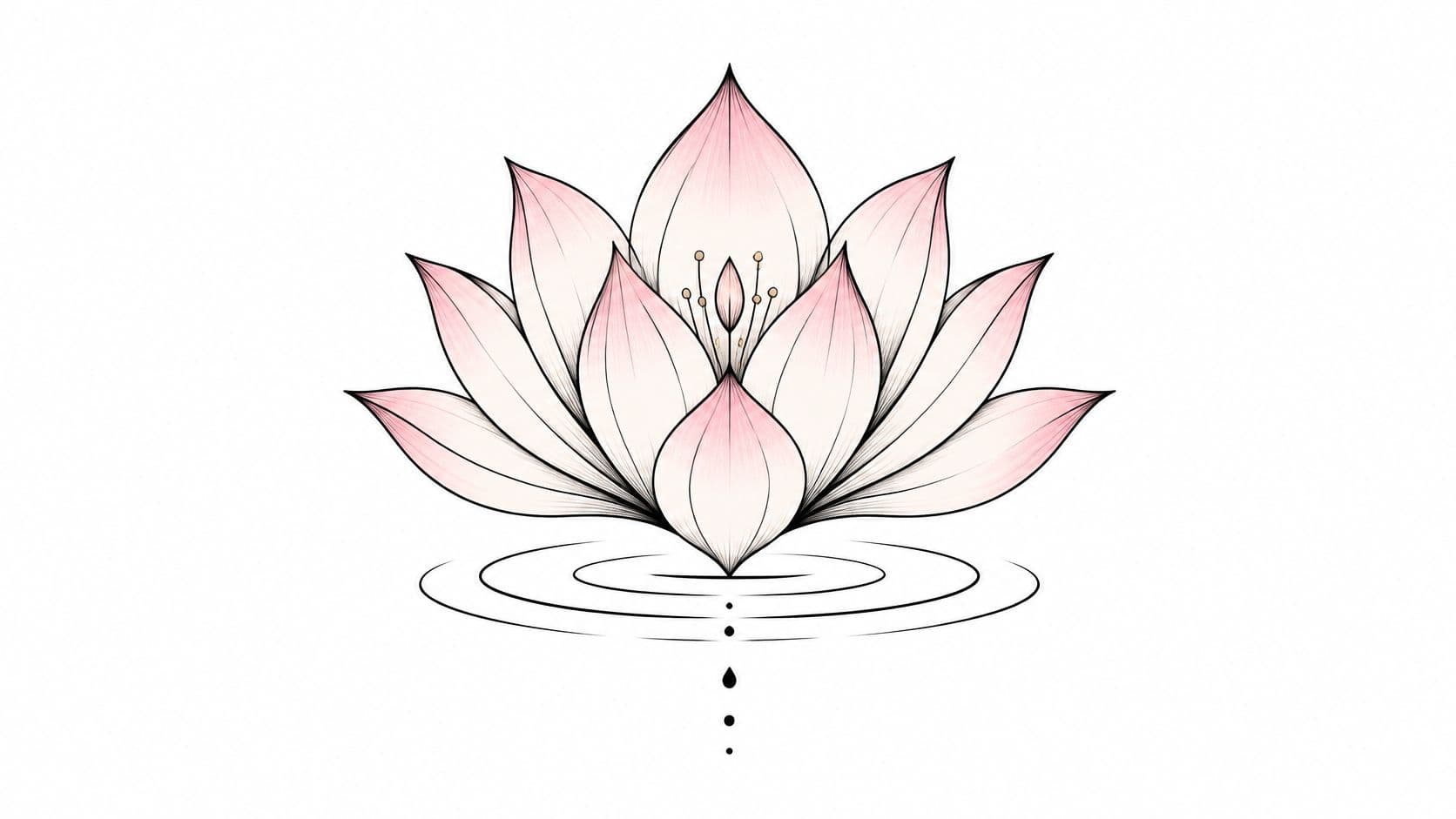
A lotus doesn't need to be fully open to make a strong tattoo. A half-open bloom can express something more honest than completion: you're still growing, and you're willing to acknowledge it.
The lotus carries associations with purity, renewal, and spiritual awakening in Hindu, Buddhist, and Jain traditions. Its emergence through muddy water makes it a compelling image for rising above difficulty without pretending that difficulty never happened.
Choose Growth Rather Than Perfection
For someone rebuilding after a difficult relationship, a bud with room around its petals could communicate ongoing renewal. An inner-forearm placement makes it available for private reflection, while an upper-arm placement gives the artist more freedom to develop the bloom.
When exploring your life path through Dan Millman's book, The Life You Were Born to Live, and the Life Purpose App, ask which quality you're learning to practice. Translate your answer into the flower's openness or composition rather than assigning the lotus a supposedly universal numerical meaning.
- Petal structure: Ask whether a personally meaningful petal count still produces a balanced drawing.
- Lettering: If you want a short phrase, leave enough room for both the words and flower to read independently.
- Cultural detail: Use symbolic lotus tattoo designs as a starting point, not permission to copy sacred artwork without understanding it.
A clear silhouette matters more than extra decoration.
2. Om (Aum)
Om is a sacred syllable before it's a graphic motif. Its use in Hindu, Buddhist, and Jain traditions deserves more consideration than whether its curves fit neatly beside a flower.
People may choose it to express connection, contemplation, or unity of body, mind, and spirit. Those intentions can be sincere, but a personal explanation shouldn't erase its religious context.
For example, a yoga practitioner might consider a compact Om near the collarbone as a reminder to return to attentive practice. Before settling on that placement, they should understand the symbol's significance within the tradition they're drawing from and seek informed guidance about respectful use.
Practical rule: Don't let an artist redraw sacred lettering from memory. Bring a reliable reference and verify the final stencil.
Keep Different Systems Distinct
If reflection on your life path in Dan Millman's book, The Life You Were Born to Live, and the Life Purpose App brings up questions about attention or connection, Om might prompt further exploration. That's your interpretation, not a prescribed symbol within Millman's framework.
Likewise, choosing to explore your sidereal birth chart is a separate inquiry. Don't treat astrology, sacred syllables, and Millman's work as interchangeable systems.
For the design itself, prioritize accurate curves and open internal spaces. A sternum composition can feel intimate, while a collarbone design is more exposed, but neither placement makes the symbol spiritually stronger. Choose according to cultural guidance, privacy, and how the stencil sits on your body.
3. Mandala
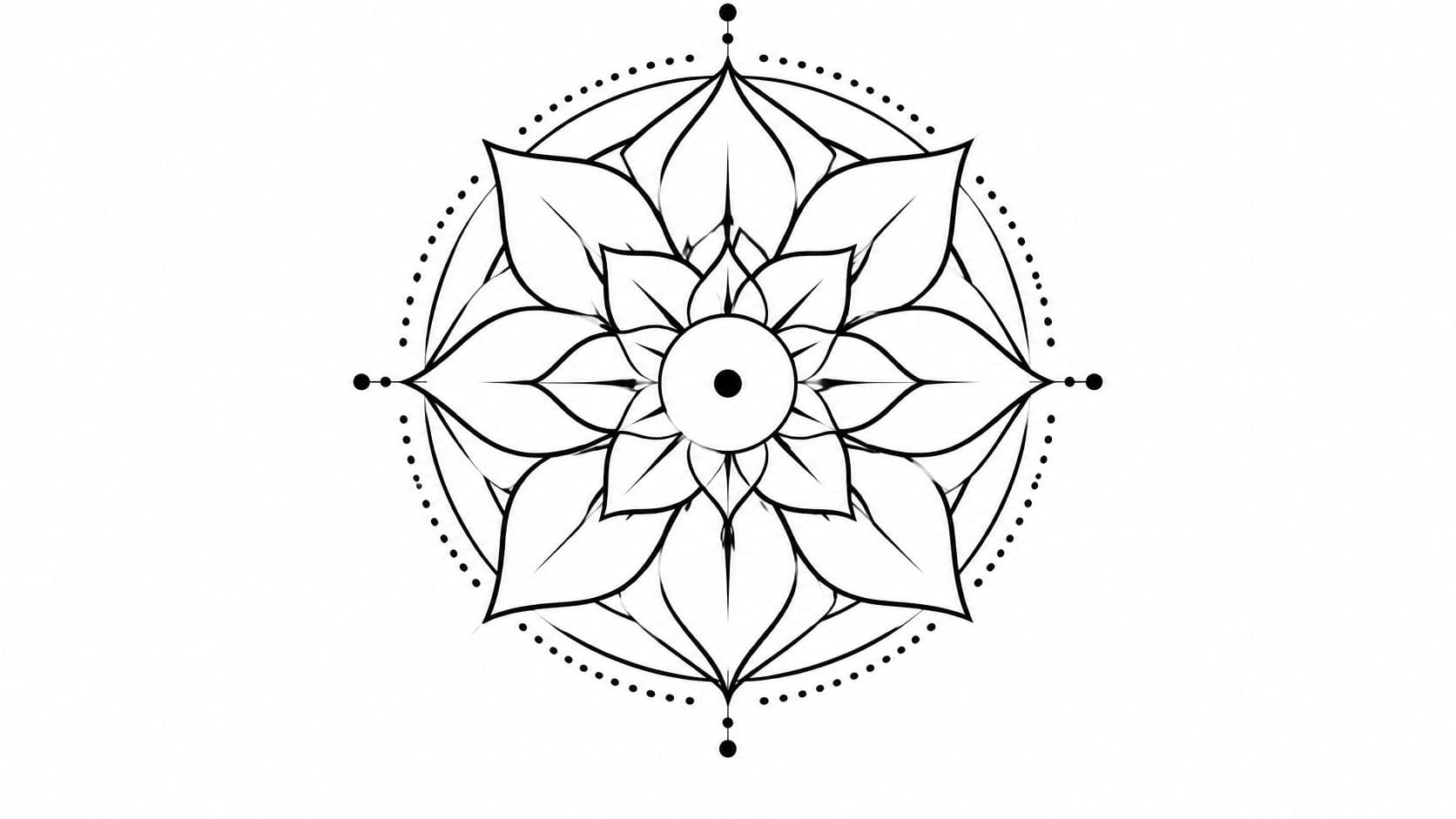
A mandala can look beautifully balanced on paper and awkward once wrapped around an ankle. Symmetry has to work with the body, not just with the drawing.
These circular geometric designs appear in Hindu, Buddhist, and Jain meditation and ritual contexts, with associations including wholeness, the universe, and inward reflection. A decorative radial flower may borrow that visual language without reproducing a specific sacred diagram, so be clear about which you're commissioning.
Give the Pattern Room
Consider someone who wants a wrist mandala to mark a return to regular meditation. A simpler radial design may serve that intention better than compressing a sleeve's worth of dotwork into a small circle.
- Small placement: Keep the center readable and reduce competing rings.
- Larger composition: An upper arm or back allows more breathing room around repeated details.
- Personal additions: Bring sketches of meaningful flowers or images, but don't require every idea to appear.
Exploring mandala art as a reflective practice can help you discover whether you connect with the process of creating patterns, not just the finished appearance.
When considering life-path themes through Dan Millman's book, The Life You Were Born to Live, and the Life Purpose App, use the mandala to reflect a quality you want to cultivate. Balance, for example, could become a deliberate relationship between detailed and open areas. That's a design choice, not proof that geometry will produce inner harmony.
4. Ouroboros
For a tattoo about change, an unbroken circle can be more expressive than a dramatic before-and-after image. The ouroboros, a serpent or dragon eating its tail, offers a way to represent cycles, renewal, and continuity.
Its historical associations include Egyptian, Greek, and alchemical contexts. Related serpent imagery also appears in Norse tradition, but that doesn't make every circular serpent the same symbol with the same story.
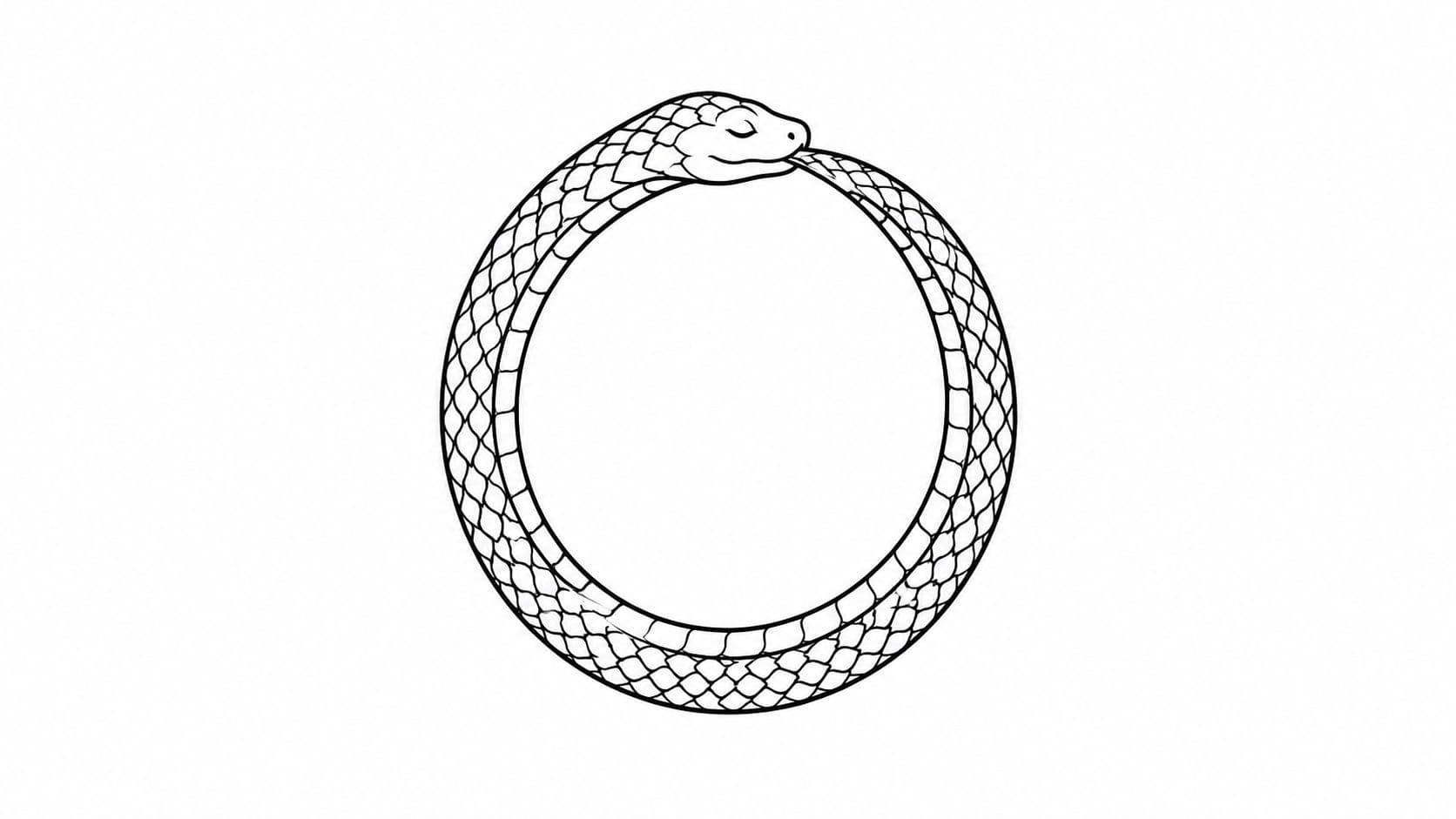
A person leaving an established career might choose an ouroboros to acknowledge that beginning again doesn't erase earlier experience. Blackwork on the forearm could keep that idea direct, without adding celestial elements that have no personal relevance.
Make the Connection Read Clearly
The mouth-to-tail join is the design's essential moment. Ask to see it clearly in the stencil rather than letting scales, shading, or overlapping shapes conceal the connection.
Choose a symbol of renewal because you're willing to change, not because you expect the tattoo to keep you from repeating mistakes.
A serpent can support a restrained composition; a dragon requires a different visual vocabulary. Decide which story you mean before combining features from unrelated references.
Dan Millman's book, The Life You Were Born to Live, and the Life Purpose App include life-path reflection and nine-year life cycles. You might personally connect that cyclical perspective with an ouroboros, while keeping the distinction clear: the tattoo is your interpretation, not an emblem assigned by the framework.
5. Tree of Life
Start a Tree of Life design by deciding what deserves the most space: the roots, the trunk, or the branches. That decision tells your artist more than a folder full of unrelated tree tattoos.
Across spiritual traditions, tree imagery can connect different realms and express ancestry, growth, and belonging. The details aren't universal, so a personal family tree and a tradition-specific sacred tree shouldn't be treated as identical.
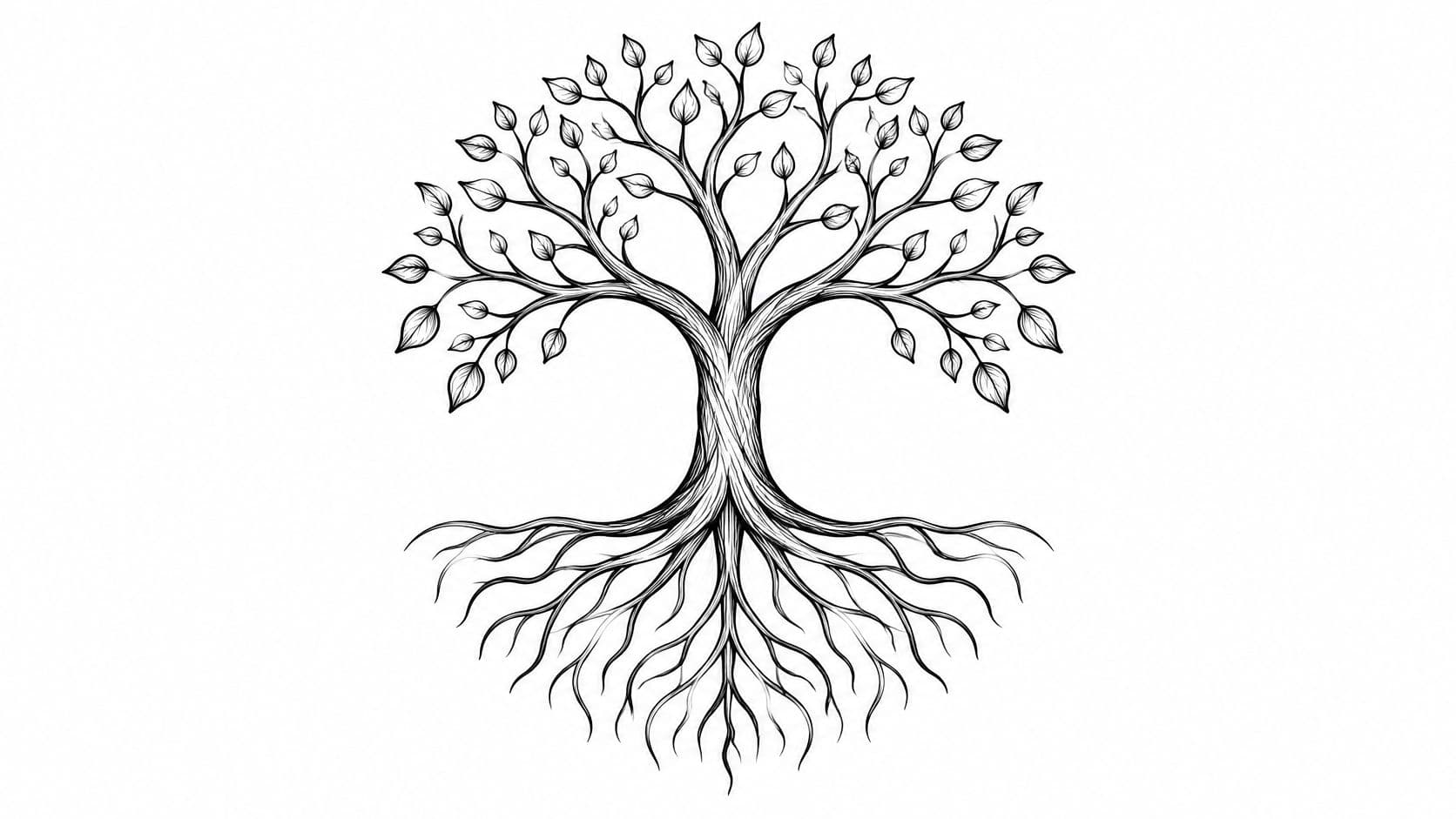
Let the Structure Tell Your Story
For someone honoring family while establishing independence, substantial roots with outward-reaching branches could express both intentions. A back piece gives that relationship space; a smaller upper-arm tree may need fewer branches and a simpler canopy.
- Ancestry: Emphasize roots without turning every root into miniature lettering.
- Future growth: Reserve open space if you want to discuss possible additions with your artist.
- Personal chapters: Give important branches distinct shapes rather than filling the canopy with competing symbols.
Browsing powerful symbols with deep meanings can help clarify whether you mean family continuity, personal growth, or something else.
For life-path exploration, use Dan Millman's book, The Life You Were Born to Live, alongside the Life Purpose App as your reference. Translate a personally relevant theme into the tree's structure, rather than claiming that a particular branch shape carries an established meaning in Millman's system.
Leave room for the person you're becoming, not just the history you already know.
6. Hamsa Hand
Protection can mean faith, connection, or a commitment to stronger boundaries. Before choosing a Hamsa, decide which of those you mean and whether this particular symbol is appropriate for expressing it.
The open-palm image is associated with protection, blessing, and good fortune in Jewish, Islamic, and North African contexts. Names such as the hand of Miriam and hand of Fatima reflect distinct cultural associations, not interchangeable decorative labels.
Someone marking a personal milestone might consider an inner-forearm Hamsa with a meaningful flower. The flower can personalize the composition, but it shouldn't obscure the hand or substitute for understanding its background.
Respect Comes Before Customization
Learning a definition isn't the same as understanding who uses a symbol and how. If you're outside the tradition, seek informed cultural guidance rather than asking your tattoo artist alone to settle questions of religious appropriateness.
Design boundary: A tattoo can remind you to protect your peace. It can't guarantee protection from harm.
For the artwork, begin with an open, legible outline. A detailed palm-sized reference may need simplification when adapted to the wrist; ask the artist to explain what they would remove and why. Don't assume a palm placement is the natural choice just because the design depicts a hand.
If life-path reflection through Dan Millman's book, The Life You Were Born to Live, and the Life Purpose App raises themes of responsibility or relationships, you might connect those themes to your intention. Keep that personal connection separate from the Hamsa's inherited cultural meanings.
7. Sri Yantra
Accuracy is part of the meaning with the Sri Yantra. This isn't a design to approximate by arranging triangles until the result looks spiritual.
The diagram comes from Hindu and Tantric traditions and uses interlocking triangles around a central point, the bindu. Its contemplative associations include the relationship between divine masculine and feminine principles and movement between the center and the wider pattern.
A person with an established meditation practice might consider an upper-back Sri Yantra within a lotus frame. Another might prefer geometric blackwork on the forearm, but the narrower placement needs careful stencil testing.
Choose the Artist Before the Size
Look for an artist whose portfolio demonstrates controlled geometric work. Ask how they'll preserve the intersections, establish the center, and adapt the reference without casually altering its structure.
- Reference: Bring a culturally grounded diagram rather than a decorative imitation.
- Scale: Be willing to enlarge the design or choose another location.
- Stencil: Examine it while standing naturally, not only while your skin is stretched for application.
The trade-off is straightforward: more intricate detail demands more space. If discretion is your priority, a different symbol may be a better choice than an overly compressed Sri Yantra.
When using Dan Millman's book, The Life You Were Born to Live, and the Life Purpose App to reflect on your life path, consider whether focus or balance is a meaningful personal intention. Don't present that connection as a traditional correspondence or as a reason to bypass learning about the diagram's religious use.
8. Eye of Horus
The Eye of Horus can express watchful care without becoming an elaborate Egyptian-themed composition. A clear, considered drawing often says more than an eye surrounded by unrelated hieroglyphs.
Also called the Wadjet, it carries ancient Egyptian associations with protection, restoration, healing, and royal power. Its connection with Horus gives it a specific cultural identity, rather than a generic meaning shared by every protective-eye image.
Someone commemorating recovery might choose a restrained blackwork version on the chest. That could serve as a personal reminder of resilience, but it shouldn't be described as providing medical healing or supernatural protection.
Keep the Reference Recognizable
Study authentic amulet references before asking for stylistic changes. Decide which features need to remain intact, then discuss how shading and line weight can create the ancient or contemporary appearance you want.
- Forearm: Test whether the eye reads clearly when your arm hangs naturally.
- Chest: Check the relationship between the design and your body's contours.
- Added geometry: Include it only if it strengthens your intended meaning.
Dan Millman's book, The Life You Were Born to Live, and the Life Purpose App can support reflection on life-path themes before you choose this image. If you connect it with discernment or self-awareness, identify that as your interpretation rather than an Egyptian meaning assigned by Millman.
Finally, don't let symbolism distract from materials. The FDA's tattoo safety guidance explains that contaminated ink and non-sterile dilution water can cause infections. Ask about sterile procedures and keep the ink's brand, color, and batch information.
Spiritual Symbol Tattoos: 8-Design Comparison Guide
| Symbol | Core Meaning | 🔄 Design Complexity & Resources | 📊 Typical Placement | ⭐ Ideal Use | 💡 Key Advantage or Consideration |
|---|---|---|---|---|---|
| Lotus Flower | Renewal, resilience, spiritual awakening | Low to moderate; petal detail benefits from sufficient size | Wrist, shoulder, back | Marking personal growth or a new beginning | Versatile and easy to personalize; very fine details may blur when small |
| Om (Aum) | Connection, inner peace, unity | Low; accuracy of the lettering is important | Finger, nape, behind the ear, sternum | A compact mindfulness or faith reminder | Fits small spaces; use a culturally informed, accurate reference |
| Mandala | Wholeness, balance, inward reflection | High for detailed designs; may require multiple sessions | Wrist or ankle for small designs; sleeve or back for large ones | A meditation focal point or highly customized geometric piece | Strong symmetry and personalization; fine dotwork needs clear spacing |
| Ouroboros | Cycles, renewal, eternity | Moderate; realistic scales or shading require specialist skill | Forearm, calf, back | Commemorating transition, continuity, or rebirth | Distinctive circular silhouette; explain the intended meaning if needed |
| Tree of Life | Growth, connection, ancestry | Moderate to high; detailed roots and branches may need more space | Back, thigh, forearm | Representing family, roots, or life chapters | Broadly adaptable symbolism; custom details help avoid a generic look |
| Hamsa Hand | Protection, blessing, good fortune | Low to moderate; decorative fills add detail | Wrist, ankle, inner forearm, behind the ear | A protective symbol with personal or cultural significance | Compact and easy to combine with other motifs; meanings vary by tradition |
| Sri Yantra | Inner balance, focus, expanded consciousness | High; precise geometry and an experienced artist are important | Upper back, forearm | Sacred-geometry or meditation-inspired designs | Strong symmetry and visual identity; a larger size can preserve fine lines |
| Eye of Horus | Protection, healing, restoration | Low to moderate; accurate proportions matter | Chest, forearm, back | A bold symbol connected to resilience or ancient Egyptian imagery | Recognizable and historically grounded; authentic references help avoid inaccurate forms |
Choosing a Spiritual Symbol Tattoo That Truly Fits
The best spiritual symbol tattoos don't require you to remain exactly who you were on appointment day. They express a value with enough depth to remain meaningful as your circumstances and beliefs change.
That value might be renewal, devotion, connection, or care. Choose the value before you choose the decoration, then ask whether the symbol's cultural meaning supports your intention rather than merely resembling it.
Personal meaning has a legitimate place in tattooing. In Pew Research Center's survey of tattoo motivations, 47% of tattooed adults said making a statement about their beliefs was a reason for having a tattoo. That doesn't establish how many chose spiritual imagery, but it shows why meaning deserves serious attention.
Bring a Clear Intention to the Consultation
Dan Millman's book, The Life You Were Born to Live, and the Life Purpose App can help you reflect on your life path and identify personal themes before committing. Use those insights as prompts, not instructions to wear a particular sacred image.
- Write your intention: Explain what you want the tattoo to remind you to practice.
- Research the context: Identify the tradition, consult credible cultural practitioners, and ask whether any restrictions apply.
- Test the design: Try a temporary rendering at the proposed scale and placement.
- Prepare for change: Consider whether the image would still feel honest if your beliefs or relationships shifted.
Bring those notes to an artist whose work suits the design. Ask to see healed examples, discuss what needs simplifying, and make room for an answer you didn't expect, including a recommendation to choose a different placement.
Safety belongs in that conversation too. The FDA's tattoo and permanent makeup fact sheet distinguishes approval for cosmetics applied to skin from approval for injection, and states that no color additives are approved for cosmetic injection into skin. Ask about studio hygiene, local requirements, ink documentation, and aftercare.
Make a shortlist, sit with it for a week, then book a consultation. Bring your references and your reasons, but stay open to an original design if it expresses your values more respectfully.
The Life Purpose App is a digital companion to Dan Millman's book, The Life You Were Born to Live, offering birth-date-based life-path exploration, spiritual laws, and reflection on personal gifts and challenges. Visit Life Purpose App to explore those themes, then use what resonates to write a clearer intention for your tattoo consultation.
Discover your life path today
Enter your date of birth and see your life path, free.
Find your life path