Got a sore throat? Learn how to use turmeric for sore throat relief with 3 easy recipes for tea, gargle, and golden milk. Plus, what science says about it.
June 24, 2026 (1mo ago)
Turmeric for Sore Throat: 3 Soothing Home Remedies
Got a sore throat? Learn how to use turmeric for sore throat relief with 3 easy recipes for tea, gargle, and golden milk. Plus, what science says about it.
← Back to blog
You wake up with that dry, scratchy sting that makes the first swallow of the day feel sharper than it should. By lunchtime, talking is annoying, hot drinks sound good, and you're standing in the kitchen wondering whether the turmeric in your cabinet can help, or whether it's just another internet remedy that sounds better than it works.
Used well, turmeric for sore throat can be soothing. Used badly, it's just yellow water. And in some situations, it can even make things worse. The useful middle ground is where many need help: what to take, how to prepare it, what has evidence behind it, and when to stop self-treating and get checked.
That Familiar Scratchy Feeling in Your Throat
A mild sore throat often starts subtly. You notice it when you sip coffee, answer a phone call, or swallow without thinking. Then your throat feels raw, talking gets effortful, and you start reaching for anything warm and comforting.
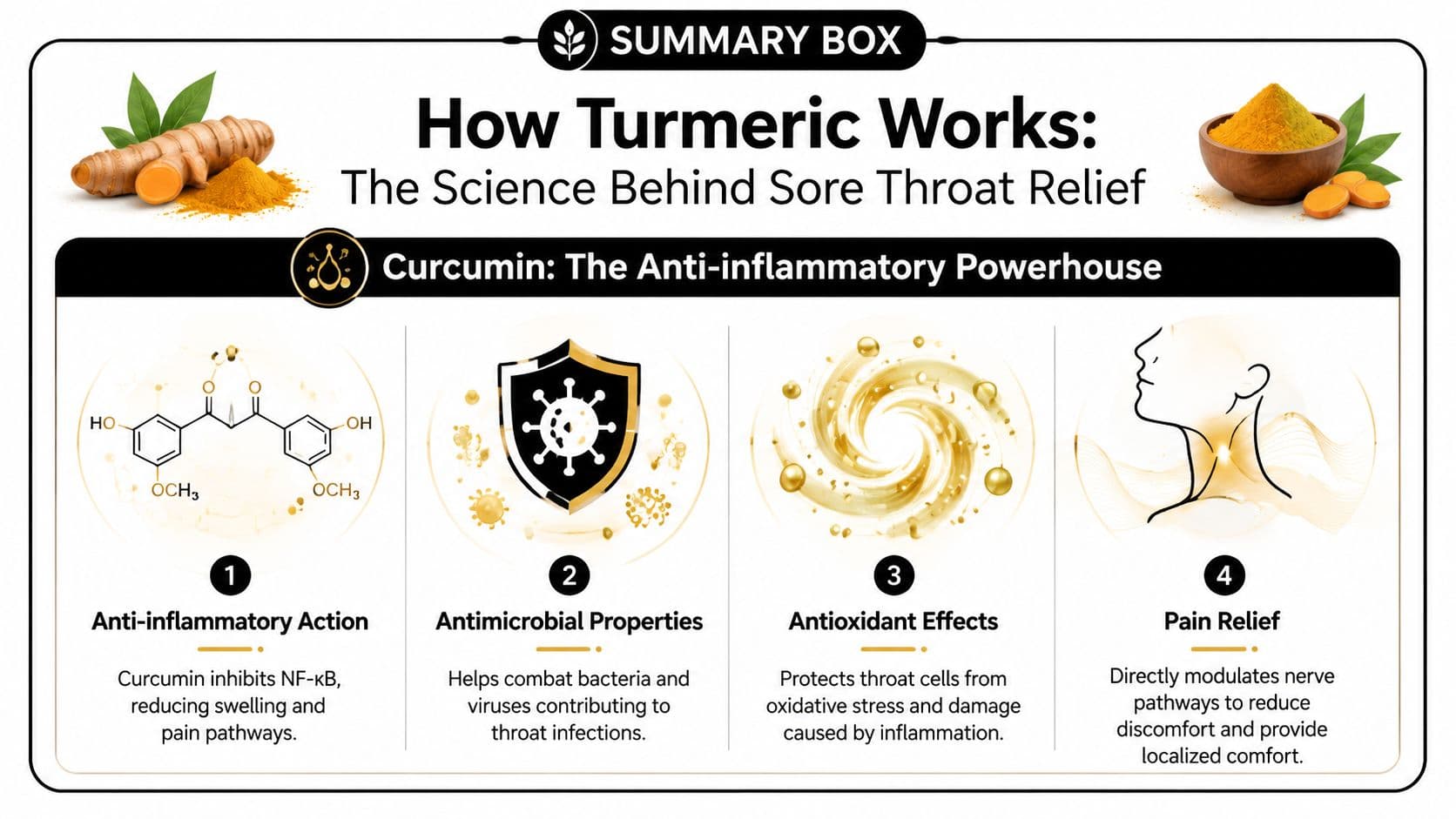
Turmeric frequently appears in discussions about sore throat remedies. Not because it's a miracle cure, but because it has a long history in home care and enough science behind it to make it worth discussing seriously. Curcumin, the best-known active compound in turmeric, has been shown to reduce inflammation in the throat by acting on pathways such as NF-κB and COX-2, which helps explain why some people feel less irritation when they use it consistently and in a form the body can effectively utilize. That anti-inflammatory point is summarized in Apollo Spectra's overview of sore throat remedies.
What turmeric can and can't do
Turmeric can help calm irritation. It may take the edge off pain, especially when your throat feels inflamed rather than severely infected.
What it won't do is replace proper care when you have a more serious illness.
Turmeric works best as a supportive remedy. Think soothing, not magic.
That distinction matters. A kitchen remedy is most useful when your throat is mildly irritated from a cold, dry air, overuse, or the early stages of an uncomplicated infection. If you're dealing with severe pain, trouble swallowing, or symptoms that keep escalating, comfort care has limits.
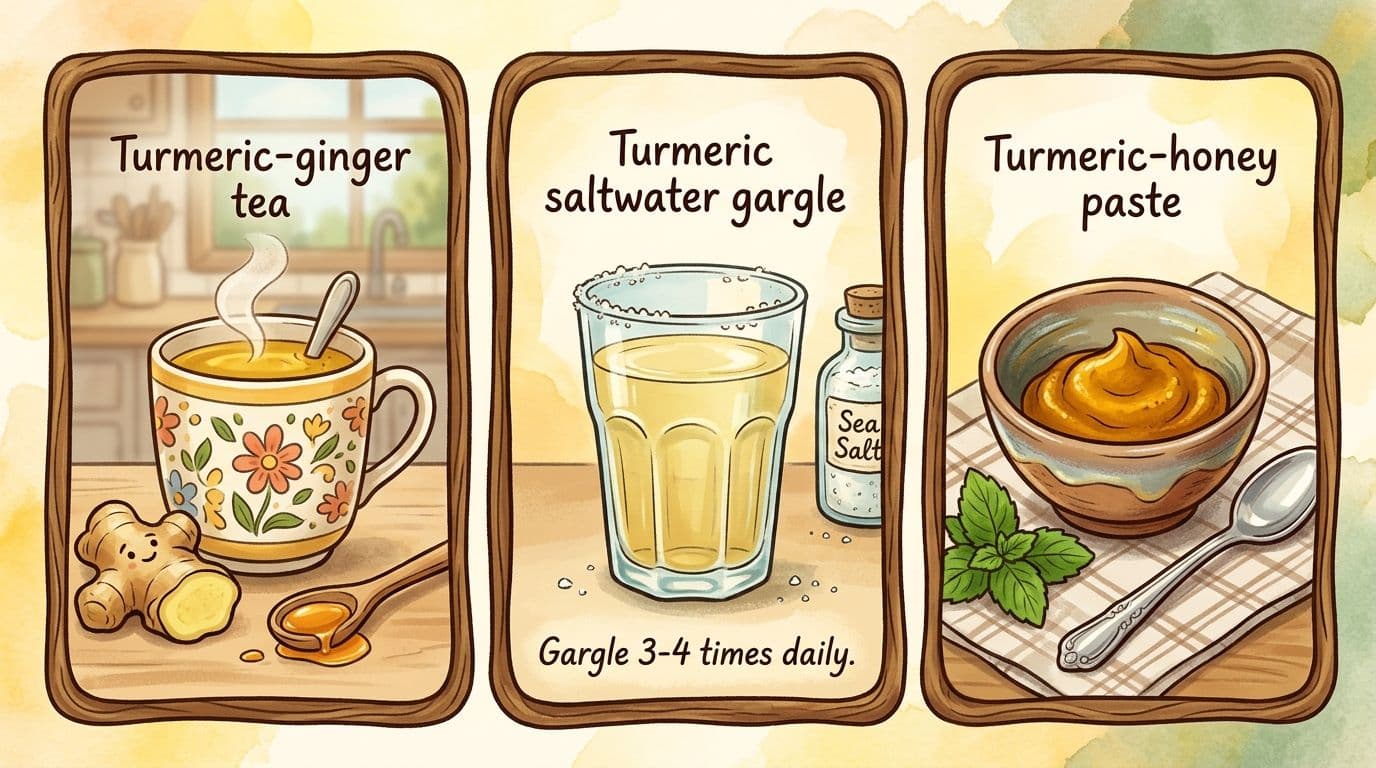
Three Simple Turmeric Remedies for Your Throat
Some turmeric remedies are worth keeping. Others are either too weak, too harsh, or too random to be reliable. These three are the ones I'd suggest because they're simple, practical, and easy to adjust.
Turmeric ginger tea
If your throat feels dry and you want something warming, tea is the gentlest place to start. In a mug or small pot, combine warm water with turmeric and fresh or powdered ginger. If you tolerate it well, add a little honey after the drink cools enough to sip comfortably.
A small pinch of black pepper can help with curcumin absorption. You don't need much. Too much pepper can make an already irritated throat feel rougher, so keep it light.
This works best when sipped slowly rather than gulped. The warmth helps, the fluid helps, and the turmeric gives you a reasonable anti-inflammatory add-on.
Turmeric saltwater gargle
This is the most targeted option because it puts the mixture directly on irritated tissue. For a proper gargle, mix 0.5 teaspoon of sea salt and 0.5 teaspoon of turmeric powder in 150 ml of hot water, then let it cool to 37°C, which is lukewarm. Water above 45°C can degrade curcumin and damage the mucosa, so hotter is not better. That preparation detail comes from OrganicBurst's turmeric gargle guidance.
Once it's lukewarm, gargle for about half a minute and spit it out. Repeat a few times if your throat is especially irritated.
Practical rule: If the gargle feels hot enough to make you flinch, let it cool longer. A burned throat won't thank you for your enthusiasm.
A few things make this work better:
- Dissolve the salt fully: Gritty salt sitting at the bottom makes the gargle inconsistent and unpleasant.
- Use it regularly: One gargle may soothe. Repeating it through the day is what usually makes it feel useful.
- Don't swallow it automatically: Gargling and spitting is often easier on the stomach, especially if your throat pain is paired with nausea or reflux.
Turmeric honey paste
When your throat hurts most during swallowing, a thicker mixture can coat better than a drink. Stir turmeric into a spoonful of honey until you get a paste you can take slowly. Let it sit in the mouth briefly before swallowing.
This isn't the most elegant remedy, but it can be effective for short-term soothing because it clings to the throat a bit longer than tea. If the taste is too earthy, add a tiny bit of warm water to loosen it.
A useful note here: if your sore throat is part of a broader viral illness, it helps to think beyond one spice. This guide to effective natural flu remedies gives a wider look at supportive care when the throat is only one piece of the picture.
How Turmeric Actually Fights a Sore Throat
Turmeric gets oversimplified. People say, “it reduces inflammation,” which is true, but not especially helpful unless you know why one turmeric remedy seems to help and another does almost nothing.
Curcumin is the useful part
The compound people care about is curcumin. It's the part of turmeric most closely tied to anti-inflammatory action. In plain language, it helps quiet the chemical signals involved in swelling and irritation.
That matters in a sore throat because the pain often isn't just about infection itself. It's also about inflamed tissue. Less inflammation can mean less burning, less tenderness, and easier swallowing.
Form matters more than people think
A lot of home advice says to throw “a pinch” of turmeric into something warm and call it a day. That's where people get disappointed. Curcumin has very low oral bioavailability, which means your body doesn't absorb much of it from plain turmeric on its own. Pairing it with black pepper or a fat source can help, and that's one reason some preparations seem much more effective than others.
There's also a difference between kitchen remedies and targeted formulations. A 2023 randomized controlled trial found that a turmeric-based lozenge reduced acute sore throat pain scores by 68% within 30 minutes, compared with placebo. That's a strong result, but it came from a specific formulation, not from vague “turmeric tea” advice.
A turmeric lozenge with a defined formula is not the same thing as sprinkling powder into hot water. People often blur that line, and it leads to unrealistic expectations.
If you want a clearer explanation of the absorption side, especially why ingredients like piperine matter, it's worth discovering Yuve's turmeric research, which gives a consumer-friendly overview of turmeric with BioPerine.
Getting the Dose Right How Much Turmeric Is Enough
Here, most turmeric advice becomes inadequate. You'll see “add a little,” “use a pinch,” or “have some golden milk,” and none of that answers the question people have, which is how much is enough to be useful without overdoing it.
There isn't one perfect kitchen dose
For a sore throat, there isn't a single standardized culinary dose that works for everyone. That's the honest answer. The useful approach is moderate, repeatable, and gentle on the stomach.
For home use, it makes sense to spread turmeric through the day instead of taking a large amount at once. A gargle, a tea, and a small food-based preparation often make more sense than chasing a heavy dose in one sitting. The goal is local soothing plus manageable intake, not flooding your system.
Where people go wrong
Many individuals miss in one of two ways:
- Too little to matter: A dusting of turmeric in a giant mug may taste healthy but doesn't do much.
- Too much too fast: Large amounts can irritate the stomach, especially if you're already run down or prone to reflux.
A sensible guardrail is to stay below a total intake of 1,200 mg of curcumin per day to reduce the chance of systemic side effects like gastrointestinal bloating or discomfort. Since the OrganicBurst URL is already cited earlier, I'll keep the reference here qualitative rather than repeat the link.
More turmeric isn't automatically better. Once a remedy starts upsetting your stomach, you've crossed out of “supportive” and into “counterproductive.”
Powder isn't the same as a supplement
Turmeric powder in food or drinks is one thing. Concentrated liquid extracts and curcumin supplements are another. They're often easier to absorb, but they also raise the stakes on interactions and side effects.
If you're considering a stronger product rather than kitchen turmeric, this guide to liquid turmeric is a useful place to compare forms and think about what you're taking. For anyone with medical conditions or regular medications, supplement-level dosing deserves a conversation with a clinician.
Important Safety Precautions When to Avoid Turmeric
Turmeric has a “natural means harmless” reputation that it hasn't fully earned. In many people, it's fine. In some, it's the wrong remedy.
When turmeric can backfire
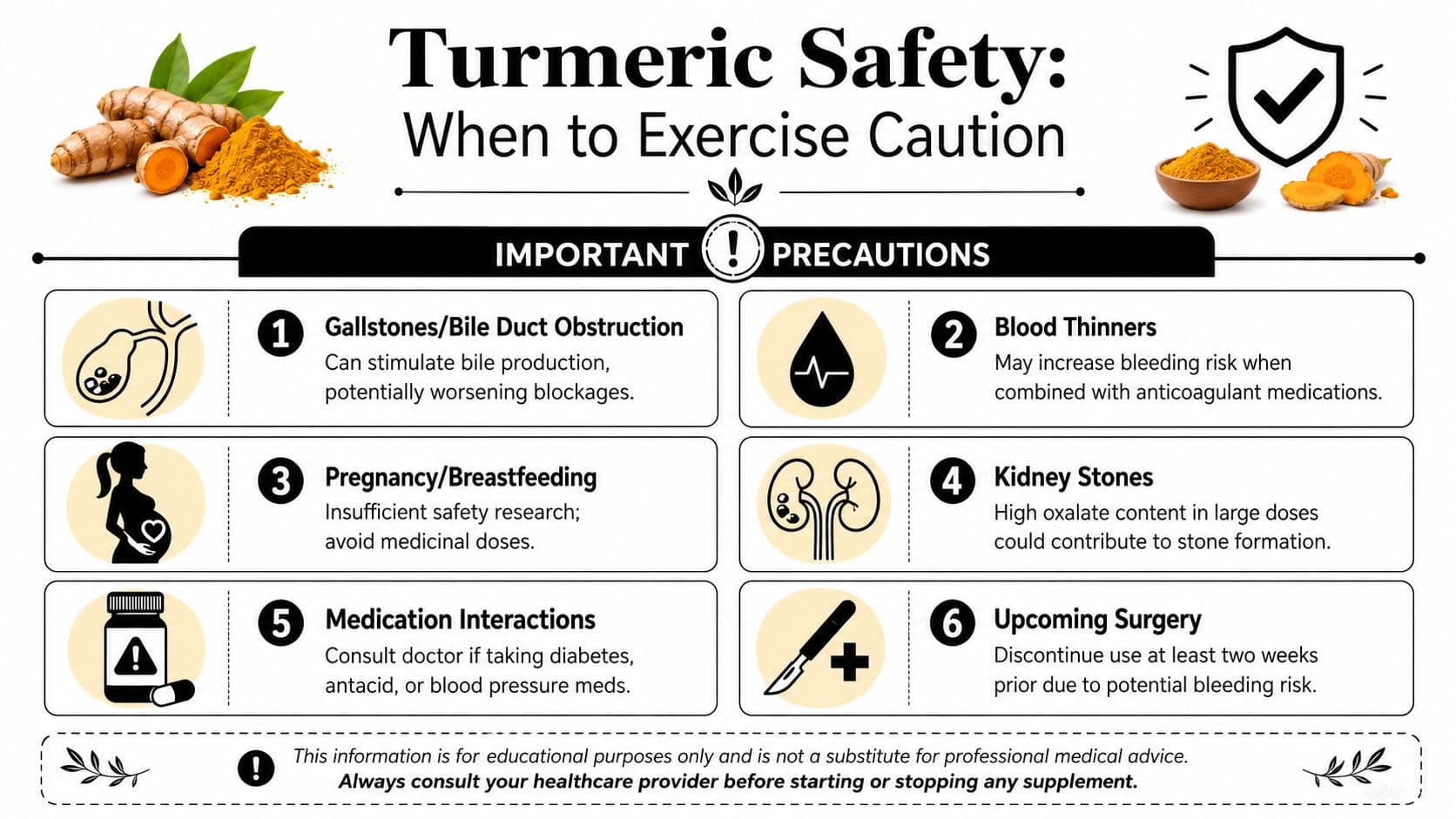
One of the biggest blind spots is reflux. If your sore throat is being driven by laryngopharyngeal reflux or GERD, turmeric may not soothe it. It can stimulate gastric acid secretion, which may worsen an acid-related throat problem instead of calming it. Mount Sinai also notes that turmeric is contraindicated for people on blood thinners or with gallbladder disease because of its effects on blood clotting and bile production. That safety guidance is summarized in Mount Sinai's turmeric monograph.
That's a major trade-off. If your throat pain comes from acid creeping upward, adding turmeric because “it helps inflammation” may send you in the wrong direction.
Use extra caution in these situations
- Reflux-driven throat symptoms: Burning, throat clearing, hoarseness, and pain after meals can point toward acid irritation rather than a simple cold.
- Blood-thinning medication: Turmeric may increase bleeding risk when combined with anticoagulants.
- Gallbladder problems: Because it affects bile flow, it may aggravate an already sensitive system.
- Pregnancy: Medicinal doses are best avoided unless your own clinician says otherwise.
- High-dose supplement use: Interaction risk and side effects become more relevant than with normal food use.
Signs it's time to stop
You don't have to force a remedy just because it's popular.
Stop using turmeric if you notice:
- More burning after taking it
- Stomach discomfort or bloating
- A reflux flare
- Any sign of unusual bruising or bleeding
- No benefit and increasing throat pain
If a remedy makes the throat feel rougher, sharper, or more acidic, that's useful feedback. Listen to it.
When Your Sore Throat Needs a Doctor
Most mild sore throats can be watched at home for a bit. Some shouldn't be.
Get medical care if you have any of the following:
- Trouble breathing or trouble swallowing
- A sore throat that keeps getting worse instead of easing
- White patches on the tonsils or obvious pus
- High fever
- Marked swelling in the neck
- A sore throat that lasts more than a week
- Severe pain on one side
- Signs of dehydration because drinking hurts too much
A home remedy can support recovery. It can't diagnose strep, rule out a deeper infection, or treat complications. If your symptoms feel out of proportion to an ordinary cold, trust that instinct and get checked.
If you enjoy blending practical self-care with deeper personal insight, the Life Purpose App is a thoughtful companion to Dan Millman's book The Life You Were Born to Live. It's designed for people who want clearer perspective on life path themes, relationships, strengths, and recurring challenges in a grounded, accessible way.
Discover Your Life Purpose Today!
Unlock your true potential and find your life’s purpose.
