Relationship dynamics are the invisible patterns that shape how you relate to partners, family, and friends. This article helps you spot repeating patterns, use life-path insights to increase empathy, and apply simple, practical steps to improve communication and closeness.

October 6, 2025 (1y ago) — last updated July 6, 2026 (3mo ago)
Boost Relationship Communication & Connection
Spot recurring patterns, use life-path insights to increase empathy, and apply simple steps to strengthen communication and closeness.
← Back to blog
Relationship dynamics are the invisible patterns that shape how you relate to partners, family, and friends. This article helps you spot repeating patterns, use life-path insights to increase empathy, and apply simple, practical steps to improve communication and closeness.
Boost Relationship Communication & Connection
Summary: Learn what relationship dynamics are, how they form, and practical ways to strengthen your bonds using life-path insights and everyday habits.
Introduction
Relationship dynamics are the invisible patterns that shape how you relate to partners, family, and friends. They show up in small moments — who speaks first, how you handle conflict, and how emotional energy moves between you. This article helps you spot repeating patterns, use life-path insights to increase empathy, and apply simple, practical steps to improve communication and closeness.
Decode the Dance of Your Relationships
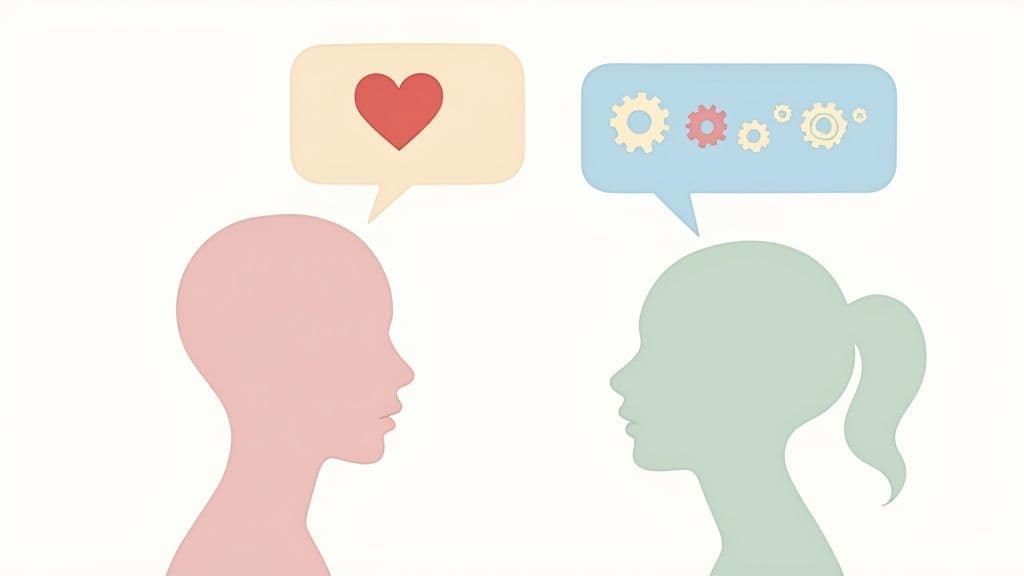
Ever leave a conversation feeling energized by one person and drained by another? Or notice the same argument replaying like a broken record? Those repeating patterns are relationship dynamics — the small interactions that set the tone for a connection.
These dynamics grow from everyday choices rather than dramatic events. Who decides plans, how you show support, and how you handle disagreements all combine into a recognizable rhythm. Recognizing those elements is the first step toward shaping them more intentionally.
The core components of connection
Think of every relationship as a recipe made from a few essential ingredients.
Key components of relationship dynamics
| Component | What it looks like in practice |
|---|---|
| Communication styles | Tone, body language, directness, and how you ask for what you need |
| Power and influence | How decisions are made and whose preferences carry more weight |
| Emotional exchange | The flow of empathy, validation, and emotional support |
Spotting these patterns gives you the power to change them. Small, consistent gestures are powerful ways to build closeness1.
A different way to look at your relationships
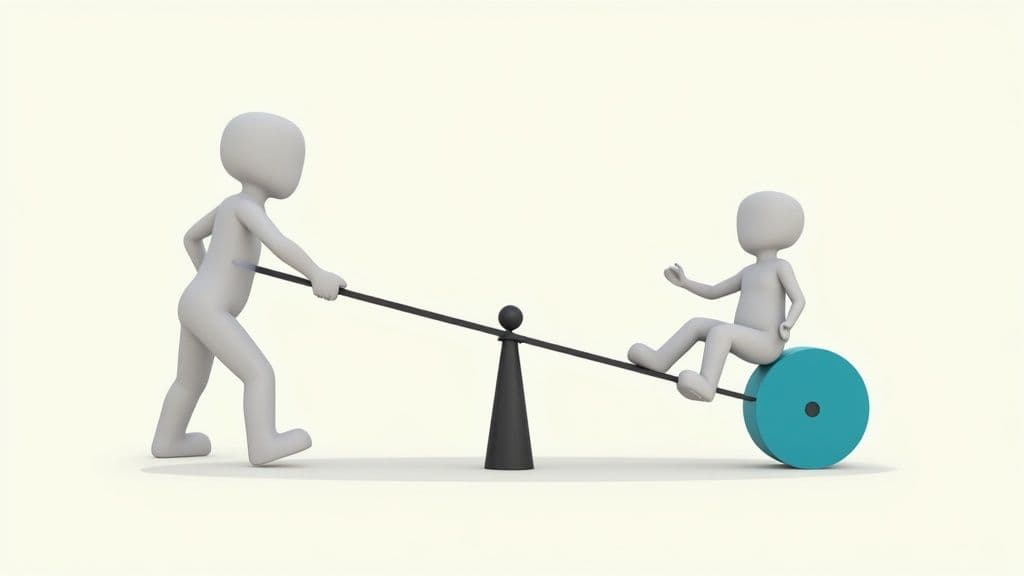
Beyond communication and power balances, a personal blueprint — your life path number — can help explain the energetic patterns you bring to relationships. Rooted in Dan Millman’s work, The Life You Were Born to Live, this approach uses your birth date to reveal core strengths, lessons, and tendencies2.
This is not fortune-telling. Think of the life path number as a personality framework that helps you spot motivations so you can respond with empathy instead of frustration.
Finding your life path number
Your life number highlights themes you’re likely to experience and the gifts you offer others. Knowing your number often leads to “aha” moments about why you think, feel, or act a certain way.
When you understand a partner’s or friend’s life number, you gain perspective on their behavior and motivations. That insight helps you move past surface-level conflict and address the deeper dynamic at work.
Try a quick calculation or get interpretations with the Life Purpose App: /apps/life-purpose-app.
A compass for curiosity
This framework helps you ask better questions and create a shared language to discuss differences and strengths. Asking thoughtful questions and guided self-disclosure are proven ways to spark deeper connection and emotional intimacy3.
“Using these insights, friction points can become opportunities for deeper understanding and mutual growth.”
How to discover your life path number
Calculating your life number is simple: add every digit in your full date of birth and reduce to a single digit.
For example, someone born on December 12, 1991 (12/12/1991):
- Add the digits: 1 + 2 + 1 + 2 + 1 + 9 + 9 + 1 = 26
- Reduce: 2 + 6 = 8
So their life number is 8. For a quick calculation, use the Life Purpose App: /apps/life-purpose-app.
Seeing dynamics in the real world
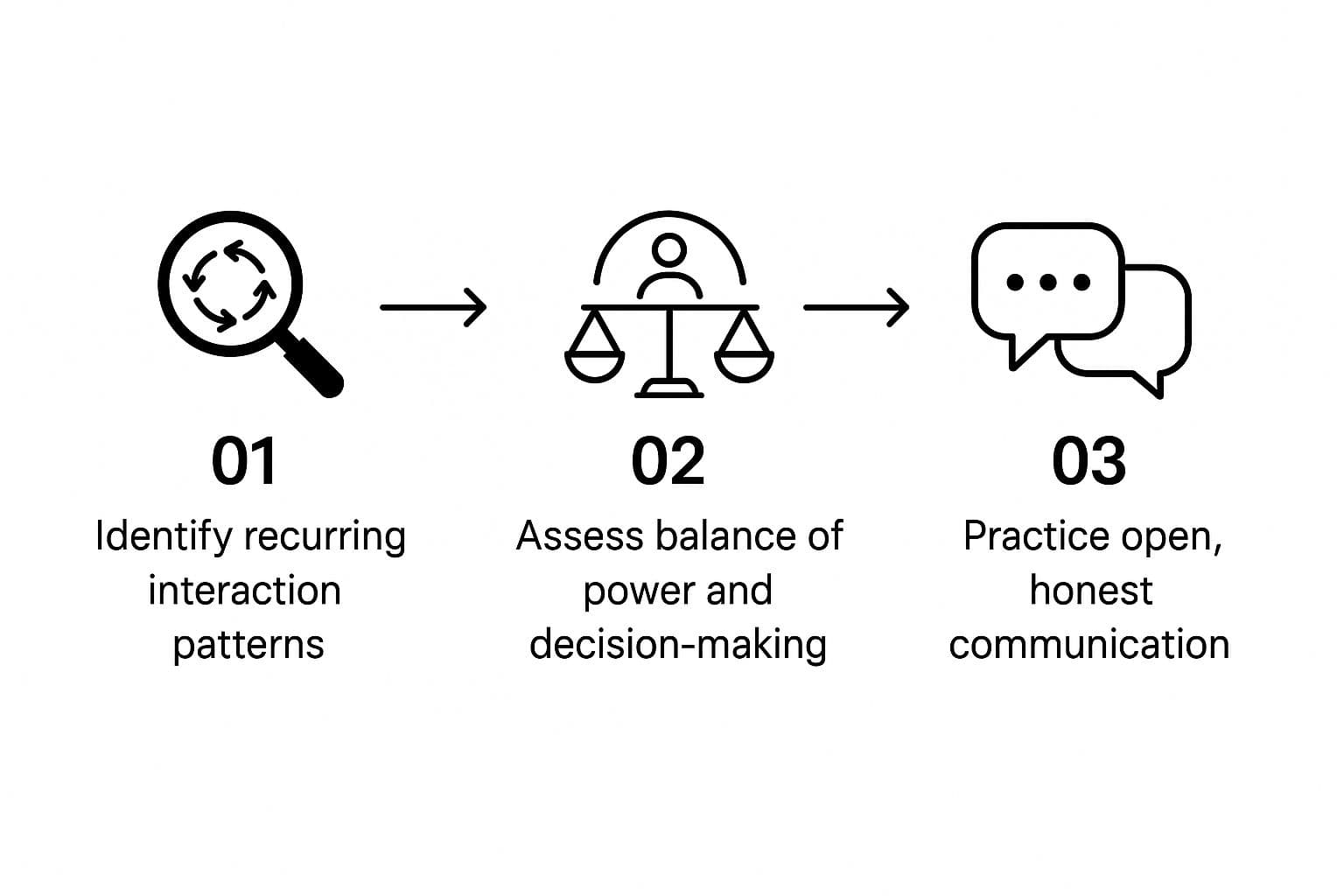
Knowing your life number is one thing; seeing how two numbers interact is where practical insight emerges. Rather than labeling relationships as “good” or “bad,” this method reveals natural harmonies and friction points that offer fertile ground for growth.
Recent generational research shows many adults are redefining partnership and exploring nontraditional structures, influencing how people form and maintain relationships4.
Common life path pairings
-
The supportive 2 and the ambitious 8. The 2 provides emotional steadiness while the 8 pursues achievement. The partnership can be powerful when both appreciate each other’s needs.
-
Two adventurous 5s. Shared excitement and freedom can create strong chemistry, with a potential downside of avoiding deeper commitment or stability.
These examples are starting points. See the Life Purpose App blog for deeper examples and personalized pairings: /blog/life-purpose-app-compatibility.
Turn insight into healthier relationships
Understanding your blueprint is useful, but applying it is where relationships improve. Small, intentional changes — clearer encouragement, firmer boundaries, and curiosity during conflict — create lasting shifts.
From awareness to action
When you know what motivates your partner, you can support them in ways that actually matter. Encourage a creatively inclined partner during self-doubt, or negotiate plans with empathy if one person wants stability and the other seeks freedom.
Use the Life Purpose App for daily reminders and practical tips to sustain these shifts: /apps/life-purpose-app.
“These insights help translate confusing behaviors into understandable needs, turning conflict into connection.”
Navigate conflict with empathy
Conflict signals care. When you understand the dynamics beneath a recurring issue — for example, money disagreements — you can reframe them as differences in values, like security versus abundance, and address underlying needs instead of assigning blame.
Developing emotional intelligence and approaching tough conversations with curiosity keeps you on the same team, even when you disagree. For practical strategies, see our guide on emotional intelligence in relationships: /guides/emotional-intelligence-relationships.
Research shows marriage rates have declined in many places, which underscores why tools for building mutual understanding are important5. Evidence on therapy outcomes is mixed, highlighting the value of everyday practices that strengthen connection6.
Practical Q&A
Q: How do I spot unhealthy dynamics quickly?
A: Notice recurring cycles where one person often feels unheard, drained, or controlled. Those patterns often point to missing boundaries or unbalanced roles.
Q: Will life numbers put my partner in a box?
A: No. Use numbers as a starting point for curiosity — labels that explain tendencies, not fixed identities.
Q: What’s one simple practice to start changing patterns together?
A: Share your life numbers, pick one insight that resonates for each of you, and try a weekly curiosity question to build empathy and interrupt old cycles.
Quick Q&A — Three short answers
Q: What’s one immediate step to improve communication?
A: Pause before reacting and ask one open question to understand intent.
Q: How can life numbers help right now?
A: They offer a quick lens for why someone may react a certain way, which reduces blame and invites curiosity.
Q: When should we seek professional help?
A: If patterns cause persistent distress or harm, a couples therapist or counselor can provide structured support.
Extra Q&A: Common user questions
How do life numbers differ from personality tests?
Life numbers offer a simple, date-based framework that highlights recurring themes and motivations. They’re a conversation starter, not a definitive label.
Can these insights improve friendships and family ties?
Yes. The same dynamics show up across relationship types; these insights can clarify patterns with siblings, friends, and colleagues.
What’s a quick exercise to build empathy together?
Each person names one recent moment they felt unseen. The other person reflects back what they heard, then asks one open question — a practice that interrupts blame and encourages listening.
Extra Q&A: Applying changes day to day
How often should we revisit our shared insights?
Weekly check-ins of 10–15 minutes keep new habits alive and prevent old patterns from returning.
What if my partner resists the idea of life numbers?
Start with observable behaviors and shared goals: fewer arguments about the same topic, more balance in decision-making. Life-number language can be optional.
Which small habit delivers the biggest payoff?
Consistent micro-acts of appreciation — a brief note, a specific compliment, or acknowledging effort — increase positive interactions and trust over time1.
Extra Q&A: When to get outside help
Is couples therapy necessary for every problem?
No. Many issues improve with intentional daily practices. Therapy is helpful when patterns cause ongoing distress, safety concerns, or repeated cycles you can’t break alone.
How do we choose the right support?
Look for a licensed therapist with training in couples work and a collaborative style. Ask about their approach, session structure, and success with similar issues.
What outcomes can we expect from coaching or therapy?
Therapy can improve communication and reduce conflict for many couples, but outcomes vary. Combining therapy with everyday practices often produces the most durable change6.
1.
H. S. Cross, “The Small Things That Build Trust,” Harvard Business Review, November 2018, [https://hbr.org/2018/11/the-small-things-that-build-trust](https://hbr.org/2018/11/the-small-things-that-build-trust)
2.
Dan Millman, The Life You Were Born to Live, (New World Library, 1993).
3.
Arthur Aron et al., “The Experimental Generation of Interpersonal Closeness,” Personality and Social Psychology Bulletin, 1997, [https://journals.sagepub.com/doi/10.1177/0146167297234003](https://journals.sagepub.com/doi/10.1177/0146167297234003)
4.
EY, “Global Generational Shifts: How different generations view work and relationships,” EY Global, accessed 2024, https://www.ey.com/en_gl/generation
5.
Pew Research Center, “Married adults account for a declining share of the U.S. population,” Pew Research, 2020, https://www.pewresearch.org/fact-tank/2020/12/16/6-facts-about-marriage-and-divorce/
6.
Cochrane Collaboration, “Couples and family therapy for relationship problems,” Cochrane Library, review of evidence on therapy outcomes, https://www.cochranelibrary.com/
Discover your life path today
Enter your date of birth and see your life path, free.
Find your life path