Wondering what are the 4 life cycles? Learn Dan Millman's planting, growth, harvest and ploughing under phases and how they repeat every nine years.

October 26, 2026 (23d ago)
What Are the 4 Life Cycles in Dan Millman's System
Wondering what are the 4 life cycles? Learn Dan Millman's planting, growth, harvest and ploughing under phases and how they repeat every nine years.
← Back to blog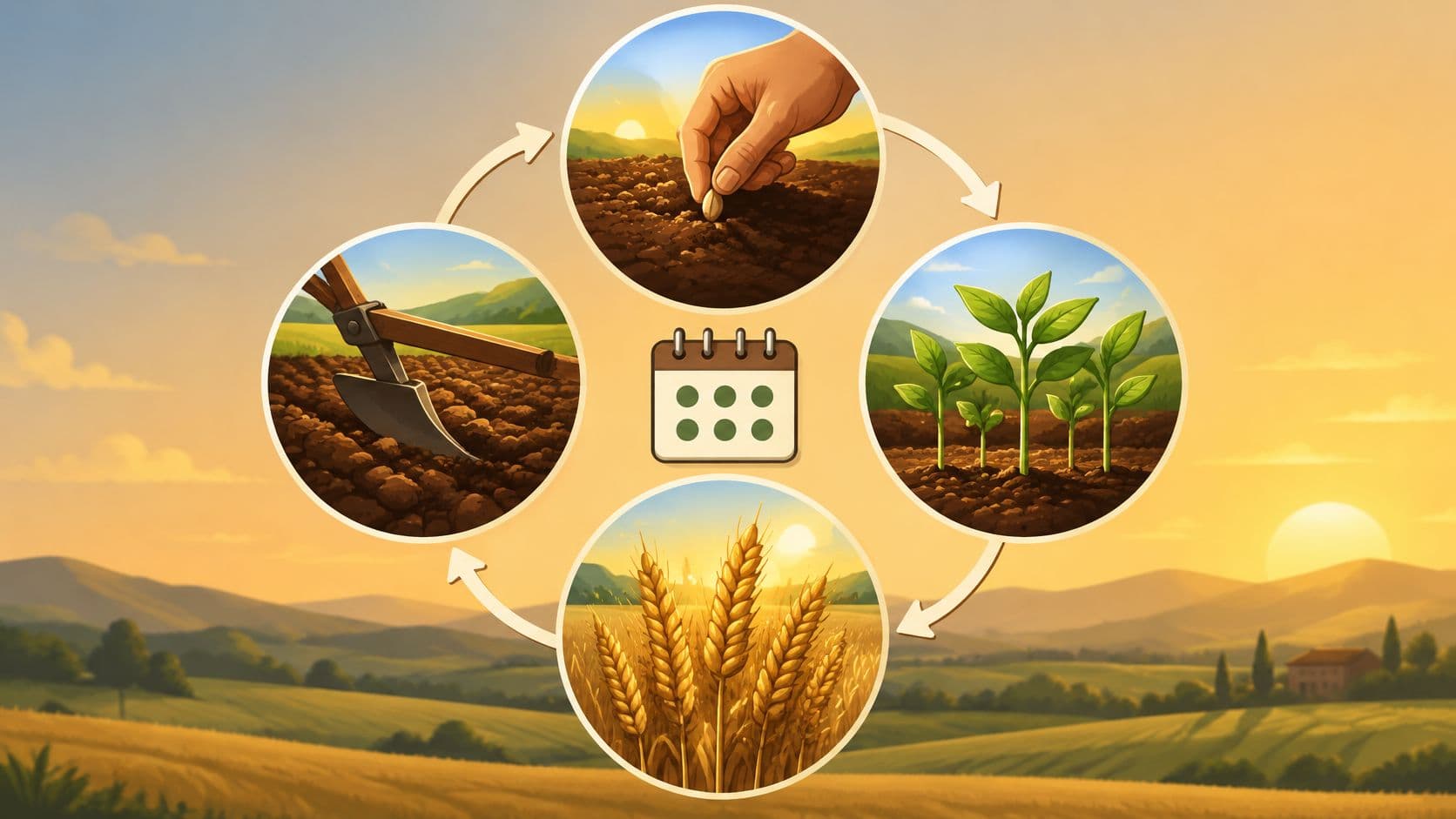
Wondering what are the 4 life cycles? Learn Dan Millman's planting, growth, harvest and ploughing under phases and how they repeat every nine years.
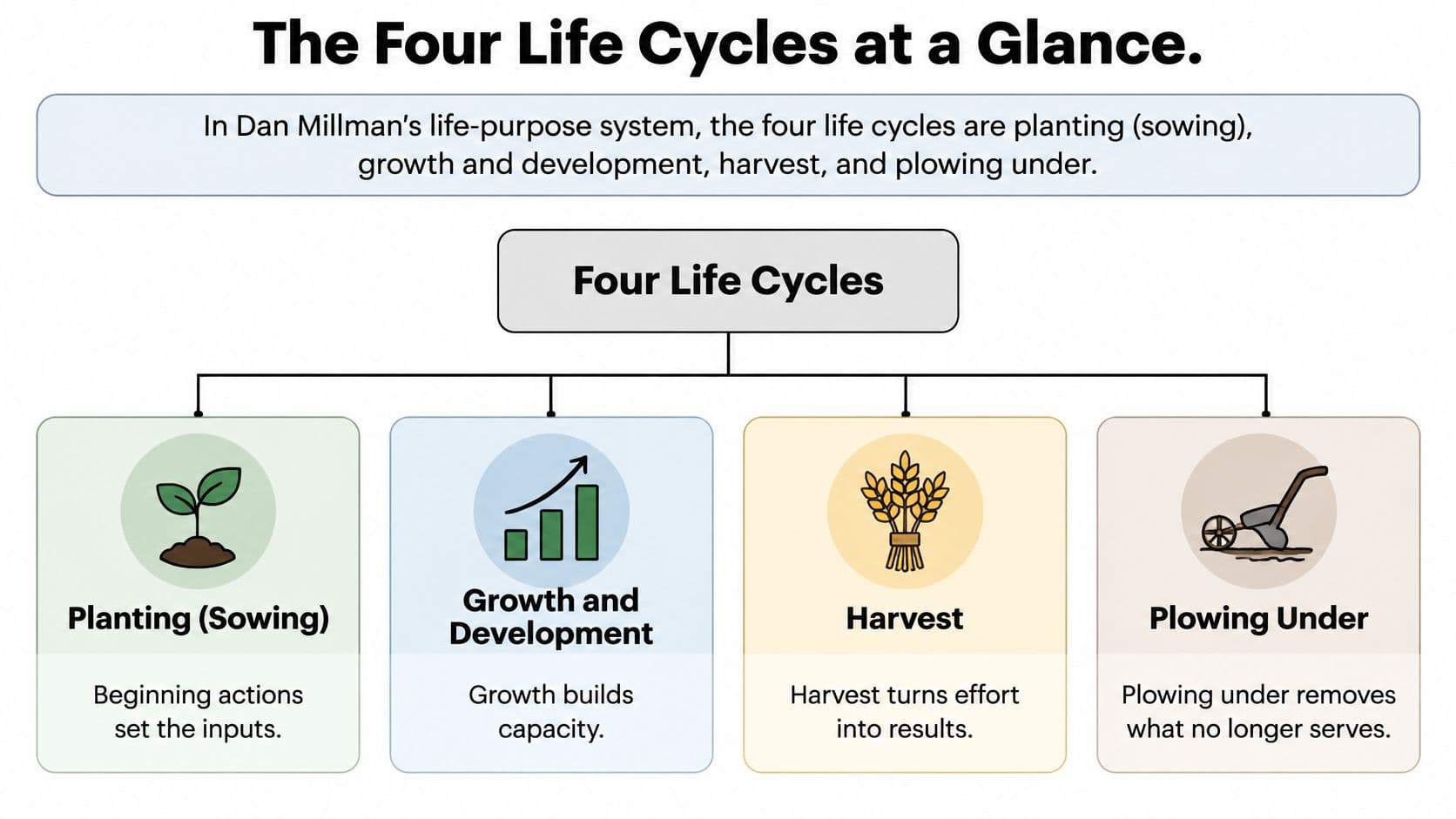
In Dan Millman's system, the 4 life cycles are planting (sowing), growth and development, harvest, and ploughing under, repeating across nine-year cycles as described in The Life You Were Born to Live and reflected in the Life Purpose App. But if those phases keep returning, why do so many explanations describe life as a ladder you climb only once?
That distinction matters. A repeating pattern can help you reflect on a fresh start or an ending without suggesting that you should have reached a particular milestone by a particular age.
The Four Life Cycles at a Glance
Millman draws his model from farming: prepare and sow, cultivate, gather the crop, then clear the ground. In The Life You Were Born to Live and the Life Purpose App, these images give beginners a way to think about beginnings, sustained effort, results, and renewal.
The four life-cycle phases in Dan Millman's system
| Phase | Farming image | Place in the nine-year cycle | What the phase is about |
|---|---|---|---|
| Planting (sowing) | A seed goes into the ground | Year 1 opens the cycle | Starting something new, creative activity and early confidence |
| Growth and development | Shoots build roots and strength | Year 2 onward, with cooperation and balance in year 2 | Building capacity and working with others and outside resources |
| Harvest | Crops are gathered | The years after growth and before the closing year | Converting accumulated effort into results and judging what worked |
| Ploughing under | Old growth is turned back into the soil | Year 9 closes the cycle | Completion, release, stillness and preparing for renewal |
Westmount Magazine's account of Millman's system describes repeating nine-year cycles, with year 1 associated with sowing and creative confidence, year 2 emphasizing cooperation and balance, and year 9 bringing completion and release. Those anchor years show why the sequence reads as a loop: each phase sets up the next, and the closing year feeds a fresh planting.
What the farming images help you notice
Planting is about establishing conditions, not demanding immediate results. Someone beginning a writing practice needs a subject, a workable routine, and the willingness to produce imperfect drafts before expecting a finished manuscript.
Growth shifts attention toward support. A plant needs more than the initial seed, and a person developing a project may need training, collaborators, feedback, equipment, or time protected from other commitments.
Harvest asks a different question: what has the effort produced? That can mean a completed qualification or a profitable project. It can also mean recognizing that an approach has not worked well enough to continue.
Ploughing under is the least familiar image. It means turning old growth back into the soil, so clearing away and retaining value happen together. You can end an obligation while keeping the skills, relationships, or judgment you gained from it.
Start with the year, not a guess
The four images describe stretches of the cycle rather than single labeled years. The fixed anchors sit at the opening, the early growth year, and the close, so the practical move is to locate your current year first. The book's calculation method, mirrored in the app's nine-year cycle mapping, places you in a specific cycle year, and the phase attached to it suggests which kind of question is worth asking.
Practical rule: Use the phase to choose a useful question, not to declare what must happen.
The sequence runs as a loop: ploughing under clears ground for the next planting rather than ending the story. Your first action is to establish which cycle year you are in, then let that position, instead of the label that sounds most appealing, point you toward the relevant phase.
Which Four Life Cycles Other Sources Mean
If you've searched “what are the 4 life cycles,” you may have found several answers that seem to contradict each other. Often, they're describing different subjects rather than disagreeing about the same model.
The OpenStax overview of lifespan theories presents Erikson's eight psychosocial stages across infancy through late adulthood and discusses Piaget's four cognitive stages. Neither framework is interchangeable with the repeating phases in Dan Millman's book, The Life You Were Born to Live, and the Life Purpose App.
Four-part life-cycle frameworks compared
| Framework | The four items | Repeats? | Tied to age? |
|---|---|---|---|
| Dan Millman's system | Planting, growth and development, harvest, ploughing under | Yes, every nine years | No, phases recur regardless of age |
| Erikson's stages grouped into life cycles | Childhood, adolescence, adulthood, old age | No, one pass through life | Yes, approximate age bands |
| Piaget's cognitive stages | Sensorimotor, preoperational, concrete operational, formal operations | No, one pass through development | Yes, linked to childhood and adolescence |
| Butterfly life cycle | Egg, larva, pupa, adult | Yes, in each generation | No, set by developmental stages rather than calendar years |
A grouping isn't the original theory
Erikson's broad life periods are a practical summary, not a replacement for his distinct psychosocial stages. His framework addresses challenges such as developing trust, forming an identity, sustaining close relationships, and reflecting on a life lived.
Piaget's framework concerns changes in thinking. Its stage names describe ways children understand and reason about their surroundings, not seasons of personal purpose.
A philosophical account may instead describe play and education, self-discovery, commitment, and legacy. That can be a helpful discussion of priorities, but it doesn't establish a scientific timetable everyone should follow.
Check what the author means by cycle
Ask whether the source describes biological development, psychological development, a philosophical progression, or a symbolic pattern. Even the word repeats needs care: a butterfly's offspring begin another generation, while an adult butterfly doesn't become an egg again.
Age boundaries in human-development summaries are approximate. People can also revisit questions of identity, commitment, and meaning after a separation, a move, or a change in work.
The discussion of life cycles offers another reason to check the author behind a cycle interpretation. For the reflective reading here, the reference remains Millman's book and its repeating model, not a universal schedule for human development.
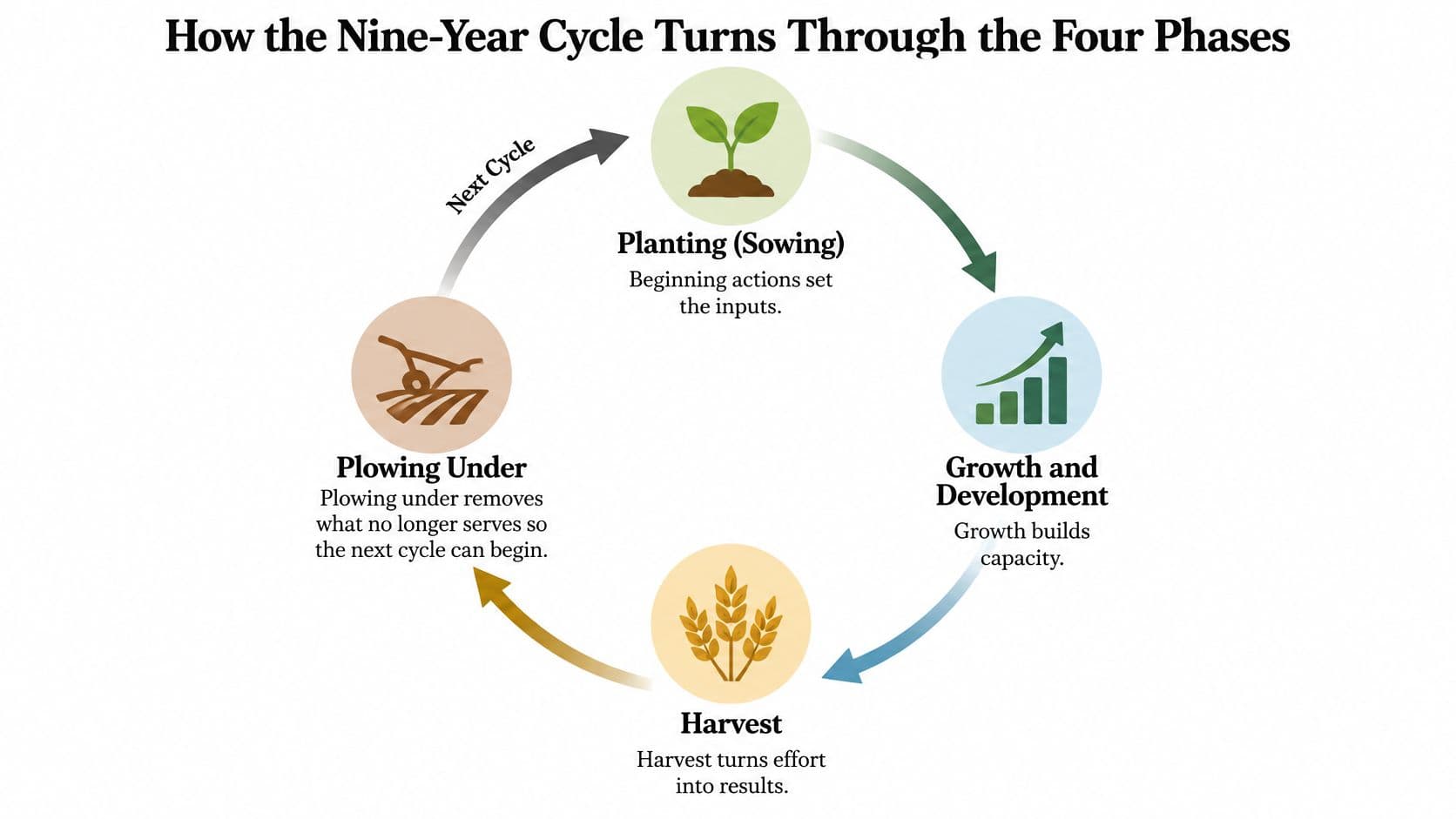
How the Nine-Year Cycle Turns Through the Four Phases
The farming sequence has a practical logic. Beginning actions establish inputs, sustained care builds capacity, gathering the crop turns effort into usable results, and clearing old growth creates room to begin again.
That logic can make reflection more orderly. It doesn't establish that a calendar position causes an event or guarantees a particular outcome.
Follow the transition rather than a deadline
The Google Books description of The Life You Were Born to Live identifies guidance on nine-year cycles, including year 9 as a period of completion, release, and stillness after the preceding eight years, before returning to year 1. In Dan Millman's book and the Life Purpose App, this is a transition point rather than just another push for expansion.
A simple timeline makes the direction clear:
Sowing → developing skills and support → gathering and evaluating results → completing and releasing → renewed sowing
Finishing matters because an unresolved commitment can occupy attention long after you've stopped enjoying it. Closing it properly may involve handing over documents, returning equipment, settling an agreement, or telling someone clearly that your involvement has ended.
Stillness has a place here too. You don't have to replace every finished commitment immediately; a pause can help you distinguish genuine interest from the discomfort of having unclaimed time.
Each nine-year cycle clears ground for the next one. What you've learned doesn't need to be cleared away with it.
Carry experience forward
Say someone ends a job during the model's closing year and begins an independent project when the sequence restarts. They aren't beginning from nothing: they bring technical skills, contacts, and a better understanding of the working conditions they need.
The example illustrates a possible interpretation, not a prediction that a job will end. Someone else could remain in the same role while completing an outdated assignment or changing how they work.
Cyclical is what sets it apart from linear. Experience, insight, and unfinished business can become material for a later beginning, rather than disappearing when a phase changes.
Academic lifespan psychology asks a different set of questions. The Maricopa introduction to lifespan development describes physical, cognitive, and psychosocial change from conception through late adulthood; that developmental perspective shouldn't be confused with Millman's symbolic timing framework.
The phases can therefore be considered at any age. Their usefulness lies in organizing attention around what you're beginning, sustaining, assessing, or ending, while leaving room for the actual circumstances of your life.
Finding Your Life Path and Current Cycle Year
Keep the two outputs separate. In Dan Millman's book, The Life You Were Born to Live, and the Life Purpose App, a life path concerns recurring themes, gifts, and challenges; a current cycle year locates a period within the repeating sequence.
Check the inputs and the edition
-
Write down your date of birth. Use the date exactly as it appears on your records. Check the day, month, and year before entering anything into a calculator or app.
-
Find your path using the correct edition. In Millman's interview with The Shift Network, he explains that the 25th Anniversary Edition expanded The Life You Were Born to Live from 37 life paths to 45, making the system more complete for people born after 2000. The Life Purpose App offers the same framework, so an older printed list may not match the newer edition.
-
Follow the book's cycle calculation. Read the relevant instructions rather than reconstructing a formula from memory. The companion explanation of the nine-year cycle can provide context, but it shouldn't replace checking the method in the book.
-
Compare a digital reading. The Life Purpose App works from the same birth-date information as Dan Millman's The Life You Were Born to Live. Check its current plan details before paying for access rather than assuming a particular feature is included.
-
Resolve disagreements before using the result. If the outputs don't agree, check the entered date, edition, and calculation instructions. Don't choose whichever result seems to approve a decision you already want to make.
Read without ranking yourself
Millman's Unity discussion of presence and purpose explains that the paths aren't ranked as better or worse. In The Life You Were Born to Live and the Life Purpose App, they're presented as potentially appropriate to a particular person and stage of life.
Read for useful reflection, not status. A description that feels challenging isn't a verdict on your worth, and an appealing description doesn't remove the need for practice or judgment.
When the Four-Phase Model Does Not Fit Your Life
Many lives don't follow a neat sequence. People change careers, start families, return to study, care for relatives, or seek renewed purpose more than once, including in midlife.
A fixed progression from childhood to adulthood to retirement leaves much out. The United Nations report on ensuring healthy lives reports that global life expectancy at birth reached 73.5 years in 2025, up 7.1 years since 2000.
Allow different responsibilities to overlap
You might be building a growing family while closing a career chapter. You could be learning a new profession while caring for a parent, leaving little room for the expansive fresh start you expected.
Treat a phase as a theme to consider, not a label that must explain every part of your life. A useful exercise is to name what each responsibility needs:
- Work: Identify whether the immediate task is learning, delivering, evaluating, or handing over.
- Home: Notice the care and practical support people need, regardless of your preferred timing.
- Personal commitments: Separate what still matters from what you continue through habit or guilt.
You don't need to force those answers into agreement. Mixed responsibilities aren't evidence that you've misunderstood yourself.
Keep the boundary clear
In Dan Millman's framework, as presented in The Life You Were Born to Live and the Life Purpose App, cycles belong to symbolic self-reflection. They aren't empirically validated developmental theory, a psychological diagnosis, or a forecast.
A phase label can help you frame a question. It can't establish why you're ill, whether an investment is safe, or what another person will do.
Don't postpone necessary help because a cycle interpretation suggests waiting. If you're struggling with persistent low mood, a health concern, or money problems, seek an appropriate professional rather than relying on a reflective framework to resolve it.
Using Each Phase and Checking Your Reading Before a Move
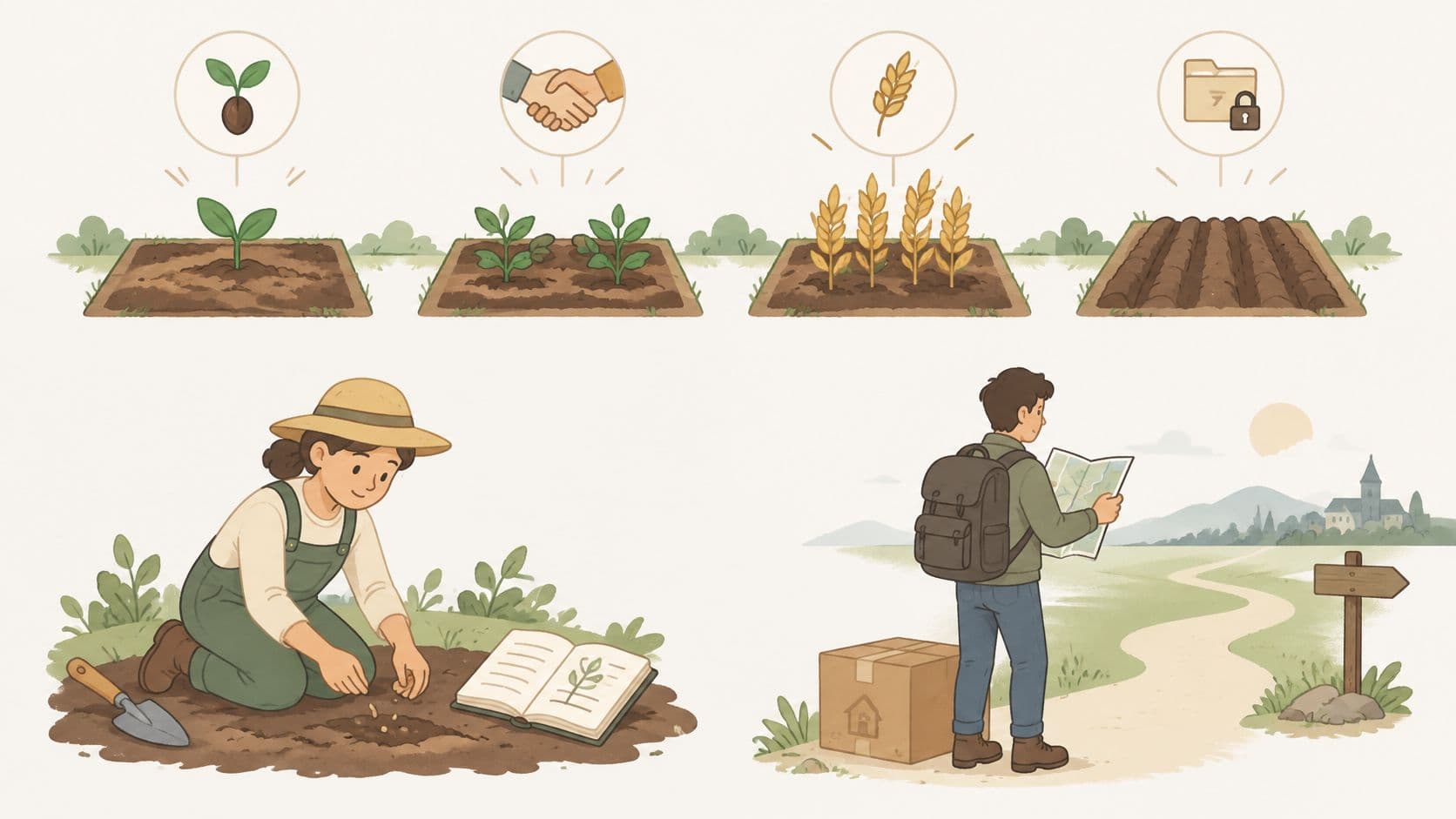
A workable heuristic is to test ideas during planting, build relationships during growth, assess results during harvest, and close commitments during ploughing under. Use those verbs to choose manageable actions, not to give yourself permission for an irreversible leap.
Say someone in a planting phase wants to open a side business. They could test a small offer for a few months while keeping their job, recording what customers ask for, what delivery costs, and whether they enjoy the work itself.
Compare that with someone who identifies with the closing phase. After checking the year 9 guidance in Dan Millman's The Life You Were Born to Live and the Life Purpose App, they might finish a long project, document the handover, and formally end a volunteer obligation they've outgrown.
Ask questions that lead to action
The difference between those scenarios is the immediate task. The first person needs evidence about a possibility; the second needs a responsible ending.
Use a notebook to answer the questions that fit your situation:
- Planting: What do I want to try? What small experiment would let me learn without risking my essential income or responsibilities?
- Growth and development: Who do I need to work with? Which skill or resource is missing, and how can I obtain it?
- Harvest: What results can I count with confidence? Which part of the effort should I retain, improve, or stop?
- Ploughing under: What am I ready to release? What practical conversation or handover would make that ending clear?
Write concrete answers. “Explore teaching” is vague; “prepare a sample lesson and ask a local adult-learning provider about entry requirements” gives you something to do and assess.
Check the practical consequences
A move deserves more than a symbolic interpretation. If relocation is part of your plan, compare housing costs, work arrangements, transport, healthcare access, and the effect on people who depend on you; you can also browse relocation articles from ReloMaps to identify practical questions to investigate.
Before making a major change, run this checklist:
- Confirm the cycle year. Use the calculation in Dan Millman's The Life You Were Born to Live, then compare it with the Life Purpose App rather than relying on memory or a summary.
- Test the fit. Check whether the phase label helps describe your actual circumstances. Treat a mismatch as a reason to reconsider the interpretation, not to ignore inconvenient facts.
- Choose a reversible step. Arrange an exploratory conversation, test a service, visit a prospective location, or reduce a commitment before abandoning it completely.
- Set a review date. A hypothetical review about a year out can help you reassess the interpretation as the cycle turns, but check sooner if your finances, health, or responsibilities change.
For health-related reflection, read the discussion of health cycles alongside appropriate medical guidance, never instead of it. These prompts aren't diagnoses or forecasts about health, income, relationships, or career.
The Life Purpose App uses the same birth-date information as Dan Millman's The Life You Were Born to Live, so compare its output with the book before deciding how to use a reading.
The Life Purpose App offers birth-date-based insight and cycle guidance as a digital companion to Dan Millman's The Life You Were Born to Live. Visit Life Purpose App to explore your current cycle and choose a practical question to reflect on before your next step.
Discover your life path today
Enter your date of birth and see your life path, free.
Find your life path