What does Kali mean? Explore the powerful Hindu goddess of time & transformation. Discover her ancient origins, symbolism, and impact on modern life & personal
July 6, 2026 (20d ago) — last updated July 18, 2026 (8d ago)
What Does Kali Mean? Goddess of Time & Change
What does Kali mean? Explore the powerful Hindu goddess of time & transformation. Discover her ancient origins, symbolism, and impact on modern life & personal
← Back to blog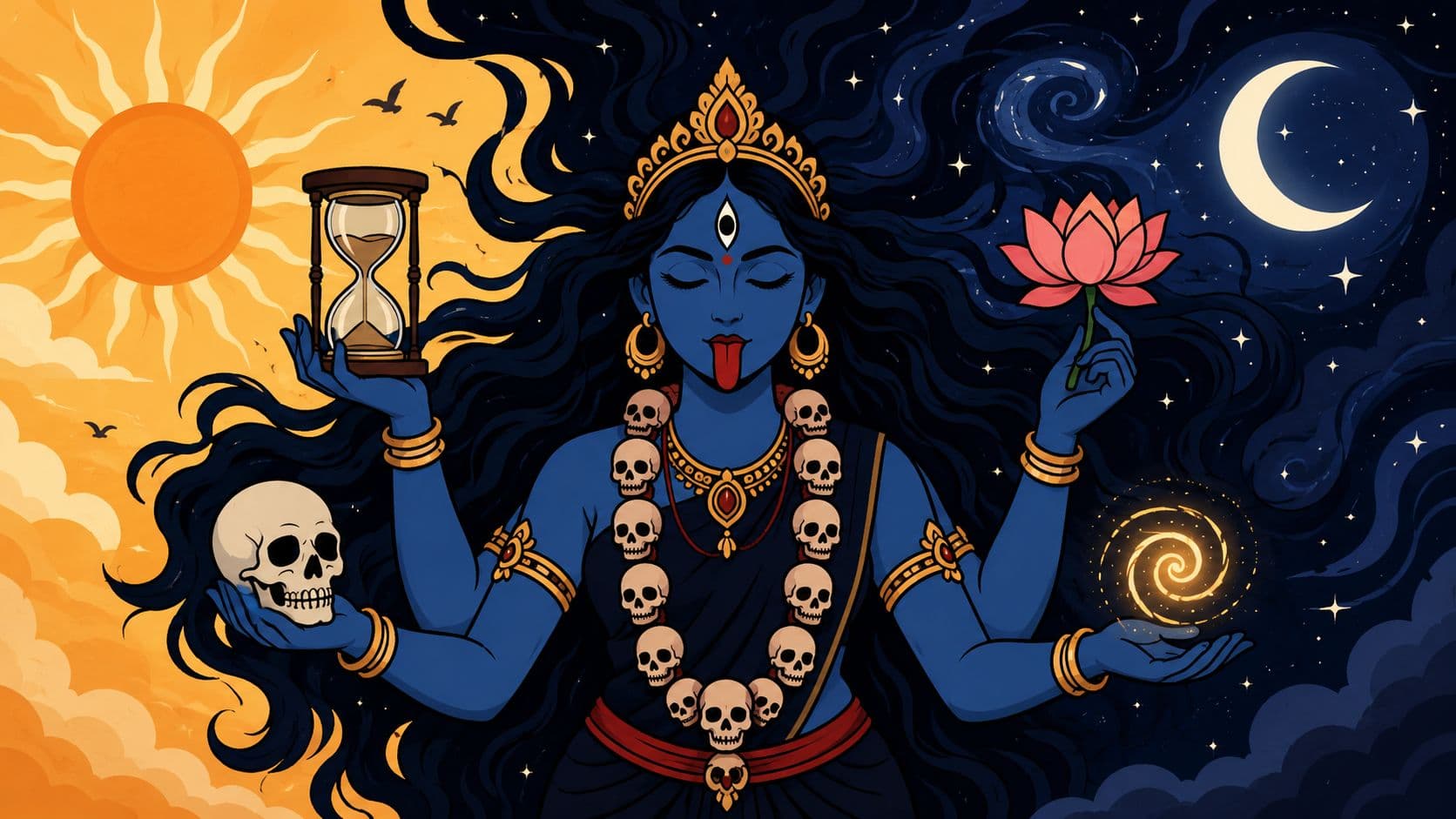
You may have seen the name Kali in a yoga class, on a statue in a shop, in a chant, or in a conversation about spiritual awakening. The reaction is often the same. Curiosity first, then a little unease. She looks fierce. People call her the goddess of death. Someone else says she's the Divine Mother. Another person says she represents change.
No wonder people ask, what does Kali mean?
The confusion gets stronger when life already feels unstable. Maybe you're in a season where work has lost its meaning, a relationship has collapsed, or the version of you that used to function well just doesn't anymore. In moments like that, Kali can seem less like an abstract religious figure and more like a symbol that keeps showing up right when your old life is cracking open.
That Name You Keep Hearing
A lot of people first meet Kali by accident.
A friend recommends a meditation. A podcast host mentions “Kali energy.” You scroll past a dark blue or black goddess with wild hair, a long tongue, and a necklace of skulls. Part of you wants to look away. Another part wants to understand why this image feels so intense.

That mixed response makes sense. In many Western settings, Kali gets flattened into one idea: destruction. She's presented as scary, chaotic, or extreme. But that's only a thin slice of what she means.
Kali belongs to a much deeper spiritual tradition in Hindu thought, especially within Shaktism and Tantra. When people ask what does Kali mean, they're usually asking more than a vocabulary question. They're asking things like:
- Is Kali evil? She isn't understood that way in Hindu tradition.
- Why does she look frightening? Her imagery is symbolic, not random.
- Why are people drawn to her during hard times? Because she speaks to endings, truth, and transformation.
- Is she about literal death or inner change? Often the deeper teaching points to ego, illusion, and awakening.
Kali often appears in a person's imagination right when old identities stop working.
That's why she can feel personal even before she's understood.
If you're new to this, it helps to set aside the reflex to divide everything into “good” and “bad.” Kali isn't a simple comfort symbol. She doesn't reassure the ego that everything will stay as it is. She represents a force that strips away what's false so something more honest can emerge.
For some people, that sounds terrifying. For others, it sounds like relief.
The Core Meaning From Ancient Sanskrit
The most direct answer to what does Kali mean begins with Sanskrit.
The name Kali comes from the Sanskrit root Kala. That root carries three core meanings: Time, Death, and Black or Dark. Kali is the feminine form of Kala, which is why her name is bound so closely to time itself, not just to destruction. Her name appears in the Atharva Veda, dated to 1200 to 1000 BCE, and her defining appearance comes in the Devi Mahatmya in the 6th century CE, where she becomes the first of the Ten Mahavidyas and a giver of liberation. That summary is drawn from this discussion of Kali's Sanskrit roots and early textual appearance.
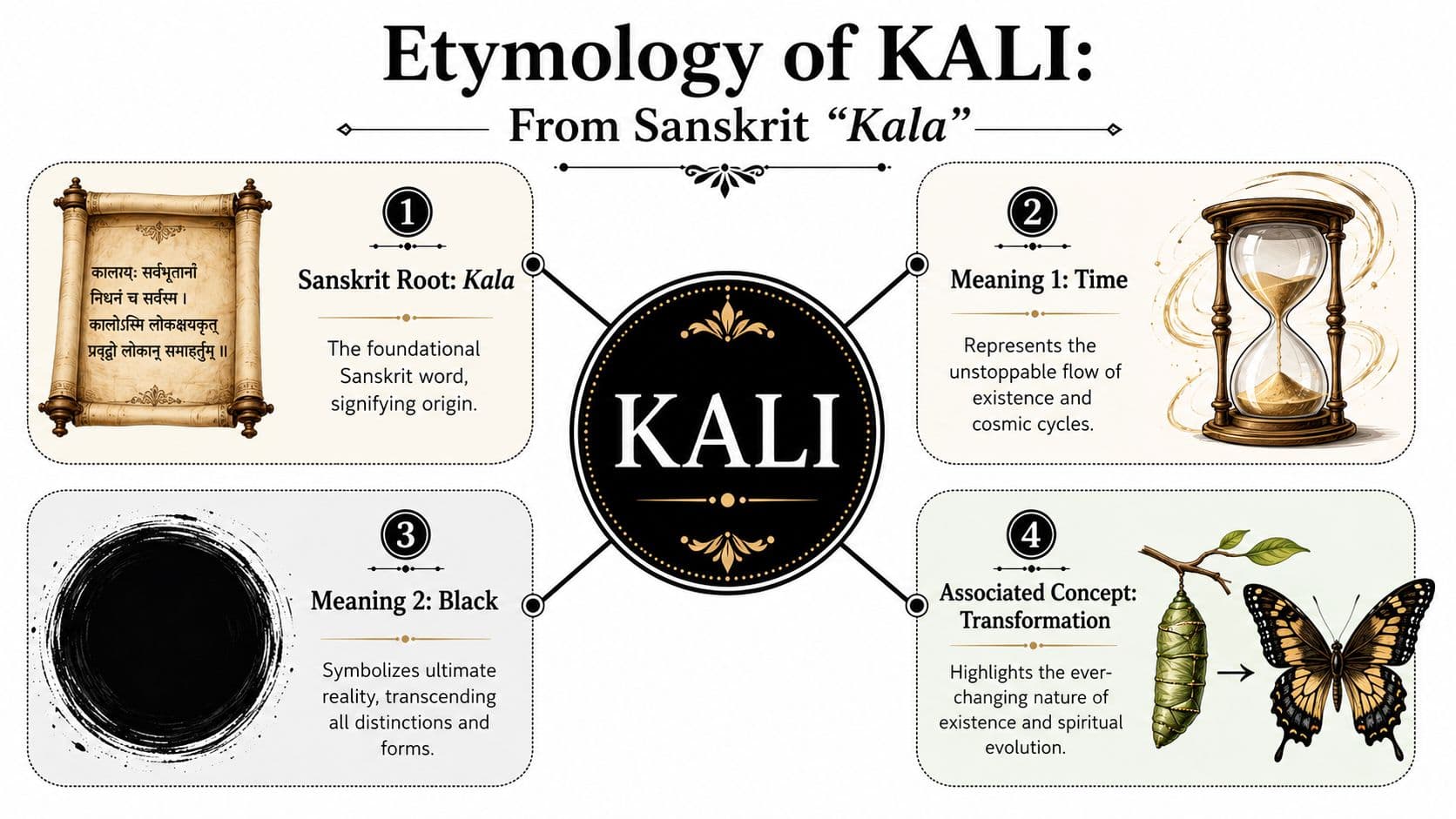
Time
Time changes everything. It ripens fruit, ages the body, ends relationships, heals grief, and reveals truth. No one bargains with it for long.
When Kali is linked to time, she isn't just a clock symbol. She points to the force that moves life forward whether we cooperate or not. That's one reason she can feel merciless. Time doesn't pause because we're attached to an old identity.
Death
Many readers often get stuck. They hear “death” and assume Kali stands for something dark or punishing.
But spiritual traditions often use death in a second sense. The death of illusion. The death of ego. The end of a false self that can't carry you into the next stage of your life. Kali's death symbolism often points there.
Practical rule: When Kali is mentioned in spiritual language, ask whether the speaker means physical death, symbolic death, or the end of a life chapter. Often it's the third meaning that matters most in personal growth.
Black or dark
Darkness here doesn't mean moral evil. It points to the primordial void, the unformed mystery out of which creation emerges. Night can look empty, but it also holds potential. A seed grows underground, not in bright daylight.
That's why Kali's darkness is better understood as foundational than frightening. She represents what exists before neat categories appear.
Why this matters
Put those meanings together and Kali becomes far more than a “destroyer.” She is the force of time, the reality of endings, and the depth from which transformation arises.
If you're interested in how sacred words carry layers of meaning beyond literal translation, this offers a useful comparison.
Understanding Kali the Hindu Goddess
Once the Sanskrit meaning is clear, Kali's mythology becomes easier to read.
Her most famous appearance comes in the Devi Mahatmya, where she emerges from the forehead of the goddess Durga during battle against the demon Raktabija. The story matters because it shows Kali as a fierce protective force, not random violence. She appears when ordinary power isn't enough.
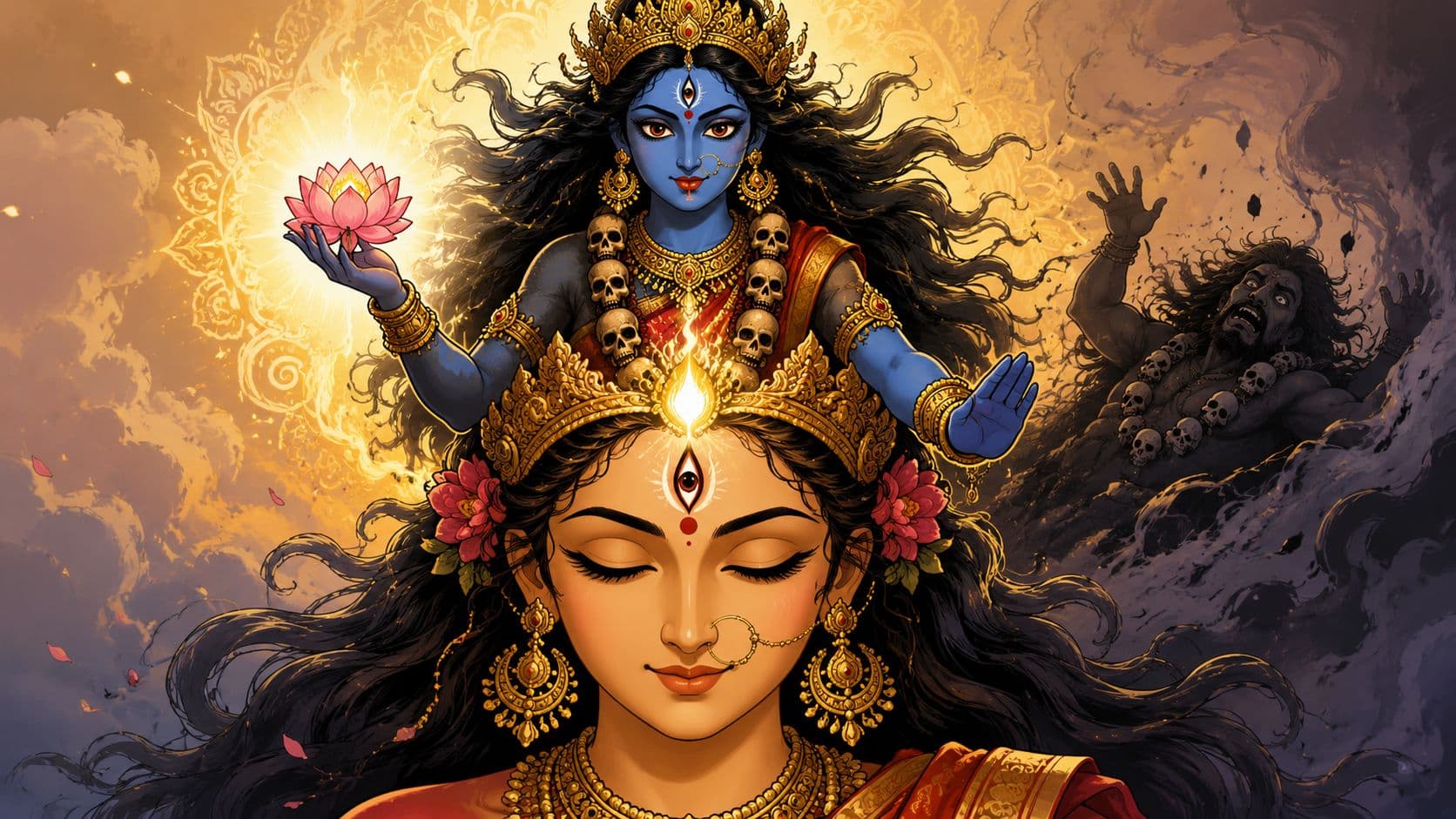
A lot of modern readers stop at the surface image and miss the language of symbols. Kali's iconography is intense because it's trying to teach something intense.
Reading the symbols instead of fearing them
According to this explanation of Kali's traditional iconography, her skull garland contains 50 heads, representing the 50 syllables of the Sanskrit language, which symbolizes mastery over knowledge and speech. The same source explains that her protruding tongue asks devotees to face fear in order to gain wisdom, and that her dark color represents Kaal, or time and death.
That changes the feeling of the image.
The skulls aren't there just to shock. They point to language, sound, knowledge, and the sacred power of speech. Her tongue isn't a random grotesque detail. It challenges the viewer. Can you look at what you fear without running from it?
What readers often misunderstand
People often think spiritual growth should look peaceful all the time. Soft light. Calm music. Gentle insight.
Kali says otherwise. Some truths arrive like a storm. Some healing begins when denial ends.
Here's a simple way to read her imagery:
| Symbol | Common first reaction | Deeper meaning |
|---|---|---|
| Skull garland | Death and horror | Knowledge, speech, sacred sound |
| Dark body | Evil or menace | Time, depth, the void beyond form |
| Tongue | Aggression | Confronting fear to reach wisdom |
Her imagery doesn't flatter the ego. It exposes it.
If you've explored the broader idea of divine feminine power, this adds helpful context for understanding why Kali can be both fierce and sacred.
Some spiritual symbols comfort you. Kali tests whether you're ready for the truth.
That's part of why her image stays with people. It doesn't let you remain superficial for long.
Beyond the Fierce Protector A Motherly Love
Many people can accept Kali as powerful. Fewer can understand why devotees also love her as a mother.
That's the paradox at the center of her meaning. The same goddess associated with battle, death, and cemeteries is also revered with tenderness. She is feared by the ego and loved by the soul.
A useful comparison is a mother bear. She doesn't look soft when danger approaches her cubs. Her ferocity is love in protective form. Kali's fierceness works in a similar way. She destroys what binds, deceives, or imprisons the deeper self.
The mother hidden inside the terrifying form
Kali is associated with the Kali Yuga, the final age of strife in the cosmic cycle, which is said to have begun in 3102 BCE and to last 432,000 years according to Britannica's overview of Kali. The same source notes that she is linked to cemeteries as a reminder that all things die, and that this symbolism points toward the death of ego as part of the path to moksha, or liberation. It also notes the paradox that later traditions revere her for profound motherly love.
That combination matters. She doesn't offer comfort by pretending life is stable. She offers liberation by helping devotees face reality.
Why cemeteries matter symbolically
A cemetery strips away status quickly. Titles don't matter there. Wealth doesn't matter there. Image doesn't matter there.
That's one reason Kali's presence in cremation grounds or cemeteries is spiritually potent. She stands where illusion loses its grip. The message is severe, but clean: if everything passes, then clinging can't save you.
For someone in a modern crisis, this isn't morbid. It can be clarifying.
- A broken career identity can reveal that your value was never your job title.
- The end of a relationship can expose patterns you kept calling love.
- A collapse in certainty can open the first honest spiritual questions of your life.
Kali's maternal side doesn't always feel soothing at first. Sometimes it feels like being pushed toward truth when you'd rather stay numb. But many traditions understand that push as compassion, not cruelty.
When Kali Calls Your Life Path
Not every hard season is a “Kali calling.”
Sometimes you're just uncomfortable because change is inconvenient. You don't want to send the email, leave the job, have the conversation, or admit that a chapter has ended. That's ordinary resistance. Many can relate to that feeling.
A true Kali calling is different. It often arrives when your inner world doesn't just feel challenged. It feels demolished.
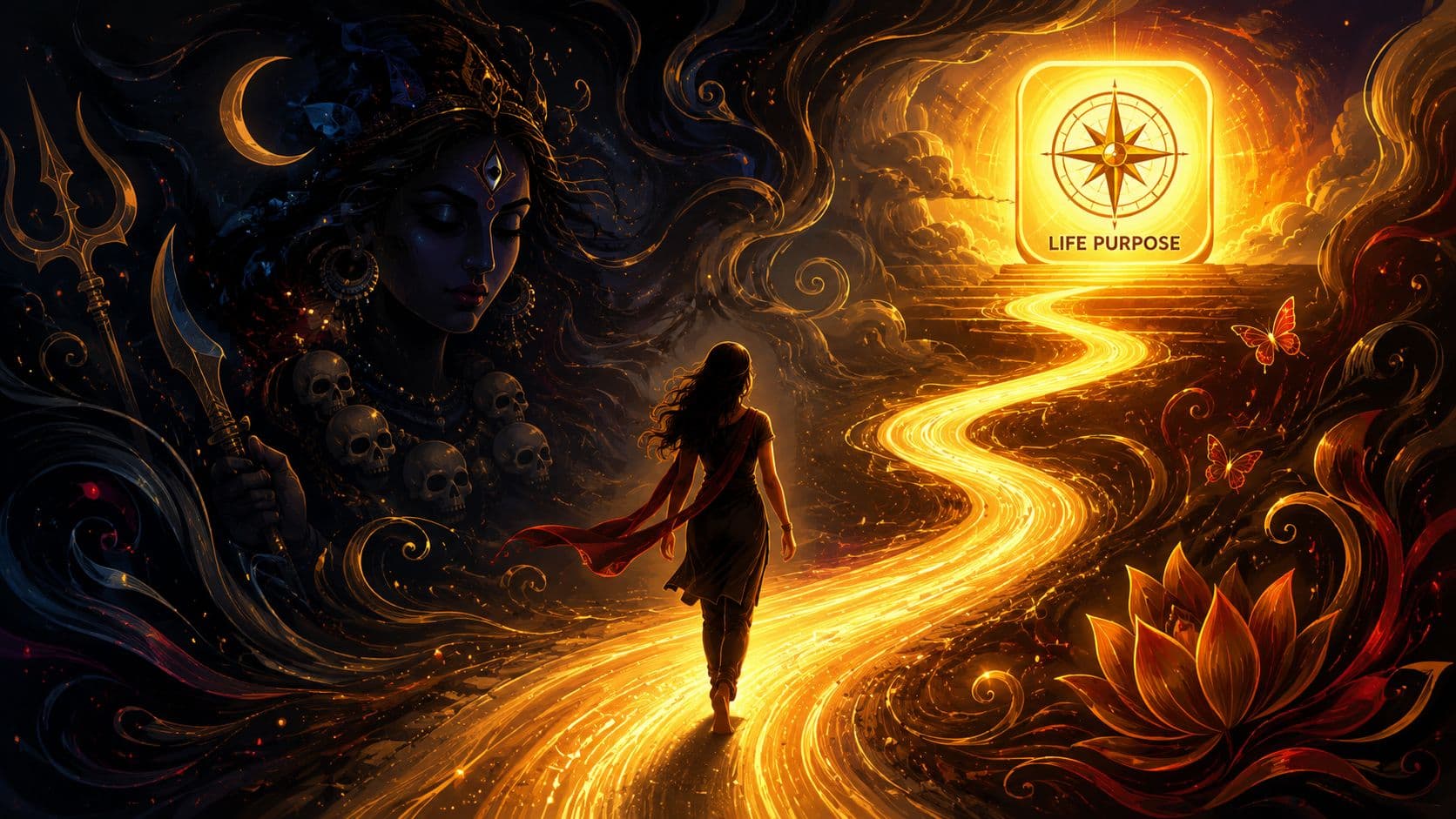
The clearest sign is not minor discomfort. It's a profound loss of hope and a feeling that your whole world has fallen apart. In this understanding, Kali's call marks consciousness emerging from darkness and the end of a life cycle. It isn't the same as wanting revenge, dramatizing pain, or trying to feel powerful through destruction.
Resistance versus a real turning point
This distinction can save people a lot of confusion.
| Experience | General resistance | Kali calling |
|---|---|---|
| Emotional tone | Irritation, avoidance, hesitation | Collapse, emptiness, total unraveling |
| What's threatened | Comfort zone | Entire identity structure |
| Inner message | “I don't want to change” | “I can't live the old way anymore” |
| Spiritual meaning | Growth is being resisted | A deeper life chapter is ending |
If your life still basically works and you're just dragging your feet, that's probably not Kali. If the story you built your identity around has stopped making sense at the root, you may be in different territory.
What this looks like in ordinary life
A person may say, “I used to know who I was, and now none of it feels real.”
Another may realize that the career path they spent years building no longer fits, yet they can't return to the earlier version of themselves either. A relationship may end and, with it, a whole identity built around pleasing, rescuing, or staying small.
A Kali calling doesn't usually flatter your self-image. It dismantles it.
Suddenly, old spiritual language becomes practical. Kali's “destruction” can be understood as the removal of what has become spiritually dead. Not because life is punishing you, but because inner stasis has become unbearable.
Staying grounded during the unraveling
When people go through major life-path change, they often want certainty fast. But this phase usually asks for honesty before clarity.
A few grounded questions help:
- What has already ended, even if I haven't admitted it yet?
- Which identity am I trying to keep alive out of fear?
- Am I grieving a real loss, or the collapse of a role?
- What feels deadened in me, and what still feels alive?
For readers who work with life-path systems and numerology, it's important to stay precise and grounded. Dan Millman's book The Life You Were Born to Live offers a structured way to think about life lessons and cycles, and the Life Purpose App builds on that framework. Used well, tools like those don't replace spiritual discernment. They help you name the season you're in without reducing it to random chaos.
Living with Kali's Wisdom Today
Living with Kali's wisdom today begins with respect. She is not a mascot for rebellion, a shortcut to feeling powerful, or a dramatic label for every uncomfortable season. She comes from a living Hindu tradition, and that asks for humility, study, and care.
That respect matters even more because people often confuse ordinary resistance with a deeper spiritual turning point. A hard week at work, boredom in a relationship, or restlessness after success does not automatically mean Kali is calling for a total life-path change. Sometimes you are tired. Sometimes you are grieving. Sometimes you need honesty, rest, or support.
A true Kali season feels heavier and clearer than passing discomfort. It can feel like standing in a house where the walls are still up, but the life inside it is gone. What once gave direction no longer gives life. Hope in the old path has drained out. That kind of ending asks for careful listening, not impulsive reinvention.
So how do you live with that wisdom in a grounded way?
You practice discernment before drama.
- Study before symbolizing: Learn who Kali is in Hindu tradition before turning her image into a personal metaphor.
- Tell the truth in plain words: If a career, role, belief, or identity has inwardly ended, say so without dressing it up.
- Separate discomfort from collapse: Ask whether you are resisting growth, or whether your whole direction has gone spiritually numb.
- Stay with the body: Major inner change affects sleep, energy, mood, and attention. Practices that support grounding, including breath and body awareness, can help. If you want a clearer foundation for that side of spiritual work, this guide to kundalini and chakra basics offers helpful context.
- Use spiritual tools carefully: Reflection, prayer, journaling, and life-path frameworks can clarify a season. They should not be used to force certainty before it arrives.
A garden offers a better analogy than a crisis story. Some weeds need pulling. Some branches need pruning. But sometimes the whole plant has reached the end of its cycle, and keeping it alive only drains the soil. Kali's wisdom belongs most to that third kind of change.
The deepest takeaway
What does Kali mean in daily life?
She means accepting that some endings are real. She means seeing that fear does not always mean stop. She means recognizing the difference between an irritated ego and a soul that can no longer survive inside its old shape.
Her wisdom asks for surrender with responsibility. You still make choices, pay attention, seek wise counsel, and care for the people your changes affect. But you stop trying to preserve an identity that has already lost its life.
If Kali once seemed only frightening, she may start to feel strangely compassionate. A surgeon's knife is not gentle, yet it serves healing when something harmful must be removed. Kali carries that kind of mercy. Fierce, clear, and unwilling to let you keep calling a dead path your destiny.
If you're exploring spiritual growth, life cycles, or personal change through Dan Millman's The Life You Were Born to Live, the Life Purpose App can help you reflect on your path, challenges, and recurring patterns with more clarity. It's a practical companion for anyone trying to understand where one chapter ends and another begins.
Discover Your Life Purpose Today!
Unlock your true potential and find your life’s purpose.
