Have you ever listed what you want in a partner and realized most of it fits the first three dates, not the next thirty years? When illness, money stress, family conflict, or the end of the honeymoon glow arrive, a different set of qualities carries the relationship. This article outlines eight practical traits that predict long-term safety, growth, and steady partnership.

April 16, 2026 (6mo ago) — last updated October 11, 2026 (11d ago)
8 Traits to Look for in a Man for a Lasting Relationship
Eight practical traits—emotional intelligence, integrity, reliability, kindness, financial responsibility, and more—that predict whether a man can build a lasting partnership.
← Back to blog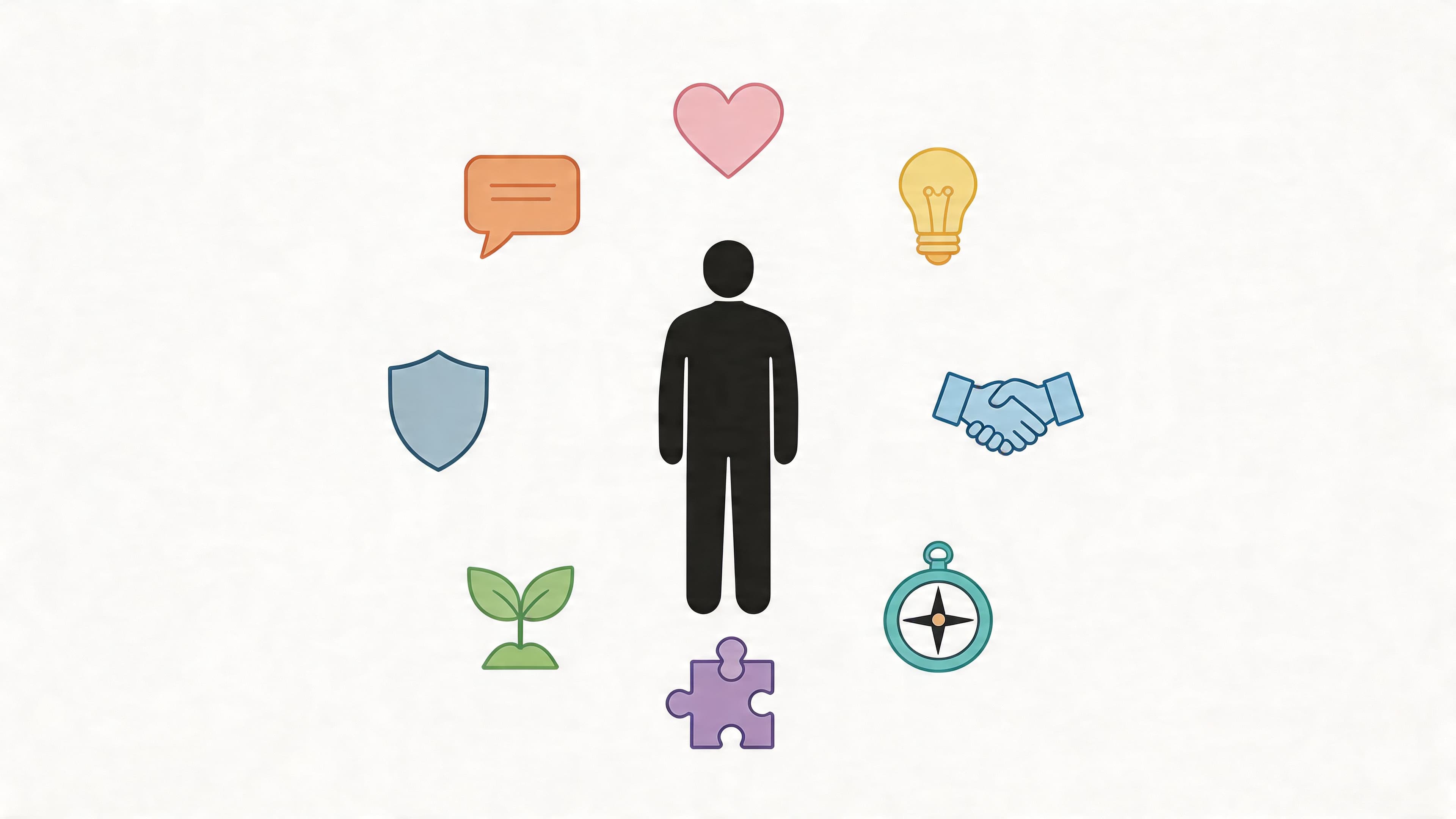
Have you ever listed what you want in a partner and realized most of it fits the first three dates, not the next thirty years? When illness, money stress, family conflict, or the end of the honeymoon glow arrive, a different set of qualities carries the relationship. This article outlines eight practical traits that predict long-term safety, growth, and steady partnership.
What to Look for in a Man: 8 Key Qualities
Summary: Beyond surface traits, these eight qualities help you choose a partner who can build a steady, lasting life with you.
Introduction
Have you ever made a list of what you want in a partner and realized most of it fits the first three dates, not the next thirty years? Height, humor, chemistry, a good job — those things matter early on. When illness, money stress, family conflict, or the end of the honeymoon glow arrive, a different set of qualities carries the relationship. Money and ongoing stress often reveal patterns that attraction can’t fix4.
I care less about polish and more about pattern, less about charm and more about character. You’re not just picking someone to go out with. You’re choosing someone who may one day sit beside you in grief, help make hard decisions, and build an ordinary life with you.
Before choosing, it helps to know yourself. If you want a companion based on surface attraction, see this guide on what science says makes a man attractive to women. For long-term partnership, the eight traits below matter most.
1. Emotional Intelligence and Self-Awareness
What kind of man stays steady when life stops being easy?
Emotional intelligence shapes almost every part of a shared life. A man who can recognize his inner state is easier to trust, easier to repair with, and less likely to make his unspoken stress everyone else’s problem1.
What this looks like in real life
Watch him when plans fall through or when he’s frustrated. Does he get cold and punishing, or can he pause and name what’s happening? Can he say, “I’m stressed and need a minute,” rather than leaking irritation and calling it honesty?
A self-aware man may still have rough edges. The difference is he can catch himself, take responsibility for his part, and pursue repair without turning the conversation into a trial about your tone or timing.
Practical rule: pay close attention to how he handles vulnerability — yours and his.
2. Integrity and Authenticity
Can you trust his word when it costs him something?
Integrity is alignment: values, words, and actions that match closely enough that you don’t feel like you’re dating three different people. He shows up consistently across contexts and admits limits when necessary.
The quickest way to spot the difference
Listen for consistency. If he says family matters, does he show up for family? If he says honesty matters, does he tell the truth when it’s difficult? People can describe themselves well; fewer live that description.
A man with integrity will say, “I can’t promise that right now,” rather than making a beautiful promise he doesn’t intend to keep.
3. A Growth Mindset
Is he teachable?
A growth mindset isn’t performative. It’s plain: when something goes wrong, does he get curious or rigid? Can he hear feedback without turning it into an attack on his identity?
The man you can grow with
After an argument, he might say, “I see where I got defensive. I want to handle that better next time.” Suggest trying something neither of you has done before — a class, a hobby, or couples counseling — and notice whether he’s energized by learning or threatened by beginner status.
What works is humility paired with effort. What doesn’t work is self-improvement theater: big declarations with no follow-through.
4. Reliability and Dependability
Romance gets the attention; reliability does the work.
You build trust through repeated follow-through. He says he’ll call, and he calls. Plans change and he communicates. He doesn’t vanish when life stops being fun.
Small patterns become big realities
If a man is careless with little commitments, that often spills into bigger ones. Missed calls become missed conversations and half-kept plans become half-kept promises. You end up carrying the mental load because it’s easier than being disappointed.
Dependable people communicate early, commit realistically, and stay present in hard seasons. That calm lets you use energy to build something real.
5. Emotional Maturity and Conflict Resolution Skills
Conflict is inevitable. The question is whether it becomes information or destruction.
A mature man knows disagreement doesn’t have to become disrespect. He doesn’t need to win every argument to feel secure. He can stay in the conversation without turning it into punishment or performance.
How healthy conflict actually sounds
“I’m getting heated. I want to come back when I can think clearly.”
“I see why that upset you, even if I meant something different.”
“I was wrong about that.”
Those ordinary sentences save relationships. By contrast, yelling, name-calling, silent treatment, or refusing to repair are red flags. If every disagreement leaves you feeling smaller, afraid to speak, or confused, that isn’t just a communication style issue — it’s a safety issue.
Judge a relationship by what happens after rupture. Is there accountability, repair, and learning? That’s emotional maturity.
6. Genuine Ambition and a Sense of Purpose
I don’t need a man to be impressive. I need him to be directed.
There’s a difference between appetite and purpose. Appetite wants more. Purpose wants to build something meaningful. It often looks like steady work, improving craft, supporting family, and making choices that align with values.
Status alone isn’t enough
Title and income matter in practical ways, but they don’t tell you whether a man is inwardly anchored. Does his work serve something he believes in, or is he chasing applause? Men driven only by status tend to bring restlessness home.
A purposeful man usually has better proportions: he works hard but isn’t consumed by image. Ask about long-term dreams and look for alignment between stated values and daily choices.
7. Kindness and Compassion
If I had to strip this list down to one trait, kindness would survive.
Not performative niceness. The steady habit of treating people with care — you, his family, a server, a stranger, and himself.
Kindness is not a small trait
Kindness shows up in subtle ways: noticing you’ve had a brutal week and making dinner, not weaponizing your weak spots in an argument, or treating people who can do nothing for him with decency. Compassion softens ordinary life and makes room for mistakes, growth, and repair.
Watch how he treats people from whom he has nothing to gain; that’s often the cleanest view of character. Surveys find kindness and patience rank highly among traits women prioritize in long-term partners2.
8. Financial Responsibility and Wisdom
Money doesn’t create love, but it exposes character fast.
I don’t mean wealth. I mean honesty, planning, and the ability to live within reality. Can he talk about money without deception, shame, or fantasy? Can he make decisions that protect the future instead of sabotaging it?
Stability matters more than flash
Financial steadiness affects housing, stress, parenting, caregiving, and household safety. Practical habits matter: regular budget talks, an emergency cushion, clear agreements, and no financial secrecy.
I’d rather see a workable plan and clean honesty than a high income with secrecy. Dating experts also rank financial stability as a top factor in serious relationship decisions3.
8-Trait Comparison: What I Look for in a Man
| Quality | Implementation Complexity | Resource Requirements | Expected Effectiveness | Typical Outcomes | Tips |
|---|---|---|---|---|---|
| Emotional Intelligence & Self-Awareness | Medium | Time, reflection, possible therapy or app support | ★★★★ | Greater empathy, fewer reactive conflicts, deeper intimacy | Use reflective prompts; map patterns with a life-purpose tool |
| Integrity & Authenticity | Low–Medium | Time, honest communication | ★★★★ | Strong trust, psychological safety | Notice behavior across contexts; prefer congruence over charm |
| Growth Mindset | Medium | Time, curiosity, courses or coaching | ★★★★ | Increased adaptability and resilience | Try new things together; favor teachability over polish |
| Reliability & Dependability | Low | Planning, punctuality, communication | ★★★★ | Stability, reduced anxiety | Start with small commitments and watch follow-through |
| Emotional Maturity & Conflict Skills | Medium–High | Communication practice, possible coaching | ★★★★ | Healthier conflict resolution and safety | Use “I” statements; take breaks when heated |
| Ambition & Purpose | Medium | Goal-setting, mentoring | ★★★★ | Meaningful motivation and direction | Ask about long-term dreams; look for alignment |
| Kindness & Compassion | Low–Medium | Emotional energy, self-care | ★★★★ | Nurturing environment and forgiveness | Watch how he treats strangers and service workers2 |
| Financial Responsibility | Medium | Budgeting tools, transparency | ★★★★ | Reduced money stress and secure planning | Hold regular money dates; build emergency funds3 |
Your Path, Your Partner, Your Purpose
What if the better question isn’t, “What do I look for in a man?” but, “What kind of partnership fits the life I am here to build?” Surface traits can attract you, but character determines whether a relationship can carry real life: work stress, family strain, money decisions, illness, and disappointment.
Choose with discernment. Emotional intelligence, integrity, reliability, maturity, purpose, kindness, and financial wisdom are not random preferences — they indicate whether someone can build a steady life with another person.
A good man is not a finished man. He’s honest about who he is, responsible for how he lives, and willing to grow beside you. Strong partnership comes from two people who know themselves well enough to choose each other with intention.
Start there. Know your path. Then choose a partner whose character can meet you in your purpose, not just your preferences.
Quick Q&A — Common Questions
Q: What matters most for long-term relationships?
A: Emotional intelligence, reliability, kindness, and aligned purpose. These traits predict day-to-day safety and shared growth more than looks or status2.
Q: How do I test for these qualities early on?
A: Watch patterns over time. Notice how he handles disappointment, money talk, everyday commitments, and how he treats people who can’t do anything for him.
Q: What if someone is good at some traits but not others?
A: Prioritize teachability and honesty. Put more weight on humility plus follow-through than on polished promises.
Three Concise Q&A Sections
Q: Can someone change these traits?
A: Yes, traits like emotional intelligence and reliability can grow with intention, feedback, and practice. Look for consistent effort, not instant transformation.
Q: Which trait should I prioritize?
A: Start with emotional safety: emotional intelligence, reliability, and kindness create a foundation that makes other traits workable.
Q: How soon can I reliably judge these qualities?
A: Patterns emerge over weeks and months, not a single date. Pay attention to small commitments, stress responses, and how he treats people in ordinary moments.
1.
Greater Good Science Center, “How Emotional Intelligence Supports Relationships,” https://greatergood.berkeley.edu/article/item/how_emotional_intelligence_affects_relationships
2.
YourTango, “Study Finds Most Women Agree: Kindness Is the Most Attractive Trait in a Man,” https://www.yourtango.com/love/study-finds-most-women-agree-most-attractive-trait-man
3.
Matchmaking Company, “What Women Want From Men: Dating Industry Experts Tell All,” https://matchmakingcompany.com/dating-tips/what-women-want-from-men-dating-industry-experts-tell-all/
4.
American Psychological Association, “Stress in America: Paying With Our Health,” https://www.apa.org/news/press/releases/stress/2015/report
Discover your life path today
Enter your date of birth and see your life path, free.
Find your life path