March 9, 2026 (2d ago)

What Is a Chi An Introduction to Life Force Energy

Curious about what is a chi? This guide explores the ancient concept of life force energy, its origins, and how you can cultivate it for better well-being.

← Back to blog
Cover Image for What Is a Chi An Introduction to Life Force Energy

Curious about what is a chi? This guide explores the ancient concept of life force energy, its origins, and how you can cultivate it for better well-being.

So, what exactly is chi? Let's start with an analogy. Think about the electricity running through your home. You can't see the current itself, but you absolutely see its effects—the lights turning on, the stove heating up, the music playing from your speakers.

Chi (often spelled 'qi') is a lot like that. In traditional Chinese culture, it's considered the fundamental life force, the unseen energy that flows through and animates every living thing.

Understanding Chi: The Energy That Animates Life

Illustration of a human body with glowing internal energy connected to a light bulb, leaves, and a running shoe.

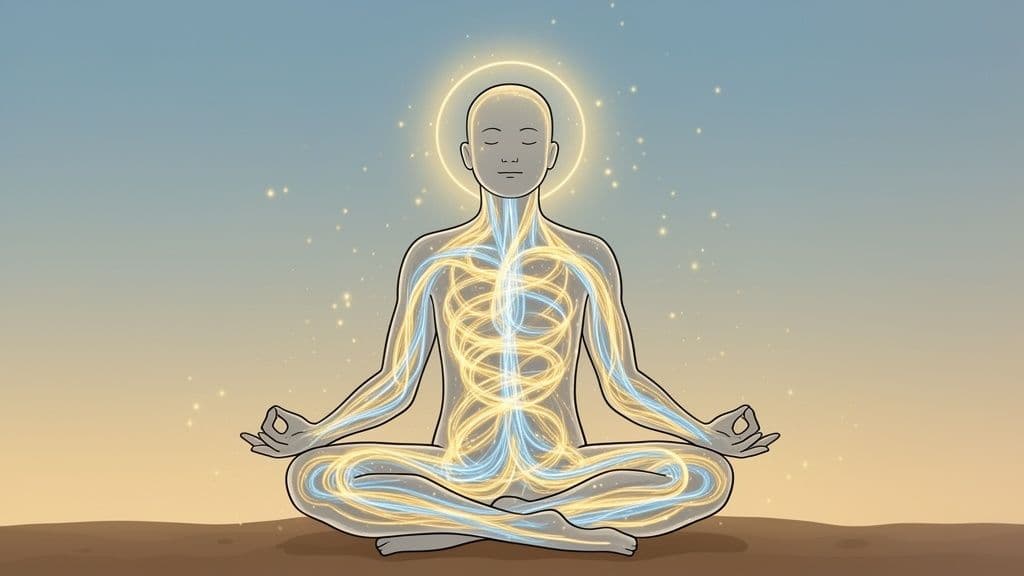
At its core, chi is the vibrant, intelligent energy that makes you feel alive. This isn't just some abstract philosophical idea; it's a practical way to understand your own vitality. We've all had days where we feel buzzing with energy, and other days when we feel completely drained. That gut feeling is the essence of chi in action.

When your chi is balanced and flowing freely, you know it. You feel it.

  • Your mind is sharp and focused.
  • Your body feels strong and resilient.
  • Your emotions are steady and calm.

This is about moving beyond a simple definition and getting a real feel for what it means to have vibrant, flowing energy versus the sluggishness that comes when it's blocked.

The Roots of Life Force

The concept of chi isn't new; it's an ancient pillar of Chinese philosophy. The earliest known mentions of this fundamental life force date back over 2,600 years to texts from the Zhou Dynasty. As language evolved, the written character for chi came to be a combination of the symbols for 'vapor' and 'rice'—a beautiful illustration of its connection to the unseen energy (like steam) that we get from physical nourishment.

You can learn more about its fascinating historical journey by exploring the origins of Taoism and chi.

This vital energy isn't just an idea to be debated; it’s a cornerstone of countless well-being practices. To get a broader perspective on subtle energy systems, you might find that understanding chakras and how to balance them offers some interesting parallels to the flow of chi.

Your personal energy is the invisible thread connecting your physical health, mental state, and emotional well-being. When it flows freely, every aspect of your life feels more aligned and purposeful.

Getting a handle on this energy is the first step toward living with more intention and awareness. It’s also why many people explore the deeper connections between our personal energy field and the world around us. For a deeper dive, check out our guide on how energy, frequency, and vibration are all connected.

The Ancient Roots and Cultural Journey of Chi

A brushstroke drawing on a parchment scroll depicting a cycle of mountain, meditating person, pagoda, and tree.

Long before it became a buzzword in modern wellness circles, the concept of chi was already ancient. Its story isn't a new-age invention but a rich cultural journey that stretches back thousands of years, woven into the very fabric of Eastern philosophy, medicine, and spirituality. To really get a feel for what chi is, we have to look at where it came from.

Early Daoist philosophers saw it as the universe's cosmic breath. It was the invisible, animating force that connected everything—heaven, earth, and humanity—in one dynamic, interconnected system. Chi was the energy that drove the changing seasons, guided the stars, and flowed through every living thing.

But this wasn't just abstract musing. For millennia, people have been developing structured, documented ways to work with this energy.

From Philosophy to Practice

We have incredible historical evidence that shows this evolution in action. Silk scrolls unearthed from the Han Dynasty, dating back over 2,000 years, feature detailed illustrations of specific physical exercises. These intricate postures and movements are unmistakable precursors to what we now call Qigong, a practice designed explicitly to cultivate and balance this life force.

This tells us that working with chi was never just a philosophical exercise. It has always been an active, hands-on practice aimed at enhancing one's own vitality and health.

The concept of chi evolved from a grand explanation of the cosmos into a practical system for mastering one's own inner world. It's one of the earliest forms of mind-body medicine, built on the idea that our vitality is something we can directly influence.

Over the centuries, this understanding grew even more sophisticated. During the Han Dynasty (206 BC–220 AD), the focus was often on the interplay between the heavens, the earth, and humanity. Fast forward to the Song Dynasty (960–1279 AD), and you have thinkers like the Neo-Confucian scholar Zhang Zai proposing that qi was the primordial substance from which the entire universe was formed. If you're interested in diving deeper, this discussion on qi's role in Chinese cosmology is a great resource.

The Visual Language of Chi

Even the written character for qi (氣) tells a powerful story about its dual nature—both ethereal and tangible.

The modern character is a combination of two symbols: "steam" or "vapor" (气) rising above the symbol for "rice" (米). It’s a beautiful, direct visual metaphor: the unseen energy (steam) that is derived from physical nourishment (rice).

This long journey, from a cosmic principle to a pillar of medicine, is precisely why chi continues to resonate today. It’s a concept that bridges ancient wisdom with our modern search for balance, health, and a deeper sense of connection.

How Chi Flows Through Your Body, Mind, and Spirit

To really grasp what chi is, you have to understand how it's believed to move. In Traditional Chinese Medicine (TCM), we're given a beautiful and practical map for this: a system of pathways called meridians.

Imagine your body is a vast, fertile garden. The meridians are like an intricate network of rivers and streams that irrigate this entire landscape. Chi is the water itself—the vital current that flows through these channels to nourish every cell, organ, and system.

When the water flows freely, without any dams or blockages, the garden is lush, healthy, and thriving. This is what it means to have balanced chi.

The Pathways of Vitality

According to TCM, we have 12 primary meridians, and each one is connected to a major organ system. It's important to understand that these aren't physical structures like veins or nerves. You won't find them on a surgeon's table. Instead, they are energetic channels that form an invisible web, connecting your physical body with your mind and spirit.

This network ensures that every part of you gets the life force it needs to function. It’s a truly holistic map, which is why TCM sees a connection between, for example, the energy of the lungs and the emotion of grief, or the liver's energy and the feeling of anger.

The meridian system is the bridge between your tangible body and your intangible emotions and thoughts. It shows how a physical issue can have an emotional root, and vice-versa.

This is exactly why so many practices that work with chi are obsessed with flow. A blockage in a meridian is like a dam in a river. It disrupts the natural current, causing energy to get stuck and stagnant in some places while leaving other areas depleted and weak.

Directing the Flow Through Practice

This is where practices like Qigong and Tai Chi come into play. They look like gentle exercises, but they are actually sophisticated forms of moving meditation designed specifically to work with your meridian system.

  • Qigong, which translates to "life energy cultivation," uses slow, deliberate movements, targeted breathing techniques, and focused intention to consciously guide chi. The goal is to clear out those blockages and build up your internal energy reserves.
  • Tai Chi, often seen as a graceful martial art, relies on flowing, circular motions to promote the smooth circulation of chi throughout the entire body, which in turn improves balance, reduces stress, and fosters a sense of calm.

Both of these ancient arts are built on the principle that you can take an active role in your own well-being by tending to your inner rivers. They teach you how to dissolve the "dams" of tension, stress, and stagnation, allowing your life force to flow freely again. While the meridian system is central to TCM, other traditions describe energy centers in different ways. You can learn about a related framework in our guide to the chakras and their associated colors.

2. Recognizing the Signs: Is Your Chi Flowing or Blocked?

You don’t have to be a seasoned qigong master to get a feel for your own chi. In fact, you're already experiencing it every single day. Sensing your chi is less about seeing a mystical energy field and more about learning to listen to the subtle signals your body, mind, and emotions are constantly sending you.

Think of it as developing a deeper kind of self-awareness. When your chi is full and moving freely, everything just seems to click. Life has a certain smoothness to it. But when it's stuck or weak, you feel it—that sense of being out of sync, sluggish, or just plain "off."

This simple diagram shows how a healthy flow of chi acts as the thread connecting the mind, body, and spirit, creating a unified state of well-being.

Diagram illustrating the flow of Chi, connecting Mind, Body, and Spirit with their benefits.

As you can see, a balanced chi isn't about excelling in just one area; it’s about creating an integrated and harmonious state of being.

The Feeling of Balance and Flow

So, what does healthy, flowing chi actually feel like? It shows up as a quiet, powerful sense of vitality. It’s that feeling of waking up genuinely rested, with a calm energy that sustains you throughout the day—no caffeine required.

  • Physical Strength: Your body feels capable and resilient. You recover well from exercise or illness, and you move with a sense of ease and flexibility.
  • Mental Focus: Thoughts are crisp and clear. You can concentrate on what’s in front of you without feeling scattered or lost in a mental fog.
  • Emotional Stability: You're better able to navigate life’s ups and downs. Feelings like frustration or sadness still happen, but they pass through you without getting you stuck. There's an underlying sense of purpose and calm.

The Experience of Blocked or Stagnant Chi

On the flip side, blocked chi feels exactly how it sounds: stuck. Imagine a traffic jam in your internal energy highway. Nothing can get where it needs to go, and problems start to pile up.

When your chi is stuck, it’s not just a lack of energy; it's a feeling of being out of sync with yourself. Small challenges can feel monumental, and your body might seem to be working against you rather than for you.

This blockage can manifest in ways that are all too common for many of us. It’s the chronic fatigue that no amount of sleep can seem to fix. It’s the persistent physical stiffness, aches, or pains that don’t have an obvious cause. It's also the emotional roller coaster—feeling irritable, anxious, or down for no clear reason.

To better understand these patterns, it's helpful to compare the signs side-by-side.

Recognizing Chi Balance vs. Blockage

Area of LifeSigns of Balanced ChiSigns of Blocked Chi
PhysicalEnergetic, strong immune system, restful sleep, good digestion, flexible body.Chronic fatigue, frequent illness, insomnia, digestive issues, stiffness, pain.
MentalClear focus, sharp memory, creativity, decisive thinking.Brain fog, poor concentration, forgetfulness, mental "looping," indecisiveness.
EmotionalCalm, resilient, joyful, adaptable, sense of purpose.Irritability, anxiety, depression, mood swings, feeling "stuck" or apathetic.

Seeing these signs laid out can help you start connecting the dots in your own life. Are you experiencing more signs from the "Balanced" column or the "Blocked" one?

For a more personalized look at your unique energetic blueprint, some people explore the life path system in Dan Millman's book, The Life You Were Born to Live. Tools inspired by this work, like the Life Purpose App, can offer insights into your innate energetic strengths and highlight where your chi might be more prone to blockages, giving you a starting point for rebalancing your flow.

Practical Ways to Cultivate Your Chi

Three illustrations depicting yoga, a meditating person with radiating chest energy, and hands on a torso with inner wavy lines.

It’s one thing to understand the concept of chi, but it’s another thing entirely to feel it and work with it. The good news is that you don’t need to be a secluded monk to cultivate your own life force. It really comes down to a few accessible, time-tested practices designed to get your internal energy flowing smoothly.

Think of it as moving from theory to a tangible, felt experience. Whether it's the gentle, flowing forms of Tai Chi or the quiet focus of deep breathing, each method is a pathway to dissolving blockages and encouraging a strong, vibrant current of vitality.

Movement as a Moving Meditation

Some of the most popular ways to work with chi involve physical movement. Practices like Tai Chi and Qigong are often called "moving meditations" because they beautifully weave together physical postures, specific breathing patterns, and focused intention to guide energy through the body.

  • Tai Chi: This art form uses slow, graceful sequences that feel like a dance. The purpose is to encourage the smooth circulation of chi, releasing tension, improving balance, and building a deep sense of calm and resilience from the inside out.
  • Qigong: Translating literally to "life energy work," Qigong is a collection of specific postures, breathing exercises, and visualizations. The main goal here is to clear out stagnant energy, build up your internal reserves, and direct that fresh flow of chi for better health and vitality.

These practices have a long, rich history. One famous example dates back to the 6th century AD, when the monk Bodhidharma is said to have blended Indian yoga breathing with Chinese qi exercises at the Shaolin Temple, laying a foundation for martial arts like Tai Chi. More recently, a 2022 meta-analysis showed that regular Qigong or Tai Chi can lower hypertension by 15-20 mmHg systolic in 70% of practitioners after just three months. You can take a deeper dive by reading about the history of chi cultivation.

Cultivating chi is less about forcing energy and more about creating the right conditions for it to flow naturally. Think of yourself as a gardener tending to your inner landscape—your job is simply to remove the weeds and ensure the water can reach everywhere it needs to go.

Acupuncture and Breathing Techniques

Beyond movement, other powerful methods can help you interact with your chi. Acupuncture, a cornerstone of Traditional Chinese Medicine, is a more direct approach. A trained practitioner inserts hair-thin needles at specific points along the meridians to release blockages and restore balance. It’s like having an expert come in to clear a logjam in your body's river system.

Your own breath is also an incredibly potent tool, and it’s always with you. Simple, conscious breathing exercises can make a huge difference in your energy. By intentionally slowing down and deepening your breath, you can soothe your nervous system, boost oxygen flow, and directly influence your entire state of being.

These techniques aren't just about feeling better in the moment; they are about clearing negative energies that cause stagnation and keep you stuck. To learn more, check out our guide on ways to clear negative energy from your life. By folding these practices into your routine, you can take an active role in your own well-being and build a much deeper connection to your inherent vitality.

Connecting Your Energy to Your Life Purpose

Have you ever noticed how your personal energy is tied directly to your sense of purpose? When you’re lit up and feeling good, it’s almost always because what you’re doing just feels right—it’s in sync with who you are. On the flip side, that feeling of being drained or stuck is often a big red flag that you’re pouring your life force into things that don’t truly matter to you.

Learning to sense your own chi is the first step toward figuring this all out. It’s like developing an internal compass that tells you which activities fill your tank and which ones leave you running on empty. This simple awareness almost always opens the door to bigger questions, like “What am I really here to do?”

Your Energetic Blueprint

This is where a fascinating system of self-knowledge can give you a clear map. In his incredible book, The Life You Were Born to Live, Dan Millman lays out a framework for understanding life paths based on your birth date. This isn't about fortune-telling; it's about uncovering the energetic blueprint you were born with.

Your life path number points to your natural gifts, the challenges you're meant to work through, and even the spiritual principles that are most important for your growth. Think of it as a guide that shows you where your chi will flow effortlessly and where you might hit some bumps.

By understanding your unique energetic makeup, you can consciously direct your chi toward activities that support your core purpose, leading to a life of greater harmony, fulfillment, and natural flow.

We actually created the Life Purpose App to make this ancient wisdom super accessible. You just pop in your birthday, and the app instantly calculates your life number and gives you a detailed guide to your unique path. It’s like getting a personalized map to your own energy system.

For instance, you might find out your path is all about creativity, leadership, or healing. Once you have that piece of the puzzle, you can start aligning your everyday choices—from your career to your hobbies—with what comes naturally. It helps ensure your life force isn't just being spent, but invested in a life that feels authentic and completely yours.

Frequently Asked Questions About Chi

As you start exploring the idea of chi, a few questions almost always pop up. It’s a concept that can feel a bit abstract at first, but the answers are surprisingly down-to-earth.

Is Chi a Real Scientific Force?

This is the big one. It's a fair question: can you prove chi exists in a lab? The short answer is no, you can't measure it with a voltmeter or put it under a microscope. But that doesn't mean its effects aren't real.

Think of it this way: science has long shown that practices built around cultivating chi—like Tai Chi and Qigong—have measurable physiological benefits. We're talking lower blood pressure, reduced inflammation, and a stronger immune response.

So while we don't have a "chi-detector," researchers are exploring modern concepts like bioelectricity, the nervous system's regulatory functions, and the body's intricate fascial network as potential Western frameworks for understanding the phenomena ancient cultures simply called chi.

Can I Learn to Feel My Own Chi?

Absolutely. With a bit of practice and focused attention, almost anyone can learn to sense their own energy. This isn't some dramatic, lightning-bolt moment. It’s far more subtle. Most people describe it as a gentle warmth, a faint tingling, or a soft, magnetic-like pressure, especially between their hands.

Here’s a classic exercise you can try right now. Briskly rub your palms together for about 30 seconds to create warmth and friction. Then, slowly pull them apart and hold them facing each other, about six inches apart. Quiet your mind and just notice the space between them. Many people are surprised to feel a subtle field of fullness or energy—that's your first introduction to sensing your own chi.

How Does Chi Relate to the Life Paths from Dan Millman's Work?

There's a fascinating connection here. In his work, particularly the book The Life You Were Born to Live, Dan Millman lays out a system of life paths based on your birth date. You can think of your life path number as a blueprint for your personal energetic wiring.

This framework reveals where your chi is naturally inclined to flow with ease and where it's more likely to encounter resistance or get stuck. For instance, someone on a creativity-focused path will likely feel their chi is most vibrant and balanced when they are painting, writing, or making music. For them, that's the most natural channel for their energy.

The Life Purpose App digitizes this entire system, making it incredibly easy to find your own energetic blueprint. It acts as a personal map, helping you direct your chi more consciously and live in harmony with your core purpose.


The Life Purpose App is your digital guide to the wisdom of Dan Millman’s The Life You Were Born to Live. Discover your unique life path and energetic blueprint to live with greater clarity and purpose. Find your path at https://lifepurposeapp.com.

← Back to blog

Discover Your Life Purpose Today!

Unlock your true potential and find your life’s purpose.