Understand what is relationship compatibility & its difference from chemistry. Explore core components, assessment methods, and insights with Life Purpose App.

June 25, 2026 (3mo ago) — last updated July 20, 2026 (3mo ago)
What Is Relationship Compatibility? Your 2026 Guide
Understand what is relationship compatibility & its difference from chemistry. Explore core components, assessment methods, and insights with Life Purpose App.
← Back to blog
Understand what is relationship compatibility & its difference from chemistry. Explore core components, assessment methods, and insights with Life Purpose App.
Relationship compatibility is the natural alignment of core values, life goals, and the ways two people handle life together, and a practical benchmark for healthy long-term functioning is about 70 to 80% compatibility and chemistry. It also shows up most clearly in communication, so much so that trained observation of just 15 minutes of a couple's interaction has predicted divorce with 90%+ accuracy when destructive patterns are present.
If you're asking what is relationship compatibility, you may already be living the question. Maybe you're with someone who feels magnetic, funny, sexy, and exciting, but everyday life with them leaves you confused, lonely, or worn out. Or maybe you're with someone kind and dependable, but you're trying to understand whether calmness means fit, or whether something essential is missing.
That confusion is common because people often mix up chemistry with compatibility. Chemistry is the spark. Compatibility is the structure that can hold a shared life.
And that shared life is built from more than attraction. It grows from how you talk after a hard day, what you believe matters most, what kind of future you want, how you handle truth, conflict, money, sex, family, time, and meaning. Traditional psychology helps us see those patterns clearly. Dan Millman's book “The Life You Were Born to Live” adds another layer by looking at deeper life patterns through birth-date-based life paths and cycles, and the Life Purpose App makes those patterns easier to explore in daily life.
Beyond the Spark What Is Relationship Compatibility Really
A relationship can begin like fire and still fail like paper.
Think of two people who meet and instantly click. They stay up late talking. They can't keep their hands off each other. Their friends say, “You two have insane chemistry.” For a while, that seems like enough. Then real life arrives. One wants children soon, the other isn't sure. One believes every problem should be talked through right away, the other shuts down when emotions run high. One values stability, the other lives from impulse to impulse.
Nothing was fake. The attraction was real. The problem is that attraction and compatibility are not the same thing.
What compatibility actually means
Relationship compatibility is the deeper fit between two people's inner worlds and outer lives. It's the degree to which your values, direction, habits, emotional rhythms, and relationship expectations can work together without constant strain.
A simple way to picture it is this:
| Relationship force | What it feels like | What it does |
|---|---|---|
| Chemistry | Exciting, intense, magnetic | Pulls you together |
| Compatibility | Steady, workable, grounding | Helps you stay together |
Chemistry says, “I want you.” Compatibility says, “We can build something here.”
That's why people get confused. A strong pull can hide a poor fit for a while. In the beginning, novelty covers friction. Later, the friction starts asking for payment.
Why the spark can mislead you
Some couples mistake intensity for destiny. They assume that if the feelings are strong enough, the differences will sort themselves out. Sometimes they do. Often they don't.
Practical rule: If a relationship feels powerful but regularly unsafe, draining, or chaotic, the issue may not be lack of love. It may be weak compatibility.
The question “what is relationship compatibility” becomes more than a dating curiosity. It becomes a tool for self-respect. Instead of asking only, “Do we feel something?” you start asking, “Can our ways of living and loving support each other?”
A fuller view of fit
Psychology usually looks at fit through values, communication, attachment, conflict, and shared goals. That lens is useful because it deals with daily reality. Dan Millman's “The Life You Were Born to Live” and the Life Purpose App add a spiritual lens by exploring deeper life patterns through life paths and cycles.
Together, these approaches offer a wiser question than “Are we meant to be?” The better question is, “What kind of bond are we capable of creating with who we are, and where we each are in life?”
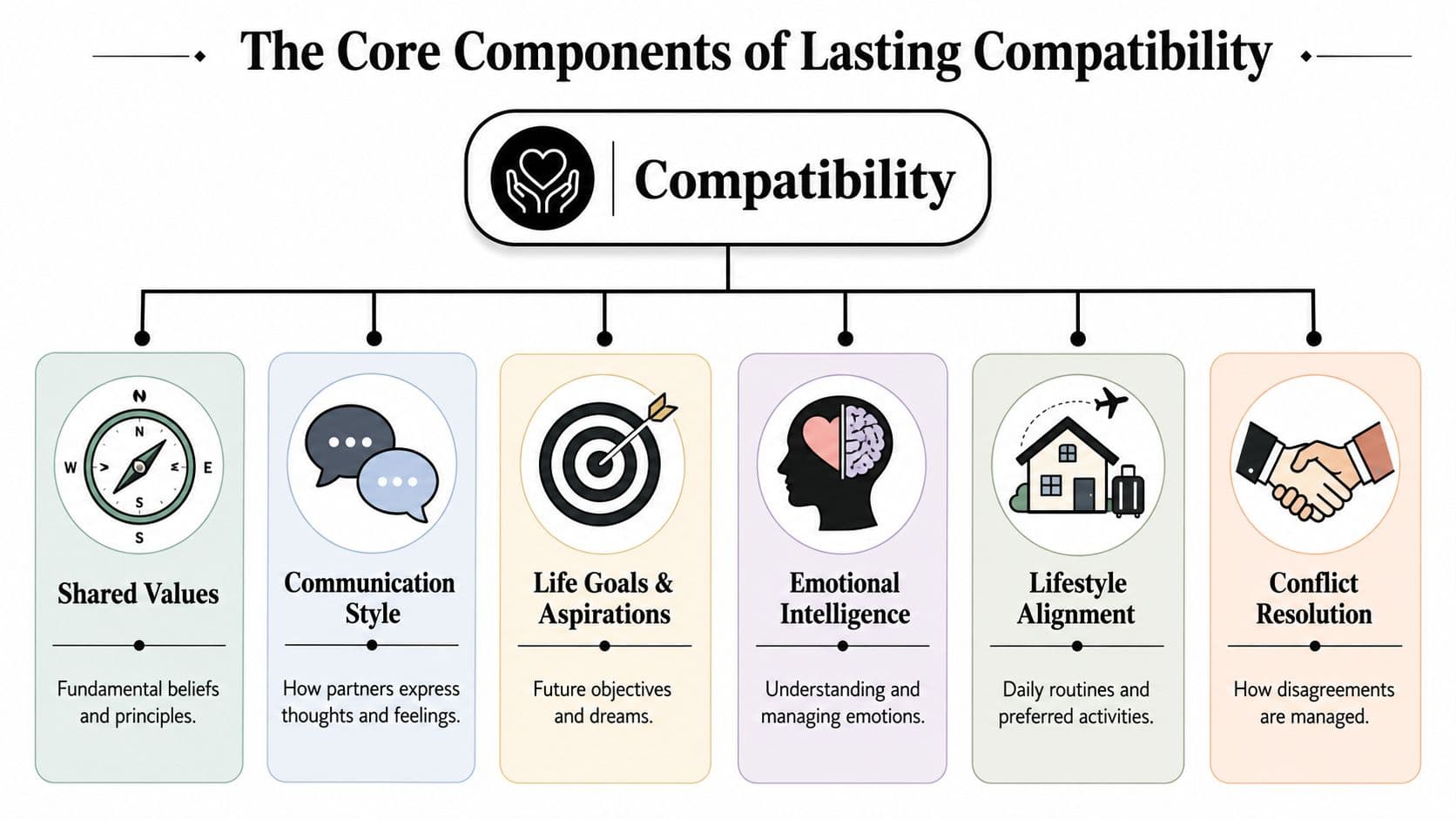
The Core Components of Lasting Compatibility
A lasting bond rarely depends on one thing. It rests on several parts working together, like the beams of a house.
Here's a visual way to hold the big picture:
Shared values
Values are the deepest layer. They shape what feels right, wrong, important, urgent, sacred, or indispensable.
Research summarized by Tree of Life Counseling on compatibility dimensions describes compatibility as rooted in long-term life goals, core values, and lifestyle preferences, and notes that shared viewpoints on major societal and moral issues are among the strongest markers of fit. In plain language, if two people disagree on what kind of life matters, love can start carrying too much weight.
Examples help:
- Children: One person sees parenthood as central. The other feels called to a child-free life.
- Money: One wants security and planning. The other wants freedom and risk.
- Meaning: One builds life around faith or spiritual practice. The other sees that as unimportant.
You can negotiate habits more easily than values.
Communication and conflict
Communication isn't just talking a lot. It's how two people handle truth, misunderstanding, and repair.
Research from the Gottman Institute, summarized by Connected Couples on relationship communication patterns, found that communication is the single most critical predictor of relationship compatibility, and that Dr. John Gottman reached 90%+ accuracy in predicting divorce by observing only 15 minutes of interaction, especially when criticism, contempt, defensiveness, and stonewalling showed up.
That tells us something important. Shared hobbies matter less than shared emotional skill.
If your conversations leave one person feeling small and the other feeling unheard, compatibility starts breaking down even when love is present.
Life direction and daily lifestyle
Two people can admire each other and still want very different lives.
One wants to stay close to family in a quiet town. The other dreams of moving often and building a public career. One loves a planned routine. The other needs spontaneity. These differences aren't automatically fatal, but they do matter.
If this area is hard to name, this article on priorities in a relationship can help people sort out what belongs at the center and what belongs at the edges.
Temperament and emotional intelligence
Some people process feelings by talking. Others process by thinking first. Some are expressive. Others are reserved. Neither is wrong.
The question is whether each person can understand and respect the other's style. Emotional intelligence matters because it helps couples respond to feelings without getting ruled by them. For readers who want another lens on how personality shapes attraction and tension, BetterDatingAI has thoughtful insights on personality and dating connection.
Sexual and relational alignment
Sexual compatibility isn't just attraction. It includes pace, openness, boundaries, honesty, and expectations around intimacy. The same goes for the broader relationship agreement. How much closeness feels healthy? How much independence? What counts as loyalty? What counts as secrecy?
A strong relationship doesn't require sameness in every area. It does require enough alignment, honesty, and goodwill to keep working as a team.
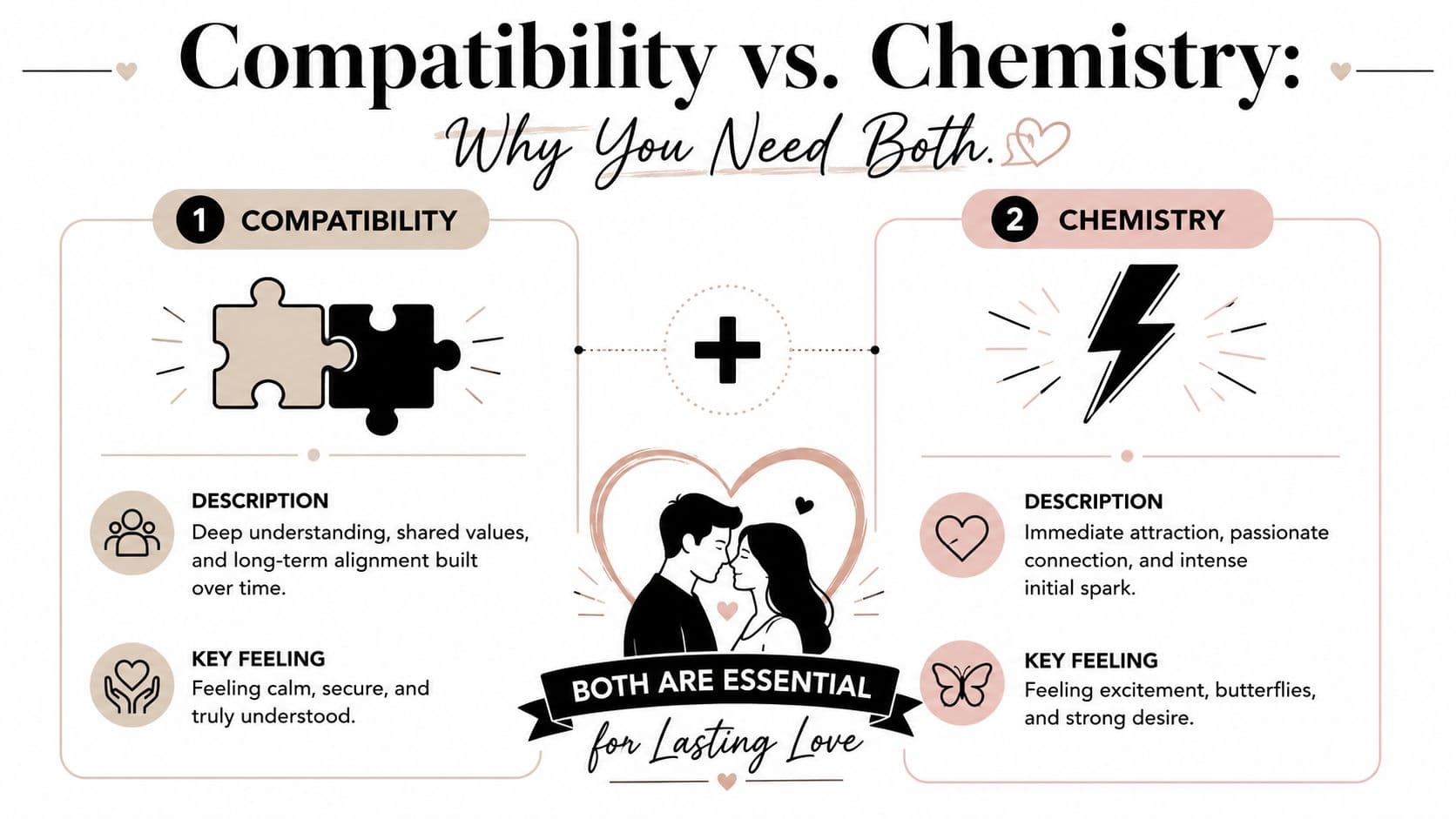
Compatibility vs Chemistry Why You Need Both
Some relationships are all fireworks and no fireplace. Others are all fireplace and no flame.
That's the simplest way I know to explain the difference.
Chemistry is the lightning strike. Compatibility is the wiring in the walls. Lightning without wiring creates damage. Wiring without any electricity feels lifeless. A healthy relationship usually needs both.
How they feel different
| Chemistry | Compatibility |
|---|---|
| Fast, intense, electric | Steady, workable, calming |
| Strong physical pull | Strong sense of mutual fit |
| Idealization is common | Reality becomes easier to face |
| Can appear instantly | Often becomes clearer over time |
| Feels exciting | Feels safe and sustainable |
Chemistry often says, “I can't stop thinking about you.”
Compatibility says, “I can be myself with you, and our lives don't keep crashing into each other.”
Signs you may be confusing one for the other
You may be leaning too heavily on chemistry if:
- You feel high and low often: The relationship swings between closeness and distress.
- Hard topics stay postponed: The spark is strong, but practical conversations keep getting delayed.
- Conflict feels destabilizing: Small differences quickly become existential threats.
You may have compatibility without enough chemistry if:
- The relationship feels polite but flat: You care for each other, but desire stays faint.
- You function well as a team: Yet romance feels more like duty than delight.
- You keep trying to talk yourself into wanting more: Respect is there, but pull is missing.
Both forces matter. Chemistry opens the door. Compatibility helps you live in the house.
Why both matter in lasting love
Many people assume they must choose between passion and peace. That's too narrow. Lasting love often includes attraction, friendship, respect, and enough structural fit to carry stress without collapsing.
If chemistry is all you have, the relationship may feel alive but unstable. If compatibility is all you have, the relationship may feel safe but undernourished. The sweet spot is a bond where desire and direction can coexist.
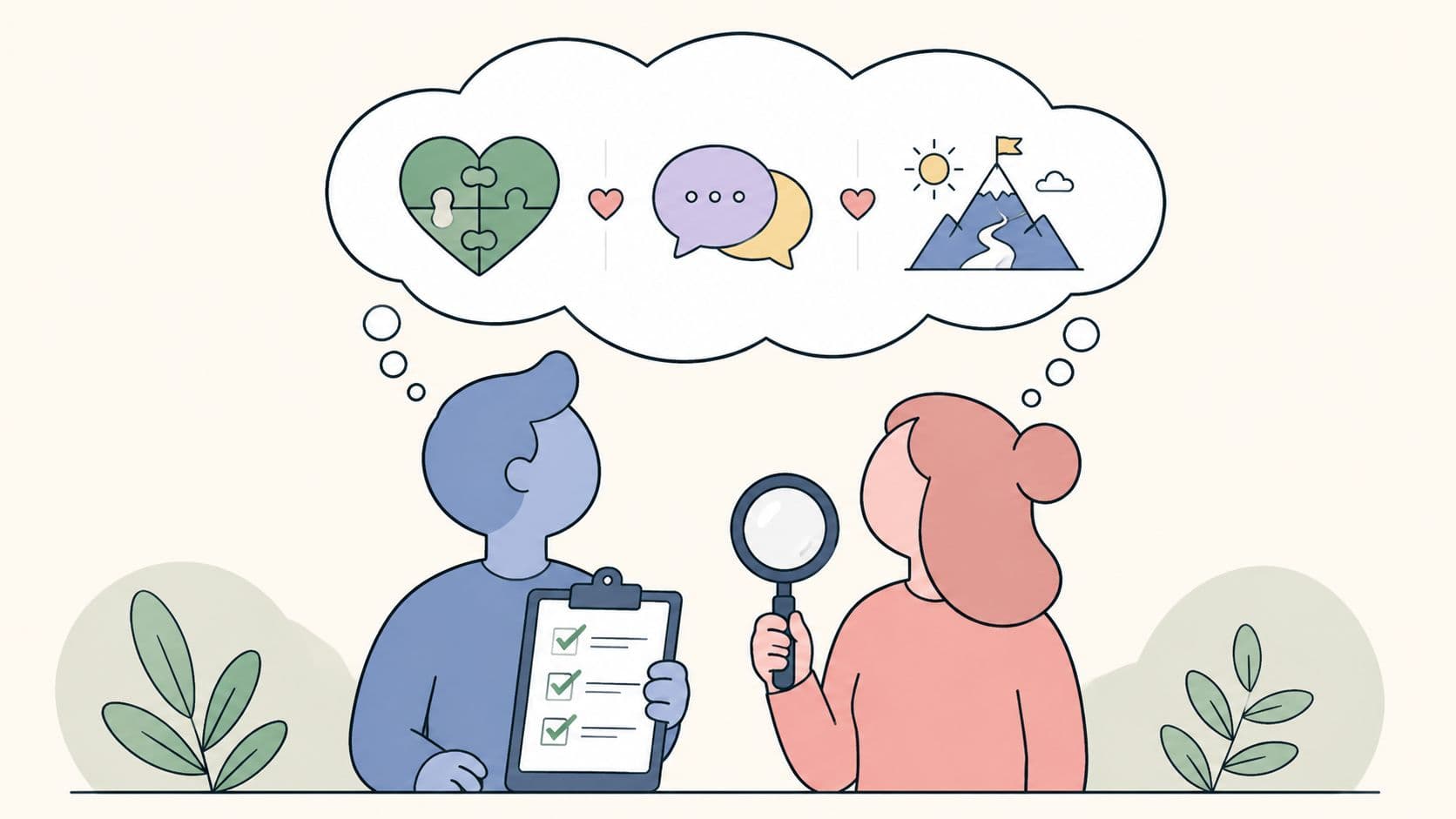
How to Assess Your Relationship Compatibility
Compatibility is easier to sense when you stop treating it like a mystery and start observing it like a pattern.
This is less about grading your partner and more about getting honest about reality.
Start with self-honesty
Before you assess the relationship, assess your own center.
Ask yourself:
- What do I need to feel safe, loved, and respected?
- Which differences feel stretching but healthy, and which feel costly?
- What future am I trying to build?
- Do I want this person, or do I want their attention, potential, or promise?
Many people skip this step and move straight to “Do they like me?” The better question is, “Does this relationship fit the life I'm meant to live?”
Watch what happens in ordinary moments
Big romantic gestures can distract you. Daily patterns reveal more.
Look for:
- Conflict recovery: After a disagreement, do you return to care, or do you stay stuck in resentment?
- Truthfulness: Can both people tell the truth without fear of punishment or withdrawal?
- Daily rhythm: Do your schedules, energy levels, and expectations fit reasonably well?
- Mutual liking: If romance were removed, would you still enjoy this person's company?
A useful benchmark comes from Mark Manson's view of relationships. He argues that aiming for about 70 to 80% compatibility and chemistry is realistic and healthy, rather than chasing an impossible perfect match. That standard can steady people who keep panicking over every difference or idealizing total alignment.
Use structure when your feelings are mixed
Strong feelings can blur judgment. That's when tools and frameworks can help.
You might journal. You might talk with a counselor. You might use guided questions. You might also explore a more structured lens such as a free relationship compatibility test to organize what you're seeing into something clearer and more discussable.
Reality check: Compatibility is not measured by how easy the first month feels. It's measured by how the relationship handles stress, difference, truth, and time.
A simple assessment grid
| Question | Healthy sign | Warning sign |
|---|---|---|
| Do we share core values? | We differ in some preferences but agree on what matters most | We avoid major value gaps because they feel too threatening |
| Can we repair after conflict? | We come back, reflect, and reconnect | Fights turn cold, cruel, or unresolved |
| Are our futures compatible? | Our visions can realistically join | One person must keep shrinking their life |
| Do I feel more like myself here? | The relationship supports honesty and growth | I feel I must perform or self-abandon |
The goal isn't to find a flawless answer. It's to see your relationship clearly enough to choose with wisdom.
A Deeper Look Through Dan Millman's Life Paths
Psychological compatibility looks at communication, values, and behavior. That matters because relationships happen in real conversations and real kitchens. But some people sense there's another layer underneath. They notice recurring themes in love, repeated lessons, or seasons when a relationship suddenly feels easy or strangely heavy.
That's where Dan Millman's “The Life You Were Born to Live” becomes useful. It offers a spiritual framework for understanding deeper patterns through life paths derived from birth dates, and the Life Purpose App applies that framework in digital form.
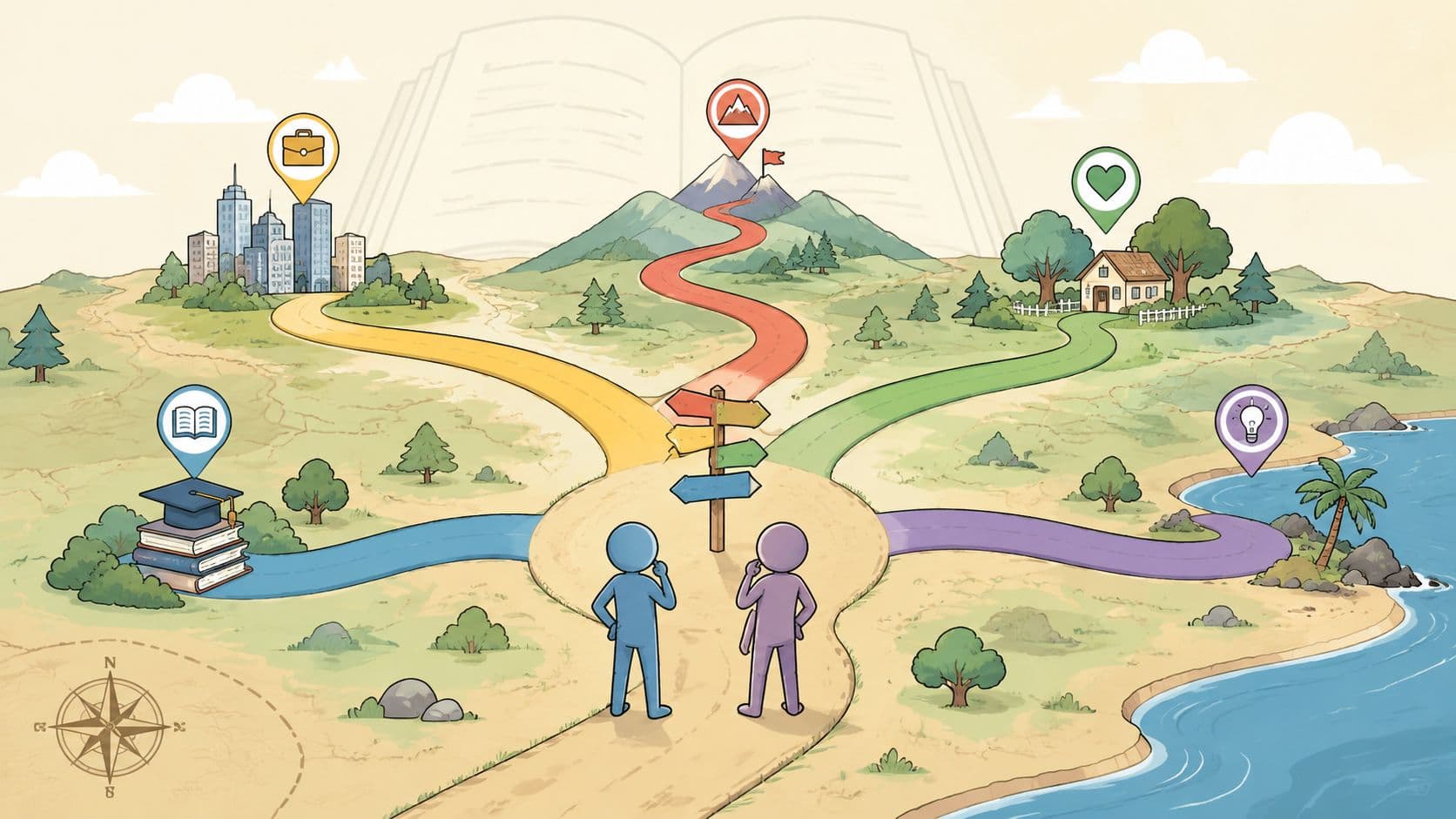
What life paths add to the conversation
Within Dan Millman's system, compatibility is explored through the meeting of Life Paths. According to the Life Purpose App's explanation of this method, two people are considered compatible when their distinct life paths, drawn from 45 types, share resonant spiritual laws that help soften opposing challenges.
This doesn't replace psychology. It complements it.
For example, two people may communicate fairly well and still feel a repeating tension around ambition, emotional pace, or how each person handles responsibility. A life-path lens can give language to that pattern. Instead of seeing the issue only as “we're difficult together,” a couple may begin to see, “we each carry a different lesson, and those lessons rub against each other in predictable places.”
Why compatibility can change over time
One of the most grounding ideas in Dan Millman's “The Life You Were Born to Live” is that compatibility isn't always static. The system also considers nine-year life cycles, which can shape what each person is being asked to learn at a given time.
That helps explain a common experience. Two people can feel aligned for a season, then unsettled later without any obvious betrayal or loss of love. Sometimes the relationship hasn't become false. Sometimes the inner seasons have changed.
If you want to explore this lens directly, a relationship compatibility by birthday guide can offer a useful starting point.
A balanced way to use spiritual tools
Use spiritual systems to deepen awareness, not to avoid responsibility.
A life-path reading shouldn't become a way to excuse hurtful behavior or force certainty where honest conversation is needed. Its value is in reflection. It can help people ask better questions, such as:
- What challenge does each of us bring into relationship?
- Where do our gifts support each other?
- Which recurring conflicts might reflect deeper patterns, not just bad timing?
Sometimes a relationship problem is practical. Sometimes it's developmental. Sometimes it's both.
When psychology and spiritual insight are used together, you get a more whole picture. You can honor communication, values, and conflict while also paying attention to timing, inner purpose, and the lessons each person is living through.
Can You Improve Your Relationship Compatibility
Yes, in some areas. No, not in all of them.
You usually can't force a deep values mismatch into harmony. If one person wants a radically different life, relationship structure, or moral framework, love alone won't solve that. But many parts of compatibility are not fixed traits. They are built through practice, honesty, and shared effort.
Where growth is possible
Compatibility often improves when couples learn how to work with difference instead of treating difference as a personal insult.
That can happen in a few concrete ways:
- Build cleaner communication habits: Replace mind-reading with direct speech. Say, “I felt shut out when you went silent,” instead of “You never care.”
- Create shared rituals: A weekly walk, a Sunday planning talk, or a short nightly check-in can create stability where life feels scattered.
- Name the recurring friction points: Money, intimacy, family boundaries, and time use often become less chaotic when openly named rather than vaguely resented.
- Respect differences that don't threaten the foundation: One person needing more solitude or more social time doesn't have to become a character flaw.
Where growth is limited
Some gaps don't shrink through better skills. They become clearer.
If you want children and your partner does not, that is not a communication glitch. If one of you values strict honesty and the other repeatedly withholds important truth, that is not just a style issue. If one person keeps asking the other to betray themselves to keep the peace, the relationship may be asking for too much.
The healthiest mindset
The goal is not to manufacture a perfect match. It's to build the strongest honest bond available between two real people.
That means asking two questions at once: “What can we strengthen?” and “What should not be forced?” Wisdom lives in holding both.
Compatibility grows when two people keep turning toward reality with courage. It weakens when they cling to fantasy and call it hope.
Building a Relationship on a Solid Foundation
A lasting relationship needs more than a spark. It needs shared values, workable communication, aligned direction, and enough mutual care to repair what everyday life strains. Psychology helps you see the structure. Dan Millman's “The Life You Were Born to Live” and the Life Purpose App add a deeper lens for noticing life patterns and timing.
If you want more practical support for the human side of this work, this guide on relationship building offers grounded ideas for creating healthier connection. In the end, compatibility isn't about finding a flawless person. It's about knowing yourself well enough to build a shared life that can hold love.
If you want a deeper, more structured way to explore your relationship patterns, the Life Purpose App offers a way to examine life paths from Dan Millman's “The Life You Were Born to Live” through birth dates, relationship dynamics, and nine-year cycles. It can be a useful companion for anyone trying to understand not just who they're drawn to, but why certain bonds feel easy, challenging, or profound.
Discover your life path today
Enter your date of birth and see your life path, free.
Find your life path