Discover what is shakti, the divine feminine energy. Learn its Hindu origins, manifestations like Kundalini, and how to harness it for spiritual growth.
April 22, 2026 (4mo ago) — last updated July 21, 2026 (1mo ago)
What Is Shakti: Unveil Divine Feminine Energy
Discover what is shakti, the divine feminine energy. Learn its Hindu origins, manifestations like Kundalini, and how to harness it for spiritual growth.
← Back to blog
Shakti is the primordial cosmic energy in Hinduism, the dynamic feminine power that creates, sustains, and transforms the universe. It also lives in human spiritual life through Shaktism, a tradition with about 25 million adherents and roots stretching back to the 9,000–8,000 BCE Baghor stone and Indus Valley goddess worship.
Maybe you're reading this because something in you feels half-awake. You handle your responsibilities, you think clearly enough, but there are moments when a stronger current moves underneath your normal life. A burst of creative clarity. A pull toward prayer. A sense that your energy isn't just physical, and that if you understood it better, you'd understand yourself better too.
That current is close to what many spiritual traditions try to name. In Hindu thought, one of the deepest names for it is Shakti.
If you've searched “what is shakti,” you've probably found two unsatisfying extremes. One turns Shakti into a vague slogan about feminine power. The other explains it in dense religious language that feels far away from everyday life. Neither helps much when you're trying to connect an ancient idea to your real experience of work, relationships, purpose, exhaustion, healing, and inner change.
A better approach is simpler. Start with what you already know in your own body and mind. Then let the philosophy deepen it.
The Universal Power You Already Feel
You don't need to begin with Sanskrit terms to understand Shakti. Start with something ordinary.
You sit down to write, paint, solve a problem, pray, or have a hard conversation. At first, nothing moves. Then something shifts. Your mind clears. Your words come. Your body feels more alive. You stop forcing and start participating. Many people know that feeling, even if they wouldn't call it spiritual.
That lived sense of movement, vitality, and intelligent force is one doorway into Shakti.
Another doorway appears in the opposite state. You wake up flat, disconnected, and unable to access your natural warmth or courage. The issue isn't always effort. Sometimes it feels like your inner current is blocked. In plain language, your energy isn't flowing.
Shakti isn't only a belief about the universe. It's also a way of recognizing the difference between inner aliveness and inner stagnation.
In that sense, Shakti isn't foreign. It's familiar. Parents feel it when care rises in the middle of exhaustion. Artists feel it when an idea takes on a life of its own. People on a healing path feel it when grief suddenly turns into honesty and honesty turns into change.
If you've ever sensed that life has a moving, creative intelligence within it, you've already brushed against the idea. The ancient tradition gives it a name, a history, and a set of practices.
For a broader reflection on how spiritual traditions describe this animating force, a related piece offers a helpful companion.
Where people get confused
Many readers hear “feminine energy” and assume Shakti refers only to women, softness, or nurturing qualities. That's too narrow.
In Hindu philosophy, the feminine here doesn't mean female personality traits. It points to dynamic, generative power. The force that moves, shapes, births, feeds, protects, dissolves, and renews.
That means anyone can work with Shakti. You don't have to fit a gender role. You only have to be willing to notice where life is active in you, and where it wants to move next.
Unveiling Shakti The Primordial Cosmic Energy
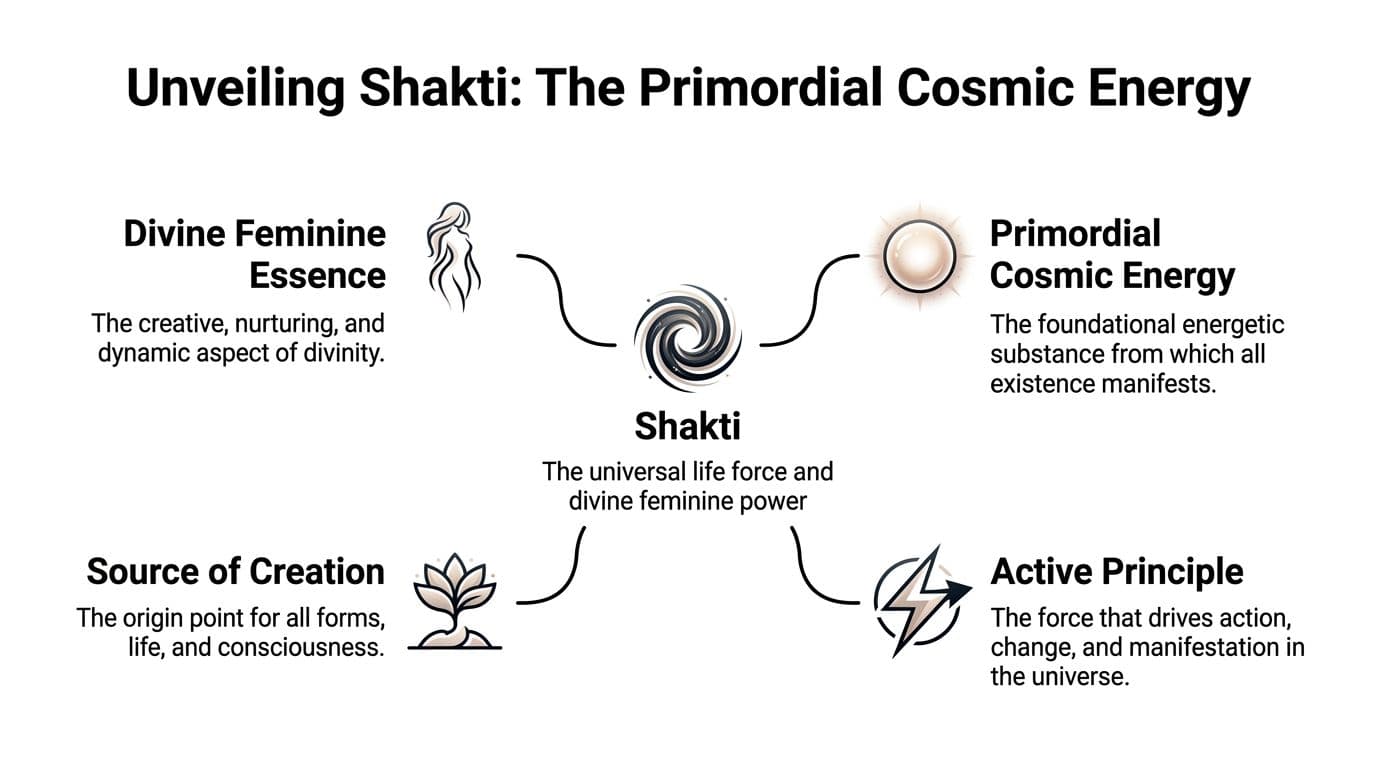
In Hindu philosophy, Shakti is the primordial cosmic energy, also called prakriti, and her interaction with purusha creates the universe. Purusha is often associated with Shiva, the witnessing principle of consciousness, while Shakti is the active force that manifests reality, as described in the Wikipedia entry on Shakti.
A simple way to picture it
Think of a lamp.
The bulb, wiring, and structure matter. But without electricity, the lamp doesn't shine. Now reverse the image. Electricity exists, but without a form through which it can express itself, you don't experience light in a room.
This analogy helps. Shakti is like the electricity. Shiva, or purusha, is like pure awareness that makes experience possible. One is active power. One is silent consciousness. Hindu traditions often present them as inseparable.
That doesn't mean they're two completely separate things awkwardly joined together. It means reality has both stillness and motion, awareness and expression, presence and power.
What Shakti actually does
The tradition describes Shakti as the force behind creation, preservation, and destruction. That sounds grand, but it's also practical.
You can see these three movements in ordinary life:
- Creation happens when a new idea, relationship, project, or identity begins.
- Preservation happens when you sustain what matters through care, discipline, and devotion.
- Transformation or destruction happens when something false, stale, or complete falls away.
A spiritual life without Shakti becomes abstract. You may have insight, but no movement. You may understand truth intellectually, but not embody it.
Practical rule: When your awareness is clear but your life won't move, you may need more Shakti. When your life is intense but chaotic, you may need steadier consciousness.
Shakti in the body
In Tantric practice, people don't treat this energy as only symbolic. They work with it through kundalini, the inner spiritual force often described as rising through the chakras. The same source notes that these practices are linked in modern studies to increased vagal tone and stress resilience during deep meditative states.
You don't have to take that as a dramatic supernatural claim. At a grounded level, the idea is simple. Spiritual practice can change how energy, attention, and the nervous system relate to each other.
Here are three distinctions that help:
| Term | Plain meaning |
|---|---|
| Shakti | Universal energy and divine power |
| Shiva / Purusha | Consciousness, awareness, witnessing presence |
| Kundalini | A personal, inward expression of Shakti in the human system |
Once this clicks, “what is shakti” stops being an abstract question. It becomes a way of understanding why life sometimes feels alive, purposeful, and creative, and why at other times it feels inert.
The Ancient Roots of Shakti Worship
The reverence for Shakti didn't begin as a modern wellness idea. It reaches far back into prehistory.
According to the history of Shaktism, evidence of goddess-centered worship appears in the Baghor stone dated to 9,000–8,000 BCE, and in widespread terracotta female figurines from the Indus Valley Civilization (3300–1300 BCE). These findings suggest that worship of the feminine principle predated Vedic Hinduism and may reflect some of the subcontinent’s earliest religious life.
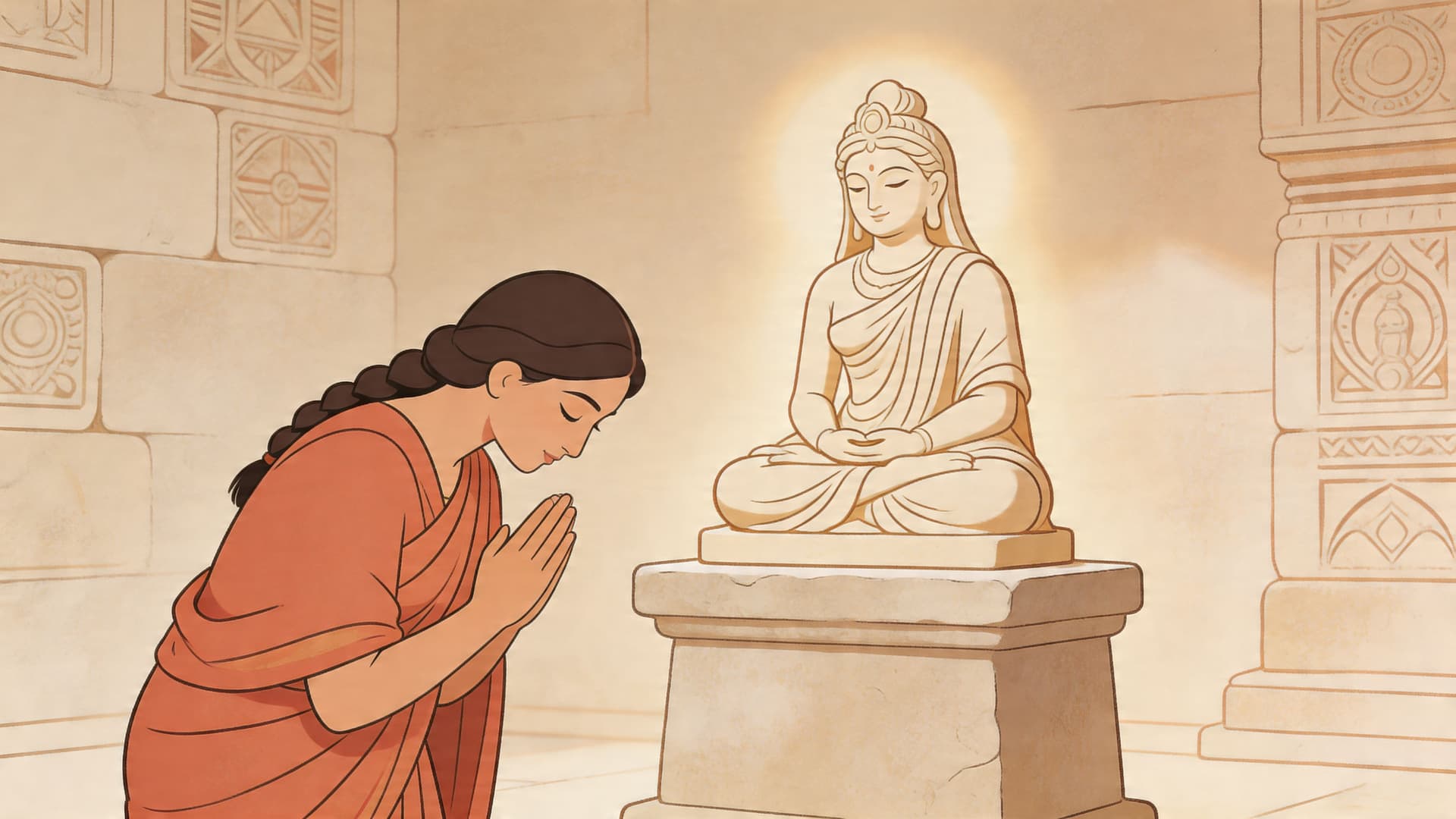
That matters because it changes the tone of the conversation. Shakti isn't a decorative side note added later. She belongs to one of the oldest continuous streams of sacred imagination in South Asia.
From ancient figurines to living devotion
Over time, this early reverence became integrated into broader Hindu traditions. Shakti appears in major texts and eventually stands at the center of Shaktism, a major Hindu denomination focused on the Divine Mother or Devi.
The tradition matured over centuries through epics, Puranas, and Tantric developments. In other words, the idea deepened. What may have begun as ritual devotion to the divine feminine also became a rich philosophical claim about reality itself.
That combination is part of Shakti's staying power. She is both intimate and cosmic. A mother. A goddess. A universal principle.
Why this history still matters
Today, Shaktism has about 25 million adherents, and Shakti influences over a billion Hindus through festivals such as Navratri, as noted in the same historical source. That living scale matters because it shows continuity. This isn't only an ancient memory preserved in museums or scripture.
Ancient traditions last when people keep finding that they describe real experience. Shakti has endured because people continue to meet life as power, mystery, devotion, beauty, and transformation.
For modern readers, that depth offers a corrective. You don't need to romanticize the past. But it's worth recognizing when a spiritual idea has been tested, prayed with, argued over, and lived for thousands of years.
Major Manifestations of Divine Feminine Power
Once you understand Shakti as divine energy, the next question is natural. How does that energy show up?
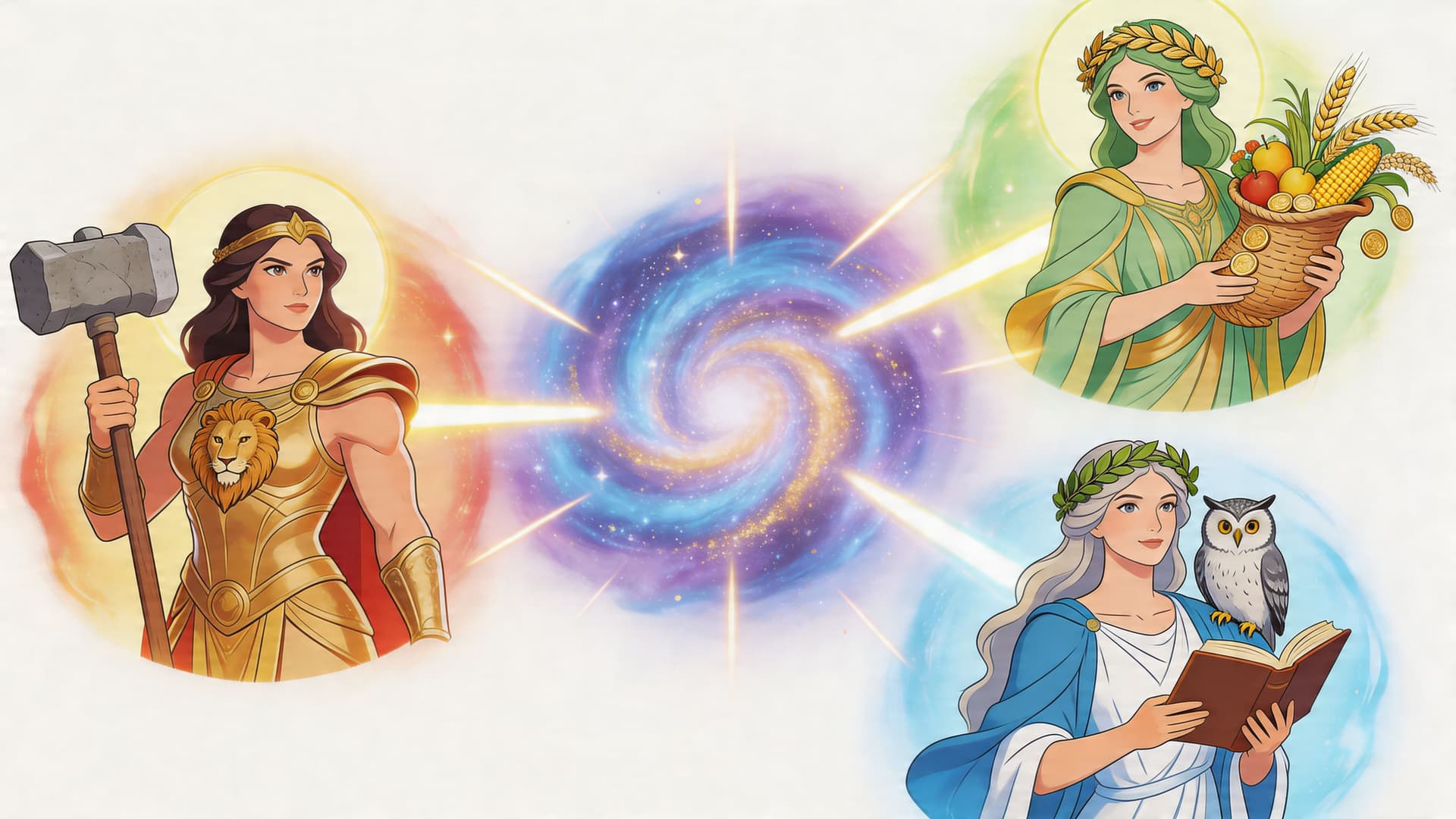
In Hindu tradition, Shakti is often personified in goddesses, each expressing a different face of the same underlying power. These forms help people relate to something vast through image, story, and practice.
Different goddesses, different energies
Some of the best-known forms are easier to understand when you connect them to lived experience:
-
Durga represents protection, courage, and the power to confront disorder. People often resonate with Durga when they need boundaries, steadiness, or moral strength.
-
Kali carries fierce transformative force. She is unsettling on purpose. Kali energy cuts through illusion, ego-attachment, and what has outlived its truth.
-
Lakshmi expresses abundance, beauty, and flourishing. This isn't only money. It's also harmony, nourishment, and the conditions that allow life to thrive.
-
Saraswati embodies wisdom, speech, learning, and creative refinement. Writers, musicians, students, teachers, and seekers often feel close to this form.
These aren't separate gods competing for attention. They're distinct lenses for one power.
The threefold power of Shakti
Traditional thought also describes Shakti through three powers: prabhu (control), mantra (counsel), and utsaha (energy), as outlined in the Wisdom Library definition of Shakti.
This is surprisingly practical.
| Aspect | Plain-language meaning | What it looks like in life |
|---|---|---|
| Prabhu | governing power | holding direction, setting boundaries |
| Mantra | wise guidance | insight, discernment, right timing |
| Utsaha | energized effort | drive, momentum, courage to act |
If one of these is missing, life tilts out of balance. You may have energy without wisdom. Insight without follow-through. Control without vitality.
Kundalini as inner Shakti
There's also an intimate form of Shakti called kundalini. In Tantric practice, this is the dormant spiritual energy within the individual.
The same source describes 21-day cycles for chakra activation and notes that work with svadhisthana can boost creativity by up to 30% in divergent thinking scores, while work with ajna is associated with improved intuition. You don't need to treat that as a promise. It's better to see it as a structured way some practitioners explore disciplined inner change.
If you'd like a grounded overview of this inner dimension, a guide explains the relationship in more accessible terms.
A useful way to work with all of this is to ask one question: which face of Shakti is trying to grow in me right now? Protection, truth, abundance, wisdom, or awakening?
Harnessing Shakti in Your Spiritual Practice
You don't need an elaborate ritual setup to begin working with Shakti. What matters most is attention, sincerity, and pacing.
A lot of people make this harder than it needs to be. They assume spiritual energy must arrive as something dramatic. Usually it begins more subtly. You feel more present in your body. Your breath deepens. Your choices become cleaner. Your inner life gets less foggy.
A simple visualization practice
Sit comfortably. Let your spine be upright without strain. Close your eyes and imagine a warm current of light at the base of your body.
As you breathe in, picture that light gently rising through the center of your body. As you breathe out, let it settle rather than forcing it upward. Do this for several minutes.
If you're new to energy work, keep it basic:
- Begin with breath. Inhale slowly and exhale a little longer.
- Use a gentle image. Think of warmth, light, or a living stream.
- End with grounding. Feel your feet, your seat, and the room around you.
This isn't about making something happen. It's about learning to notice.
If your practice leaves you more agitated than clear, simplify it. Depth grows through steadiness, not intensity.
For readers who want a complementary practice focused on energy centers, this guide can support a calmer start.
One mantra and why it helps
Mantra gives the mind a living focus. In many traditions of Shakti practice, sound isn't treated as decoration. Sound directs attention and shapes inner atmosphere.
A gentle starting point is the seed sound Aim, often associated with clarity, wisdom, and refined expression. You can chant it softly, repeat it mentally, or let it ride the breath.
Try this for a few minutes:
- On the inhale listen inward.
- On the exhale repeat Aim slowly.
- After several rounds sit in silence and notice the effect.
If chanting feels unfamiliar, that's fine. The value isn't performance. It's rhythm, attention, and receptivity.
Mindful movement for Shakti
Some people access Shakti more easily through movement than through stillness. If that sounds like you, use the body as your first teacher.
Stand with both feet planted. Put on music without lyrics if that helps. Let your arms, spine, and hips move slowly without trying to look graceful. Keep your attention on sensation rather than appearance.
A few anchors make this practice stronger:
- Move from feeling, not image. Let the body respond instead of directing every motion.
- Stay honest. If the energy feels tender, move tenderly. If it feels strong, let strength appear.
- Pause before ending. Stand still and sense what changed.
If you like reflective tools alongside spiritual practice, a thoughtful resource such as this Tarot guidance book for modern mindfulness can help you put language around what movement, intuition, and symbol bring up.
The point of these practices isn't to collect mystical experiences. It's to build relationship with the energy of your own life.
Connecting Shakti to Your Unique Life Purpose
Many people understand Shakti as cosmic force but don't know how to apply it to personal development. That's a real gap.
According to the Wisdom Library concept page on Shakti, “Shakti awakening meditation” queries rose 35% from 2025 to 2026, yet existing content often fails to connect Shakti to practical frameworks for life-purpose clarity, including the system in Dan Millman’s “The Life You Were Born to Live.”
That disconnect is easy to understand. Spiritual teachings often describe universal truths well, but people also want to know: how does this energy move through my specific gifts, fears, habits, and lessons?
Shakti as personal expression
One useful bridge is this. If Shakti is the creative force of life, then your life purpose isn't separate from Shakti. It's one of the ways Shakti expresses itself through your temperament, timing, challenges, and capacities.
Dan Millman’s “The Life You Were Born to Live” is especially relevant. His life path system gives readers a structured way to reflect on recurring patterns in health, money, relationships, work, and emotional growth. Used wisely, it can serve as a map for where your energy naturally gathers and where it repeatedly gets blocked.
For example, one person may feel Shakti primarily through service and compassion. Another may meet it through disciplined leadership. Another may experience it through creativity, truth-telling, or relationship lessons.
A grounded way to combine the two
You don't need to mash traditions together carelessly. A respectful synthesis looks like this:
- Use Shakti as the energy principle. Ask where life wants to move, create, heal, or transform.
- Use Dan Millman’s “The Life You Were Born to Live” as a reflective map. Ask which life lessons keep repeating.
- Use journaling or coaching to translate insight into behavior. Purpose becomes real when it changes how you live.
If you work with coaches or help others in transition, this broader overview of transformation life coaching offers a useful lens on how people turn inner insight into lived change.
A simple journaling prompt can bring this down to earth:
Where does my energy feel most alive right now, and what recurring life lesson is asking for that energy to be used more consciously?
That question keeps Shakti from becoming a fantasy. It turns divine energy into responsibility, discernment, and action.
Modern Interpretations and Common Misconceptions
A common modern mistake is treating Shakti as a pretty synonym for “goddess vibes.” That version is easy to sell, but it strips away the depth.
Shakti includes nurturing power, yes. It also includes disruption, dissolution, and fierce correction. A better analogy than a scented affirmation is a wildfire. Fire destroys, but it also clears dead growth and makes renewal possible. Shakti works like that in spiritual life.
What Shakti is not
Some misconceptions come up again and again:
- It isn't only for women. Shakti names a universal principle, not a female-only experience.
- It isn't only sexual energy. Sexuality can be one expression of life-force, but Shakti is wider than that.
- It isn't automatically pleasant. Growth often involves grief, endings, and truth that unsettles comfort.
Modern adaptations can also flatten the concept into identity branding. That becomes risky when people chase intensity without grounding, ethics, or patience.
According to Meridian University’s discussion of Shakti in Hinduism, some feminist critics argue that certain Shakti archetypes can reinforce patriarchy, and 42% of some female practitioners in recent academic studies reported “Shakti burnout” from unbalanced awakening linked to relational strain.
Balanced spiritual energy should make you more honest and more humane. If it makes you inflated, unstable, or disconnected from reality, something needs correction.
That doesn't make Shakti dangerous in itself. It means powerful language and powerful practices require maturity.
Frequently Asked Questions About Shakti
A few questions usually remain after the bigger ideas settle in. Here are concise answers that add some precision.
| Question | Answer |
|---|---|
| Is Shakti a goddess or an energy? | Both, depending on the level you're working with. In philosophy, Shakti is the universal dynamic power of existence. In devotion, that same power is worshiped in personal forms such as Devi, Durga, Kali, Lakshmi, or Saraswati. |
| Is Shakti the same as Kundalini? | Not exactly. Shakti is the larger universal principle. Kundalini is an inward, individual expression of that power within the human being. |
| Do I have to be Hindu to work with Shakti? | No. Many people approach Shakti as a contemplative idea or spiritual practice without formally becoming Hindu. Still, respect matters. Learn the tradition carefully rather than borrowing bits of it casually. |
| Why is Shakti called feminine? | “Feminine” here points to generative, dynamic, manifesting power. It doesn't mean only women possess it, and it doesn't force anyone into a gender stereotype. |
| Can Shakti practice feel uncomfortable? | Yes. Inner work can surface emotion, fatigue, or imbalance if pushed too fast. That's one reason gentle pacing and grounding matter. |
| How can I explore Shakti and life purpose together? | A helpful way is to pair spiritual practice with a clear reflective framework. Dan Millman’s “The Life You Were Born to Live” gives language for recurring gifts and challenges, and the Life Purpose App makes that system easier to explore in daily life. |
One final note. If you're still asking “what is shakti,” that isn't a sign you've missed the point. It's often the sign that the idea has moved from theory into contemplation. Some teachings aren't understood all at once. They're understood by living with them.
If you want a practical way to connect spiritual insight with your own patterns, gifts, and recurring lessons, the Life Purpose App is a strong next step. It’s built around Dan Millman’s “The Life You Were Born to Live” and helps you explore your life path, core challenges, relationship dynamics, and nine-year cycles in a format you can use day to day.
Discover Your Life Purpose Today!
Unlock your true potential and find your life’s purpose.
