Why is life purpose important? Discover how purpose boosts health, resilience and decisions, plus how life-path insight can guide meaningful living.

September 18, 2026 (1mo ago) — last updated September 19, 2026 (1mo ago)
Why Is Life Purpose Important for Health and Happiness
Why is life purpose important? Discover how purpose boosts health, resilience and decisions, plus how life-path insight can guide meaningful living.
← Back to blog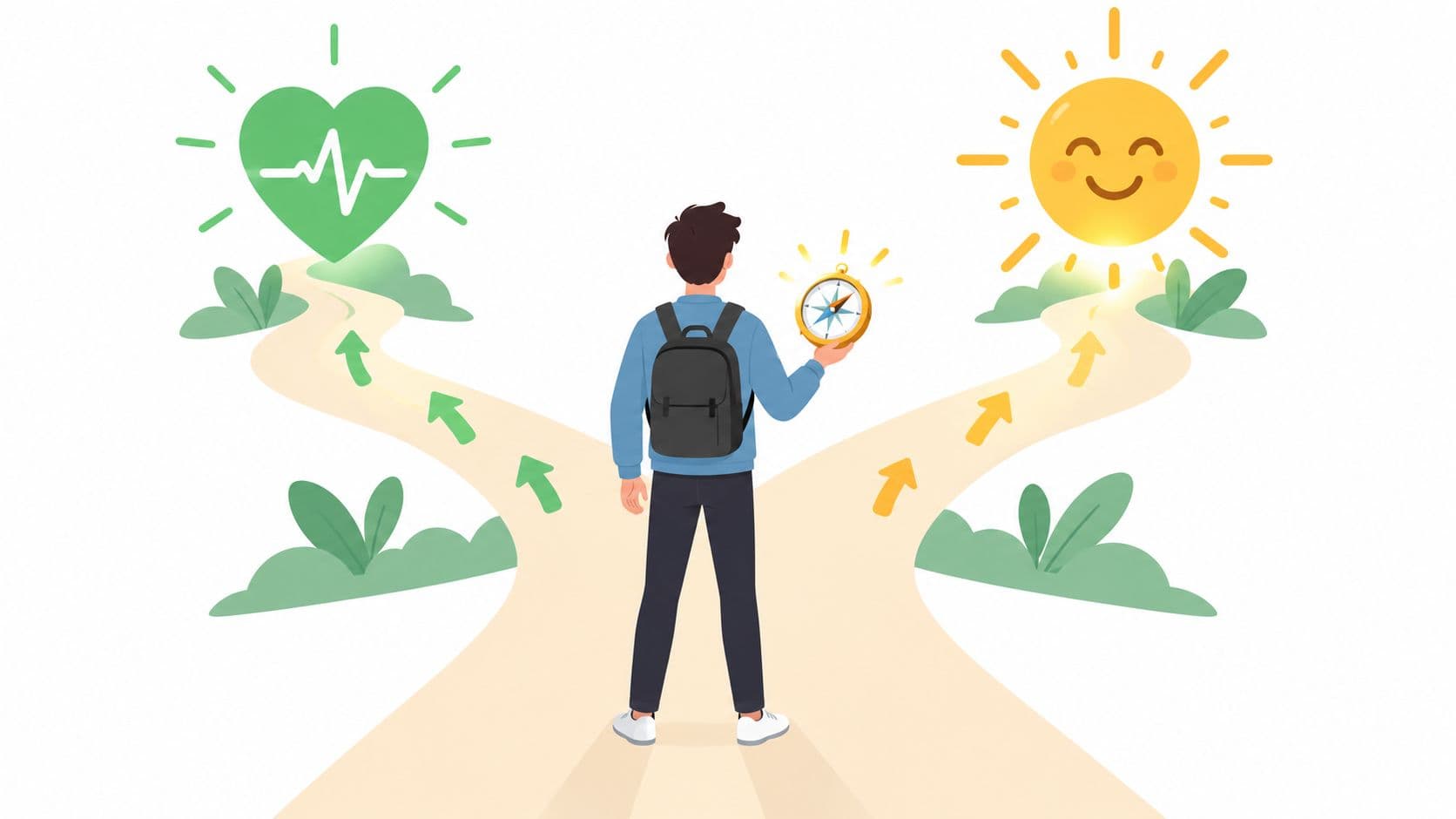
Why is life purpose important? Discover how purpose boosts health, resilience and decisions, plus how life-path insight can guide meaningful living.
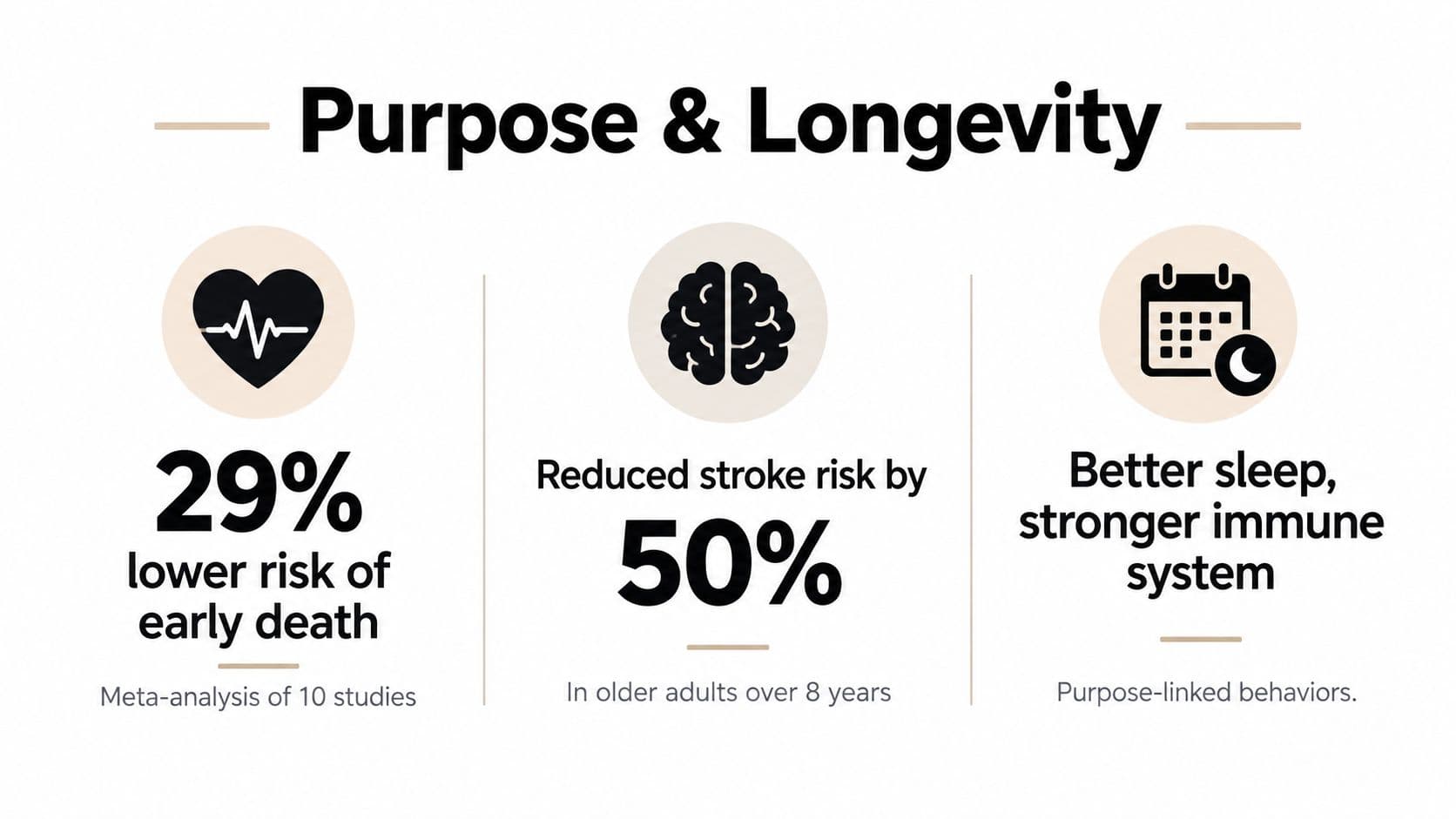
A large 2026 meta-analysis followed 488,765 people for up to 32 years and found that a stronger sense of purpose was associated with about a 30% lower risk of earlier death. The researchers reported a meta-analytic hazard ratio of 0.76, with a 95% confidence interval of 0.70 to 0.83, and found a statistically significant association in 21 of 25 samples across the United States, Europe, and Asia. The published meta-analysis offers a striking answer to the question, why is life purpose important: purpose may shape far more than motivation. It can influence how people care for their health, handle stress, connect with others, and decide what deserves their limited attention.
Yet purpose isn't a magic sentence waiting to appear in your mind. It is discovered through ordinary choices, especially during seasons when work, family responsibilities, health concerns, or major transitions make life feel scattered. Purpose acts less like a finish line and more like an anchor. It helps you decide what to move toward when every direction seems possible.
Introduction Why Purpose Feels Essential Right Now
You wake up already behind. Messages need replies, deadlines compete for attention, and your phone supplies a steady stream of other people's priorities. By evening, you've completed plenty of tasks, but you can't shake the feeling that you were busy without being directed.
That experience doesn't mean you're lazy or ungrateful. It often means your daily actions have become disconnected from a deeper sense of meaning. Without an internal reference point, even a full calendar can feel strangely empty.
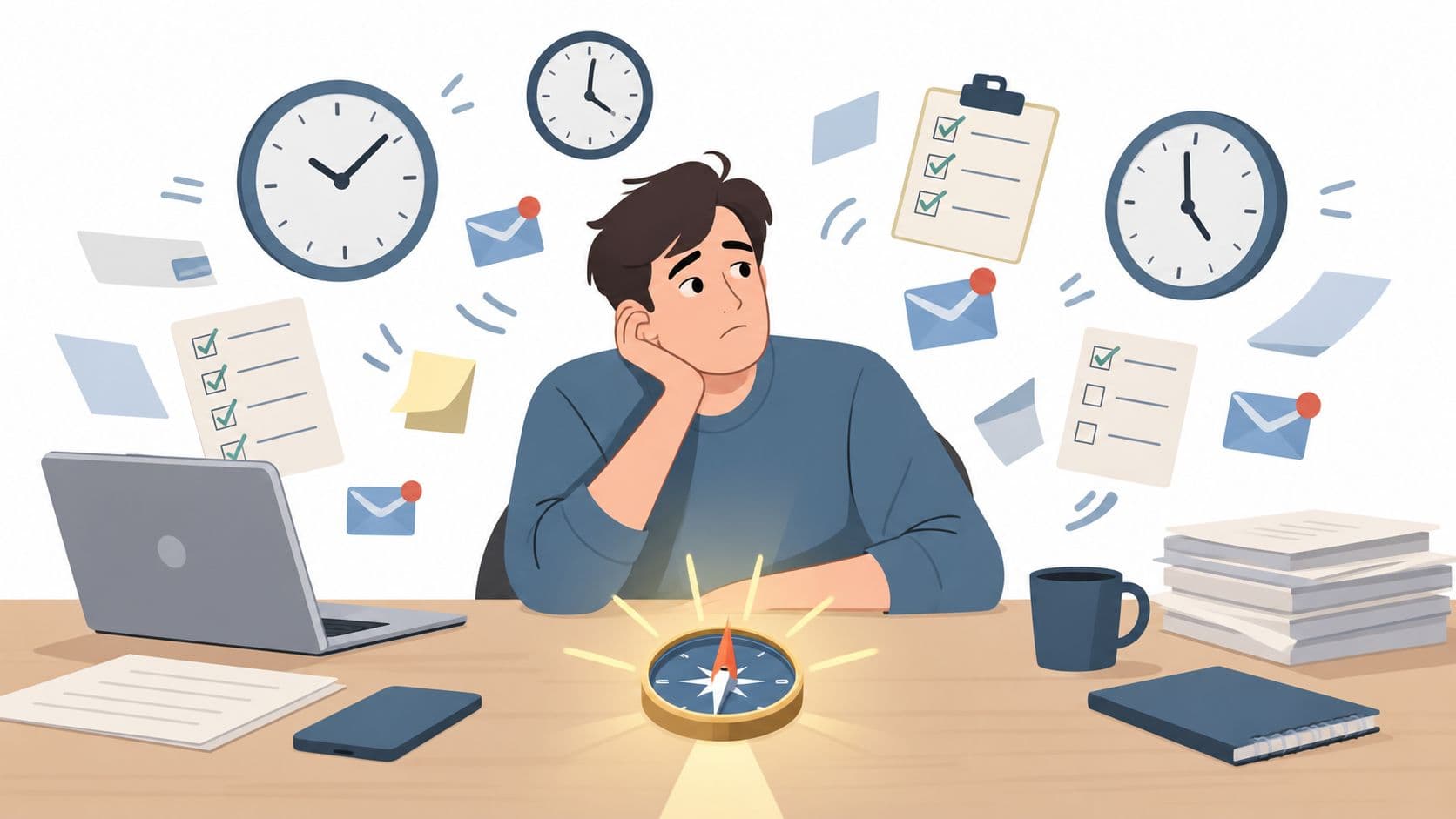
Purpose gives those decisions a direction. Think of it as a compass rather than a map. A map promises to show every road and destination, while a compass helps you recognize whether you're moving in a meaningful direction. You can still change careers, revise your relationships, or rethink your goals without losing your sense of orientation.
A parent might choose a demanding conversation instead of another hour of distraction because family connection matters. A professional might decline an impressive opportunity because it conflicts with the kind of contribution they want to make. Someone recovering from a difficult period might begin with a small routine, not because it solves everything, but because caring for life has become important again.
The research on purpose and health makes this practical question worth taking seriously. It doesn't prove that purpose alone prevents illness or guarantees a long life, but it does show a consistent association with important outcomes across large populations and long follow-up periods. That gives purpose a place beside sleep, movement, relationships, and emotional care, not as a replacement for them, but as a possible organizing force.
This article moves from definition to evidence, then from evidence to everyday application. It also considers how Dan Millman's system in The Life You Were Born to Live and the Life Purpose App can give people a structured language for reflecting on gifts, challenges, relationships, and direction.
Understanding What Life Purpose Really Means
Life purpose is the sense that your existence has a meaningful direction and that your choices can contribute to something you value. It doesn't have to mean one grand mission. For many people, purpose is expressed through caring for family, creating useful work, supporting a community, pursuing spiritual growth, or becoming the kind of person they respect.
Three elements usually appear together:
- Direction: You have a clearer sense of what deserves your time.
- Meaning: Your effort connects to values that feel personally significant.
- Contribution: Your life reaches beyond immediate comfort and affects other people, a craft, a community, or a cause.
Purpose works like a compass because it helps you evaluate competing options. If learning matters to you, you'll look for work that develops your mind. If service matters, you'll notice opportunities to make someone else's day safer or easier. The compass doesn't remove uncertainty. It helps you make decisions while uncertainty remains.
Purpose also differs from a goal. A goal might be to finish a degree, launch a business, or move to a new city. Purpose explains why that goal matters and how it fits into the life you're trying to build. When one goal disappears, purpose can continue guiding you toward another expression of the same value.
Core idea: Purpose isn't something you prove once. You practice it through repeated daily choices.
Dan Millman's The Life You Were Born to Live offers one structured approach to this kind of self-examination. Its life-path system uses birth-date calculations to explore recurring gifts, challenges, guiding principles, and patterns in areas such as career, relationships, money, and health. The framework is best used as a prompt for reflection rather than a fixed prediction about who you're allowed to become.
The Life Purpose App's guide to finding your life purpose can sit alongside journaling, counseling, meditation, or a reflective retreat. For readers who want a dedicated space for quiet exploration, VIVARA's spiritual retreat guide offers another way to think about stepping away from routine and listening to what feels meaningful.
How Purpose Supports Longer and Healthier Living
Purpose matters for health partly because it can influence what people do repeatedly. Someone who feels responsible for a meaningful role may be more willing to protect their energy, attend to symptoms, maintain routines, or recover after setbacks. Someone without direction may find those same actions difficult to connect to anything beyond obligation.
The strongest population-level finding comes from the 2026 meta-analysis of 488,765 participants followed for up to 32 years. Higher purpose was associated with approximately 30% lower all-cause mortality risk, with a hazard ratio of 0.76 and a 95% confidence interval of 0.70 to 0.83. The Cambridge summary of the analysis notes that the association remained statistically significant in 21 of 25 samples.
A hazard ratio can sound abstract. In plain language, a value of 0.76 means the higher-purpose group experienced roughly 24% lower instantaneous risk during follow-up, while the authors described the overall relationship as approximately 30% lower mortality risk. These figures describe an association across groups, not a personal guarantee.
What the cohort evidence adds
A 2019 U.S. cohort study of 6,985 adults found that people in the lowest purpose category had a mortality hazard 2.43 times higher than people in the highest category. For deaths involving heart, circulatory, and blood conditions, the lowest-purpose group had a hazard ratio of 2.66 compared with the highest-purpose group. The study in JAMA Network Open also discusses earlier and pooled research, including an adjusted hazard ratio of 0.60 for higher purpose in older adults and adjusted relative risks of 0.83 for all-cause mortality and cardiovascular events in a later pooled analysis.
These findings don't show that downloading an app or writing a purpose statement will directly extend your life. Researchers continue to examine whether purpose is a cause, a consequence of better health, or part of a two-way relationship. A 2024 review of the field highlights gaps in measurement quality and the need for more longitudinal and intervention research.
Purpose may support health through several pathways. It can help regulate risky behavior, buffer stress, encourage health maintenance, and make difficult routines feel connected to a valued future. The Life Purpose App's mind-body connection is useful for readers who want to reflect on how inner priorities affect physical habits without treating purpose as a substitute for medical care.
Why Purpose Strengthens Mind Relationships and Decisions
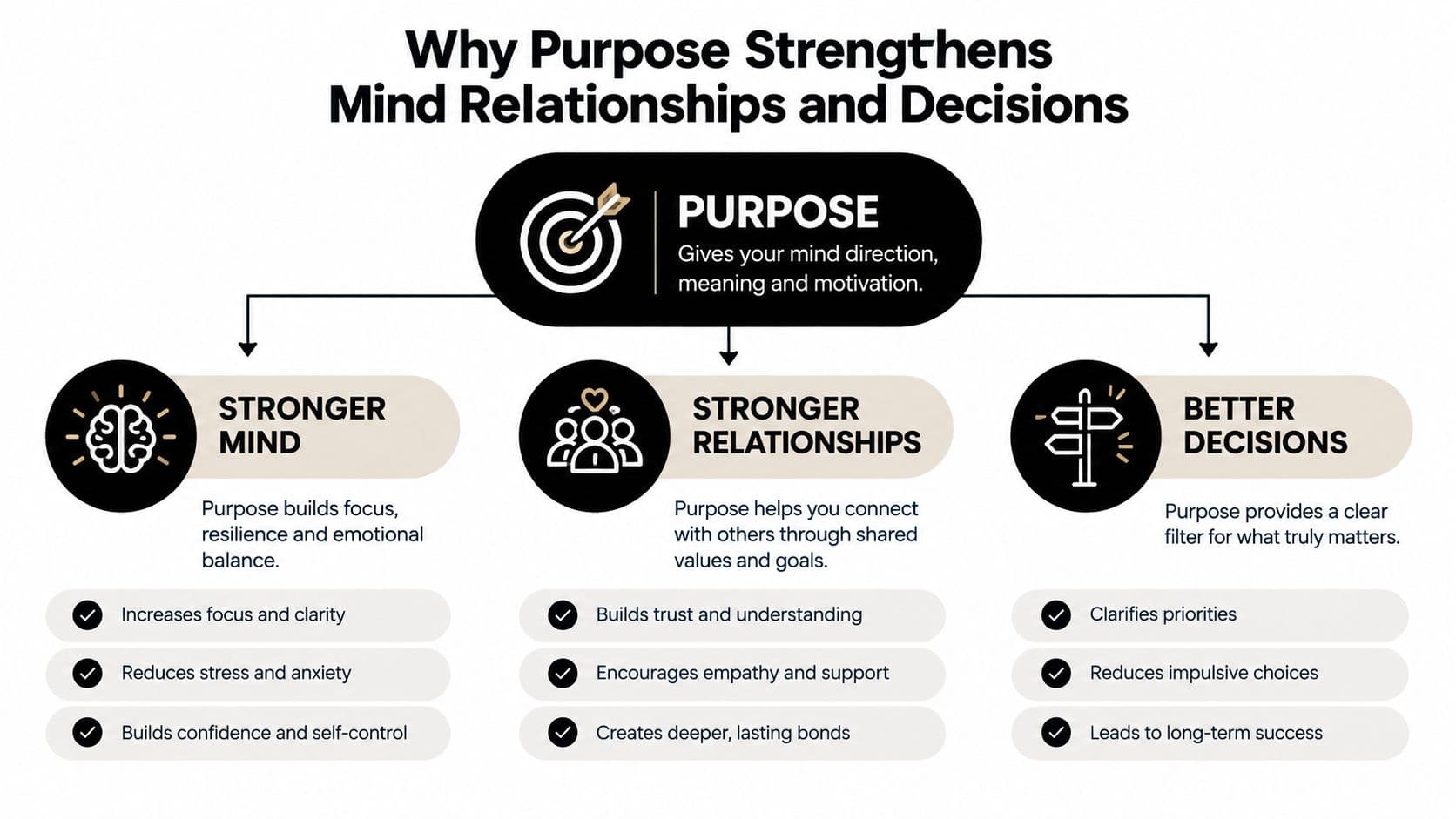
Purpose can function like an upstream influence. It doesn't control every outcome, but it can affect several parts of life at once. A person who knows what matters may find it easier to protect sleep, choose supportive relationships, tolerate temporary discomfort, and recover after disappointment.
A prospective nationally representative study of U.S. adults aged 50 and older found that people in the highest purpose quartile had 46% lower mortality risk over a four-year period. The same study reported 13% lower risk of sleep problems, 43% lower risk of depression, less loneliness, and higher physical activity. The study published in SAGE Journals shows why purpose is better understood as a multi-domain factor rather than a mood that exists separately from daily life.
Purpose and emotional resilience
Consider two people who both receive a disappointing work decision. One sees the event as painful but limited. Their larger purpose may still include caring for family, developing a craft, or serving others. The other experiences the setback as evidence that nothing matters, because no wider direction gives the event a place in the story.
Purpose doesn't eliminate grief, anxiety, or anger. It can give those emotions a container. That distinction matters because resilience isn't constant optimism. It's the ability to remain connected to meaningful action while emotions move through you.
Purpose also shapes relationships. When people know the values they want to embody, they can communicate boundaries more clearly. They may choose honest repair over winning an argument, or steady presence over performing affection. Readers exploring how direction affects connection can find practical reflection in the Life Purpose App's relationships guide.
Purpose and decision clarity
A clear purpose can turn a vague decision into a values question:
- What kind of person do I want to be in this situation?
- Which option supports that direction?
- What short-term discomfort am I willing to accept for a meaningful long-term result?
Sleep also affects judgment, so purpose shouldn't be considered in isolation from basic restoration. The sleep guide from The Sleep Consultant provides useful context for understanding why tired people may struggle with choices even when their values are clear.
Purpose helps most when it's translated into behavior. A commitment to family might mean setting a phone boundary during dinner. A commitment to creativity might mean protecting time to write. A commitment to service might mean offering practical help instead of waiting for a perfect opportunity.
Living With Purpose Versus Drifting Without It
Purpose becomes easier to understand when you compare two ordinary days.
Maya has a demanding job and limited free time. She hasn't solved every question about her future, but she knows she wants her work to help people learn and wants her home life to feel attentive rather than rushed. When a new opportunity appears, she asks whether it develops those values. She may still accept the role, but she evaluates it by more than salary or status.
Jon feels equally busy, but his choices come mostly from pressure. He says yes to requests because he fears disappointing people, stays in projects he dislikes because leaving feels risky, and spends his evenings recovering from days that never felt like his own. Neither person has a perfect life. The difference is that Maya has a reference point, while Jon reacts to whatever demand arrives next.
| Life Area | With Clear Purpose | Without Clear Purpose |
|---|---|---|
| Daily routine | Activities connect with valued priorities | The loudest demand gets attention |
| Setbacks | A difficult event becomes one part of a larger direction | A setback can make everything feel pointless |
| Career choices | Work is assessed by contribution, fit, and values | Status, fear, or outside approval dominates |
| Relationships | Boundaries and commitments become easier to explain | Resentment grows when choices stay reactive |
| Time | Some opportunities are declined deliberately | Time fills up before priorities are considered |
The table isn't a moral judgment. People drift during grief, burnout, illness, unemployment, caregiving, and major change. Losing direction can be a normal response to circumstances, not a character flaw.
Small shifts can restore orientation. Instead of asking, “What should I do with my entire life?” ask, “What deserves my attention today?” You might call a neglected friend, remove one obligation that conflicts with your values, or spend focused time on work that makes you feel useful.
Purpose-driven living also leaves room for revision. A person may discover that a former ambition no longer fits, or that a relationship needs new boundaries. The compass can point in a new direction as understanding develops.
How Life Path Insight Makes Purpose Practical
Dan Millman's The Life You Were Born to Live gives readers a specific system for examining personal patterns. Rather than treating purpose as an abstract question, the book presents 45 life paths, each associated with particular gifts, challenges, and guiding principles. The framework also includes nine-year cycles and relationship dynamics, which can help users reflect on timing, recurring themes, and interpersonal patterns.
The most useful starting point is curiosity, not certainty. Entering a birth date into the Life Purpose App produces a life-path reading based on Millman's system. The result can point you toward questions about health, money, career, sexuality, and relationships, areas where your strengths and difficulties may appear in different forms.
A practical way to use the system
Begin with the description of your core gifts. Ask where those qualities already appear in your life. If the reading highlights communication, for example, look at moments when explaining, teaching, listening, or connecting ideas comes naturally. Then examine the challenge side without turning it into a label. A recurring difficulty can become an area for practice rather than proof that something is wrong with you.
Next, connect the insight to a current decision. You might ask:
- Career: Does my present work give my abilities a constructive outlet?
- Relationships: Do I communicate directly, or do I expect others to guess what I need?
- Health: Which routines help me stay available for the responsibilities I value?
- Money: Do my financial choices support independence, generosity, security, or another guiding priority?
The nine-year cycles add a time-based lens. They aren't a promise about what must happen. They can encourage you to review what you've learned, what you're currently developing, and what kind of effort feels appropriate for this phase.
The Life Purpose App offers a free summary and system overview, while paid options provide complete text from the 25th Anniversary Edition, detailed life-path analyses, unlimited contacts, and access to primary numbers and cycles. Use the material as a reflective tool. Compare it with your lived experience, discuss it with a trusted counselor or coach, and keep the parts that help you make more conscious choices.
Embracing Your Purpose for a More Meaningful Life
The question why is life purpose important has both a research answer and a personal answer.
Research links stronger purpose with lower mortality risk, better physical health, less depression, fewer sleep problems, greater activity, and stronger psychosocial functioning. The evidence is substantial, but it remains observational in important areas. Purpose appears meaningful, yet researchers still need more intervention studies to determine exactly how deliberately building purpose changes health outcomes.
Your personal answer may be quieter. Purpose can help you decide what deserves protection when life becomes crowded. It can help you respond to conflict without abandoning your values, choose relationships that support mutual growth, and keep taking constructive steps when a goal changes.
Purpose doesn't require constant confidence. You can feel uncertain and still act with intention. You can change your mind and remain faithful to what matters. You can begin with one honest observation about the kind of life that feels worth building.
For readers interested in a broader psychological perspective, THERAPSY's guide to fulfillment for a happier life offers another lens on how meaning and satisfaction develop through lived experience.
Purpose becomes real when a value receives your time, attention, and care.
Start small. Write down one value you want your week to express, then choose one action that makes it visible. If Dan Millman's approach speaks to you, use The Life You Were Born to Live and the Life Purpose App as a starting point for self-inquiry, not as a final verdict. Let the insight lead to better questions, kinder boundaries, and decisions that feel more aligned.
The Life Purpose App offers life-path insight based on Dan Millman's The Life You Were Born to Live, including reflections on gifts, challenges, cycles, and relationship dynamics. Visit the app, explore your free summary, and use what you learn to choose one purposeful action for the life you're living now.
Example: After: "...for your small business."
Discover your life path today
Enter your date of birth and see your life path, free.
Find your life path