Tired of generic self-improvement advice? This practical guide shows how to work on yourself with small daily habits, Dan Millman’s life-path insights, and the Life Purpose App to build steady, lasting progress.

January 5, 2026 (9mo ago) — last updated October 8, 2026 (16d ago)
Work on Myself: Practical 7-Step Growth Plan
A practical, step-by-step plan to work on yourself with small daily habits, Dan Millman’s insights, and the Life Purpose App for steady, lasting growth.
← Back to blog
Tired of generic self-improvement advice? This practical guide shows how to work on yourself with small daily habits, Dan Millman’s life-path insights, and the Life Purpose App to build steady, lasting progress.
Work on Myself: Practical Growth Plan
Tired of generic advice? This guide offers a practical, personalized plan for working on yourself using Dan Millman’s insights and the Life Purpose App to move from feeling stuck to making steady progress.
“Working on myself” is more than a trending phrase; it’s a quiet commitment to improving your mindset, habits, and overall well-being. It’s a personal journey that starts with understanding who you are now and taking intentional steps, big or small, toward the person you want to become.
Start Your Journey: Clear, Practical First Steps
Deciding you want to work on yourself is a major first step, and it can feel overwhelming. Where do you begin?
This isn’t about dramatic overnight change. Think of it as creating a personal roadmap: honestly assess where you are today and choose one small direction to move in.
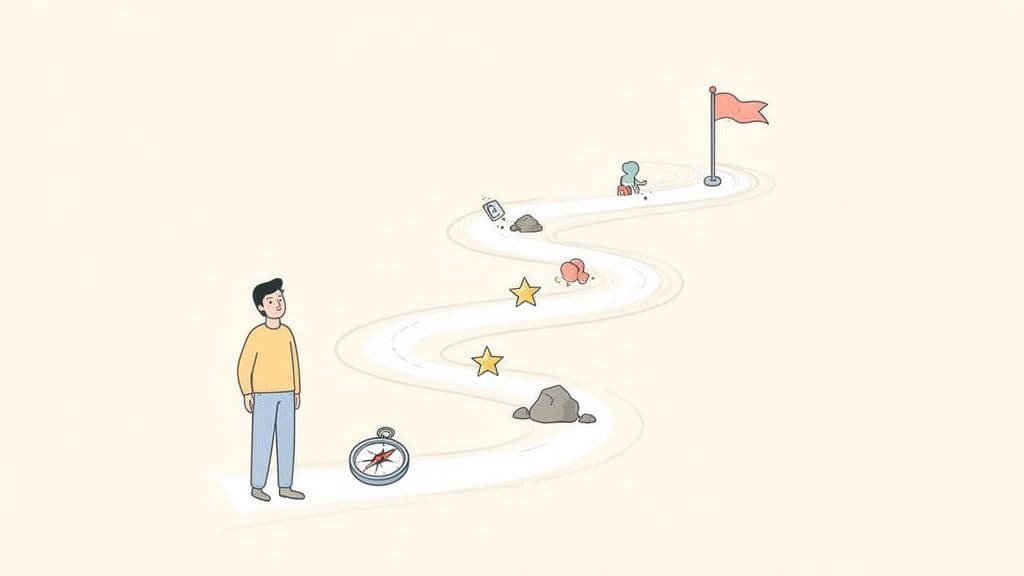
The self-improvement field is expanding rapidly, reflecting growing demand for personal-growth tools and coaching services1. This guide helps you turn the vague idea of “getting better” into a concrete, actionable starting point.
Create an Authentic Starting Point
You can’t get to where you’re going if you don’t know where you are. This isn’t about harsh self-criticism; it’s about clear, compassionate awareness. We use a framework inspired by Dan Millman’s The Life You Were Born to Live to help you tap into natural strengths and recurring challenges.
If you want a shortcut to these personal insights, the Life Purpose App translates Millman’s system into a practical tool you can use daily4.
Your starting point should include:
- An honest check-in: Notice how different areas of your life—career, health, relationships, personal time—feel. No fixing yet, just observing.
- Identifying your strengths: What are you already good at? Growth isn’t only about fixing weaknesses but also about leaning into what you do well.
- Acknowledging your challenges: Where do you repeat the same frustrations? Getting clear on these points you toward what to focus on first.
The goal is an authentic foundation for growth. This turns the daunting task of “working on myself” into a genuine exploration of who you are and where you want to go.
Use a Simple Self-Audit
Spend 10–15 minutes filling out a brief snapshot to move from vague feelings to actionable data.
| Life Area (e.g., Career, Health) | Satisfaction Score (1–10) | What Would a ‘10’ Feel Like? | One Small Action I Can Take |
|---|---|---|---|
This first step is about getting real with yourself so you can move forward with purpose.
Find a Growth Plan That Fits You
Generic formulas rarely stick because they aren’t built around how you naturally operate. The trick is creating a plan that fits your rhythms, not one you force yourself to follow.
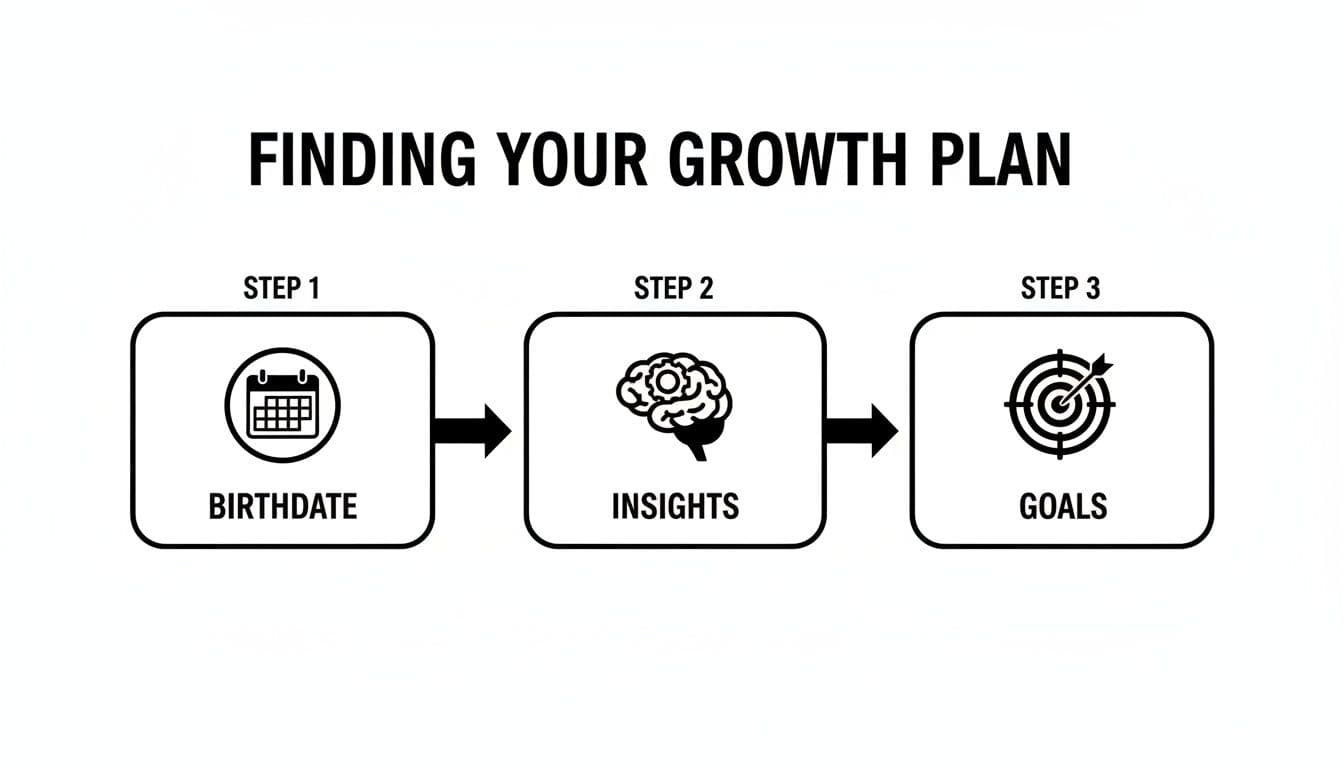
Dan Millman’s system uses your birth date to identify one of 45 life paths. It provides a practical map of core strengths and recurring challenges, helping you design a plan that matches your wiring rather than fighting it.
Once you have this clarity, you stop guessing. If your path highlights communication challenges, your plan can focus on small communication skills. If inconsistency is a theme, you prioritize tiny, sustainable habits.
Learn more on the Life Purpose App blog4.
Using the Life Purpose App
Apps have made personal-growth systems more accessible and actionable. The Life Purpose App delivers Millman’s system on your phone, outlining your life path, spiritual laws, and nine-year cycles so you can apply the insights to daily goals and habits4.
Below is a photo of Dan Millman, whose work is the foundation for this system.
Millman’s approach bridges ancient wisdom and modern development, offering a structured yet personal way to understand purpose and turn vague goals into concrete actions.
Your life path isn’t a limitation; it’s a guide that helps you prepare for the terrain you’re most likely to encounter.
Build Daily Practices That Actually Stick
Lasting change is built in small, consistent actions. The goal is daily practices that feel natural, not like another item on your to-do list.
Start Small and Stack Habits
Habit stacking makes new habits easier by tacking them onto routines you already do. This reduces friction and makes consistency much more likely.
Examples:
- After my morning coffee, I’ll sit for two minutes of quiet breathing.
- When I tie my running shoes, I’ll think of one thing I’m grateful for.
- Before I shut my laptop, I’ll jot down one small win.
Consistency over intensity is the engine of long-term change.
Journaling for Focused Reflection
Use prompts that steer you toward useful insight instead of a daily log.
Try:
- What was one moment today where I felt totally myself?
- Where did I feel resistance, and what might that signal?
- If I could give my past self one piece of advice from today, what would it be?
Treat your journal as a private conversation, not a performance. Short, focused writing sessions can uncover meaningful patterns. For practical guides to habit-building, see additional resources5.
Navigate Your Inner World with Confidence
Personal growth requires learning to notice thoughts and emotions without automatically reacting. The shift from reactive to responsive creates space to choose how you act.
Understand Emotional Patterns
Notice what triggers you and the thoughts that come before a strong reaction. Often these patterns relate to themes your life path highlights. Knowing your tendencies gives context and helps you approach yourself with compassion.
This kind of self-awareness is driving demand for balanced mental, physical, and emotional health tools3.
Learn to Sit with Discomfort
Once you spot an emotion, try allowing it to be present for a minute. Notice where you feel it physically. Observing sensations without buying into the dramatic story your mind creates trains your nervous system to tolerate discomfort and respond more skillfully. Practices like mindfulness and focused reflection have documented benefits for stress resilience and emotional regulation6.
For deeper exercises on self-awareness, see the Life Purpose App blog4.
Align Your Life with Who You’re Becoming
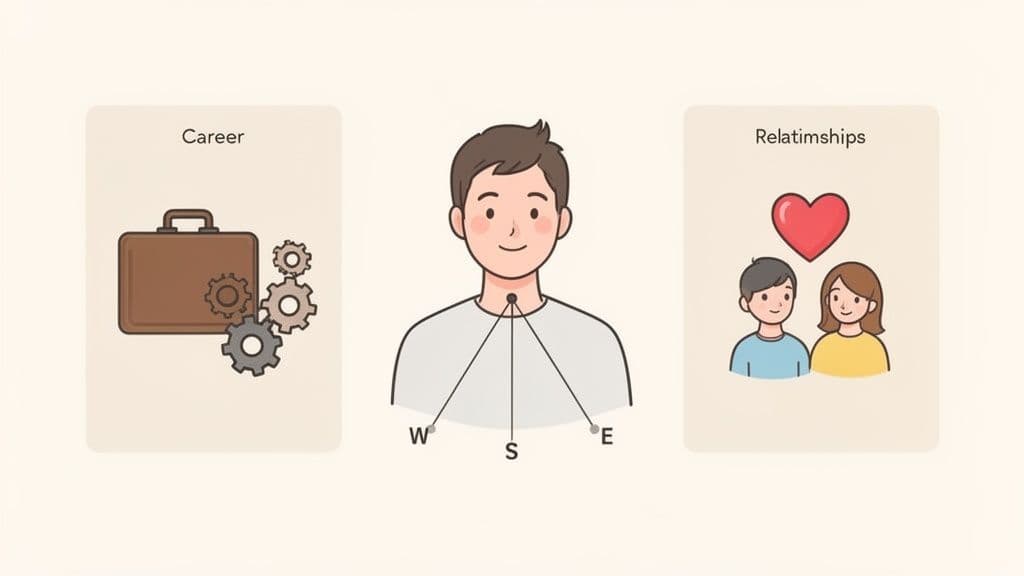
As your inner world changes, the outer world may start to feel out of sync. That’s a signal that something in your life no longer fits. This is an opportunity to make conscious changes so your environment supports who you are becoming.
Improve Relationships
Relationship strain often comes from miscommunication or mismatched needs. Millman’s system maps energetic dynamics between life paths, and the Life Purpose App can highlight natural flows and friction points so you can have clearer conversations and set healthier boundaries4.
Find a More Fulfilling Career Path
If your job feels off, it may not match your innate strengths. Your life path points to natural talents that make work feel energizing. Use those insights to evaluate roles or projects that align with what energizes you, rather than what simply looks impressive.
Quick Evaluation
Map where you stand right now. No long essays—just honest answers.
| Life Area | Currently Feels Aligned? (Yes/No) | What Would Feel More Aligned? (One Sentence) |
|---|---|---|
| Primary Relationship | ||
| Closest Friendships | ||
| Current Career | ||
| Daily Routine |
This snapshot helps you direct your energy where it will matter most.
Overcome Plateaus and Stay Motivated
Plateaus are a normal part of change. They signal that something in your approach or expectations needs adjusting. Instead of forcing willpower, get curious about why you’ve stalled.
Use Your Personal Rhythm to Get Unstuck
Millman outlines nine-year cycles in The Life You Were Born to Live. Knowing which cycle you’re in can clarify whether this is a season for starting, consolidating, or letting go. The Life Purpose App shows your current cycle and can offer context for what you’re feeling4.
Practical Steps to Reignite Motivation
Break monotony and reconnect with your original why. Write down what you were chasing when you started. Redefine progress for the short term—sometimes showing up is the win. Celebrate small acts of consistency and use them to regain momentum.
Quick Q&A — Common Reader Questions
How long before I see change?
Small shifts can appear within weeks—catching yourself before an old reaction or finding a calmer moment. Larger life changes typically require months of steady practice.
What’s the difference between self-help and therapy?
Self-help is a personal toolkit you use on your own. Therapy is guided work with a trained professional. They complement each other; seek therapy for deep trauma or persistent, interfering symptoms.
Do I need the Life Purpose App?
No. The core work—self-reflection, tiny daily habits, and intentional choices—works without the app. The Life Purpose App speeds clarity by translating Dan Millman’s system into actionable insights you can use daily4.
Ready to see your blueprint? The Life Purpose App translates Millman’s work into a practical tool you can use every day. Download the Life Purpose App4.
Three Concise Q&A Summaries
Q: What is the simplest first step to start working on myself?
A: Do a 10–15 minute self-audit: rate key life areas, describe what a 10 feels like, and pick one tiny action to start.
Q: How do I build habits that stick?
A: Start very small and use habit stacking—attach a new two-minute practice to an established routine and celebrate showing up.
Q: What if I hit a plateau?
A: Get curious, not harsh. Revisit your why, adjust expectations, and use cycle insights like Millman’s nine-year framework to understand the season you’re in4.
1.
Research And Markets, “Global Self-Improvement Service Market.” https://www.researchandmarkets.com/report/global-self-improvement-service-market
2.
Zion Market Research, “Self-Improvement Market.” https://www.zionmarketresearch.com/report/self-improvement-market
3.
Grand View Research, “Personal Development Market Analysis.” https://www.grandviewresearch.com/industry-analysis/personal-development-market
4.
Life Purpose App, blog and app resources. https://lifepurposeapp.com
5.
Practical habit-building resource referenced. https://stopsugar.app/blog/building-healthy-habits
6.
Research on mindfulness and resilience benefits (selected review). https://www.ncbi.nlm.nih.gov/pmc/articles/PMC3679190/
Discover your life path today
Enter your date of birth and see your life path, free.
Find your life path