La Méditation en 6 phases est une pratique active et structurée, pensée pour les vies occupées. En 15–20 minutes, six étapes ciblées vous aident à cultiver compassion, gratitude, pardon, visualisation, intention et bénédiction pour plus de clarté et de calme.
March 23, 2026 (5mo ago) — dernière mise à jour le June 28, 2026 (1mo ago)
Méditation 6 phases — Calme et clarté en 15 min
Pratique guidée de 15–20 min pour cultiver compassion, gratitude, pardon, visualisation, intention et bénédiction. Simple, structurée et adaptée aux vies occupées.
← Retour au blog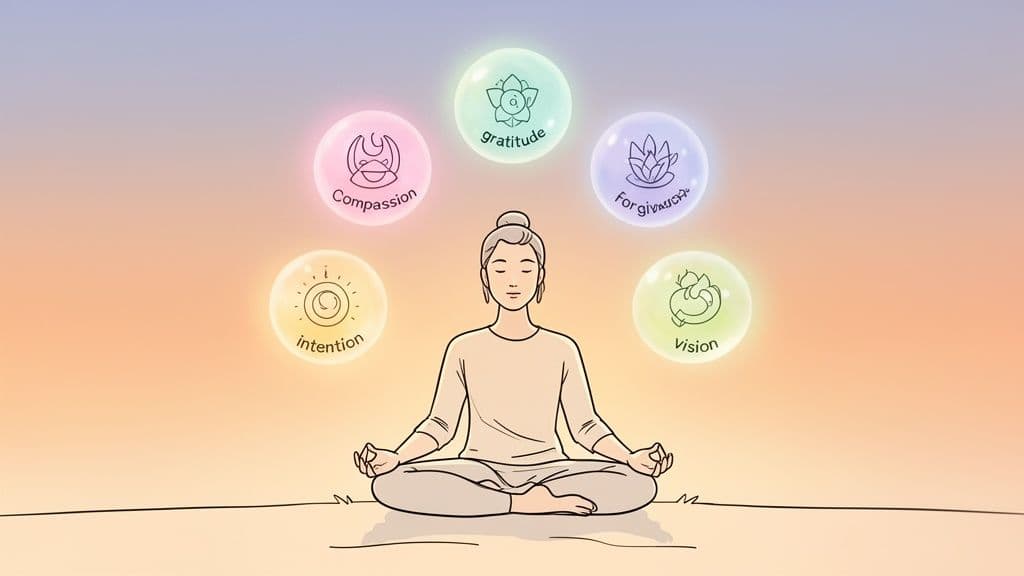
Méditation en 6 phases : Un guide vers la clarté et le calme
Découvrez comment la méditation en 6 phases peut transformer votre quotidien avec des étapes courtes et concrètes pour gagner en clarté, calme et sens.
Introduction
Si vous avez essayé la méditation et pensé “ce n’est pas pour moi”, vous n’êtes pas seul. La Méditation en 6 phases est une pratique active et structurée, pensée pour les emplois du temps chargés. En 15–20 minutes, vous traversez six étapes ciblées qui orientent votre esprit vers le sens plutôt que de vous demander de le vider. Ce guide décrit chaque phase, explique pourquoi elle fonctionne et donne des conseils pour en faire une habitude durable.
Qu’est‑ce que la Méditation en 6 phases et pourquoi ça marche
Popularisée par Vishen Lakhiani et Mindvalley, la Méditation en 6 phases est un rituel quotidien qui guide l’attention à travers des états émotionnels précis plutôt que d’encourager uniquement l’observation des pensées. C’est un entraînement mental intentionnel qui aide à réduire le stress, renforcer la concentration et préparer le cerveau à la créativité et au sens. Des études montrent que la méditation peut produire des changements mesurables dans la structure et le fonctionnement du cerveau1, et des revues cliniques rapportent des améliorations petites à modérées des symptômes d’anxiété et de dépression avec des programmes de pleine conscience2.
Les six piliers de la pratique
Chaque phase s’appuie sur la précédente pour guider l’esprit depuis la connexion et le nettoyage, jusqu’à une créativité tournée vers le futur et une intention claire. Utilisez ce tableau comme référence rapide.
| Phase | Focalisation | Bénéfice principal |
|---|---|---|
| 1. Compassion | Étendre l’amour et la connexion vers l’extérieur | Développe l’empathie et le sentiment d’appartenance |
| 2. Gratitude | Apprécier ce que vous avez déjà | Oriente la perspective vers l’abondance |
| 3. Pardon | Libérer les ressentiments et la charge négative | Libère de l’énergie mentale pour la croissance |
| 4. Visualisation du futur | Créer une image vivante de votre futur idéal | Aligne l’attention subconsciente sur les objectifs |
| 5. Intention quotidienne | Visualiser le bon déroulement de votre journée | Donne un ton productif et positif à la journée |
| 6. Bénédiction | Sentiment de soutien par quelque chose de plus grand | Cultive la confiance et la guidance |
Cette séquence transforme la méditation en un entraînement mental actif qui vous prépare à être présent avec clarté et sens.
Les six phases en pratique
-
Compassion — Commencez par des respirations profondes et ancrantes. Imaginez une lumière chaude dans la poitrine et laissez ce sentiment s’étendre autour de votre corps, dans la pièce, vers votre communauté, puis vers la planète entière. Laissez cette connexion vous ancrer.
-
Gratitude — Ramenez la lumière dans votre cœur et concentrez‑vous sur des choses spécifiques pour lesquelles vous êtes reconnaissant. Visez trois éléments personnels, trois liés au travail ou à l’extérieur, et trois qualités chez vous. Restez avec chaque élément 20–30 secondes et ressentez la gratitude.
-
Pardon — Évoquez une personne ou une situation qui porte encore une charge émotionnelle. Dites “Je te pardonne” et “Je te libère”, en visualisant le lien énergétique se dissoudre. Si rien de précis n’apparaît, pratiquez le pardon envers vous‑même pour des erreurs passées.
-
Visualisation du futur — Créez une image claire et émotionnellement vivante de votre futur idéal, généralement dans 2–3 ans. Si la visualisation est difficile, concentrez‑vous sur les sensations que vous voulez ressentir — satisfaction, liberté, fierté.
-
Intention quotidienne — Zoomez sur aujourd’hui. Imaginez la journée se déroulant avec aisance et concentration. Voyez les interactions clés et les tâches importantes se passer bien et notez ce que vous ressentez pendant qu’elles se déroulent.
-
Bénédiction — Concluez en vous sentant soutenu et guidé. Connectez‑vous à un sentiment de sécurité, que ce soit une puissance supérieure, l’univers ou votre propre sagesse intérieure.
Chaque phase peut durer 2–3 minutes ; ajustez le temps selon votre emploi du temps. Même une minute par phase vaut mieux que de sauter la séance.
Reconfigurer votre cerveau pour des résultats concrets
La pratique aide à faire passer le cerveau d’un état de stress à des états plus calmes et intuitifs. La méditation régulière est associée à des modifications neuroplastiques dans des régions liées à l’attention, la régulation émotionnelle et la conscience de soi1. Les revues cliniques montrent aussi que les programmes de méditation réduisent l’anxiété et les symptômes dépressifs de façon modeste à modérée, selon la durée et la régularité de la pratique2.
Quand vous vous sentez bloqué, les six phases offrent un cadre fiable pour vous reconnecter au sens. La structure guidée réduit l’incertitude et rend la pratique accessible, même pour les personnes qui trouvent la méditation silencieuse traditionnelle difficile3.
Comment personnaliser la pratique
La Méditation en 6 phases devient plus puissante quand vous l’alignez sur vos objectifs et vos valeurs. Des outils comme l’application Life Purpose aident à identifier des thèmes à long terme et à adapter vos visualisations à ce qui compte le plus pour vous4. Par exemple :
- Si vous voulez développer votre expression créative, utilisez la visualisation du futur pour répéter mentalement l’achèvement d’un projet.
- Si vous visez le leadership, façonnez l’intention quotidienne autour de la clarté, la confiance et le service.
Cette combinaison de clarté intérieure et d’action extérieure rend la pratique directement pertinente pour la vie quotidienne.
Conseils pratiques pour tenir la pratique dans la durée
- Commencez petit : une minute par phase les jours chargés.
- La constance vaut mieux que la perfection : une séance courte improvisée vaut mieux qu’attendre le calme parfait.
- Utilisez des audios guidés jusqu’à ce que vous soyez à l’aise pour vous guider vous‑même.
- Si la visualisation est difficile, concentrez‑vous sur les sensations ; l’émotion provoque le changement plus que l’image.
- Si le pardon pèse, reformulez‑le comme le lâcher‑prise d’un point de tension.
Obstacles courants et comment les gérer
- Esprit vagabond : remarquez la distraction sans jugement et revenez doucement à la phase. C’est la pratique.
- « Est‑ce que je le fais bien ? » : visez le ressenti plutôt que la visualisation parfaite. L’émotion est ce qui compte.
- Jours manqués : ne vous punissez pas. Reprenez la pratique le lendemain.
Questions et réponses rapides
Q : En quoi est‑ce différent de la pleine conscience ?
A : La pleine conscience met souvent l’accent sur une conscience ouverte et non jugeante. La Méditation en 6 phases est plus directive — vous traversez compassion, gratitude, pardon, visualisation, intention et bénédiction pour façonner des états émotionnels et des objectifs3.
Q : Je suis mauvais en visualisation. Cette pratique est‑elle pour moi ?
A : Oui. Concentrez‑vous sur les sensations que vous recherchez — dynamisme, calme, accomplissement — plutôt que sur des images cinématographiques. Les méditations guidées aident à développer cette compétence.
Q : Quand verrai‑je des bénéfices ?
A : Beaucoup de personnes remarquent un calme immédiat. Des changements plus profonds de perspective et de comportement apparaissent généralement avec une pratique quotidienne sur plusieurs semaines à mois ; la constance est déterminante2.
Ressources et prochaines étapes
Pour approfondir votre pratique, explorez des versions guidées de la Méditation en 6 phases et des ressources qui aident à aligner vos intentions quotidiennes avec un objectif à long terme, comme l’application Life Purpose et des programmes guidés4. Consultez aussi nos autres articles sur la pleine conscience et les routines pratiques sur le blog pour enrichir votre pratique, par exemple: Techniques de pleine conscience et Rituels matinaux pour la clarté.
Q&R — Résumé pratique (3 questions fréquentes)
Q : Combien de temps consacrer chaque jour ?
A : 15–20 minutes est idéal, mais même 6–10 minutes consolide la pratique. Lors des jours chargés, faites au moins 1 minute par phase.
Q : Que faire si je décroche mentalement ?
A : Accueillez la distraction sans jugement, respirez, puis revenez à la phase en cours. La répétition renforce l’attention.
Q : Comment mesurer les progrès ?
A : Notez vos états d’esprit après chaque séance et suivez-les sur plusieurs semaines. Recherchez une plus grande clarté, moins de réactions impulsives et une meilleure énergie mentale.
1.
Hölzel, Britta K., et al., “How Does Mindfulness Meditation Work? Proposing Mechanisms of Action From a Conceptual and Neural Perspective,” Perspectives on Psychological Science, 6(6):537–59. https://www.ncbi.nlm.nih.gov/pmc/articles/PMC4253124/
2.
Goyal, Madhav, et al., “Meditation Programs for Psychological Stress and Well‑Being: A Systematic Review and Meta‑analysis,” JAMA Internal Medicine, 174(3):357–68. https://jamanetwork.com/journals/jamainternalmedicine/fullarticle/1809754
3.
Mindvalley and Vishen Lakhiani popularized the 6 Phase Meditation through guided programs and talks. See Mindvalley resources: https://www.mindvalley.com
4.
L’application Life Purpose et les guides associés fournissent des cadres pour aligner la méditation avec des chemins de vie personnels et des objectifs. https://lifepurposeapp.com
Discover Your Life Purpose Today!
Unlock your true potential and find your life’s purpose.
